California Affidavit - Surviving Domestic Partner Succeeding to Title to Domestic Partnership Property
What this document covers
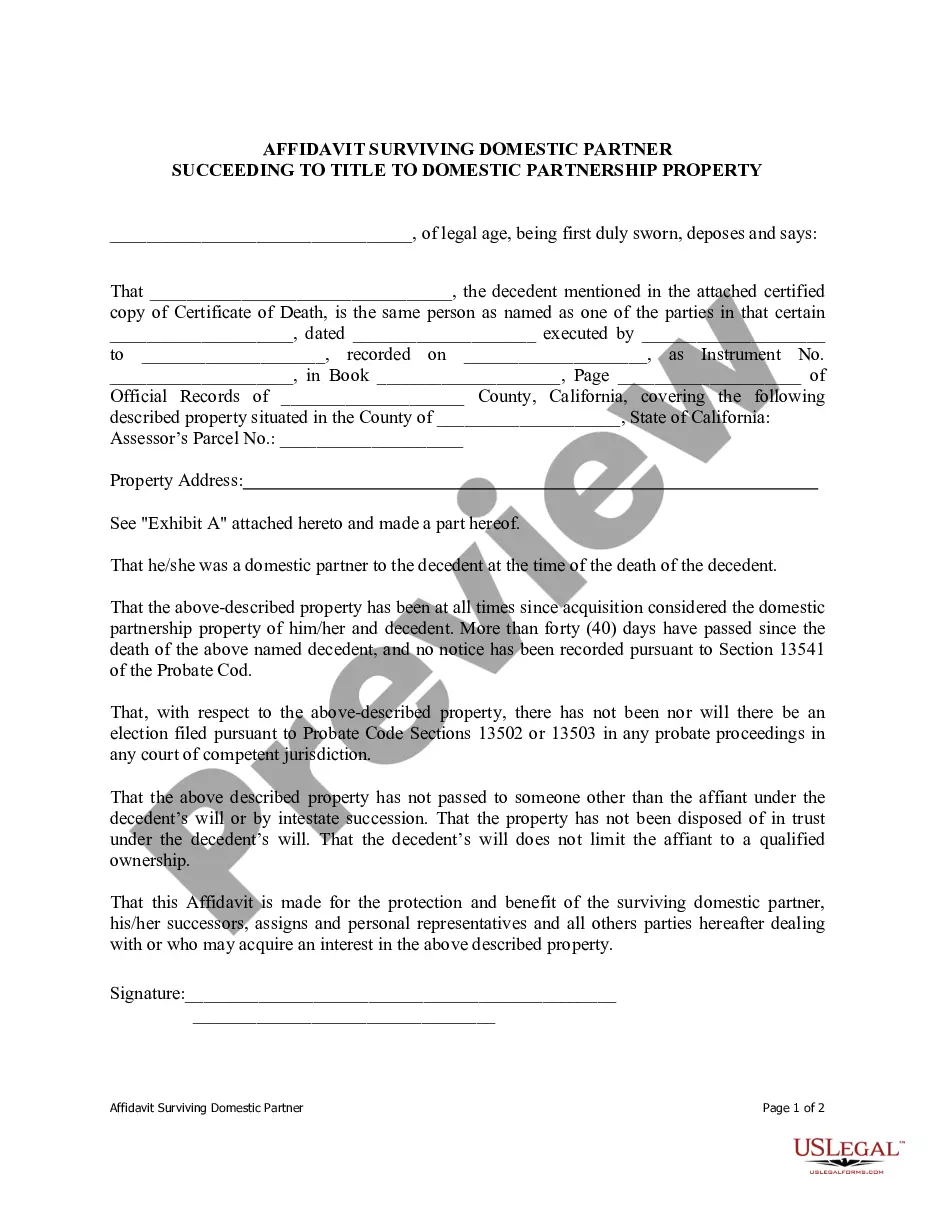
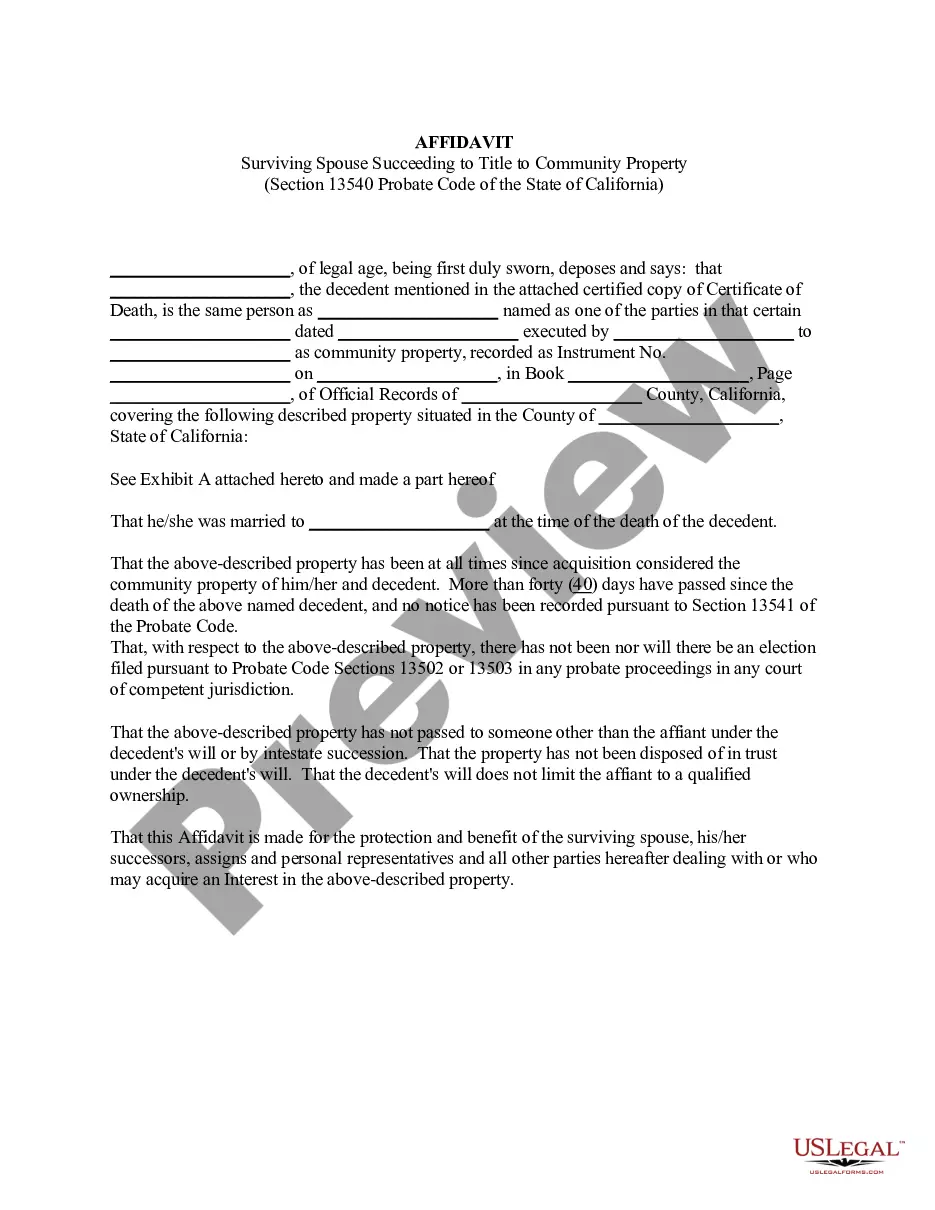
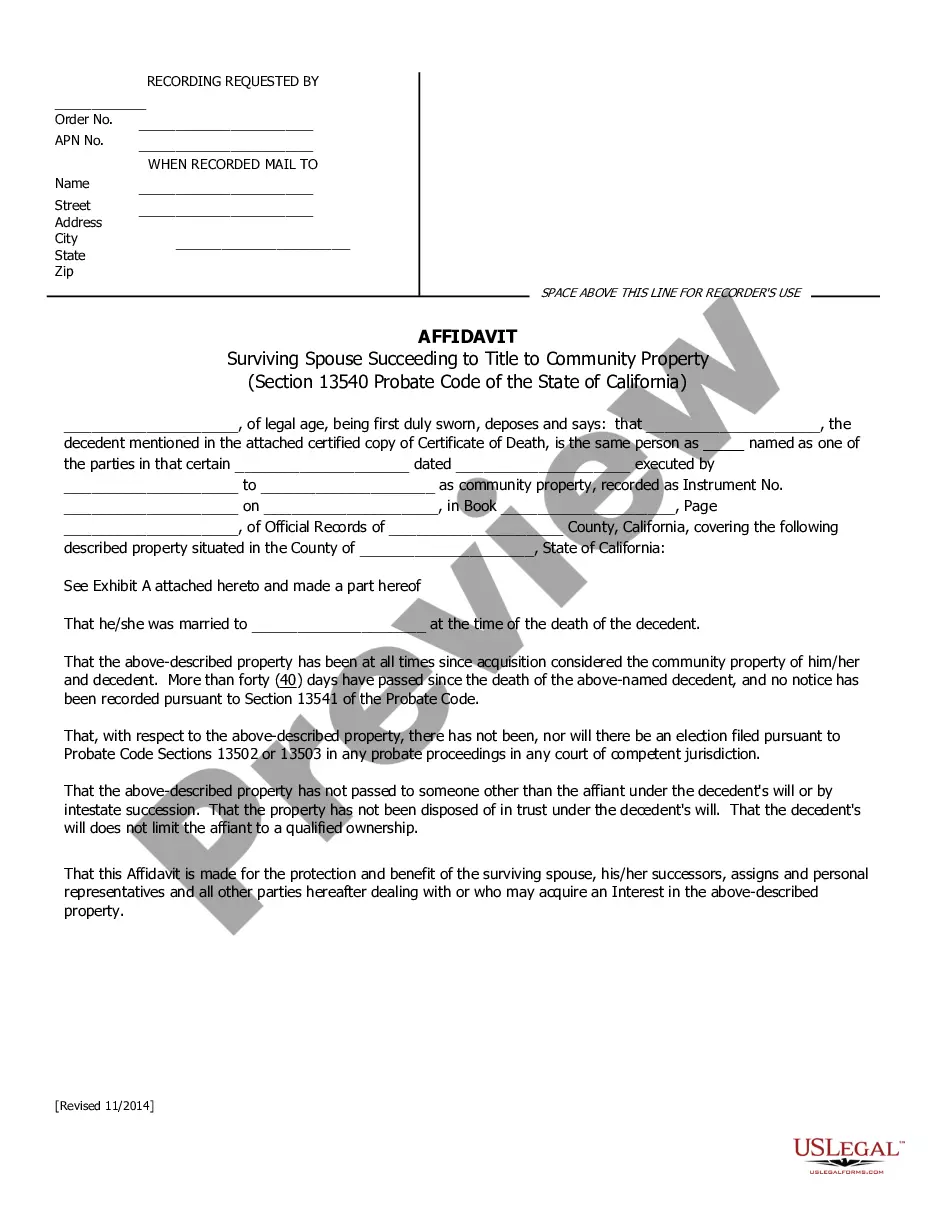
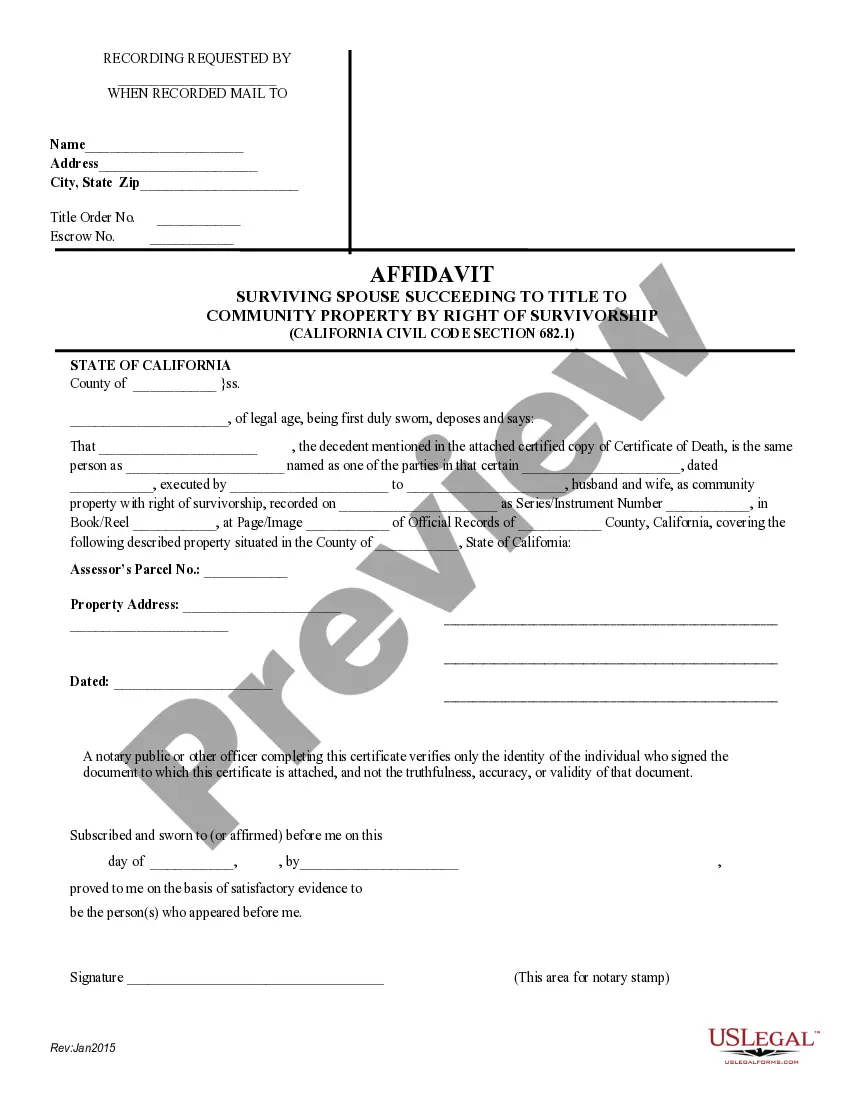
The Affidavit - Surviving Domestic Partner Succeeding to Title to Domestic Partnership Property is a legal document used to establish the rights of a surviving domestic partner to the property owned jointly with the deceased partner. This affidavit serves to officially transfer the title of the property, ensuring that the surviving partner's ownership is recognized without the need for probate. It is distinct from other property transfer documents as it specifically addresses domestic partnerships and their unique legal considerations.
Main sections of this form
- Identification of the decedent and the surviving partner.
- Reference to the decedent's death certificate.
- Details about the property being transferred, including assessorâs parcel number and address.
- A declaration that the property has always been considered domestic partnership property.
- Certification of the absence of conflicting claims or probate proceedings.
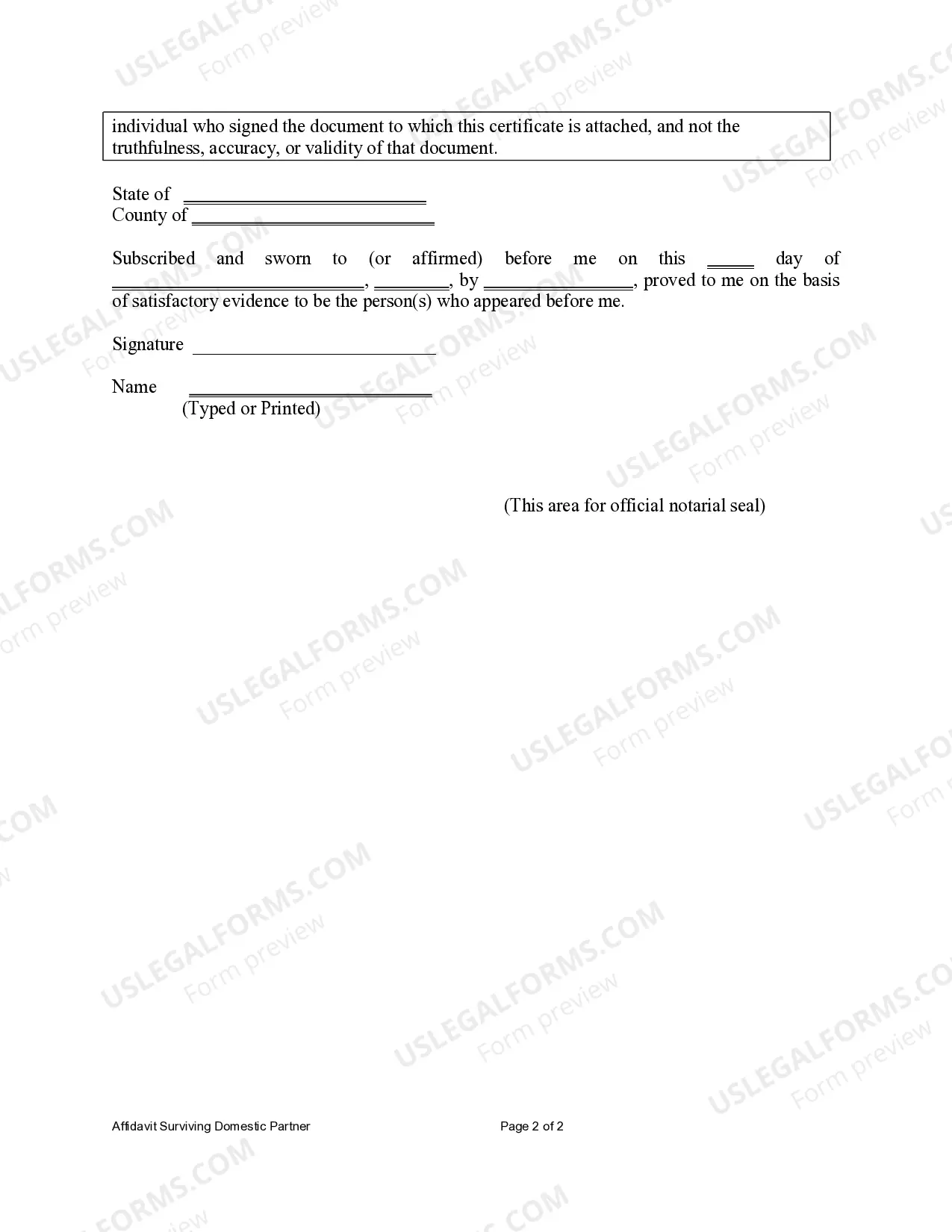
- Signature and notarization section to verify authenticity.
Situations where this form applies
This affidavit should be used when one partner in a domestic partnership passes away, and the surviving partner needs to assert their right to property jointly owned by the couple. It is especially relevant in cases where more than forty days have elapsed since the partner's death, and there has been no probate filed. The affidavit helps in avoiding probate and ensures a smooth transfer of property ownership directly to the surviving partner.
Who can use this document
This affidavit is intended for:
- Surviving domestic partners seeking to claim ownership of property after the death of their partner.
- Individuals who were in a registered domestic partnership at the time of their partnerâs death.
- Personal representatives or successors of a deceased domestic partner who need to establish property rights.
Instructions for completing this form
- Identify the parties involved: enter the names of the surviving partner and the decedent.
- Attach the certified copy of the decedent's death certificate.
- Specify the property details, including assessorâs parcel number and address.
- Provide declarations regarding the ownership status and absence of contested claims.
- Sign the affidavit before a notary public to validate the document.
Does this document require notarization?
Yes, this form must be notarized to be legally valid. Notarization ensures the authenticity of the signatures and protects against potential fraud. US Legal Forms provides integrated online notarization services, allowing you to complete the notarization process securely and conveniently via a video call, accessible 24/7 without the need to travel.
Get your form ready online
Our built-in tools help you complete, sign, share, and store your documents in one place.
Make edits, fill in missing information, and update formatting in US Legal Forms—just like you would in MS Word.
Download a copy, print it, send it by email, or mail it via USPS—whatever works best for your next step.
Sign and collect signatures with our SignNow integration. Send to multiple recipients, set reminders, and more. Go Premium to unlock E-Sign.
If this form requires notarization, complete it online through a secure video call—no need to meet a notary in person or wait for an appointment.
We protect your documents and personal data by following strict security and privacy standards.

Make edits, fill in missing information, and update formatting in US Legal Forms—just like you would in MS Word.

Download a copy, print it, send it by email, or mail it via USPS—whatever works best for your next step.

Sign and collect signatures with our SignNow integration. Send to multiple recipients, set reminders, and more. Go Premium to unlock E-Sign.

If this form requires notarization, complete it online through a secure video call—no need to meet a notary in person or wait for an appointment.

We protect your documents and personal data by following strict security and privacy standards.
Common mistakes to avoid
- Failing to attach the certified death certificate.
- Omitting essential property details, leading to possible disputes.
- Not having the form notarized, which could invalidate the affidavit.
- Incorrectly stating the status of ownership or existing probate matters.
Why use this form online
- Convenient access to a legal document from home, saving time.
- Editability allows customization to fit specific circumstances.
- Reliability in receiving a document drafted by licensed attorneys.
Looking for another form?


Form popularity
FAQ
To be officially ?registered? as domestic partners with the State of California, certain criteria must be me: Both persons must have a common residence. They must agree to be responsible for each other's basic living expenses. Neither person can be married or a member of another domestic partnership.
The benefits that are provided to couples who join a domestic partnership include: No marriage tax penalty. The ability to adopt together. Legal rights to raise, take care of, and make decisions for children. Bereavement leave. Visitation in applicable circumstances. Family leave for a sick or injured partner.
The fee for filing a domestic partnership is $33.00 if both partners are under the age of 62. The fee for filing a domestic partnership is $10.00 if either partner is 62 or older.
Registered domestic partners are entitled to inherit through their domestic partner even if their domestic partner does not leave a will (this is called intestate succession). If your partner dies without a will, you will be entitled to the same share to which a surviving spouse would be.
Community property ? All wages earned by a registered domestic partner while living in California is community property, as is any real or personal property acquired with such wages or existing community property or community debt. Both partners are entitled equally to manage and control all community property.
You may register by completing a Confidential Declaration of Domestic Partnership Form DP-1A, having both partners' signatures notarized, and submitting the form with the appropriate fee to the California Secretary of State.
If you and your partner are over 18, or one or both partners are under 18 and have obtained a court order granting permission to establish a domestic partnership, and meet the requirements of California Family Code section 297, you may register a domestic partnership with the California Secretary of State.
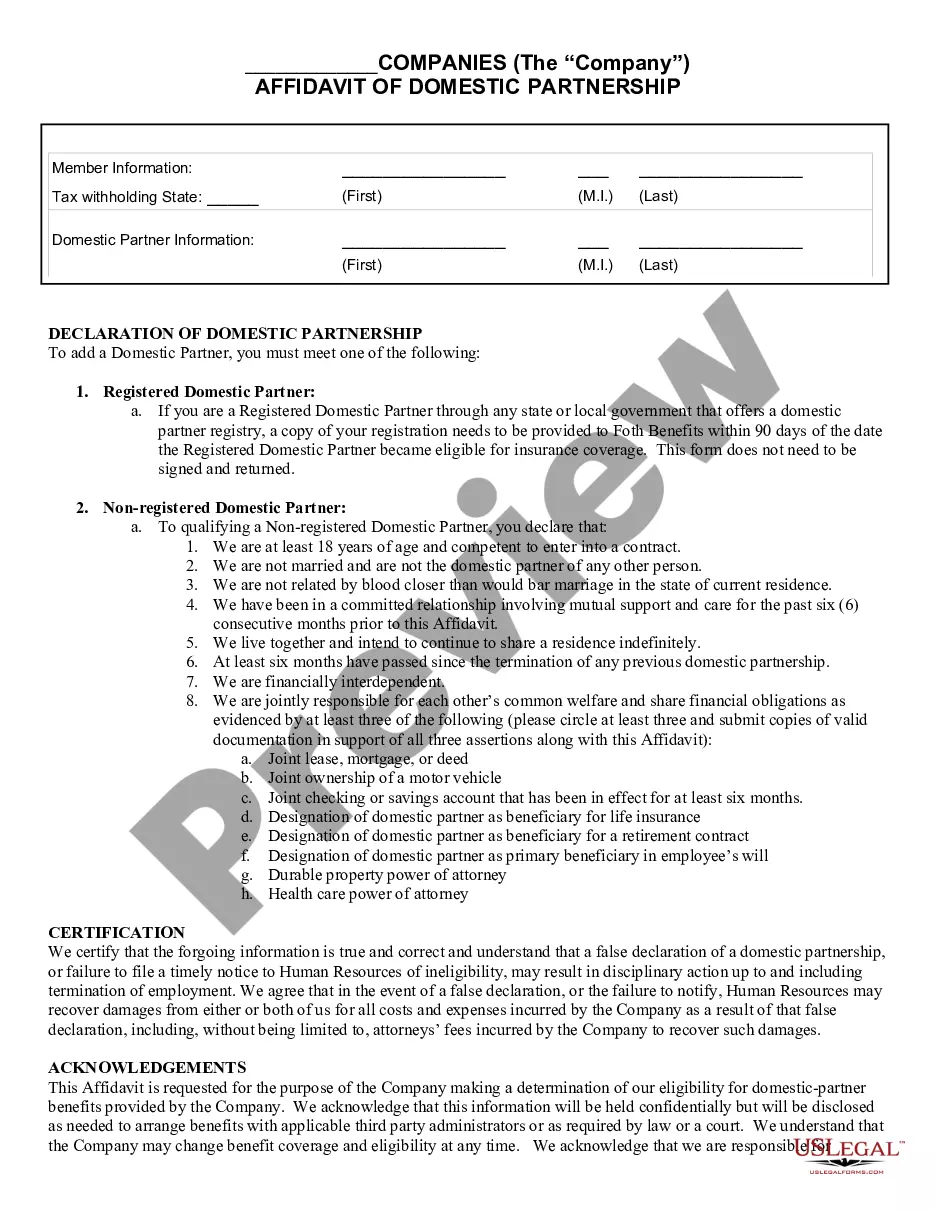
A domestic partner affidavit is a declaration made by a couple to acknowledge that they are engaged in a domestic partnership under state law. This gives each partner special rights (such as hospital visitation, inheritance, etc.) without being legally married.