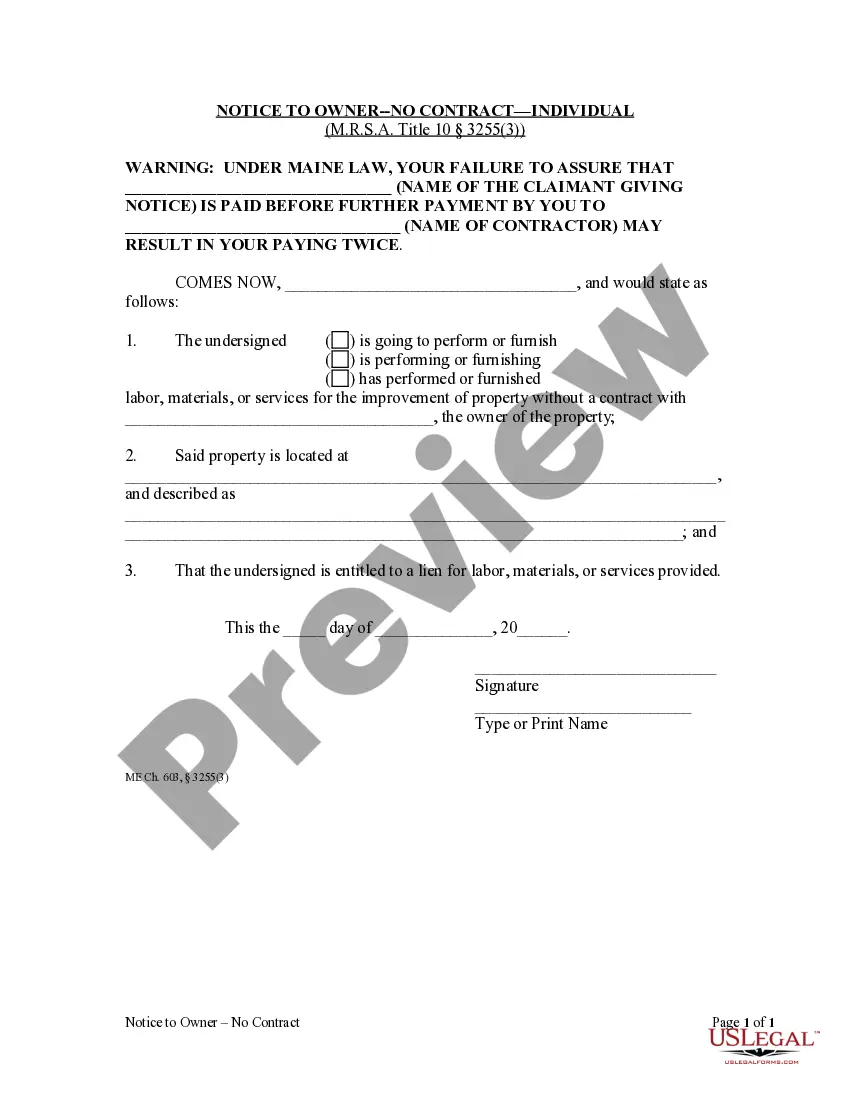
Pennsylvania Special or Limited Power of Attorney for Real Estate Sales Transaction By Seller
Overview of this form
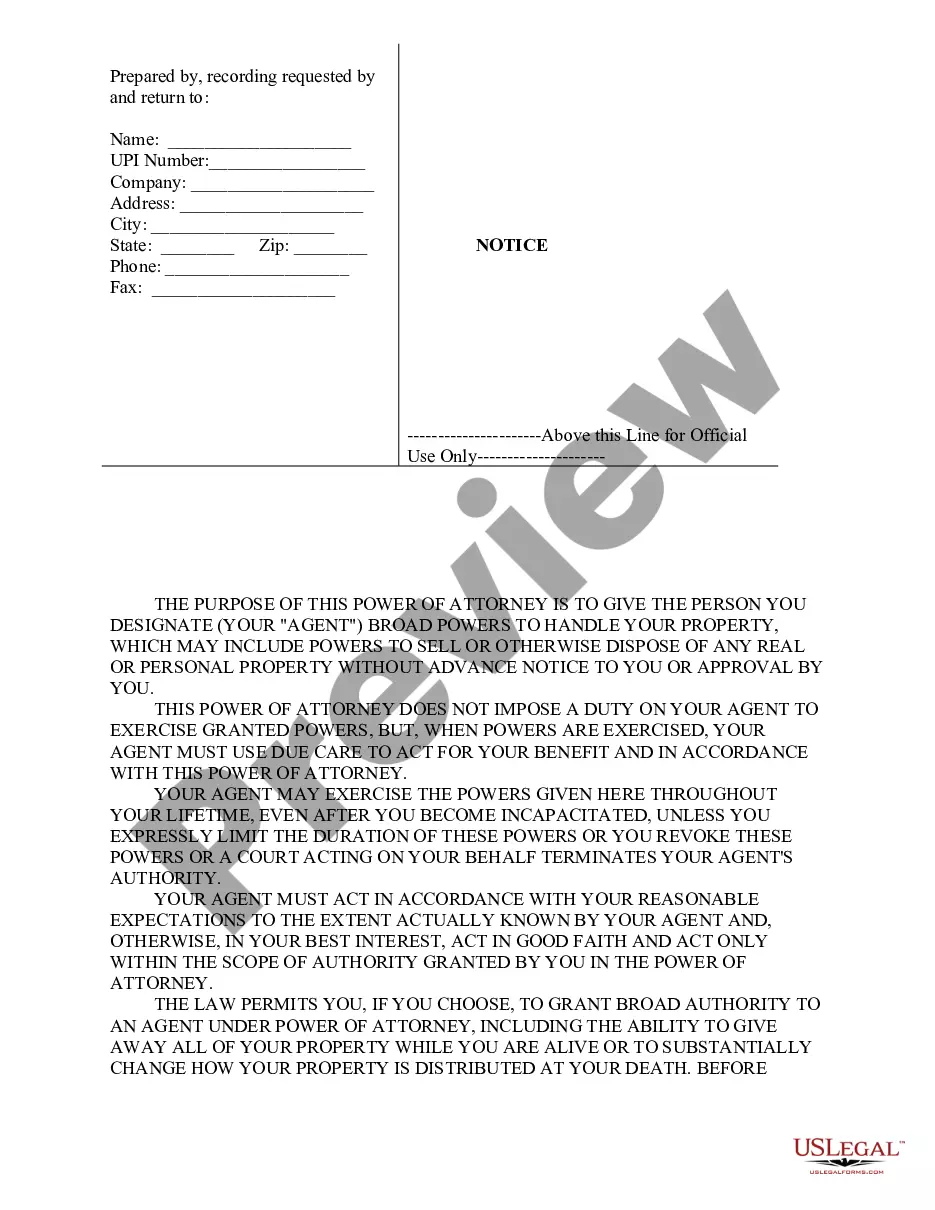
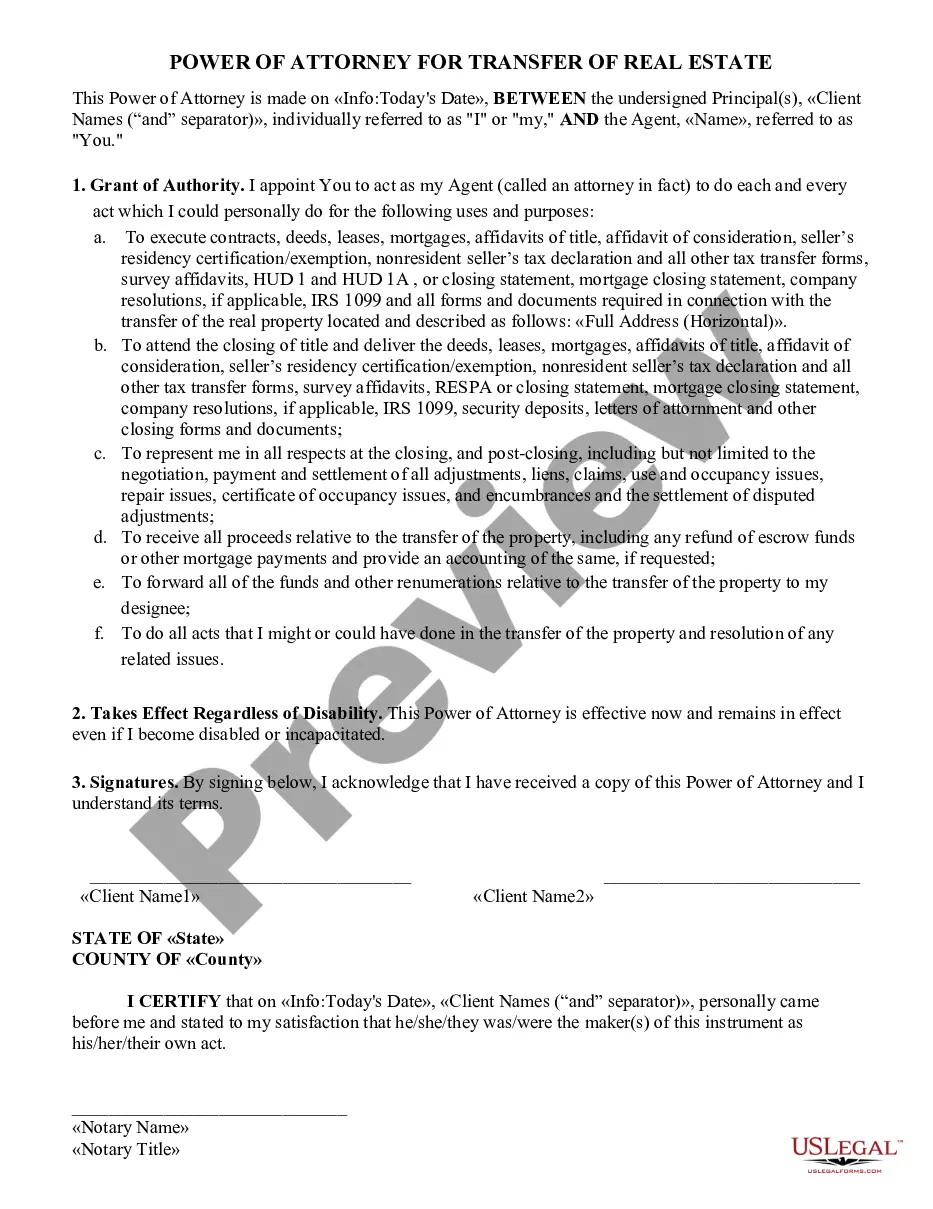
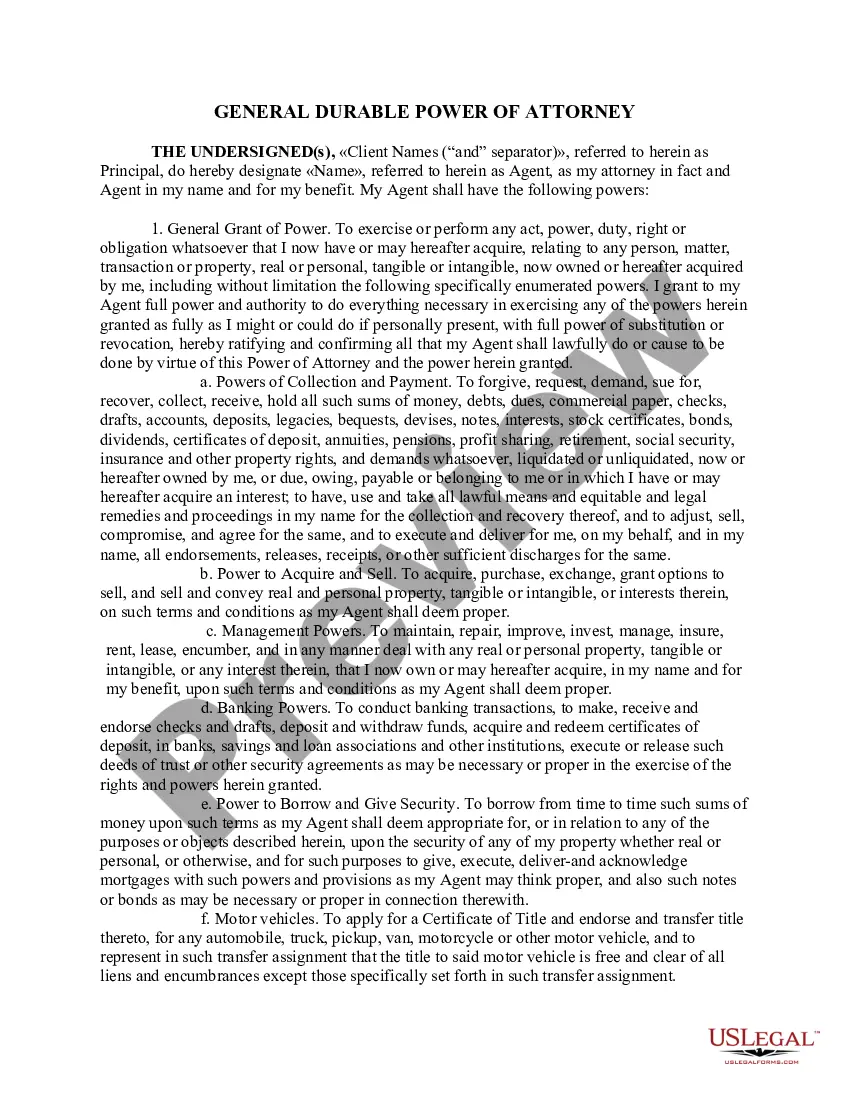
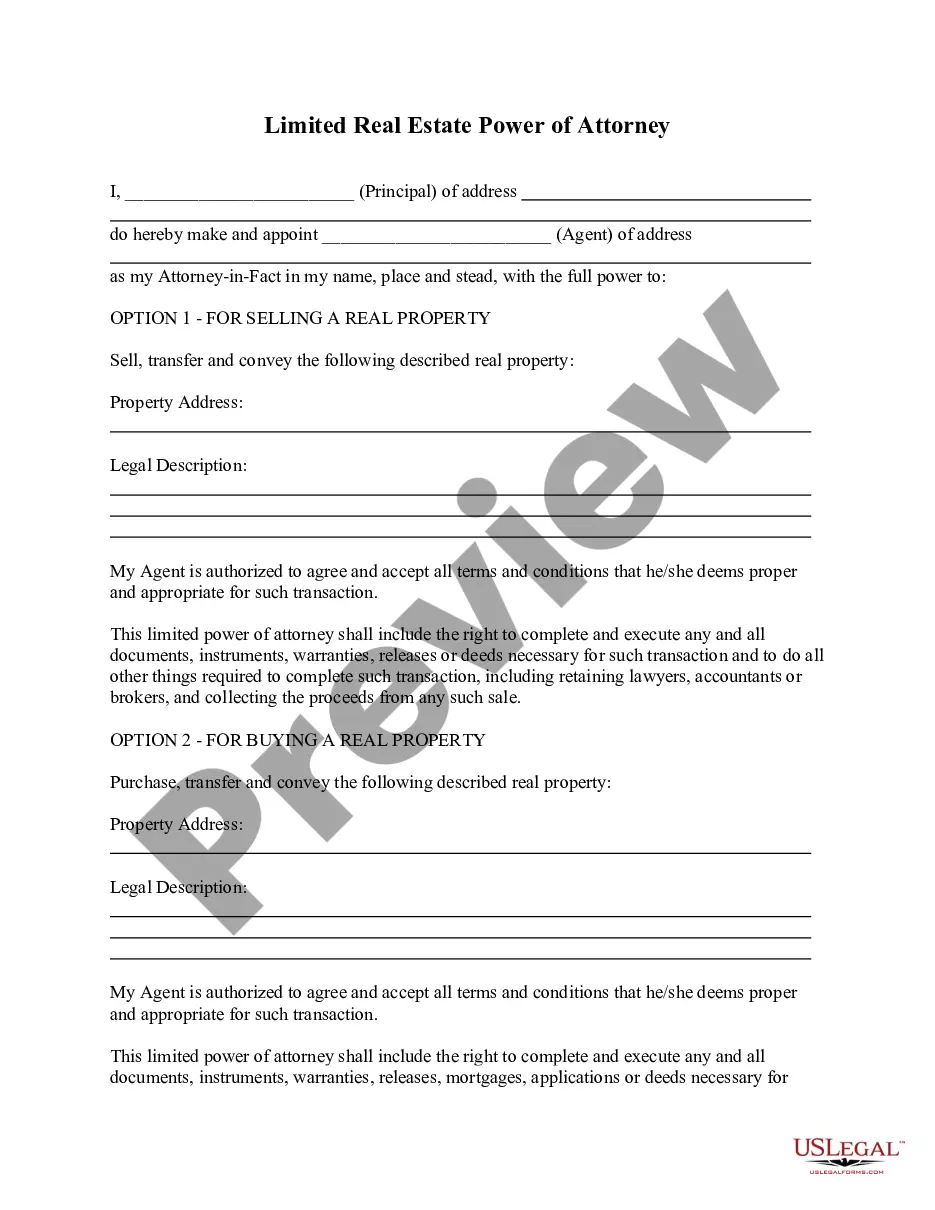
The Special or Limited Power of Attorney for Real Estate Sales Transaction By Seller is a legal document that enables a seller to authorize an agent to manage, execute, and finalize the sale of real estate on their behalf. This form grants the attorney-in-fact the authority to execute necessary documents related to the transaction, differentiating it from general powers of attorney, which may encompass broader responsibilities beyond real estate transactions.
Form components explained
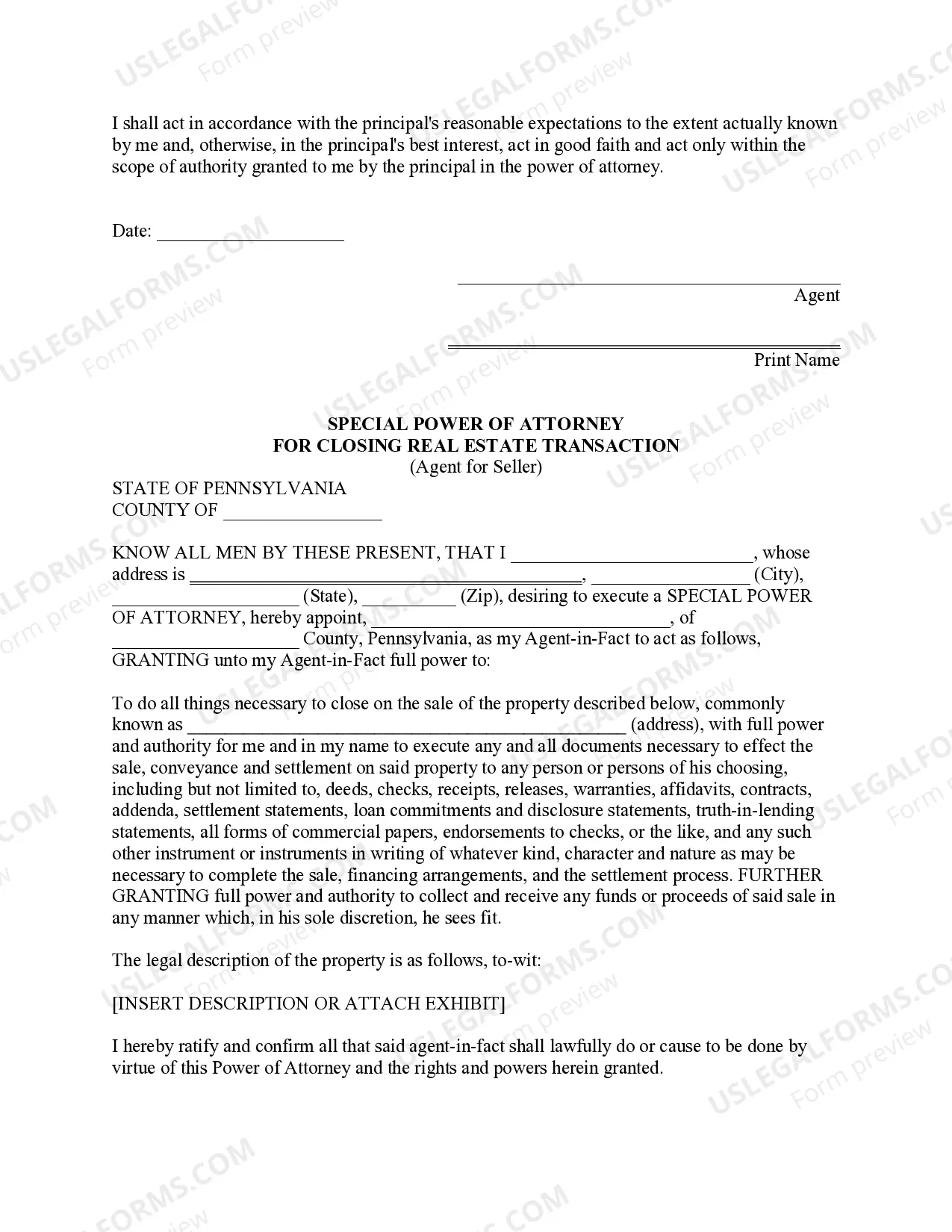
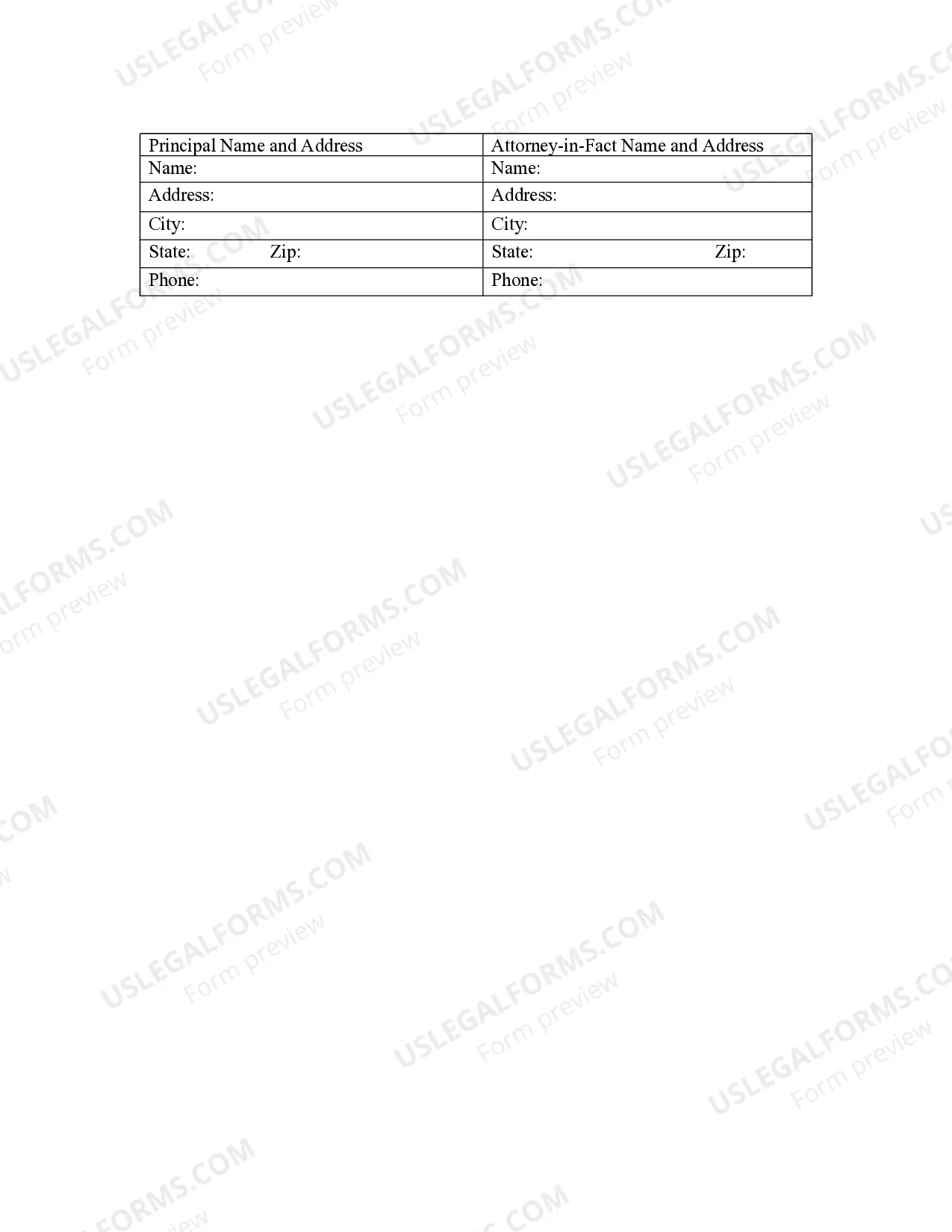
- Principal's details: Name, address, and identification number.
- Agent-in-fact's information: Name and address of the appointed agent.
- Property description: Clear identification of the real estate being sold.
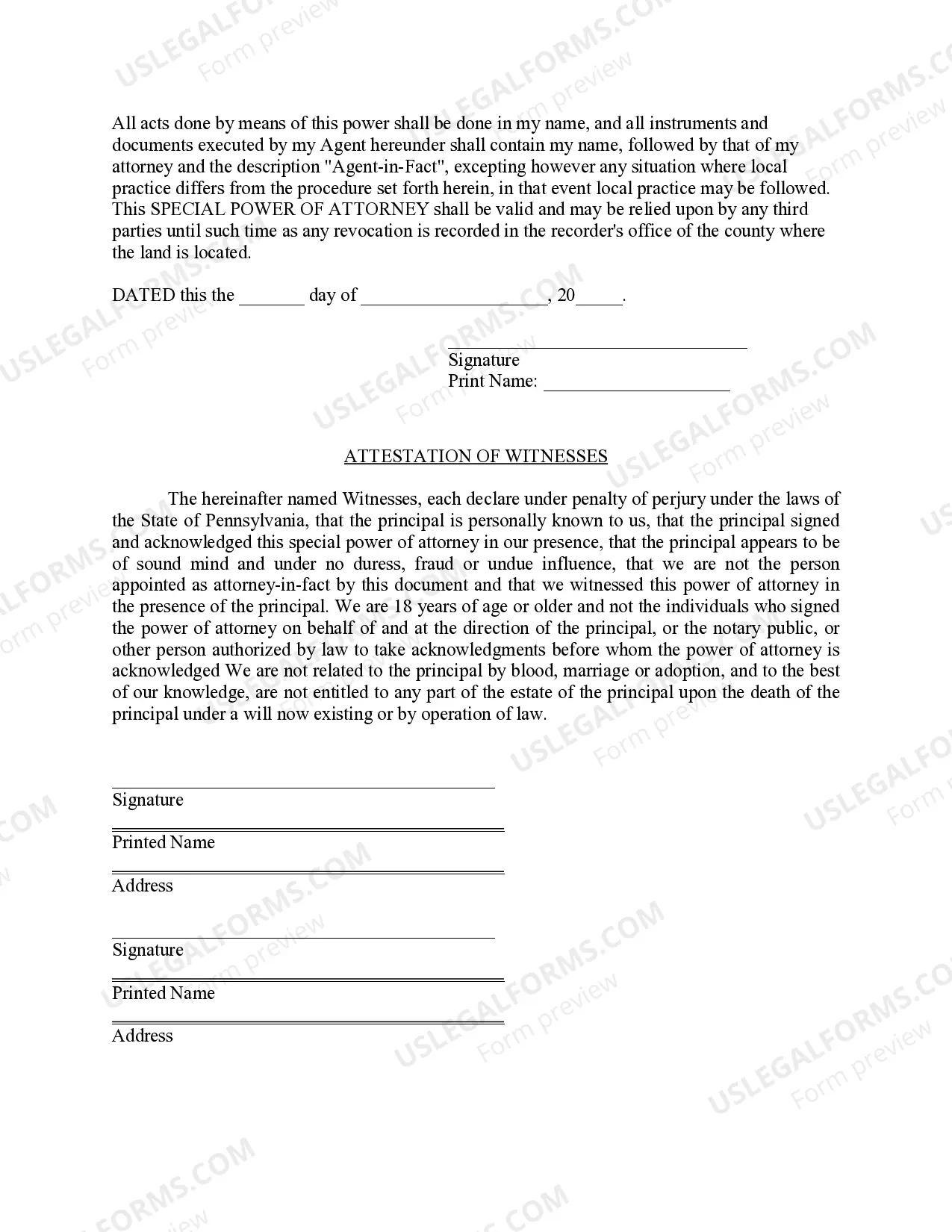
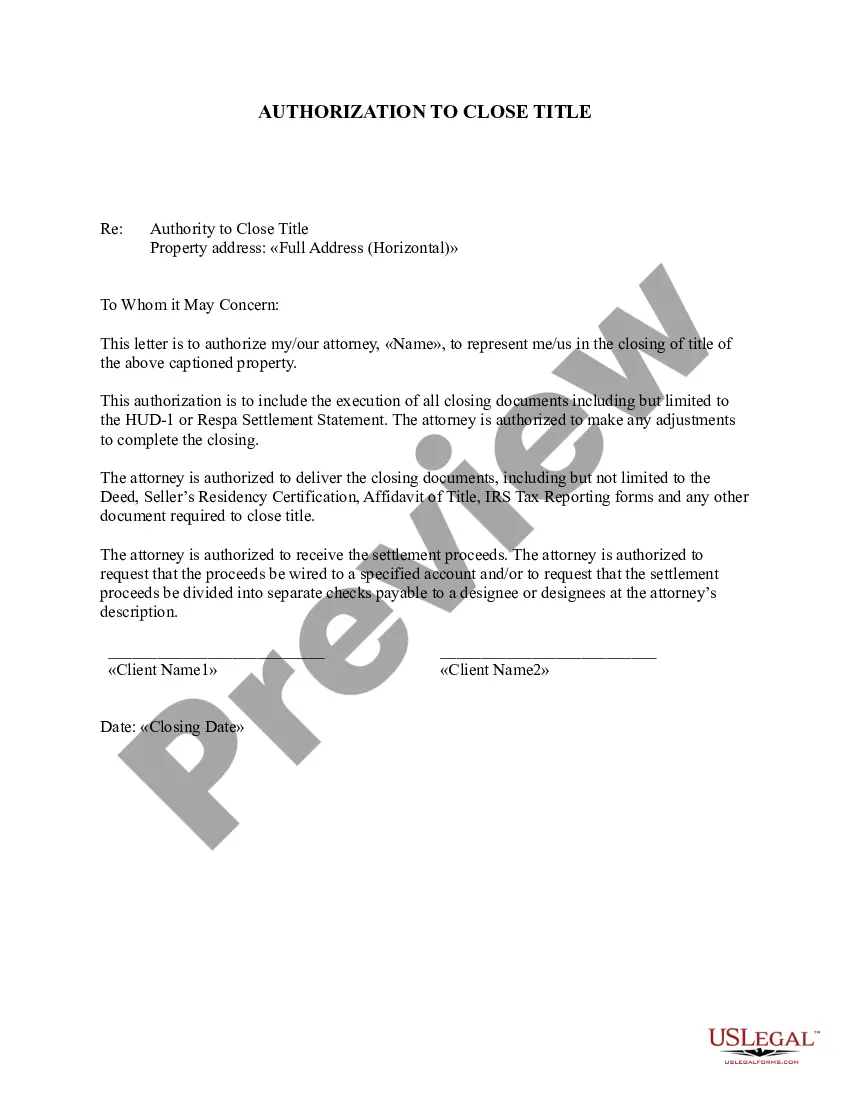
- Powers granted: Specific authority to execute documents related to the sale, including deeds, contracts, and settlement statements.
- Revocation clause: Conditions under which the authority may be terminated.
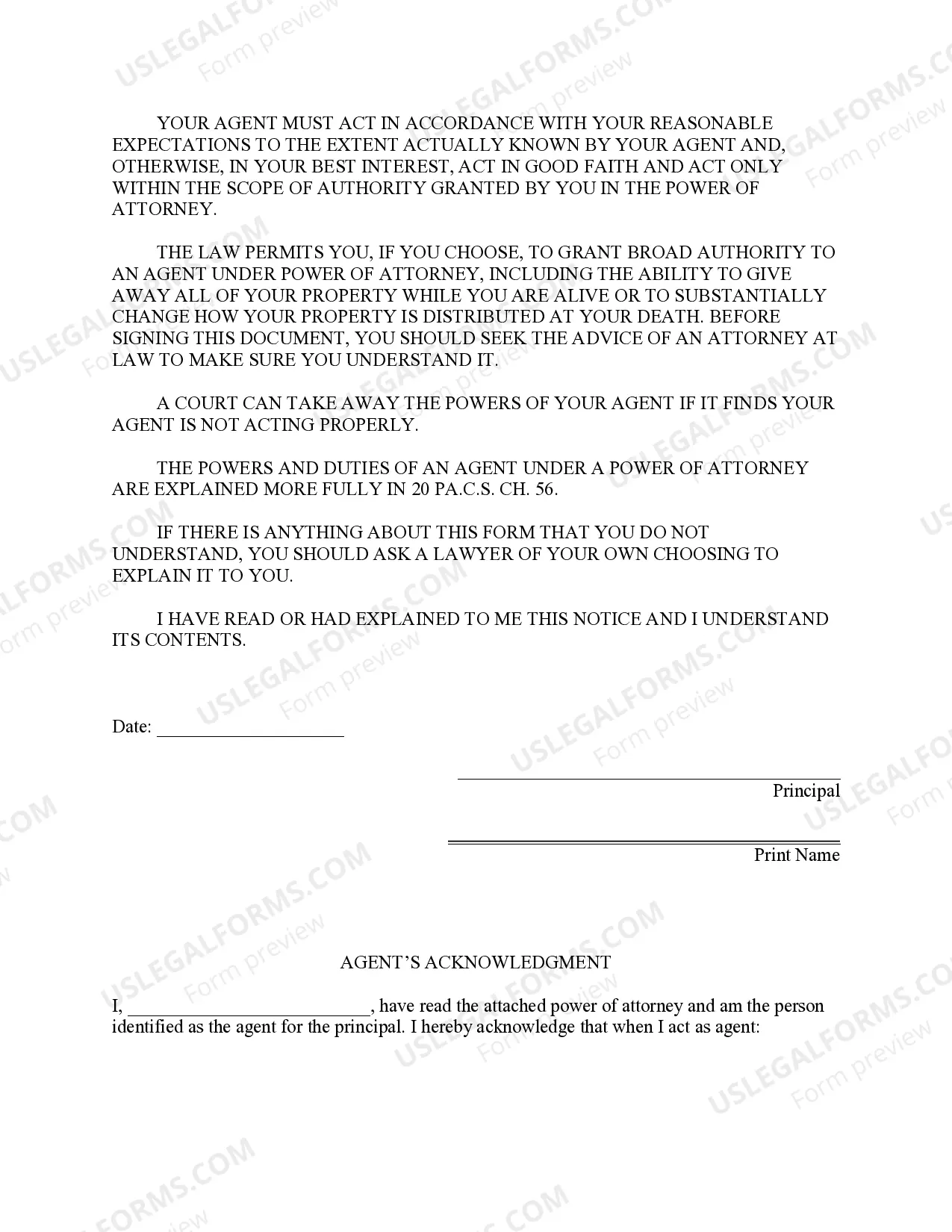
- Signature lines: Spaces for the principal and agent to sign and date the document.
Common use cases
This form should be used when a seller is unable to attend the closing of a real estate transaction and needs to delegate authority to someone else to handle the sale. Common situations include the seller being out of the state during the closing, illness, or other circumstances that prevent their presence. It ensures the transaction proceeds smoothly without delay.
Who this form is for
- Property sellers who cannot attend the closing themselves.
- Individuals who need to designate a trusted agent to manage their real estate transaction.
- Anyone requiring representation in a real estate sale due to logistical challenges.
Completing this form step by step
- Identify the principal: Enter the full name and address of the seller.
- Choose the agent: Provide the name and address of the person authorized to act on your behalf.
- Specify the property: Clearly describe the real estate being sold, including its address.
- Define the powers: Confirm the specific powers you wish to grant to your agent for the transaction.
- Sign and date: Ensure both the principal and the agent sign the document, dating it appropriately.
- Consider notarization: Review if notarization is required to ensure the form's legal enforceability.
Does this document require notarization?
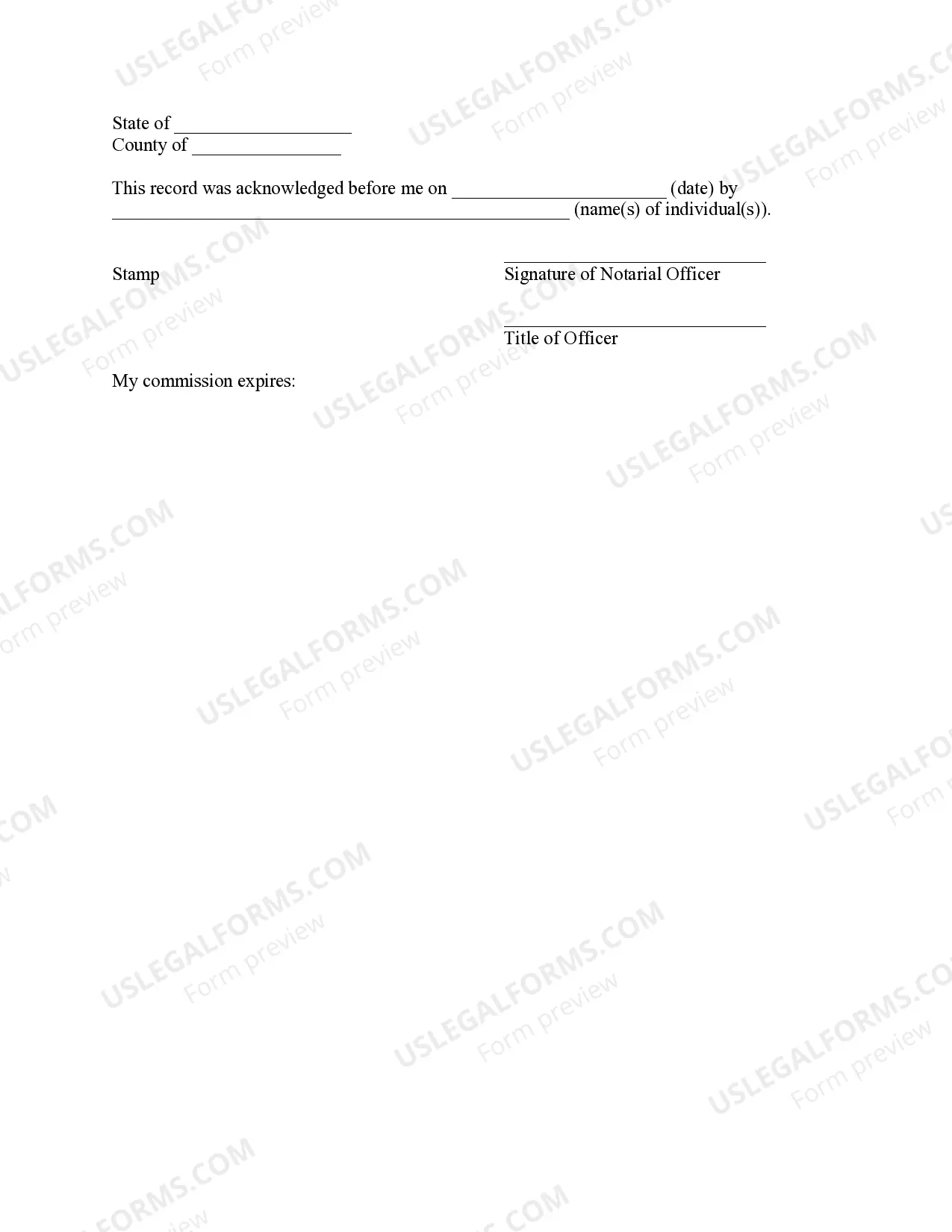
Yes, this form must be notarized to be legally valid. Notarization ensures that the identities of the signers are confirmed and adds an additional layer of authenticity. US Legal Forms offers integrated online notarization services available twenty-four-seven, providing a secure and efficient way to notarize your document without the need for travel.
Get your form ready online
Our built-in tools help you complete, sign, share, and store your documents in one place.
Make edits, fill in missing information, and update formatting in US Legal Forms—just like you would in MS Word.
Download a copy, print it, send it by email, or mail it via USPS—whatever works best for your next step.
Sign and collect signatures with our SignNow integration. Send to multiple recipients, set reminders, and more. Go Premium to unlock E-Sign.
If this form requires notarization, complete it online through a secure video call—no need to meet a notary in person or wait for an appointment.
We protect your documents and personal data by following strict security and privacy standards.

Make edits, fill in missing information, and update formatting in US Legal Forms—just like you would in MS Word.

Download a copy, print it, send it by email, or mail it via USPS—whatever works best for your next step.

Sign and collect signatures with our SignNow integration. Send to multiple recipients, set reminders, and more. Go Premium to unlock E-Sign.

If this form requires notarization, complete it online through a secure video call—no need to meet a notary in person or wait for an appointment.

We protect your documents and personal data by following strict security and privacy standards.
Common mistakes
- Failing to properly identify the property being sold.
- Not specifying the powers granted, leading to confusion.
- Omitting signatures or dates, making the form invalid.
- Neglecting to consult legal advice when unsure about the implications.
Advantages of online completion
- Convenience of completing the form at your own pace from home.
- Accessibility to downloadable templates drafted by licensed attorneys.
- Immediate access to your completed forms for printing or digital submission.
Legal use & context
- This form can be used in Pennsylvania and must comply with the state's legal requirements.
- It grants specific powers to the agent, limiting their authority to the tasks outlined in the document.
- The provisions ensure that the agent must act in the best interests of the seller when executing their duties.
Quick recap
- This form is essential for sellers who need to delegate the sale of their property to an agent.
- Be clear and thorough when filling out the form to avoid legal complications.
- Notarization is required for the document to be valid in the state of Pennsylvania.
Looking for another form?


Form popularity
FAQ
This form lets a seller appoint an agent (the attorney-in-fact) to manage, execute, and finalize a real estate sale on the seller's behalf. It provides authority to handle sale documents, specifically to execute deeds, contracts, and settlement statements, and includes a revocation clause and signature lines for the principal and agent.
The form grants specific authority to execute sale documents and is limited to the real estate transaction. It does not grant broader, non-sale powers beyond those described, so actions outside the sale—such as general financial or personal decisions—aren't authorized by this document.
Yes. This Special or Limited Power of Attorney for Real Estate Sales Transaction By Seller expressly authorizes the agent-in-fact to handle the real estate sale by executing necessary documents related to the sale, including deeds, contracts, and settlement statements. The authority is limited to the sale and empowers the agent to act on the seller's behalf at closing.
Not specified in the form. The signature lines indicate who signs, but the document does not designate who must notarize it. Notarization is a separate requirement under Pennsylvania practice; consult a licensed attorney or a qualified notary to ensure proper execution.
This form designates a single agent-in-fact appointed by the seller to handle the sale, not a real estate agent representing both sides. It covers the seller's authorization to execute sale-related documents through the appointed agent, while dual representation by a single realtor is not addressed by this form.
This form is described as Special or Limited and restricts authority to real estate sale activities. The agent's powers are specifically to execute documents related to the sale (including deeds, contracts, and settlement statements) and to manage closing matters, whereas a general POA would authorize broader, non-sale matters.