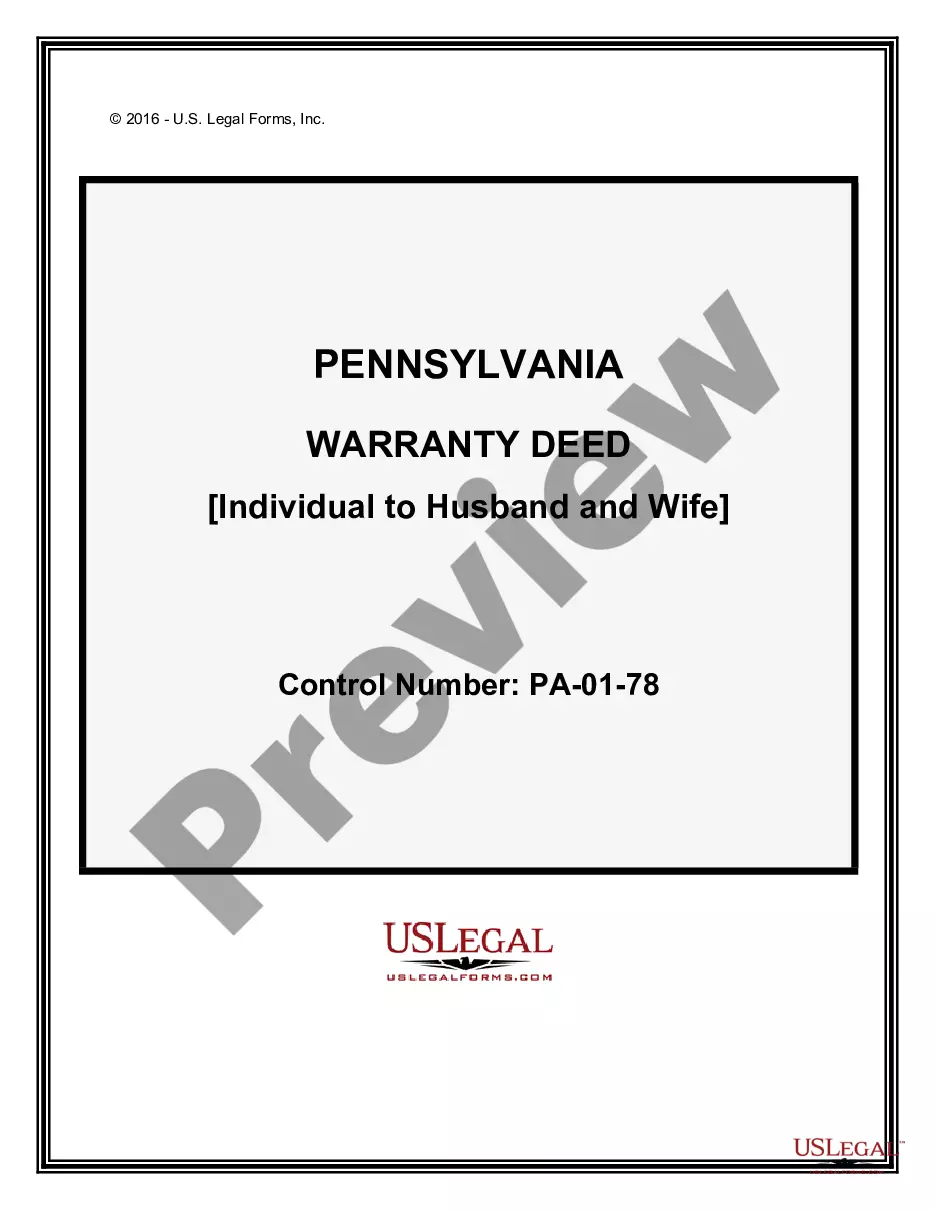
Pennsylvania Warranty Deed from Individual to Husband and Wife
About this form
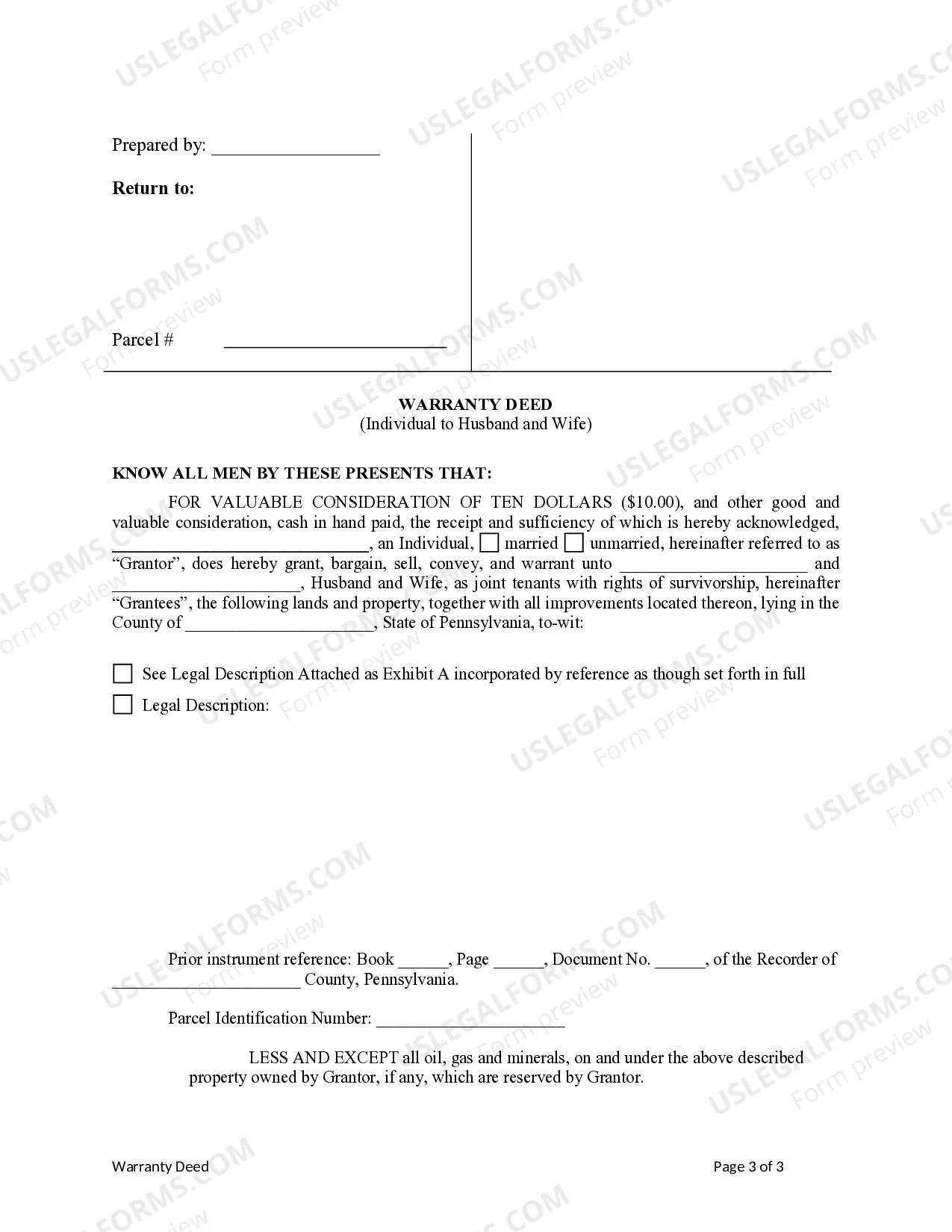
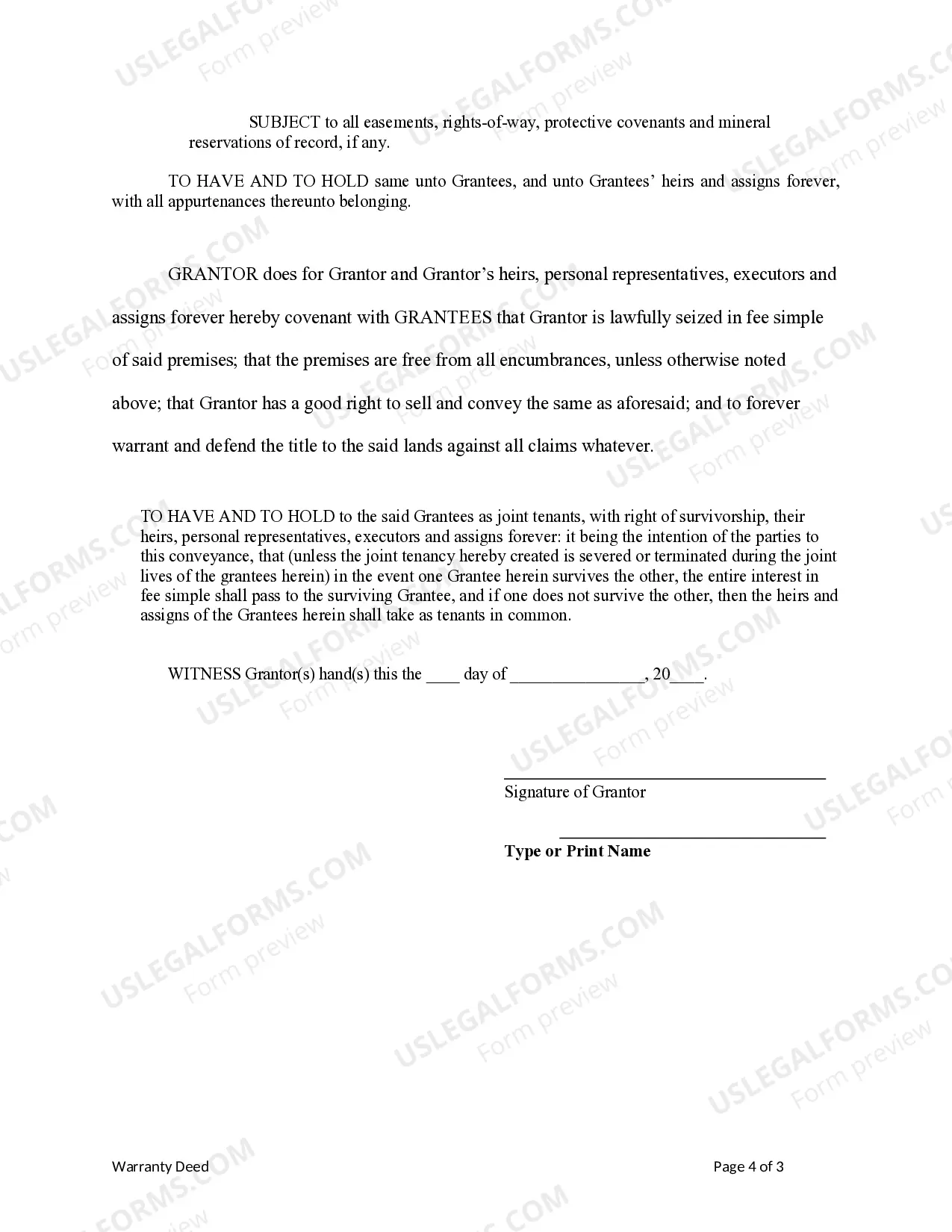
The Warranty Deed from Individual to Husband and Wife is a legal document used to transfer property ownership from an individual (the Grantor) to a married couple (the Grantees). This deed not only conveys the property but also warrants that the title is free of encumbrances, unless otherwise noted. Unlike other forms of deeds, this warranty deed specifically includes a provision for the couple to hold the property as joint tenants with rights of survivorship, ensuring that if one spouse passes away, the other automatically inherits the entire interest in the property.
Key parts of this document
- Identification of the Grantor (individual) and Grantees (husband and wife).
- Description of the property being conveyed, including improvements and legal descriptions.
- Warranty clause that confirms the Grantor's legal ownership and absence of encumbrances.
- Provision for joint tenancy with rights of survivorship.
- Reservation of oil, gas, and minerals by the Grantor, if applicable.






When this form is needed
This form should be used when an individual wishes to transfer property ownership to a married couple. Common scenarios include when one spouse wants to gift property to the other or when both spouses want to ensure that one owns the property outright upon the other's death. The deed provides clarity and legal protection for both parties involved in the transaction.
Who this form is for
This form is intended for:
- Individuals looking to legally transfer property ownership to a couple.
- Married couples who wish to hold property jointly with survivorship rights.
- Individuals wanting to ensure clear title transfer and property rights for their spouse.
Completing this form step by step
- Identify the parties by entering the Grantor's name and the names of the Grantees (husband and wife).
- Specify the property by including a legal description of the land being transferred.
- Check the warranty clause and ensure all reservation clauses (such as oil and minerals) are noted.
- Complete the signatures; ensure the Grantor signs and dates the document.
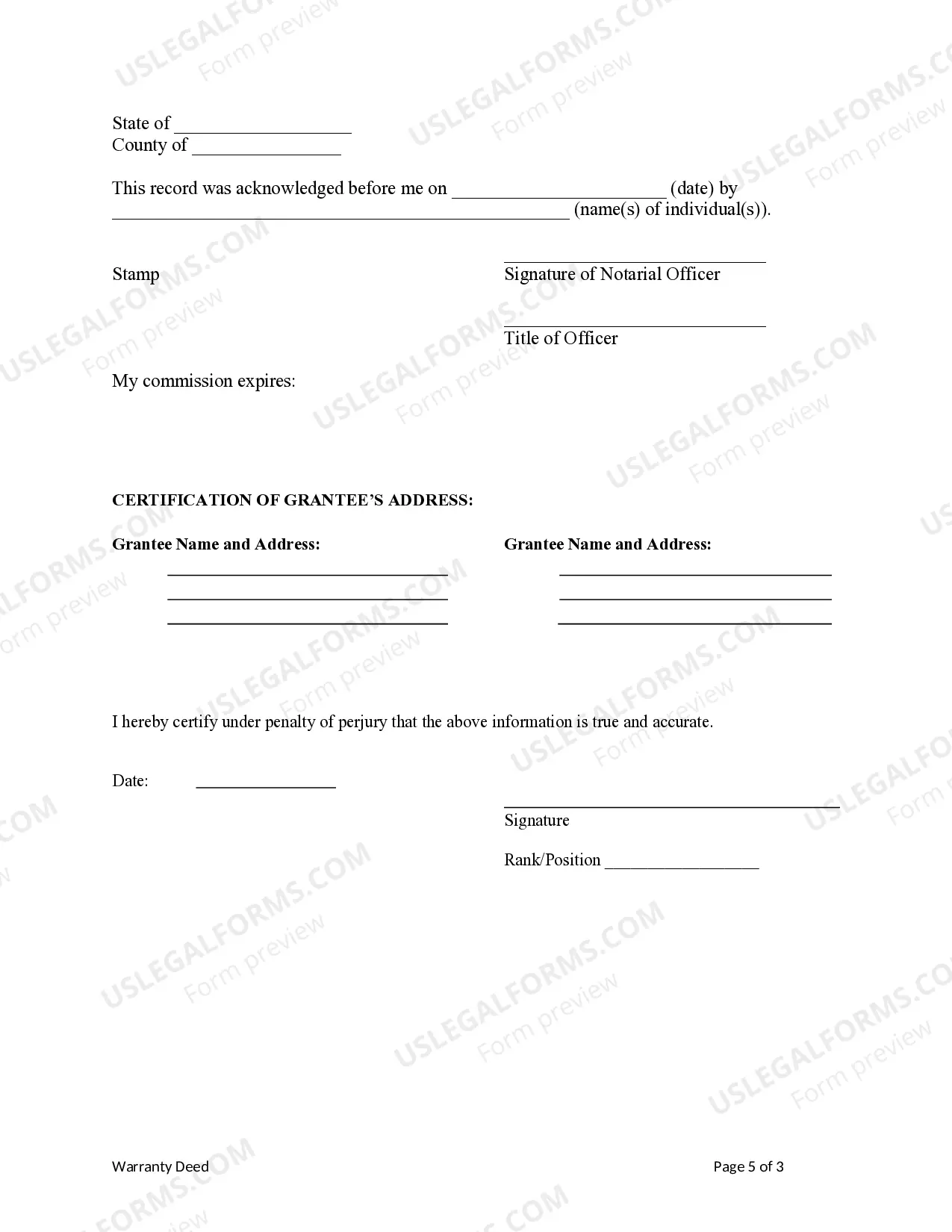
- Consider notarizing the document if needed for local legal requirements before filing it with the appropriate county office.
Is notarization required?
This form needs to be notarized to ensure legal validity. US Legal Forms provides secure online notarization powered by Notarize, allowing you to complete the process through a verified video call, available anytime.
Get your form ready online
Our built-in tools help you complete, sign, share, and store your documents in one place.
Make edits, fill in missing information, and update formatting in US Legal Forms—just like you would in MS Word.
Download a copy, print it, send it by email, or mail it via USPS—whatever works best for your next step.
Sign and collect signatures with our SignNow integration. Send to multiple recipients, set reminders, and more. Go Premium to unlock E-Sign.
If this form requires notarization, complete it online through a secure video call—no need to meet a notary in person or wait for an appointment.
We protect your documents and personal data by following strict security and privacy standards.

Make edits, fill in missing information, and update formatting in US Legal Forms—just like you would in MS Word.

Download a copy, print it, send it by email, or mail it via USPS—whatever works best for your next step.

Sign and collect signatures with our SignNow integration. Send to multiple recipients, set reminders, and more. Go Premium to unlock E-Sign.

If this form requires notarization, complete it online through a secure video call—no need to meet a notary in person or wait for an appointment.

We protect your documents and personal data by following strict security and privacy standards.
Typical mistakes to avoid
- Failing to provide a complete legal description of the property.
- Not including the signature of the Grantor or failing to date the deed.
- Overlooking the reservation of rights clause, which could affect the transfer.
- Using outdated or incorrect information relating to joint tenancy or survivorship rights.
Why use this form online
- Convenient access to legal document templates without needing to visit an attorney.
- Edit and customize the form easily using online tools.
- Guaranteed compliance with state laws for property transfers.
- Immediate download and printing options for time-saving convenience.
Looking for another form?


Form popularity
FAQ
When it comes to reasons why you shouldn't add your new spouse to the Deed, the answer is simple divorce and equitable distribution. If you choose not to put your spouse on the Deed and the two of you divorce, the entire value of the home is not subject to equitable distribution.
To transfer property in Pennsylvania, you'll need to prepare and execute a deed and record it in the county where the property is located. If the transfer was in exchange for money, you'll have to pay transfer tax.
Yes you can. This is called a transfer of equity but you will need the permission of your lender. If you are not married or in a civil partnership you may wish to consider creating a deed of trust and a living together agreement which we can explain to you.
A warranty deed guarantees that: The grantor is the rightful owner of the property and has the legal right to transfer the title.The title would withstand third-party claims to ownership of the property. The grantor will do anything to ensure the grantee's title to the property.
To add a name to a house deed in Pennsylvania, a new deed is prepared. The owner can prepare his own deed or contact an attorney or document service to provide one. Using an attorney is the best route because the attorney ensures that the deed is prepared per the requirements of the state.
Signing over the interest in the property, whether land or house, can be done in several ways. However, the most common instruments of transfer of property between family members are the quitclaim deed, the gift deed or the transfer on death (TOD) deed.
The State of Pennsylvania charges 1% of the sales price and the municipality and school district USUALLY charge 1% between them for a total of 2% (i.e. 2% X 100,000 = $2,000). By custom, the buyer and seller split the cost. 1% to buyer, 1% to seller; however payment is dictated by the sales contract.
A: A "special warranty" deed is the type of deed used most frequently in Pennsylvania real estate sales. It essentially represents that the seller did nothing to weaken the status of title from the time that he/she received it.A "quit-claim" deed is a deed that contains no warranties at all.
To add a name to a house deed in Pennsylvania, a new deed is prepared. The owner can prepare his own deed or contact an attorney or document service to provide one. Using an attorney is the best route because the attorney ensures that the deed is prepared per the requirements of the state.
If you live in a common-law state, you can keep your spouse's name off the title the document that says who owns the property.You can put your spouse on the title without putting them on the mortgage; this would mean that they share ownership of the home but aren't legally responsible for making mortgage payments.