Oregon Lease Subordination Agreement
Overview of this form
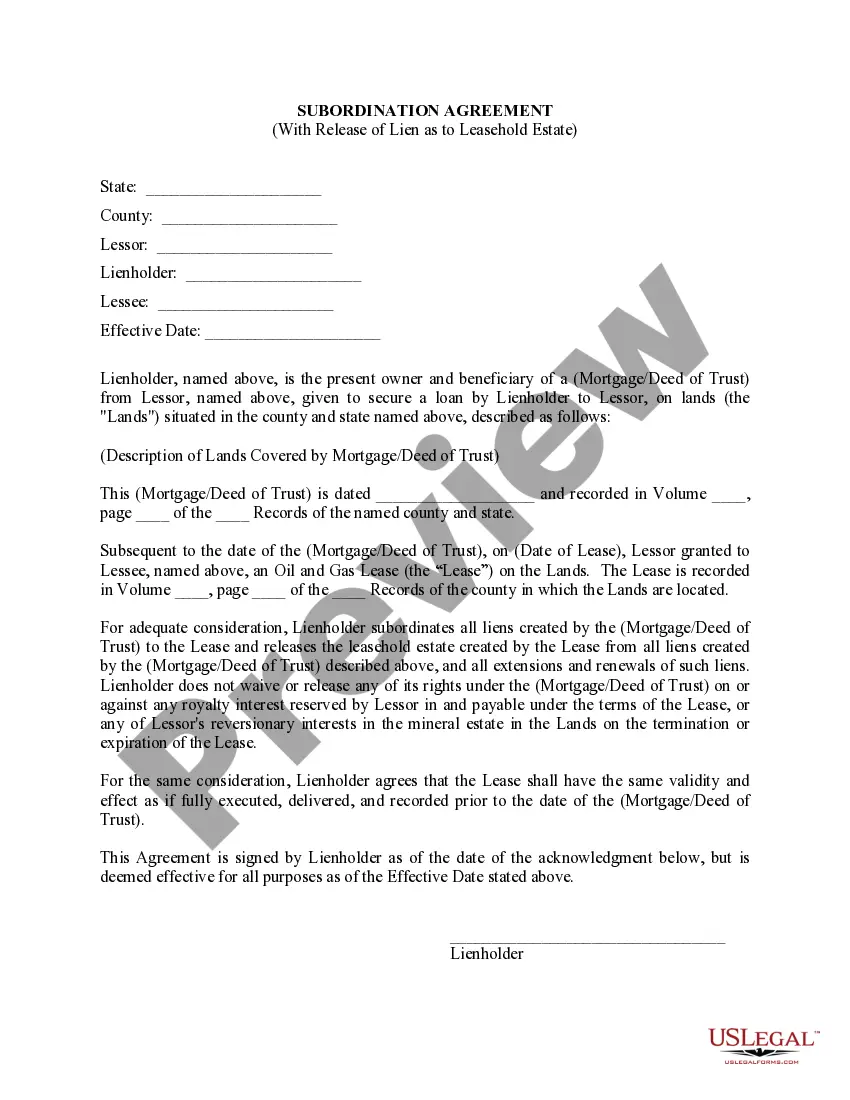
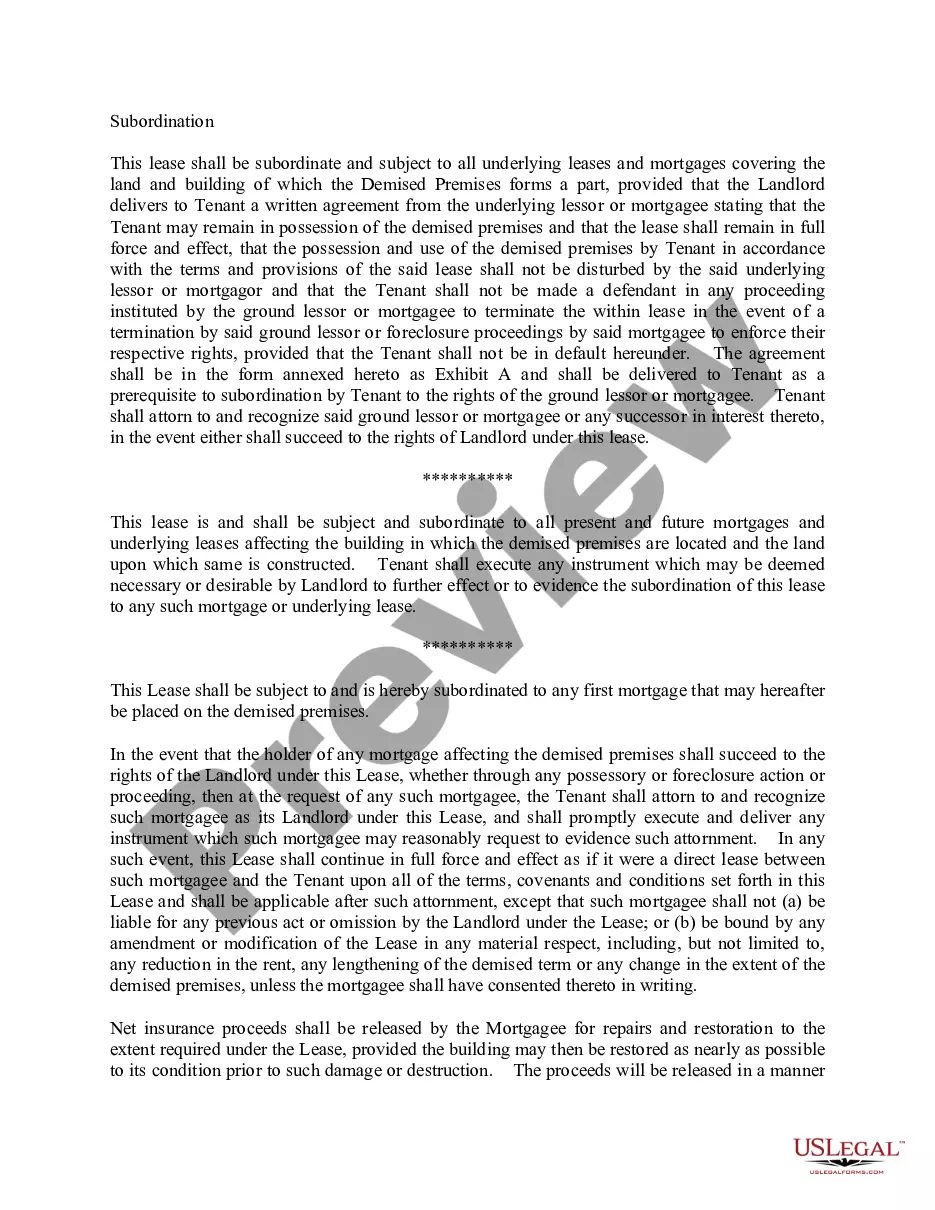
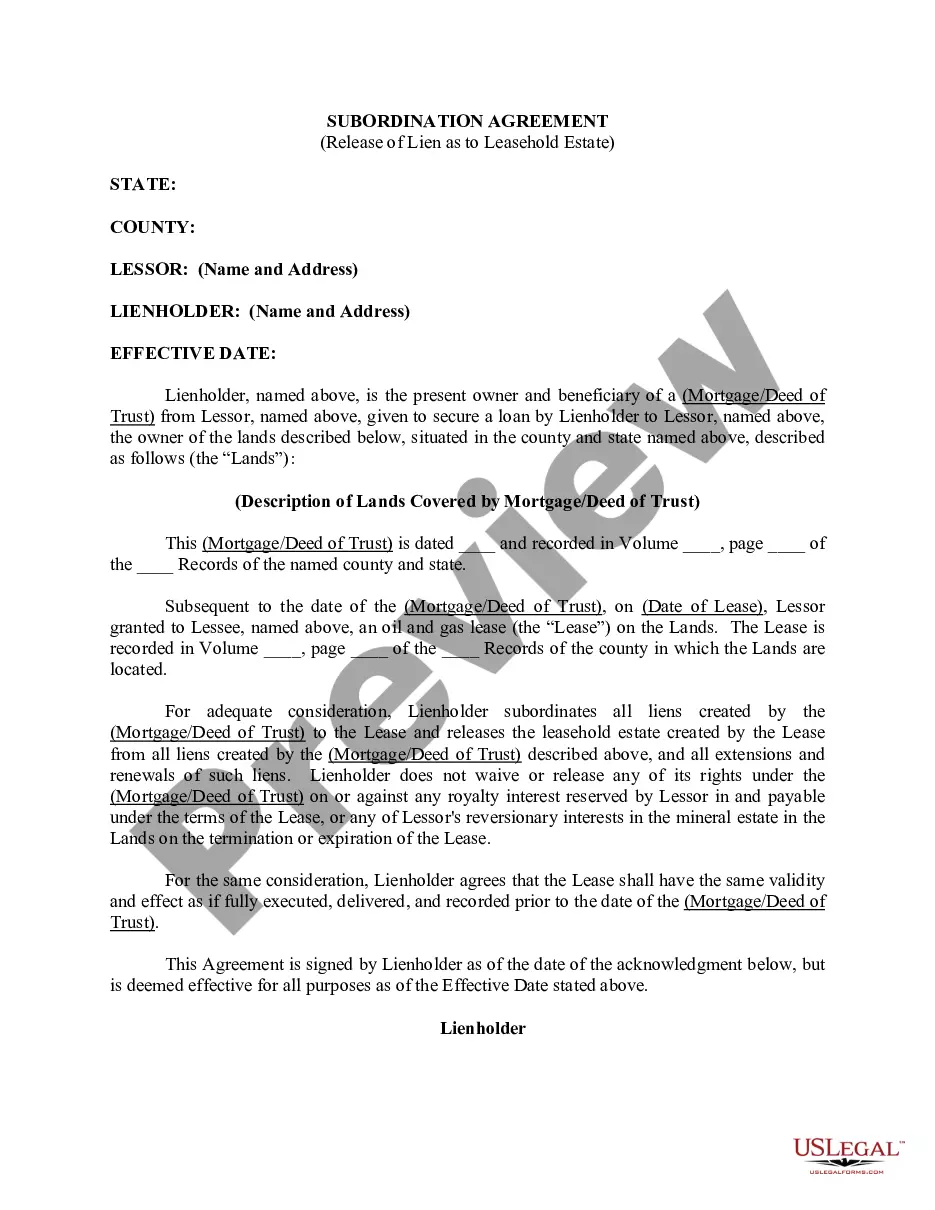
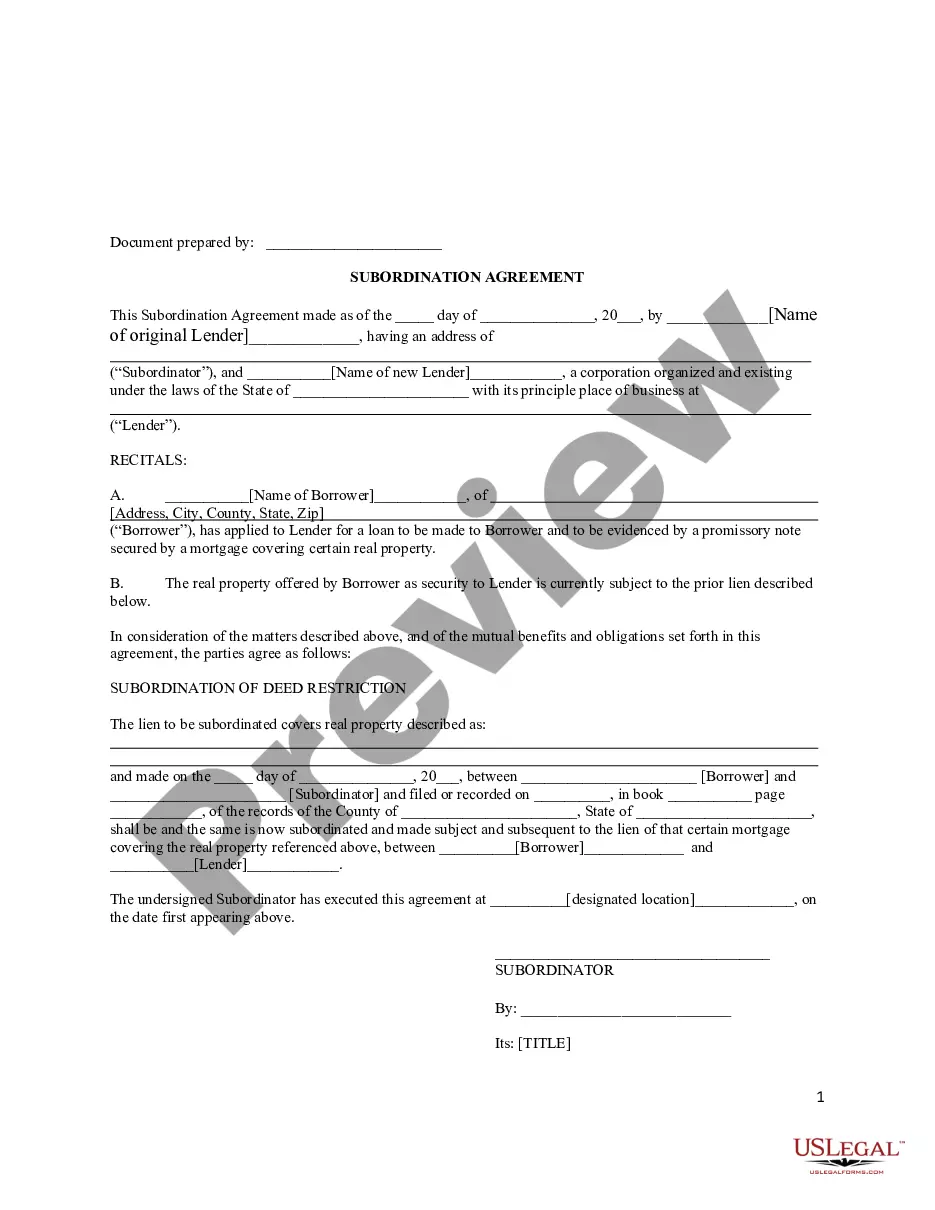
A Lease Subordination Agreement is a legal document that establishes the priority of a lease over existing liens on a property, such as a mortgage or deed of trust. This agreement ensures that the lease remains valid and continues to be effective even if there are other outstanding debts secured by the property. By subordinating the lienholder's claim, this form protects the lessee's rights under an oil, gas, or mineral lease, setting it apart from other types of contracts that do not involve lease agreements.
What’s included in this form
- Identification of the parties involved: Lessor, Lienholder, and Lessee.
- Description of the property covered by the lease and mortgage.
- Effective date of the subordination agreement.
- Details regarding the original mortgage or deed of trust.
- Provisions for the release of liens against the leasehold estate.
- Conditions for the validity and effect of the lease relative to the subordinate mortgage.
Situations where this form applies
This form is needed when a property owner wants to establish that a lease for oil, gas, or minerals takes priority over a current mortgage or deed of trust. It is particularly useful in situations where the lessor seeks to enter into new agreements without jeopardizing the rights of existing lienholders. Common scenarios include refinancing situations, changes in lease agreements, or when a lessee applies for new loans utilizing the property as collateral.
Intended users of this form
- Property owners (Lessors) seeking to lease land for mineral extraction.
- Lessee parties engaged in oil and gas leasing who require secure rights under the lease.
- Lienholders wanting to maintain clarity regarding their claim against leasehold estates.
Steps to complete this form
- Identify the parties: Clearly state the names and titles of the Lessor, Lienholder, and Lessee.
- Specify the property: Provide a detailed description of the lands affected by the agreements.
- Enter effective date: Insert the date when this subordination agreement takes effect.
- Detail the original mortgage or deed of trust: Include the date and recording information for the original mortgage.
- Signatures: Ensure that all parties sign the document to validate the agreement.
Notarization guidance
This form does not typically require notarization unless specified by local law. However, it is important to check specific state regulations to ensure compliance with any notarization requirements that may apply.
Get your form ready online
Our built-in tools help you complete, sign, share, and store your documents in one place.
Make edits, fill in missing information, and update formatting in US Legal Forms—just like you would in MS Word.
Download a copy, print it, send it by email, or mail it via USPS—whatever works best for your next step.
Sign and collect signatures with our SignNow integration. Send to multiple recipients, set reminders, and more. Go Premium to unlock E-Sign.
If this form requires notarization, complete it online through a secure video call—no need to meet a notary in person or wait for an appointment.
We protect your documents and personal data by following strict security and privacy standards.

Make edits, fill in missing information, and update formatting in US Legal Forms—just like you would in MS Word.

Download a copy, print it, send it by email, or mail it via USPS—whatever works best for your next step.

Sign and collect signatures with our SignNow integration. Send to multiple recipients, set reminders, and more. Go Premium to unlock E-Sign.

If this form requires notarization, complete it online through a secure video call—no need to meet a notary in person or wait for an appointment.

We protect your documents and personal data by following strict security and privacy standards.
Mistakes to watch out for
- Failing to accurately describe the property involved.
- Not obtaining the necessary signatures from all parties.
- Omitting the effective date, which may cause confusion about the agreement's applicability.
- Using incorrect or outdated legal terminology that does not comply with state laws.
Why use this form online
- Access to legal forms drafted by licensed attorneys ensures reliability.
- Convenient download and edit options allow for quick adjustments to suit specific needs.
- Time-saving, as it eliminates the need to consult a lawyer for basic document drafting.
Legal use & context
- This form ensures that all parties understand the hierarchy of claims on the property.
- Subordination is a common practice in real estate financing and leasing, allowing property owners to maximize their land's use.
- It may be necessary for lenders to accept lower priority in order to allow lessees to proceed with their leases.
Summary of main points
- The Lease Subordination Agreement clarifies the relationship between existing liens and mineral leases.
- This document is essential for property owners looking to lease land while managing prior debts.
- Proper completion and signing of the form ensures legal protection and clarity among all parties.
Looking for another form?
Form popularity
FAQ
And many lenders charge a fee to review the subordination package, a fee that might run as high as $100. Your lender will probably pass this fee to you.
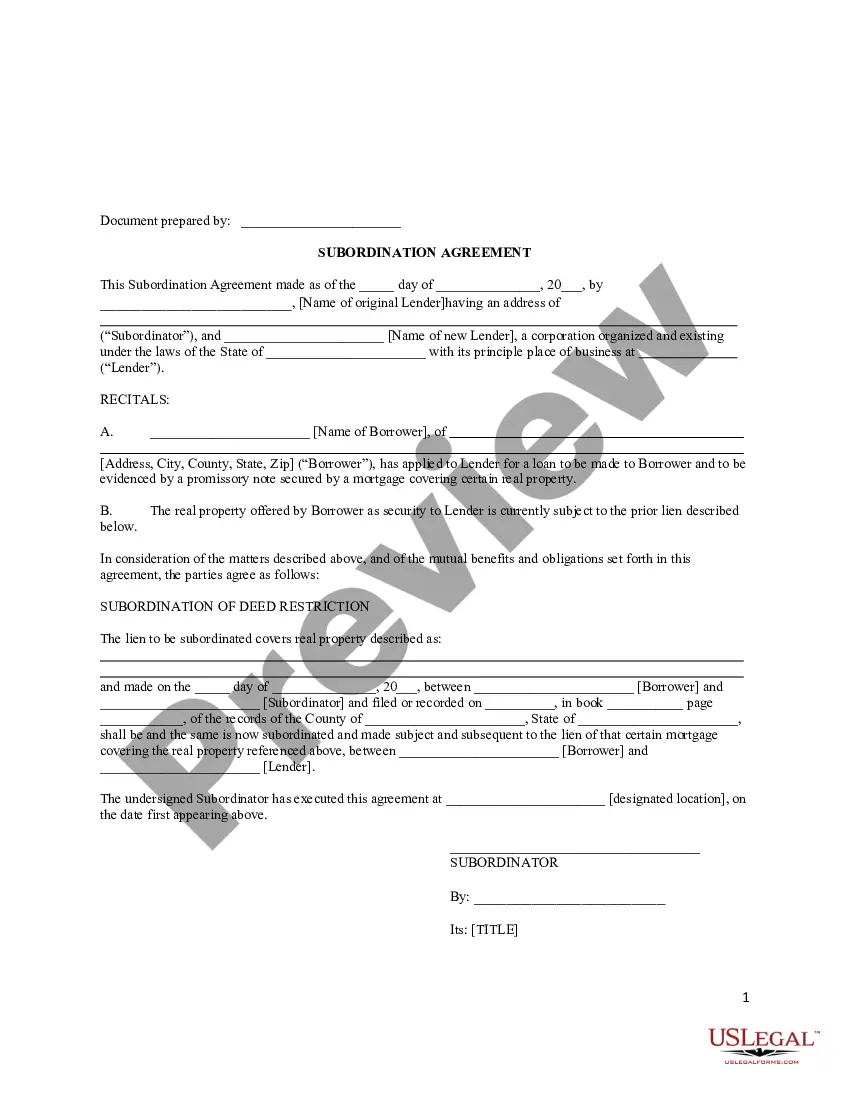
Despite its technical-sounding name, the subordination agreement has one simple purpose. It assigns your new mortgage to first lien position, making it possible to refinance with a home equity loan or line of credit. Signing your agreement is a positive step forward in your refinancing journey.
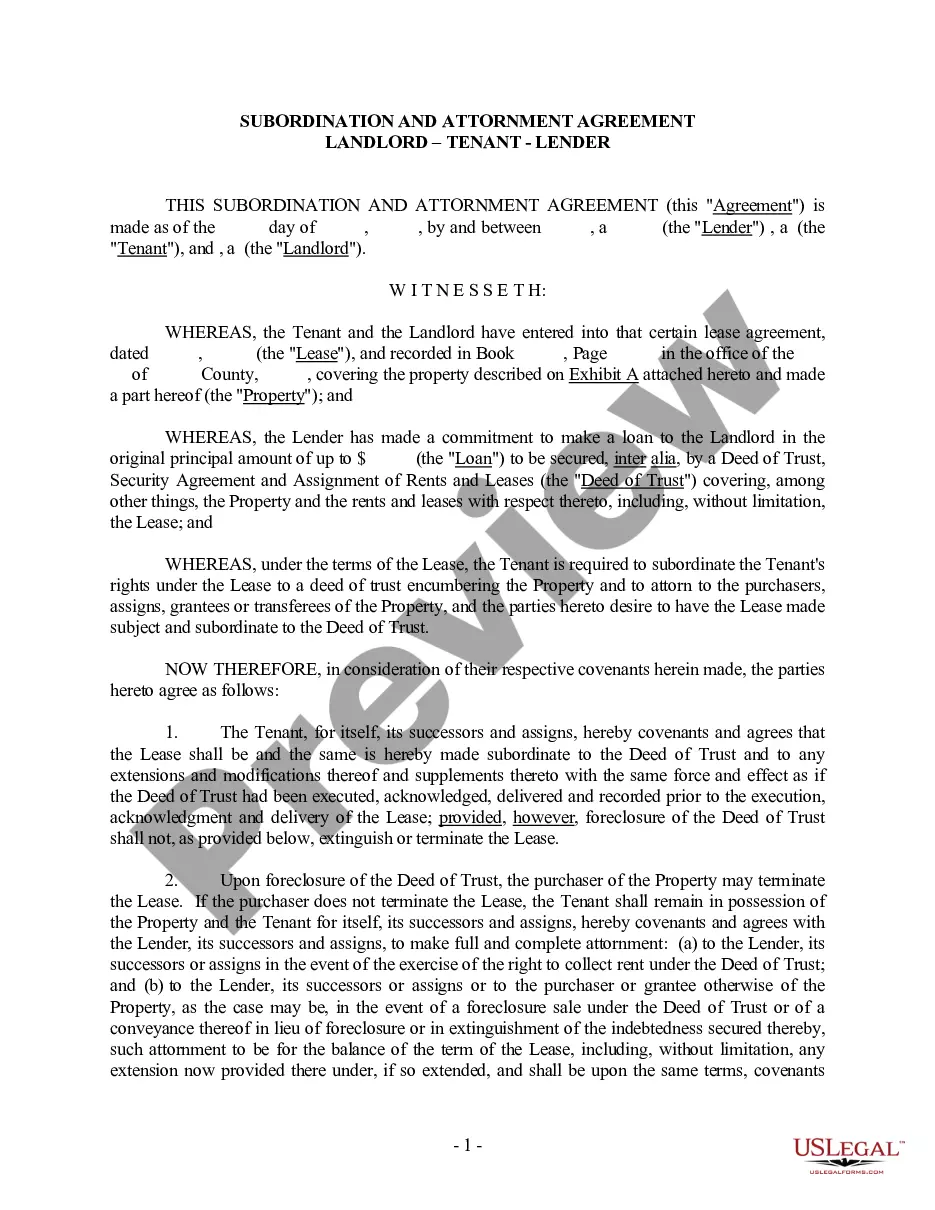
An SNDA is an agreement entered into between a tenant and the lender of the landlord (and, ideally, the landlord) to establish the relationship between the tenant and lender (who would not otherwise have a direct relationship) and provide relative priorities between them.
But as property values are going up and the demand for refinance isn't as much, it seems that the subordination process has gotten a little easier. Typically, it takes two to three weeks to get the resubordination paperwork through, and it is likely to set you back $200 to $300.
Subordination is the tenant's agreement that its interest under the lease will be subordinate to that of the lender.Attornment is the tenant's agreement to become the tenant of someone other than the original landlord and who has now taken title to the property.
A subordination agreement prioritizes collateralized debts, ranking one behind another for purposes of collecting repayment from a debtor in the event of foreclosure or bankruptcy. A second-in-line creditor collects only when and if the priority creditor has been fully paid.
Estoppels and SNDAs are usually initiated by the lender; however, well written documents serve the interest of the tenant just as well. An estoppel certificate is a certification from a landlord and a tenant that outlines the terms and conditions of the lease.
A lender typically wants to have an SNDA because of its subordination clause if, in the absence of such an agreement, the lease would be prior to the mortgage.Therefore, if a mortgage is senior to a lease, the foreclosure of the mortgage will terminate the lease unless there is an agreement that provides otherwise.
Subordination clauses in mortgages refer to the portion of your agreement with the mortgage company that says their lien takes precedence over any other liens you may have on your property.The primary lien on a house is usually a mortgage. However, it's also possible to have other liens.