Ohio Last Will and Testament with All Property to Trust called a Pour Over Will
What this document covers
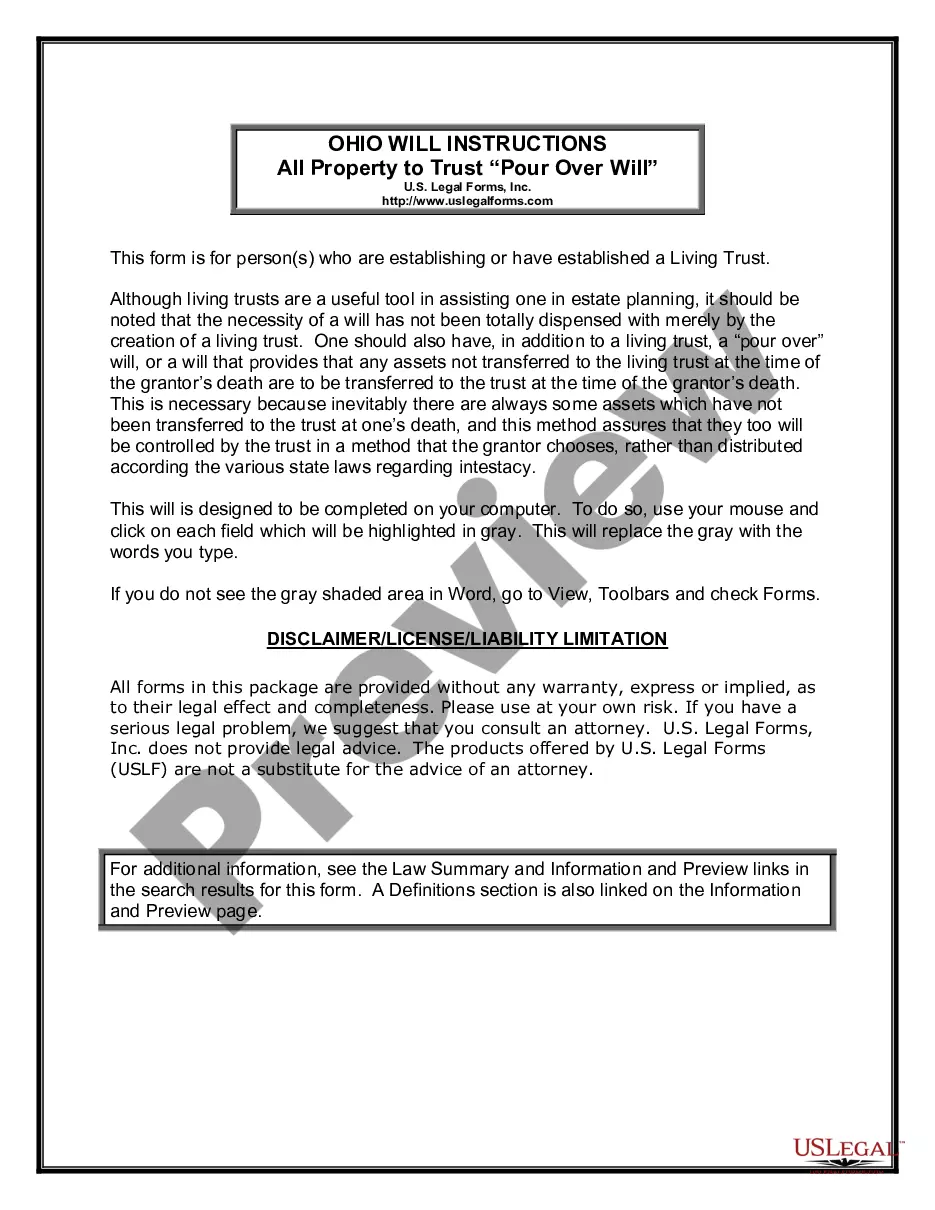
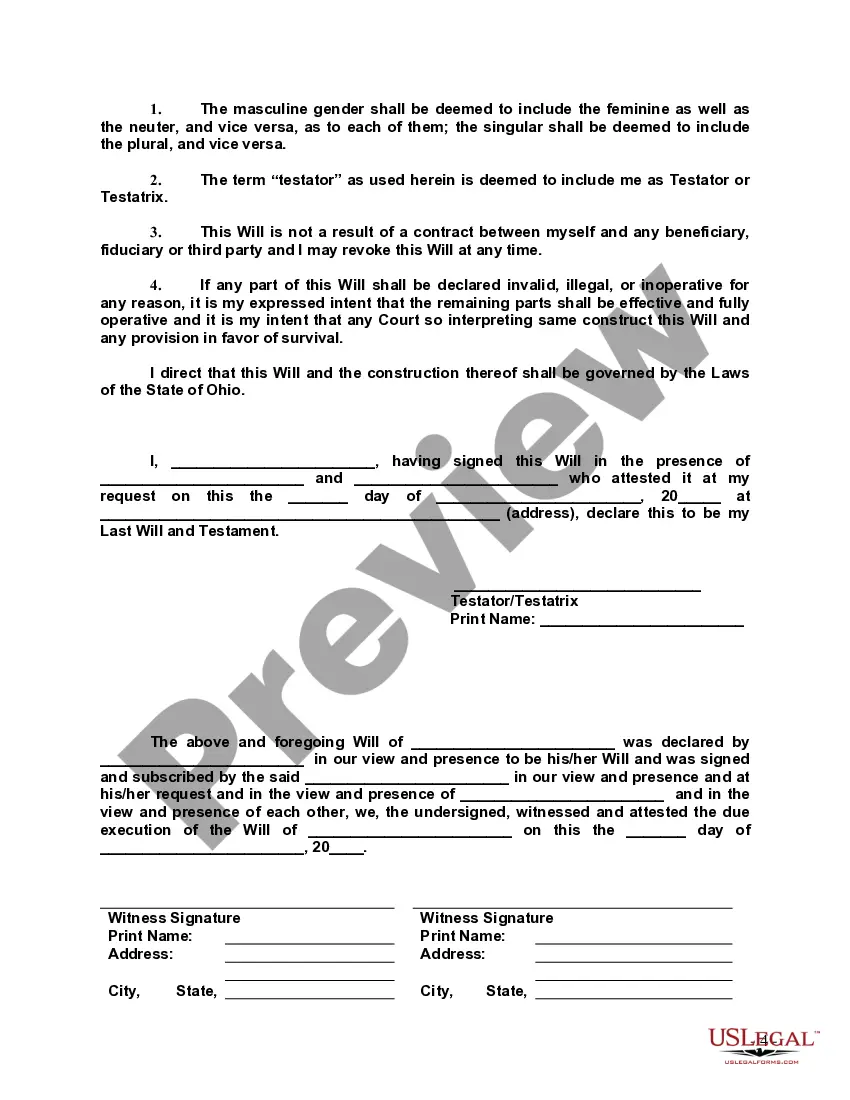
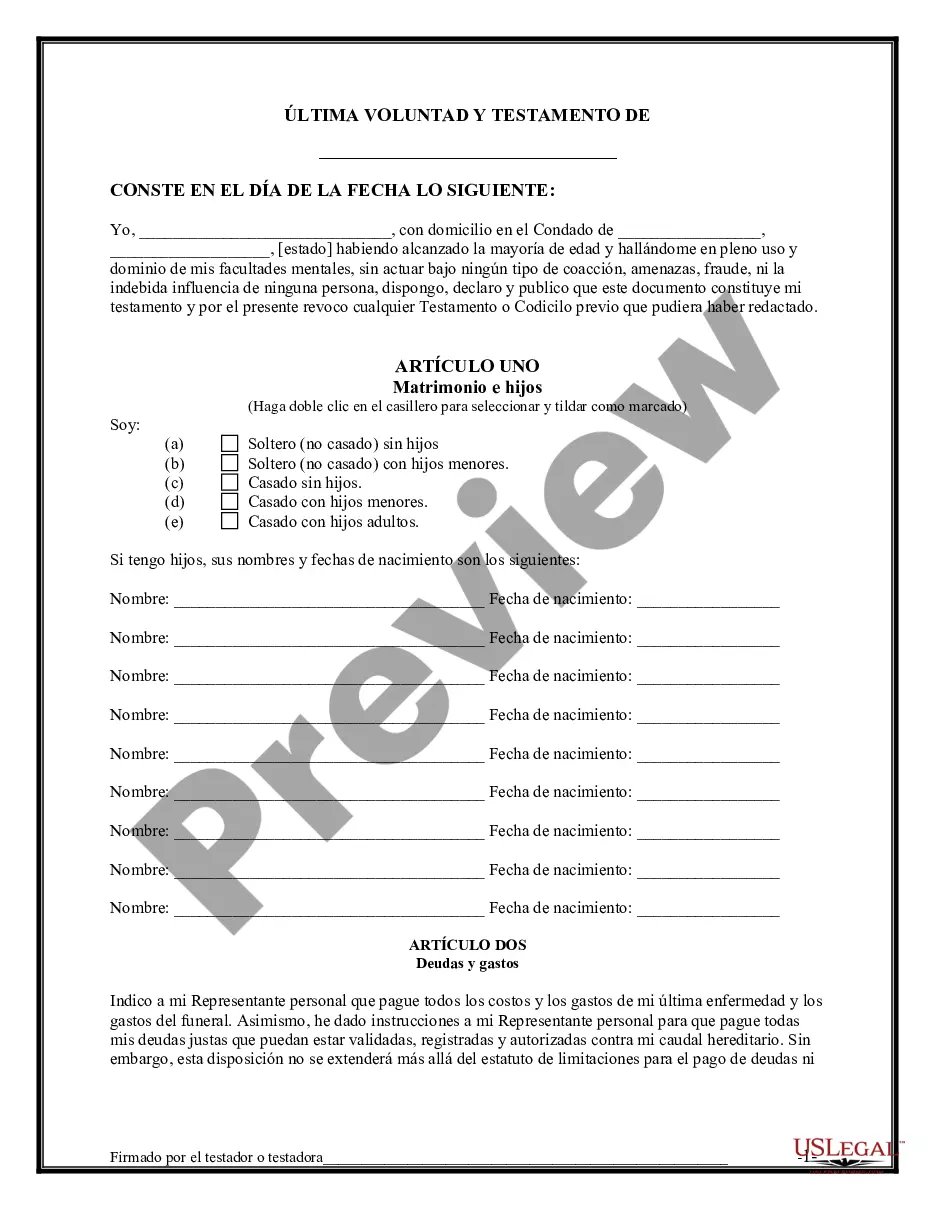
The Last Will and Testament with All Property to Trust, commonly known as a Pour Over Will, is a legal document that ensures any assets not already placed in your living trust are transferred to that trust upon your death. This will facilitates estate planning by directing that all leftover property be "poured over" into your living trust, allowing your wishes regarding asset distribution to be honored while avoiding state laws of intestacy. Unlike a standard will, this form specifically integrates with your trust, ensuring comprehensive estate management.
Main sections of this form
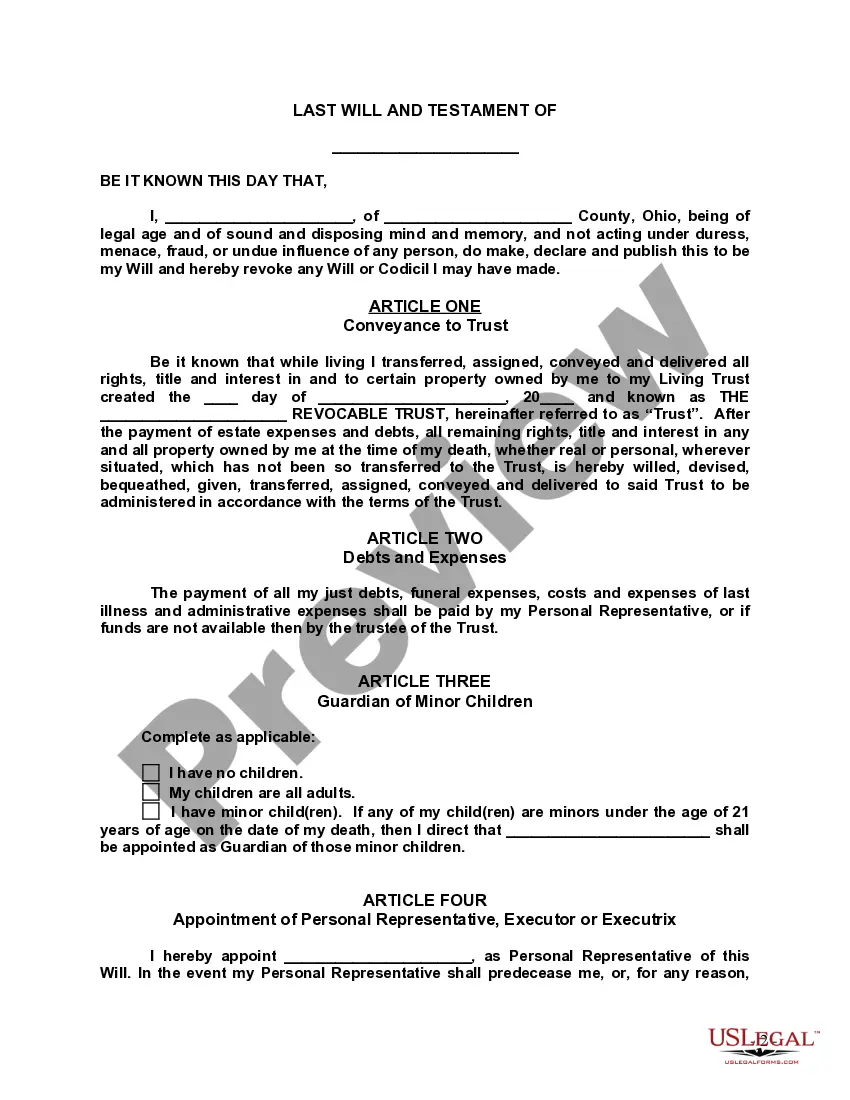
- Article One: Specifies the transfer of assets to the living trust.
- Article Two: Details the payment of debts and expenses from the estate.
- Article Three: Allows for the appointment of a guardian for minor children.
- Article Four: Names a Personal Representative to execute the will.
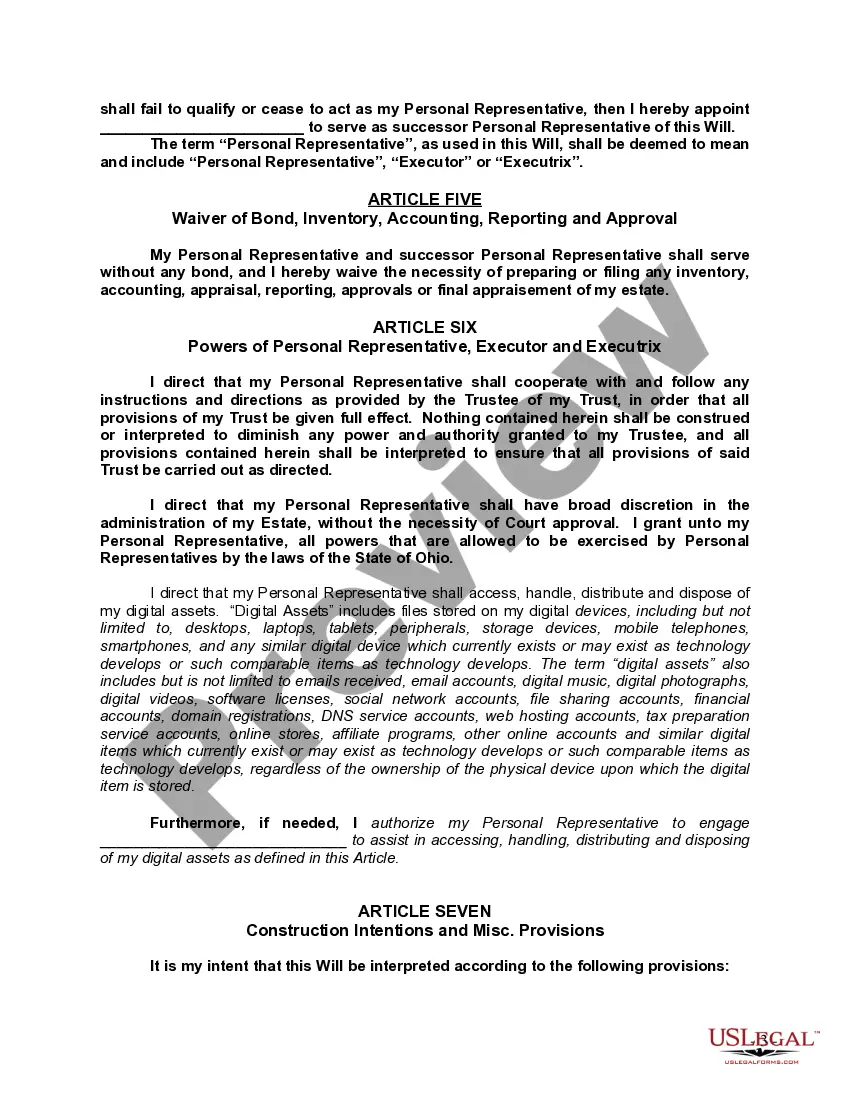
- Article Five: Waives the necessity of a bond for the Personal Representative.
- Article Six: Grants powers to the Personal Representative to follow trust instructions.




When to use this document
This form is essential for individuals who have created or plan to create a living trust. It is particularly useful if you want to ensure that any property not transferred to the trust during your lifetime is still managed according to your wishes. Common scenarios include estate planning for parents with minor children or individuals with diverse assets that may not have been initially included in their trust.
Intended users of this form
- Individuals establishing a living trust.
- Those wanting to ensure all their assets are distributed as intended.
- Parents with minor children needing guardianship provisions.
- People looking to avoid the complications of state intestacy laws.
Steps to complete this form
- Identify and enter your name and the county you reside in.
- Specify the details of your Living Trust established previously.
- List any minor children and designate a guardian if applicable.
- Appoint a Personal Representative who will carry out the terms of your will.
- Sign the will in the presence of witnesses and have them sign as well.
Notarization requirements for this form
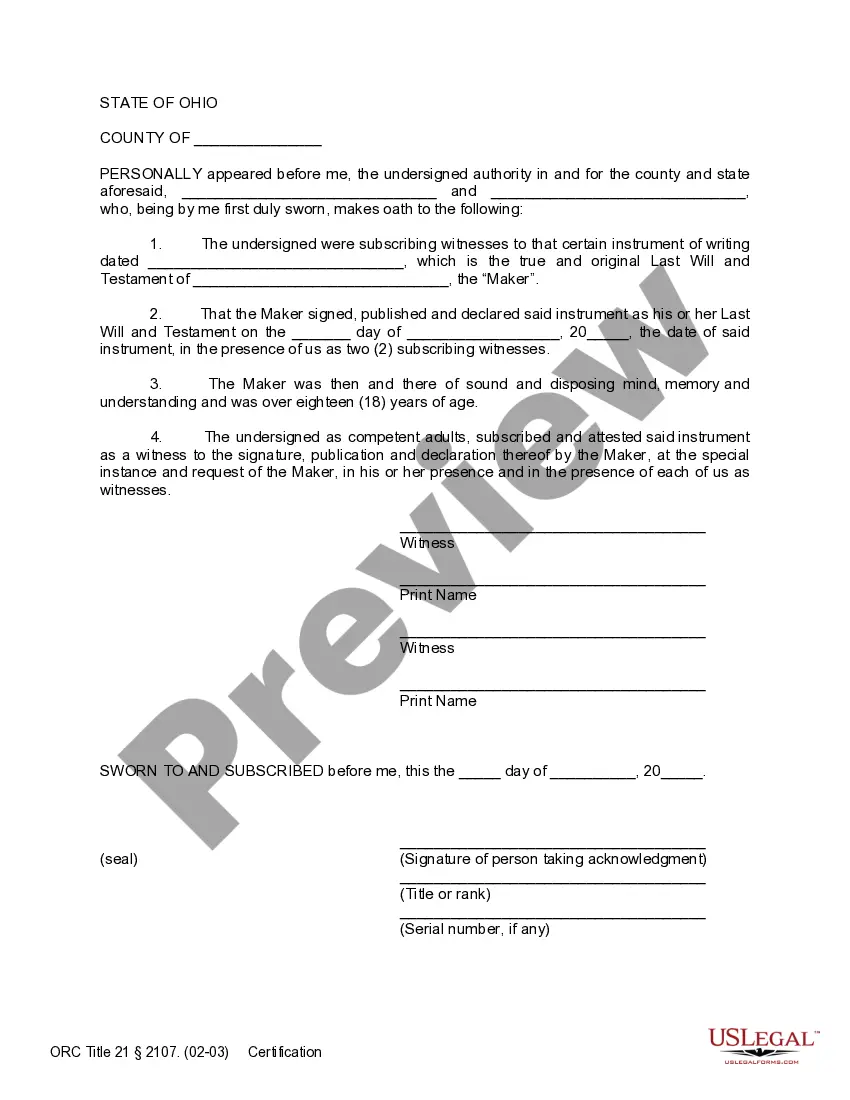
This document requires notarization to meet legal standards. US Legal Forms provides secure online notarization powered by Notarize, allowing you to complete the process through a verified video call, available 24/7.
Get your form ready online
Our built-in tools help you complete, sign, share, and store your documents in one place.
Make edits, fill in missing information, and update formatting in US Legal Forms—just like you would in MS Word.
Download a copy, print it, send it by email, or mail it via USPS—whatever works best for your next step.
Sign and collect signatures with our SignNow integration. Send to multiple recipients, set reminders, and more. Go Premium to unlock E-Sign.
If this form requires notarization, complete it online through a secure video call—no need to meet a notary in person or wait for an appointment.
We protect your documents and personal data by following strict security and privacy standards.

Make edits, fill in missing information, and update formatting in US Legal Forms—just like you would in MS Word.

Download a copy, print it, send it by email, or mail it via USPS—whatever works best for your next step.

Sign and collect signatures with our SignNow integration. Send to multiple recipients, set reminders, and more. Go Premium to unlock E-Sign.

If this form requires notarization, complete it online through a secure video call—no need to meet a notary in person or wait for an appointment.

We protect your documents and personal data by following strict security and privacy standards.
Common mistakes
- Failing to transfer all assets to the trust before death.
- Not appointing a guardian for minor children if applicable.
- Overlooking the need for witness signatures.
- Using incorrect or outdated legal language in the will.
Why use this form online
- Convenient access to customizable legal documents from home.
- Ability to edit and save your information when needed.
- Quick download ensures you can complete your estate planning promptly.
- Forms drafted by licensed attorneys ensure they meet legal standards.
What to keep in mind
- A Pour Over Will facilitates the transfer of assets not included in a living trust.
- It is crucial for comprehensive estate planning.
- Timely updates and proper witnessing are essential for the will's validity.
Looking for another form?







Form popularity
FAQ
A will and a trust are separate legal documents that usually have a common goal of coordinating a comprehensive estate plan.Since revocable trusts become operative before the will takes effect at death, the trust takes precedence over the will, in the event that there are issues between the two.
After reading about the benefits of a revocable living trust, you may wonder, Why do I need a pour-over will if I have a living trust? A pour-over will is necessary in the event that you do not fully or properly fund your trust.Your trust agreement can only control the assets that the trust owns.
When people make revocable living trusts to avoid probate, it's common for them to also make what's called a "pour-over will." The will directs that if any property passes through the will at the person's death, it should be transferred to (poured into) the trust, and then distributed to the beneficiaries of the trust.
The pour over will does not need to be notarized; however, in California it does need to be signed by two disinterested witnesses.
One document that is explicitly written to supersede a will is a codicil, which is a separate document that amends the latest version of a last will and testament. The codicil must control distribution of the assets it references and supersede certain sections of the latest document.
Pour-over wills are subject to probate since the assets have not yet been transferred into the trust. Some states also require your assets to go through the probate process any time your assets or property are over a certain value.Even though pour-over wills don't avoid probate, there is still a measure of privacy.
A pour-over will is a just-in-case will that states that your living trust is the beneficiary for any property in your name that's not in the trust at the time of your death, thereby moving any forgotten or remaining assets into the trust.One of the main reasons to create a living trust is to avoid probate.
Spillover Trusts definition: Spillover trusts are established to hold any remaining assets after all other instructions from the will are carried out.
After reading about the benefits of a revocable living trust, you may wonder, Why do I need a pour-over will if I have a living trust? A pour-over will is necessary in the event that you do not fully or properly fund your trust.Your trust agreement can only control the assets that the trust owns.