Ohio Essential Legal Life Documents for New Parents
What this form package covers
The Ohio Essential Legal Life Documents for New Parents form package contains vital legal documents for new parents. It addresses significant changes in your legal life that come with the addition of a child. This package includes state-specific forms drafted by licensed attorneys, ensuring they meet Ohio's legal requirements. Unlike generic packages, this tailored collection helps you manage your familyâs legal needs effectively.
Forms included in this package
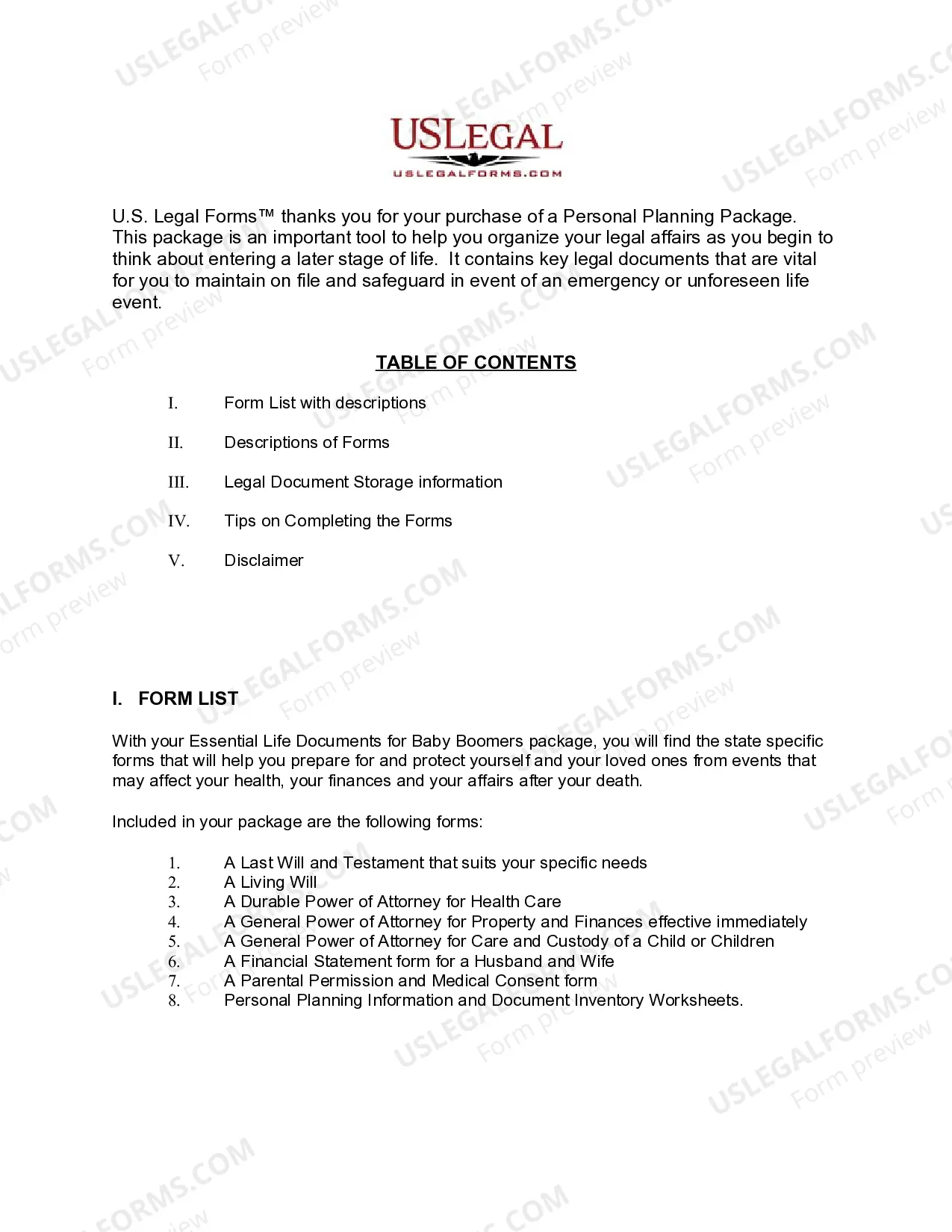
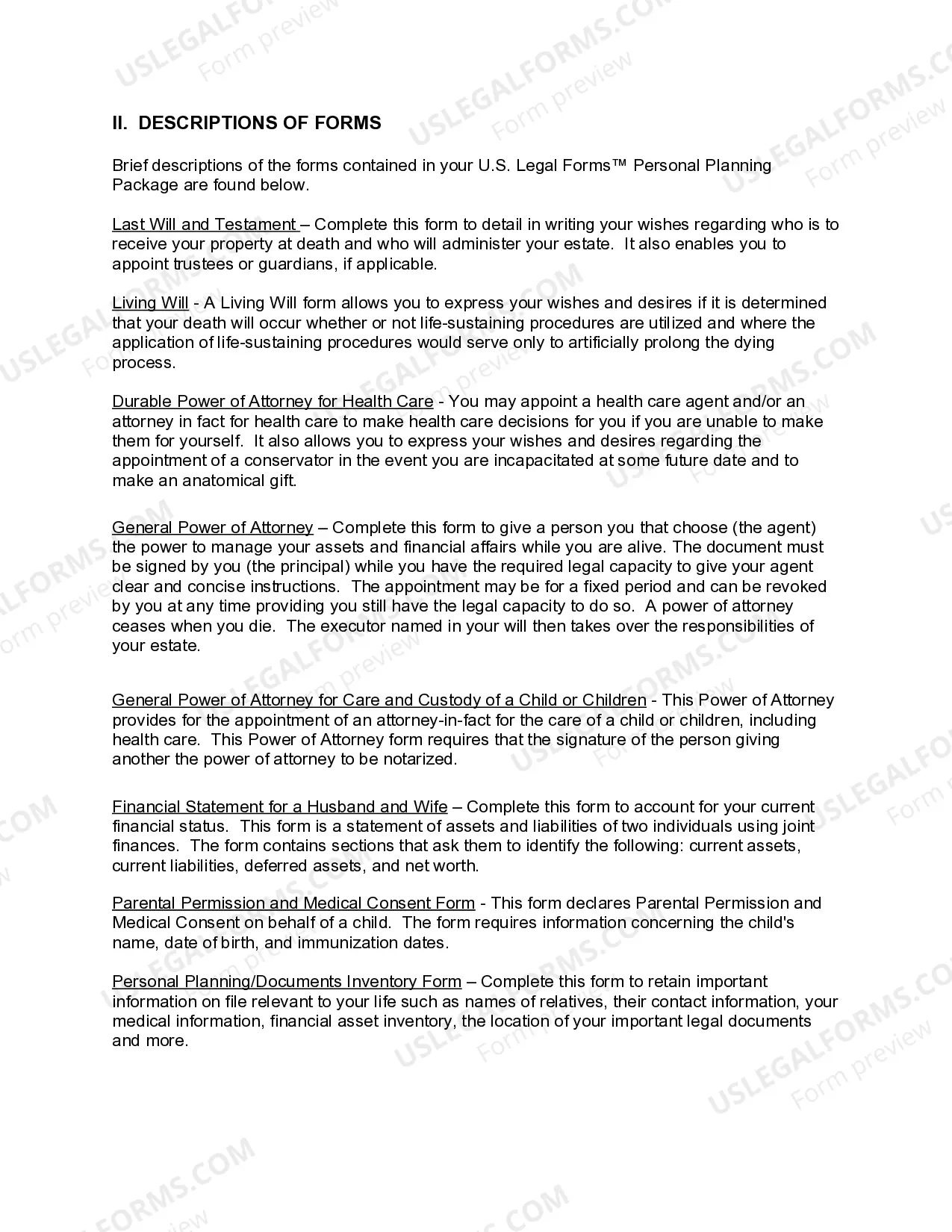
- General Durable Power of Attorney for Property and Finances or Financial Effective Immediately
- Caretaker Authorization Affidavit - Statutory
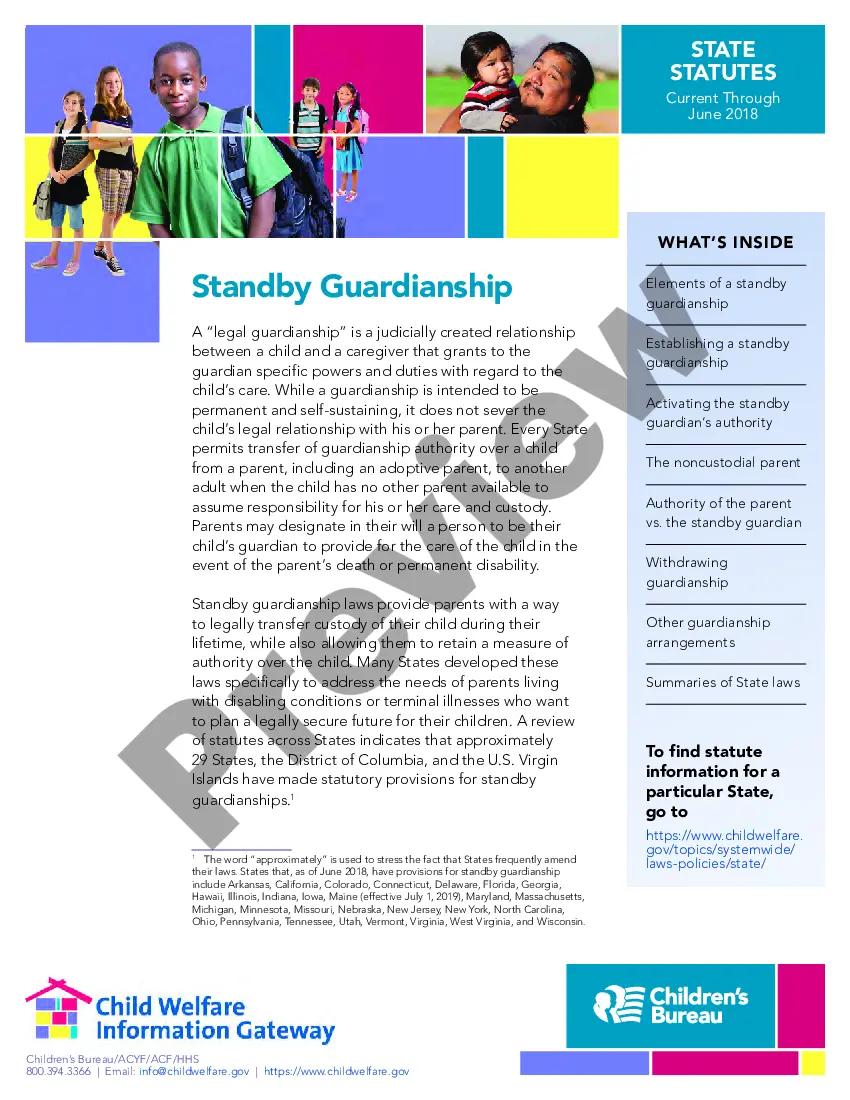
- Power of Attorney Care and Custody of Child or Children - General
- Durable Power of Attorney for Health Care
- Living Will or Declaration concerning the use of life sustaining treatment
- Financial Statement Form - Husband and Wife Joint
- Parental Permission and Medical Consent Form
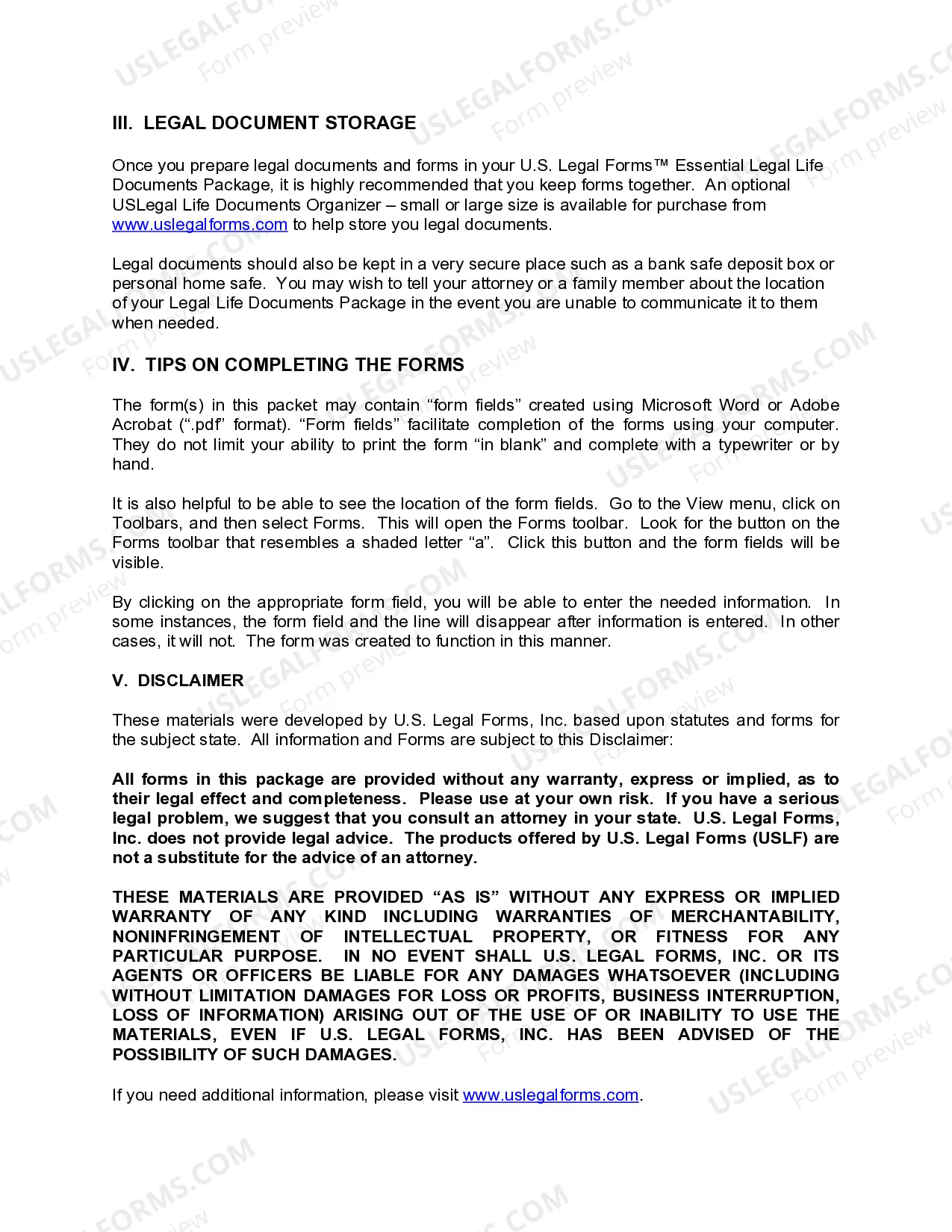
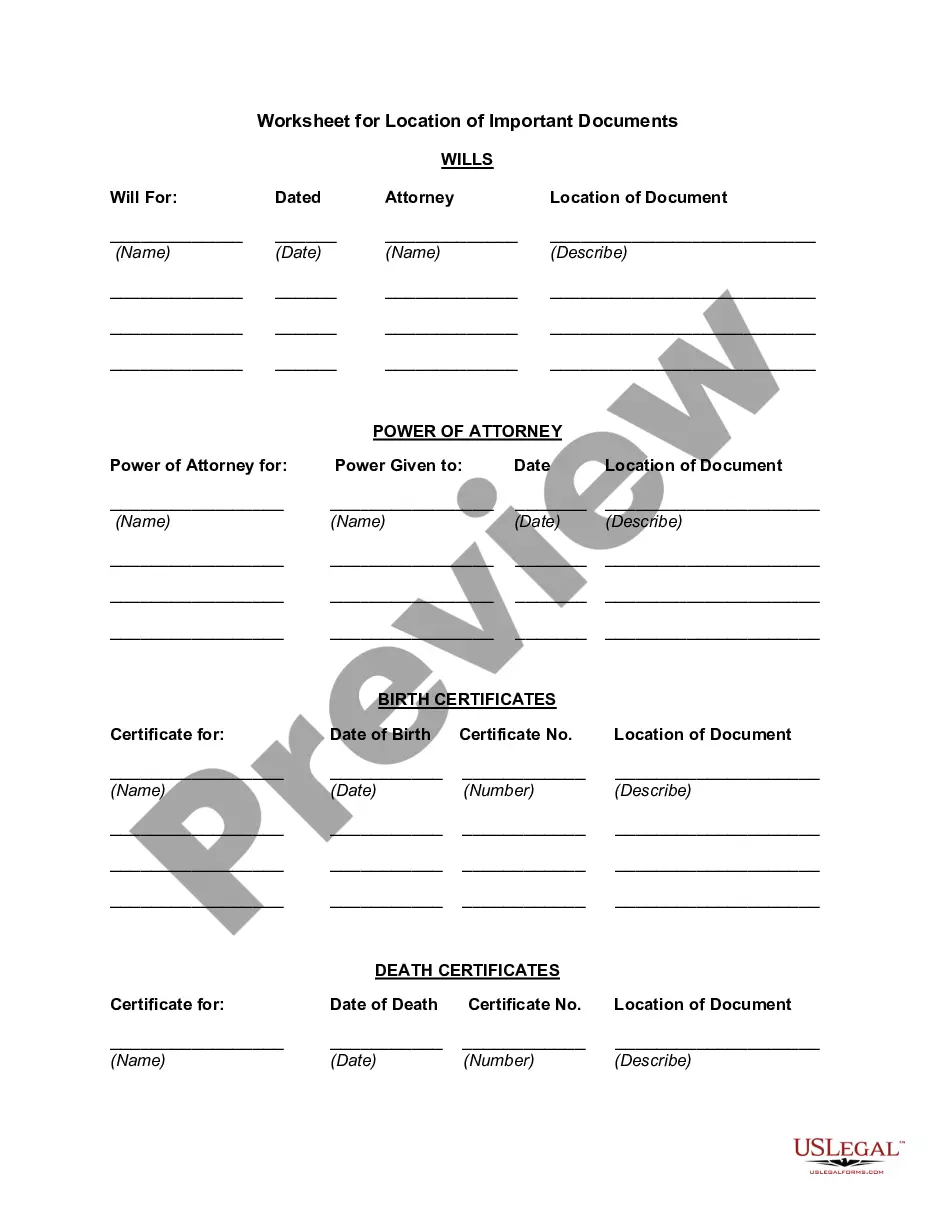
- Personal Planning Information and Document Inventory Worksheets - A Legal Life Document

Common use cases
Consider using this form package in the following scenarios:
- When you are expecting a child and need to establish legal protections.
- If you want to prepare a will that reflects your new responsibilities as a parent.
- When you need to assign healthcare decisions to a trusted individual.
- If you wish to authorize someone to handle your finances or property in your absence.
- When you need legal consent for your child's medical decisions.
Who needs this form package
- New parents in Ohio seeking to establish legal documents for their family.
- Expecting parents planning for their child's future legal needs.
- Parents wanting to secure healthcare and financial decisions for their children.
- Couples who share finances and need to outline their financial statuses.
Completing these forms step by step
- Review all included forms carefully for your specific needs.
- Identify the parties involved in the documents (you, your partner, and any agents).
- Fill in the required information, such as names, dates, and any relevant medical information.
- Sign the documents in the presence of a notary if required.
- Store the completed forms in a secure location, like a safe or bank deposit box.
Notarization requirements for forms in this package
Yes, forms in this package must be notarized for certain documents, such as the Durable Power of Attorney for Care and Custody of a Child. U.S. Legal Forms offers integrated online notarization services, available 24/7 through secure video calls, ensuring that your documents are legally valid without needing to travel.
Get your form ready online
Our built-in tools help you complete, sign, share, and store your documents in one place.
Make edits, fill in missing information, and update formatting in US Legal Forms—just like you would in MS Word.
Download a copy, print it, send it by email, or mail it via USPS—whatever works best for your next step.
Sign and collect signatures with our SignNow integration. Send to multiple recipients, set reminders, and more. Go Premium to unlock E-Sign.
If this form requires notarization, complete it online through a secure video call—no need to meet a notary in person or wait for an appointment.
We protect your documents and personal data by following strict security and privacy standards.

Make edits, fill in missing information, and update formatting in US Legal Forms—just like you would in MS Word.

Download a copy, print it, send it by email, or mail it via USPS—whatever works best for your next step.

Sign and collect signatures with our SignNow integration. Send to multiple recipients, set reminders, and more. Go Premium to unlock E-Sign.

If this form requires notarization, complete it online through a secure video call—no need to meet a notary in person or wait for an appointment.

We protect your documents and personal data by following strict security and privacy standards.
Common mistakes to avoid
- Failing to properly sign or date the forms.
- Not providing complete information on all required fields.
- Overlooking the need for notarization when specified.
- Storing important documents in insecure locations.
- Not discussing the contents of the forms with your family or trusted parties.
Advantages of online completion
- Convenience of downloading and completing documents from home.
- Editability allows for easy customization according to your needs.
- Access to professionally drafted forms by licensed attorneys.
- Immediate availability without the need for in-person attorney meetings.
Main things to remember
- This package provides essential legal documents tailored for new parents in Ohio.
- It addresses important aspects of child custody, health care decisions, and estate planning.
- Documents must be completed accurately and stored securely to ensure legality and accessibility.
Looking for another form?

Form popularity
FAQ
By signing the form, parents are establishing paternity for their child - meaning legally recognized fatherhood.Once completed, the Acknowledgement of Paternity Affidavit is used to add the biological father to the child's birth certificate.
You may voluntarily give up your parental rights if someone else wants to adopt the child, or if someone else has filed a petition to terminate your rights. You will typically need to go to a court hearing to let the judge know your wishes in person.
In Ohio, an adoption agency or the child's adoptive parents can file an adoption petition with the Ohio probate court. The paperwork might include written consent signed by the father confirming that he wishes to terminate his parental rights so the child can be adopted.
Ohio law does not provide a predetermined age, though many counties do in their local rules. Often they are addressed in the county's standard order of parenting time. The majority of counties appear to choose the age of 16 as the age in which the minor child may make the choice on their own behalf.
Under Ohio law, voluntary termination of parental rights by a parent is required for an adoption unless the court, after proper service of notice and hearing, finds by clear and convincing evidence that the parent has failed without justifiable cause to provide more than de minimis contact with the minor or to provide
(1) "Abandoned" means the parents of a child have failed to visit or maintain contact with the child for more than ninety days, regardless of whether the parents resume contact with the child after that ninety-day period.
Guardianship Documents. Health Care Power of Attorney. Financial Power of Attorney. Living Will. Last Will and Testament. U.S. Legal Services Can Help!
A parent cannot just sign over his rights to avoid child support. Even if he chooses not to pursue rights regarding parenting time or decision-making, he will still have the obligation to support his child and you can work with the state to get the support established.
A medical directive. A durable power of attorney for healthcare and HIPAA release. A durable power of attorney for finances. A revocable living trust. A will.