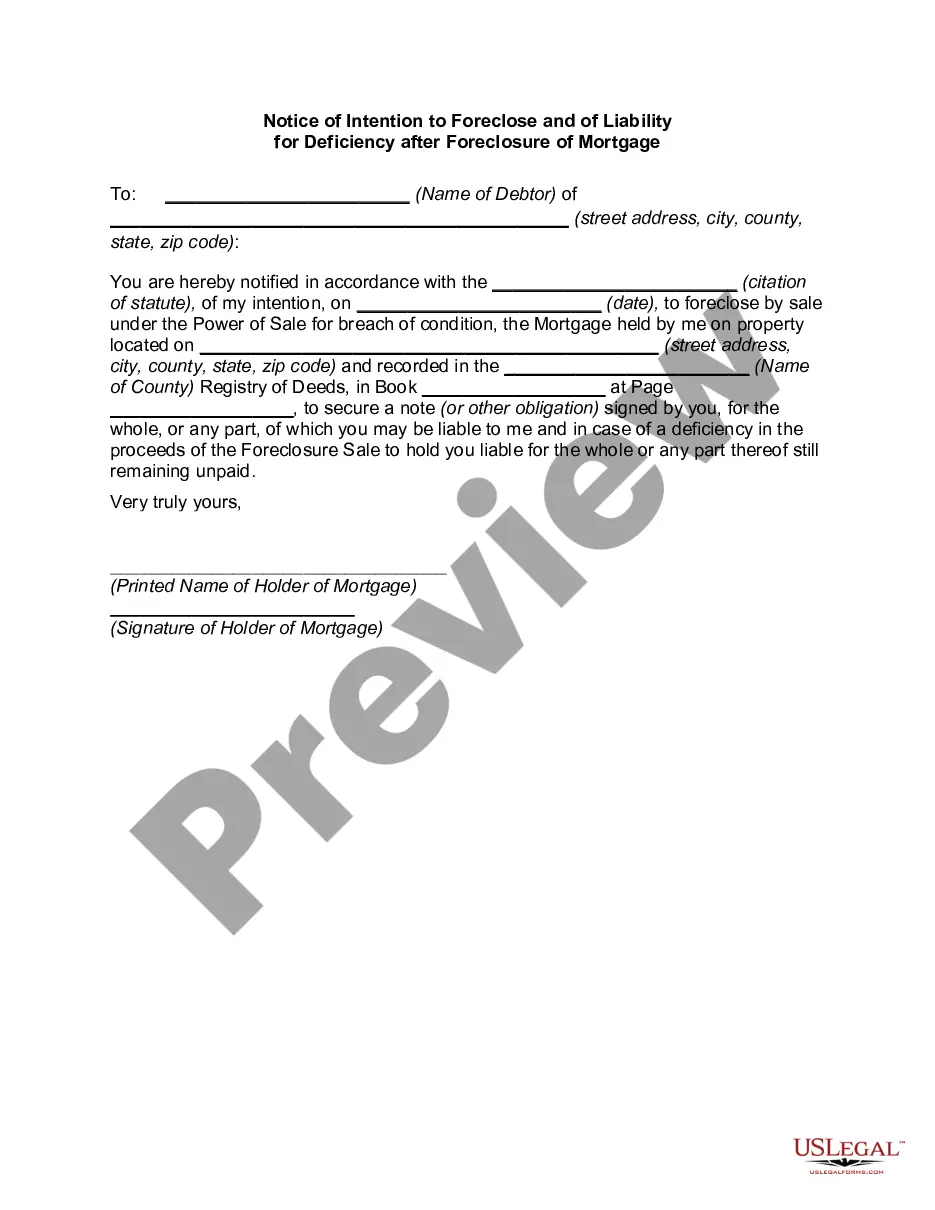
New York Letter from Tenant to Landlord containing Notice that premises in uninhabitable in violation of law and demand immediate repair
Overview of this form
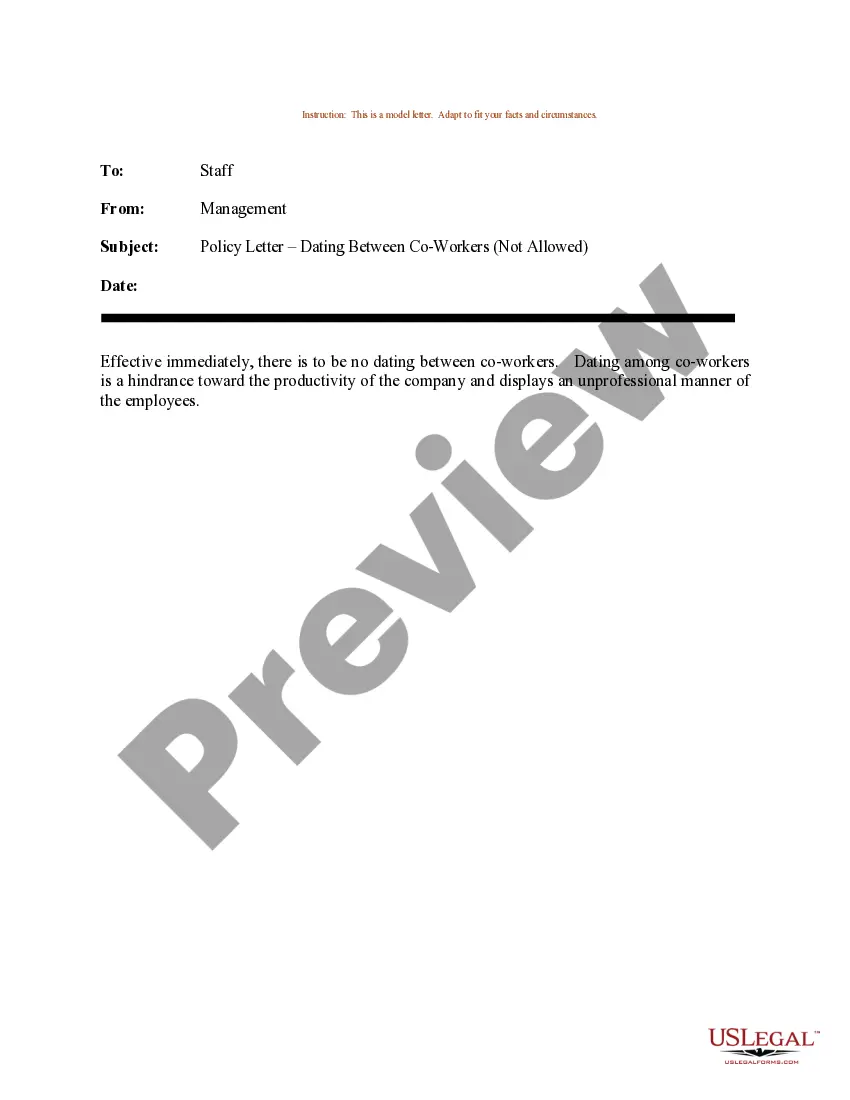
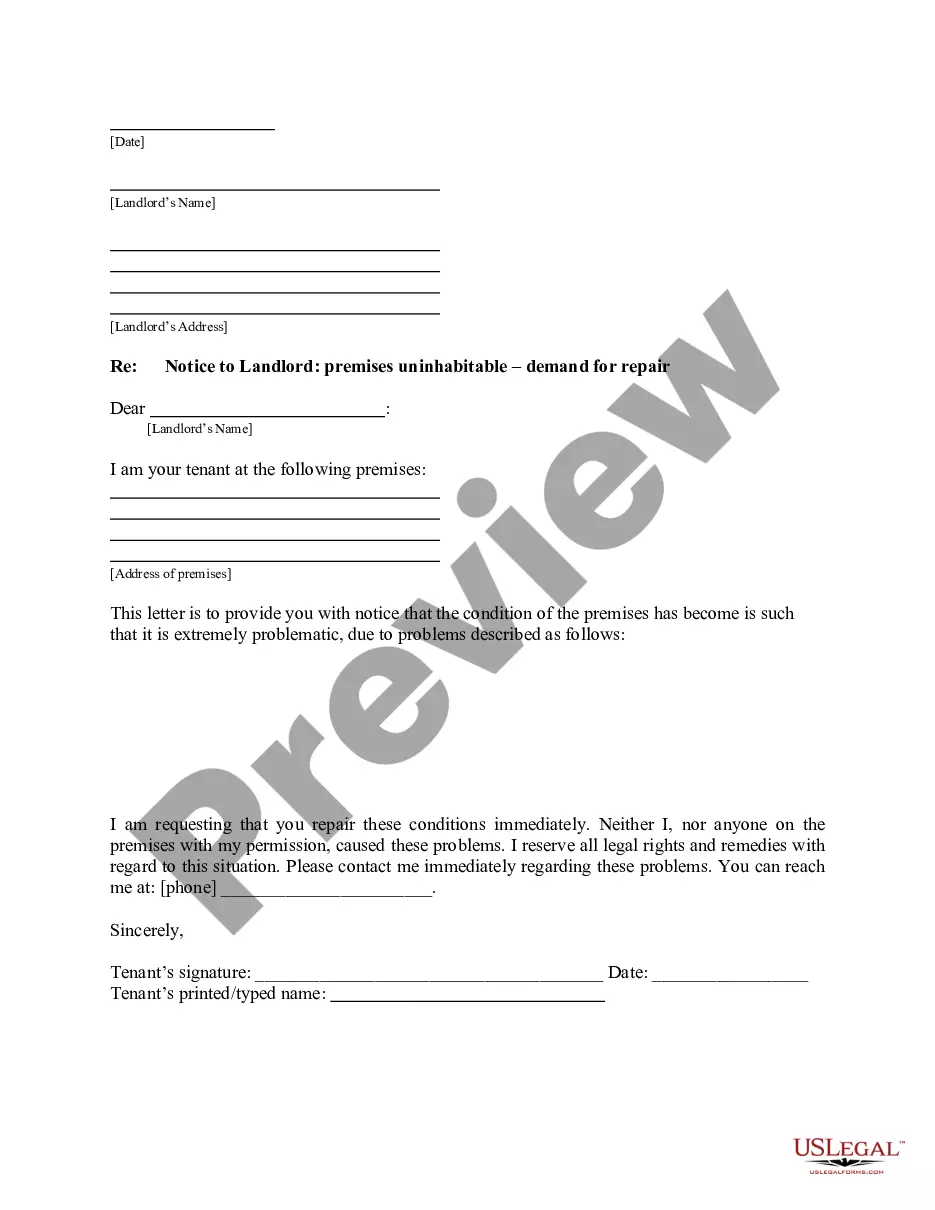
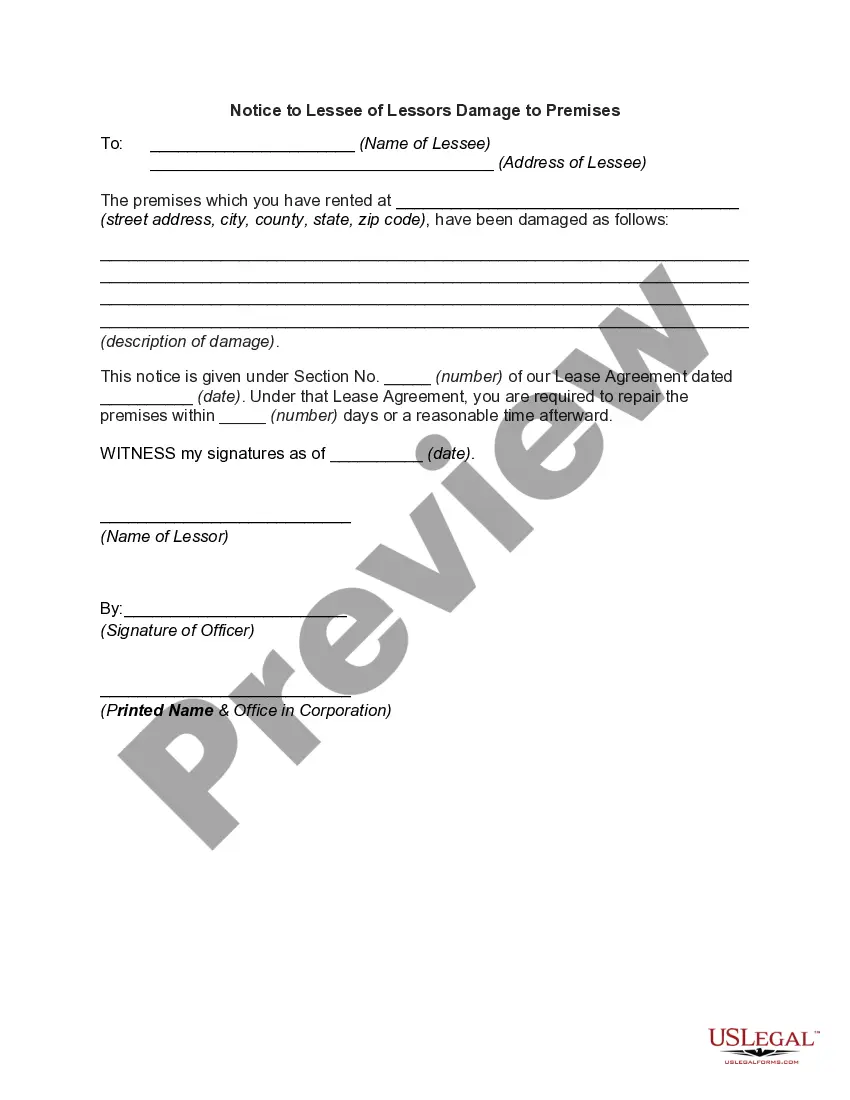
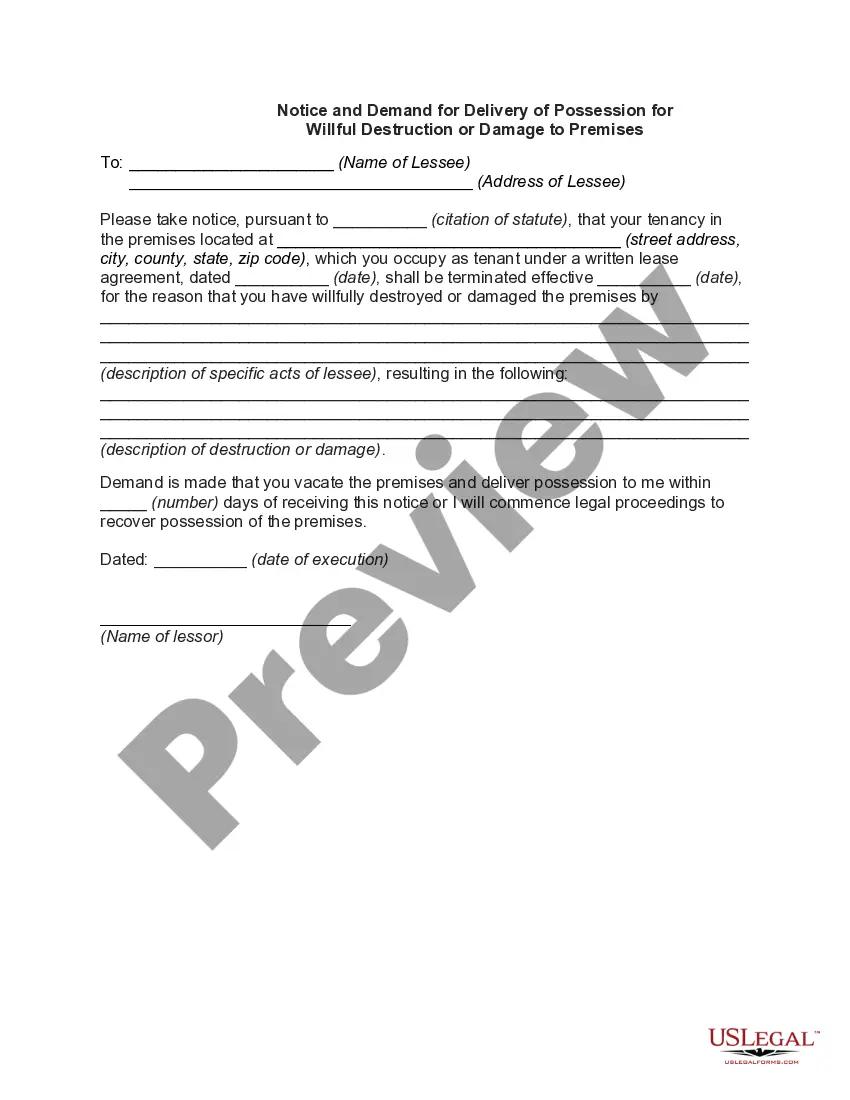
This form is a letter from the tenant to the landlord, notifying them that the rental premises are uninhabitable and violate legal standards. It demands immediate repairs to the property. Unlike other tenant forms, this document specifically addresses the tenants' rights regarding unsafe living conditions, making it essential for ensuring a safe living environment.
Key components of this form
- Tenant's name and contact information
- Landlord's name and contact information
- Description of the specific issues violating habitability
- Demand for immediate repairs
- Tenant's signature and date
- Space for additional signatures if needed


When this form is needed
This form should be used when a tenant discovers that their rented living space is unsafe, unhealthy, or otherwise unfit for habitation. For example, if there are significant issues such as mold, lack of heating, or structural problems that violate local housing codes, the tenant should promptly send this notice to the landlord to initiate repairs and protect their rights.
Who should use this form
This form is intended for:
- Renters who feel their living conditions are unsafe or unhealthy
- Tenants seeking to formally address habitability issues with their landlord
- Individuals wanting to document issues for potential legal action
How to complete this form
- Identify the parties involved by entering your name and the landlord's name.
- Describe the specific issues that make the premises uninhabitable.
- Clearly state your demand for repairs to be made immediately.
- Date the letter to provide a record of when the notice was sent.
- Sign the letter to affirm your request for repairs, and provide a space for any co-tenants to sign as well.
Does this document require notarization?
This form does not typically require notarization to be legally valid. However, some jurisdictions or document types may still require it. US Legal Forms provides secure online notarization powered by Notarize, available 24/7 for added convenience.
Get your form ready online
Our built-in tools help you complete, sign, share, and store your documents in one place.
Make edits, fill in missing information, and update formatting in US Legal Forms—just like you would in MS Word.
Download a copy, print it, send it by email, or mail it via USPS—whatever works best for your next step.
Sign and collect signatures with our SignNow integration. Send to multiple recipients, set reminders, and more. Go Premium to unlock E-Sign.
If this form requires notarization, complete it online through a secure video call—no need to meet a notary in person or wait for an appointment.
We protect your documents and personal data by following strict security and privacy standards.

Make edits, fill in missing information, and update formatting in US Legal Forms—just like you would in MS Word.

Download a copy, print it, send it by email, or mail it via USPS—whatever works best for your next step.

Sign and collect signatures with our SignNow integration. Send to multiple recipients, set reminders, and more. Go Premium to unlock E-Sign.

If this form requires notarization, complete it online through a secure video call—no need to meet a notary in person or wait for an appointment.

We protect your documents and personal data by following strict security and privacy standards.
Typical mistakes to avoid
- Failing to include specific details about the uninhabitable conditions.
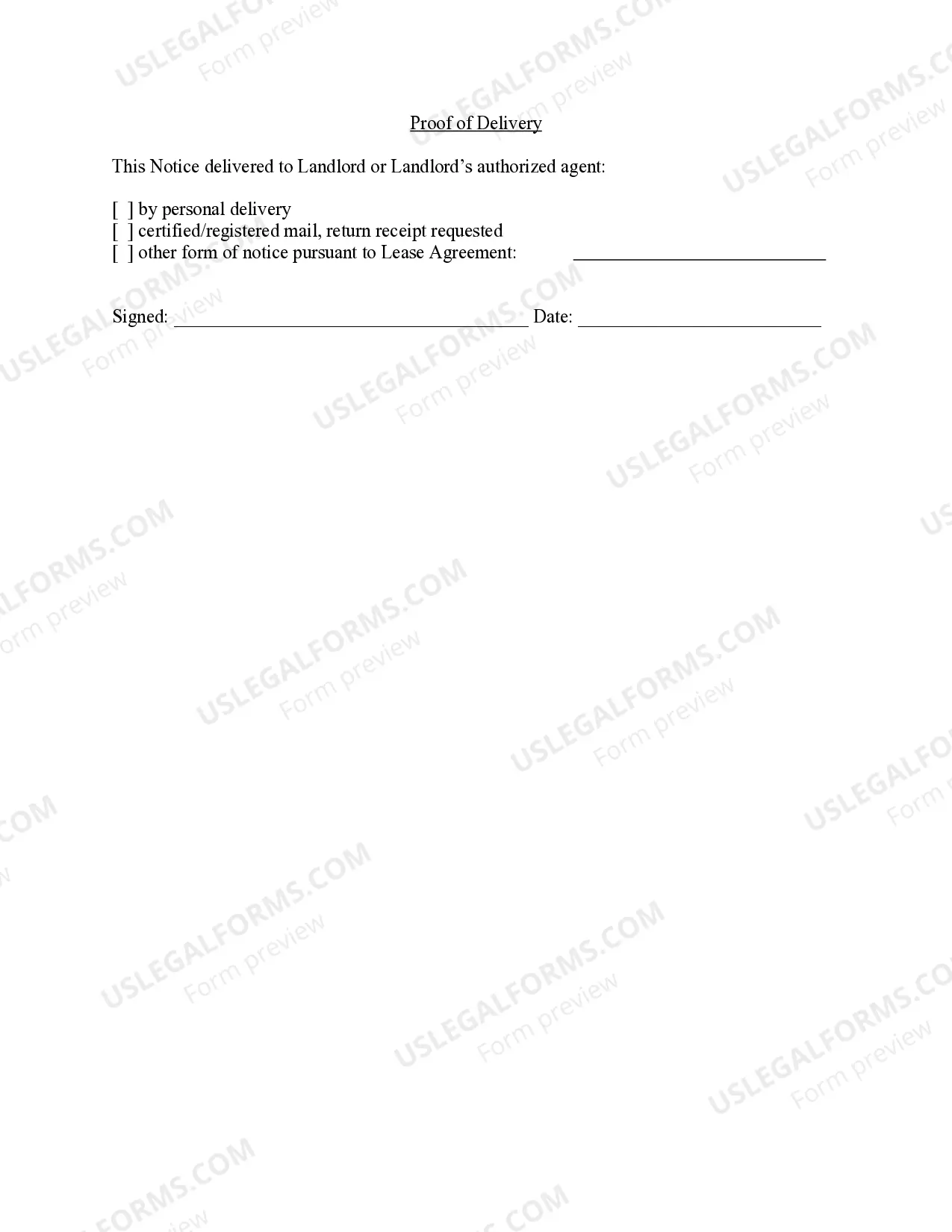
- Not sending the letter through a verifiable method (e.g., certified mail).
- Neglecting to keep a copy of the letter for personal records.
- Forgetting to sign the letter before sending it.
Benefits of completing this form online
- Convenient access: Download and complete your form at any time.
- Editability: Easily customize the form to suit your specific situation.
- Legally vetted: Trust that the form has been drafted by licensed attorneys to comply with legal standards.
Legal use & context
- This form serves as official documentation of a tenant's request for repairs.
- Failure by the landlord to act on this notice may give the tenant legal grounds to terminate the lease.
- The notice strengthens the tenant's position in case of further disputes or legal actions.
Looking for another form?


Form popularity
FAQ
The legal definition of an unsanitary living condition can vary from state-to-state and even county-to-county. However, generally speaking, these definitions might include but are not limited to: excessive dirt or filth in the home. improper building construction or poor maintenance of living quarters.
You can file a lawsuit for negligence against the manager of a real estate property in the same way you can sue the owner of any type of business. Generally speaking, with certain exceptions, filing a lawsuit for negligence against a property manager is a straightforward process.
Know your state's landlord/tenant laws. Read and respond to the court summons. Try to work out a settlement. Consider legal counsel. Show up for court. Look sharp and provide evidence.
Filing a complaint with state or local health or building inspectors (who may fine a landlord who fails to correct the problem within a set amount of time, or actually condemn the property in severe cases) suing the landlord for the difference between the monthly rent and the value of the unit with defects, or.
The landlord had a duty to reasonably maintain the property; The landlord knew or should have known of the dangerous condition; The landlord breached their duty by failing to repair/fix the dangerous condition;
Uninhabitable conditions can include dangerous ones, such as holes in the floor, unsafe or exposed wiring, or non-working air conditioning in dangerously hot summer months. Gross infestations of roaches, fleas or other pests are also uninhabitable conditions.
Uninhabitable conditions can include dangerous ones, such as holes in the floor, unsafe or exposed wiring, or non-working air conditioning in dangerously hot summer months. Gross infestations of roaches, fleas or other pests are also uninhabitable conditions.
Respectfully state that you are making a complaint. Explain the reason behind you making the complaint, making sure to put in the various reasons why you are making the complaint. Relate to the reader what you wish to be done about your complaint. End on a positive tone.
If you're seeking damages for emotional distress caused by a landlord's discrimination, or punitive damages for especially blatant and intentional discrimination, a lawsuit may well be your best bet. Understand what's involved in suing your landlord. You may file a lawsuit in either federal or state court.