New York Warranty Deed from Corporation to Corporation
Overview of this form
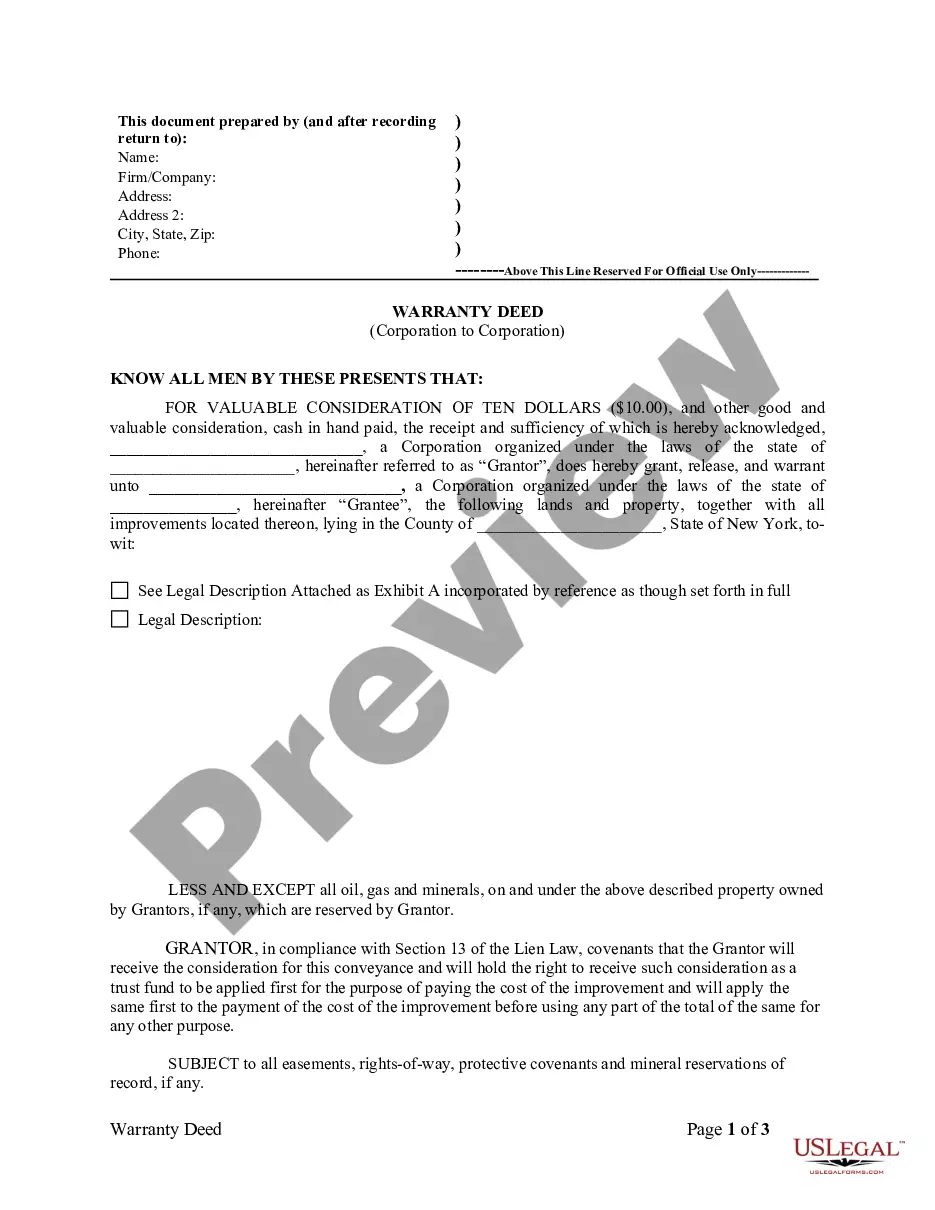
The Warranty Deed from Corporation to Corporation is a legal document used when one corporation (the Grantor) transfers property ownership to another corporation (the Grantee). This deed ensures that the Grantor warrants clear title to the property, with specific reservations for any underlying minerals or resources. It differs from other types of deeds by specifically addressing corporate entities, ensuring compliance with state statutory laws in the process of transferring real estate ownership.
What’s included in this form
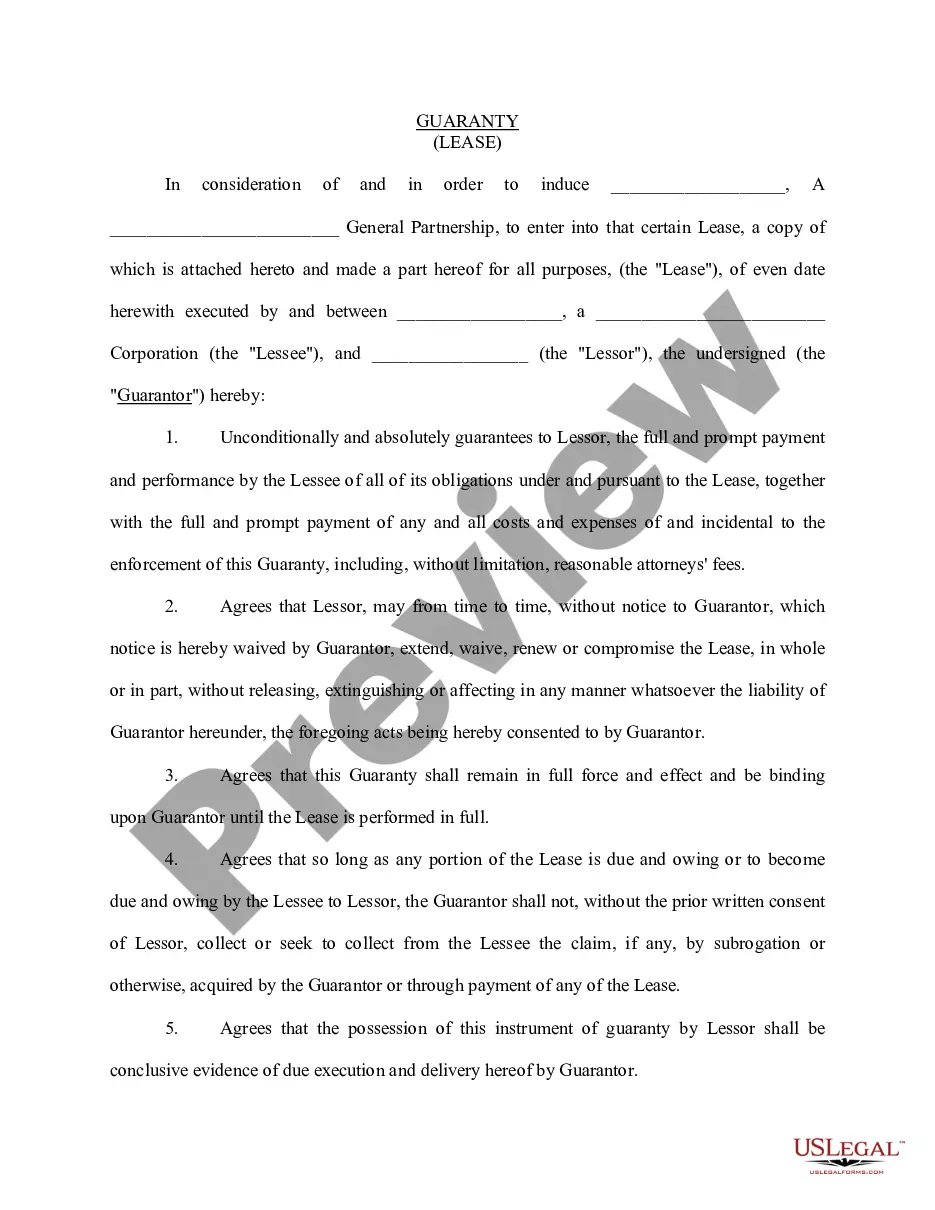
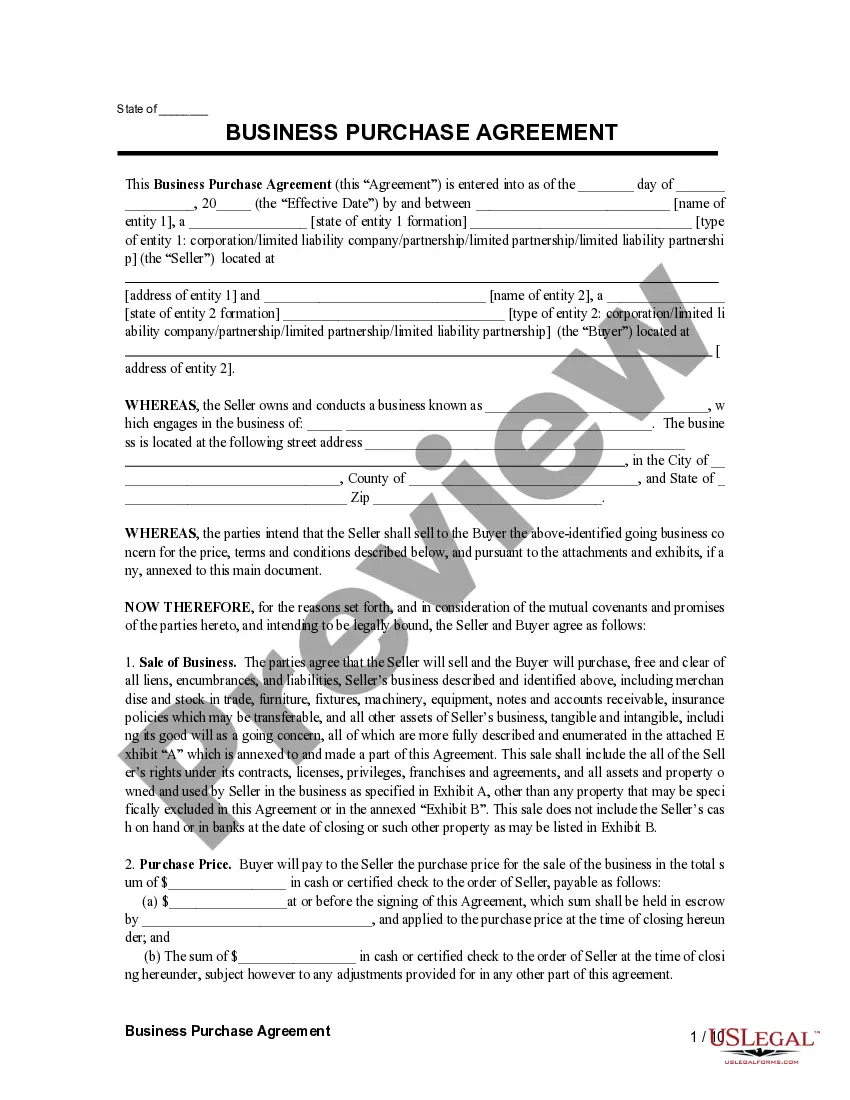
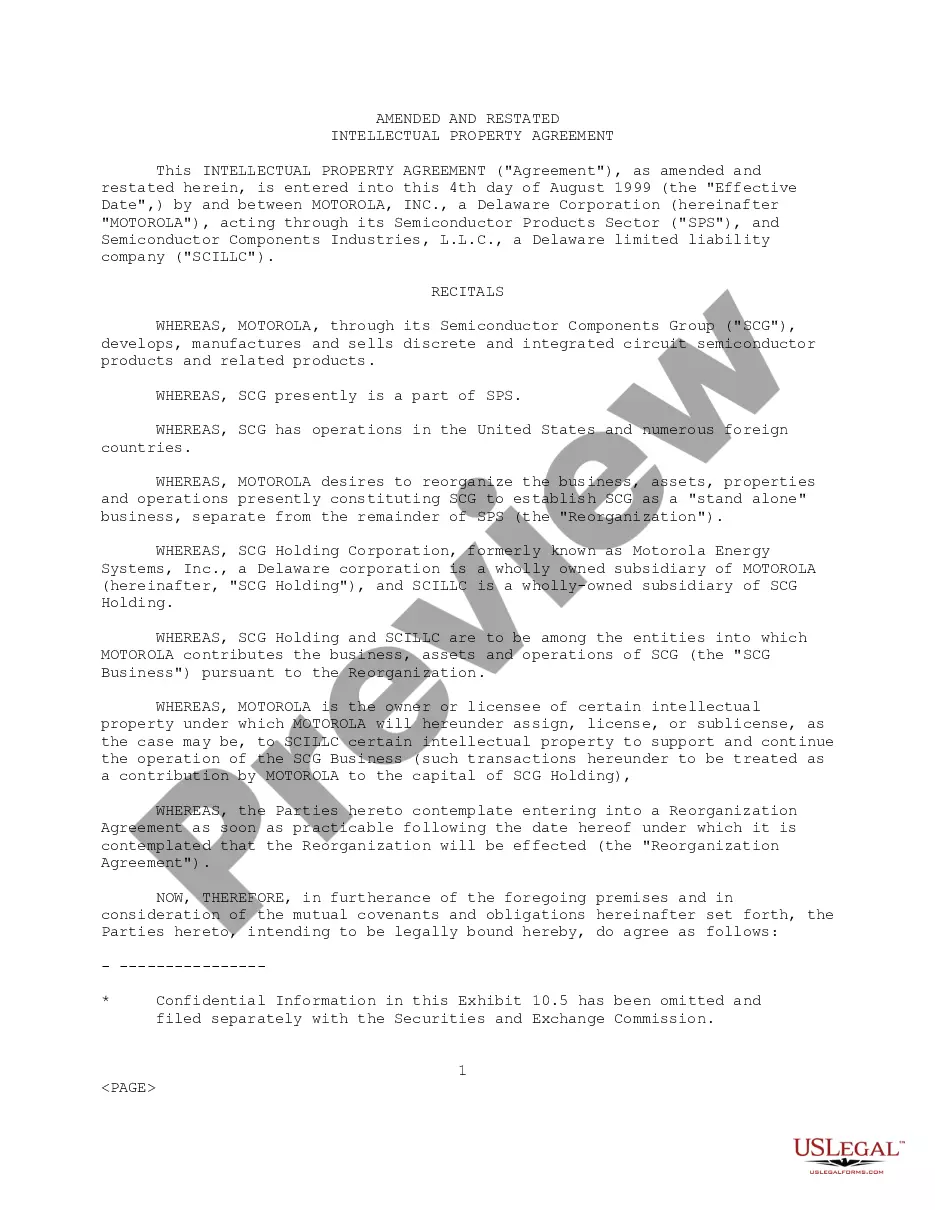
- Identification of the Grantor and Grantee corporations.
- Legal description of the property being transferred.
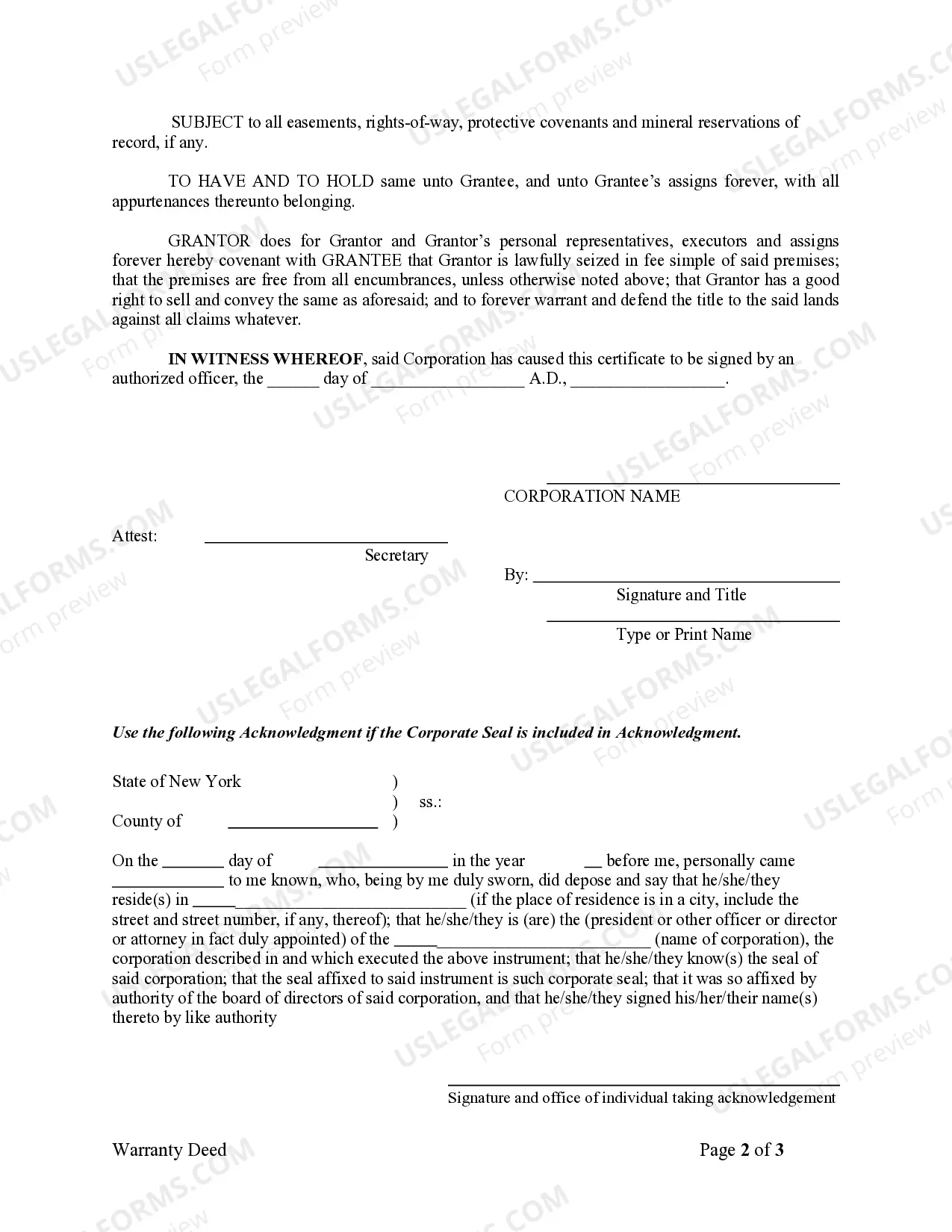
- Warranty clause stating the Grantor's right to convey the property.
- Reservation clause for oil, gas, and mineral rights.
- Statement of conveyance to the Grantee and their assigns.
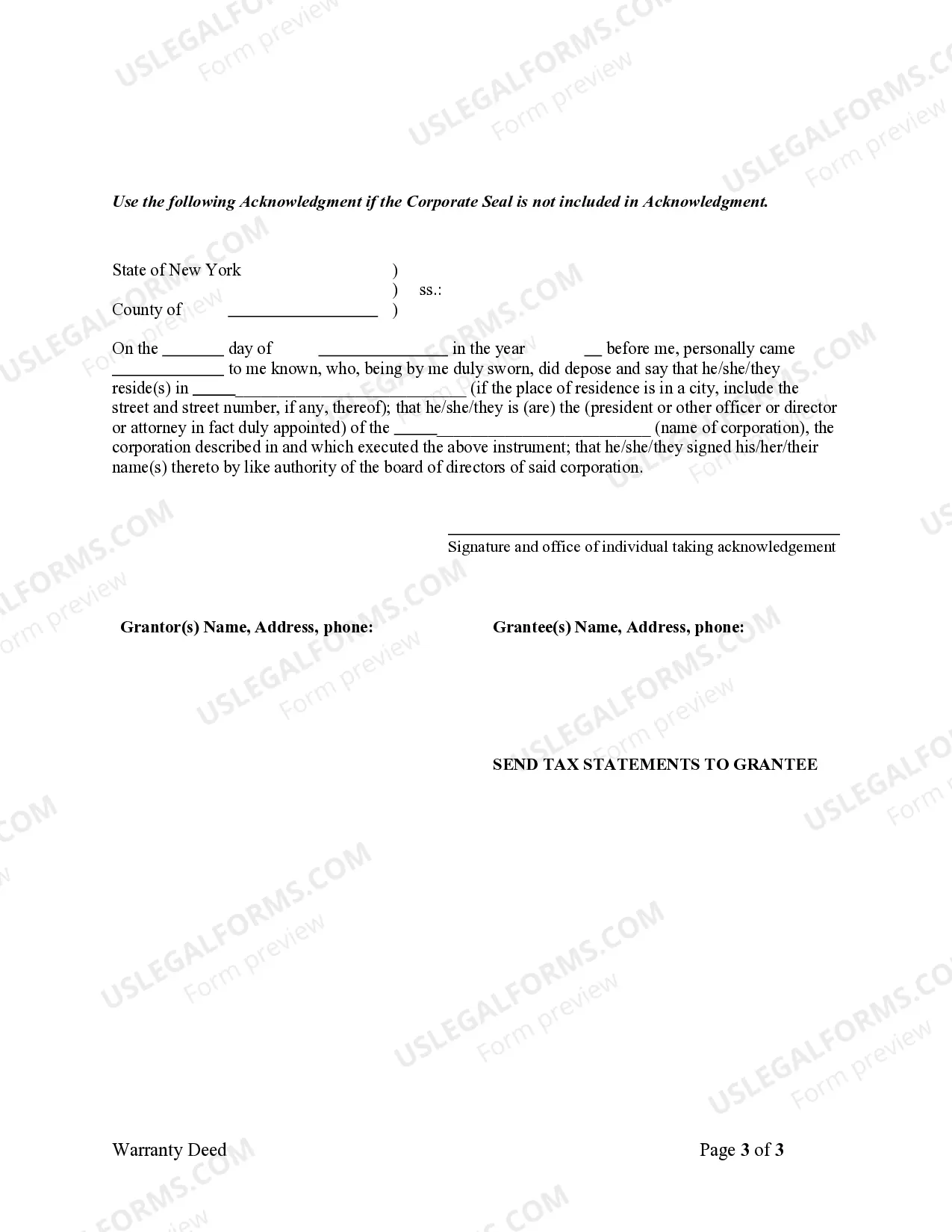
- Notary acknowledgment section for signing validity.


Situations where this form applies
This form is ideal when a corporation needs to transfer ownership of real property to another corporation. Common scenarios include corporate mergers, asset sales, or restructuring. This deed protects both parties by ensuring the title is warranted and outlines any reservations on the property, such as mineral rights, which may be important for future legal or financial considerations.
Intended users of this form
This form is intended for:
- Corporate shareholders or executives involved in property transactions.
- Real estate managers handling transfers between corporate entities.
- Legal representatives overseeing corporate asset management.
How to complete this form
- Identify the Grantor and Grantee by entering their legal names and addresses.
- Provide a precise legal description of the property in the designated section.
- Fill in the date of the transaction and ensure the Grantor executes the deed.
- Complete the notary acknowledgment section, including signatures and commission expiration.
- Ensure any reservations, like mineral rights, are clearly stated.
Notarization requirements for this form
Notarization is required for this form to take effect. Our online notarization service, powered by Notarize, lets you verify and sign documents remotely through an encrypted video session, available 24/7.
Get your form ready online
Our built-in tools help you complete, sign, share, and store your documents in one place.
Make edits, fill in missing information, and update formatting in US Legal Forms—just like you would in MS Word.
Download a copy, print it, send it by email, or mail it via USPS—whatever works best for your next step.
Sign and collect signatures with our SignNow integration. Send to multiple recipients, set reminders, and more. Go Premium to unlock E-Sign.
If this form requires notarization, complete it online through a secure video call—no need to meet a notary in person or wait for an appointment.
We protect your documents and personal data by following strict security and privacy standards.

Make edits, fill in missing information, and update formatting in US Legal Forms—just like you would in MS Word.

Download a copy, print it, send it by email, or mail it via USPS—whatever works best for your next step.

Sign and collect signatures with our SignNow integration. Send to multiple recipients, set reminders, and more. Go Premium to unlock E-Sign.

If this form requires notarization, complete it online through a secure video call—no need to meet a notary in person or wait for an appointment.

We protect your documents and personal data by following strict security and privacy standards.
Avoid these common issues
- Failing to provide a complete legal description of the property.
- Not notarizing the document, which could invalidate the deed.
- Omitting important reservations or restrictions on the property.
- Using incorrect or outdated corporate names for the parties involved.
Advantages of online completion
- Convenience of downloading and printing the form immediately.
- Editability to add specific details before finalizing the deed.
- Access to legally reviewed templates ensures compliance with laws.
- Time-saving approach compared to traditional legal consultations.
Summary of main points
- The warranty deed transfers property ownership from one corporation to another.
- It includes important legal assurances regarding property title and rights.
- Notarization is required for this form to be legally effective.
Looking for another form?

Form popularity
FAQ
It's important to note that a warranty deed does not actually prove the grantor has ownership (a title search is the best way to prove that), but it is a promise by the grantor that they are transferring ownership and if it turns out they don't actually own the property, the grantor will be responsible for compensating
Retrieve your original deed. Get the appropriate deed form. Draft the deed. Sign the deed before a notary. Record the deed with the county recorder. Obtain the new original deed.
To change the deed in New York City, as we discussed, we will need a deed signed and notorized by the grantor. Additionally, the deed must also be filed and recorded with the Office of the City Register along with transfer documents which identify if any taxes are due.
The fees to file a New York quitclaim deed vary from county to county, but some of the fees are similar. As of 2018, the basic fee for filing a quitclaim deed of residential or farm property is $125, while the fee for all other property is $250. These fees are for the RP-5217 form.
To change the deed in New York City, as we discussed, we will need a deed signed and notorized by the grantor. Additionally, the deed must also be filed and recorded with the Office of the City Register along with transfer documents which identify if any taxes are due.
A quitclaim deed transfers real estate interests from one party to another. It is a special type of deed in which the grantee takes ownership of the interests the grantor has at the time of the deed's execution whether or not the grantor is the actual property owner. A quitclaim deed offers zero protection to buyers.
Corporate warranty deeds offer the seller's guarantee to the buyer in regards to the validity of the chain of title. Generally, special warranty deeds only protect against problems occurring since the seller purchased the property.
Contains the strongest and broadest form of guarantee of title of any type of deed, and provides the greatest protection of any deed to the grantee. In this type of deed, the grantor makes various covenants, or warranties.
A warranty deed, also known as a general warranty deed, is a legal real estate document between the seller (grantor) and the buyer (grantee). The deed protects the buyer by pledging that the seller holds clear title to the property and there are no encumbrances, outstanding liens, or mortgages against it.