New Mexico Last Will and Testament for Widow or Widower with Minor Children
What this document covers
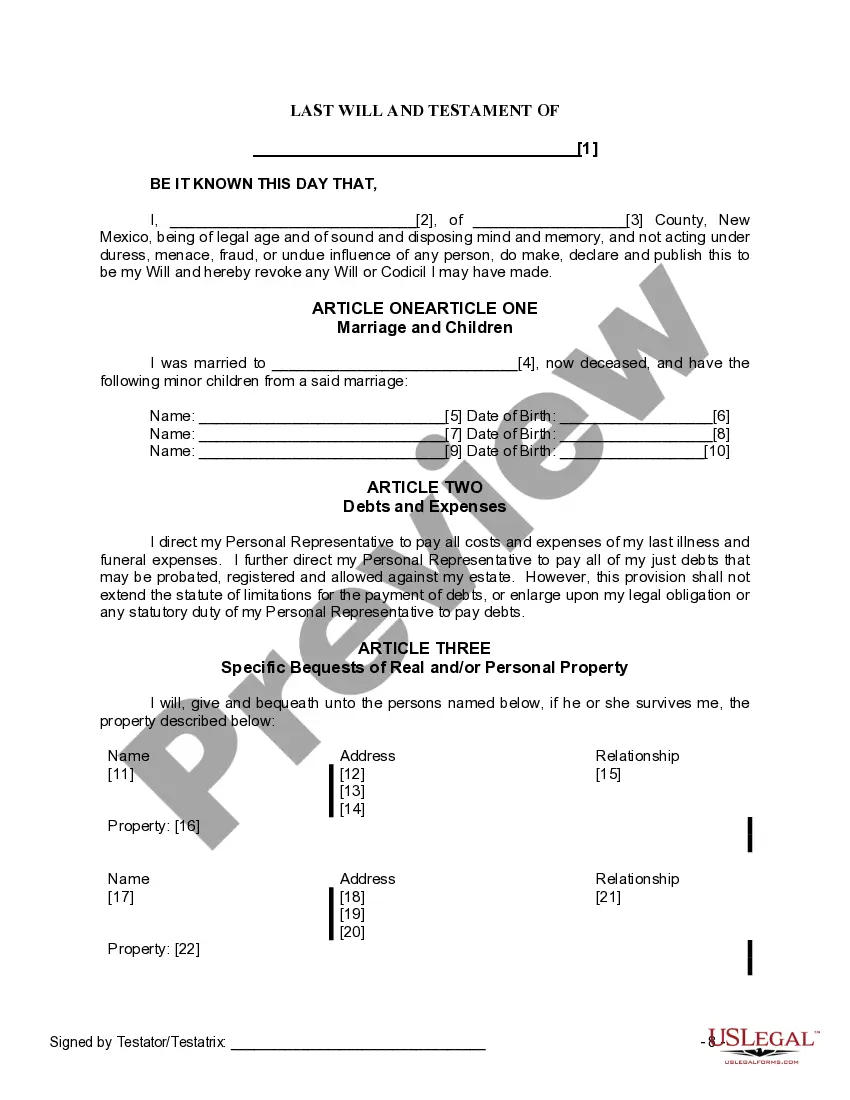
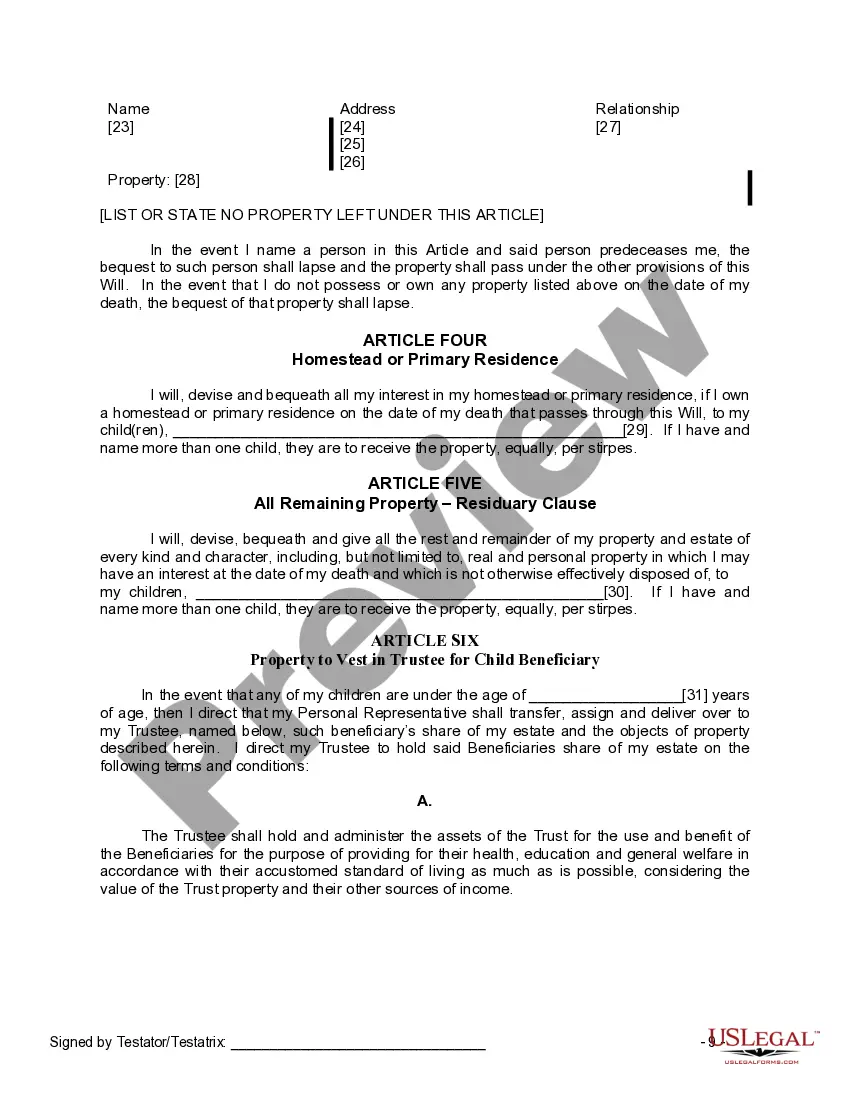
The Last Will and Testament for Widow or Widower with Minor Children is a legal document designed to outline the distribution of assets after death, specifically for individuals who are widows or widowers and have minor children. This form provides guidance on appointing a personal representative, specifying beneficiaries, and establishing provisions for a trustee that manages assets for minor beneficiaries, ensuring their financial protection. Unlike general wills, this form addresses the unique needs and concerns of parents in similar situations.
Form components explained
- Identification of the deceased spouse and minor children.
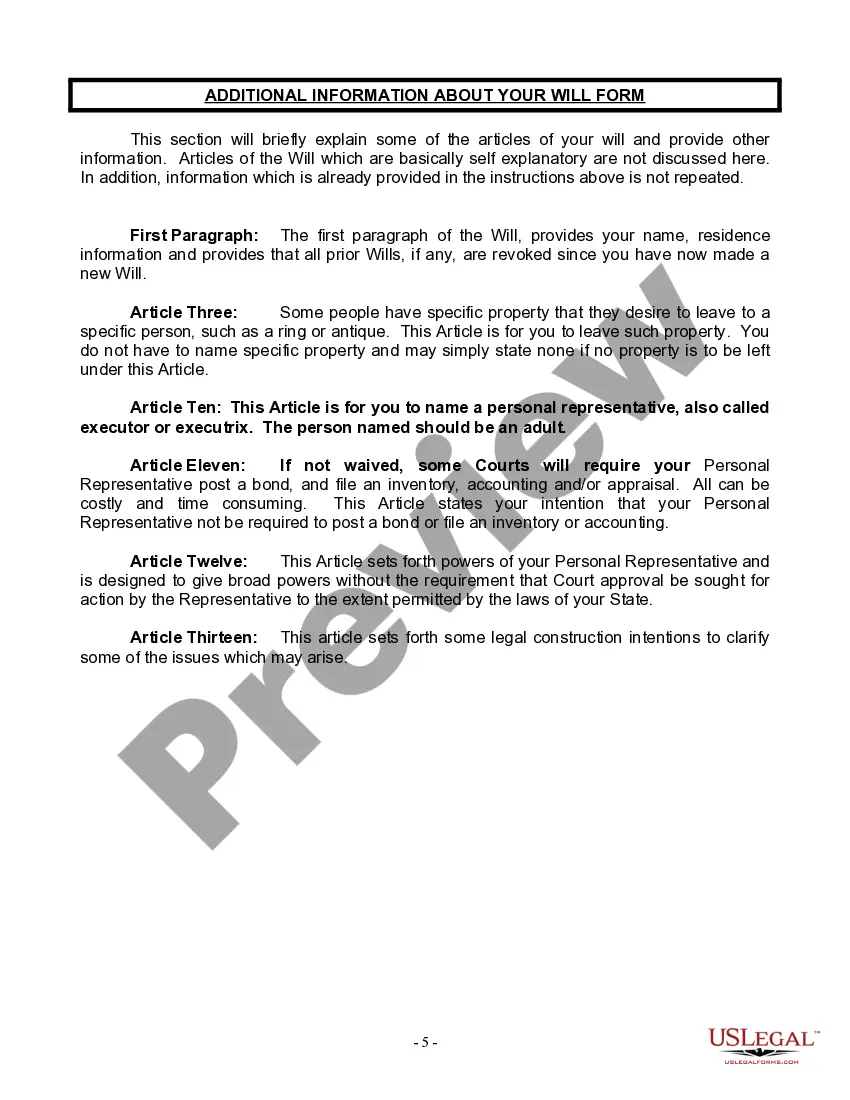
- Appointment of a personal representative to manage the estate.
- Specific bequests of property to designated individuals.
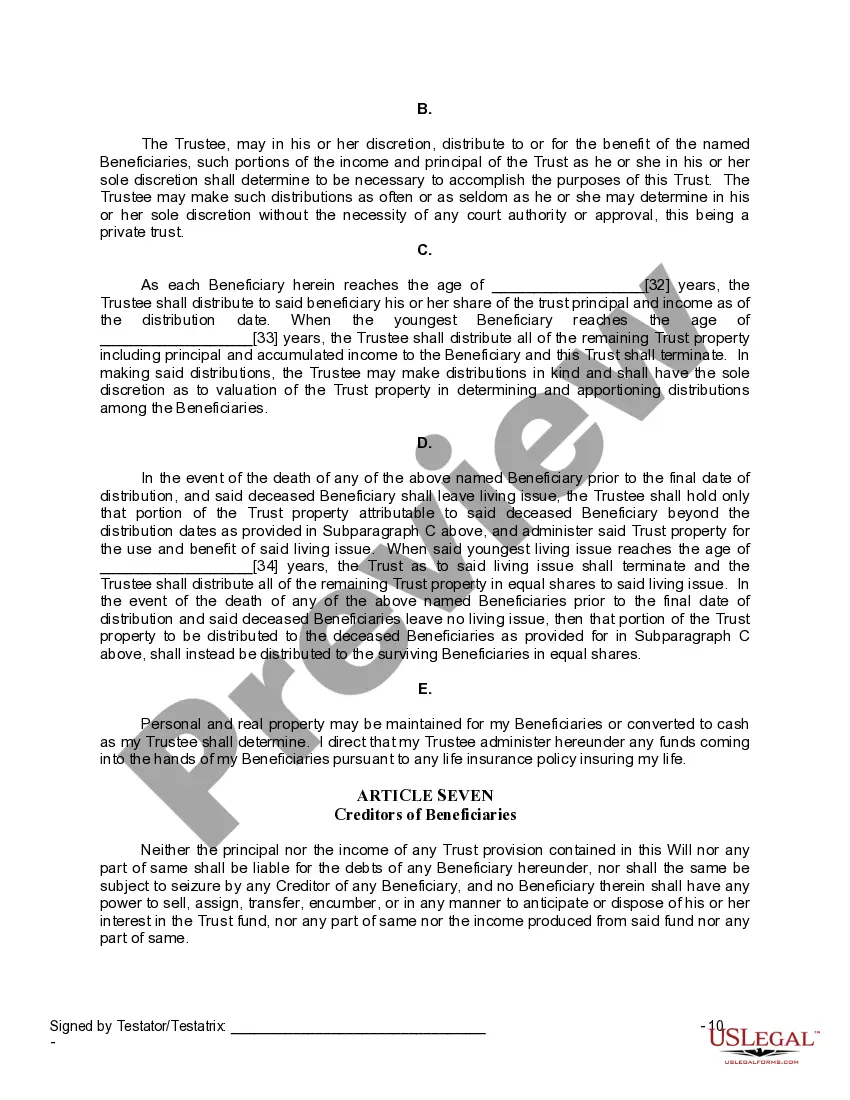
- Creation of a trust for the benefit of minor children.
- Designation of a guardian for minor children, if applicable.
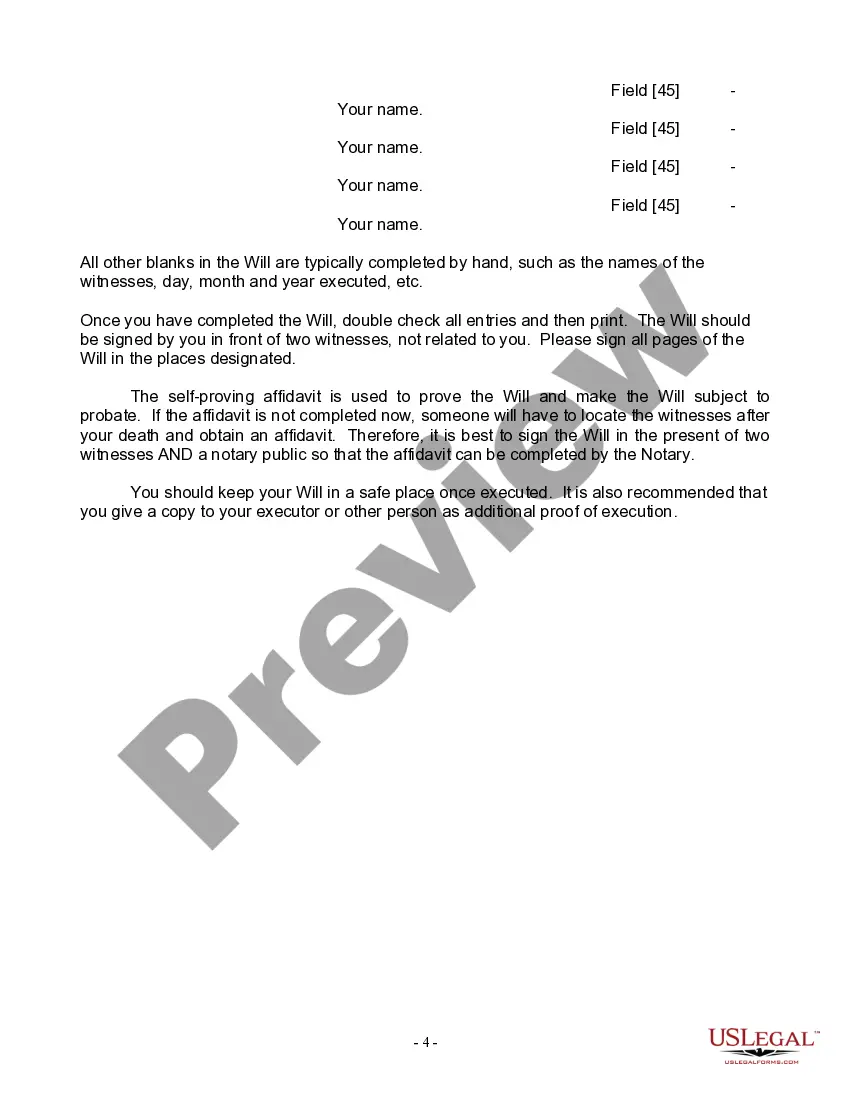
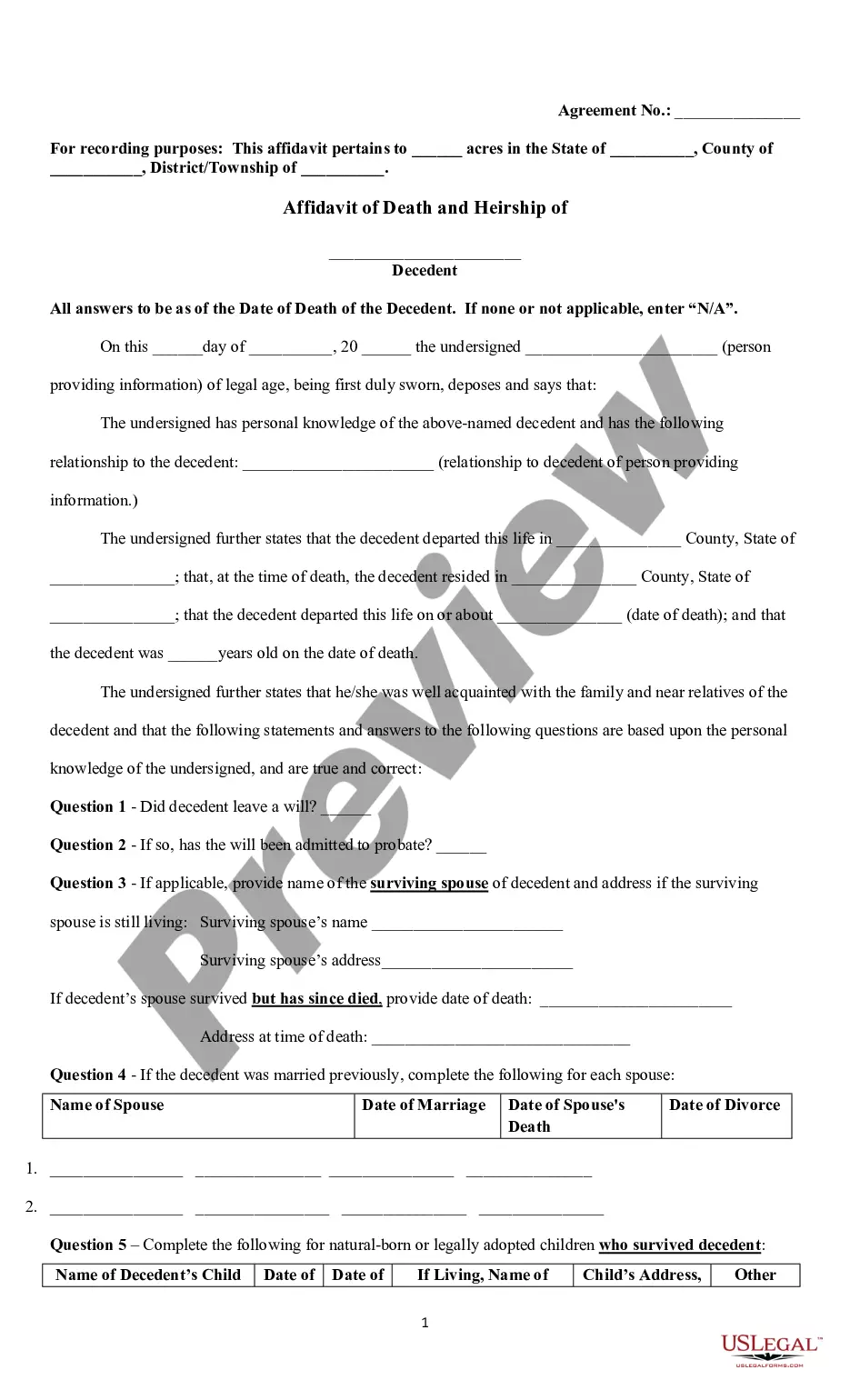
- Self-proving affidavit provision for easier probate processing.




Situations where this form applies
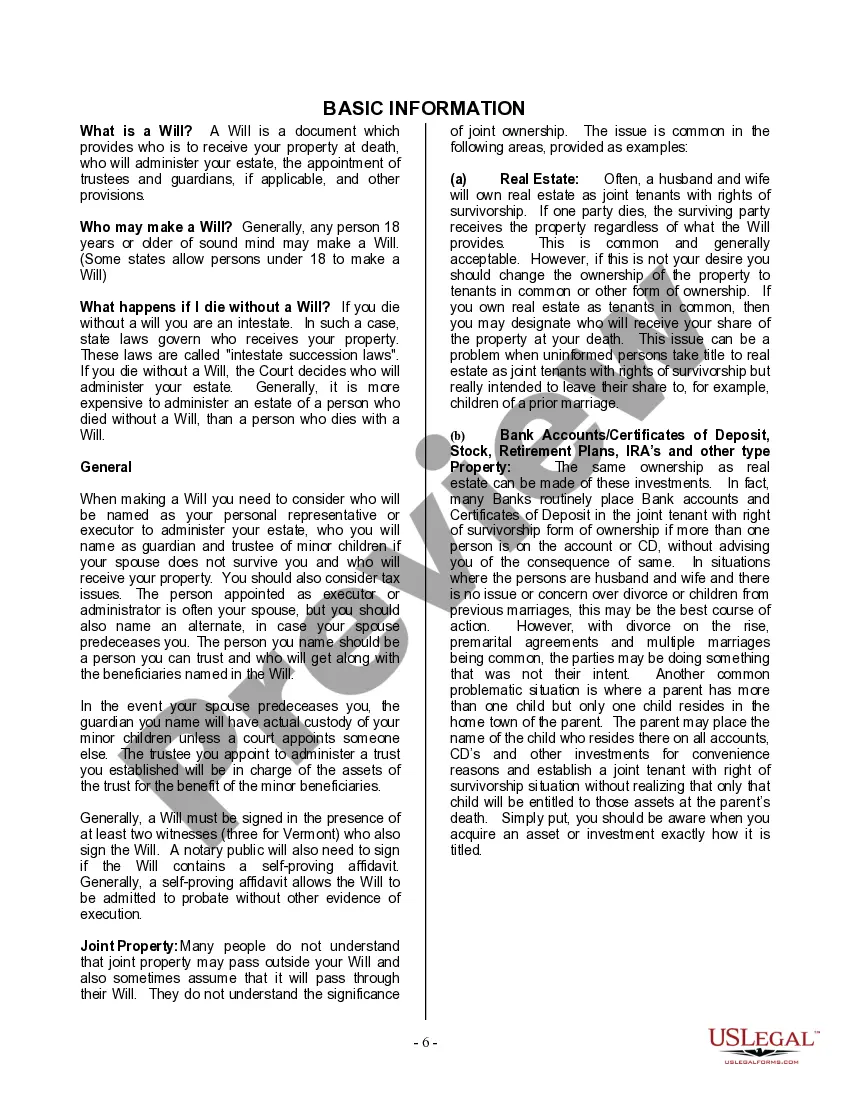
This Last Will and Testament should be used when a widow or widower wishes to dictate the distribution of their estate after their death, ensuring that their minor children are cared for both financially and emotionally. It is particularly important when there are specific wishes regarding who will manage the assets for the children or who will care for them. This will provide peace of mind during a difficult time, ensuring that decisions are made according to the individual's intentions.
Who this form is for
- Widows or widowers with minor children.
- Individuals who wish to specify how their assets will be distributed after death.
- Those who want to appoint a guardian for their minor children.
- Individuals interested in establishing a trust for their children's financial future.
Completing this form step by step
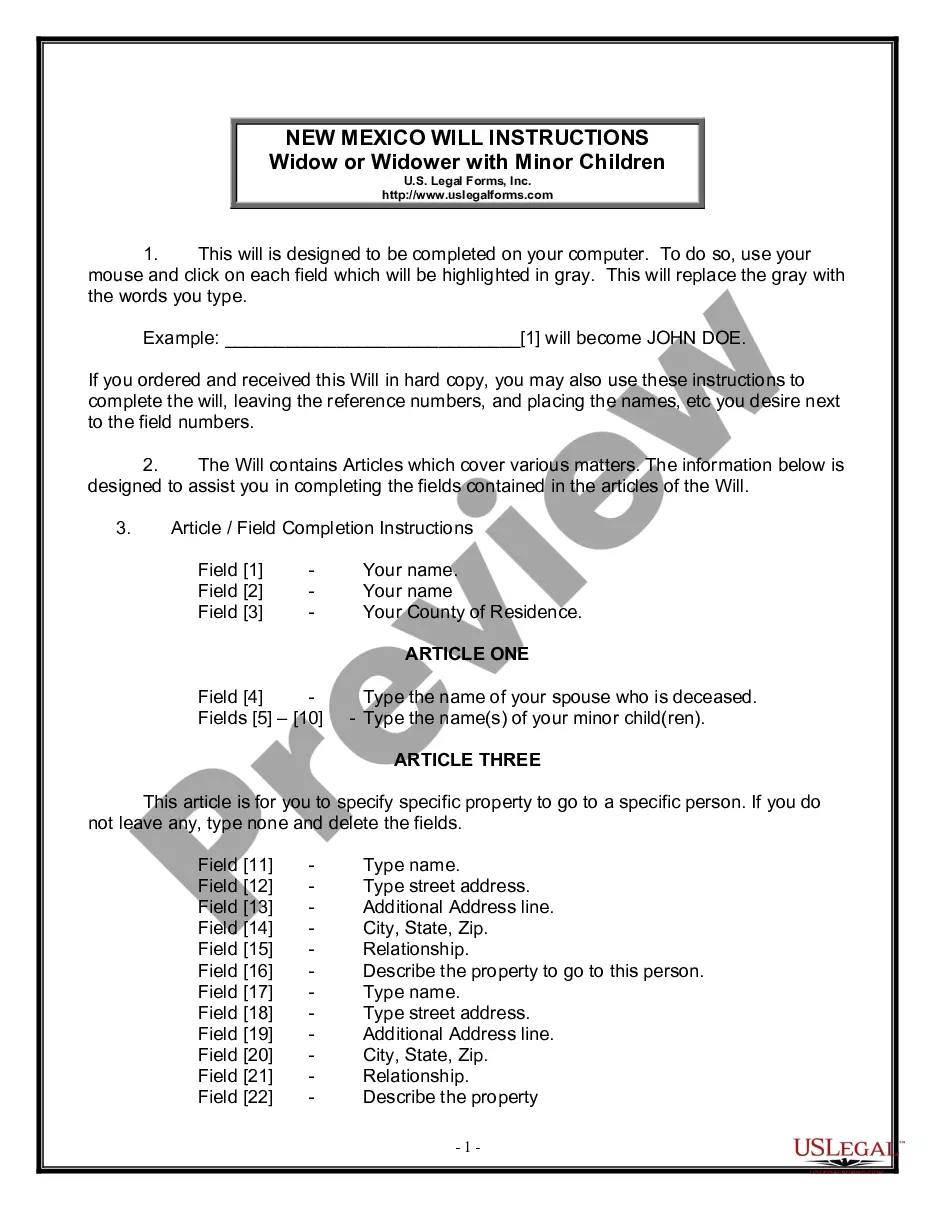
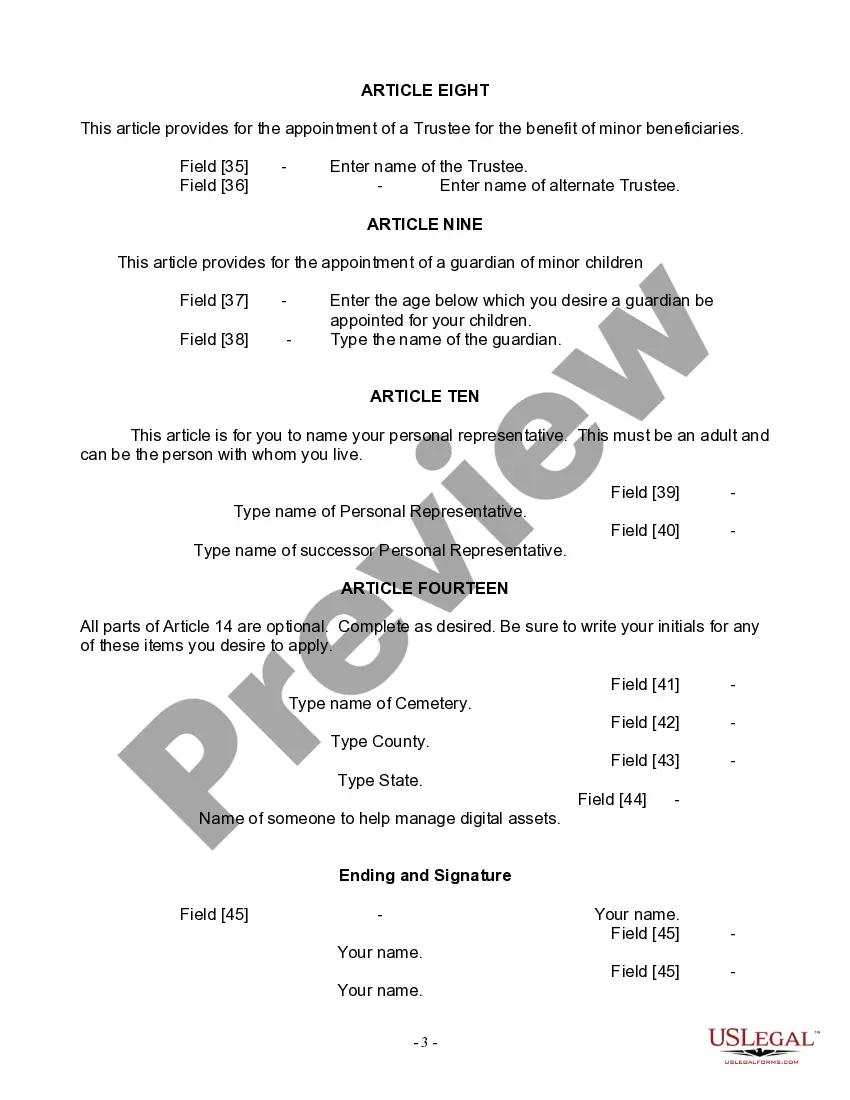
- Identify yourself by entering your name and county of residence.
- Record the name of your deceased spouse and the names of your minor children.
- Specify any particular properties or assets you wish to bequeath to specified individuals.
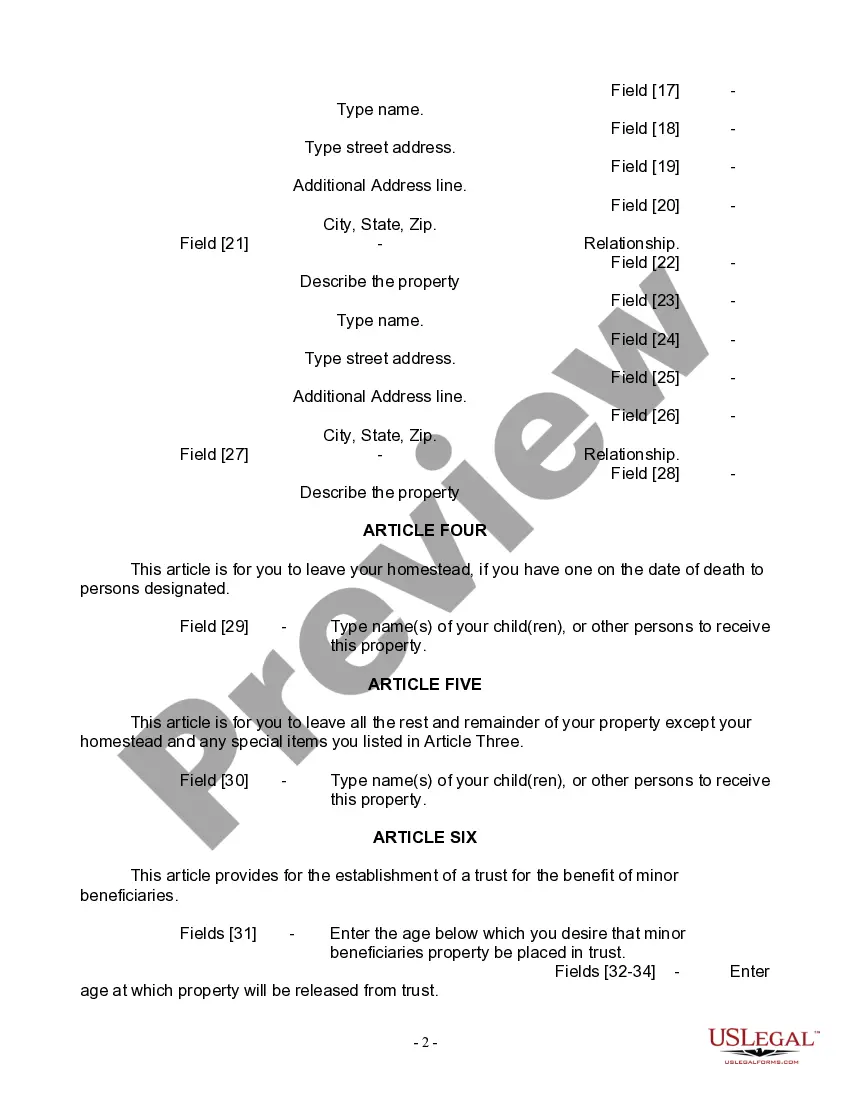
- Designate a trustee who will manage the assets for your minor children.
- Sign the document in the presence of two witnesses who are not related to you or named in the will.
Does this document require notarization?
This document requires notarization to meet legal standards. US Legal Forms provides secure online notarization powered by Notarize, allowing you to complete the process through a verified video call, available 24/7.
Get your form ready online
Our built-in tools help you complete, sign, share, and store your documents in one place.
Make edits, fill in missing information, and update formatting in US Legal Forms—just like you would in MS Word.
Download a copy, print it, send it by email, or mail it via USPS—whatever works best for your next step.
Sign and collect signatures with our SignNow integration. Send to multiple recipients, set reminders, and more. Go Premium to unlock E-Sign.
If this form requires notarization, complete it online through a secure video call—no need to meet a notary in person or wait for an appointment.
We protect your documents and personal data by following strict security and privacy standards.

Make edits, fill in missing information, and update formatting in US Legal Forms—just like you would in MS Word.

Download a copy, print it, send it by email, or mail it via USPS—whatever works best for your next step.

Sign and collect signatures with our SignNow integration. Send to multiple recipients, set reminders, and more. Go Premium to unlock E-Sign.

If this form requires notarization, complete it online through a secure video call—no need to meet a notary in person or wait for an appointment.

We protect your documents and personal data by following strict security and privacy standards.
Common mistakes to avoid
- Failing to have the will signed by two witnesses, which is a requirement for validity.
- Not appointing a backup personal representative in case the primary is unable to serve.
- Neglecting to specify the age at which minor beneficiaries will receive their inheritance.
- Omitting the self-proving affidavit, which can complicate the probate process.
Why complete this form online
- Convenience of completing the form from home at your own pace.
- Editable format allows for easy updates should life circumstances change.
- Access to instructions ensures that you complete the form correctly.
- Immediate availability for download, eliminating wait times associated with traditional methods.
Looking for another form?
Form popularity
FAQ
To make a will self-proved in New Mexico, the testator and witnesses must sign a self proving affidavit before a notary public. An affidavit is a sworn statement, and a notary public is an officer of the court. Therefore, an affidavit before a notary public is like making a statement in court.
Age: The testator must be at least 18 years old. Capacity: The testator must be of sound mind. Signature: The will must be signed by the testator or by someone else in the testator's name in his conscious presence, by his direction.
No probate is necessary. Joint tenancy often works well when couples (married or not) acquire real estate, vehicles, bank accounts or other valuable property together. In New Mexico, each owner, called a joint tenant, must own an equal share.
New Mexico law does not require a notary's signature and seal on a will. The only requirements for a valid will in New Mexico are that it be: in writing; signed by you or signed by someone directed by you and in your presence; and signed by two witnesses who both sign in the presence of you and each other.
A handwritten will can be used in New Mexico, but only if it comports with other statutory requirements to create a valid will.However, a formal will signed in the presence of witnesses that was prepared by an attorney is ideal.
No, in New Mexico, you do not need to notarize your will to make it legal. However, New Mexico allows you to make your will "self-proving" and you'll need to go to a notary if you want to do that. A self-proving will speeds up probate because the court can accept the will without contacting the witnesses who signed it.
A notarized will does not need to be probated.When a person dies leaving behind a will that is not notarized, the law requires that its validity be ascertained by a notary or by a court. Similarly, any non-notarized modification made to a will must be probated, whether the will is notarized or not.