New Mexico Last Will and Testament for a Single Person with Minor Children
Understanding this form
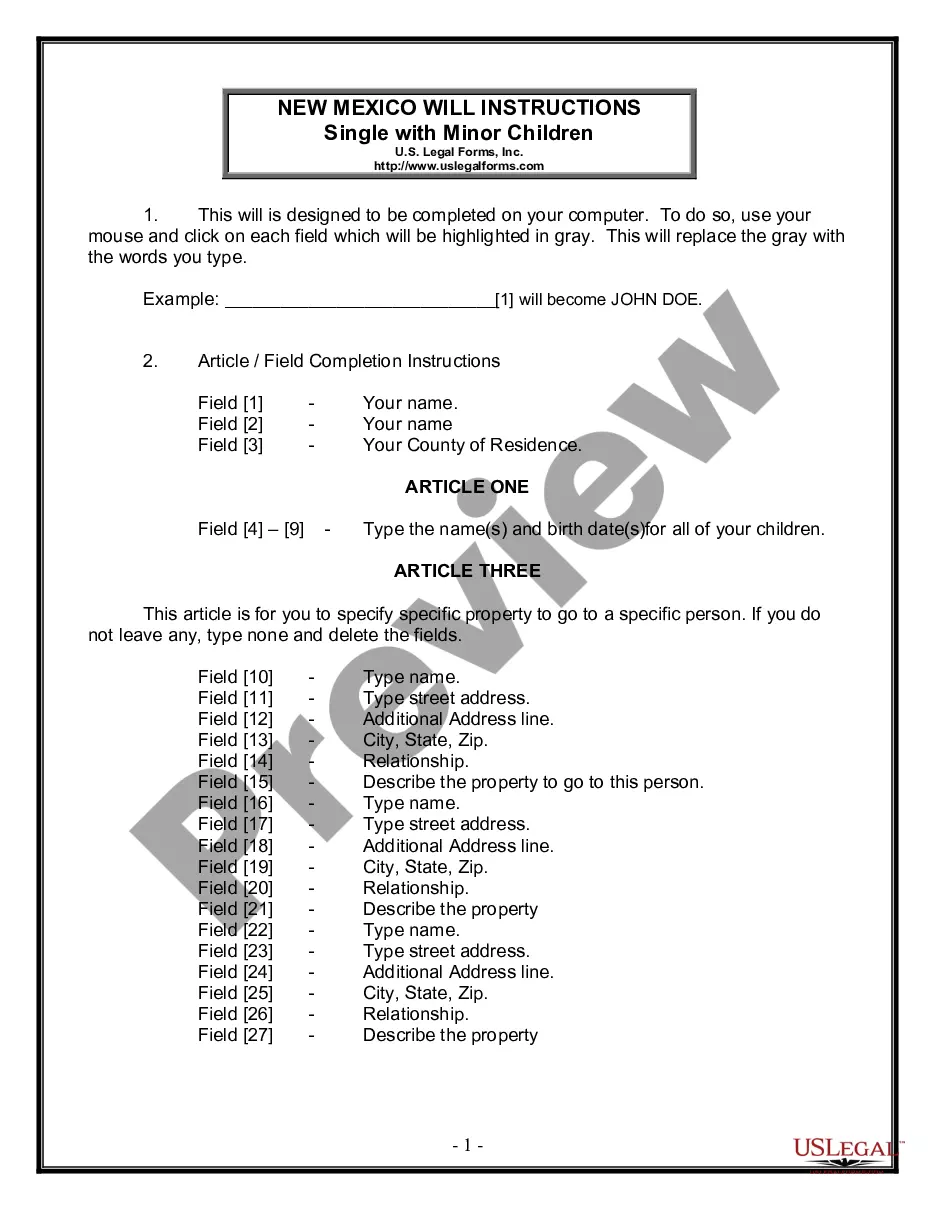
The Last Will and Testament for a Single Person with Minor Children is a legal document that specifies how your assets will be distributed upon your death, particularly if you have minor children. This form allows you to appoint a personal representative to oversee your estate, designate who will inherit your property, and make important decisions regarding the care of your children. Unlike similar forms, this Will includes specific provisions tailored for parents, ensuring your children's welfare and financial security are prioritized after your passing.
Key parts of this document
- Identification of the testator (you) and revocation of prior wills.
- Appointment of a personal representative to manage your estate.
- Designation of guardians for minor children.
- Provisions for specific bequests of property to designated individuals.
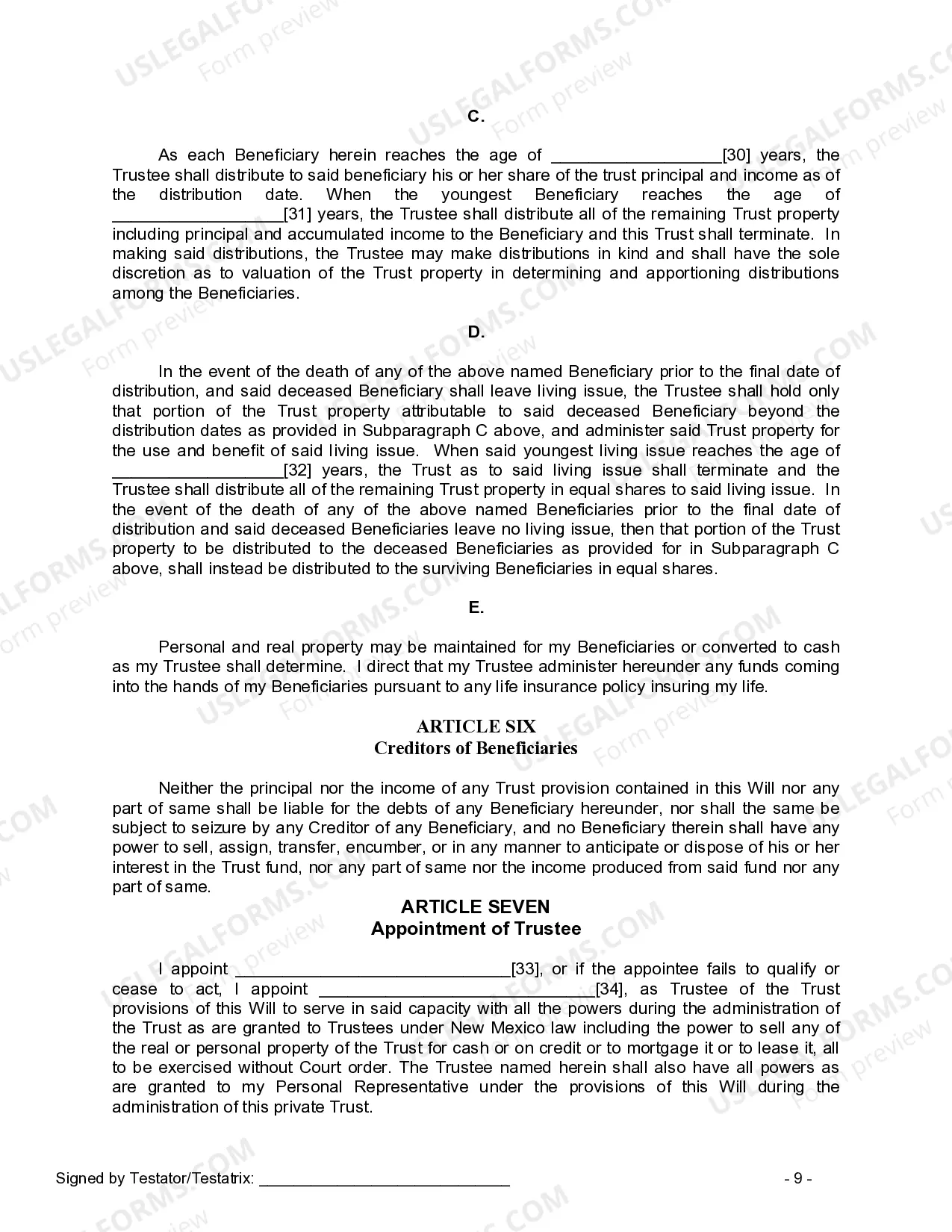
- Establishment of a trust for minor beneficiaries, outlining management terms.
- Self-proving affidavit provisions for streamlining probate.








Common use cases
This form is essential when a single individual with minor children wishes to dictate how their assets will be distributed after death and ensure proper guardianship for their children. It is particularly important when you want to lay out specific instructions regarding who will care for your children and how their inheritance should be handled in trust until they reach adulthood.
Who this form is for
- Single parents who have minor children.
- Individuals seeking to establish a clear plan for their estate distribution.
- Those wanting to designate guardianship for their children in the event of their passing.
- Any individual wishing to avoid intestate succession laws that could complicate the distribution of their assets.
Completing this form step by step
- Identify yourself by entering your full name and county of residence.
- List the names and birth dates of your minor children to ensure clear identification.
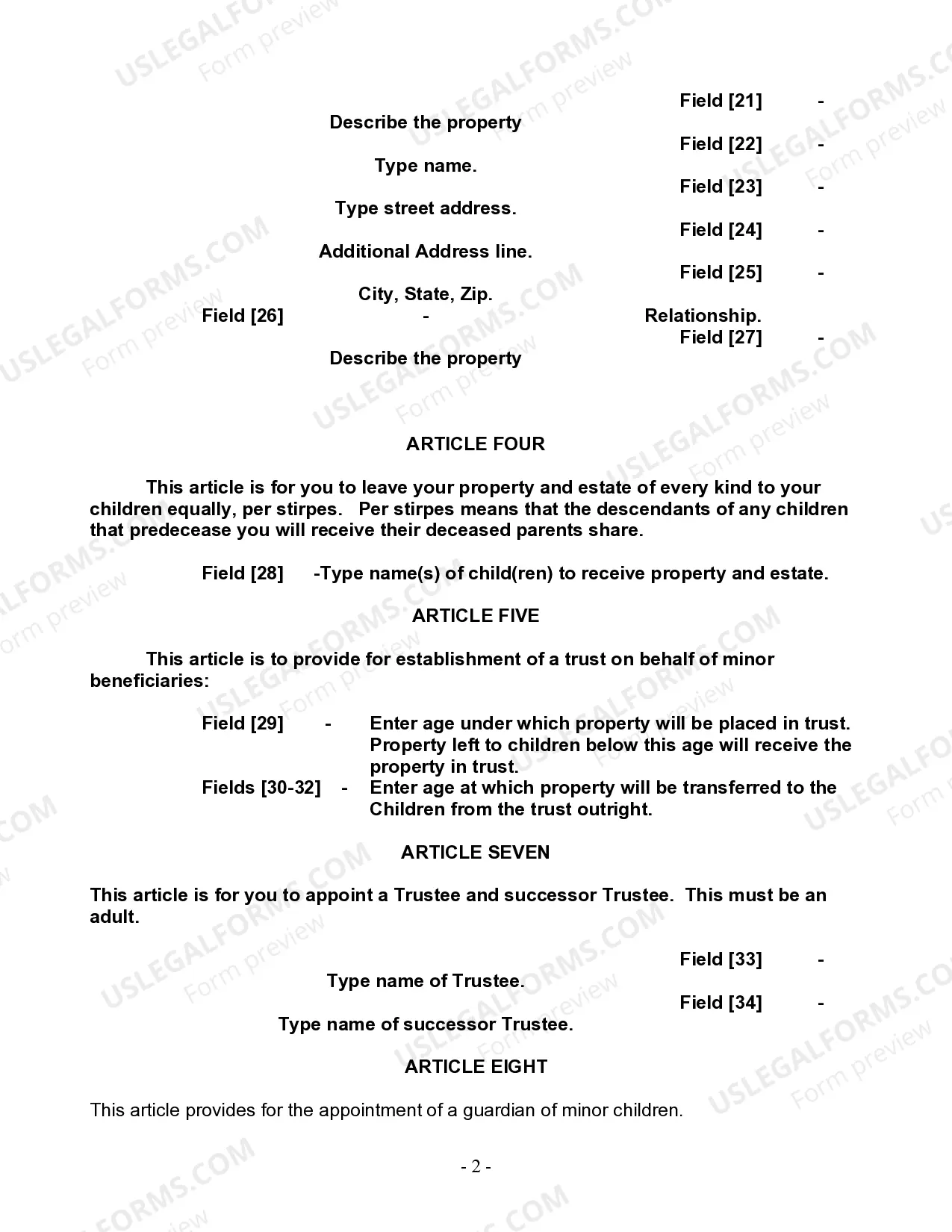
- Specify any specific properties you wish to bequeath to individuals in Article Three.
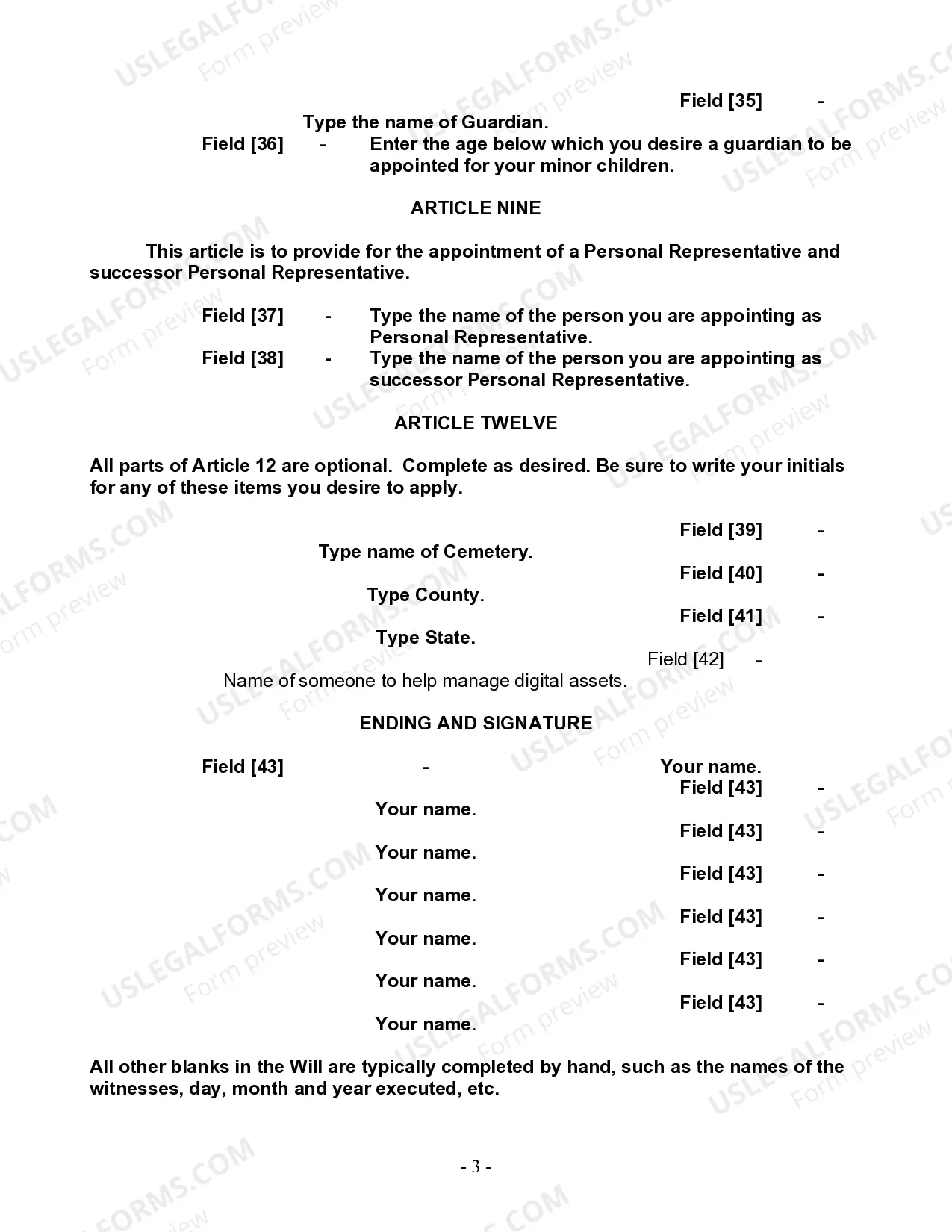
- Appoint a guardian for your minor children and a personal representative for your estate.
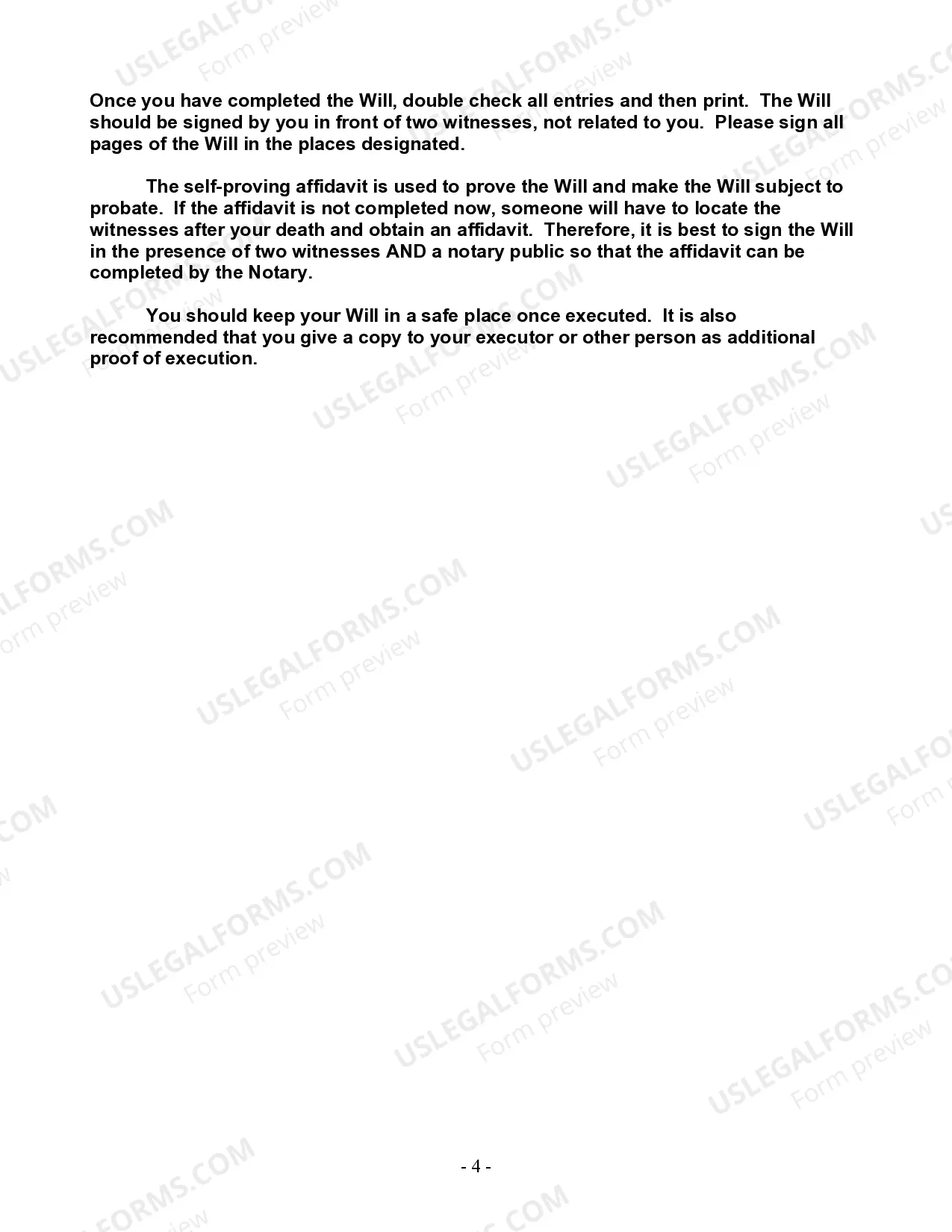
- Sign the Will in front of two witnesses, ensuring they also sign the document.
- If applicable, complete the self-proving affidavit for added legal validation.
Does this form need to be notarized?
Yes, this form must be notarized to be legally valid. The self-proving affidavit included in the form should be signed before a notary public, which confirms the authenticity of the witnesses and your signature, making the probate process smoother.
Get your form ready online
Our built-in tools help you complete, sign, share, and store your documents in one place.
Make edits, fill in missing information, and update formatting in US Legal Forms—just like you would in MS Word.
Download a copy, print it, send it by email, or mail it via USPS—whatever works best for your next step.
Sign and collect signatures with our SignNow integration. Send to multiple recipients, set reminders, and more. Go Premium to unlock E-Sign.
If this form requires notarization, complete it online through a secure video call—no need to meet a notary in person or wait for an appointment.
We protect your documents and personal data by following strict security and privacy standards.

Make edits, fill in missing information, and update formatting in US Legal Forms—just like you would in MS Word.

Download a copy, print it, send it by email, or mail it via USPS—whatever works best for your next step.

Sign and collect signatures with our SignNow integration. Send to multiple recipients, set reminders, and more. Go Premium to unlock E-Sign.

If this form requires notarization, complete it online through a secure video call—no need to meet a notary in person or wait for an appointment.

We protect your documents and personal data by following strict security and privacy standards.
Typical mistakes to avoid
- Failing to list all minor children, which can lead to disputes.
- Not having the Will signed in front of appropriate witnesses.
- Overlooking the importance of appointing a reliable personal representative.
- Leaving out provisions for a trust for minor beneficiaries.
Why complete this form online
- Convenience of completing the Will on your computer at your own pace.
- Edit and customize the document to fit your specific needs.
- Access to forms written and reviewed by licensed attorneys.
- Eliminates the need for unnecessary trips to a lawyer's office.
Summary of main points
- A valid will is essential for ensuring your wishes are carried out after your death.
- You have the flexibility to designate guardians and trustees for your childrenâs welfare.
- Proper execution of the will includes signing in front of witnesses and notarization, if required.
Looking for another form?
Form popularity
FAQ
Property in a living trust. One of the ways to avoid probate is to set up a living trust. Retirement plan proceeds, including money from a pension, IRA, or 401(k) Stocks and bonds held in beneficiary. Proceeds from a payable-on-death bank account.
You can make your own will in California, using Nolo's do-it-yourself online will or will software. You may, however, want to consult a lawyer in some situations; for example, if you suspect your will might be contested or if you want to disinherit your spouse, you should talk with an attorney.
1Create the initial document. Start by titling the document Last Will and Testament" and including your full legal name and address.2Designate an executor.3Appoint a guardian.4Name the beneficiaries.5Designate the assets.6Ask witnesses to sign your will.7Store your will in a safe place.
You don't have to have a lawyer to create a basic will you can prepare one yourself. It must meet your state's legal requirements and should be notarized.But be careful: For anything complex or unusual, like distributing a lot of money or cutting someone out, you'd do best to hire a lawyer.
A will can also be declared invalid if someone proves in court that it was procured by undue influence. This usually involves some evil-doer who occupies a position of trust -- for example, a caregiver or adult child -- manipulating a vulnerable person to leave all, or most, of his property to the manipulator instead
Bank accounts. Brokerage or investment accounts. Retirement accounts and pension plans. A life insurance policy.
Include personal identifying information. Include a statement about your age and mental status. Designate an executor. Decide who will take care of your children. Choose your beneficiaries. List your funeral details. Sign and date your Last Will and Testament.
An executor of a will cannot take everything unless they are the will's sole beneficiary.However, the executor cannot modify the terms of the will. As a fiduciary, the executor has a legal duty to act in the beneficiaries and estate's best interests and distribute the assets according to the will.
You and your spouse may have one of the most common types of estate plans between married couples, which is a simple will leaving everything to each other. With this type of plan, you leave all of your assets outright to your surviving spouse. The kids or other beneficiaries only get something after you are both gone.