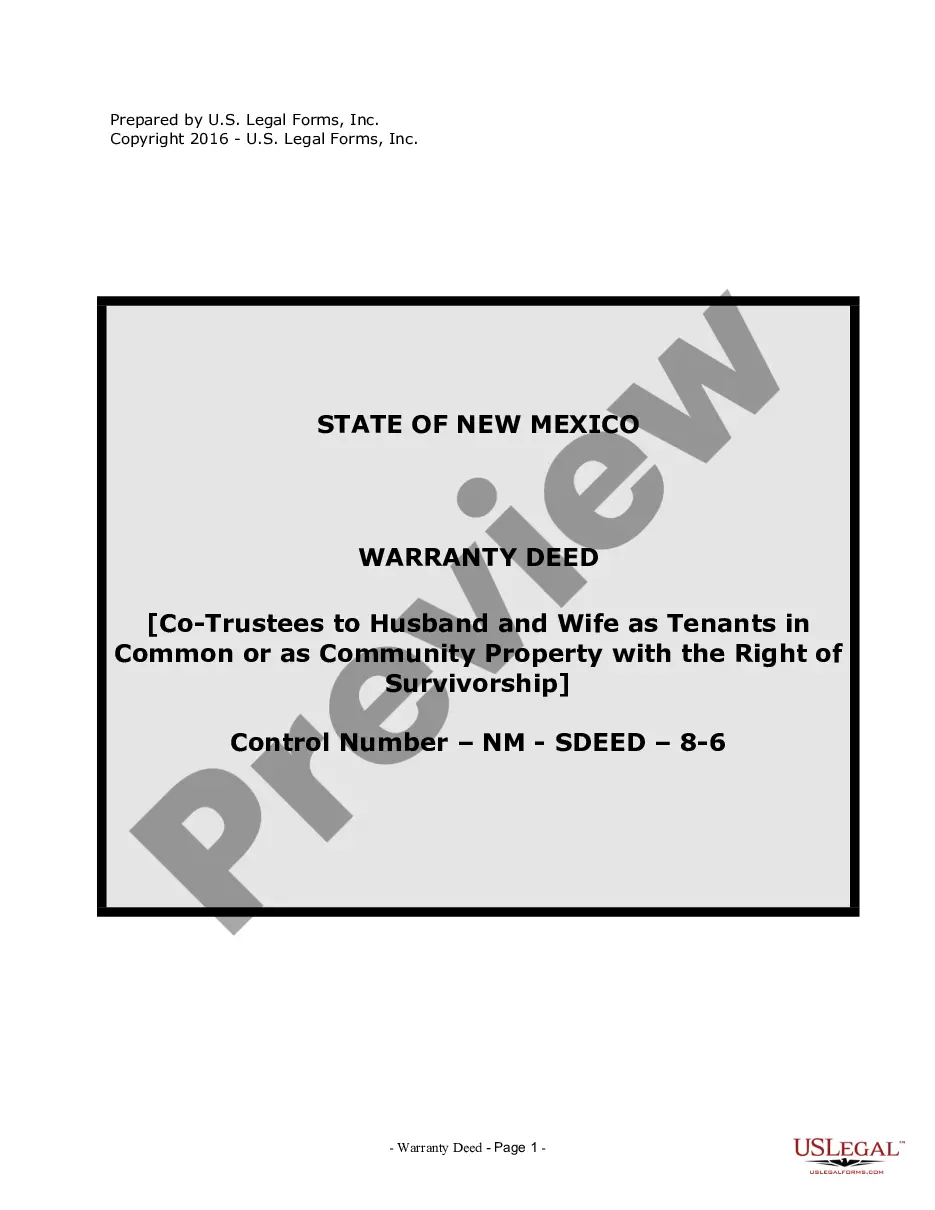
New Mexico Warranty Deed for Co-Trustees to Husband and Wife as Tenants in Common or as Community Property
Understanding this form
The Warranty Deed for Co-Trustees to Husband and Wife as Tenants in Common or as Community Property is a legal document that transfers real estate ownership from co-trustees of a trust to a married couple. This warranty deed ensures that the couple holds title either as tenants in common or as community property, providing certain rights of survivorship. This form is particularly important for couples looking to clarify their ownership stake in a property held in trust, differentiating it from standard warranty deeds that may not involve trusts or co-trustees.
Main sections of this form
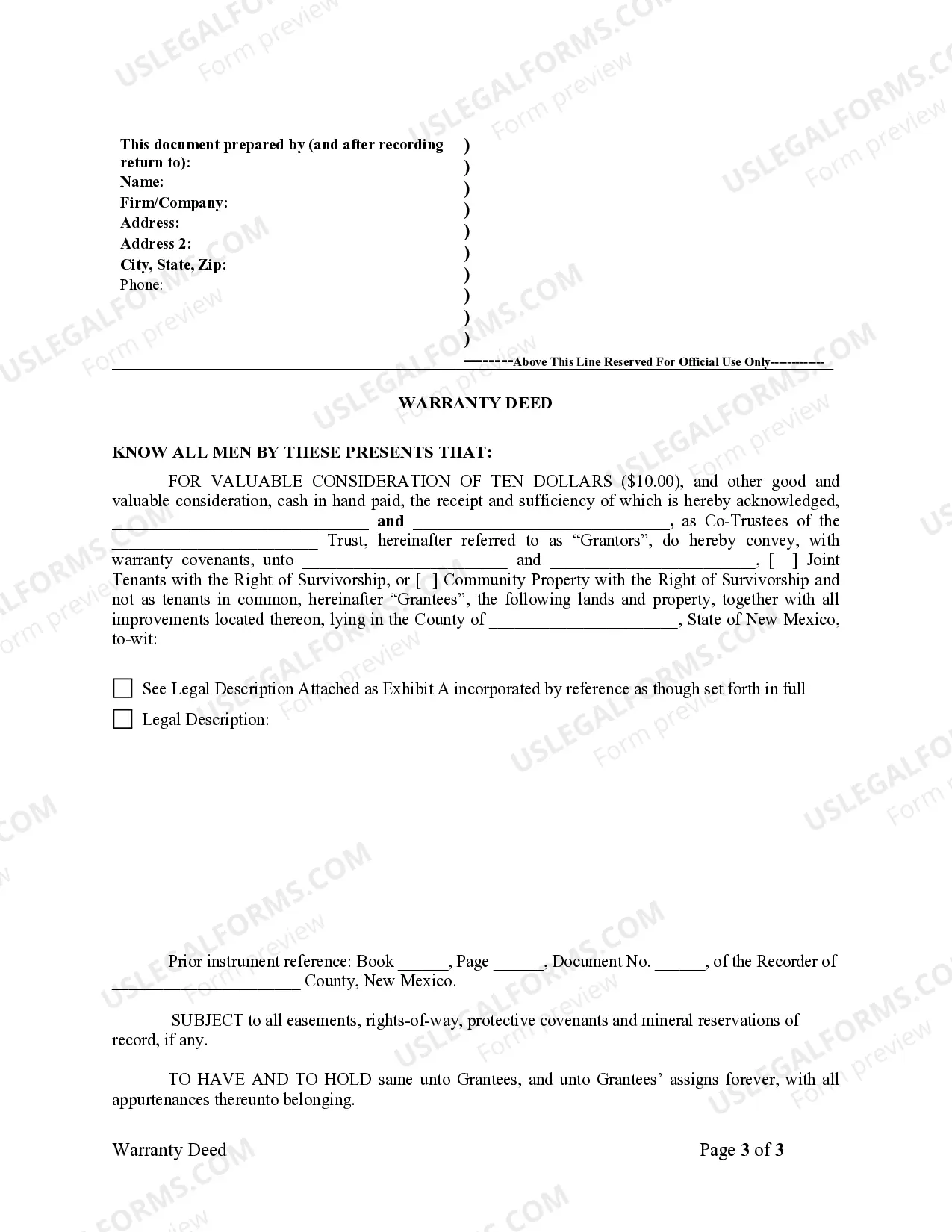
- Grantors and Grantees: Identifies the co-trustees as the grantors and the husband and wife as the grantees, detailing their ownership rights.
- Property Description: A specific description of the property being transferred, ensuring clarity regarding the asset.
- Community Property Rights: Specifies if the property is to be held as tenants in common or as community property, impacting ownership rights upon the death of one spouse.
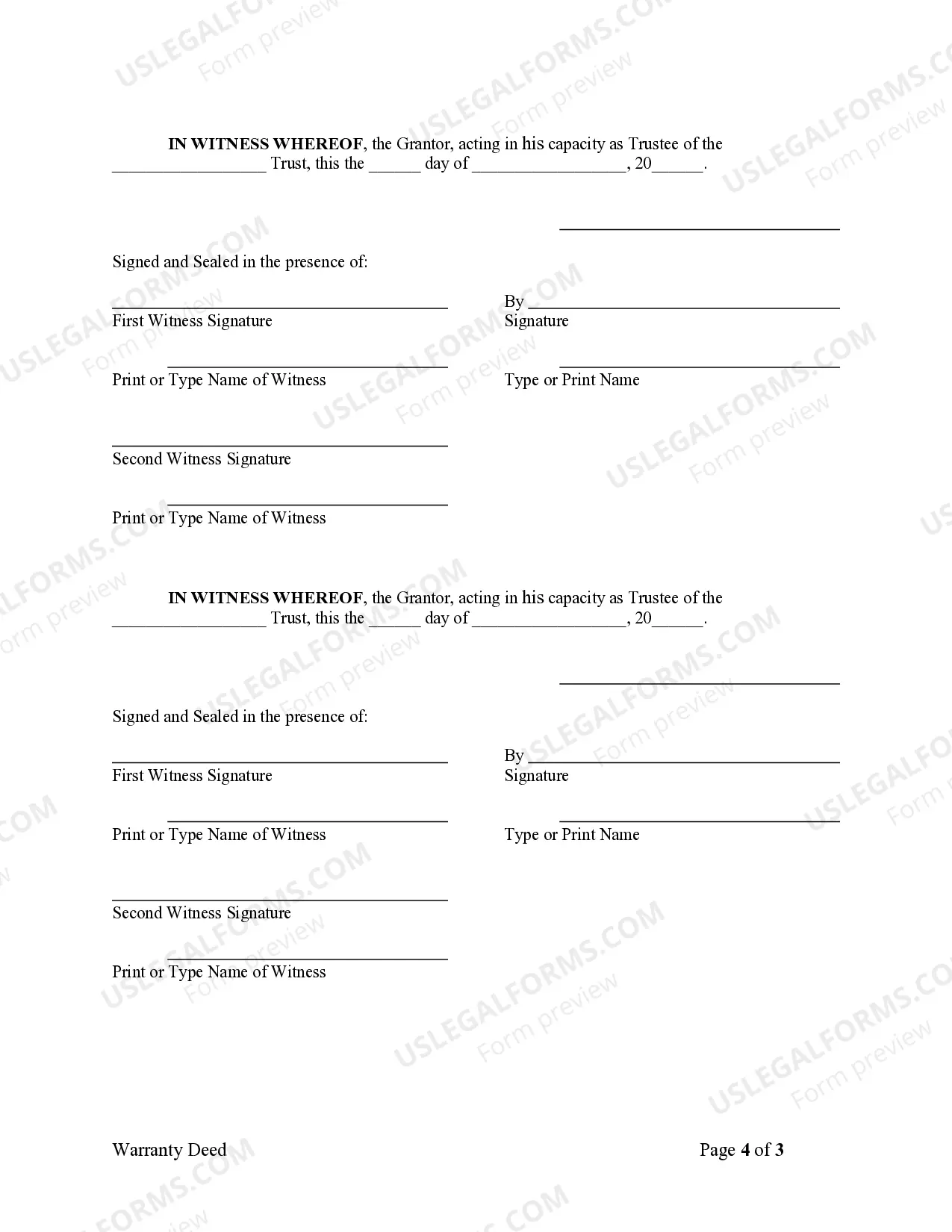
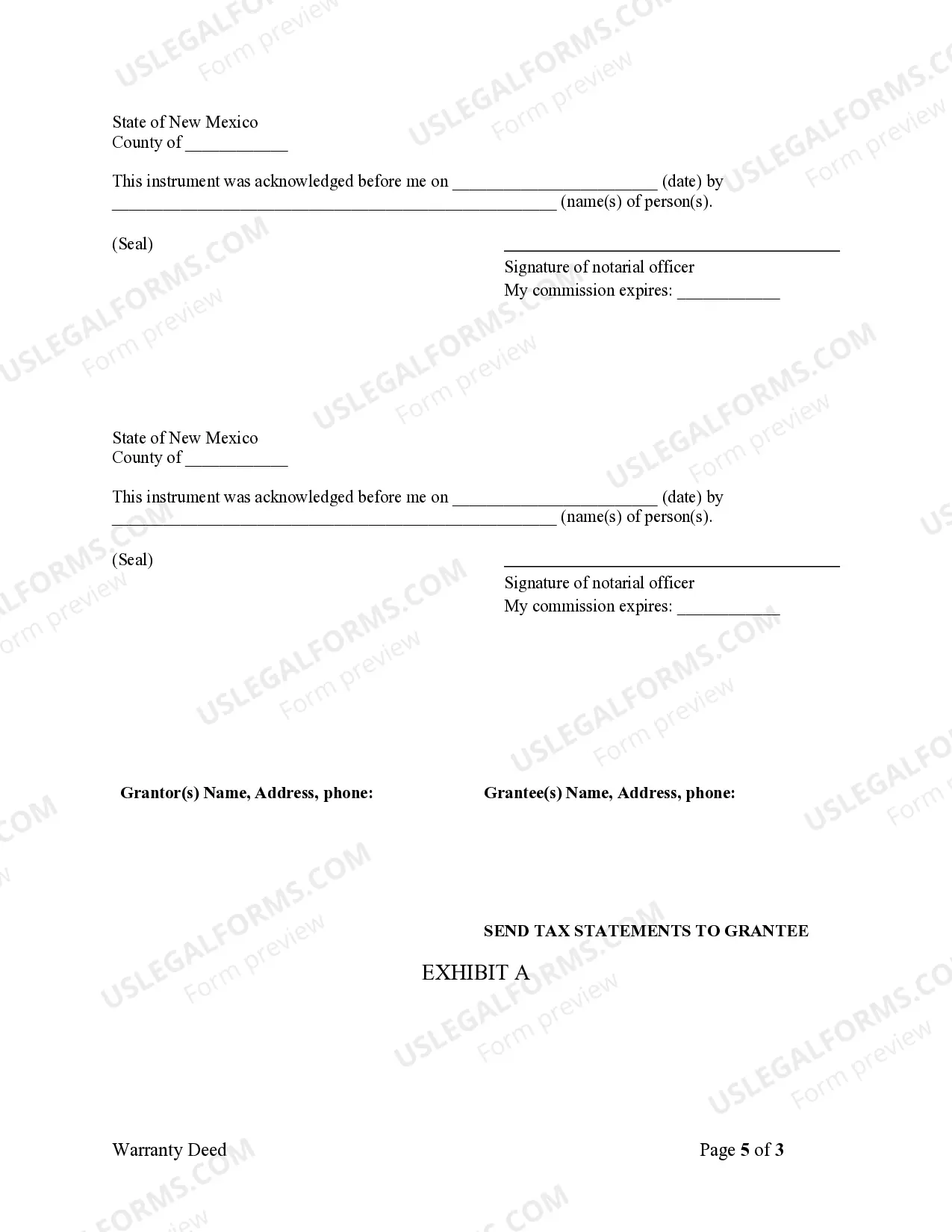
- Witnesses and Signatures: Includes required signatures and witnesses to validate the deed.
- Legal Language: Incorporates necessary legal clauses to ensure enforceability in New Mexico.



Situations where this form applies
This form should be used when co-trustees wish to transfer real estate to themselves as a married couple. It's particularly useful in situations where the couple desires to establish joint ownership with clarity on their rights, especially in states that recognize community property. Common scenarios include the acquisition of marital property or transferring properties held in trust into joint names for estate planning purposes.
Who needs this form
- Co-trustees managing a trust who want to transfer property to a married couple.
- Married couples looking to clarify their ownership of property held in a trust.
- Individuals involved in estate planning or asset management who want to ensure proper legal documentation of property transfers.
Completing this form step by step
- Identify the parties involved, filling in the names of the co-trustees as grantors and the husband and wife as grantees.
- Provide a clear description of the property being transferred, including any relevant legal identifiers.
- Specify how the couple is holding the title, either as tenants in common or community property.
- Collect signatures from all necessary parties, ensuring witnesses are present if required by law.
- File the completed deed with the appropriate county office to complete the property transfer process.
Is notarization required?
Notarization is required for this form to take effect. Our online notarization service, powered by Notarize, lets you verify and sign documents remotely through an encrypted video session, available 24/7.
Get your form ready online
Our built-in tools help you complete, sign, share, and store your documents in one place.
Make edits, fill in missing information, and update formatting in US Legal Forms—just like you would in MS Word.
Download a copy, print it, send it by email, or mail it via USPS—whatever works best for your next step.
Sign and collect signatures with our SignNow integration. Send to multiple recipients, set reminders, and more. Go Premium to unlock E-Sign.
If this form requires notarization, complete it online through a secure video call—no need to meet a notary in person or wait for an appointment.
We protect your documents and personal data by following strict security and privacy standards.

Make edits, fill in missing information, and update formatting in US Legal Forms—just like you would in MS Word.

Download a copy, print it, send it by email, or mail it via USPS—whatever works best for your next step.

Sign and collect signatures with our SignNow integration. Send to multiple recipients, set reminders, and more. Go Premium to unlock E-Sign.

If this form requires notarization, complete it online through a secure video call—no need to meet a notary in person or wait for an appointment.

We protect your documents and personal data by following strict security and privacy standards.
Common mistakes to avoid
- Failing to accurately describe the property being transferred.
- Not securing the required signatures from all parties involved.
- Neglecting to check local requirements for witness signatures or notarization.
- Inaccurately stating how the couple will hold the title.
Advantages of online completion
- Convenient access to legal forms that can be completed from home.
- Editability allows for easy adjustments before finalizing the document.
- Reliable format designed by licensed attorneys to ensure legal compliance.
Looking for another form?







Form popularity
FAQ
Joint Tenancy Two or more people, including spouses, may hold title to their jointly owned real estate as joint tenants. There is a so-called right of survivorship, which means that when one dies, the property automatically transfers to the survivor without the necessity of probating the estate.
To make the form legally binding, you must sign it in front of a notary public. You must then file your signed and notarized deed with the county office that's in charge of recording property documents. Once the grantee signs the warranty deed, he/she legally has ownership and claim to the property.
Under the Grantor section of the deed, write the name of the person transferring title. Under Grantee, write the name of the person receiving title. Describe the parcel of land. Use the street address and include the North Carolina County where the land is located.
The General Rule. In the great majority of states, if you and the other owners call yourselves "joint tenants with the right of survivorship," or put the abbreviation "JT WROS" after your names on the title document, you create a joint tenancy. A car salesman or bank staffer may assure you that other words are enough.
The name and address of the seller (called the grantor) The name and address of the buyer (called the grantee) A legal description of the property (found on the previous deed) A statement that the grantor is transferring the property to the grantee.
The answer is yes. Parties to a transaction are always free to prepare their own deeds. If you do so, be sure your deed measures up to your state's legal regulations, to help avert any legal challenge to the deed later.
Joint Tenancy With Survivorship In this arrangement, tenants have an equal right to the account's assets. They are also afforded survivorship rights in the event of the death of another account holder. In simple terms, it means that when one partner or spouse dies, the other receives all of the money or property.
To transfer it, you will have to get a succession certificate (for moveable property) and a letter of administration (for Immoveable property). While doing so, get the son and daughter to give no objections in court that they have no objection if all the property is transferred to the widow.
The name and address of the seller (called the grantor) The name and address of the buyer (called the grantee) A legal description of the property (found on the previous deed) A statement that the grantor is transferring the property to the grantee.