New Jersey General Durable Power of Attorney for Property and Finances or Financial Effective Immediately

What is this form?
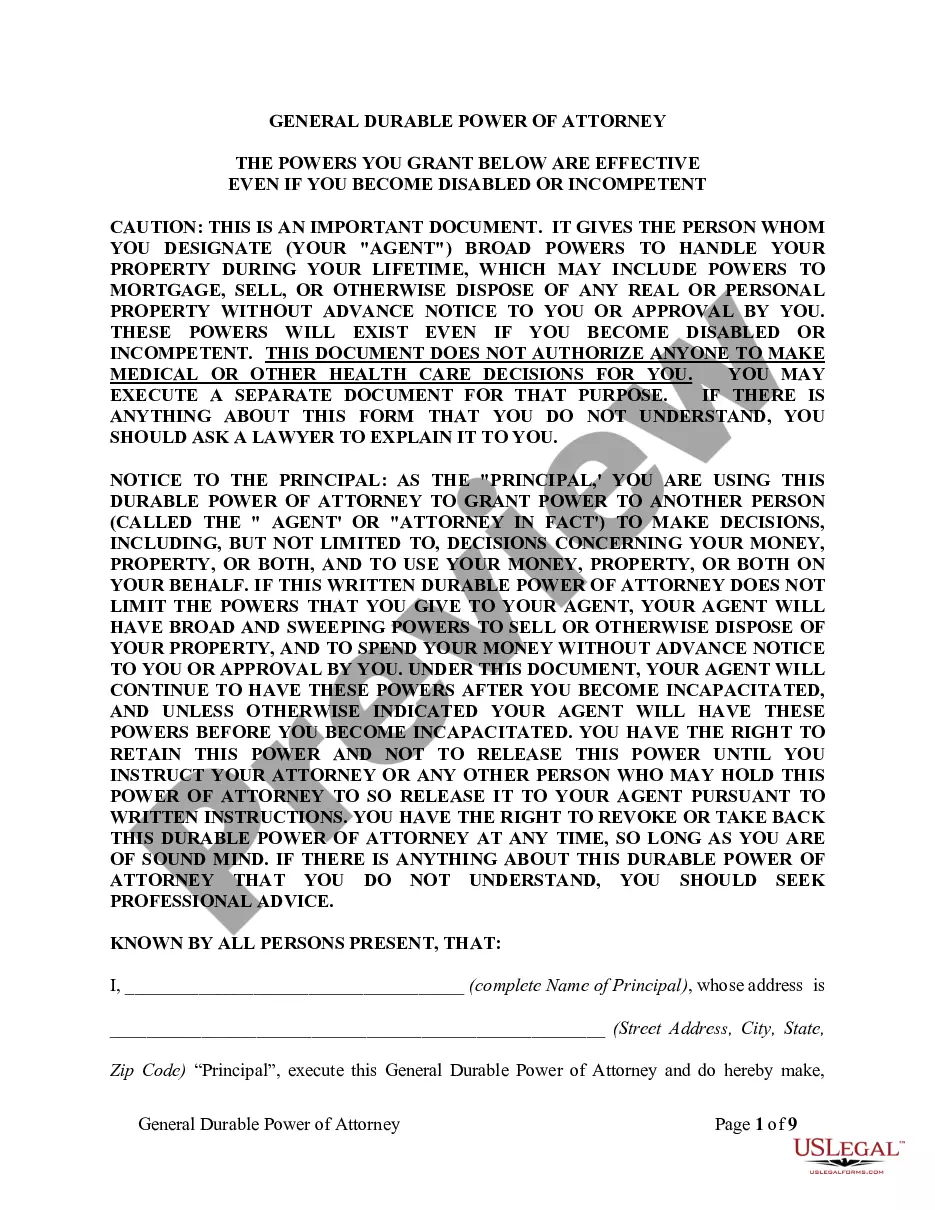
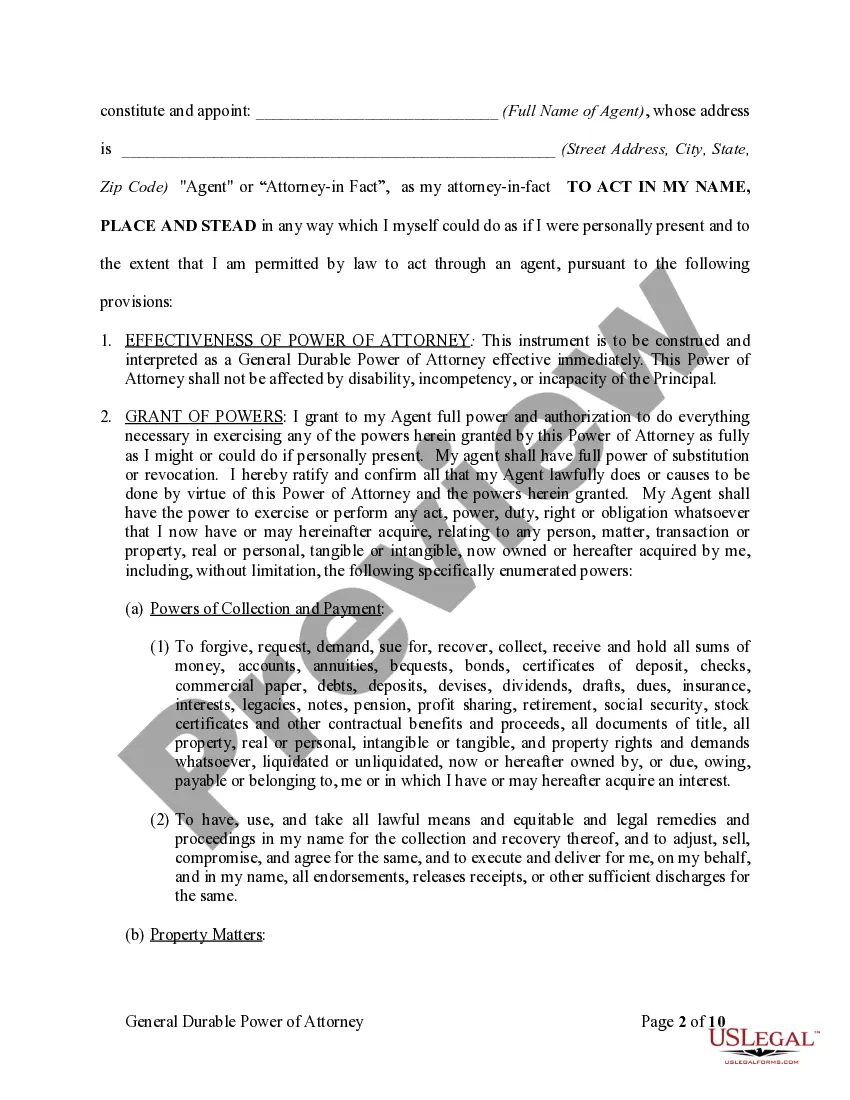
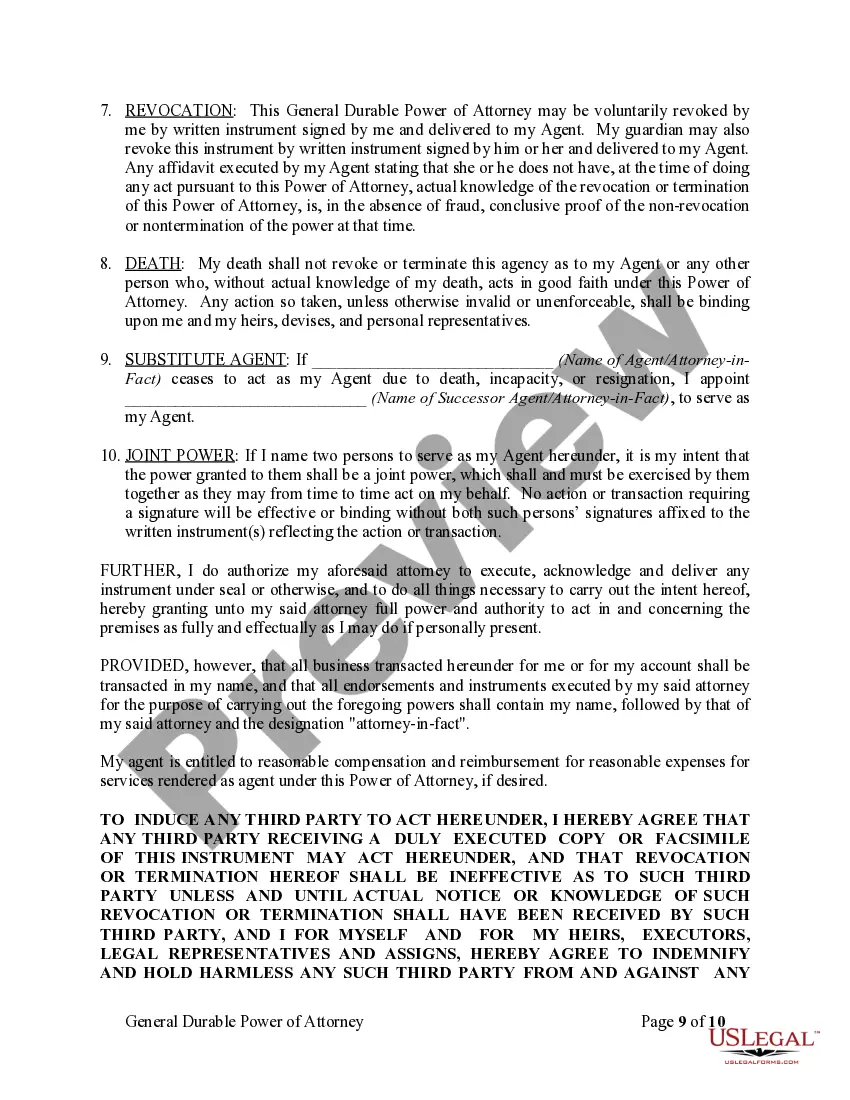
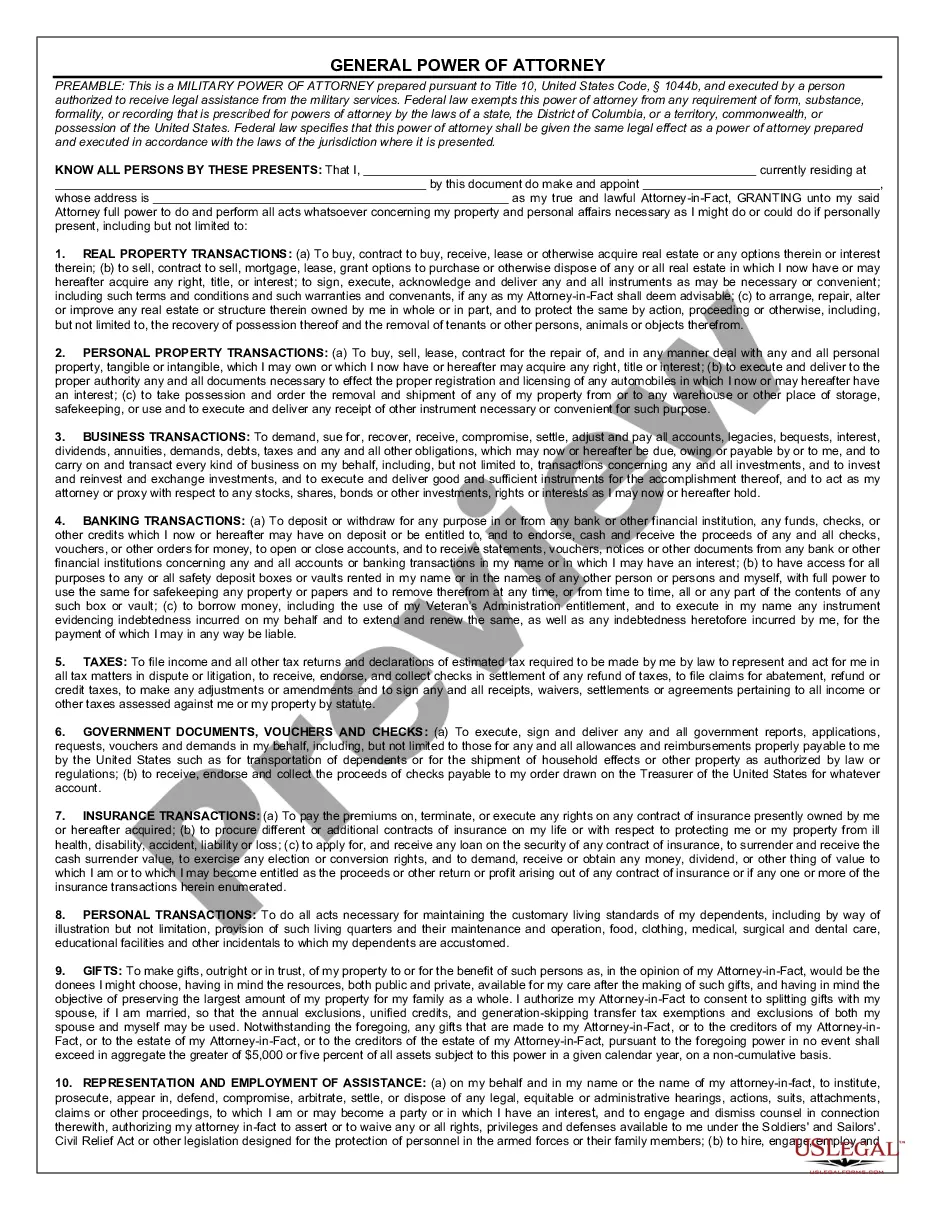
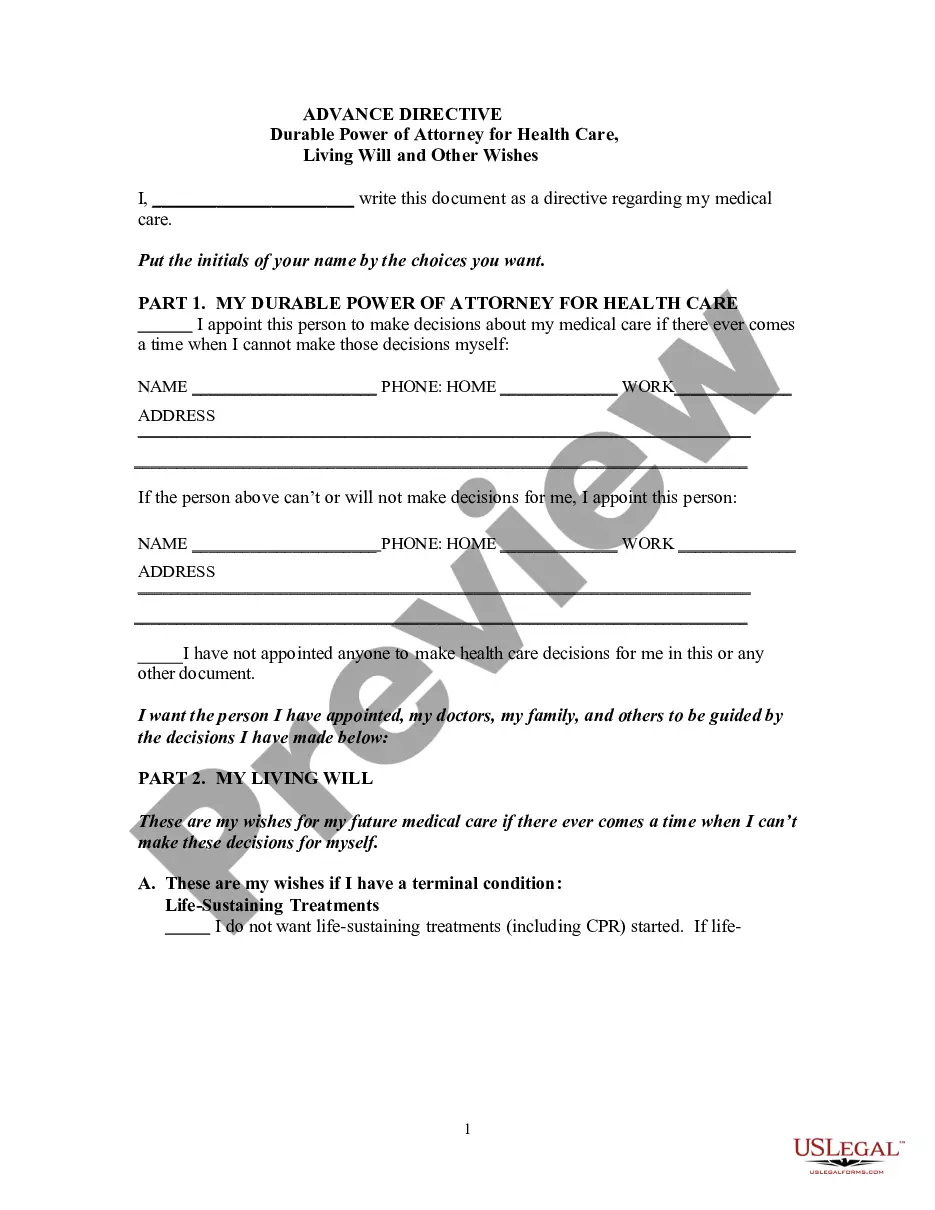
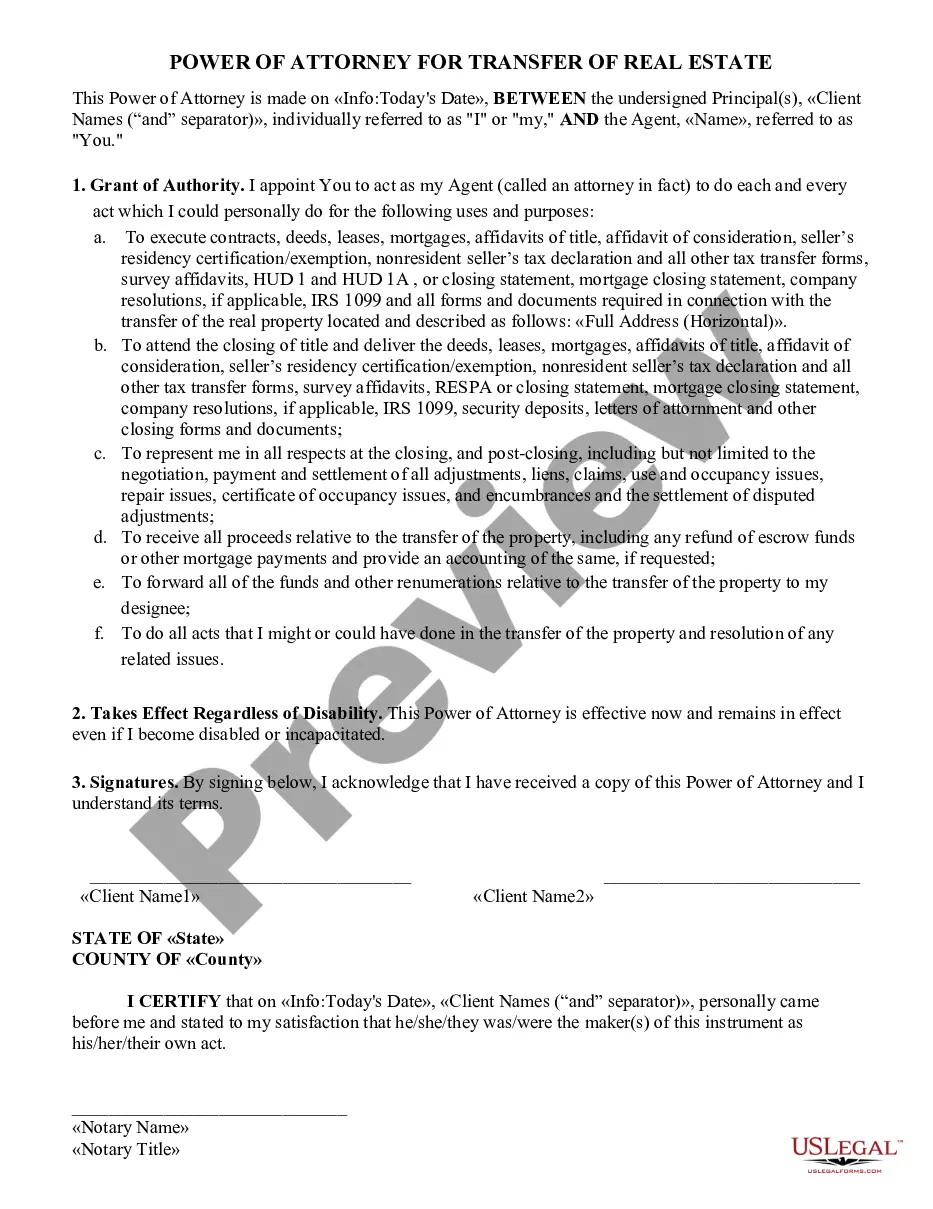
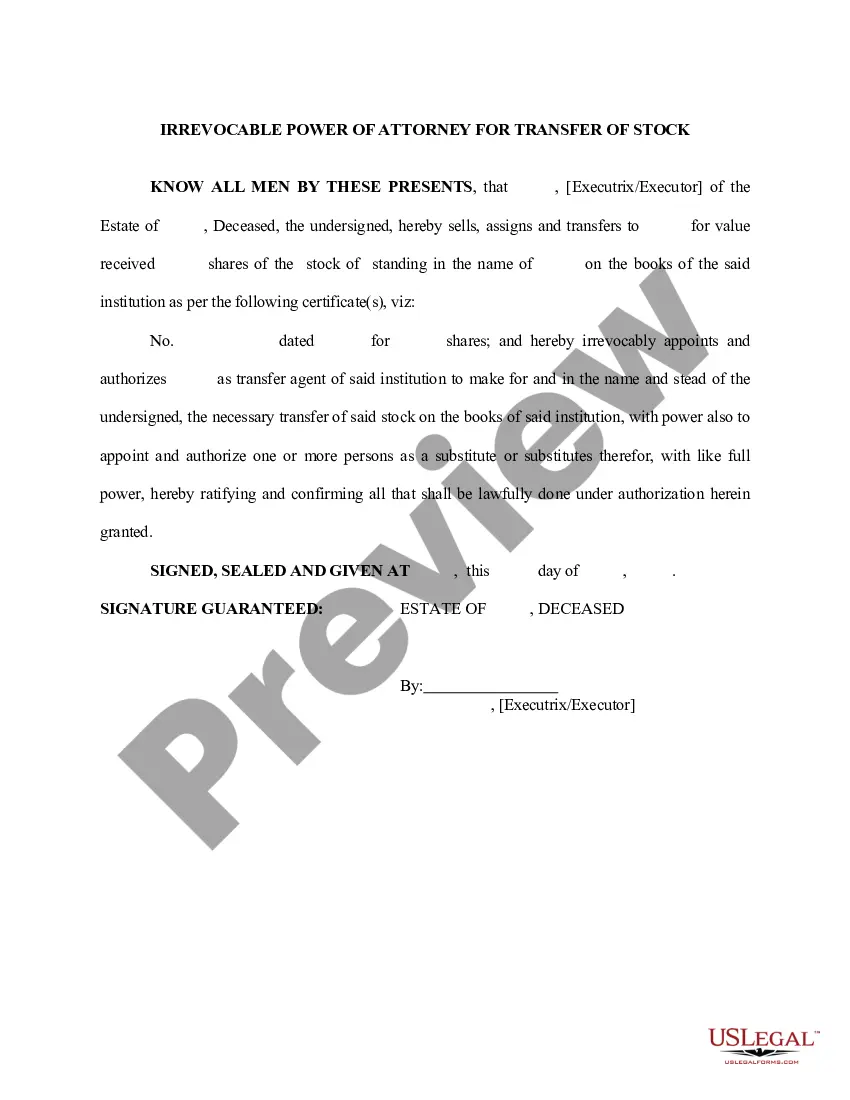
The General Durable Power of Attorney for Property and Finances, also known as a Durable Power of Attorney, is a legal document that grants broad powers to an appointed agent to manage your financial affairs immediately, even if you become incapacitated. This form allows your agent to handle various matters, including property management, banking, business transactions, and other financial decisions on your behalf. It's important to note that this form does not cover health care decisions, distinguishing it from other powers of attorney designed for medical issues.
What’s included in this form
- Principal and agent identification fields
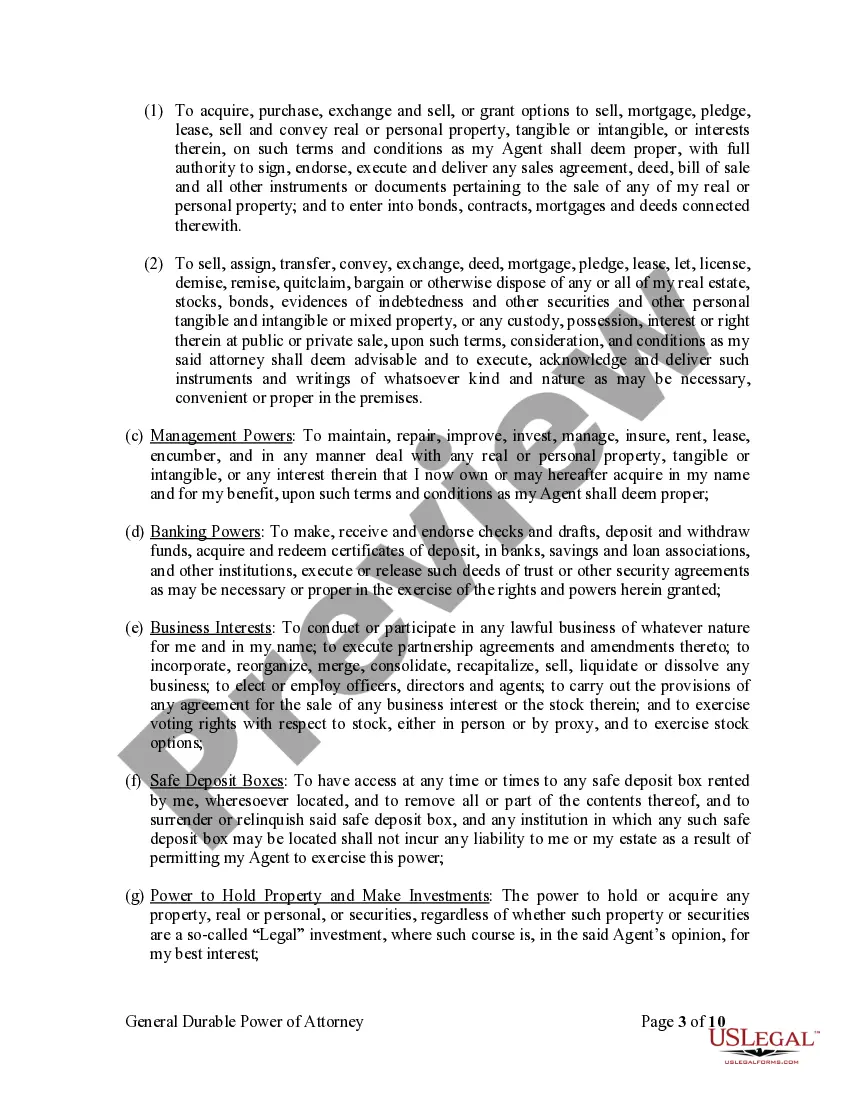
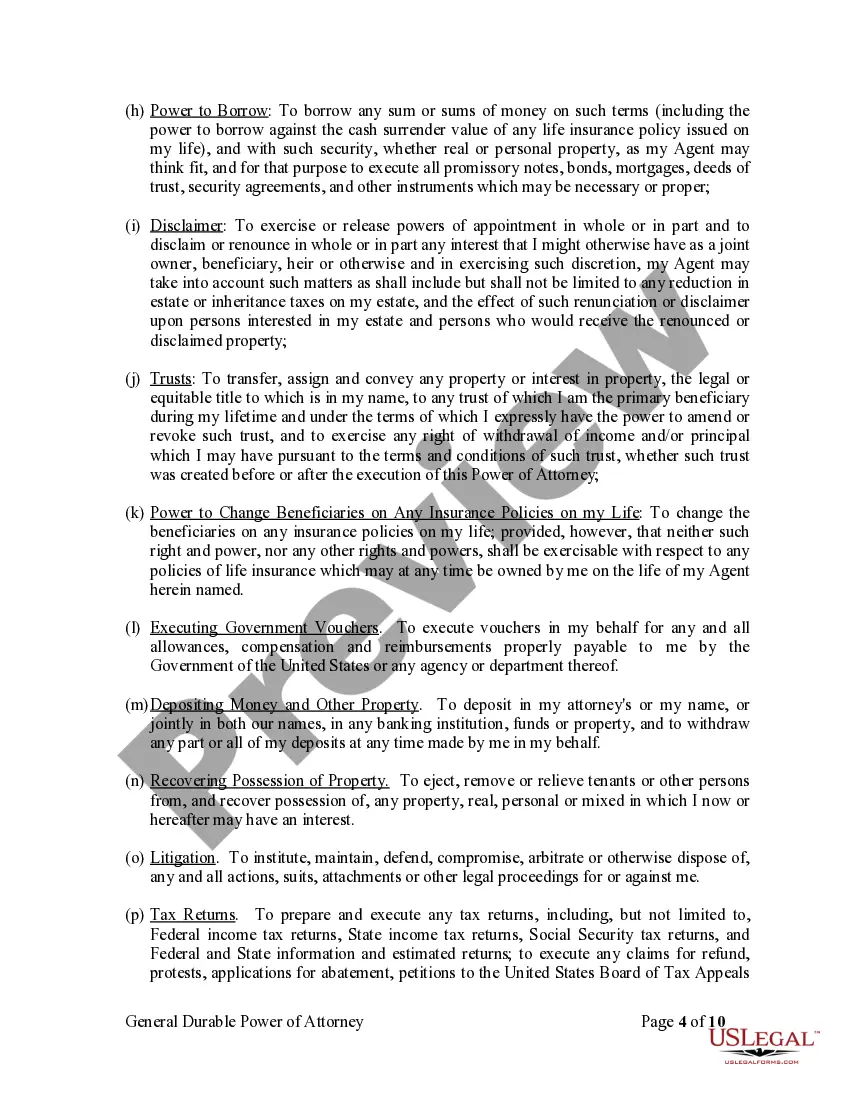
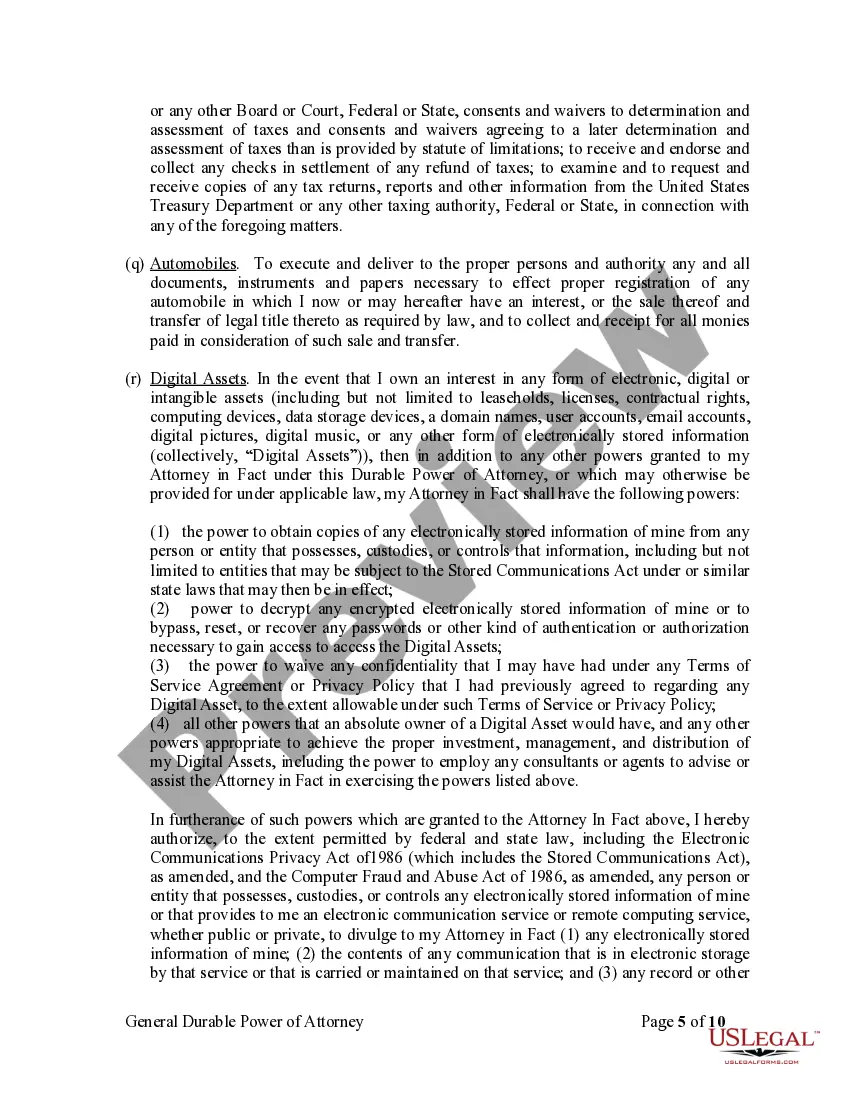
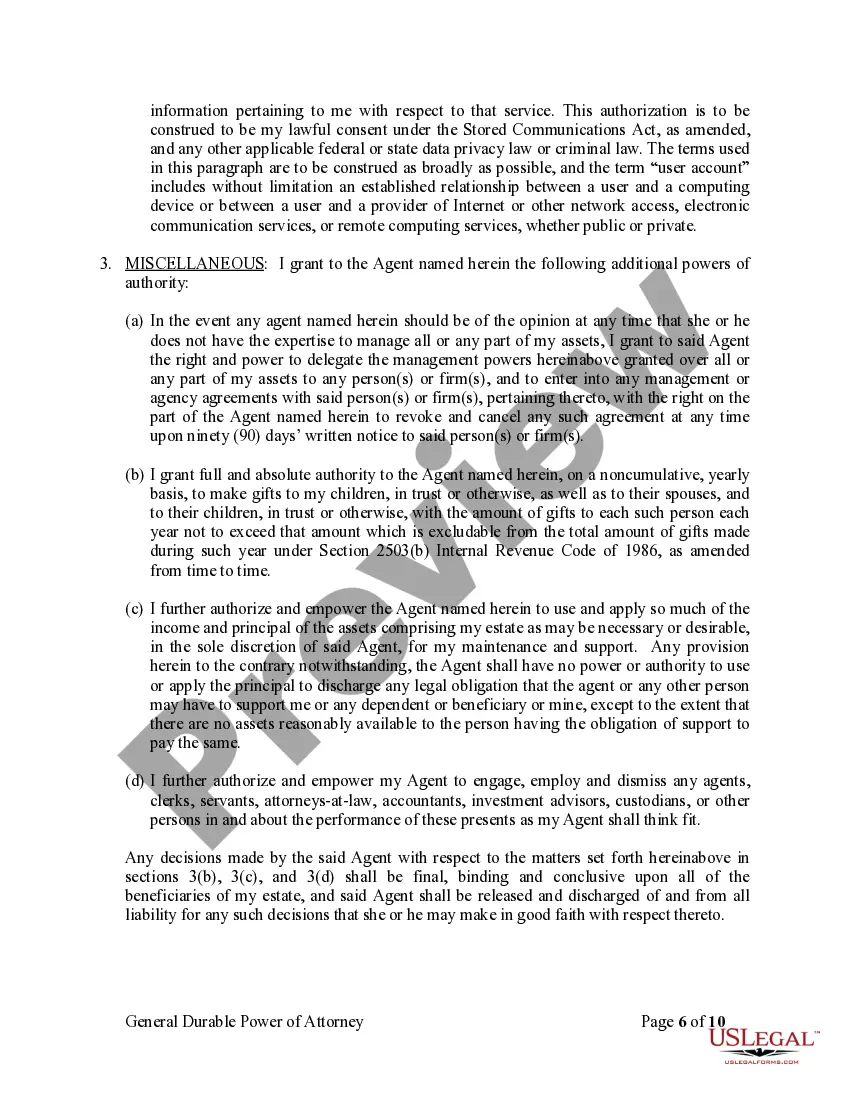
- Broad powers granted to the agent, including real estate and financial management
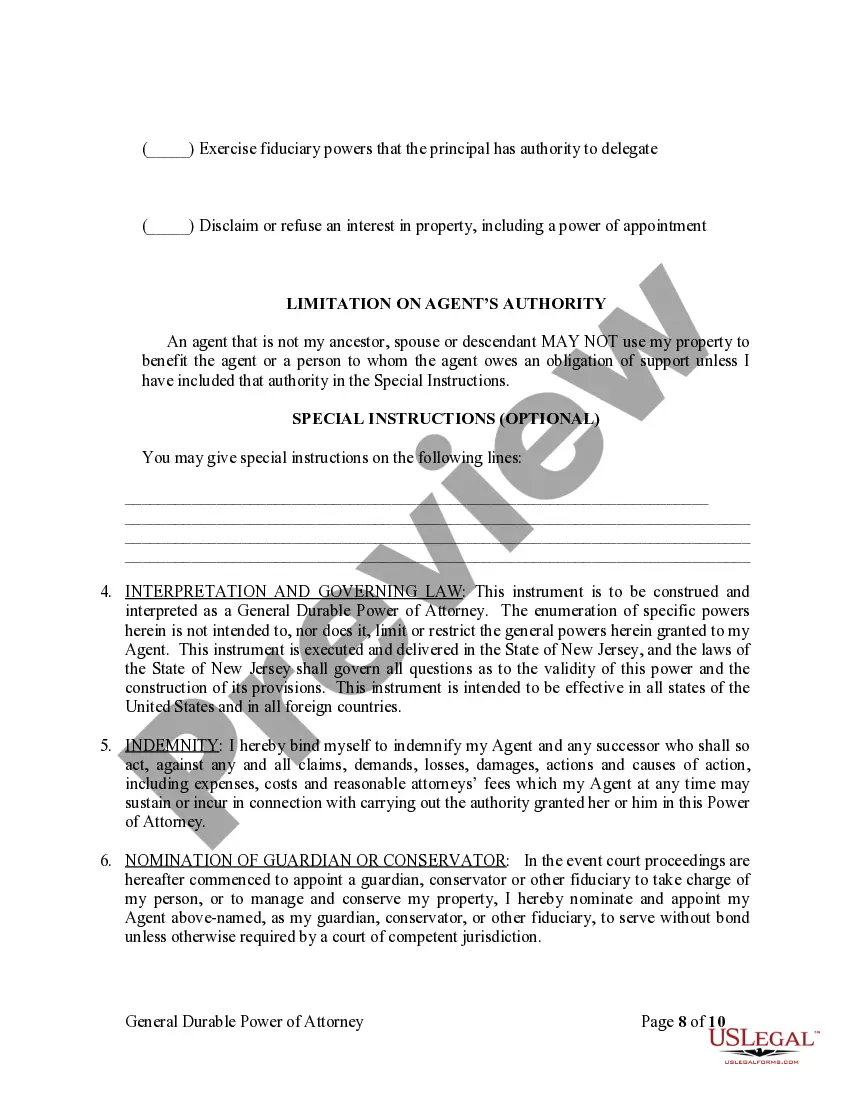
- Specifications on the agent's authority and limitations
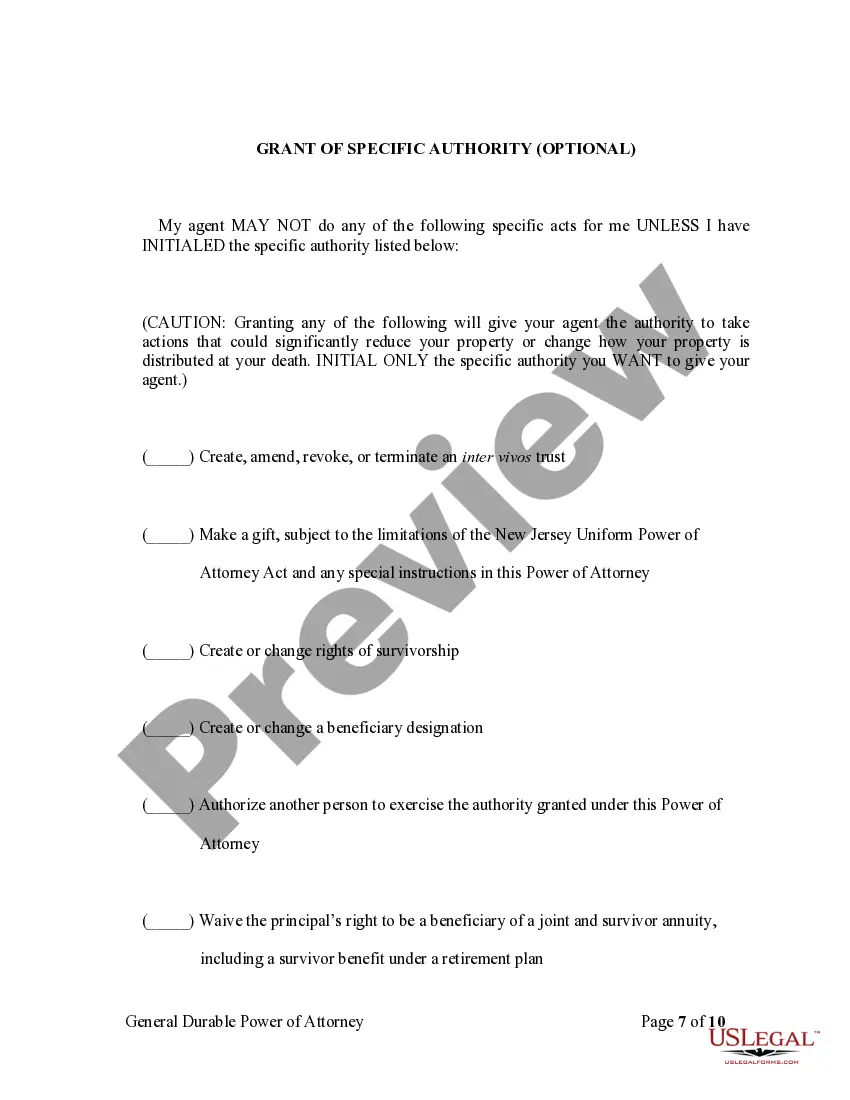
- Option for additional specific powers, such as changing beneficiaries
- Legal context and jurisdiction compliance
When to use this document
This form is useful in various scenarios, including but not limited to the following: when you want someone to handle your financial affairs without delay, when you are planning for potential incapacity due to illness or accident, or when you wish to ensure your finances are managed by a trusted individual in your absence. You may also consider this form if you are traveling and need to delegate your financial responsibilities temporarily.
Who should use this form
- Individuals seeking to designate a trusted person to manage their finances
- People preparing for potential future incapacity
- Individuals interested in delegating immediate financial authority
- Anyone needing to address specific property or financial decisions proactively
How to prepare this document
- Identify yourself as the principal and enter your name and address.
- Appoint your chosen agent by entering their name and address in the designated fields.
- Consider specifying alternate agents in case your first choice is unable to serve.
- Grant the desired powers by checking the appropriate boxes for specific authorities.
- Review and sign the document in the presence of a notary public if required.
Notarization guidance
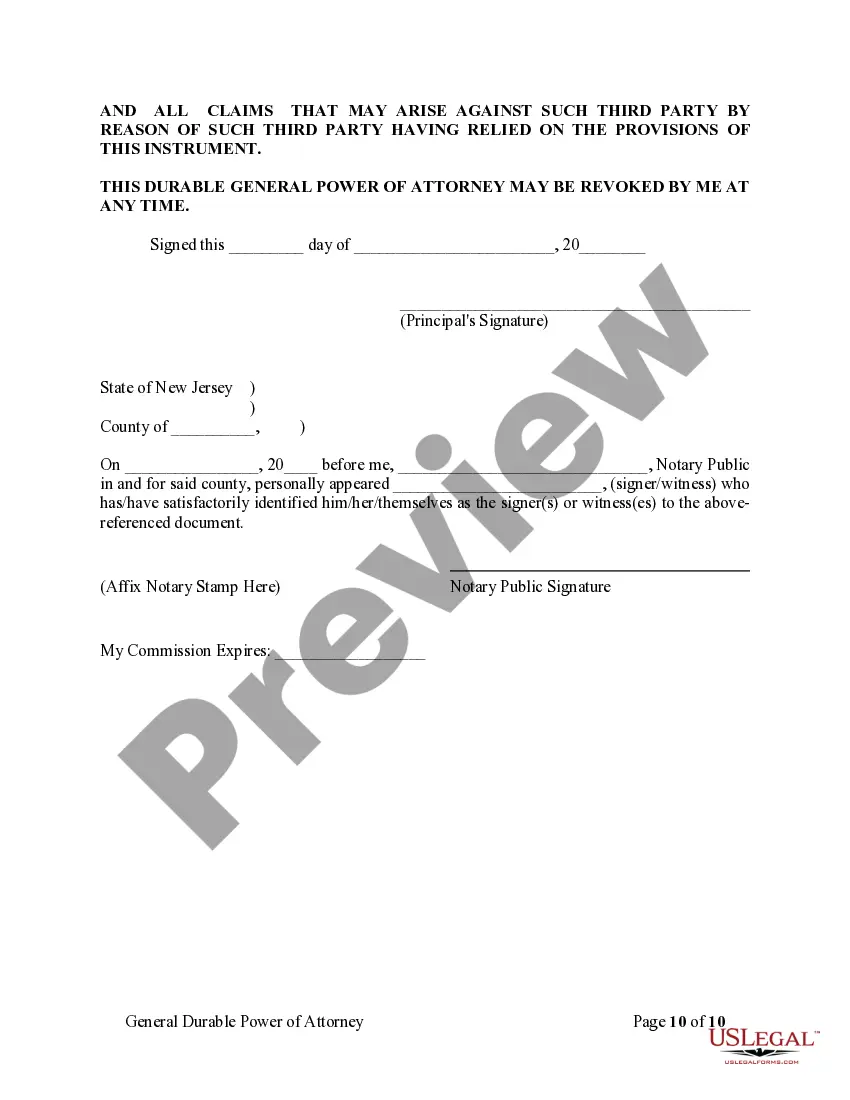
To make this form legally binding, it must be notarized. Our online notarization service, powered by Notarize, lets you verify and sign documents remotely through an encrypted video session.
Get your form ready online
Our built-in tools help you complete, sign, share, and store your documents in one place.
Make edits, fill in missing information, and update formatting in US Legal Forms—just like you would in MS Word.
Download a copy, print it, send it by email, or mail it via USPS—whatever works best for your next step.
Sign and collect signatures with our SignNow integration. Send to multiple recipients, set reminders, and more. Go Premium to unlock E-Sign.
If this form requires notarization, complete it online through a secure video call—no need to meet a notary in person or wait for an appointment.
We protect your documents and personal data by following strict security and privacy standards.

Make edits, fill in missing information, and update formatting in US Legal Forms—just like you would in MS Word.

Download a copy, print it, send it by email, or mail it via USPS—whatever works best for your next step.

Sign and collect signatures with our SignNow integration. Send to multiple recipients, set reminders, and more. Go Premium to unlock E-Sign.

If this form requires notarization, complete it online through a secure video call—no need to meet a notary in person or wait for an appointment.

We protect your documents and personal data by following strict security and privacy standards.
Common mistakes to avoid
- Failing to sign the document properly or not having it notarized when required.
- Leaving blank fields that should be filled in before use.
- Not discussing the powers granted with the appointed agent, leading to misunderstandings.
- Using outdated versions of the form that may not comply with current laws.
Why use this form online
- Immediate access: Download the form whenever you need it.
- Editability: Complete the form easily on your computer.
- Guided completion: Follow clear instructions for filling it out accurately.
- Legal compliance: Forms are designed to meet current state laws.
Legal use & context
- Your Durable POA remains valid even if you become disabled or incompetent.
- It must comply with statutory definitions and requirements to be enforceable.
- Make sure your agent understands their responsibilities and limitations to avoid misuse.
Summary of main points
- A Durable Power of Attorney is essential for managing financial matters through an appointed agent.
- Review policies and regulations in your specific state for additional requirements.
- Be clear about the powers you grant to avoid unwanted consequences.
Looking for another form?

Form popularity
FAQ
Include their address, relationship to you, phone number, or email address. Also specify whether the durable power of attorney applies to financial decisions, health care decisions, legal decisions, or all three areas. Include any instructions you would like to leave for your agent.
Determine if one is needed. Under a few circumstances, a power of attorney isn't necessary. Identify an agent. Take a look at the standard forms. Notarize the written POA, keep it stored safely, and provide copies to important people. Review the POA periodically.
Choose an agent. Before you begin to fill out the form, you have some decisions to make. Decide on the type of authority. You can choose whether you want your POA to be broad or narrow. Identify the length of time the POA will be in effect. Fill out the form. Execute the document.
By signing the durable power of attorney, you are authorizing another person to act for you, the principal. Before you sign this durable power of attorney, you should know these important facts:This durable power of attorney must be dated and must be acknowledged before a notary public or signed by two witnesses.
Most states offer simple forms to help you create a power of attorney for finances. Generally, the document must be signed, witnessed and notarized by an adult. If your agent will have to deal with real estate assets, some states require you to put the document on file in the local land records office.
A N.J. lawyer is an ex-officio notary and can take acknowledgements, administer oaths.
In order to ensure the validity of the Power of Attorney, it should be notarized. However, if this is not possible, you should still complete the form to the best of your ability. A notary is someone who simply acknowledges that a person is signing a document.In addition, any attorney in New Jersey is a notary.
In New Jersey, all power of attorney documents require that both the principal and the attorney-in-fact are competent and be of sound mind at the point at which they are executed. They must be signed in the presence of at least 2 witnesses and in the presence of a licensed Notary of the State of New Jersey.
In many states, notarization is required by law to make the durable power of attorney valid. But even where law doesn't require it, custom usually does. A durable power of attorney that isn't notarized may not be accepted by people with whom your attorney-in-fact tries to deal.