New Jersey Complaint in Ejectment
Understanding this form
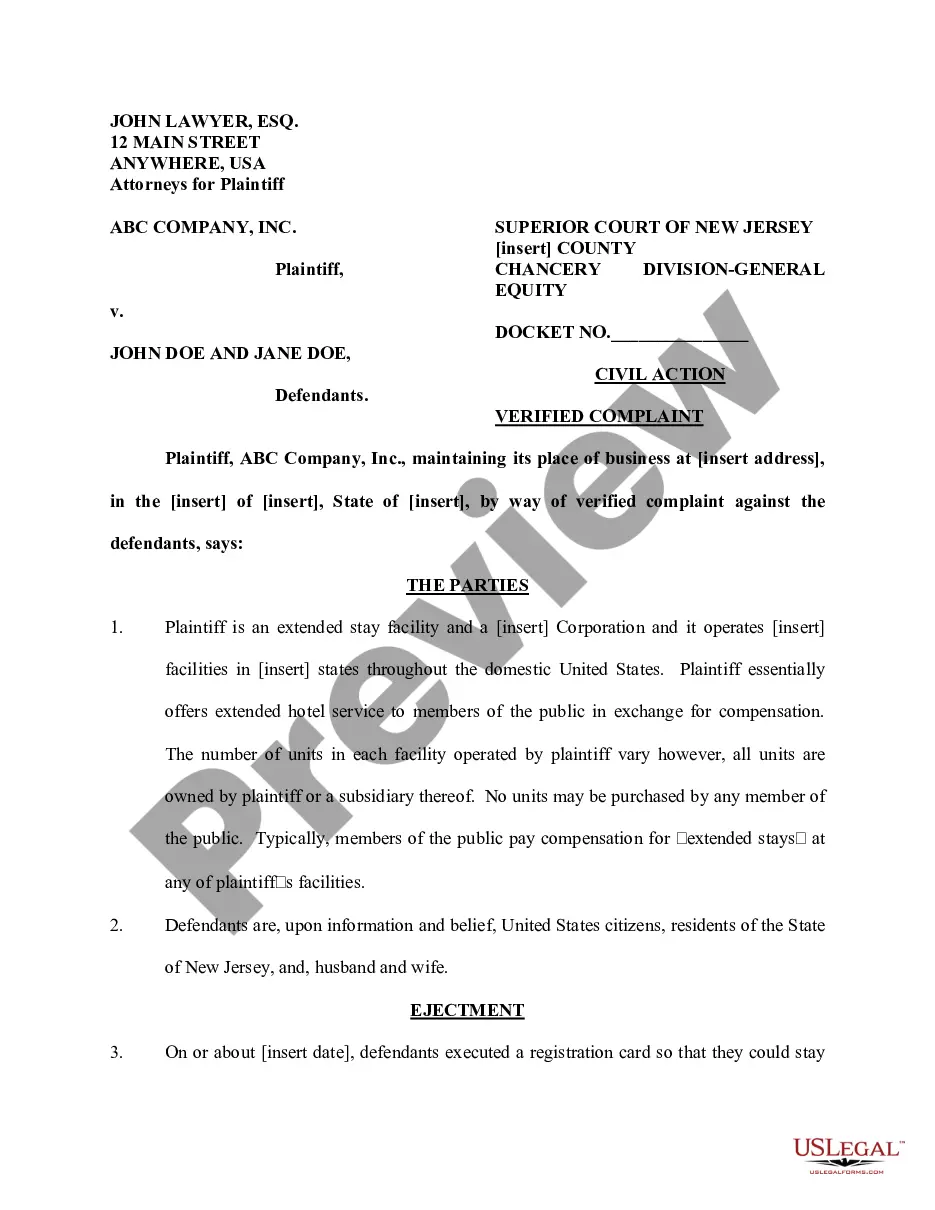
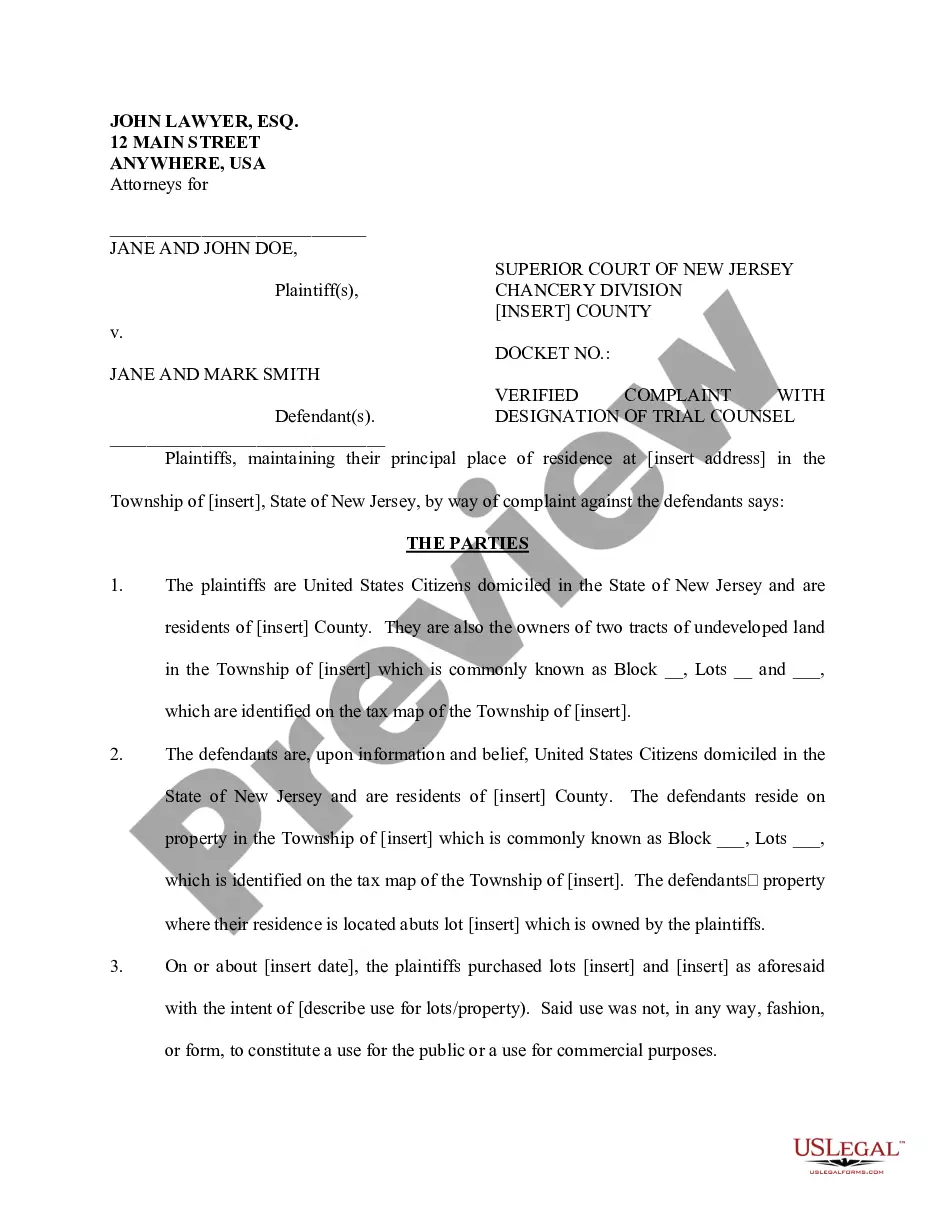
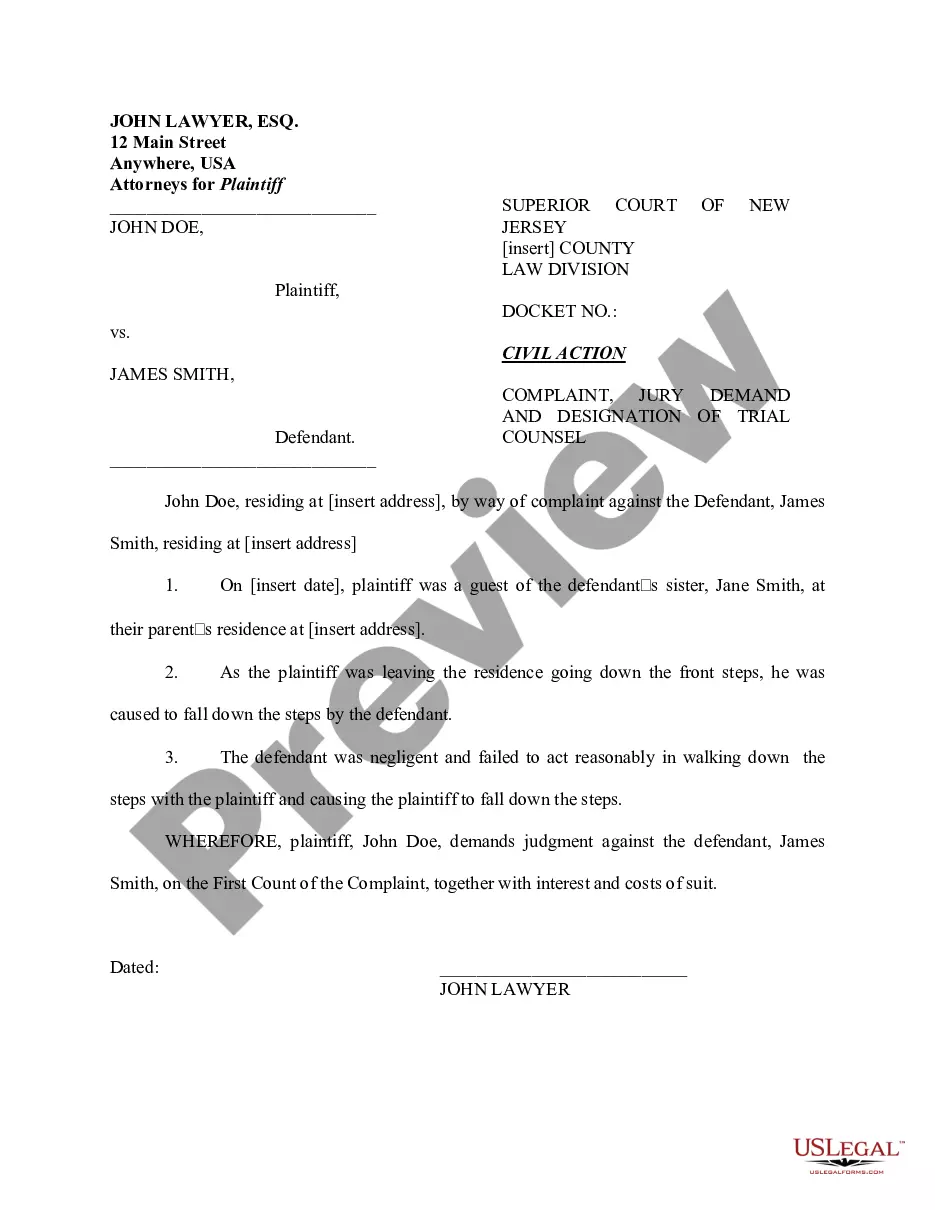
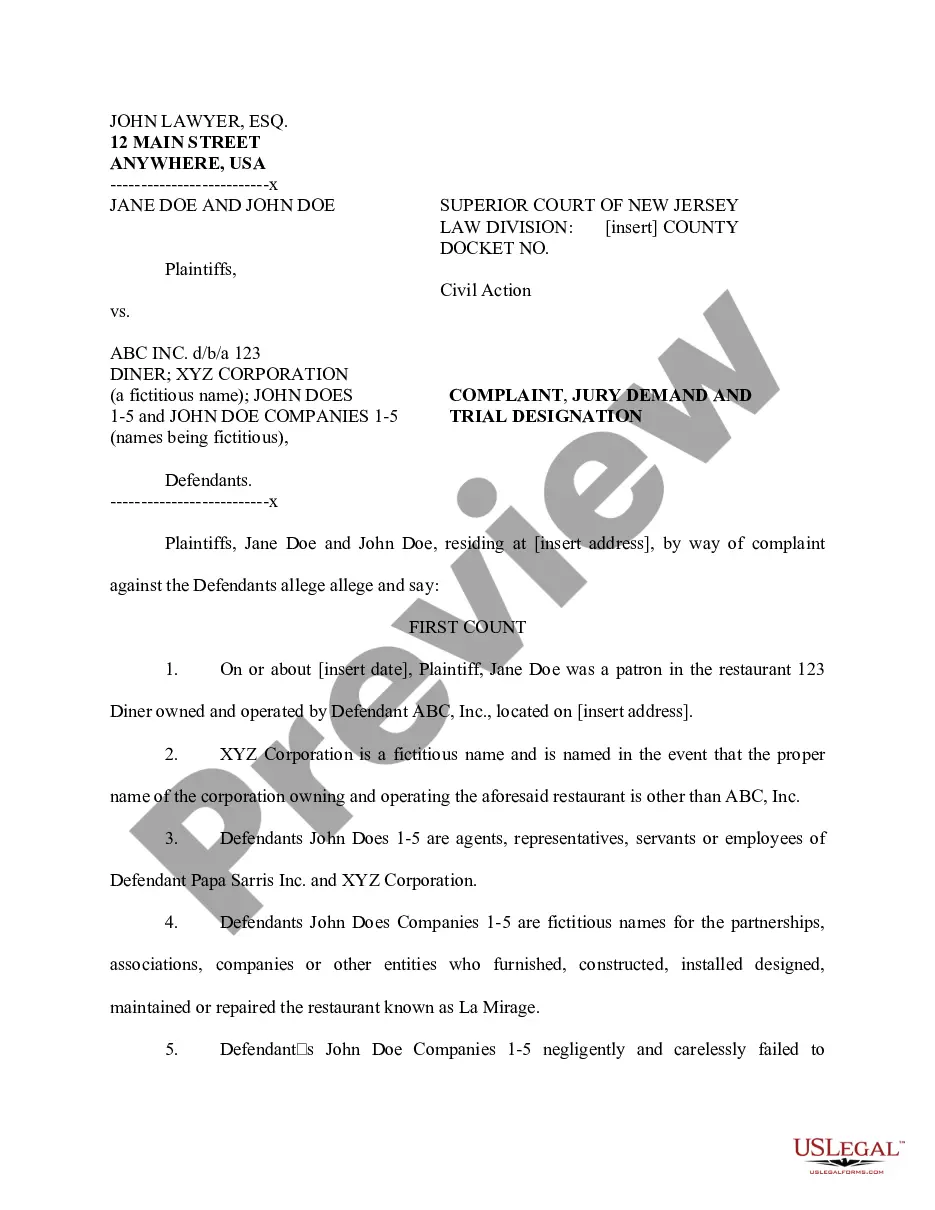
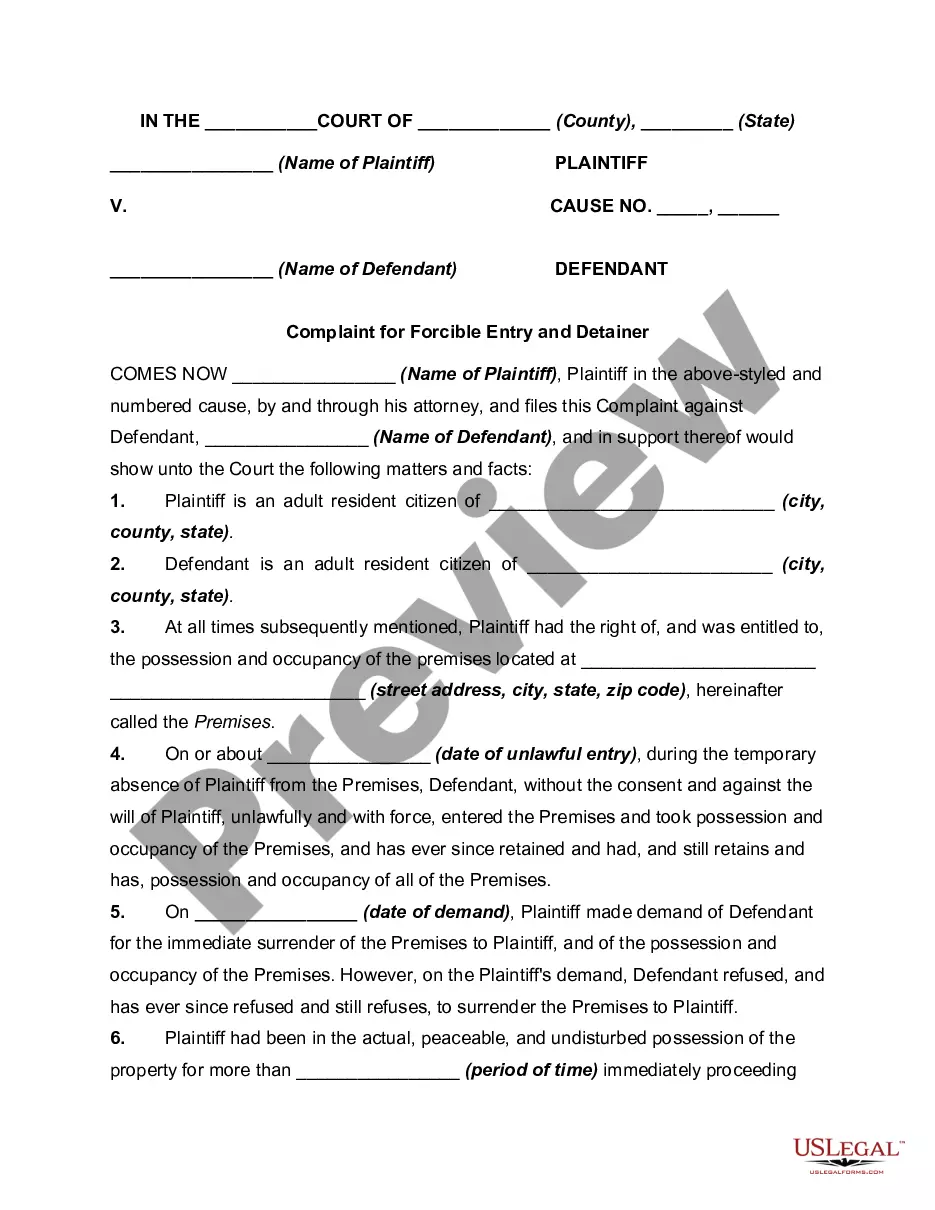
The Complaint in Ejectment is a legal document used in New Jersey to initiate a civil action regarding the removal of individuals from a property. This form is particularly appropriate in circumstances where a business, such as an extended stay facility, needs to formally eject disruptive guests who do not hold a landlord-tenant relationship. It serves as a mechanism to regain possession of the property and to prevent further disturbances caused by the defendants.
Key parts of this document
- Title section: Identifies the parties involved in the case.
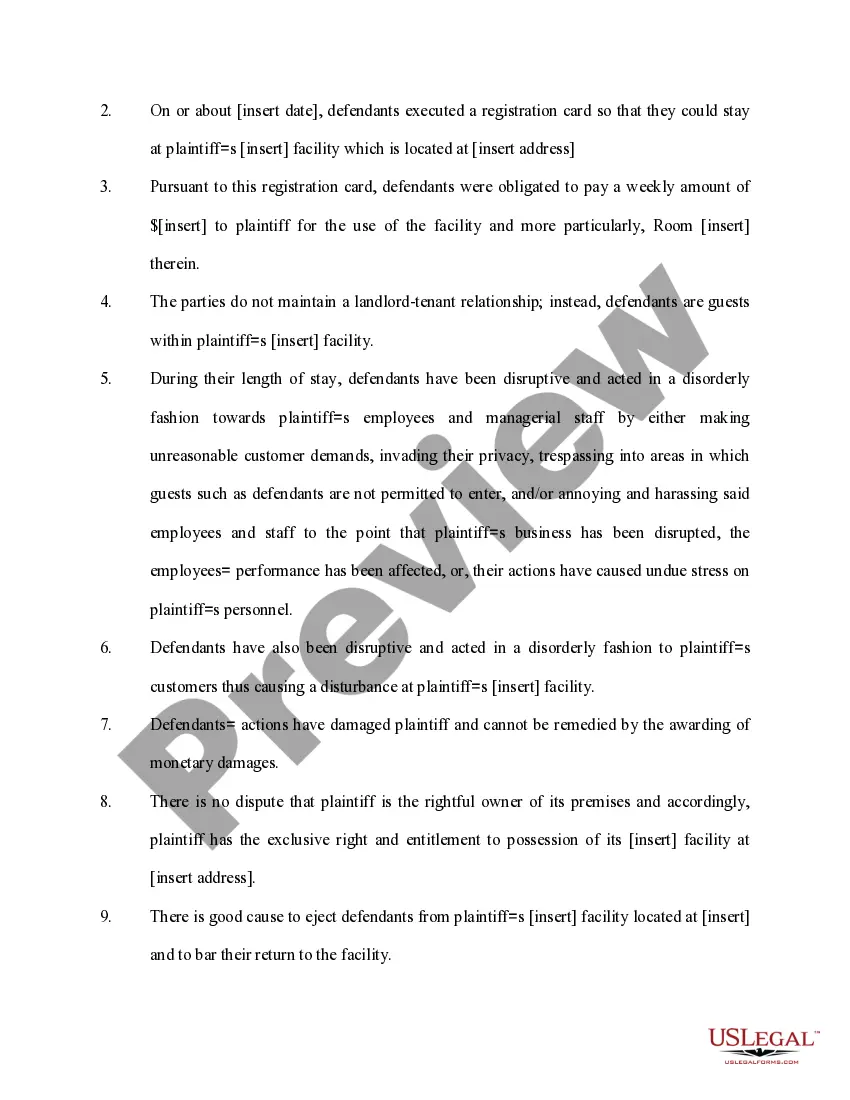
- Verified complaint: States the circumstances and basis for the ejectment, detailing actions that justify the claim.
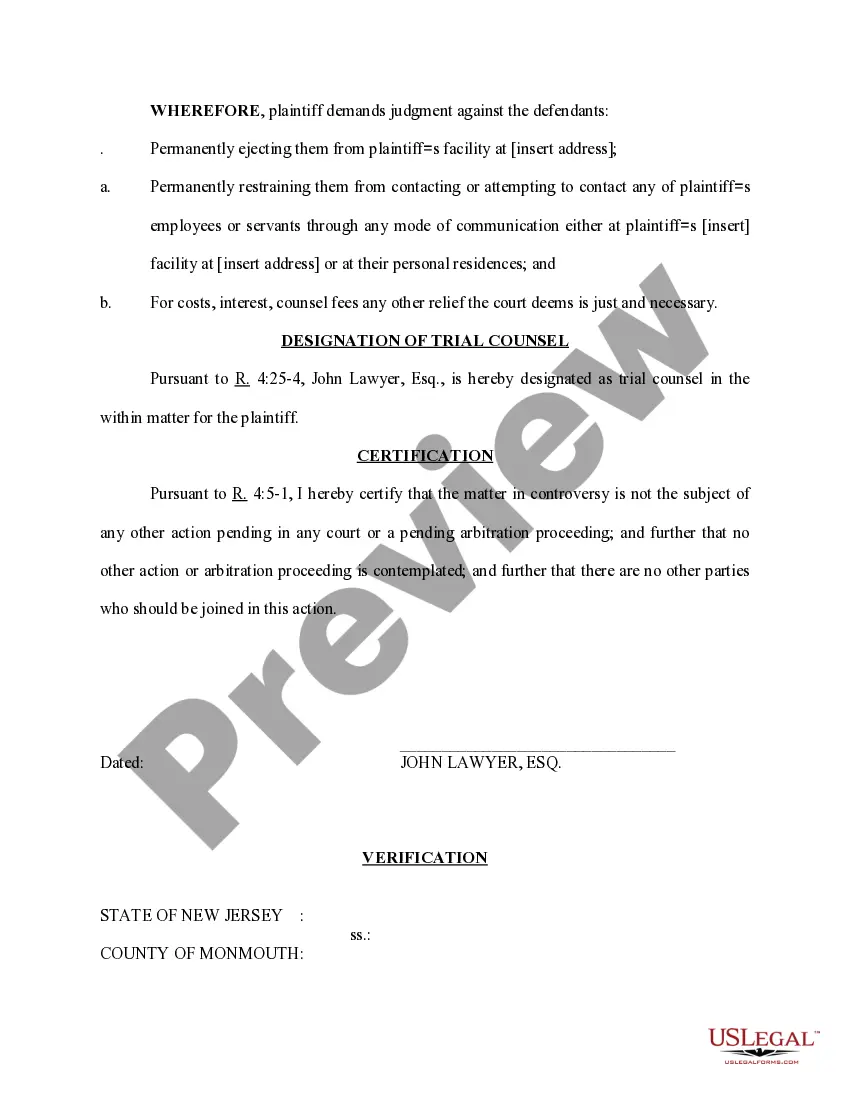
- Demand for relief: Specifies the requests made by the plaintiff, including permanent ejection and restrictions against contacting staff.
- Designation of trial counsel: Names the attorney representing the plaintiff in the action.
- Certification: Confirms that the matter is not part of any other legal proceedings.
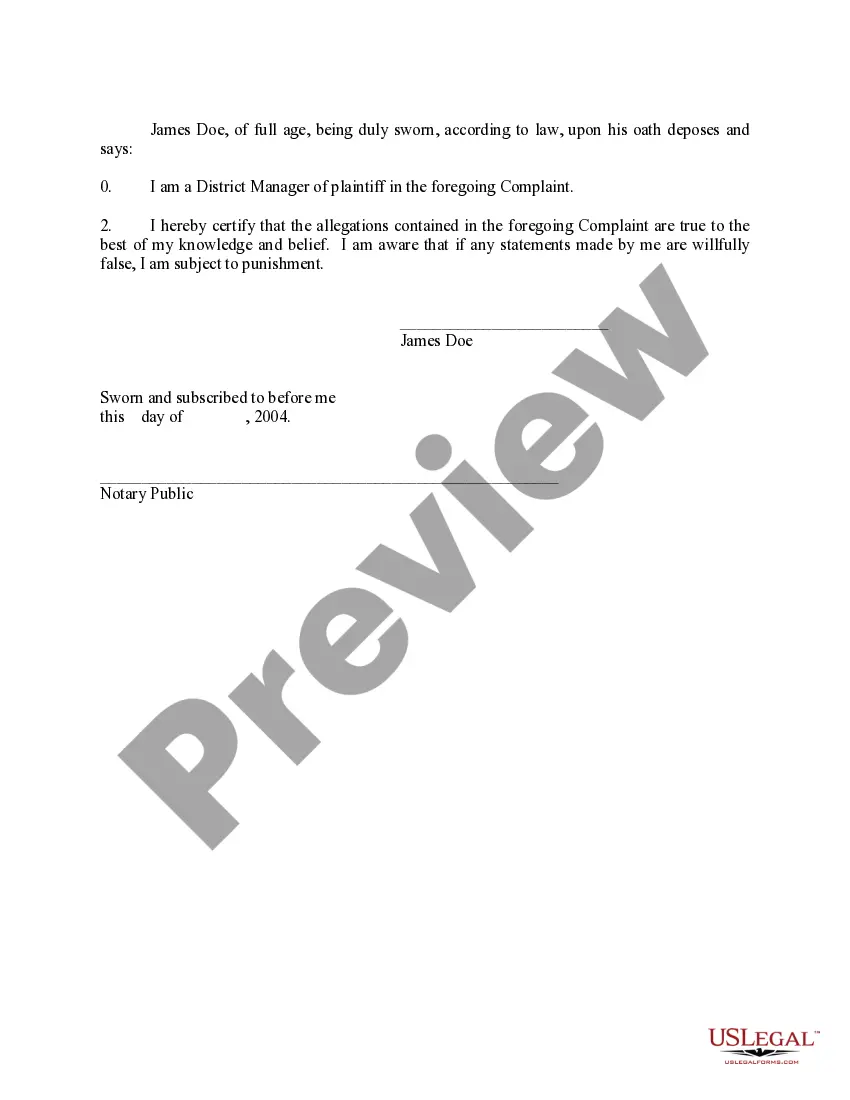
- Verification: An affiant attests to the truth of the complaint under oath.
When to use this form
This form should be used when a property owner or operator, such as an extended stay facility, faces disturbances from guests who fail to comply with conduct standards. It is necessary when attempts to resolve issues amicably have failed, and the property owner seeks legal recourse to remove these individuals from the premises.
Intended users of this form
- Property owners or managers of extended stay facilities.
- Landlords seeking to remove disruptive tenants or guests.
- Legal representatives acting on behalf of property owners.
- Any entity that requires formal legal proceedings to regain property possession.
How to complete this form
- Identify the parties involved: Fill in the names and addresses of the plaintiff and defendants.
- Detail the allegations: Describe the actions of the defendants that warrant ejection.
- Specify the relief sought: Clearly state the requests made to the court.
- Complete the certification: Confirm no other actions or proceedings exist regarding this matter.
- Have the form verified: Ensure it is signed under oath by the affiant before a notary if required.
Does this document require notarization?
Yes, this form must be notarized to be legally valid in New Jersey. It's important to have the verification section signed in the presence of a notary public to ensure its enforceability.
Get your form ready online
Our built-in tools help you complete, sign, share, and store your documents in one place.
Make edits, fill in missing information, and update formatting in US Legal Forms—just like you would in MS Word.
Download a copy, print it, send it by email, or mail it via USPS—whatever works best for your next step.
Sign and collect signatures with our SignNow integration. Send to multiple recipients, set reminders, and more. Go Premium to unlock E-Sign.
If this form requires notarization, complete it online through a secure video call—no need to meet a notary in person or wait for an appointment.
We protect your documents and personal data by following strict security and privacy standards.

Make edits, fill in missing information, and update formatting in US Legal Forms—just like you would in MS Word.

Download a copy, print it, send it by email, or mail it via USPS—whatever works best for your next step.

Sign and collect signatures with our SignNow integration. Send to multiple recipients, set reminders, and more. Go Premium to unlock E-Sign.

If this form requires notarization, complete it online through a secure video call—no need to meet a notary in person or wait for an appointment.

We protect your documents and personal data by following strict security and privacy standards.
Mistakes to watch out for
- Failing to provide complete information for all parties involved.
- Omitting critical details about the disruptive behavior of the defendants.
- Not clearly stating the relief sought in the complaint.
- Neglecting to get the necessary verification and signature before filing.
- Filing in the wrong jurisdiction or court without proper legal advice.
Why use this form online
- Convenient accessibility 24/7, allowing users to fill out the form at their own pace.
- Editability lets users easily update information as needed before saving or printing.
- Reliability of the form ensures adherence to New Jersey legal standards.
- Instant downloads make it easy to begin the filing process without delays.
Legal use & context
- Form is used for legal proceedings in ejectment actions in New Jersey.
- Important for ensuring the property owner's rights are protected in a court of law.
- Details must be factual to withstand legal scrutiny and be enforceable.
Key takeaways
- The Complaint in Ejectment is vital for property owners needing to reclaim their premises legally.
- Filling out the form correctly is crucial to ensure successful legal action.
- Online versions offer convenience and ease for users unfamiliar with legal processes.
Looking for another form?
Form popularity
FAQ
Ejectment is a legal action to recover possession of real property wrongfully withheld from the plaintiff.Thus, a plaintiff who acquires possession under the judgment in an ejectment action does not acquire any better or different title and goes into possession under whatever title he or she previously held.
Ejectment Procedures For New Jersey Foreclosure; Judgment Entered and Writ of Possession Issued: At the conclusion of the Sheriff's Sale, judgment may be entered for possession. Simultaneously, a Writ of Possession is issued and the Sheriff has thirty days to serve the Writ of Possession on defendant.
Eviction is the legal method of removing a tenant. A tenant is someone who is paying rent and/or who has a lease. Ejectment is the legal method of removing someone who is not a tenant, in other words, usually someone who is staying without a...
Step 1: Notice to Vacate. Step 2: File the Ejectment Lawsuit. Step 3: Judge Signs the Order to Show Cause. Step 4: Serve Documents on the Occupant. Step 5: File Proof of Service. Step 6: Court Hearing. Step 7: Service of the Order of Possession. Step 8: Request Writ of Possession.
Eviction is the legal method of removing a tenant. A tenant is someone who is paying rent and/or who has a lease. Ejectment is the legal method of removing someone who is not a tenant, in other words, usually someone who is staying without a...
We have noted that the New Jersey eviction process is a generally fast and simple procedure that allows landlords to evict tenants in as little as four to six weeks.