Massachusetts Protecting Deceased Persons from Identity Theft
Overview of this form package
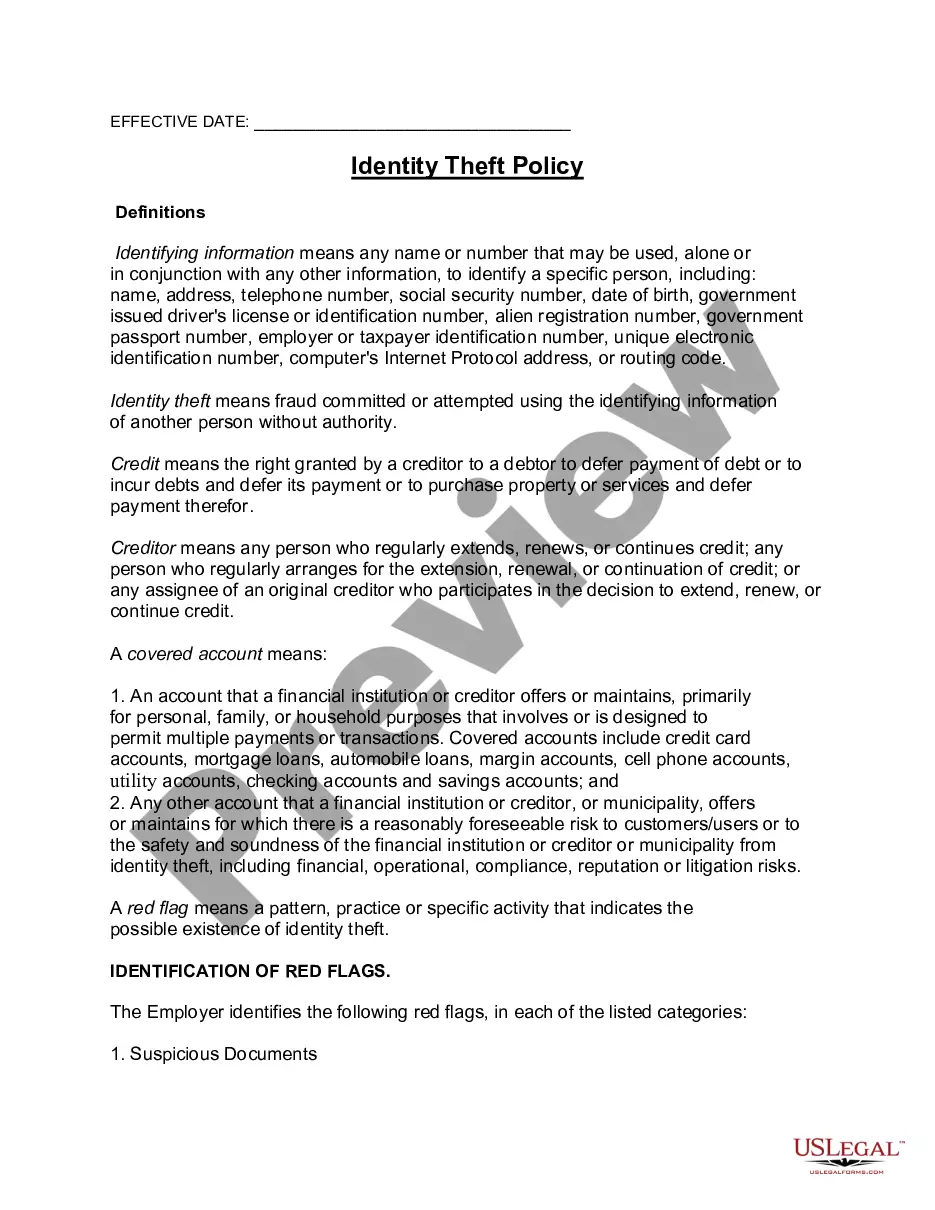
This Massachusetts Protecting Deceased Persons from Identity Theft form package offers essential legal documents designed to help families protect the identifying information of deceased individuals and address identity theft concerns. Unlike other legal packages, this comprehensive set of forms specifically targets the needs of dealing with identity theft and the notification process following the death of a loved one.
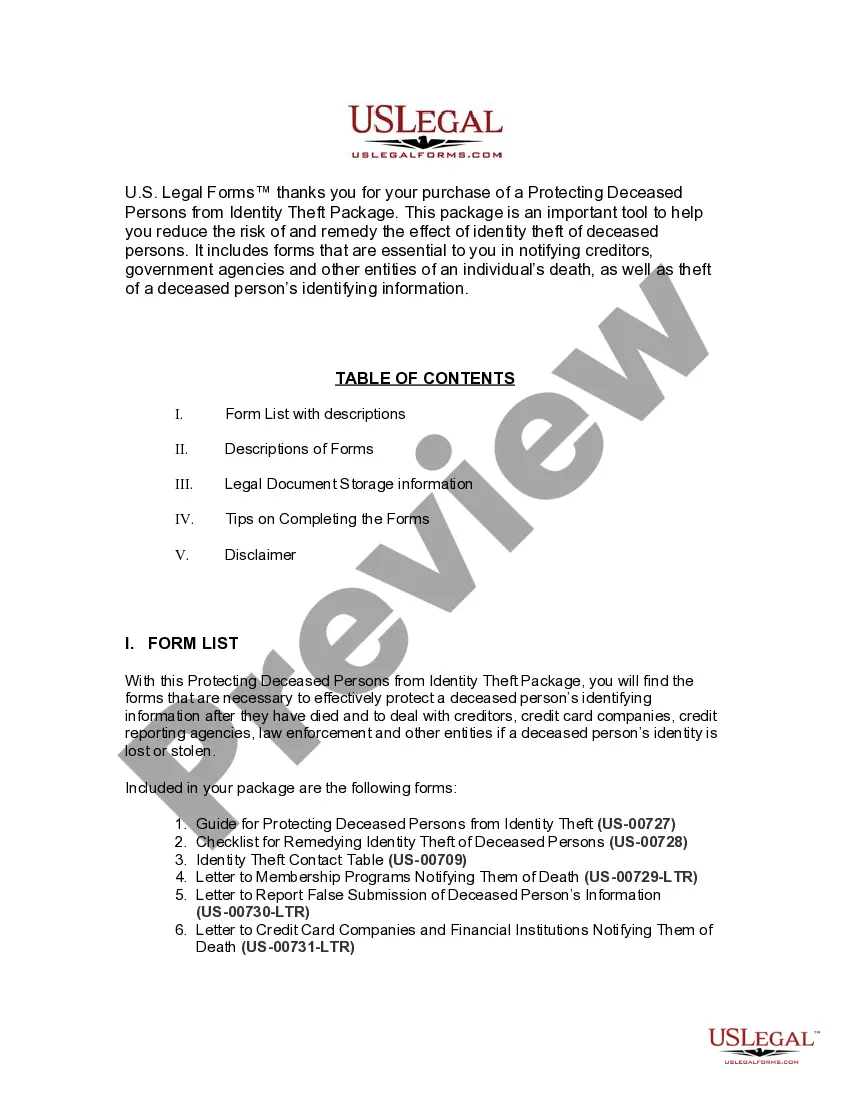
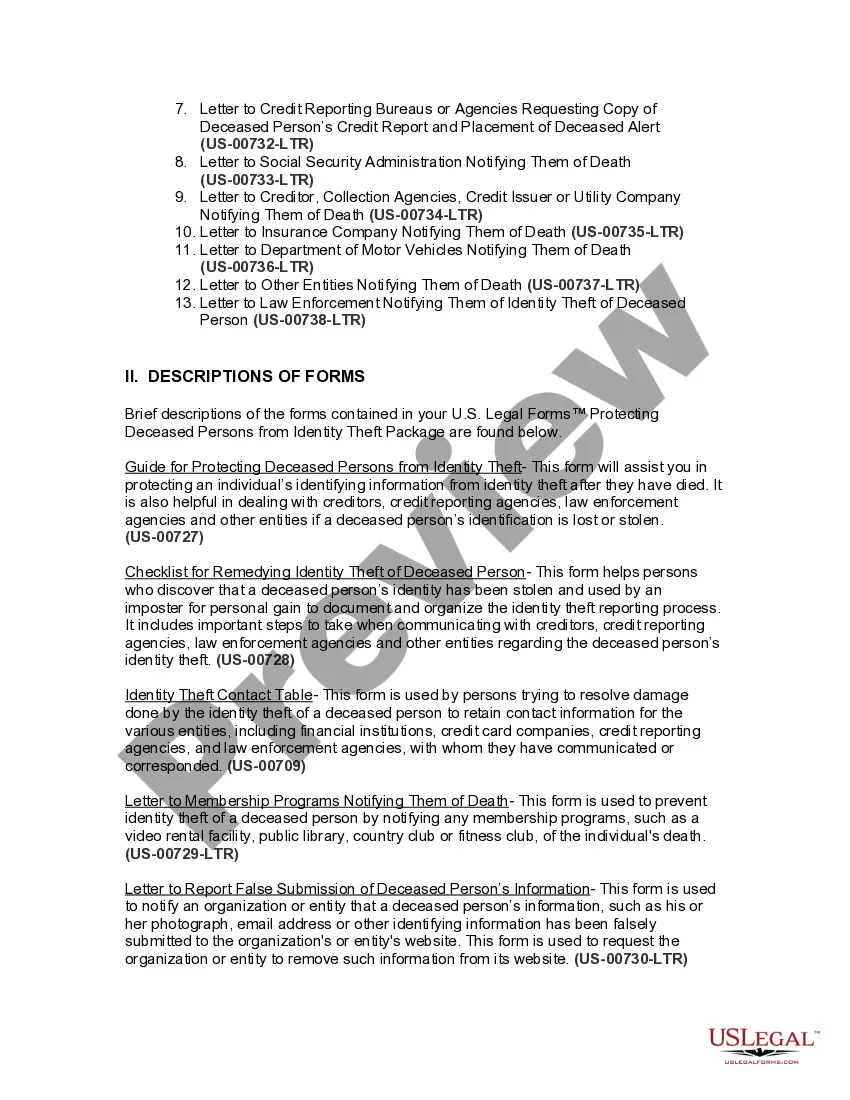
Forms provided in this package
- Identity Theft Contact Table
- Guide for Protecting Deceased Persons from Identity Theft
- Checklist for Remedying Identity Theft of Deceased Persons
- Letter to Membership Programs Notifying Them of Death
- Letter to Report False Submission of Deceased Person's Information
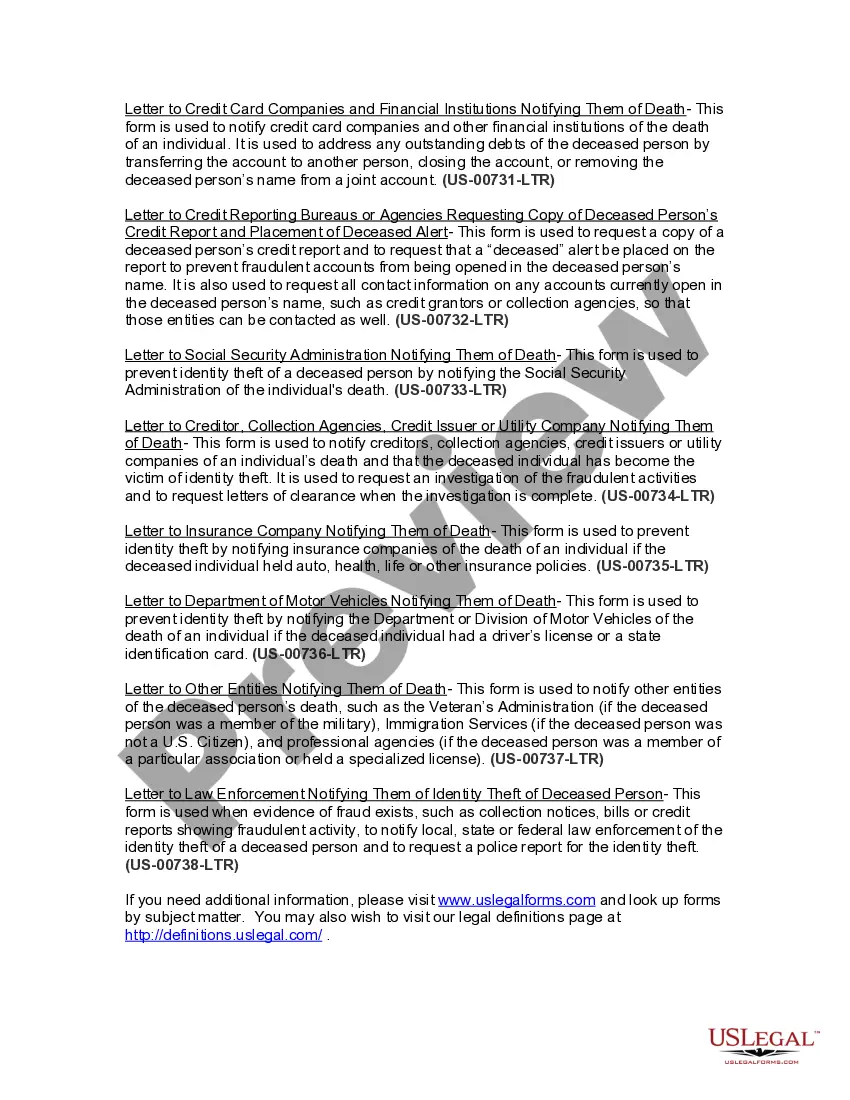
- Letter to Credit Card Companies and Financial Institutions Notifying Them of Death
- Letter to Credit Reporting Bureaus or Agencies Requesting Copy of Deceased Person's Credit Report and Placement of Deceased Alert
- Letter to Social Security Administration Notifying Them of Death
- Letter to Creditor, Collection Agencies, Credit Issuer or Utility Company Notifying Them of Death
- Letter to Insurance Company Notifying Them of Death
- Letter to Department of Motor Vehicles Notifying Them of Death
- Letter to Other Entities Notifying Them of Death
- Letter to Law Enforcement Notifying Them of Identity Theft of Deceased Person
Common use cases
This form package should be used in situations such as:
- When a family member have passed away and there is concern about identity theft.
- When fraudulent accounts or debts are discovered affecting the deceased's name.
- When notifying various agencies, creditors, and organizations of the individual's death.
- When taking proactive steps to secure the deceased's identity from misuse.
Intended users of this form package
- Family members or guardians of the deceased individual.
- Executor or administrator of the deceased's estate.
- Individuals responsible for managing the affairs of the deceased.
- Anyone seeking to respond to identity theft affecting a deceased person's identity.
Completing these forms step by step
- Review the included guide and checklist to understand the identity theft situation.
- Identify and gather necessary personal information related to the deceased.
- Complete each form accurately, filling out the relevant information.
- Send each notification letter as required to the appropriate parties.
- Keep copies of all correspondence for your records.
Do forms in this package need to be notarized?
Forms in this package typically do not require notarization unless required by local law. However, it is advisable to verify any notarization requirements specific to your situation or relevant institutions when submitting documents.
Get your form ready online
Our built-in tools help you complete, sign, share, and store your documents in one place.
Make edits, fill in missing information, and update formatting in US Legal Forms—just like you would in MS Word.
Download a copy, print it, send it by email, or mail it via USPS—whatever works best for your next step.
Sign and collect signatures with our SignNow integration. Send to multiple recipients, set reminders, and more. Go Premium to unlock E-Sign.
If this form requires notarization, complete it online through a secure video call—no need to meet a notary in person or wait for an appointment.
We protect your documents and personal data by following strict security and privacy standards.

Make edits, fill in missing information, and update formatting in US Legal Forms—just like you would in MS Word.

Download a copy, print it, send it by email, or mail it via USPS—whatever works best for your next step.

Sign and collect signatures with our SignNow integration. Send to multiple recipients, set reminders, and more. Go Premium to unlock E-Sign.

If this form requires notarization, complete it online through a secure video call—no need to meet a notary in person or wait for an appointment.

We protect your documents and personal data by following strict security and privacy standards.
Common mistakes to avoid
- Failing to notify all necessary agencies and creditors.
- Not keeping copies of notified entities or letters sent.
- Submitting forms without sufficient information or required attachments.
- Overlooking the importance of timely notifications after death.
Benefits of using this package online
- Convenient access to all necessary forms and instructions at any time.
- Ability to edit and customize forms easily to fit specific circumstances.
- Reliable templates drafted by licensed attorneys, ensuring legal compliance.
- Quick download and immediate use help streamline the identity protection process.
Legal use & context
- This package is designed to help mitigate the risk of identity theft after a person's death.
- Forms included are structured to provide legal notice to necessary organizations and protect the deceased's identity.
- Using these forms properly can help establish a clear record of actions taken to handle identity theft issues.
Quick recap
- The Massachusetts Protecting Deceased Persons from Identity Theft package provides essential forms for managing identity theft concerns after a death.
- Properly notifying all relevant parties can help prevent identity theft and secure the deceased's affairs.
- Reviewing and completing each form accurately is crucial to ensure effective communication with organizations.
Looking for another form?

Form popularity
FAQ
Reporting identity theft for a deceased person can be done through various online platforms, including the Federal Trade Commission (FTC) website. You may need to provide documentation to prove the death and your relationship to the deceased. Utilizing resources like uslegalforms can simplify this process, ensuring that you effectively address the issues of Massachusetts Protecting Deceased Persons from Identity Theft.
Data protection laws extend to deceased individuals to some extent, especially regarding identity theft. While the deceased cannot enforce their rights, the families can take measures to protect their loved one's personal information. Massachusetts Protecting Deceased Persons from Identity Theft highlights the significance of safeguarding the information of those who have passed away.
Yes, someone can misuse the SSN of a deceased person if it is not properly protected. This can lead to fraudulent accounts and financial loss for the deceased's estate. To prevent this, Massachusetts Protecting Deceased Persons from Identity Theft emphasizes the importance of taking proactive steps after a death.
Telling the bank about a person's death can lead to immediate account freezes and complications with managing the deceased's finances. This can create hurdles for settling bills or distributing assets. Therefore, it's wise to approach the situation carefully, keeping in mind that Massachusetts Protecting Deceased Persons from Identity Theft requires strategic communication.
In Massachusetts, identity theft is taken very seriously. The law protects individuals from the misuse of personal information, including that of deceased persons. Understanding these laws is important for families who want to ensure they are taking the necessary steps for Massachusetts Protecting Deceased Persons from Identity Theft.
If someone steals the identity of a deceased person, it can lead to fraudulent activities using that person's name. This not only complicates financial matters for the deceased's estate but can also create emotional distress for surviving family members. Addressing identity theft promptly is essential, and Massachusetts Protecting Deceased Persons from Identity Theft provides guidelines on how to manage such situations effectively.
When a person passes away, their Social Security Number (SSN) becomes inactive. This means that the SSN can no longer be used for any transactions or benefits. However, it's important to manage the SSN properly to prevent identity theft. Massachusetts Protecting Deceased Persons from Identity Theft is crucial to ensure that the deceased's identity remains secure.
To fill out an identity theft report, start by gathering all relevant information about the deceased person, including their full name, date of birth, and Social Security number. Then, document any suspicious activity or accounts that may have been opened in their name. You can file a report with the Federal Trade Commission (FTC) online or by phone, and ensure you follow up with local law enforcement if necessary. Remember, Massachusetts Protecting Deceased Persons from Identity Theft aims to guide you through this process, helping you secure the deceased's identity and prevent further misuse.
A dead person's Social Security number can be misused for various malicious purposes, such as opening new credit accounts or committing fraud. This illegal activity can create significant challenges for the deceased's family, including financial loss and legal complications. By understanding the risks and utilizing resources like uslegalforms, families can better protect against identity theft and ensure that the identities of their loved ones remain secure.
Yes, data protection does apply to deceased individuals in Massachusetts. The state recognizes the importance of safeguarding the personal information of those who have passed away, as their identities can still be vulnerable to theft. Massachusetts Protecting Deceased Persons from Identity Theft ensures that families can take steps to secure their loved ones' information and prevent misuse.