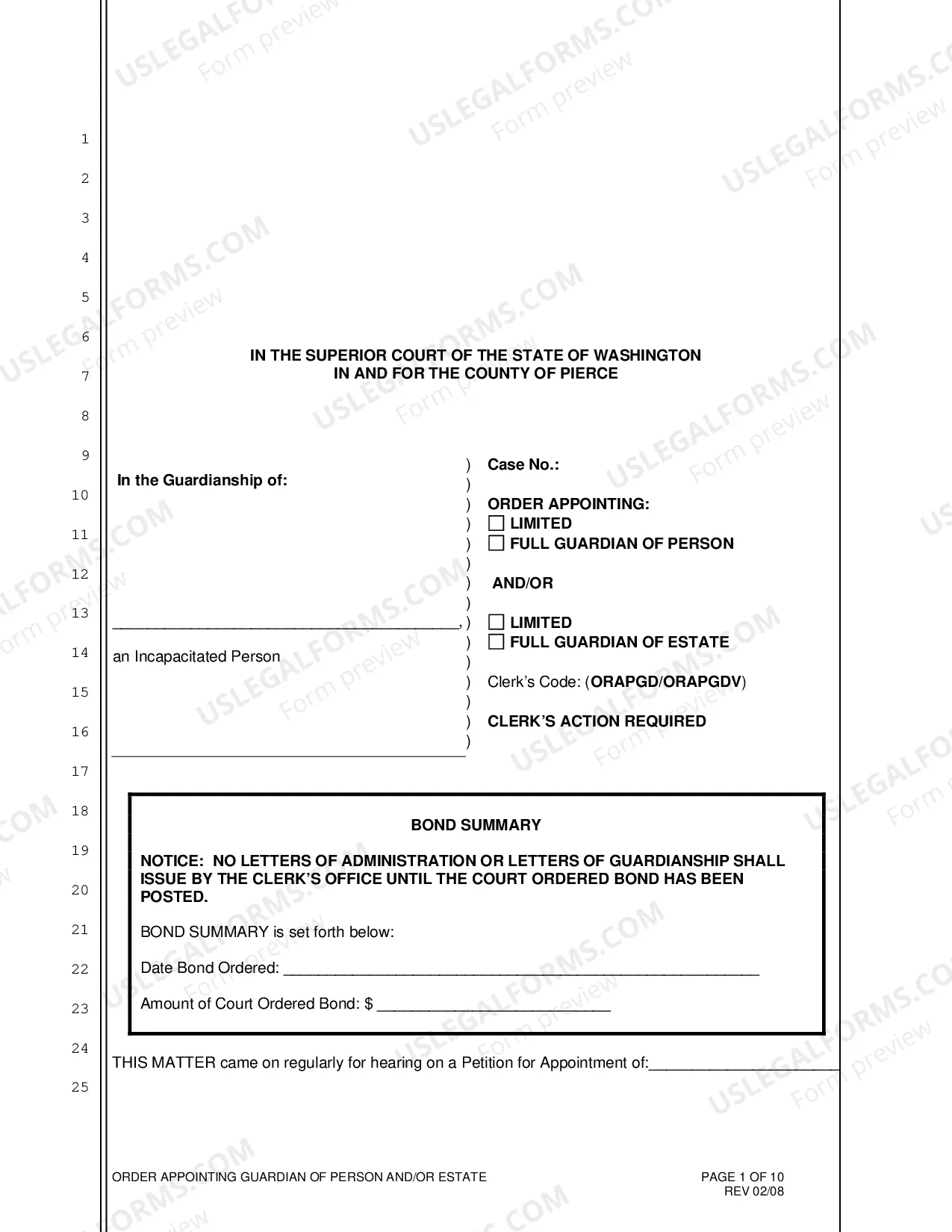
New Jersey Complex Will with Credit Shelter Marital Trust for Large Estates
What is this form?
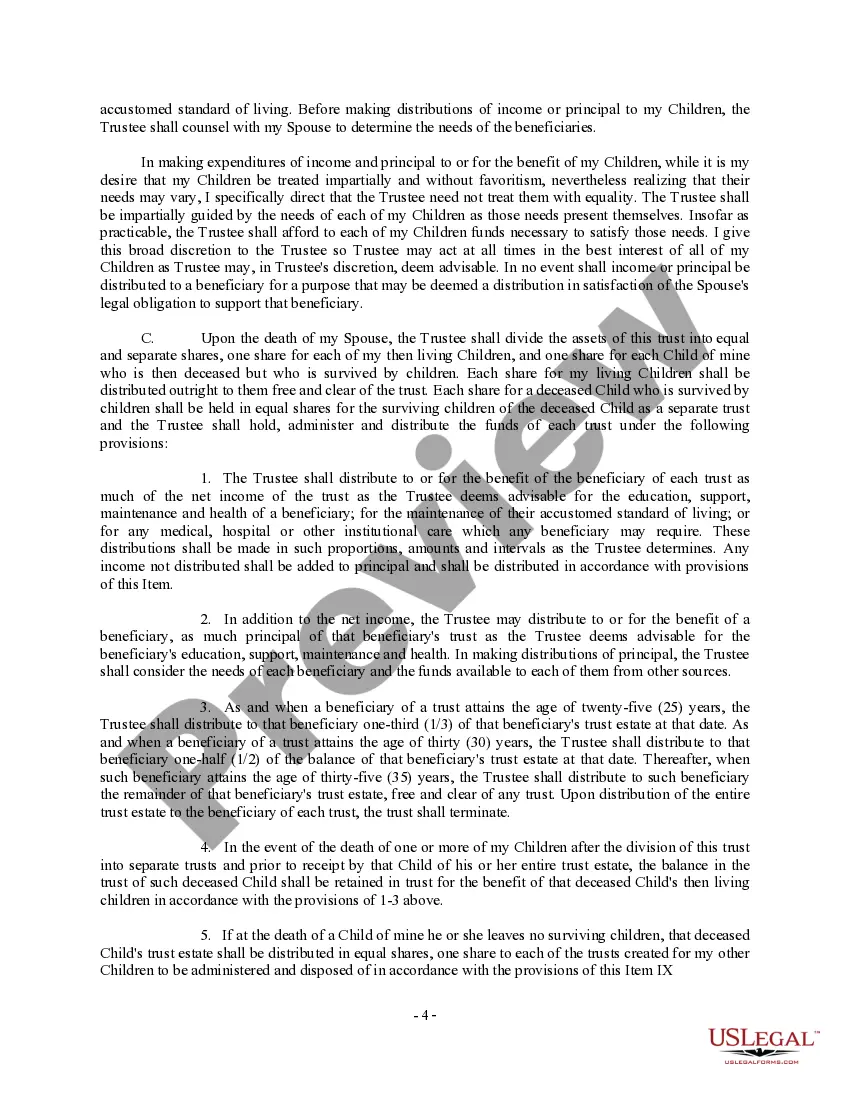
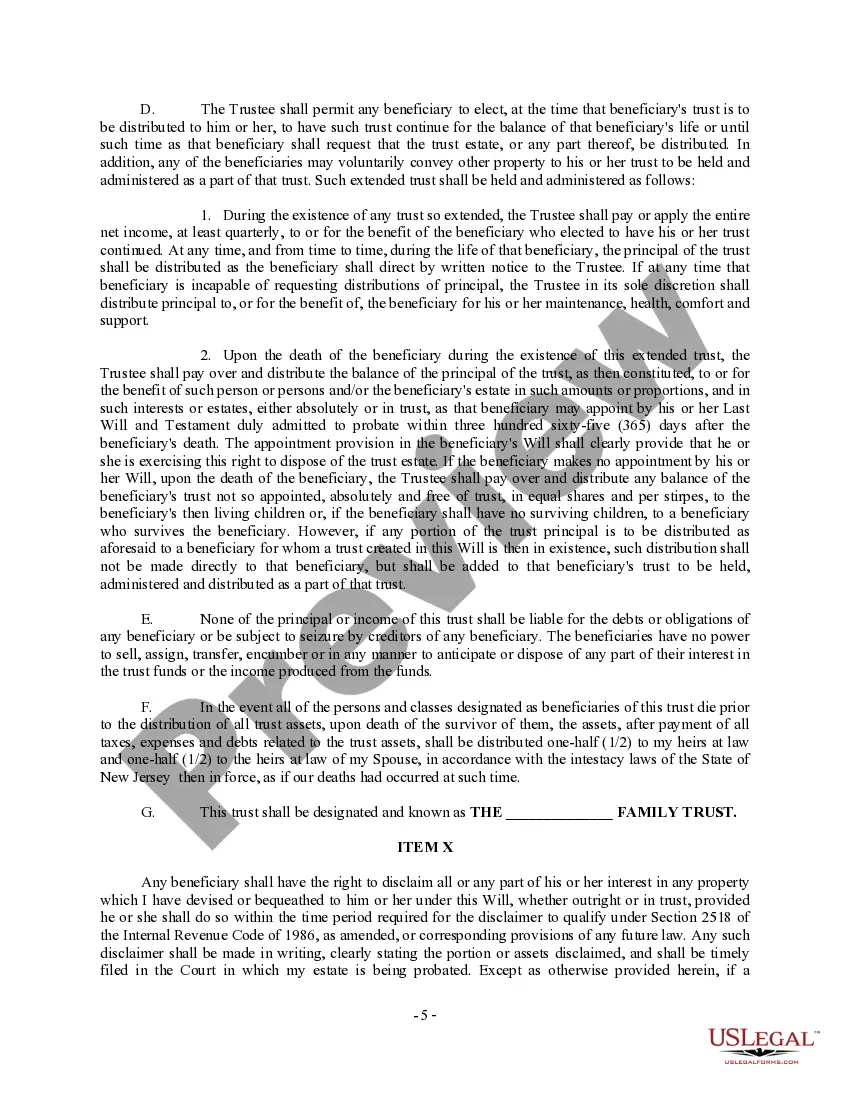
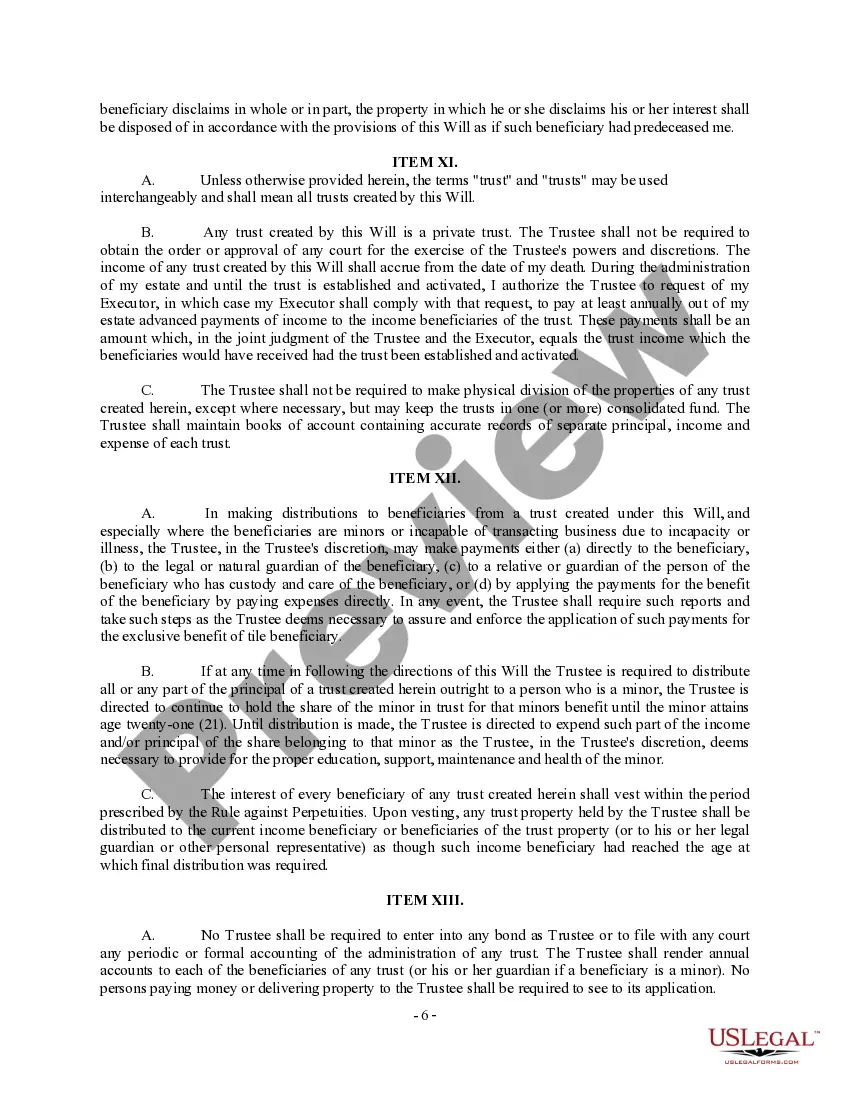
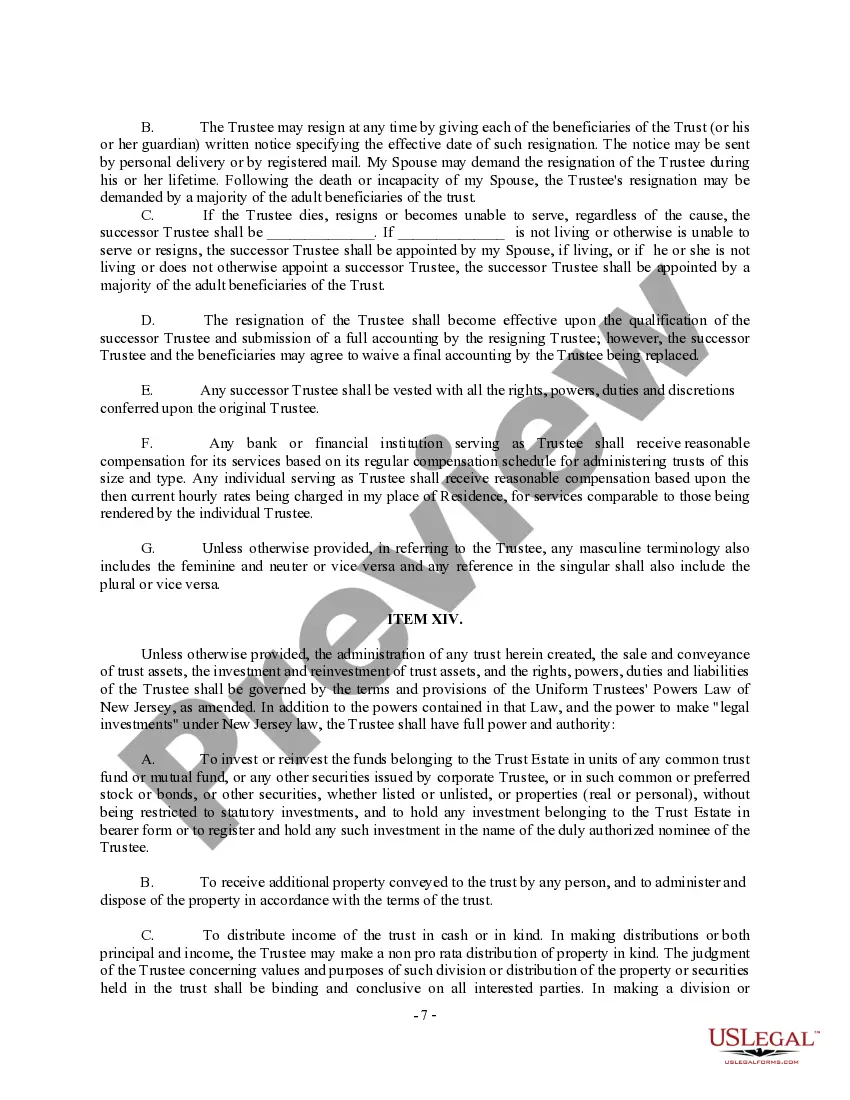
The Complex Will with Credit Shelter Marital Trust for Large Estates is a specialized legal document that enables a married couple to efficiently manage their estate and minimize estate taxes. This complex will allows for the establishment of a credit shelter trust, which ensures that a significant portion of the estate can pass tax-free to heirs, thus maximizing the wealth retained by the family. Unlike standard wills, this form is specifically designed for larger estates, making it a critical choice for couples looking to optimize their inheritance strategy.
Form components explained
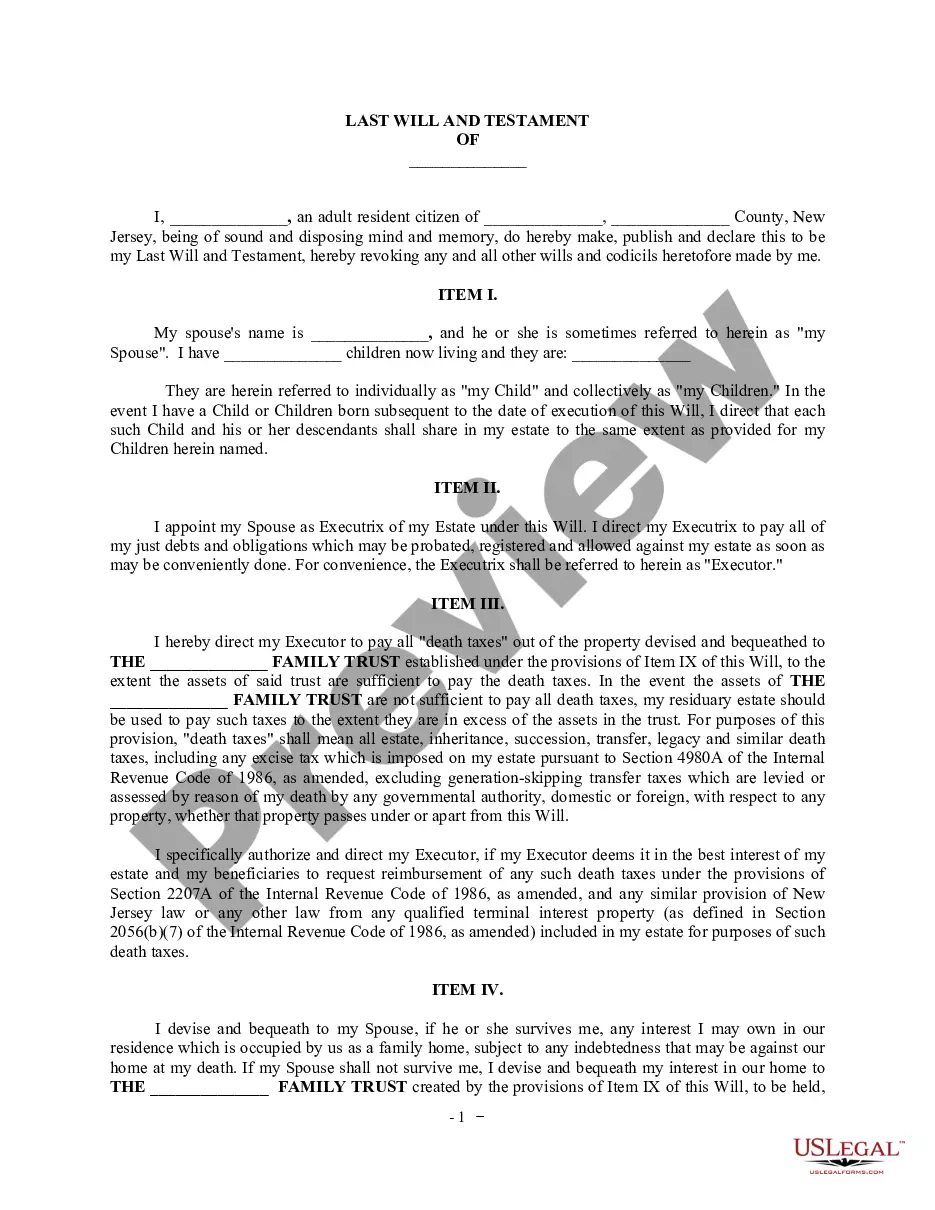
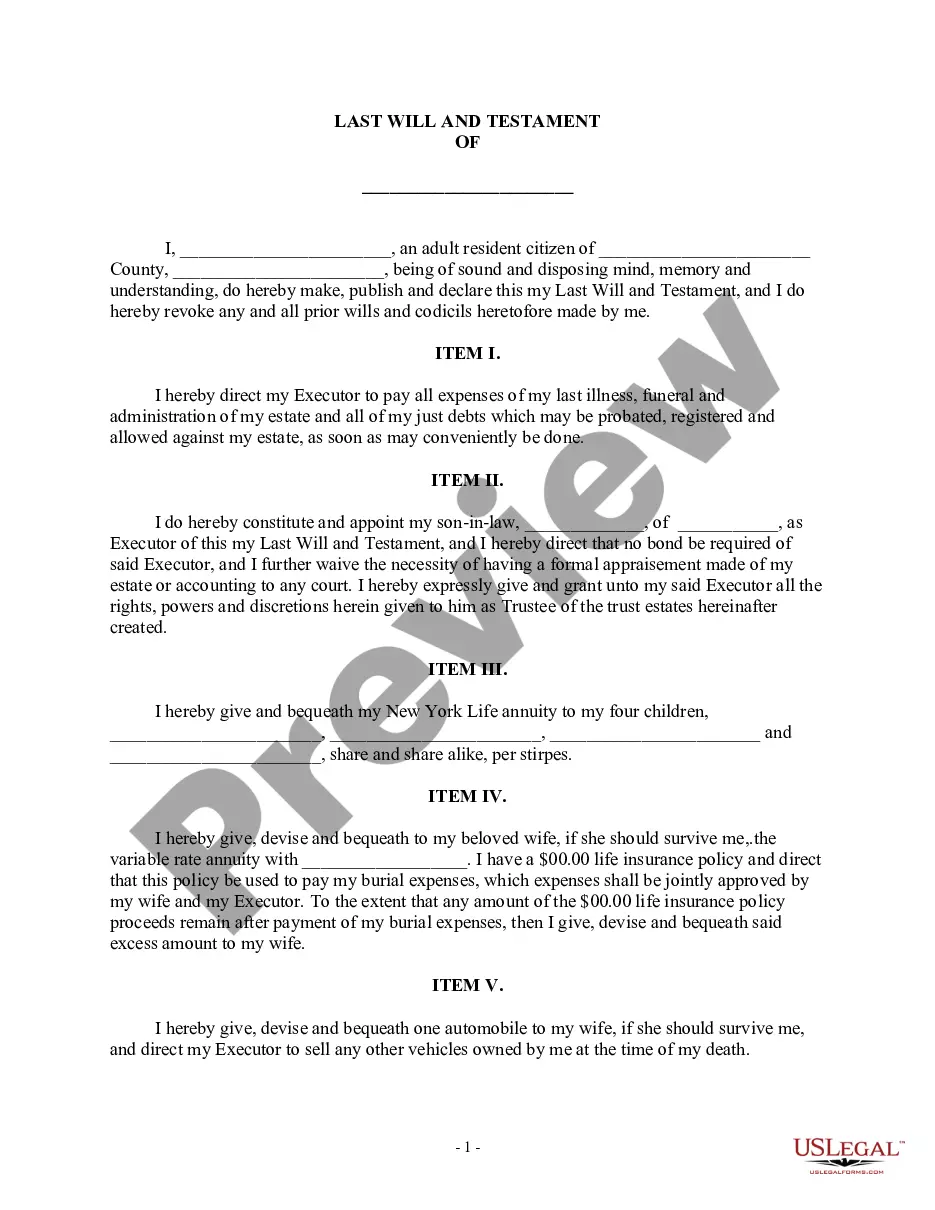
- Introduction of testator and revocation of prior wills.
- Appointment of an executor to manage the estate.
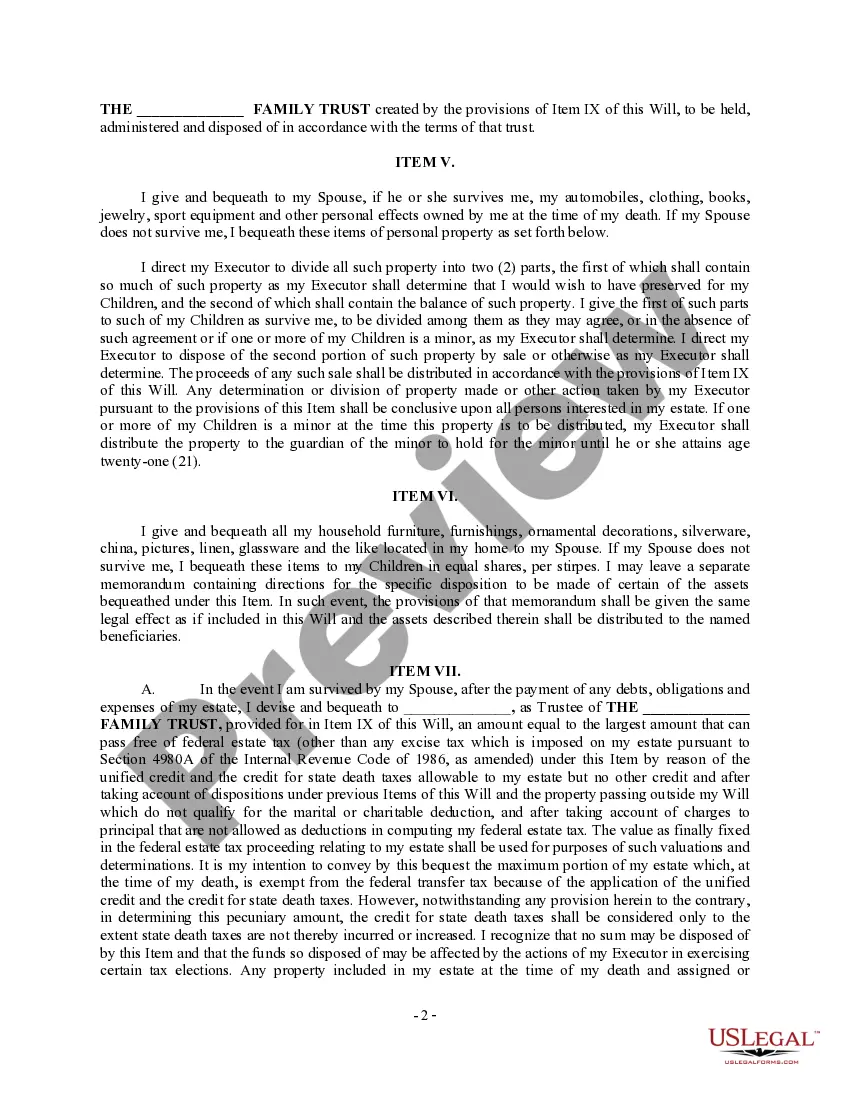
- Specification of a family trust for tax-free inheritance up to a designated amount.
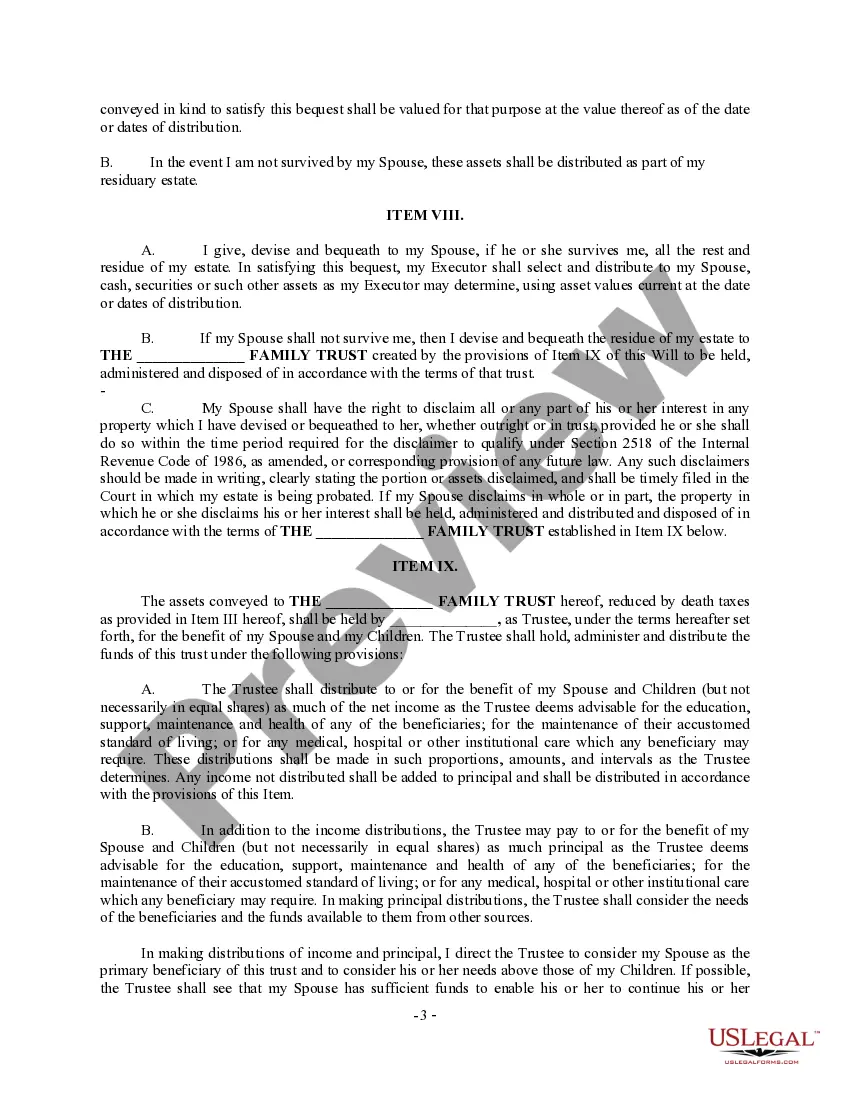
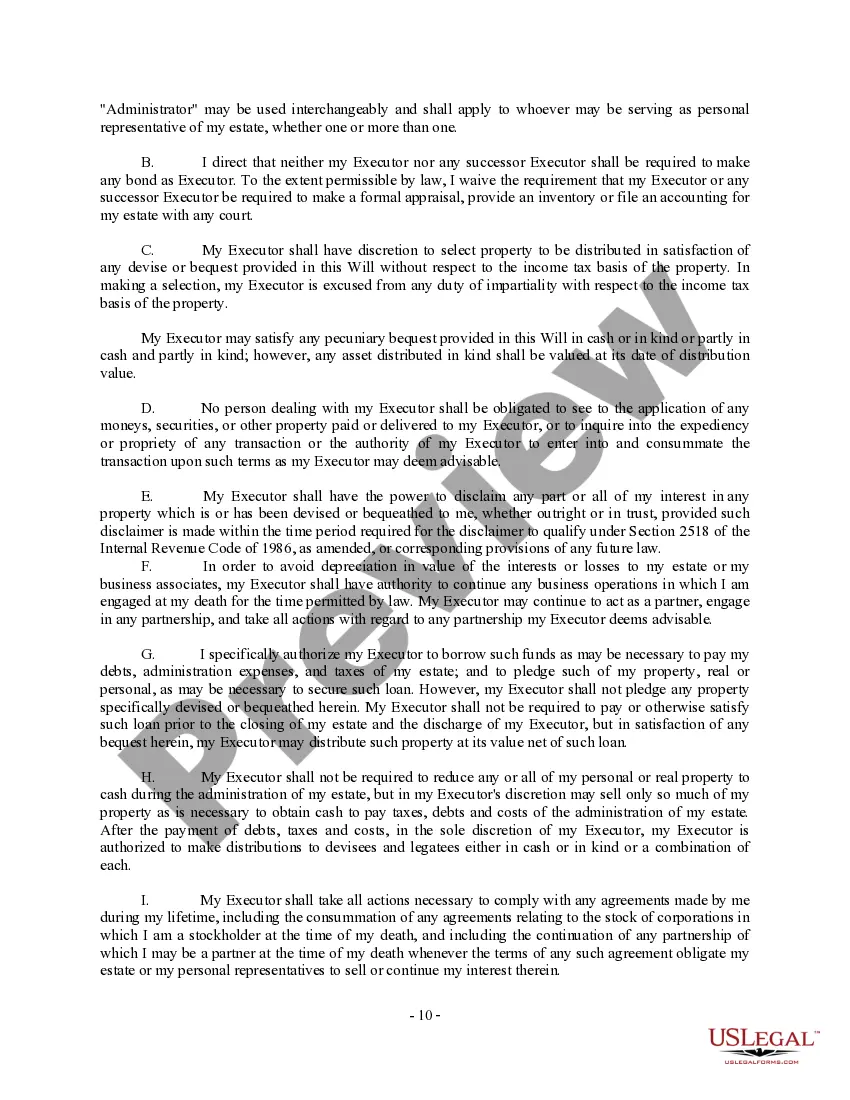
- Distribution of personal property and residuary estate provisions.
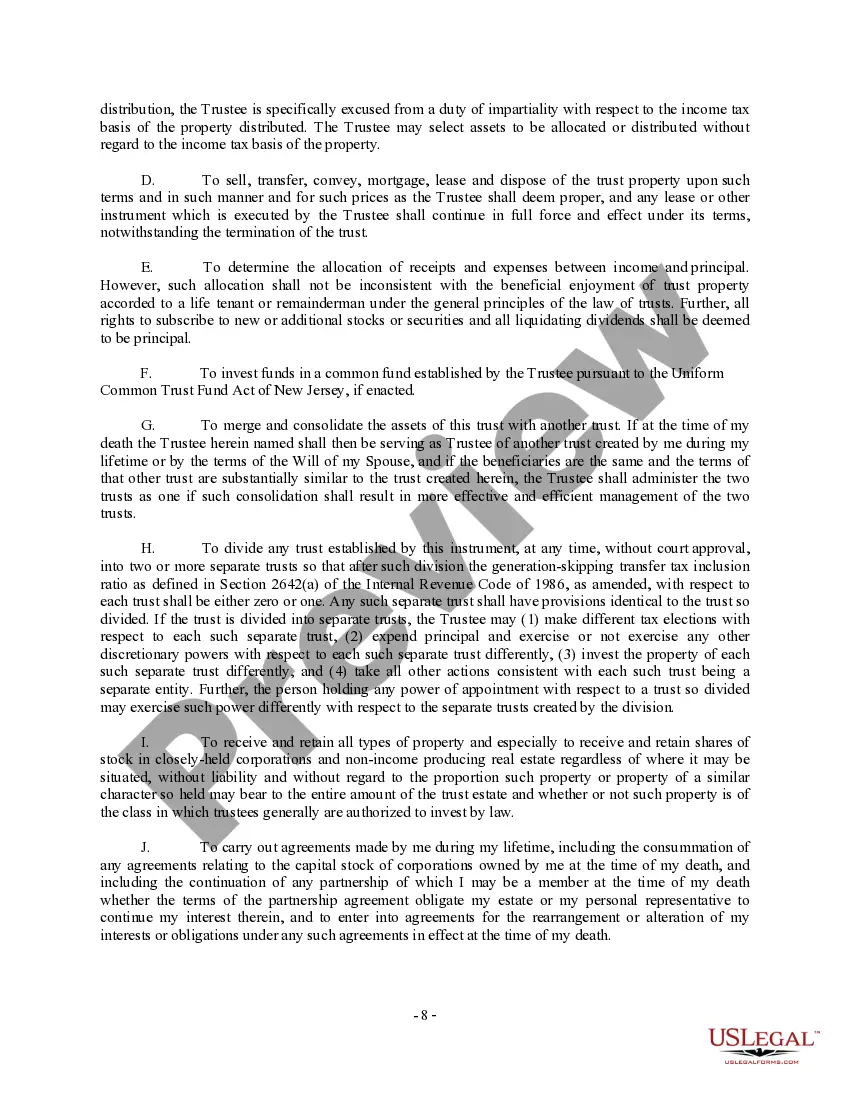
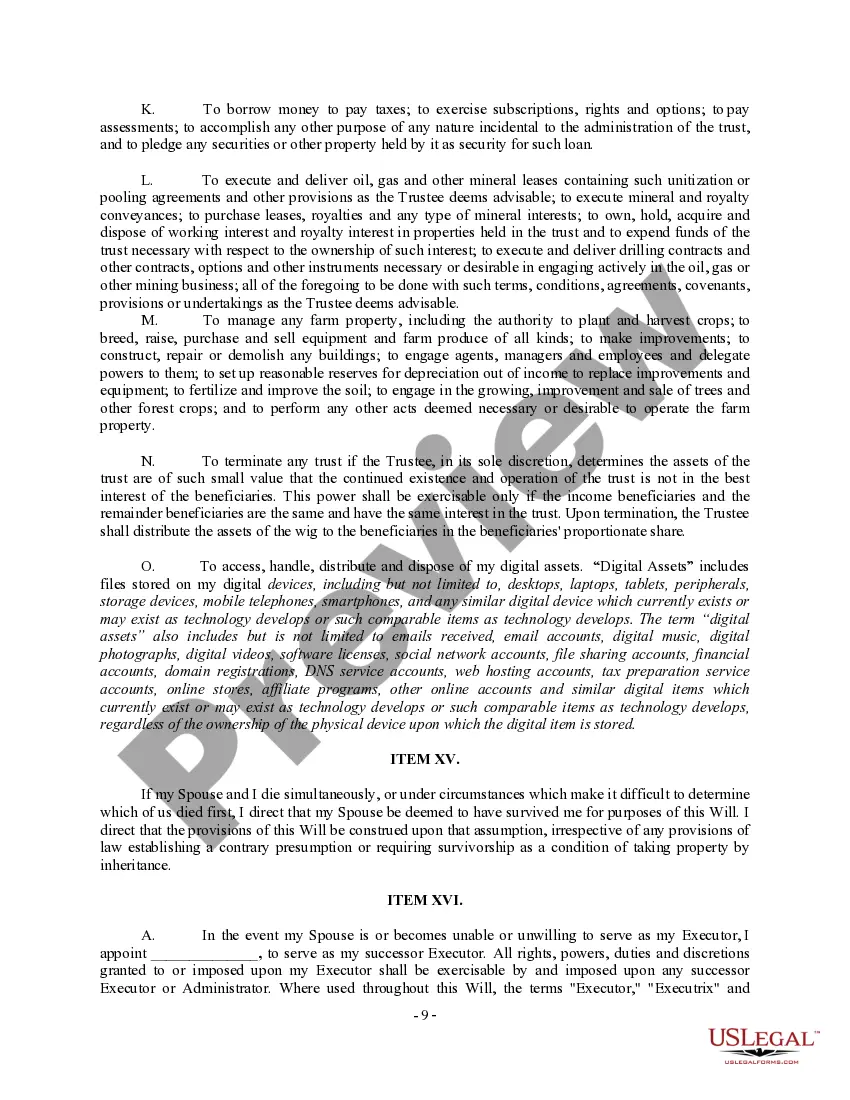
- Detailed instructions regarding the management and distribution of trust assets.





Common use cases
This form is essential for couples with sizable estates who wish to ensure that their assets are distributed according to their wishes while minimizing estate taxes. It is particularly useful for individuals planning to pass on wealth to their children or beneficiaries and those aiming to optimize their estate's financial sustainability after death. Utilizing this will can protect family wealth from excessive taxation, ensuring more of the estate is preserved for heirs.
Who should use this form
- Married couples with substantial assets and investments.
- Individuals seeking to establish an effective estate planning strategy to manage tax implications.
- Those wanting to provide for children and other beneficiaries with minimal tax burdens.
- Individuals who have previously created simpler wills but now require more comprehensive estate planning.
Instructions for completing this form
- Identify the testator and provide their personal details, including name and address.
- Appoint an executor to handle the estate, naming them in the designated section.
- Specify the amount to be placed into the credit shelter trust and outline recipients for other assets.
- Detail any instructions for the distribution of personal property and remaining assets.
- Sign and date the document in the presence of witnesses, ensuring compliance with state notarization laws if required.
Notarization requirements for this form
To make this form legally binding, it must be notarized. Our online notarization service, powered by Notarize, lets you verify and sign documents remotely through an encrypted video session.
Get your form ready online
Our built-in tools help you complete, sign, share, and store your documents in one place.
Make edits, fill in missing information, and update formatting in US Legal Forms—just like you would in MS Word.
Download a copy, print it, send it by email, or mail it via USPS—whatever works best for your next step.
Sign and collect signatures with our SignNow integration. Send to multiple recipients, set reminders, and more. Go Premium to unlock E-Sign.
If this form requires notarization, complete it online through a secure video call—no need to meet a notary in person or wait for an appointment.
We protect your documents and personal data by following strict security and privacy standards.

Make edits, fill in missing information, and update formatting in US Legal Forms—just like you would in MS Word.

Download a copy, print it, send it by email, or mail it via USPS—whatever works best for your next step.

Sign and collect signatures with our SignNow integration. Send to multiple recipients, set reminders, and more. Go Premium to unlock E-Sign.

If this form requires notarization, complete it online through a secure video call—no need to meet a notary in person or wait for an appointment.

We protect your documents and personal data by following strict security and privacy standards.
Typical mistakes to avoid
- Failing to update the will after significant life events, such as the birth of a child or change in financial status.
- Not clearly specifying all assets and beneficiaries resulting in potential disputes among heirs.
- Neglecting to choose a trustworthy and capable executor.
- Inadequate signing and witnessing, which can lead to challenges in the will's validity.
Why complete this form online
- Convenient access to customizable legal forms at any time.
- Editable templates that allow users to tailor information to their specific circumstances.
- Reliable, attorney-drafted content ensuring compliance with legal standards.
- The ability to securely store and retrieve essential documents when needed.
Looking for another form?
Form popularity
FAQ
At the time of your death, the assets in your family trust are protected by the exemption, and the assets in your marital trust are protected by the marital deduction. No estate taxes are due.
First, in a standard credit shelter trust, there is no step-up in basis at the death of the surviving spouse.Second, the credit shelter trust is a separate taxpayer and requires its own tax return, Form 1041.
A marital trust starts as a revocable living trust. A surviving spouse can be its trustee.
You can be trustee of your own living trust. If you are married, your spouse can be trustee with you. Most married couples who own assets together, especially those who have been married for some time, are usually co-trustees.
A credit shelter trust (CST) is a trust created after the death of the first spouse in a married couple. Assets placed in the trust are generally held apart from the estate of the surviving spouse, so they may pass tax-free to the remaining beneficiaries at the death of the surviving spouse.
Trust B is irrevocable, the surviving spouse cannot change its terms. When one spouse dies the survivor must hire a lawyer or an accountant to determine how to best divide the couple's assets between the deceased spouse's irrevocable trust and the surviving spouse's revocable trust.
A marital trust allows the couple's heirs to avoid probate and take less of a hit from estate taxes by taking full advantage of the unlimited marital deductiona provision that enables spouses to pass assets to each other without tax consequences.
The "A Trust" is also commonly referred to as the "Marital Trust," "QTIP Trust," or "Marital Deduction Trust." The "B Trust" is also commonly referred to as the "Bypass Trust," "Credit Shelter Trust," or "Family Trust."
Yes, the surviving spouse may serve as trustee of the credit shelter trust.All of the assets in the credit shelter trust, including any appreciation in value during the surviving spouse's lifetime, pass free of estate tax to the beneficiaries.