Oklahoma Small Estate Successor Affidavit - Not to Exceed $50,000
About this form
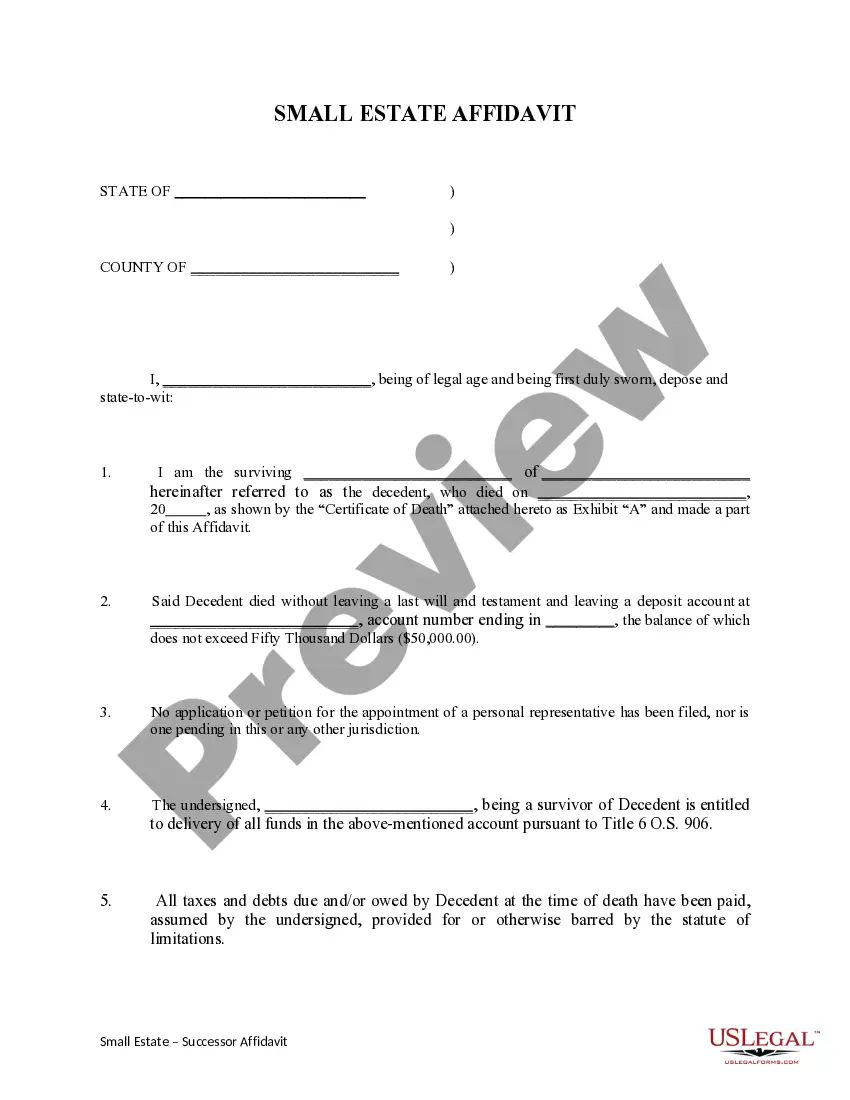
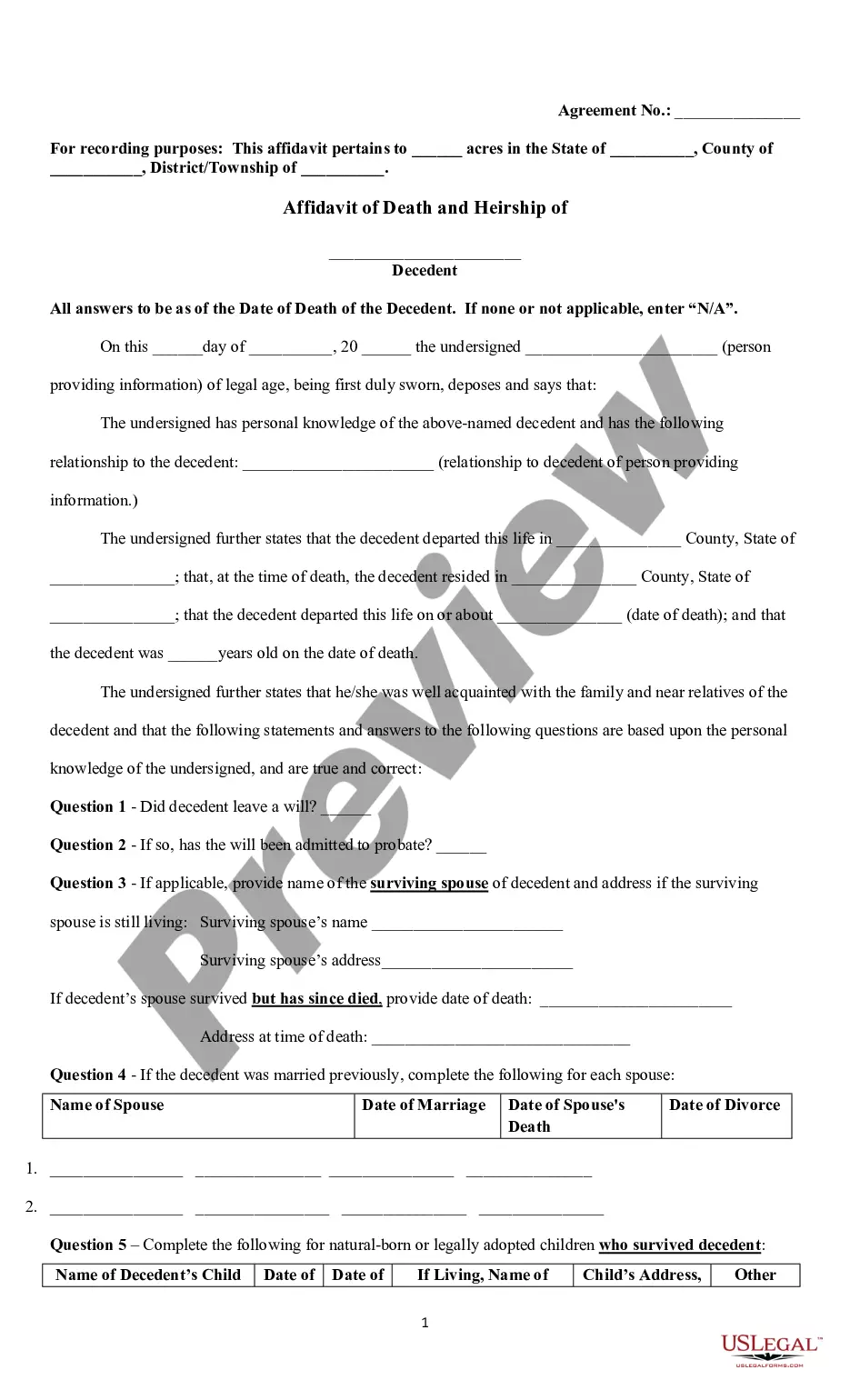
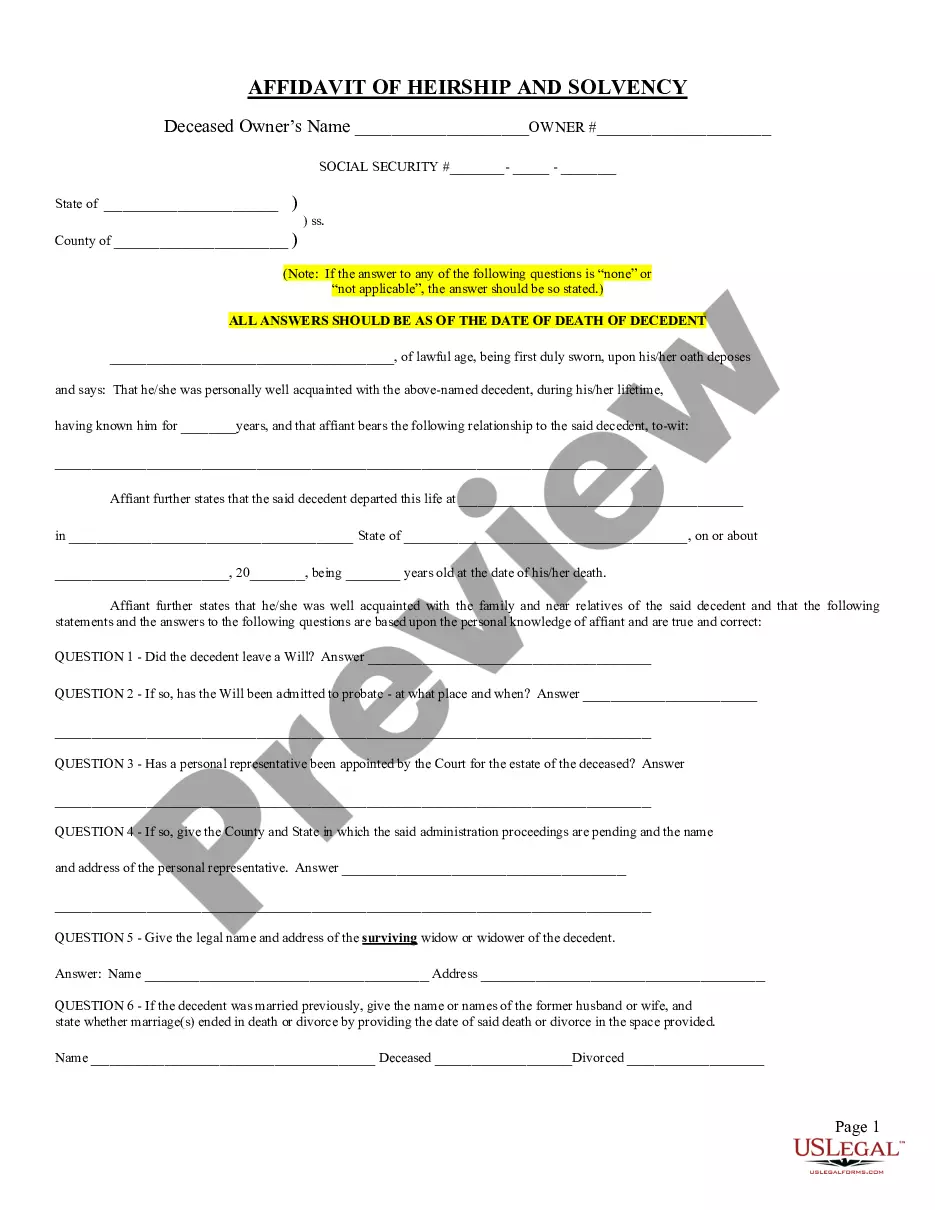
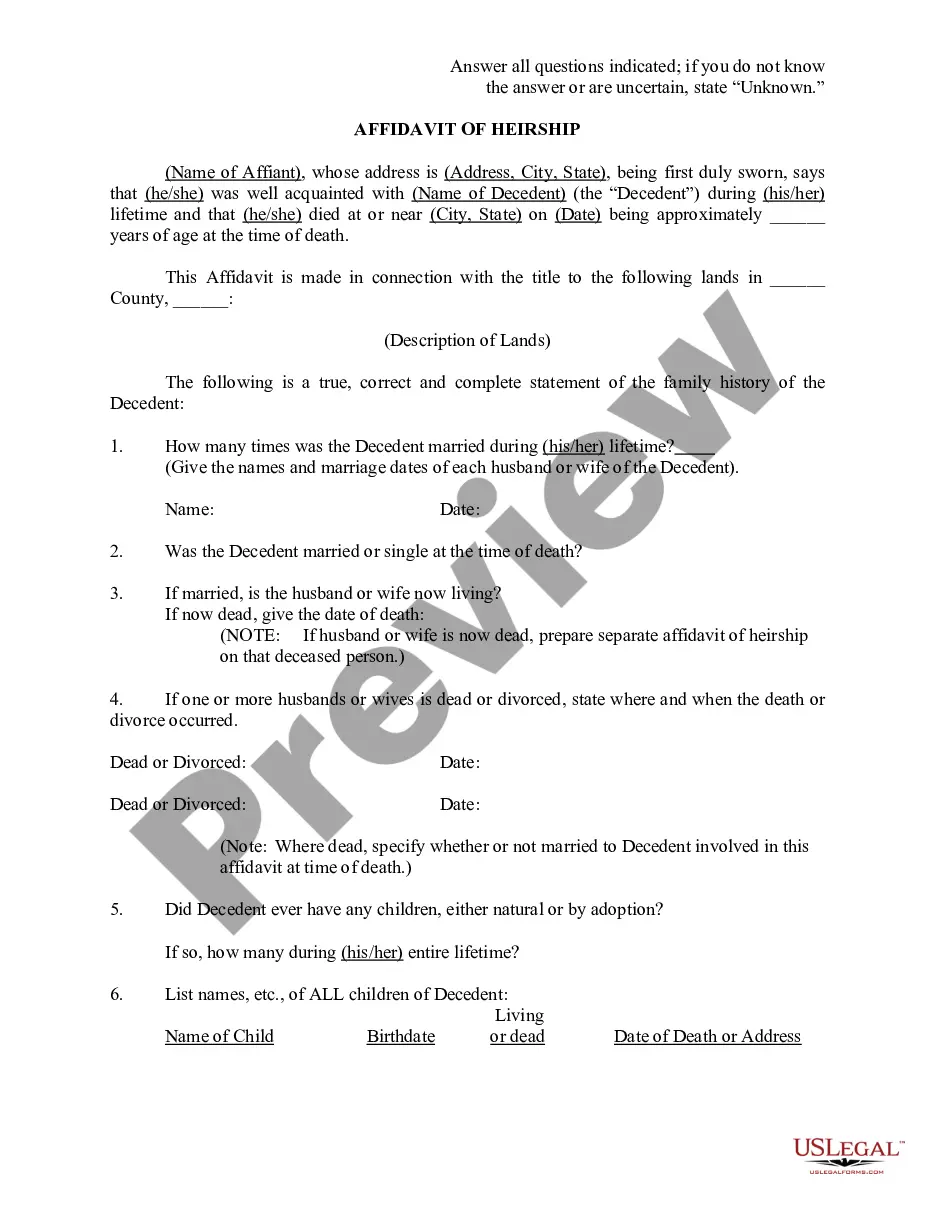
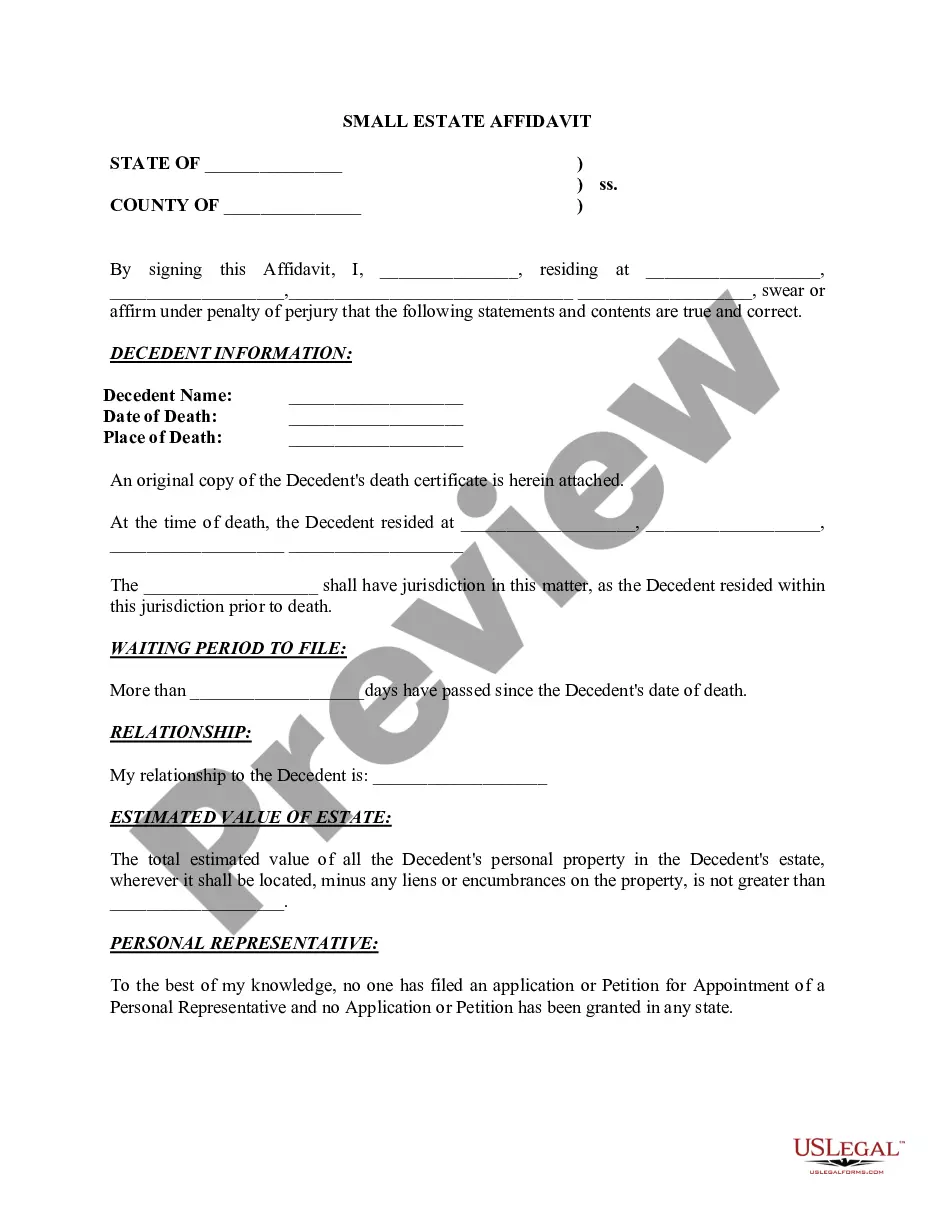
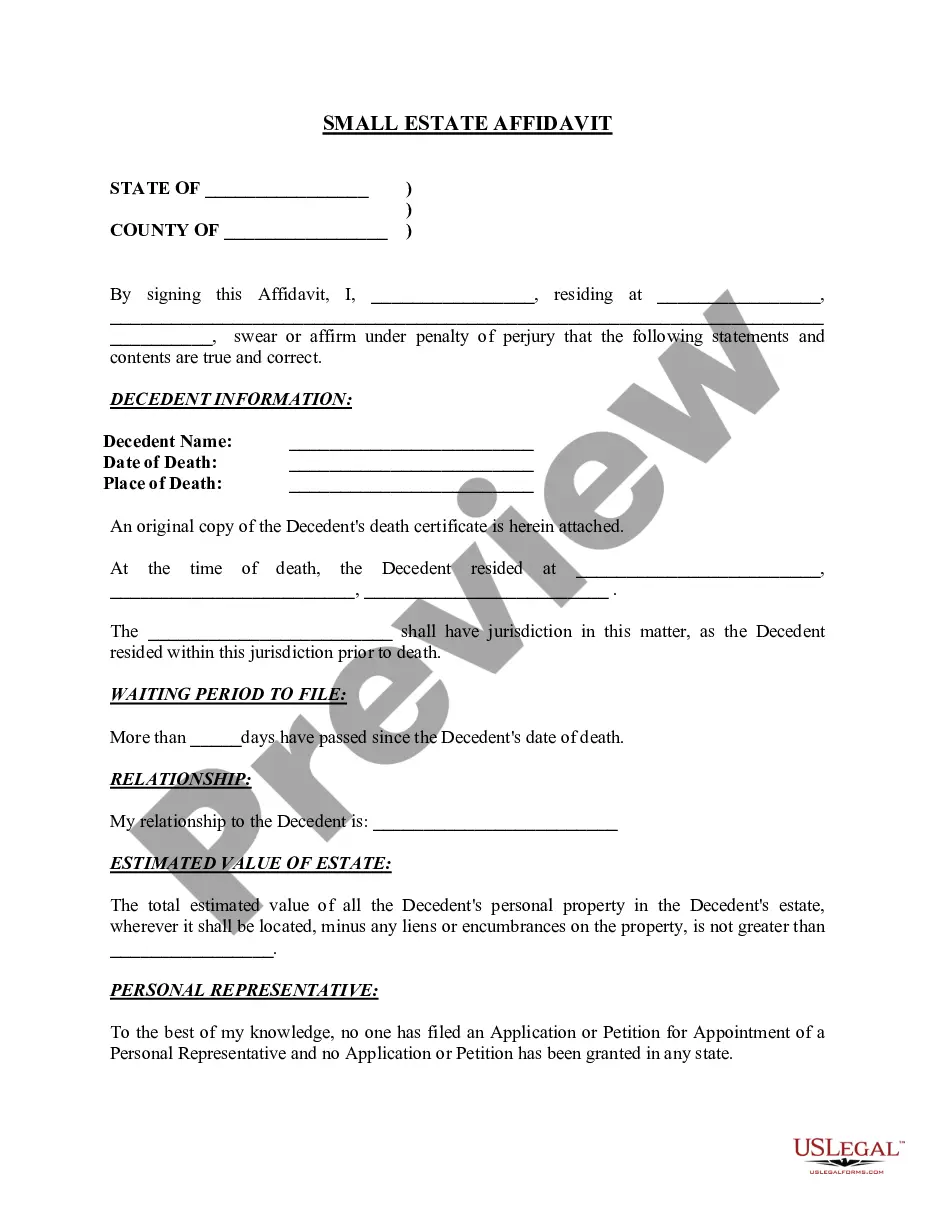
The Small Estate Successor Affidavit - Not to Exceed $50,000 is a legal document that allows a successor of a deceased person to distribute certain assets, particularly tangible personal property or bank accounts, valued at no more than fifty thousand dollars. This affidavit serves as a simplified method of transferring ownership without the need for formal probate proceedings, differentiating it from other estate forms which may require more extensive legal procedures.
What’s included in this form
- Identification of the deceased and the successor.
- Description of the tangible personal property to be distributed.
- Names and addresses of individuals entitled to receive the property.
- Respective shares of the property among the beneficiaries.
- Affirmation of the successor's right to handle the estate as per state laws.
When to use this form
This form is typically used when a person has died and their estate consists of tangible personal property, including cash in bank accounts, that does not exceed fifty thousand dollars in total value. It enables the successor to legally claim and distribute these assets without going through the often lengthy probate process, making it ideal for small estates.
Who this form is for
This form is suitable for:
- Successors or heirs of a deceased person who are entitled to the estate.
- Individuals or family members managing the estate of a loved one who has passed away with minimal assets.
- Beneficiaries looking to expedite the transfer of personal property valued under fifty thousand dollars.
How to prepare this document
- Identify the deceased person's full name and date of death.
- Enter your details as the successor along with your relationship to the deceased.
- List the tangible personal property and specify each item's value, ensuring it does not exceed fifty thousand dollars.
- Provide the names and addresses of all persons entitled to receive the property.
- Affix your signature and date the affidavit as required by state laws.
Notarization guidance
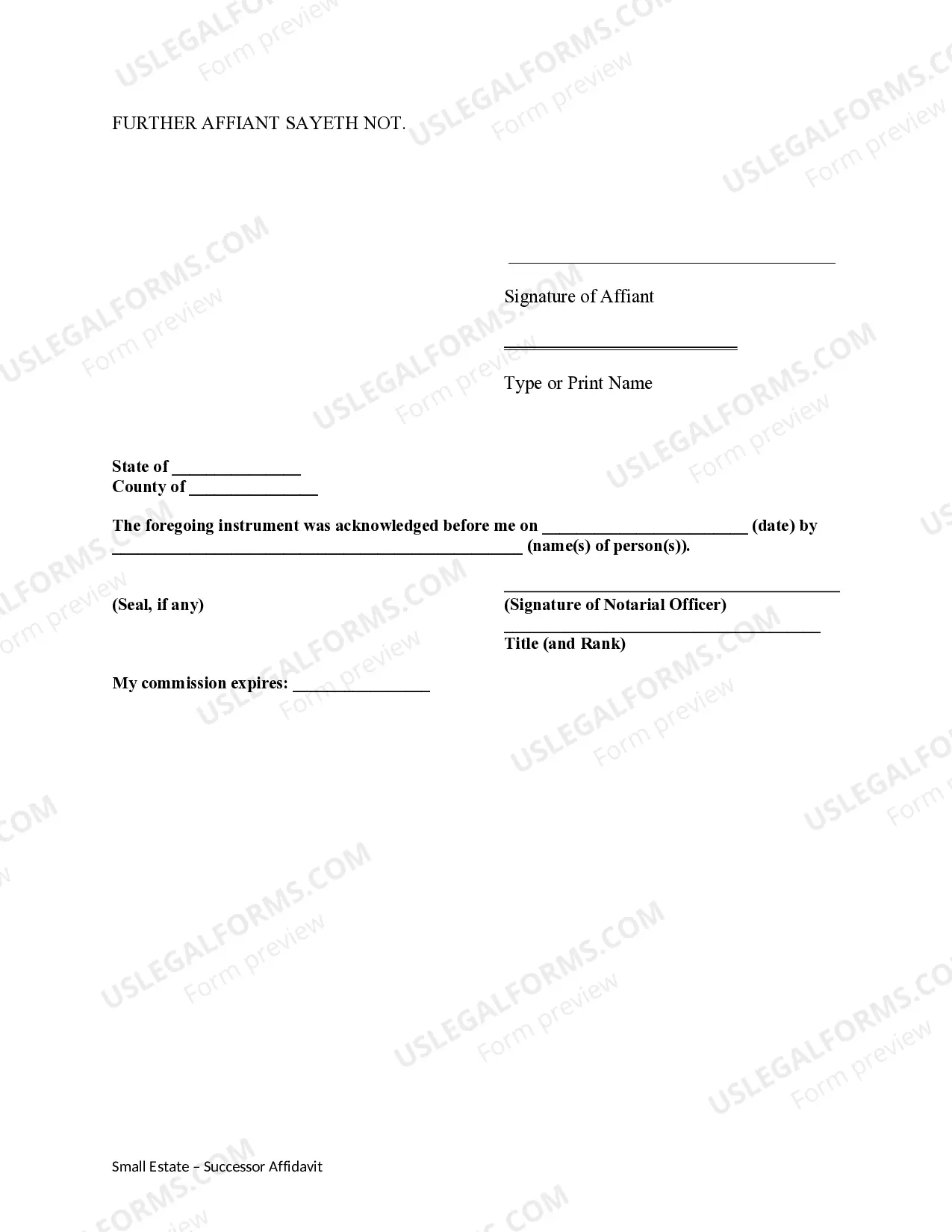
This form must be notarized to be legally valid. US Legal Forms provides secure online notarization powered by Notarize, allowing you to complete the process through a verified video call.
Get your form ready online
Our built-in tools help you complete, sign, share, and store your documents in one place.
Make edits, fill in missing information, and update formatting in US Legal Forms—just like you would in MS Word.
Download a copy, print it, send it by email, or mail it via USPS—whatever works best for your next step.
Sign and collect signatures with our SignNow integration. Send to multiple recipients, set reminders, and more. Go Premium to unlock E-Sign.
If this form requires notarization, complete it online through a secure video call—no need to meet a notary in person or wait for an appointment.
We protect your documents and personal data by following strict security and privacy standards.

Make edits, fill in missing information, and update formatting in US Legal Forms—just like you would in MS Word.

Download a copy, print it, send it by email, or mail it via USPS—whatever works best for your next step.

Sign and collect signatures with our SignNow integration. Send to multiple recipients, set reminders, and more. Go Premium to unlock E-Sign.

If this form requires notarization, complete it online through a secure video call—no need to meet a notary in person or wait for an appointment.

We protect your documents and personal data by following strict security and privacy standards.
Common mistakes
- Failing to list all entitled beneficiaries can lead to disputes later.
- Not accurately assessing the total value of the estate may invalidate the affidavit.
- Omitting required signatures or dates can create legal issues.
Why complete this form online
- Easy access to legal resources drafted by licensed attorneys.
- Convenience of filling out and downloading the form at your own pace.
- Reduced costs compared to traditional legal services.
Legal use & context
- The affidavit serves as a formal declaration of the successor's right to the property.
- Using this form can significantly expedite the process of transferring small estate assets.
- It provides legal immunity for successors when distributing the specified property, protecting them from claims against the estate.
Quick recap
- The Small Estate Successor Affidavit is crucial for managing estates under fifty thousand dollars without probate.
- It is essential to accurately complete the form to ensure legality and compliance with state requirements.
- Understanding the specific laws of Oklahoma can facilitate a smooth property transfer process.
Looking for another form?
Form popularity
FAQ
Located in this state if all of the property that the decedent owns, located in this state, is of a total value less than $50,000, it's a small estate.
When you use a small estate affidavit , you have to pay the decedent's bills before paying money to anyone else. For example, the decedent might have owed money to a credit card company when they died. If you use the small estate affidavit, you must give money from the estate to pay the credit card company.
You can use the simplified small estate process in Oklahoma if the value of the estate is $200,000 or less, if the deceased person has been dead for more than five years, or if he or she resided in another state at the time of death.
A small estate affidavit is a sworn written statement that authorizes someone to claim a decedent's assets outside of the formal probate process.
A typical probate can be completed in around 4-6 months, but could last much longer depending on the size of the estate, creditor claims and whether there is a challenge to the will or to appointment of the Personal Representative. For small estates, Oklahoma has procedures called summary administration.
In most states, however, there is the option to use a small estate affidavit when the assets of the estate are under a certain dollar amount, which varies by state. An attorney is not required to file a small estate affidavit, although it may be helpful to consult with one prior to filing the small estate affidavit.
Step 1 Fill in the county in which you are signing the document. Step 2 Write in your name as successor in interest of decedent. Step 3 Write in your relationship to decedent and decedent's name and date of death in Section 1. Make sure to attach a certified death certificate.
In Michigan you can use an Affidavit if the estate does not include real property and the value of the entire estate, less liens and encumbrances, is less than $15,000. There is a 28-day waiting period.