Arizona Contract, General Purpose
About this form
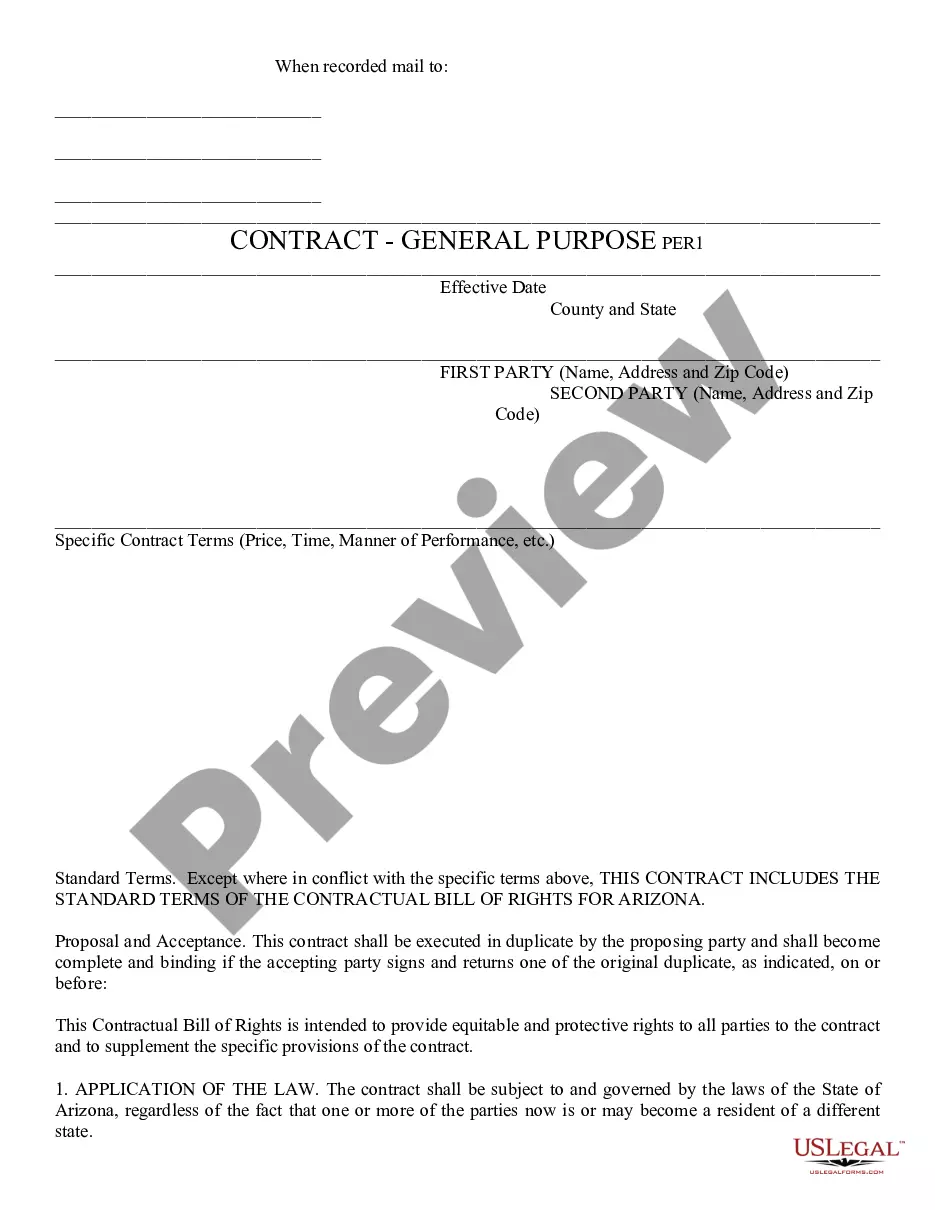
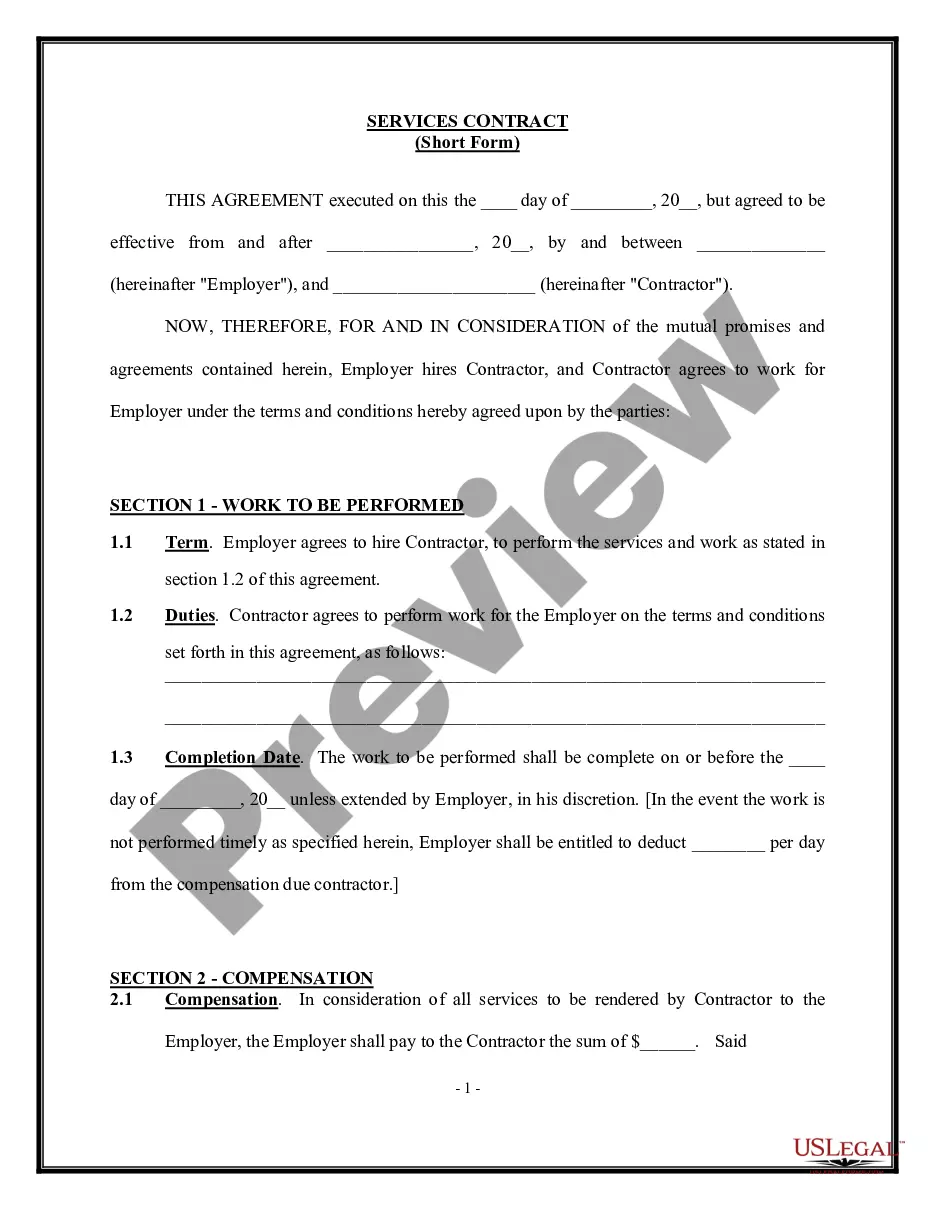
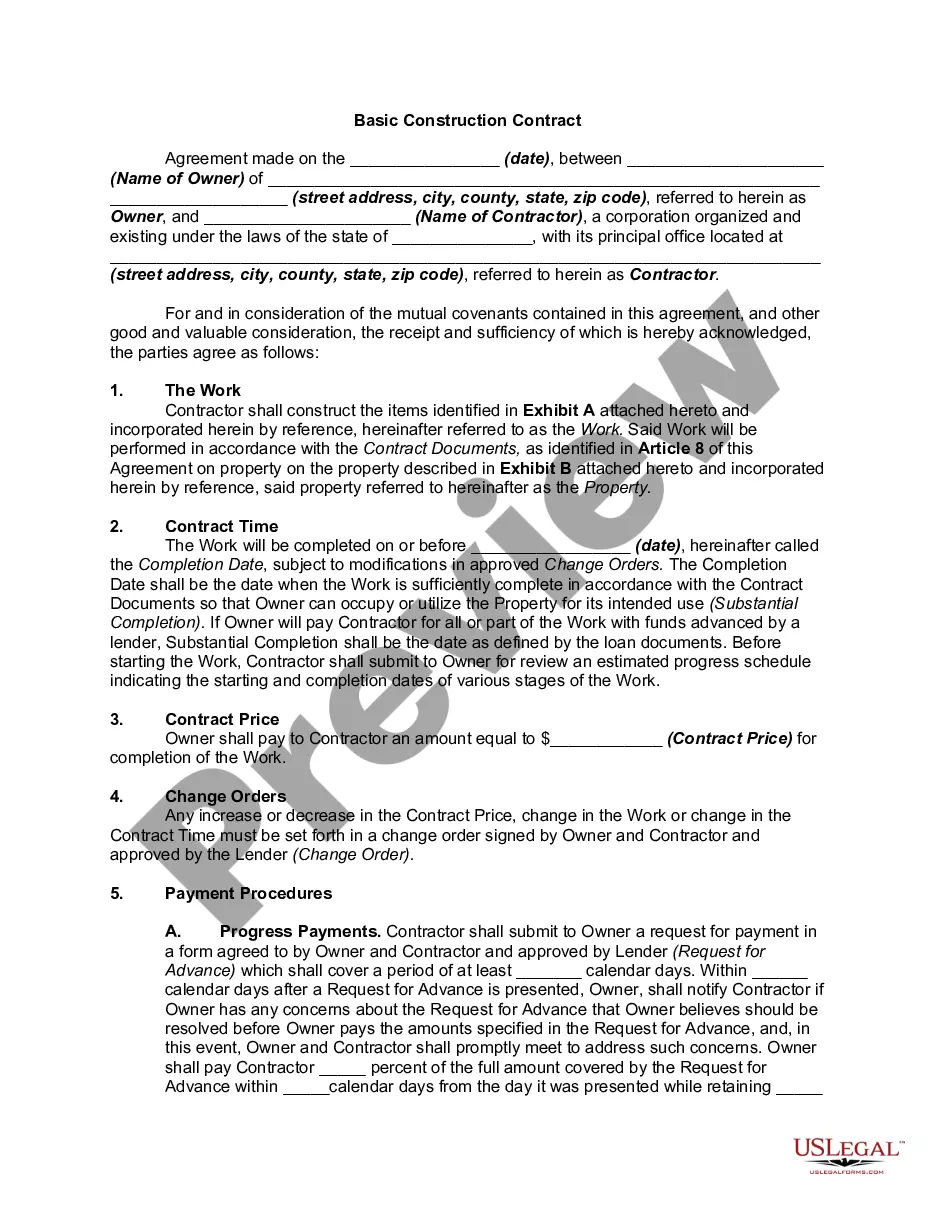
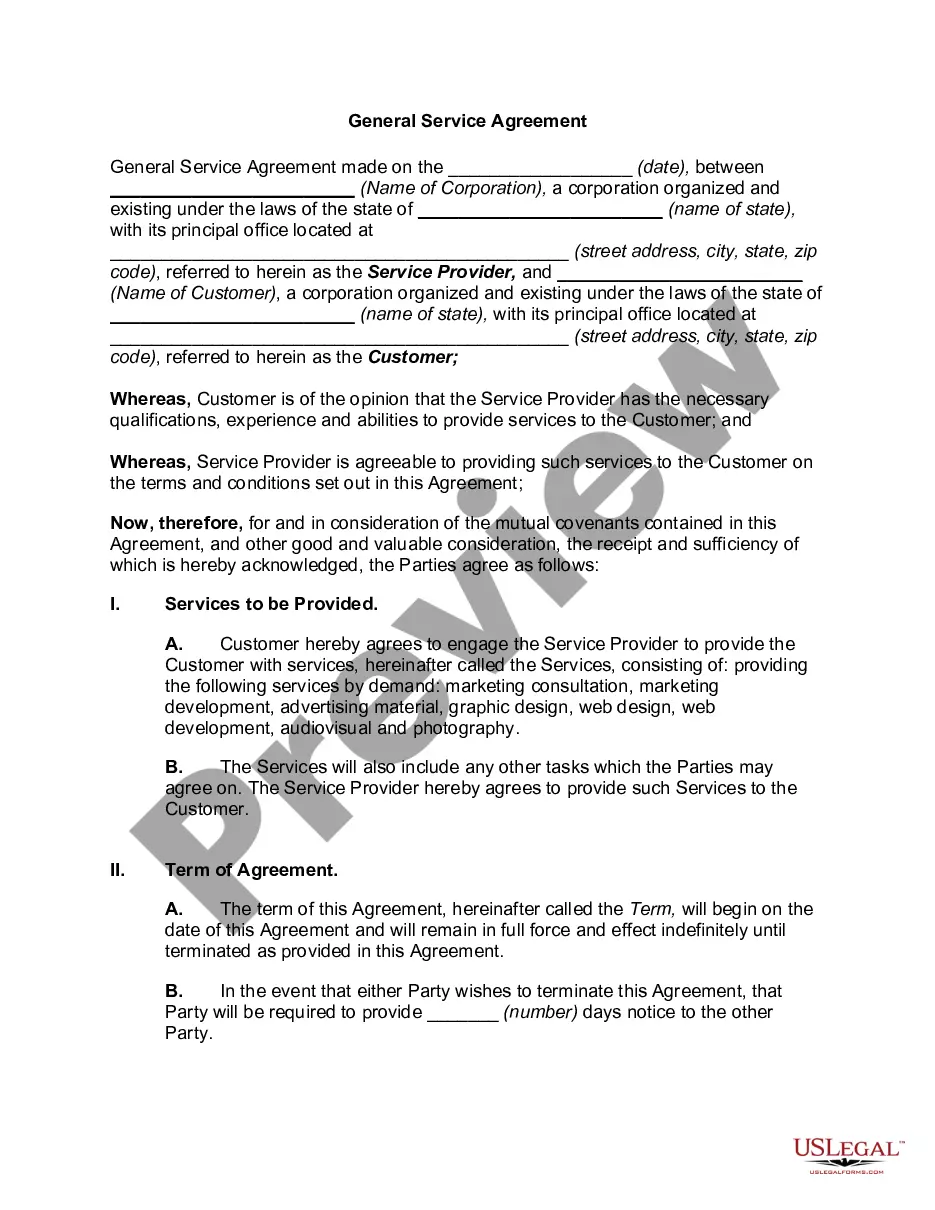
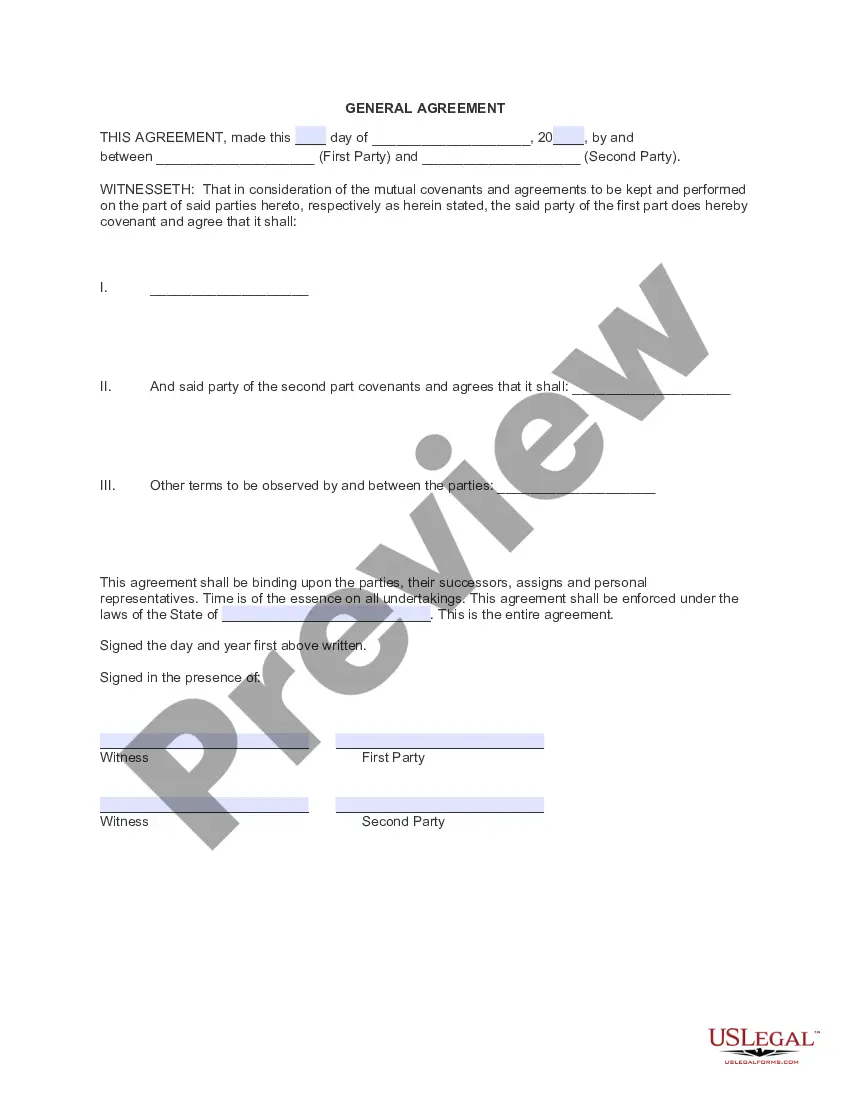
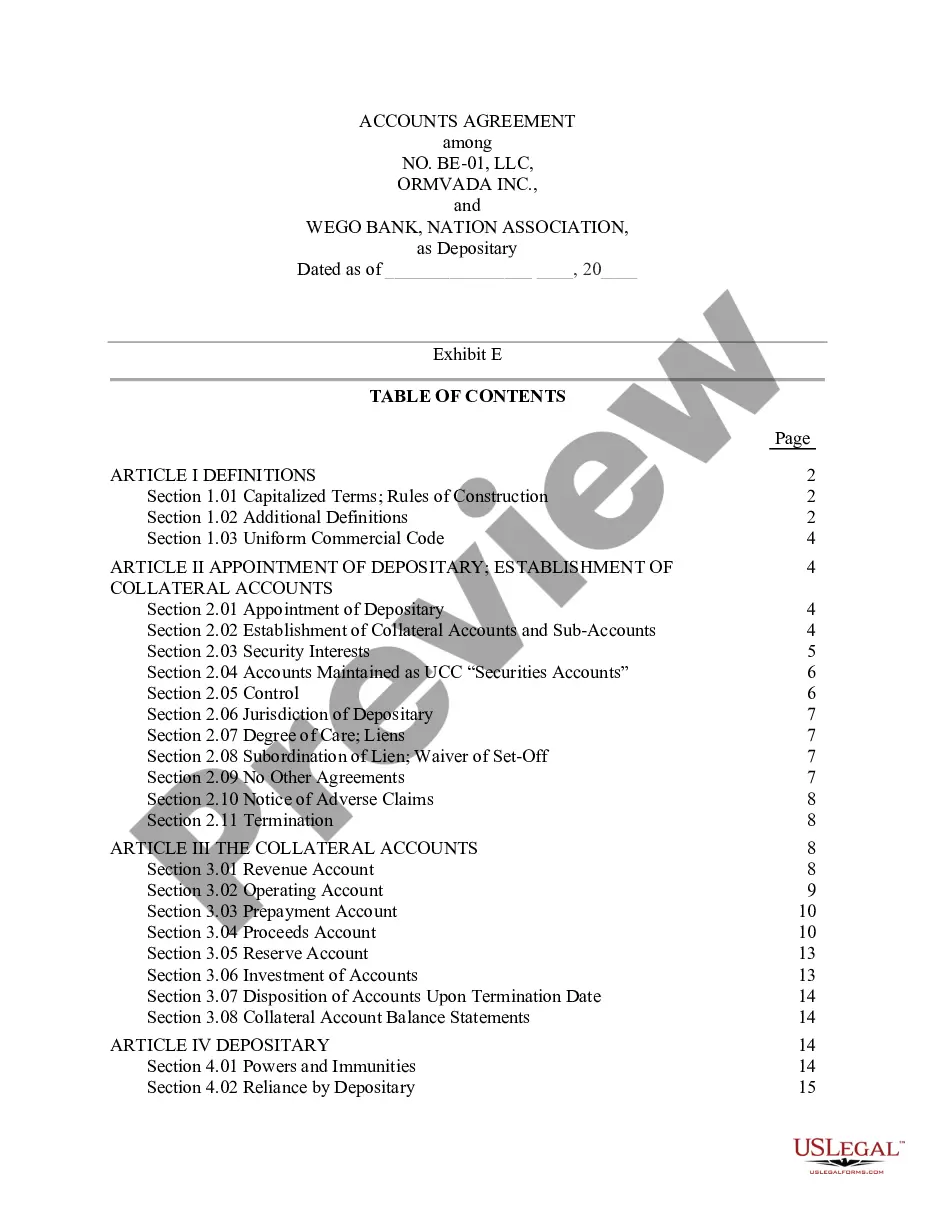
The General Purpose Contract is a versatile legal document used to outline the terms and conditions of an agreement between two or more parties. It serves to clarify the expectations and obligations for both sides, making it distinct from more specialized contracts. This form is particularly useful for those seeking a straightforward, broadly applicable contract for various business or personal arrangements in Arizona.
Main sections of this form
- Details of the parties involved, including names and addresses.
- Specific contract terms such as price, performance timeframe, and manner of execution.
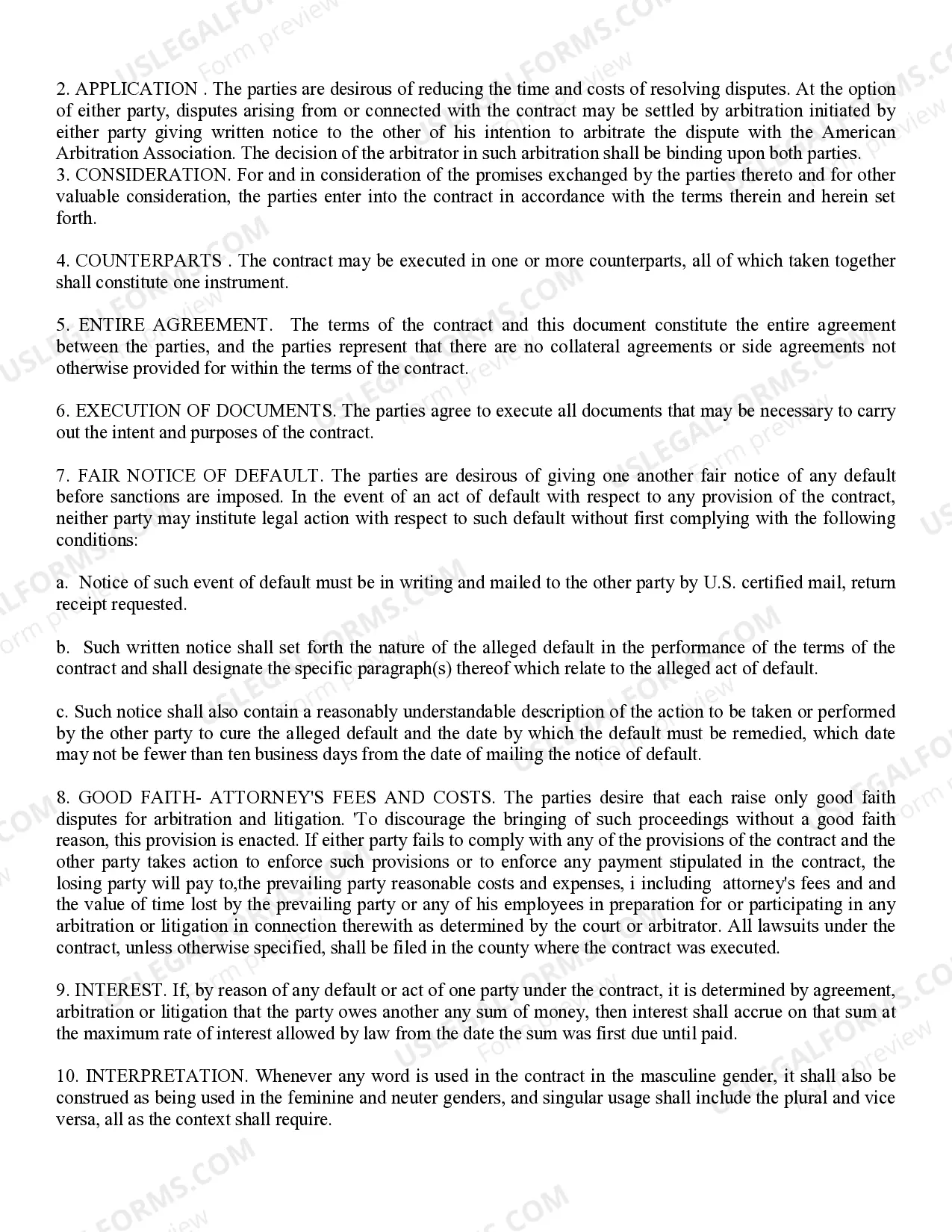
- Inclusion of the Arizona Contractual Bill of Rights, outlining the rights and responsibilities of all parties.
- Clauses addressing dispute resolution, including arbitration options and procedures.
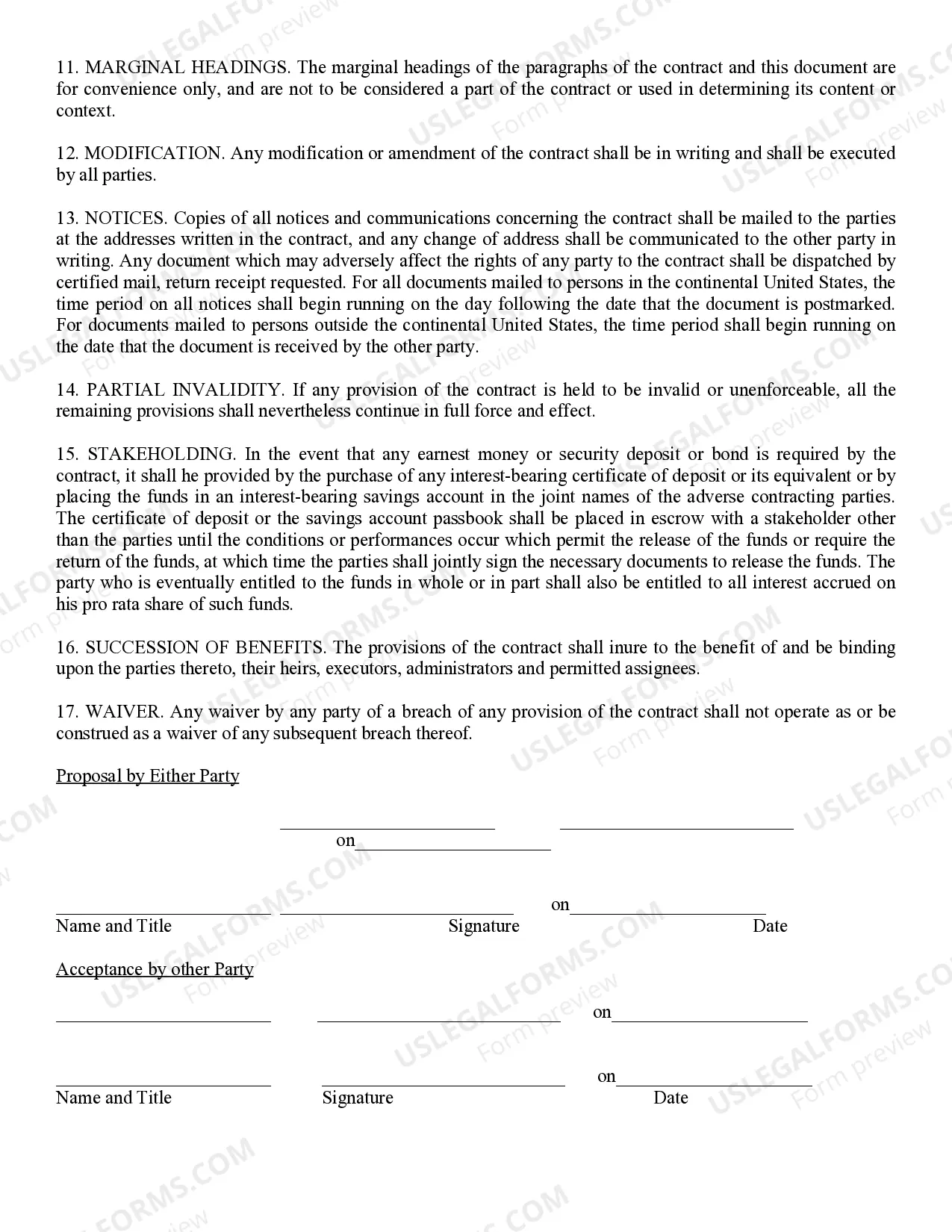
- Provisions for modifications, notices, and partial invalidity.
Situations where this form applies
This form is ideal for a variety of situations where a clear agreement is necessary. Examples include agreements for services, sales transactions, joint ventures, or collaborative projects. It can be especially useful when the parties involved wish to formalize their understanding and establish legal protections in case of disagreements.
Who this form is for
This form is suitable for:
- Individuals entering into personal contracts.
- Small business owners needing a contract for client work or partnerships.
- Professionals seeking to formalize service agreements.
- Anyone looking to outline clear terms for mutual benefit in any arrangement.
How to complete this form
To complete this form, follow these steps:
- Identify the parties by entering their full names and addresses at the beginning of the contract.
- Clearly specify the terms of the agreement, including price and timeline for performance.
- Review and include standard terms from the Arizona Contractual Bill of Rights as applicable.
- Ensure that both parties sign and date the document to validate the agreement.
- Consider notarizing the document for added legal authenticity, especially if required.
Notarization guidance
Yes, this form must be notarized to be legally valid. Notarization provides an added layer of security, confirming both parties' identities and that they willingly entered into the agreement. US Legal Forms offers integrated online notarization, allowing you to complete this process easily through secure video call, ensuring convenience and legal equivalence without the need for travel.
Get your form ready online
Our built-in tools help you complete, sign, share, and store your documents in one place.
Make edits, fill in missing information, and update formatting in US Legal Forms—just like you would in MS Word.
Download a copy, print it, send it by email, or mail it via USPS—whatever works best for your next step.
Sign and collect signatures with our SignNow integration. Send to multiple recipients, set reminders, and more. Go Premium to unlock E-Sign.
If this form requires notarization, complete it online through a secure video call—no need to meet a notary in person or wait for an appointment.
We protect your documents and personal data by following strict security and privacy standards.

Make edits, fill in missing information, and update formatting in US Legal Forms—just like you would in MS Word.

Download a copy, print it, send it by email, or mail it via USPS—whatever works best for your next step.

Sign and collect signatures with our SignNow integration. Send to multiple recipients, set reminders, and more. Go Premium to unlock E-Sign.

If this form requires notarization, complete it online through a secure video call—no need to meet a notary in person or wait for an appointment.

We protect your documents and personal data by following strict security and privacy standards.
Common mistakes to avoid
- Failing to include all necessary details about the parties involved.
- Leaving key terms vague or open to interpretation.
- Not signing and dating the document, which can render it unenforceable.
- Ignoring local laws or specific requirements under Arizona law.
Benefits of completing this form online
- Convenience of downloading the form and filling it out at your own pace.
- Editability allows for tailored agreements that meet specific needs.
- Reliability of forms drafted by licensed attorneys ensuring legal compliance.
Looking for another form?
Form popularity
FAQ
To become an independent contractor in Arizona, start by defining your services and understanding the legal requirements for your business type. Next, obtain any necessary licenses and permits, and consider registering your business name. It's crucial to create contracts that outline the terms of service, and leveraging the Arizona Contract, General Purpose can simplify this process and help you establish clear agreements.
Yes, most independent contractors in Arizona are required to have a business license to operate legally. This requirement helps ensure compliance with local laws and can also protect your business's legitimacy. It's advisable to check with your local government for specific requirements and regulations that apply to your profession. Using an Arizona Contract, General Purpose can provide guidance on the necessary licenses and permits you may need.
To become a general contractor in Arizona, start by meeting the state's requirements, which often include education, experience, and passing an examination. You must submit your application, provide proof of financial stability, and obtain liability insurance. Ensuring you have a solid foundation with the Arizona Contract, General Purpose can help protect your interests during the application process.
Yes, you can be your own general contractor in Arizona, provided you meet the state's licensing requirements. Taking on this role allows you to manage your own projects, but you must also ensure compliance with local regulations. This independence can save costs but requires careful planning. The Arizona Contract, General Purpose can assist you in navigating contracts and obligations effectively.
The time it takes to obtain a general contractor license in Arizona can vary based on several factors, including paperwork completion and exam scheduling. Typically, if all documentation is prepared correctly, the process takes a few weeks to a couple of months. It's essential to stay organized and follow up with the Arizona Registrar of Contractors for updates. Having a solid Arizona Contract, General Purpose template can streamline some of this paperwork.
In Arizona, working as an unlicensed contractor can lead to significant legal issues. If your project exceeds a certain value, a license is typically required to comply with state laws. To avoid fines and potential legal disputes, it's essential to understand the specific requirements. Utilizing the Arizona Contract, General Purpose can help clarify these regulations and ensure compliance.
Arizona Form 5000 is typically used for general tax exemption requests, while Form 5000A is designed for specific purposes related to contractors. Form 5000A includes details that specifically address labor services and transactions contingent on contracts. To ensure you are using the correct form, refer to the guidelines provided on the uslegalforms platform, which can help clarify the distinction between Arizona contracts, general purpose.
Arizona Tax Exemption 5000 refers to the exemption for certain contractors from paying transaction privilege tax on specific labor services. This exemption applies to contractors who qualify and properly complete the necessary forms. To fully understand how this impacts your business, check out resources available on uslegalforms. They'll help you navigate Arizona contracts, general purpose, and tax exemptions.
To be a general contractor in Arizona, you must meet several requirements, including having a valid contractor's license, proof of liability insurance, and compliance with local laws. Additionally, you may need to demonstrate your experience and pass an examination. The uslegalforms platform can guide you through the necessary steps to secure the appropriate Arizona contracts, general purpose.
The Arizona tax form you need depends on your business structure and activities. Sole proprietors may typically use Form 140, while partnerships and corporations utilize their respective forms. If you engage in contracting, make sure to check specific requirements related to Arizona contracts, general purpose, and consult resources like uslegalforms for clarity on tax obligations.