Oklahoma Notice to Quit and Demand for Past Due Rent
What is this form?
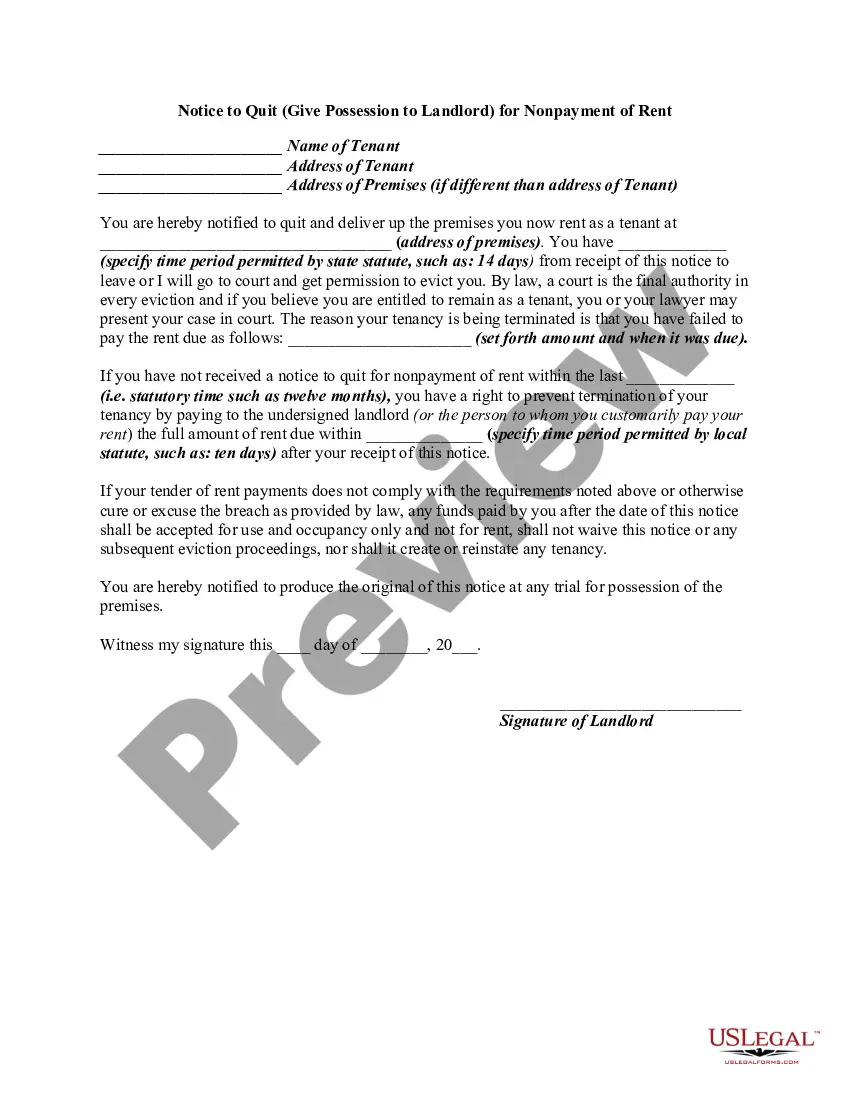
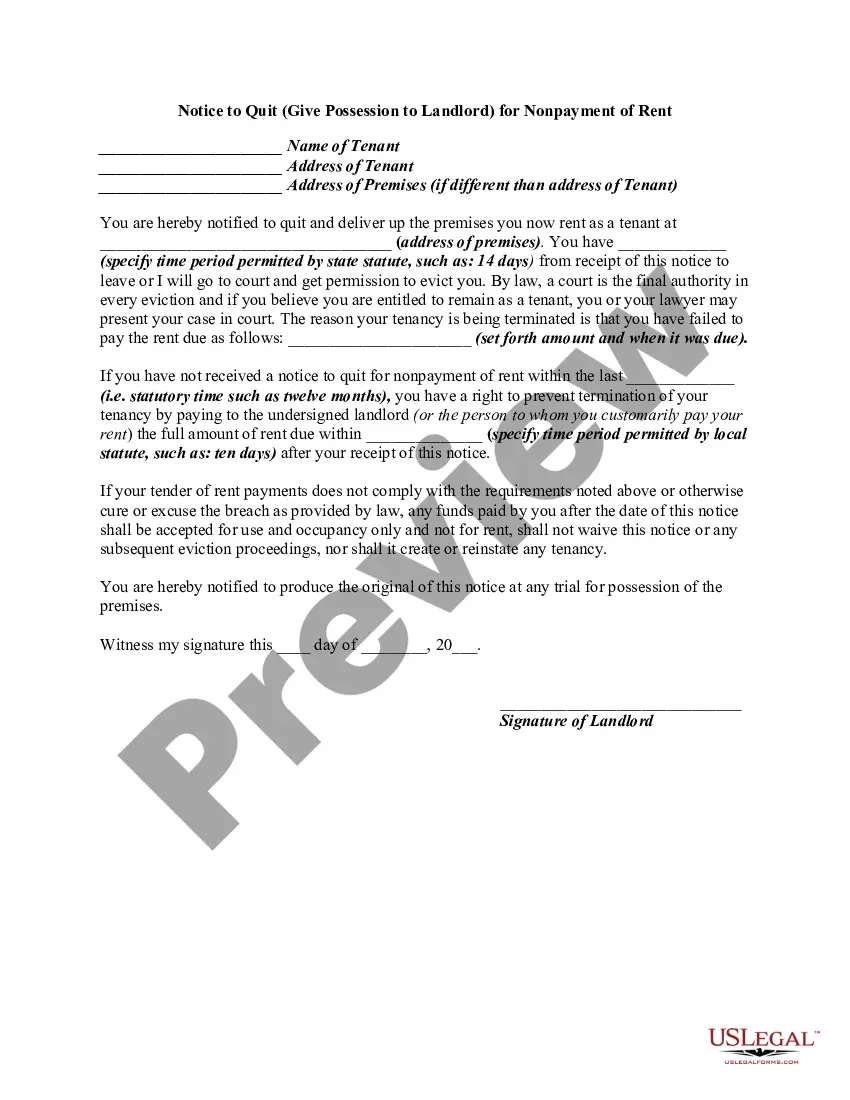
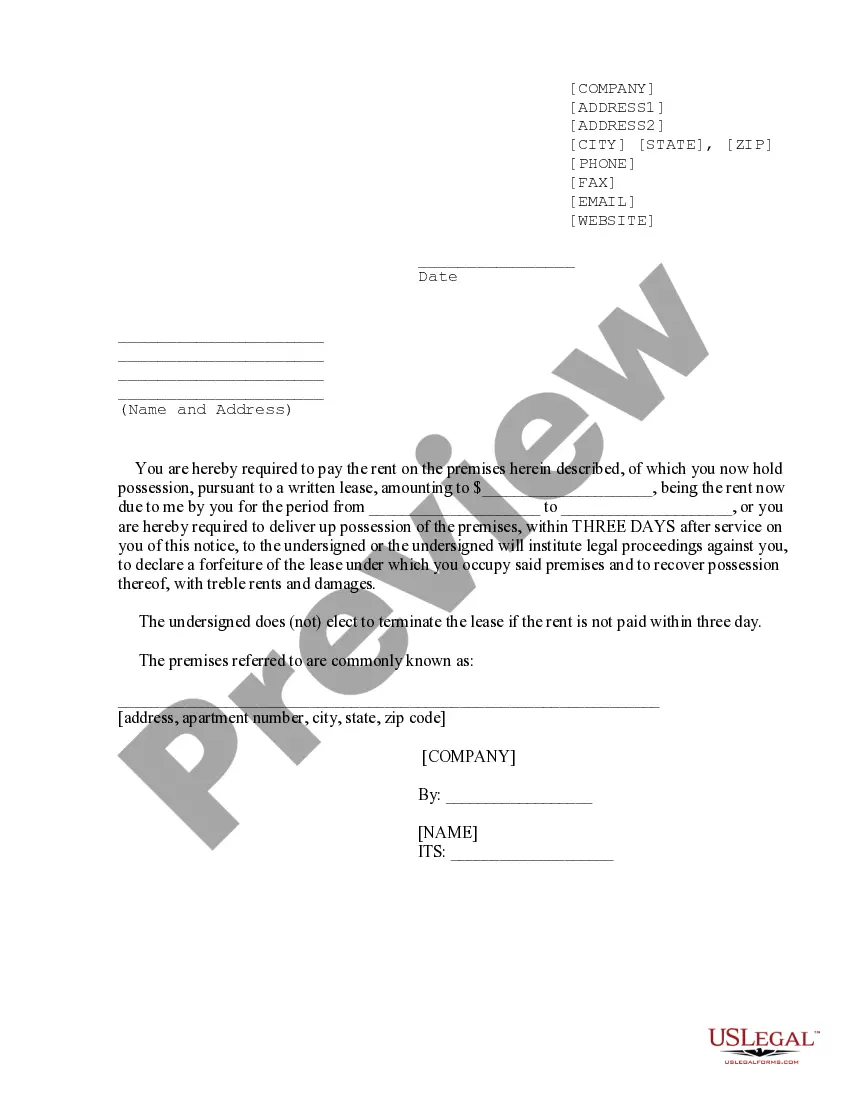
The Notice to Quit and Demand for Past Due Rent is a legal document used by landlords to formally notify tenants of their failure to pay rent on time. This notice serves as a prerequisite to initiating eviction proceedings, informing the tenant that they must either pay the overdue rent within five days or vacate the premises. Unlike other eviction notices, this document also gives landlords the option to terminate the lease even if the tenant pays the rent during this period.
Main sections of this form
- Property address: The location of the leased property.
- Occupants: Names of the tenant(s) and other individuals in possession of the property.
- Lease information: Details of the lease or rental agreement, including start date and monthly rent amount.
- Amount due: Specification of any overdue rents, including the total amount and periods covered.
- Compliance directive: Clear instructions for tenants to pay or vacate within five days.
- Legal rights: Statement of the landlord's rights per Oklahoma laws regarding eviction and lease enforcement.

When this form is needed
This form should be used when a tenant has not paid rent and the landlord wishes to inform them of their default. It is essential before any legal action can be taken to initiate eviction or other remedies for the breach of the rental agreement. Common scenarios include consistent late payments or multiple missed rent payments.
Who should use this form
- Landlords or property managers needing to collect overdue rent.
- Property owners planning to take legal action against tenants who fail to pay rent on time.
- Individuals seeking to understand their obligations and rights as landlords in Oklahoma.
How to prepare this document
- Identify the property by entering the complete address of the premises.
- List all tenants and occupants who are receiving the notice.
- Fill in the details of the lease agreement, including the date signed and the monthly rent amount.
- Specify the total number of months that rent is overdue and the corresponding amount due.
- Clearly state the deadline for payment or vacating the property.
- Sign and date the notice to formalize the document.
Does this document require notarization?
This form does not typically require notarization unless specified by local law. However, it is advisable to keep a copy for your records and to serve the tenant in a manner that ensures proper documentation of delivery.
Get your form ready online
Our built-in tools help you complete, sign, share, and store your documents in one place.
Make edits, fill in missing information, and update formatting in US Legal Forms—just like you would in MS Word.
Download a copy, print it, send it by email, or mail it via USPS—whatever works best for your next step.
Sign and collect signatures with our SignNow integration. Send to multiple recipients, set reminders, and more. Go Premium to unlock E-Sign.
If this form requires notarization, complete it online through a secure video call—no need to meet a notary in person or wait for an appointment.
We protect your documents and personal data by following strict security and privacy standards.

Make edits, fill in missing information, and update formatting in US Legal Forms—just like you would in MS Word.

Download a copy, print it, send it by email, or mail it via USPS—whatever works best for your next step.

Sign and collect signatures with our SignNow integration. Send to multiple recipients, set reminders, and more. Go Premium to unlock E-Sign.

If this form requires notarization, complete it online through a secure video call—no need to meet a notary in person or wait for an appointment.

We protect your documents and personal data by following strict security and privacy standards.
Typical mistakes to avoid
- Failing to provide accurate tenant details, leading to improper service of the notice.
- Omitting the specific amount due and the period it covers.
- Not including the correct property address, which may invalidate the notice.
- Missing the signature or date, which is essential for legal recognition.
Benefits of using this form online
- Convenient access: Download and fill out the form anytime, anywhere.
- Editability: Customize the form easily to fit your specific situation.
- Reliability: The form is drafted by licensed attorneys, ensuring legal accuracy.
Looking for another form?


Form popularity
FAQ
Termination of Lease Rights If you are behind in your rent, your landlord must give you at least a 5 day written notice. If you do not pay the rent you owe within five days, the landlord can initiate eviction proceedings.
Except as otherwise provided in the Oklahoma Residential Landlord and Tenant Act, when the tenancy is month-to-month or tenancy at will, the landlord or tenant may terminate the tenancy provided the landlord or tenant gives a written notice to the other at least thirty (30) days before the date upon which the
The Oklahoma immediate notice to quit is served on tenants who have acted illegally to inform them that their lease is canceled and they must quit the premises immediately. The tenant's lease agreement is legally terminated if they engage in any criminal activity on the rental property.
In Oklahoma, the landlord can evict the tenant for a lease violation. The landlord must provide a written notice called a 15-Day Notice to Comply which gives the tenant 10 days to fix the issue. Should the tenant be unable to correct the issue in 10 days, then they have the remaining 5 days to vacate the property.
Landlords can only evict tenants after receiving a court order. Before filing an eviction lawsuit, also known as a forcible entry and detainer action, the landlord must provide notice to the tenant.
An Oklahoma Lease Termination Letter (30-Day Notice) is a legally required document that will allow a landlord or a tenant to provide notice that they intend to vacate the premises (or have the premises vacated) and terminate the lease agreement. This document must provide at least 30 days notice.
Landlord Evicted Tenant Through a "Self-Help" Eviction The landlord cannot force a tenant out of a rental unit in any other way, such as turning off the utilities in the rental unit or changing locks on the doors. This type of illegal action is often referred to as a "self-help" eviction.