New Jersey Notice of Default in Payment of Rent as Warning Prior to Demand to Pay or Terminate for Nonresidential or Commercial Property
What this document covers
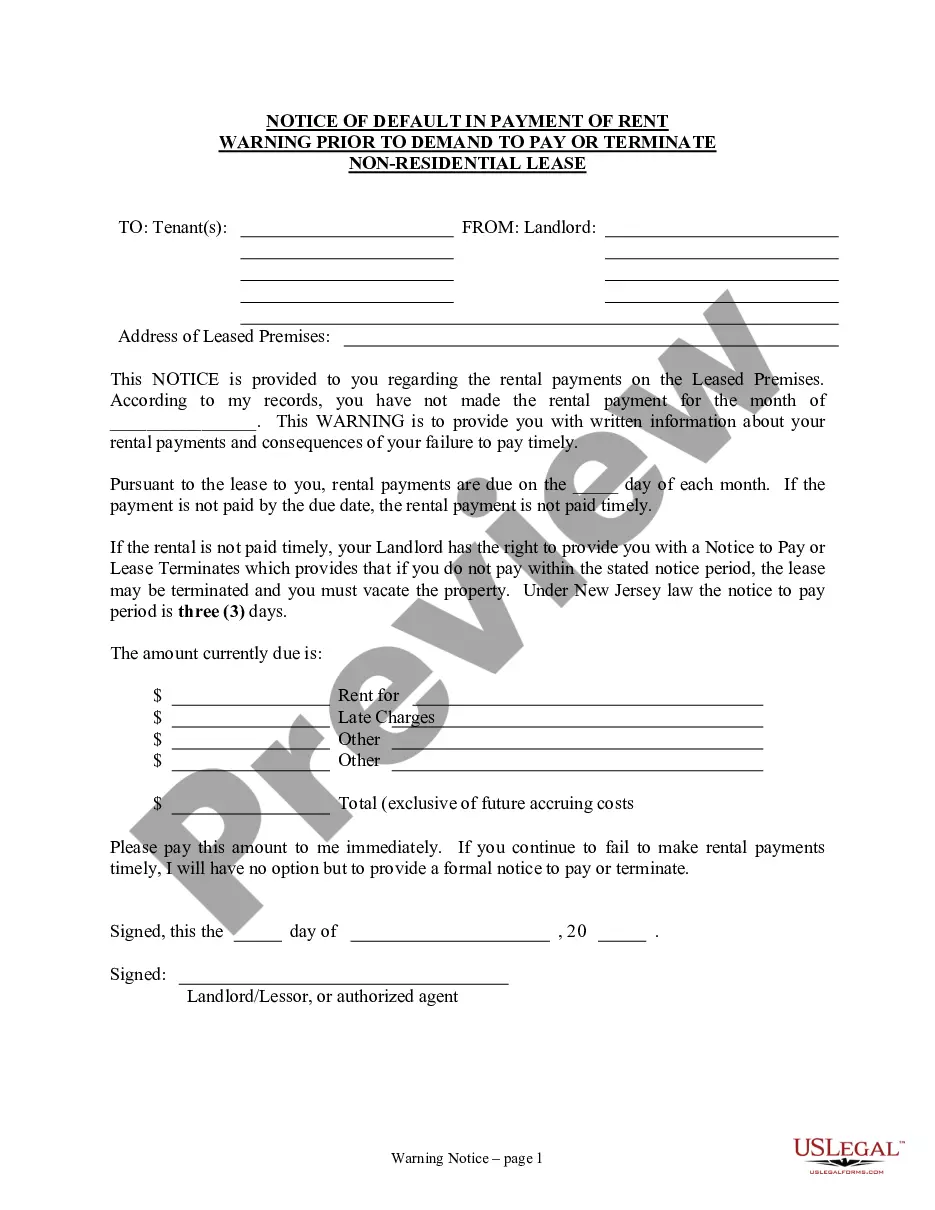
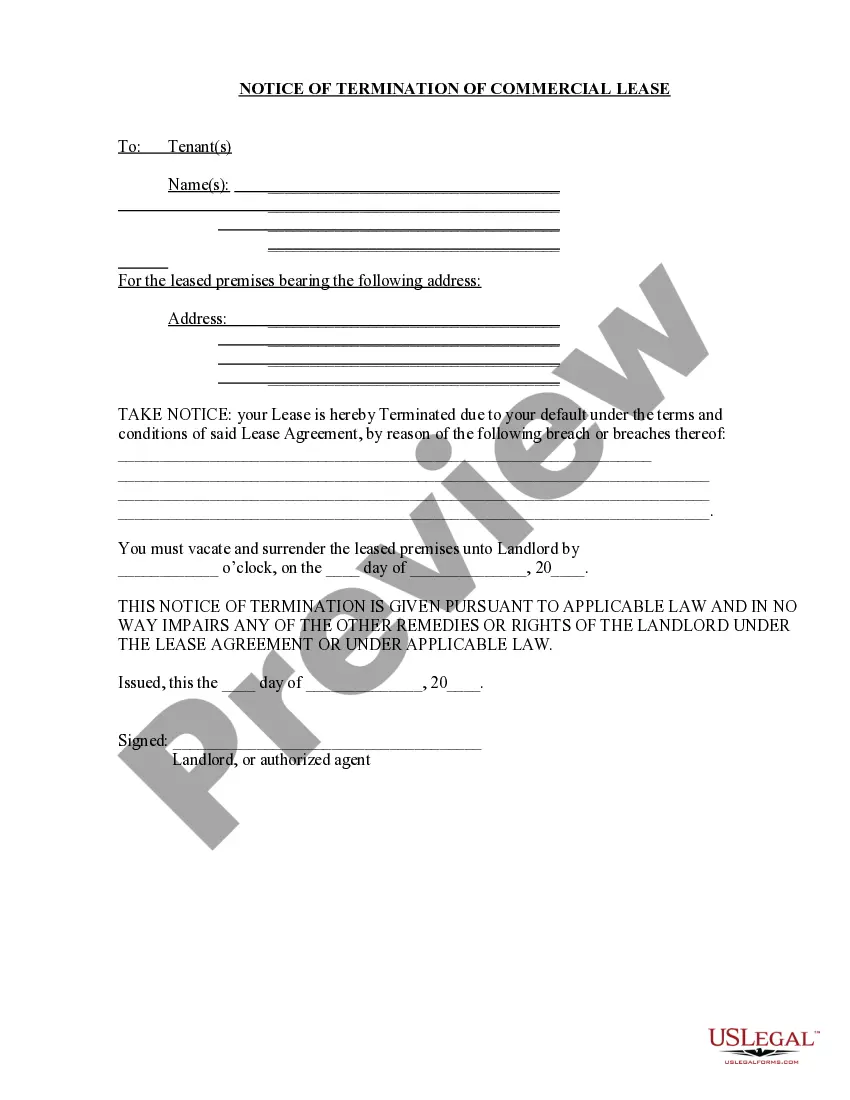
The Notice of Default in Payment of Rent is a legal document used by landlords to formally notify tenants of their failure to pay rent on time for non-residential or commercial property. This form serves as a warning before the landlord issues a demand for payment or initiates lease termination, clearly outlining the due date and potential consequences of continued non-payment.
Main sections of this form
- Identification of the landlord and tenant
- Details of the leased premises
- The specific month for which rent is overdue
- The due date for rent payment
- The total amount due, including any late charges
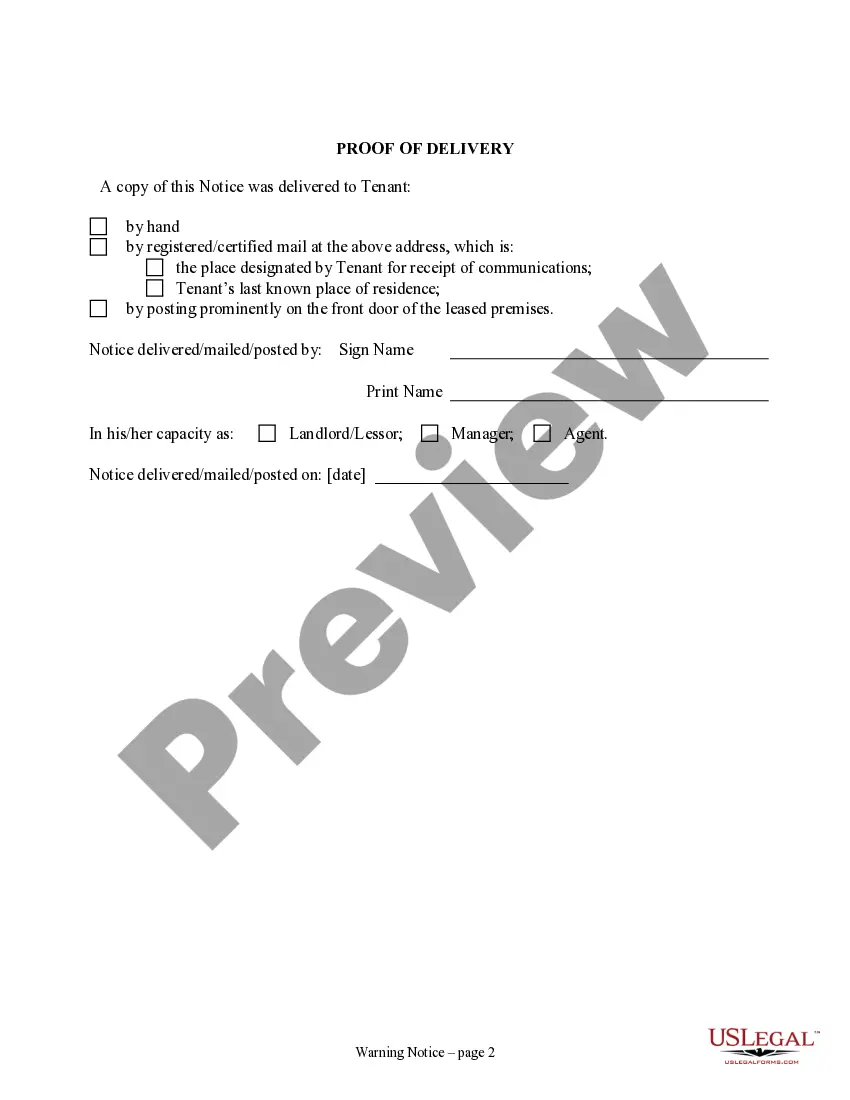
- Proof of delivery of the notice


When to use this form
You should use this form when a tenant has not made their rent payment by the due date, and you want to give them a formal warning before escalating the situation. It is an important step in the eviction process, helping to ensure that tenants are aware of their obligations and the consequences of failing to meet them.
Who should use this form
- Landlords or property owners managing non-residential or commercial properties
- Property managers acting on behalf of landlords
- Entities leasing commercial space to tenants
Instructions for completing this form
- Identify and fill in the names of the landlord and tenant.
- Specify the address of the leased premises.
- Enter the month for which the rental payment is overdue.
- Provide the due date for the rent payment and any late charges incurred.
- Sign and date the notice, ensuring it is delivered as per legal requirements.
Does this form need to be notarized?
In most cases, this form does not require notarization. However, some jurisdictions or signing circumstances might. US Legal Forms offers online notarization powered by Notarize, accessible 24/7 for a quick, remote process.
Get your form ready online
Our built-in tools help you complete, sign, share, and store your documents in one place.
Make edits, fill in missing information, and update formatting in US Legal Forms—just like you would in MS Word.
Download a copy, print it, send it by email, or mail it via USPS—whatever works best for your next step.
Sign and collect signatures with our SignNow integration. Send to multiple recipients, set reminders, and more. Go Premium to unlock E-Sign.
If this form requires notarization, complete it online through a secure video call—no need to meet a notary in person or wait for an appointment.
We protect your documents and personal data by following strict security and privacy standards.

Make edits, fill in missing information, and update formatting in US Legal Forms—just like you would in MS Word.

Download a copy, print it, send it by email, or mail it via USPS—whatever works best for your next step.

Sign and collect signatures with our SignNow integration. Send to multiple recipients, set reminders, and more. Go Premium to unlock E-Sign.

If this form requires notarization, complete it online through a secure video call—no need to meet a notary in person or wait for an appointment.

We protect your documents and personal data by following strict security and privacy standards.
Common mistakes to avoid
- Failing to include the specific month for overdue rent.
- Not providing the total amount due accurately.
- Inadequate proof of delivery of the notice.
- Using incorrect formatting or terminology that does not comply with local legal requirements.
Why complete this form online
- Convenience of downloading and completing the form at your own pace.
- Editability allows for easy input of specific tenant and property information.
- Access to templates drafted by licensed attorneys ensures legal compliance.
Legal use & context
- This notice is legally recognized as a formal communication regarding non-payment of rent.
- Utilizing this form can facilitate legal proceedings if eviction becomes necessary.
- Proper documentation helps protect landlord rights under the lease and state law.
Key takeaways
- The Notice of Default serves as a critical first step in the eviction process.
- Completing the form accurately ensures legal compliance and establishes a clear record.
- The form is customizable and designed to reflect specific state regulations.
Looking for another form?
Form popularity
FAQ
All tenants have a right to live in habitable conditions, but they also have the responsibility to maintain and preserve a landlord's property under New Jersey law. The landlord must maintain livable conditions in an apartment or rental home and must repair damages caused from normal wear and tear.
Notice to Terminate the Lease A month-to-month tenant must give written notice of lease termination at least one full month prior to moving. Most yearly leases require a 60 to 90 day notice from the tenants in order to terminate the lease.
To terminate a tenancy early in New Jersey, a landlord must have cause, or a legal reason.No notice necessary: The landlord is not required to give the tenant notice if evicting the tenant for failure to pay rent, as long as the landlord does not habitually accept late rent from the tenant.
If the tenant fails to pay rent when it is due, the landlord can go directly to court and file an eviction lawsuit against the tenant, thus ending the tenancy (see New Jersey Stat. Ann. § 2A:18-61.2). Three-Day Notice to Quit: In certain situations, the landlord can give the tenant a three-day notice to quit.
They don't have to give you any reasons why they want to evict you. They have to give you at least 28 days notice, but this could be longer depending on your agreement. If you don't leave by the time your notice ends, your landlord has to go to court to get a court order to make you leave.
A landlord must have good cause to evict a tenant.Each cause, except for nonpayment of rent, must be described in detail by the landlord in a written notice to the tenant. A Notice to Quit is required for all good cause evictions, except for an eviction for nonpayment of rent.
The Eviction Process in NJ with No Lease Your landlord is required to go through the court in order to legally evict you. Your landlord is also not permitted from unilaterally locking you out of your home, removing your personal belongings, or shutting off any utilities.
A typical New Jersey eviction process will take anywhere from 6 weeks to 6 months but they can drag on for much longer if you aren't careful. Below is a broad overview of what you can expect in the NJ eviction process.
Tenant at least three days prior to filing a suit for eviction. least three days prior to filing a suit for eviction. Quit must be served on the tenant at least one month prior to filing the suit for eviction. In addition, any notices must be given on or before the start of a new month.