Nebraska Last Will and Testament for Single Person with Adult and Minor Children
What is this form?
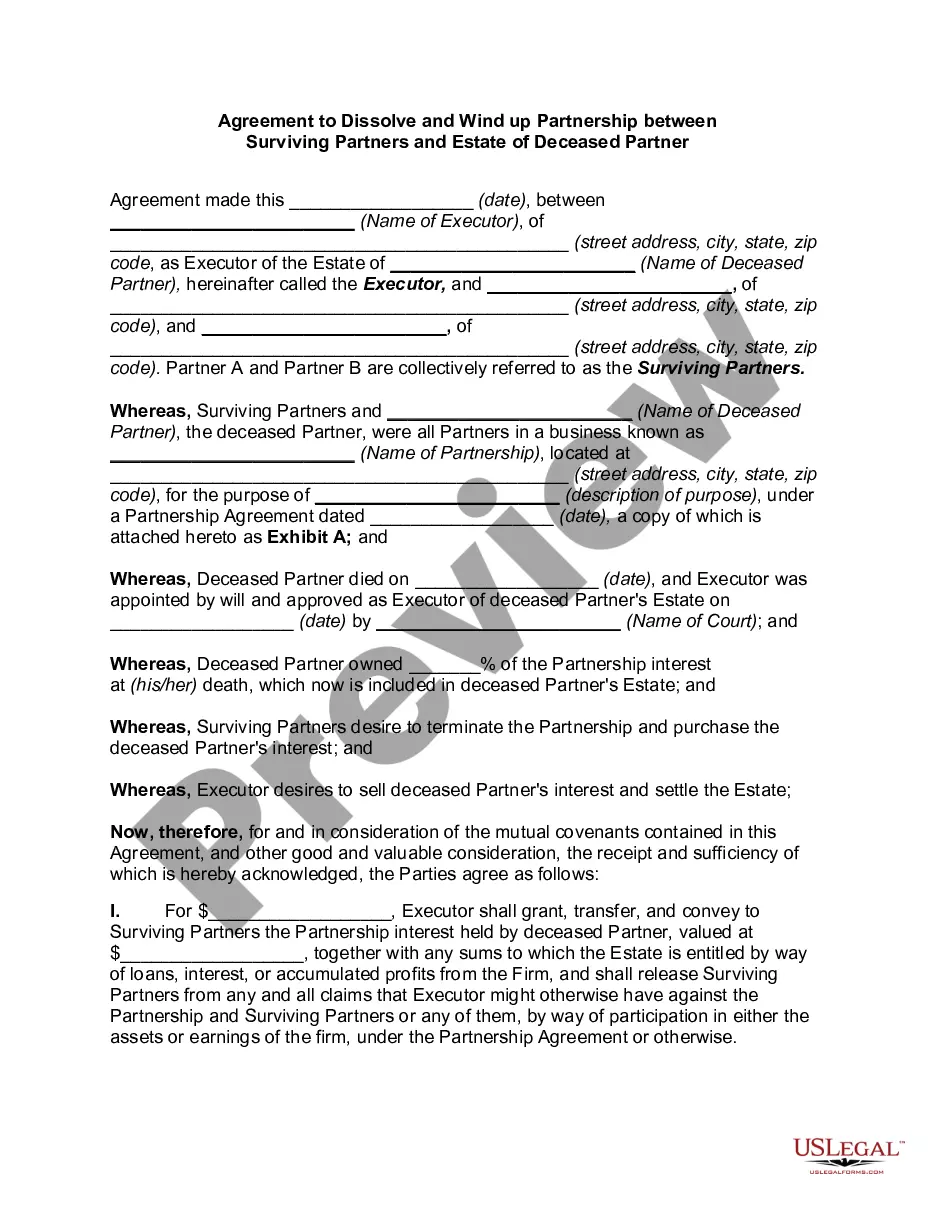
The Last Will and Testament for Single Person with Adult and Minor Children is a legal document that outlines how a single parent wishes to distribute their assets after passing, specifically addressing the inclusion of both adult and minor children. This form allows you to plan for the appointment of an executor, specify inheritance details, and establish guardianship for minor children. It is designed for single individuals who want to ensure their children are cared for and that their estate is handled according to their wishes.
Key parts of this document
- Appointment of a Personal Representative: Designate an executor to manage your estate.
- Specific Bequests: Specify particular assets to be given to specific individuals.
- Distribution of Residual Assets: Ensure all property goes to your children equally, with provisions for descendants.
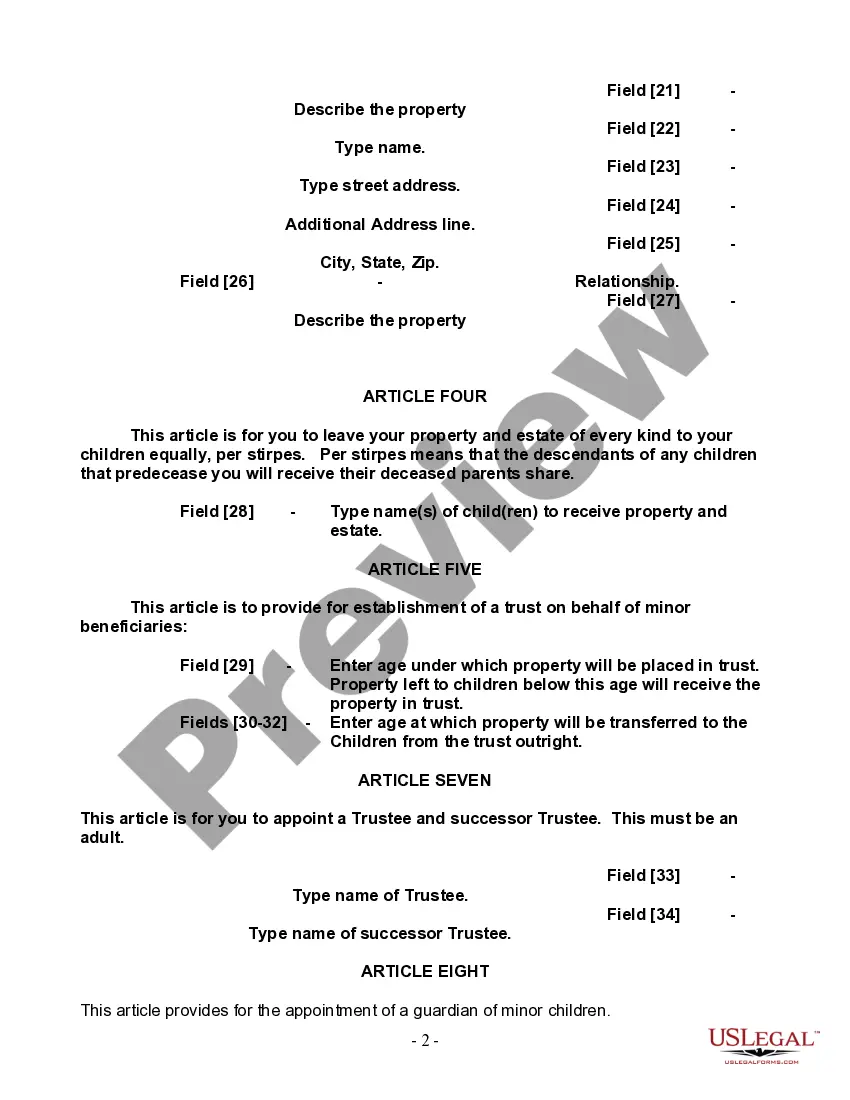
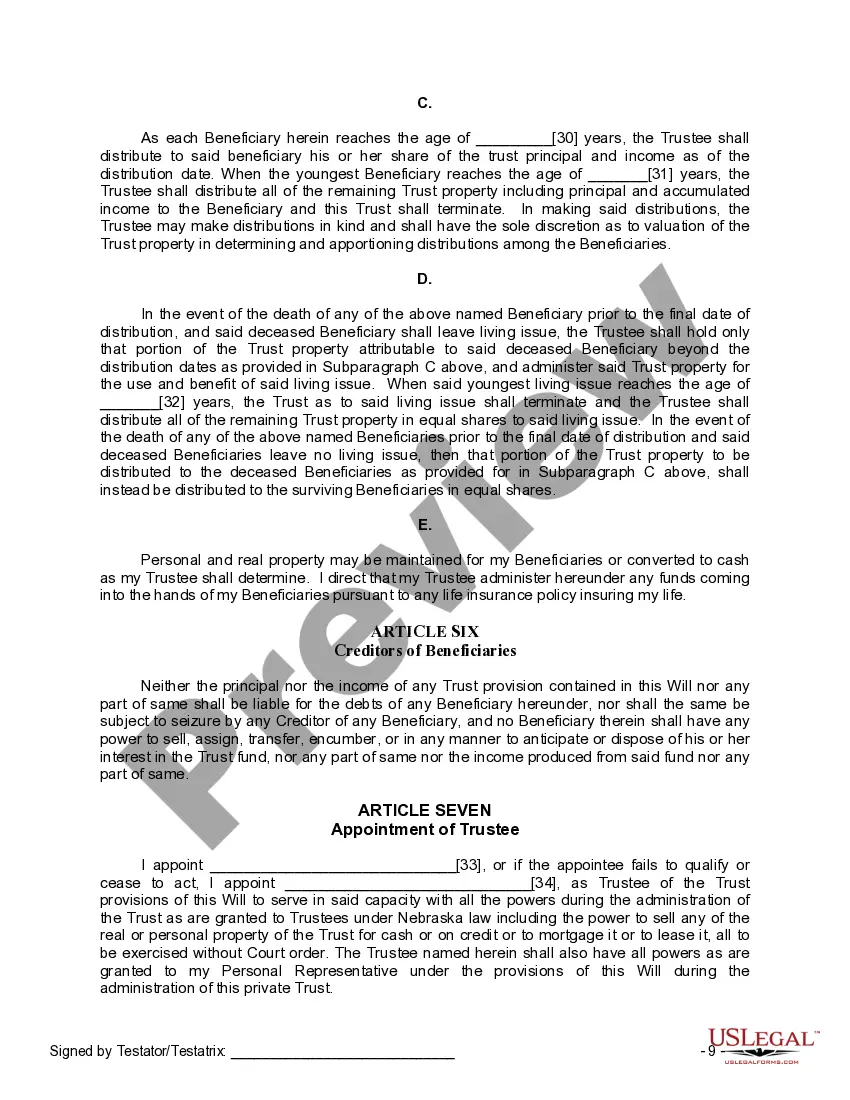
- Establishment of a Trust: Create a trust for any minor children to manage their inheritance until they reach adulthood.
- Guardianship Provision: Appoint a guardian for your minor children should something happen to you.
- Signature Requirements: The will must be signed in front of two witnesses who are not related to you.







Common use cases
You should use this form when you want to officially document your wishes regarding the distribution of your assets, particularly if you are a single parent with children. Itâs commonly used when starting a family, anticipating potential life changes, or wanting to ensure your childrenâs future is secure in the event of your death.
Who this form is for
This form is intended for:
- Single parents who have adult and minor children.
- Individuals wanting to specify guardianship arrangements for minor children.
- Those wishing to outline clear directives for property distribution.
- Anyone preparing their estate planning documents for future needs.
How to prepare this document
To properly complete this form, follow these steps:
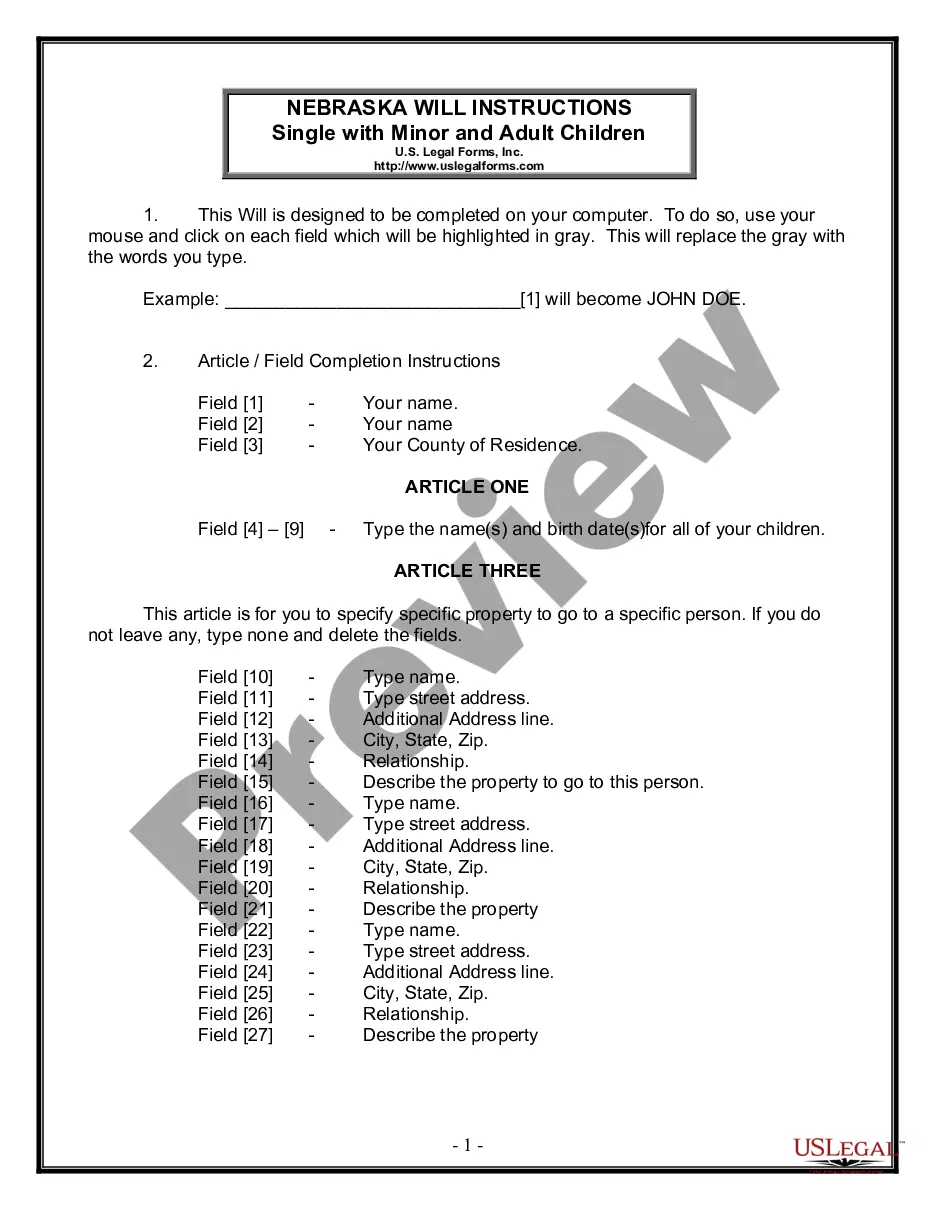
- Enter your personal information, including your name and county of residence.
- List the names and birth dates of all your children.
- Designate specific property for particular individuals in the appropriate section.
- Specify how your remaining assets should be distributed among your children.
- Appoint a trustee and guardian, and ensure all necessary names and details are provided.
- Sign the document in the presence of two witnesses and, if applicable, a notary public.
Notarization guidance
Yes, this form must be notarized to be legally valid. It requires the presence of a notary public to ensure that the will can be subjected to probate without further evidence of execution. US Legal Forms provides integrated online notarization services for your convenience, allowing you to complete the process through secure video calls at any time.
Get your form ready online
Our built-in tools help you complete, sign, share, and store your documents in one place.
Make edits, fill in missing information, and update formatting in US Legal Forms—just like you would in MS Word.
Download a copy, print it, send it by email, or mail it via USPS—whatever works best for your next step.
Sign and collect signatures with our SignNow integration. Send to multiple recipients, set reminders, and more. Go Premium to unlock E-Sign.
If this form requires notarization, complete it online through a secure video call—no need to meet a notary in person or wait for an appointment.
We protect your documents and personal data by following strict security and privacy standards.

Make edits, fill in missing information, and update formatting in US Legal Forms—just like you would in MS Word.

Download a copy, print it, send it by email, or mail it via USPS—whatever works best for your next step.

Sign and collect signatures with our SignNow integration. Send to multiple recipients, set reminders, and more. Go Premium to unlock E-Sign.

If this form requires notarization, complete it online through a secure video call—no need to meet a notary in person or wait for an appointment.

We protect your documents and personal data by following strict security and privacy standards.
Common mistakes
- Failing to include all children or provide specific instructions for inheritance.
- Not having the will properly witnessed, which may invalidate the document.
- Overlooking to include a guardian for minor children.
- Using ambiguous language that could lead to confusion about your intentions.
Why complete this form online
- Convenient online access to fill out your will securely from home.
- Edit and update your information easily whenever your circumstances change.
- Reliability from using templates drafted by licensed attorneys.
Quick recap
- This Last Will and Testament accommodates single individuals with adult and minor children, ensuring all family members are considered.
- Itâs crucial to appoint a personal representative and a guardian for minor children.
- Legal notarization may be required to ensure the will's enforceability.
- Thoroughly review and update the will as life circumstances change.
Looking for another form?

Form popularity
FAQ
No, in Nebraska, you do not need to notarize your will to make it legal. However, Nebraska allows you to make your will "self-proving" and you'll need to go to a notary if you want to do that. A self-proving will speeds up probate because the court can accept the will without contacting the witnesses who signed it.
In most situations, a will template is an easy and inexpensive way to make sure your wishes are known and carried out. Most people can get everything they need by using a will template, with little cost or hassle.
Nebraska recognizes holographic (handwritten) wills so long as the material provisions, signature, and date are in the testator's handwriting. In Nebraska, a holographic will does not need to have witnesses in order to be valid.
Self-written wills are typically valid, even when handwritten, as long as they're properly witnessed and notarized, or proven in court. A handwritten will that is not witnessed or notarized is considered a holographic will. Not all states accept holographic wills .
Contrary to popular belief, you do not need to have an attorney draft a will for you. Anyone can write this document on their own, and as long as it meets all of the legal requirements of the state, courts will recognize one you wrote yourself.
To make a will self-proved in Nebraska, the testator and witnesses must sign a self proving affidavit before a notary public. An affidavit is a sworn statement, and a notary public is an officer of the court. Therefore, an affidavit before a notary public is like making a statement in court.
A. You don't have to have a lawyer to create a basic will you can prepare one yourself. It must meet your state's legal requirements and should be notarized.A do-it-yourself will that's poorly drafted can save you money but create a mess for your heirs when you're gone.