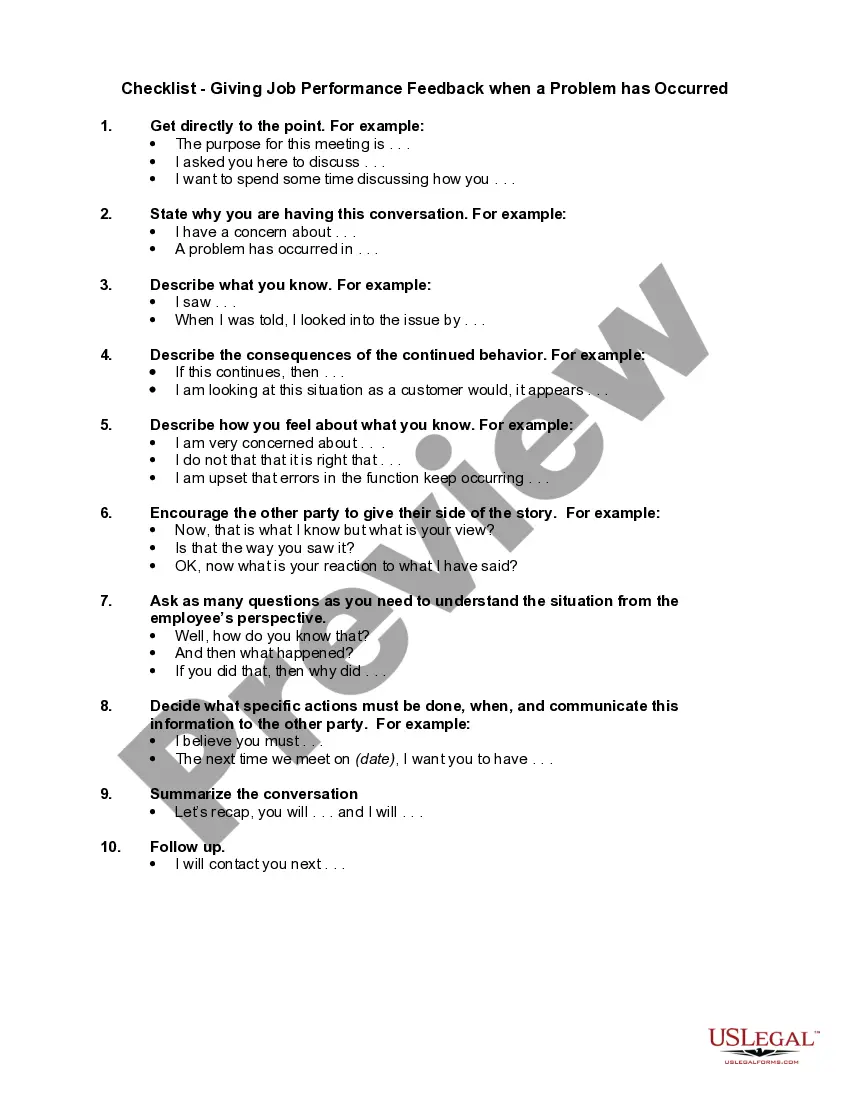
Checklist - Giving Job Performance Feedback when a Problem has Occurred
Overview of this form
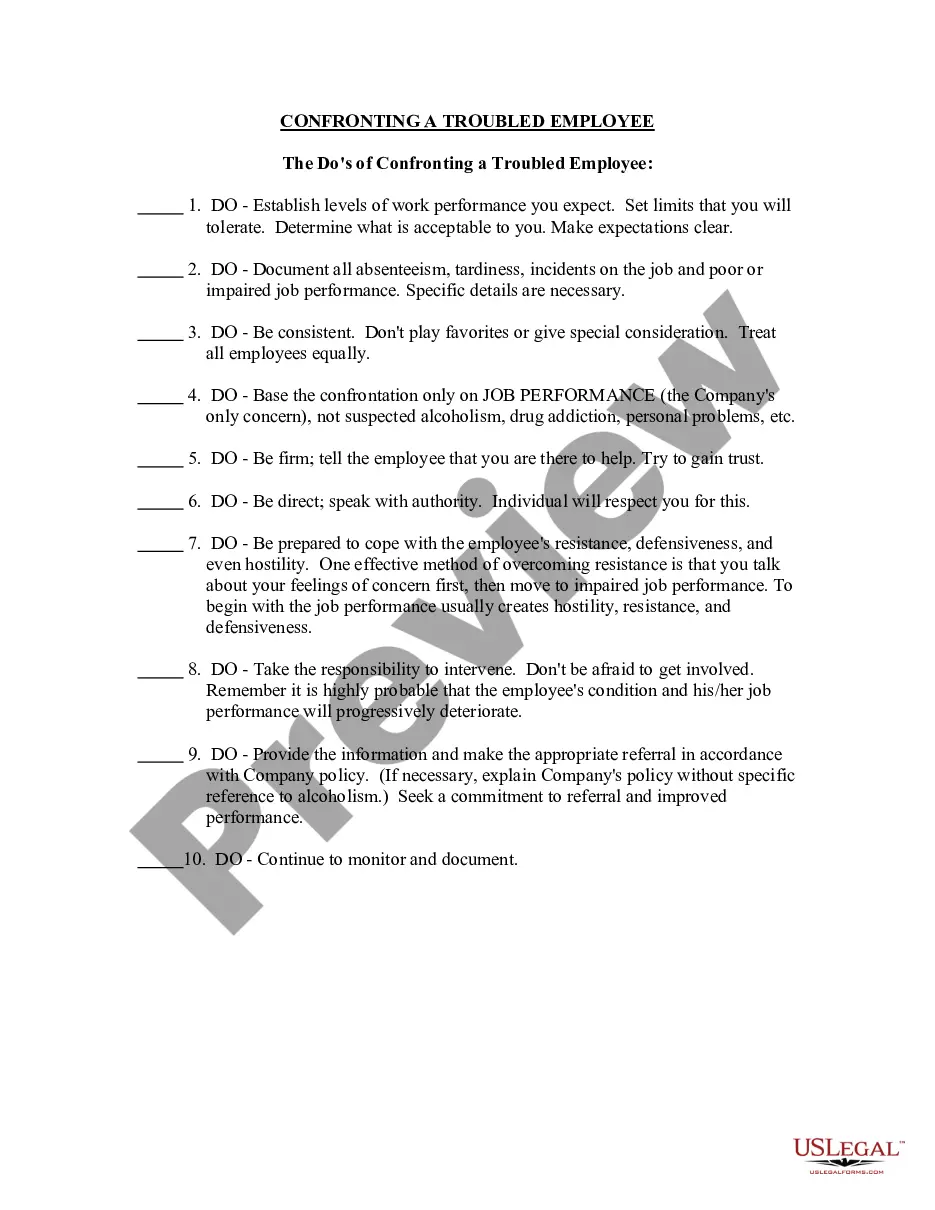
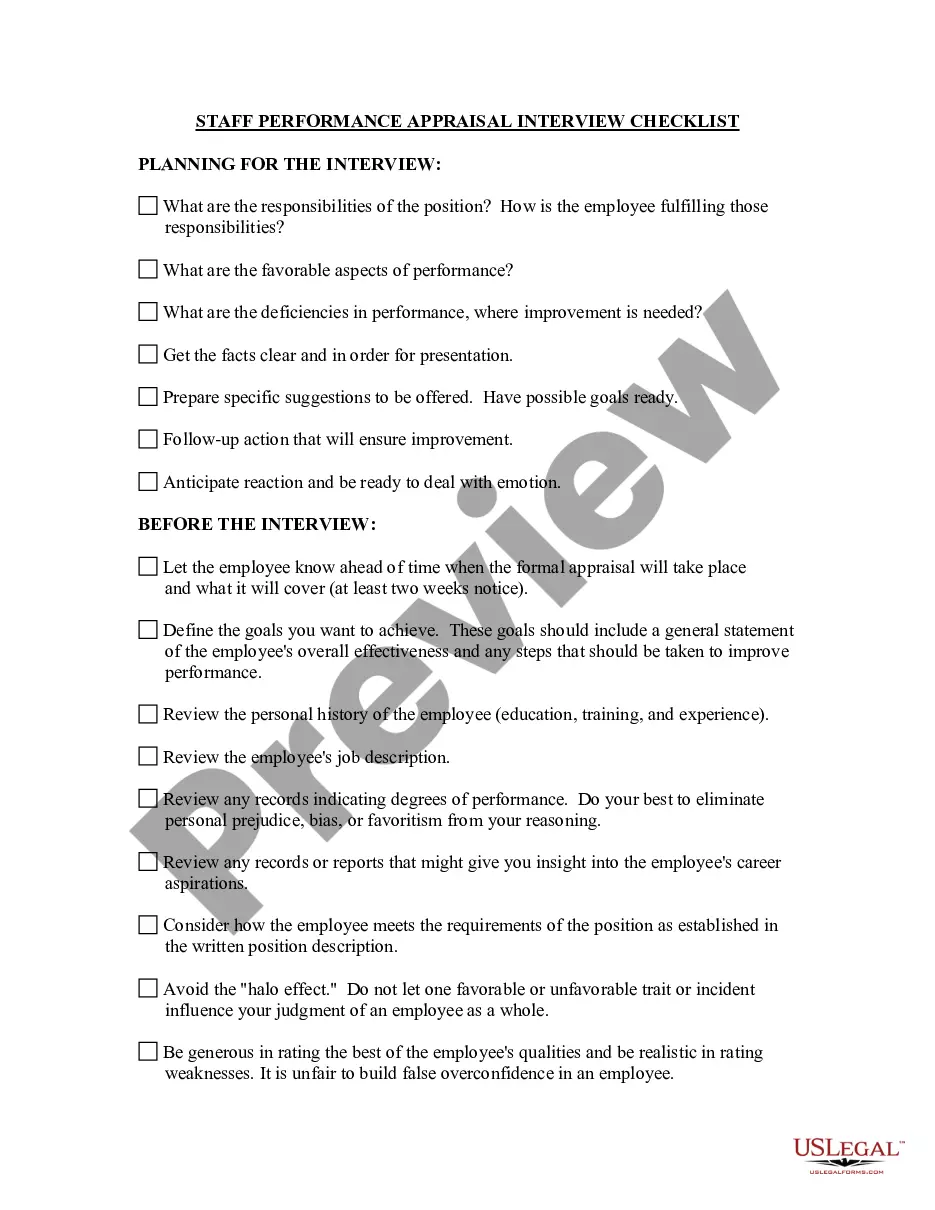
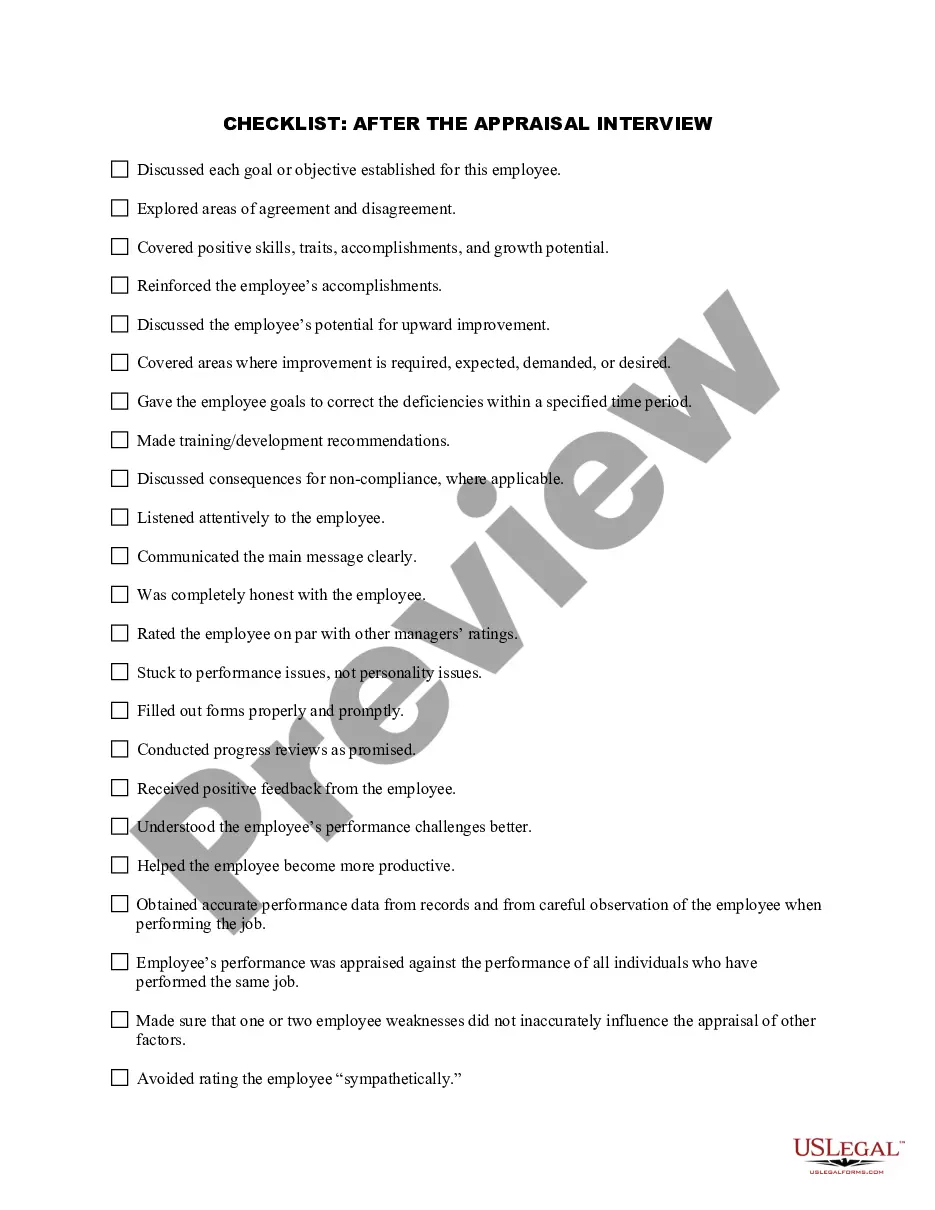
The Checklist - Giving Job Performance Feedback when a Problem has Occurred is a tool designed to help managers conduct performance discussions with employees who may be facing issues in their roles. This checklist streamlines the process of addressing employee concerns by providing a structured approach, ensuring that critical points are covered during the conversation. Unlike generic templates, this form is specifically curated for situations where an employee's performance has led to a problem, facilitating clear communication and resolution.
Key parts of this document
- Introduction of the purpose of the feedback session.
- Clarification of the reason for the conversation.
- Presentation of factual evidence related to the issue.
- Description of the potential consequences of continued behavior.
- Expression of personal feelings regarding the observed problems.
- Encouragement for the employee to share their perspective.
- Inquiry aimed at gaining a deeper understanding of the situation.
- Specific action steps with deadlines for improvement.
- Recap of the conversation highlights and agreement on next steps.
- Follow-up plan to ensure accountability and progress.
When this form is needed
This checklist should be utilized in any scenario where an employee's job performance has raised concerns. It is particularly useful for situations involving recurring issues, unmet expectations, or specific incidents that need to be addressed. Managers can benefit from this structured approach to ensure that all relevant points are covered during feedback sessions, which can lead to improved employee performance and workplace morale.
Who can use this document
- Managers and supervisors who need to provide performance feedback.
- Human resources professionals involved in employee relations.
- Team leaders addressing performance concerns within their teams.
- Employers seeking a formal approach to performance management.
Completing this form step by step
- Begin by stating the purpose of the feedback meeting clearly.
- Explain the reason for the discussion, focusing on specific concerns.
- Share any relevant observations and evidence regarding the performance issue.
- Discuss the implications of the current behavior and the need for change.
- Encourage the employee to share their viewpoint and ask clarifying questions.
- Outline specific actions required from the employee and set a timeline for follow-up.
Is notarization required?
In most cases, this form does not require notarization. However, some jurisdictions or signing circumstances might. US Legal Forms offers online notarization powered by Notarize, accessible 24/7 for a quick, remote process.
Get your form ready online
Our built-in tools help you complete, sign, share, and store your documents in one place.
Make edits, fill in missing information, and update formatting in US Legal Forms—just like you would in MS Word.
Download a copy, print it, send it by email, or mail it via USPS—whatever works best for your next step.
Sign and collect signatures with our SignNow integration. Send to multiple recipients, set reminders, and more. Go Premium to unlock E-Sign.
If this form requires notarization, complete it online through a secure video call—no need to meet a notary in person or wait for an appointment.
We protect your documents and personal data by following strict security and privacy standards.

Make edits, fill in missing information, and update formatting in US Legal Forms—just like you would in MS Word.

Download a copy, print it, send it by email, or mail it via USPS—whatever works best for your next step.

Sign and collect signatures with our SignNow integration. Send to multiple recipients, set reminders, and more. Go Premium to unlock E-Sign.

If this form requires notarization, complete it online through a secure video call—no need to meet a notary in person or wait for an appointment.

We protect your documents and personal data by following strict security and privacy standards.
Mistakes to watch out for
- Being too vague about the performance issues.
- Failing to allow the employee to share their perspective.
- Not following up on the agreed actions or support.
- Letting emotions dictate the conversation, rather than sticking to facts.
Benefits of completing this form online
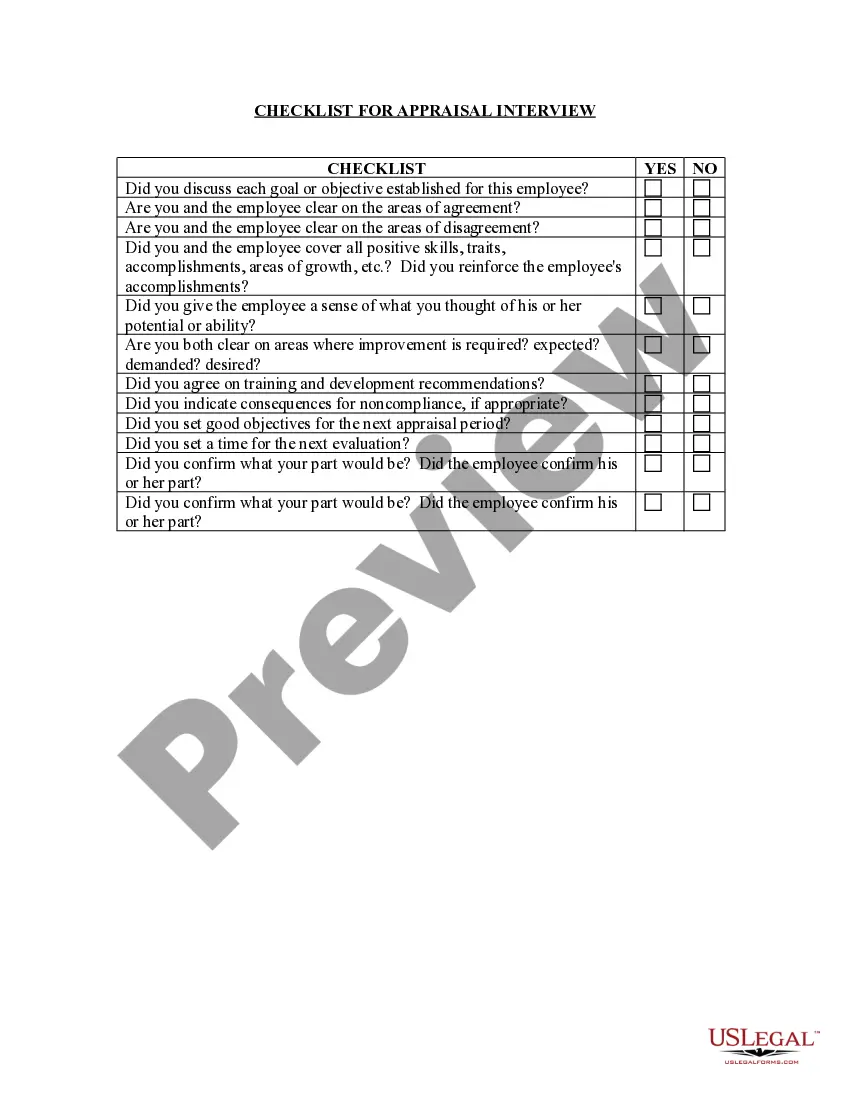
- Convenient access to a structured checklist to guide performance discussions.
- Editability allows for customization to fit specific situations or employee needs.
- Reliability ensuring that critical components of feedback are addressed consistently.
Legal use & context
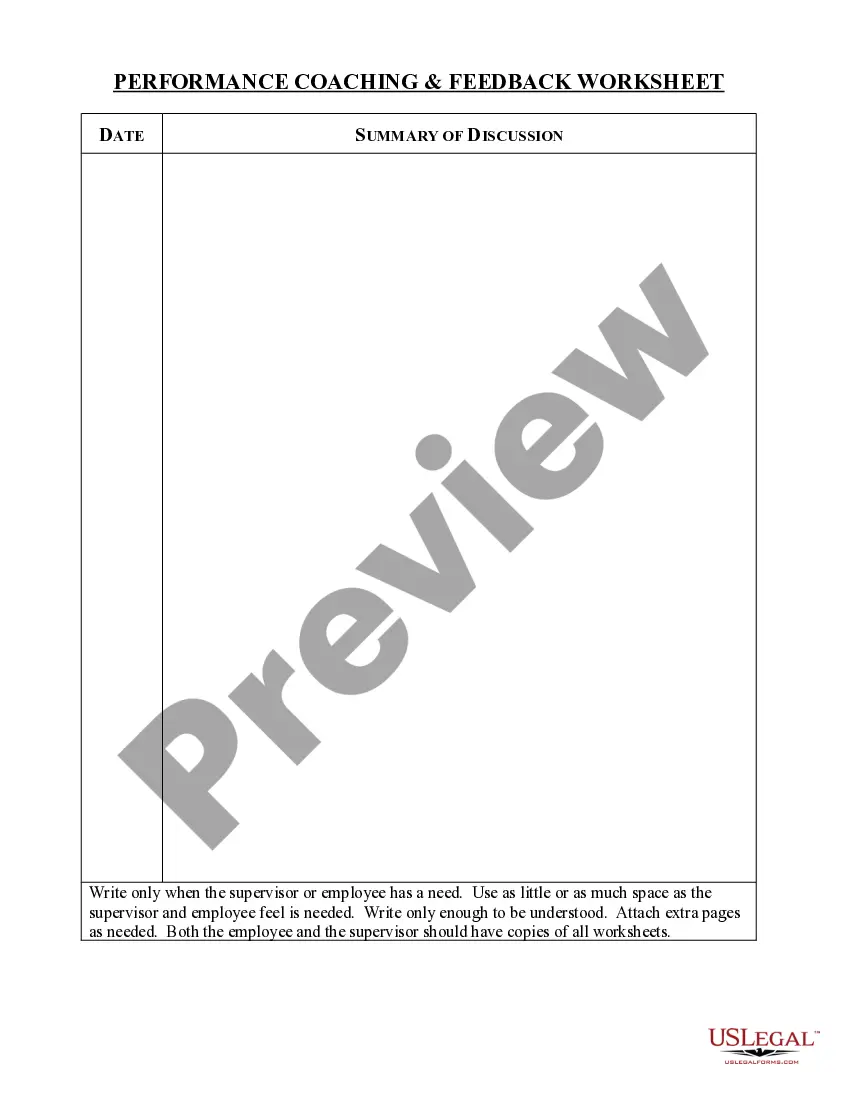
- This checklist can help establish a record of performance discussions, which may be important for combating potential legal claims related to employment practices.
- Clear documentation can assist in maintaining compliance with applicable labor laws and employment regulations.
What to keep in mind
- The checklist is an essential tool for addressing performance issues effectively.
- Clear communication is key to successful performance feedback.
- Involving the employee in the conversation promotes a collaborative environment.
- Follow-up is critical to ensure action items are completed.
Looking for another form?

Form popularity
FAQ
1) Attendance. Punctuality is one of the strongest virtues an employee can possess. 2) Innovation and Creativity. 3) Leadership. 4) Communication Skills. 5) Collaboration and Teamwork. 6) Time Management. 7) Customer Experience. 8) Problem Solving.
Communication. Collaboration and teamwork. Problem-solving. Quality and accuracy of work. Attendance, punctuality and reliability. The ability to accomplish goals and meet deadlines.
Provide examples of bad behavior One way to make feedback specific is to highlight past examples of the employee's poor attitude. Give actionable advice After you provide examples of bad behavior, clearly let the employee know how they should have behaved so they know what is expected of them going forward.
Ensure feedback is specific Don't just tell the employee their behavior needs to improve. Point out exactly what negative traits they have and the impact each has on other employees. Provide examples of bad behavior One way to make feedback specific is to highlight past examples of the employee's poor attitude.
Have your employee complete self-assessment first. Be open to amendments. Don't make it personal. Focus on strengths. Use concrete examples. Base the review against their job description. Include action items for moving forward. Follow up.
Create clear metrics of job performance. Have the right mindset. Collect 360 feedback from other team members. Have a one-to-one meeting. Use the Johari window matrix. Ask questions, listen, and understand. Collaborate on how to fix their poor performance.
Focus on the job, not the person. Be specific. Consider questions over statements. With positives, stick to process. Connect personally where you can. Get serious but don't get mean.
Let the employee know your concern. Share what you have observed. Explain how their behavior impacts the team. Tell them the expected behavior. Solicit solutions from the employee on how to fix the situation. Convey the consequences. Agree upon a follow-up date. Express your confidence.
Do: Be timely. The most effect feedback comes quickly after the action takes place. Do: Be specific. Don't: be emotional. Do: Focus on patterns. Don't: Use absolutes. Do: Give them reason(s) to change. Don't: Get irrelevant. Do: Be kind.