Performance Coaching and Feedback Worksheet
Overview of this form
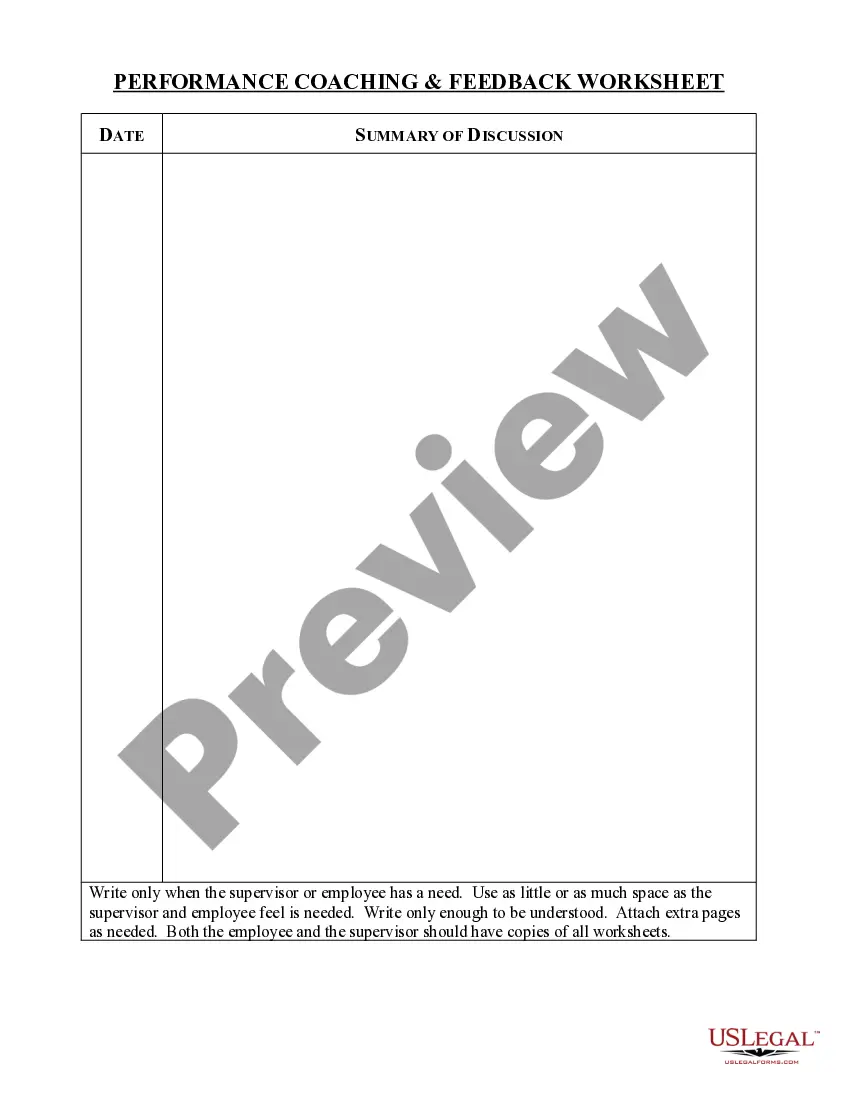
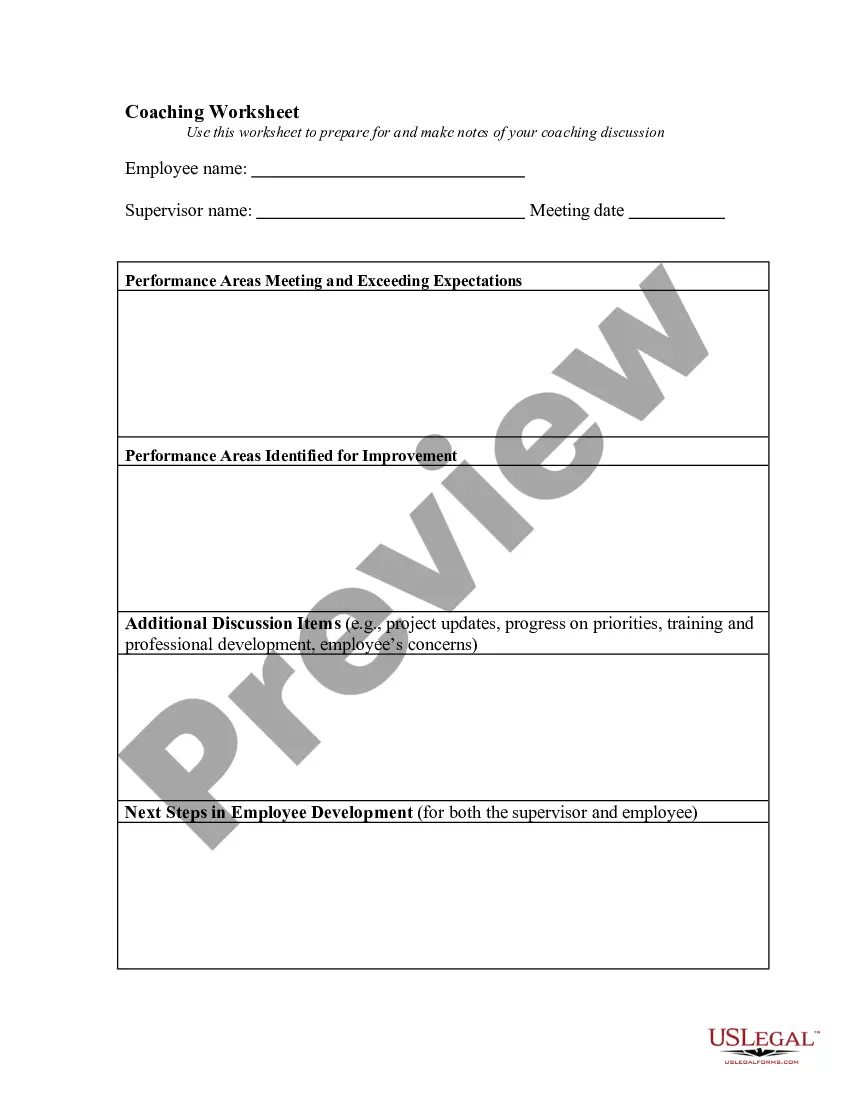
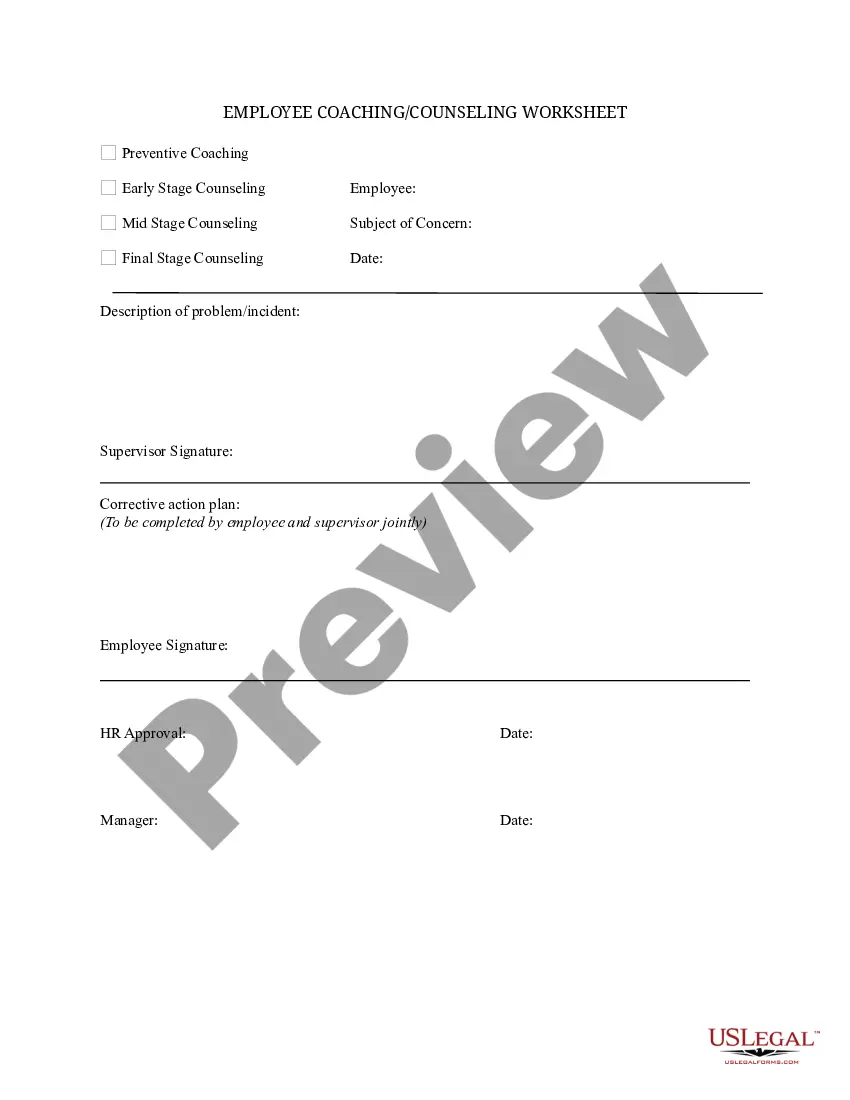
The Performance Coaching and Feedback Worksheet is a vital tool designed for managers to document key discussions during coaching sessions. This form provides a structured format for summing up feedback, progress, and future objectives, distinguishing it from informal notes or verbal feedback mechanisms. By utilizing this worksheet, managers can ensure consistent and constructive coaching processes that promote employee development.
Key components of this form
- Coaching session summary: A section for summarizing key points discussed during the session.
- Feedback area: Dedicated space for providing specific feedback regarding performance.
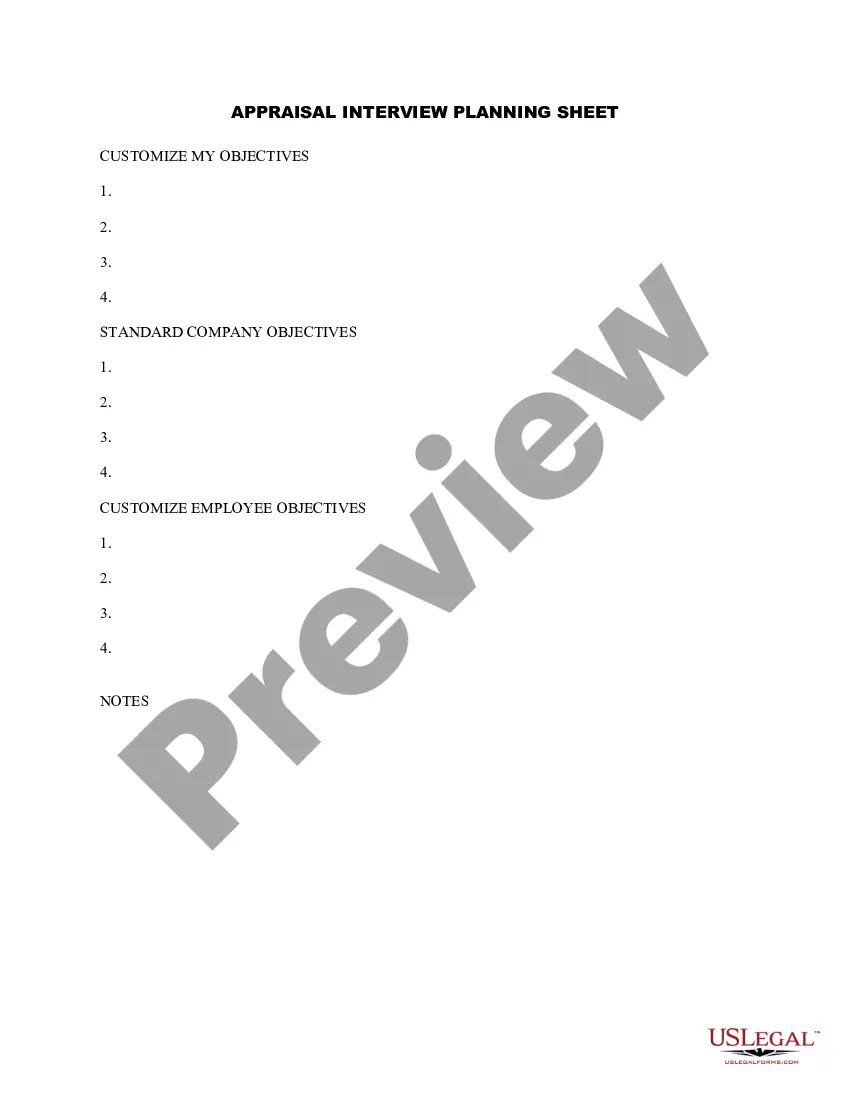
- Goals and objectives: A section for setting clear goals for future performance improvements.
- Action items: Description of actionable steps assigned to the employee post-coaching.
- Follow-up schedule: A timeline for future check-ins to assess progress.
When to use this document
This form is used during performance coaching sessions to record discussions between a manager and an employee. It is particularly useful when an employee is being evaluated for improvement areas, during periodic performance reviews, or when setting new performance objectives. Using this worksheet helps maintain focus on key development areas and encourages accountability for both the manager and employee.
Who this form is for
- Managers responsible for employee performance evaluations.
- HR professionals involved in staff development and training.
- Team leaders conducting regular performance coaching sessions.
How to prepare this document
- Identify the employee being coached and the date of the session.
- Summarize the key discussion points from the coaching session in the designated section.
- Provide specific feedback regarding the employee's performance.
- Set clear goals and objectives for improvement.
- Outline a list of action items that the employee should focus on moving forward.
- Schedule follow-up sessions to review progress and provide ongoing support.
Notarization requirements for this form
This form does not typically require notarization to be legally valid. However, some jurisdictions or document types may still require it. US Legal Forms provides secure online notarization powered by Notarize, available 24/7 for added convenience.
Get your form ready online
Our built-in tools help you complete, sign, share, and store your documents in one place.
Make edits, fill in missing information, and update formatting in US Legal Forms—just like you would in MS Word.
Download a copy, print it, send it by email, or mail it via USPS—whatever works best for your next step.
Sign and collect signatures with our SignNow integration. Send to multiple recipients, set reminders, and more. Go Premium to unlock E-Sign.
If this form requires notarization, complete it online through a secure video call—no need to meet a notary in person or wait for an appointment.
We protect your documents and personal data by following strict security and privacy standards.

Make edits, fill in missing information, and update formatting in US Legal Forms—just like you would in MS Word.

Download a copy, print it, send it by email, or mail it via USPS—whatever works best for your next step.

Sign and collect signatures with our SignNow integration. Send to multiple recipients, set reminders, and more. Go Premium to unlock E-Sign.

If this form requires notarization, complete it online through a secure video call—no need to meet a notary in person or wait for an appointment.

We protect your documents and personal data by following strict security and privacy standards.
Typical mistakes to avoid
- Not recording specific examples of performance, leading to vague feedback.
- Failing to set measurable goals, which can confuse the employee.
- Overlooking the importance of scheduling follow-up sessions.
Why complete this form online
- Convenient access from any device allows for immediate documentation.
- Editability lets managers tailor feedback according to each session dynamically.
- Reliability of the format ensures that important points are not overlooked.
Legal use & context
- This form serves as an official record of coaching sessions, which can be important for performance management documentation.
- Maintaining completeness ensures compliance with organizational policies regarding employee performance reviews.
Main things to remember
- The Performance Coaching and Feedback Worksheet is vital for structured coaching discussions.
- Completing the form helps clarify expectations and outlines actionable steps for improvement.
- This tool is beneficial for managers, team leaders, and HR professionals in performing effective coaching.
Looking for another form?

Form popularity
FAQ
Avoid giving unsolicited advice. Only a third of people believe the feedback they receive is helpful. Be specific. Come with a deep level of empathy. Don't wait for a quarterly review. Keep it private. Don't take the sandwich approach Make the conversation a two-way street. Focus on performance, not personality.
Coaching is about assisting employees reach their goals for the future. Feedback is about helping employees understand what prevents them from reaching their current goals. Coaching is about advocating optimal performance. Feedback is about reinforcing appropriate behavior.
Give employees regular, frequent feedback. Create a culture of team feedback. Push employees to their attainable limits. Be open to employee ideas. Encourage employees to learn from others. Ask employees for opinions. Build confidence.
Some examples of positive feedback are contractions in child birth and the ripening of fruit; negative feedback examples include the regulation of blood glucose levels and osmoregulation.
Be positive. Focus on the behavior, not the person. Be specific. Be timely. Make sure you are clear on why you are delivering the feedback. Don't use judgment as a means for feedback. Provide feedback from a neutral place. Make it a two-way conversation.
Determine the need. A continuous process that can be done through performance appraisal or by observing performance in the workplace; discuss the coaching process with the learner and agree on what the learning outcomes should be. Explain. Demonstrate. Provide practise opportunities. Provide feedback.
Give employees regular, frequent feedback. Create a culture of team feedback. Push employees to their attainable limits. Be open to employee ideas. Encourage employees to learn from others. Ask employees for opinions. Build confidence.
Stick to the facts and underline expectations. Emphasize behavior. Align records of past performance. Describe proof of misconduct. Identify and present consequences. Meet in person and get a signature.
Be positive. Focus on the behavior, not the person. Be specific. Be timely. Make sure you are clear on why you are delivering the feedback. Don't use judgment as a means for feedback. Provide feedback from a neutral place. Make it a two-way conversation.