Nebraska Warranty Deed from Individual to Husband and Wife
Overview of this form
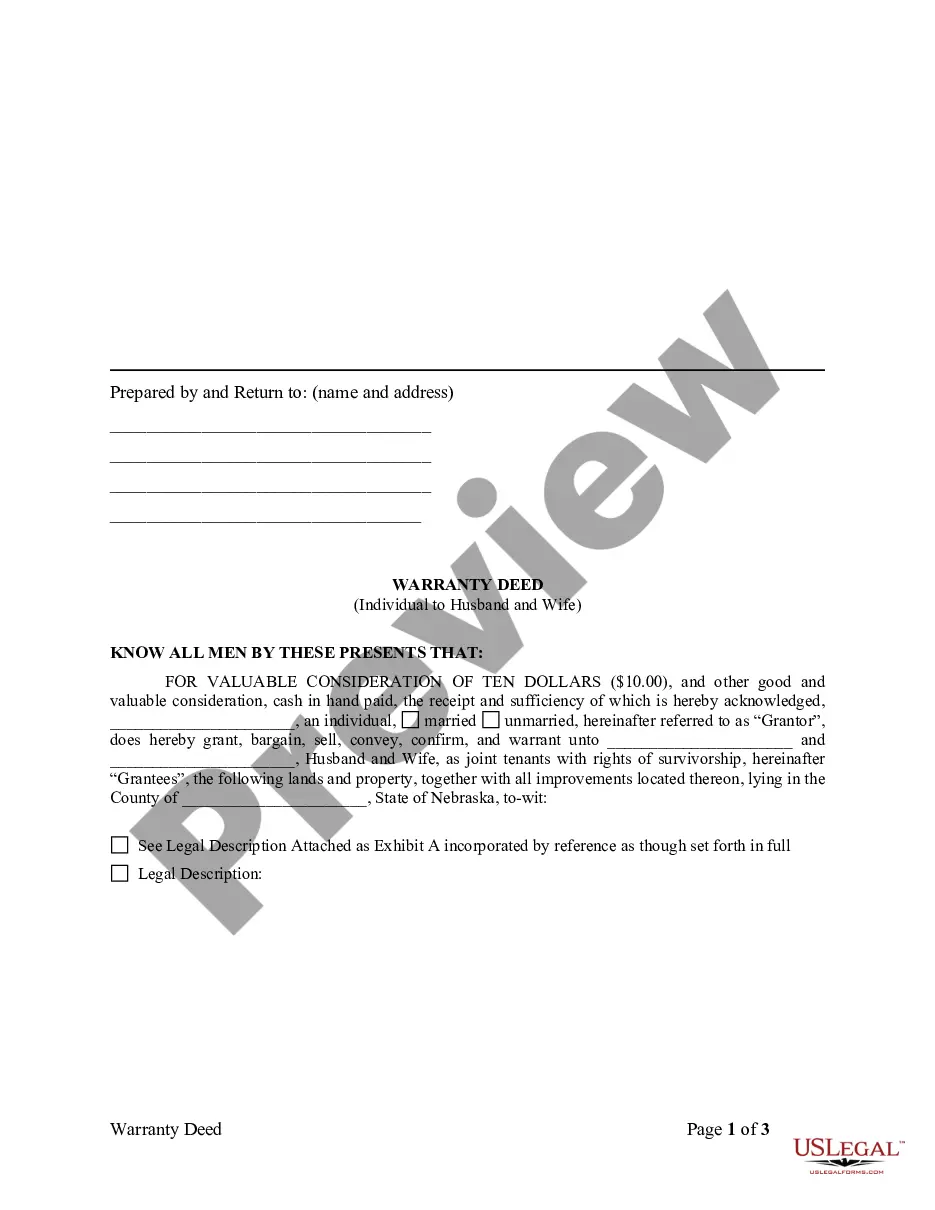
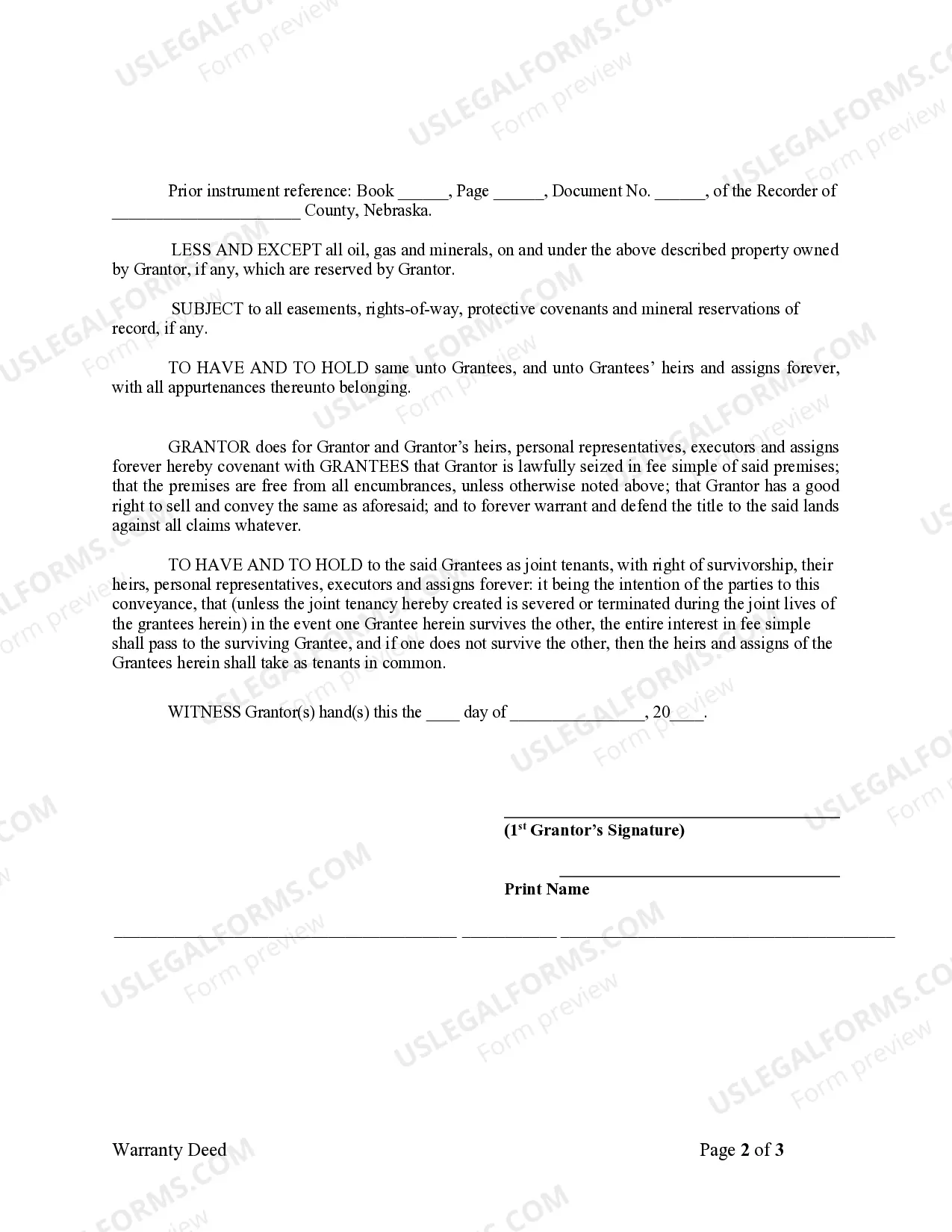
This Warranty Deed from Individual to Husband and Wife is a legal document that facilitates the transfer of property ownership from an individual (the Grantor) to a married couple (the Grantees). Unlike other types of deeds, this warranty deed ensures that the Grantor guarantees a clear title to the property being conveyed and defends against any claims. It is commonly used in real estate transactions to solidify ownership and clarify any reserved rights, such as minerals beneath the property.
What’s included in this form
- Prepared by and return to section for name and address of the parties involved.
- Identification of the county and state where the property is located.
- Property description, including reservations such as oil, gas, and minerals.
- Legal assurances from the Grantor regarding ownership and encumbrances.
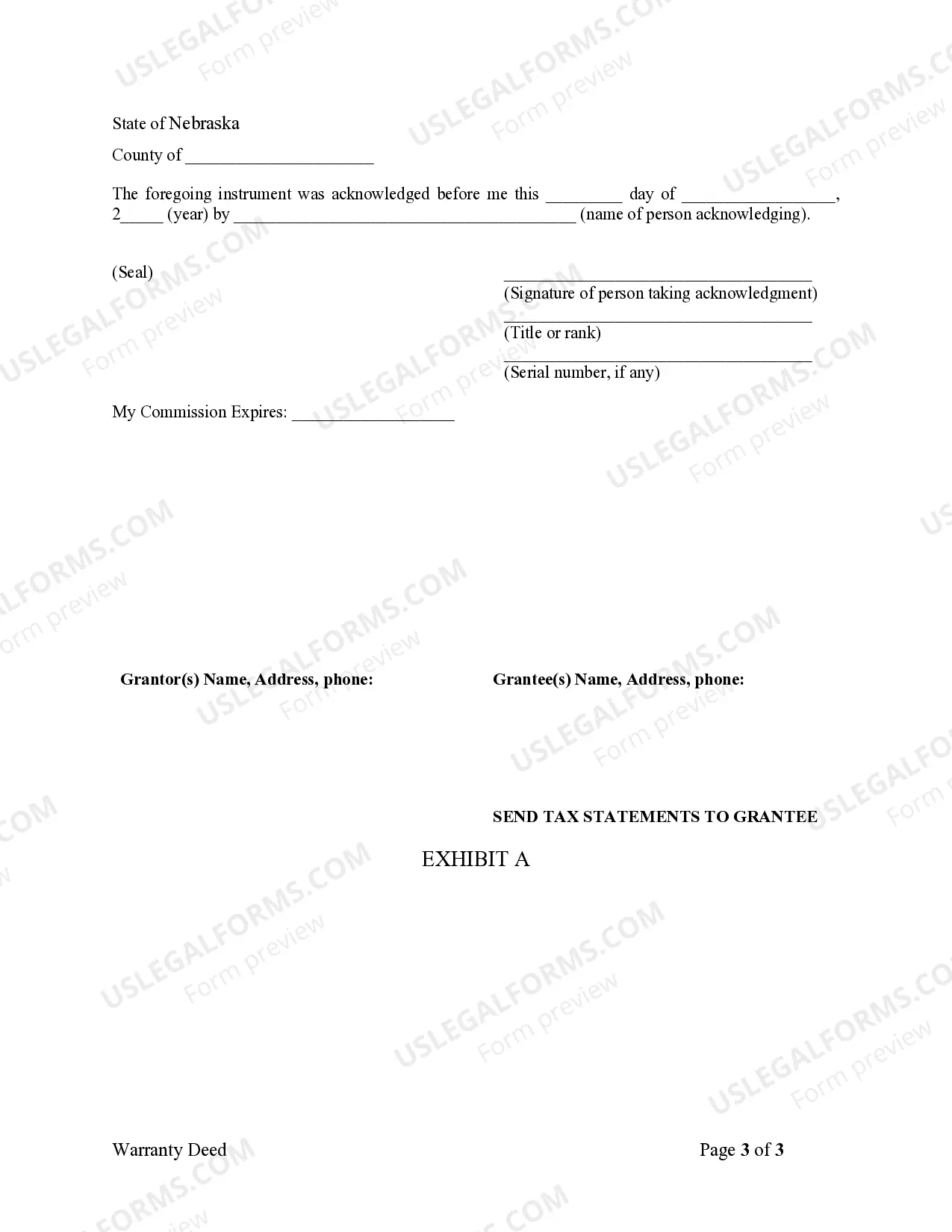
- Notary acknowledgment section to validate the signatures.





Common use cases
This form should be used when an individual wants to transfer property to a married couple while ensuring that the couple receives full ownership rights. Common scenarios include gifting property to family members, property settlements in divorce, or estate planning when transferring family real estate to children.
Intended users of this form
- Individuals looking to transfer real property ownership to their spouse or another married couple.
- Anyone involved in a property settlement or estate planning involving real estate.
- Homeowners managing the transfer of property between family members.
Instructions for completing this form
- Identify the parties involved by filling in the names and addresses in the prepared by section.
- Specify the county and state in which the property is located.
- Provide a detailed property description in the designated section.
- Confirm that any reservations of rights, such as minerals, are clearly stated and understood.
- Sign the form in the presence of a notary public to validate the transaction.
Notarization requirements for this form
Yes, this form must be notarized to be legally valid. US Legal Forms offers integrated online notarization services available 24/7, allowing you to complete the acknowledgment securely via a video call without the need for travel.
Get your form ready online
Our built-in tools help you complete, sign, share, and store your documents in one place.
Make edits, fill in missing information, and update formatting in US Legal Forms—just like you would in MS Word.
Download a copy, print it, send it by email, or mail it via USPS—whatever works best for your next step.
Sign and collect signatures with our SignNow integration. Send to multiple recipients, set reminders, and more. Go Premium to unlock E-Sign.
If this form requires notarization, complete it online through a secure video call—no need to meet a notary in person or wait for an appointment.
We protect your documents and personal data by following strict security and privacy standards.

Make edits, fill in missing information, and update formatting in US Legal Forms—just like you would in MS Word.

Download a copy, print it, send it by email, or mail it via USPS—whatever works best for your next step.

Sign and collect signatures with our SignNow integration. Send to multiple recipients, set reminders, and more. Go Premium to unlock E-Sign.

If this form requires notarization, complete it online through a secure video call—no need to meet a notary in person or wait for an appointment.

We protect your documents and personal data by following strict security and privacy standards.
Common mistakes to avoid
- Failing to include a detailed property description, leading to potential disputes.
- Not identifying all parties properly in the prepared by section.
- Signing the deed without proper notarization, making it legally invalid.
Advantages of online completion
- Convenient access to downloadable legal forms from home.
- Edit and customize the form to fit specific needs easily.
- Reliable templates drafted by licensed attorneys, ensuring compliance with laws.
Main things to remember
- The Warranty Deed from Individual to Husband and Wife establishes clear property ownership and provides legal protection for the Grantees.
- Proper completion and notarization are crucial for the form to be effective.
- This form is essential for individuals transferring property to a married couple and should be customized according to local laws.
Looking for another form?

Form popularity
FAQ
It's usually a very straightforward transaction, but it's possible for a quitclaim deed to be challenged. If a quitclaim deed is challenged in court, the issue becomes whether the property was legally transferred and if the grantor had the legal right to transfer the property.
The law doesn't forbid adding people to a deed on a home with an outstanding mortgage. Mortgage lenders are familiar and frequently work with deed changes and transfers.When you "deed" your home to someone, you've effectively transferred part ownership, which could activate the "due-on-sale" clause.
A warranty deed guarantees that: The grantor is the rightful owner of the property and has the legal right to transfer the title.The title would withstand third-party claims to ownership of the property. The grantor will do anything to ensure the grantee's title to the property.
A quitclaim deed is a legal instrument that is used to transfer interest in real property.The owner/grantor terminates (quits) any right and claim to the property, thereby allowing the right or claim to transfer to the recipient/grantee.
Laws NRS 23-1510. Recording Must be filed in the County Recorder's Office where the property is located (See County List). Signing (NRS 76-211) All quit claim deeds must be signed with the Grantor(s) being acknowledged by a Notary Public.
A Quitclaim Deed must be notarized by a notary public or attorney in order to be valid.Consideration in a Quitclaim Deed is what the Grantee will pay to the Grantor for the interest in the property.
When you purchase property, the previous owner will transfer the warranty deed to you. However, if you're paying for your home with a mortgage, as most people do, the warranty deed is not free and clear.You must deal with your mortgage appropriately if you move to sell your home.
But you might be wondering if an owner can transfer a deed to another person without a real estate lawyer. The answer is yes. Parties to a transaction are always free to prepare their own deeds.A quitclaim deed, for example, is far simpler than a warranty deed.
In some instances, however, quitclaim deeds are used when the grantor has a mortgage. In this case, the grantor remains liable for the mortgage even after ownership has transferred through the execution of a quitclaim deed. Quitclaim deeds transfer title but do not affect mortgages.