North Dakota Last Will and Testament for Divorced and Remarried Person with Mine, Yours and Ours Children
Overview of this form
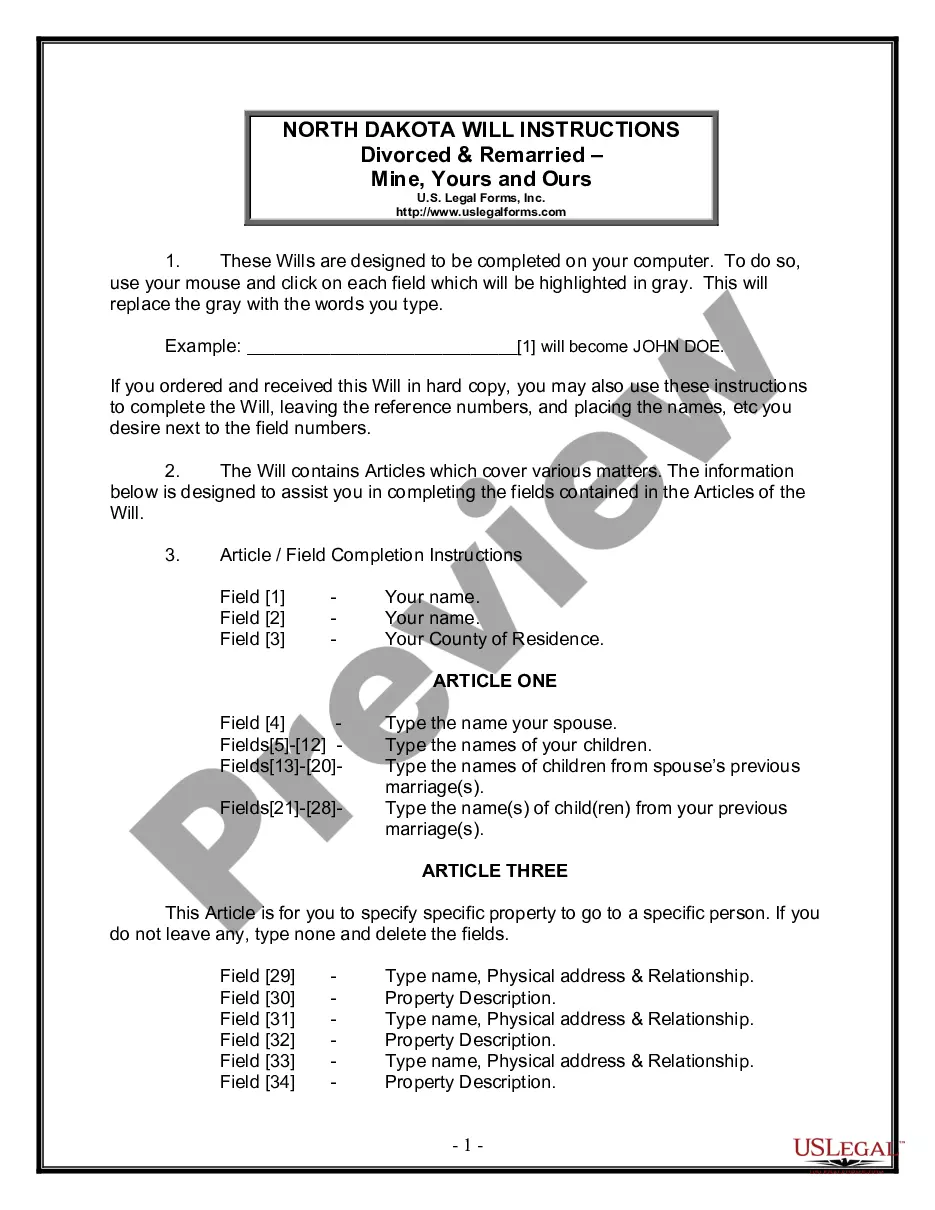
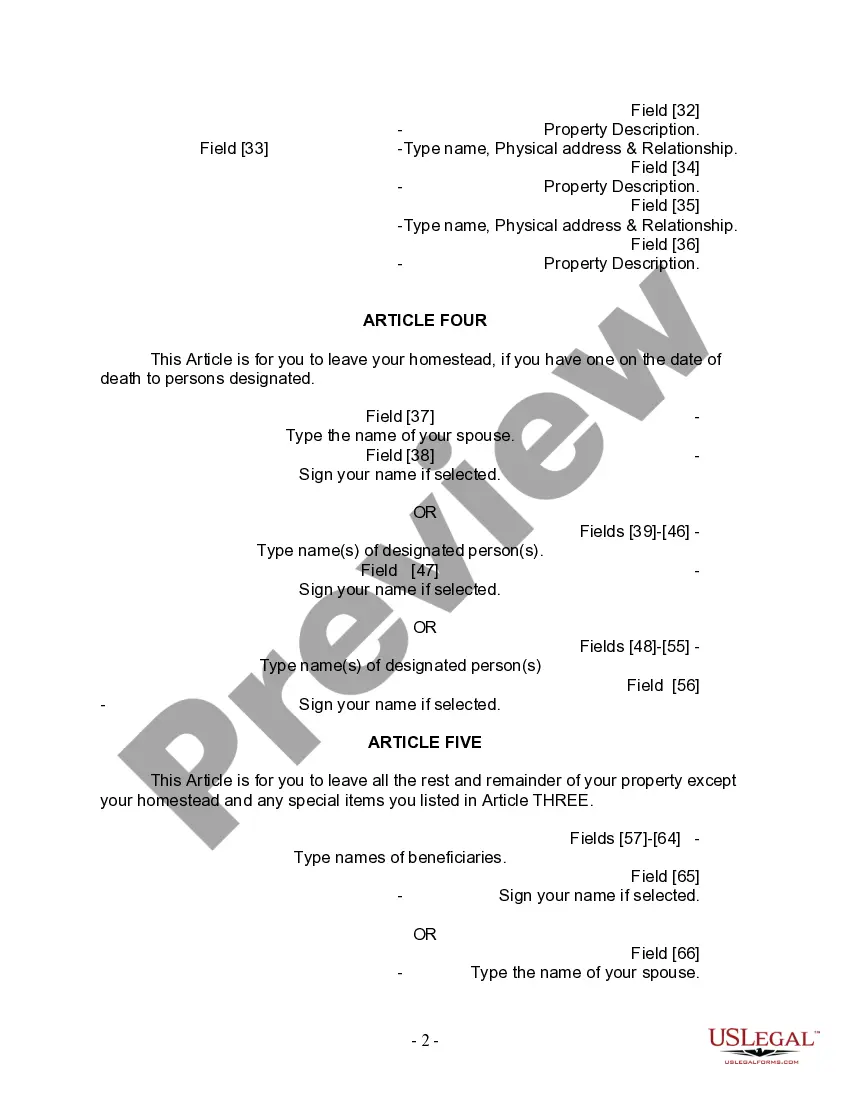
The Last Will and Testament for Divorced and Remarried Persons with Mine, Yours, and Ours Children is a legal document that outlines how your assets and responsibilities will be managed after your death. This will specifically addresses the needs of individuals who have remarried and have children from previous marriages, providing clarity on property distribution among all children involved. Different from a standard will, this form includes provisions for appointing a personal representative, designating beneficiaries, establishing trusts for minor children, and ensuring that all aspects of care and distribution are handled fairly among blended family members.
Key parts of this document
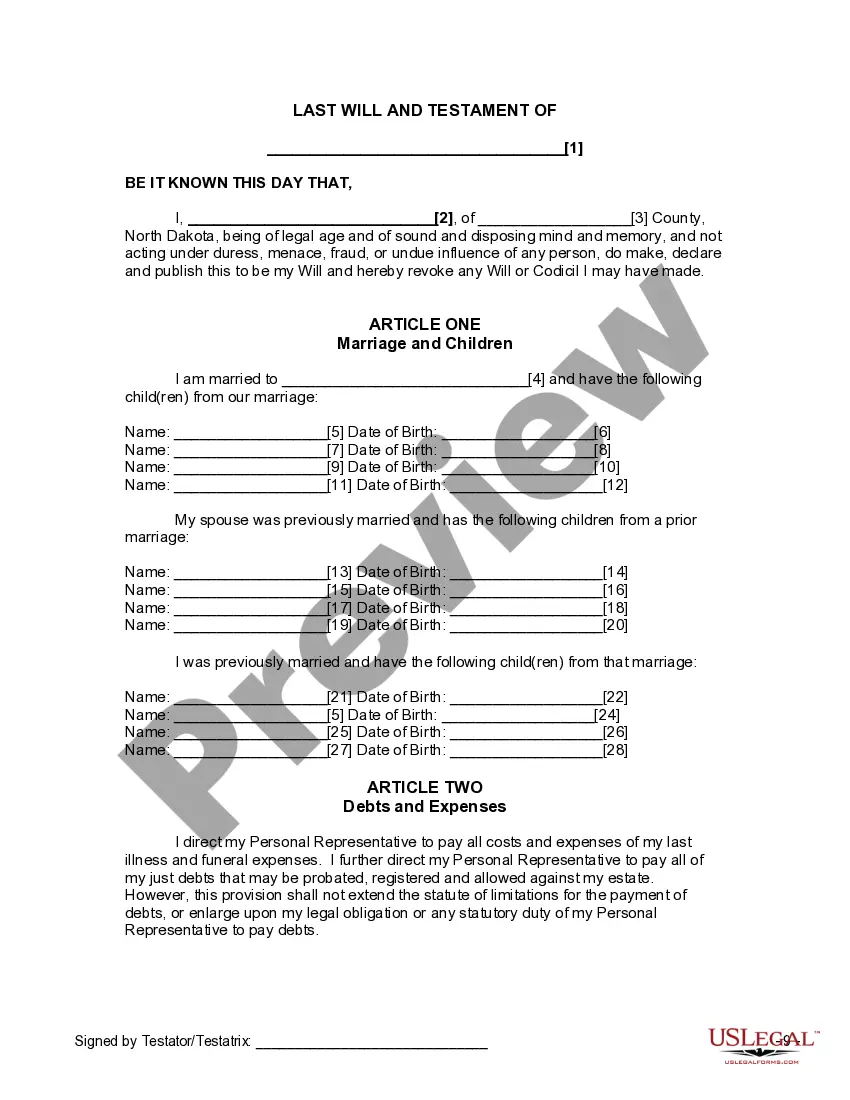
- Personal information fields, including names and relationships of all family members involved.
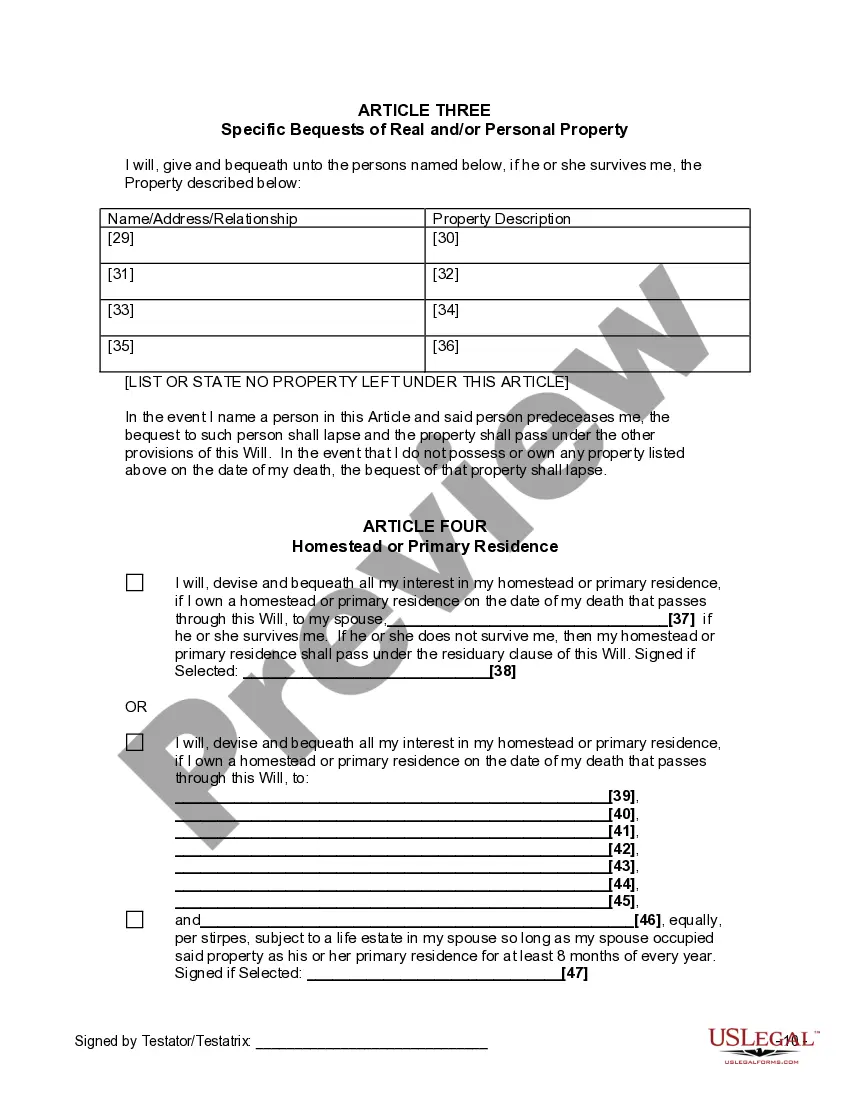
- Articles detailing specific bequests, homestead distribution, and residual estate division.
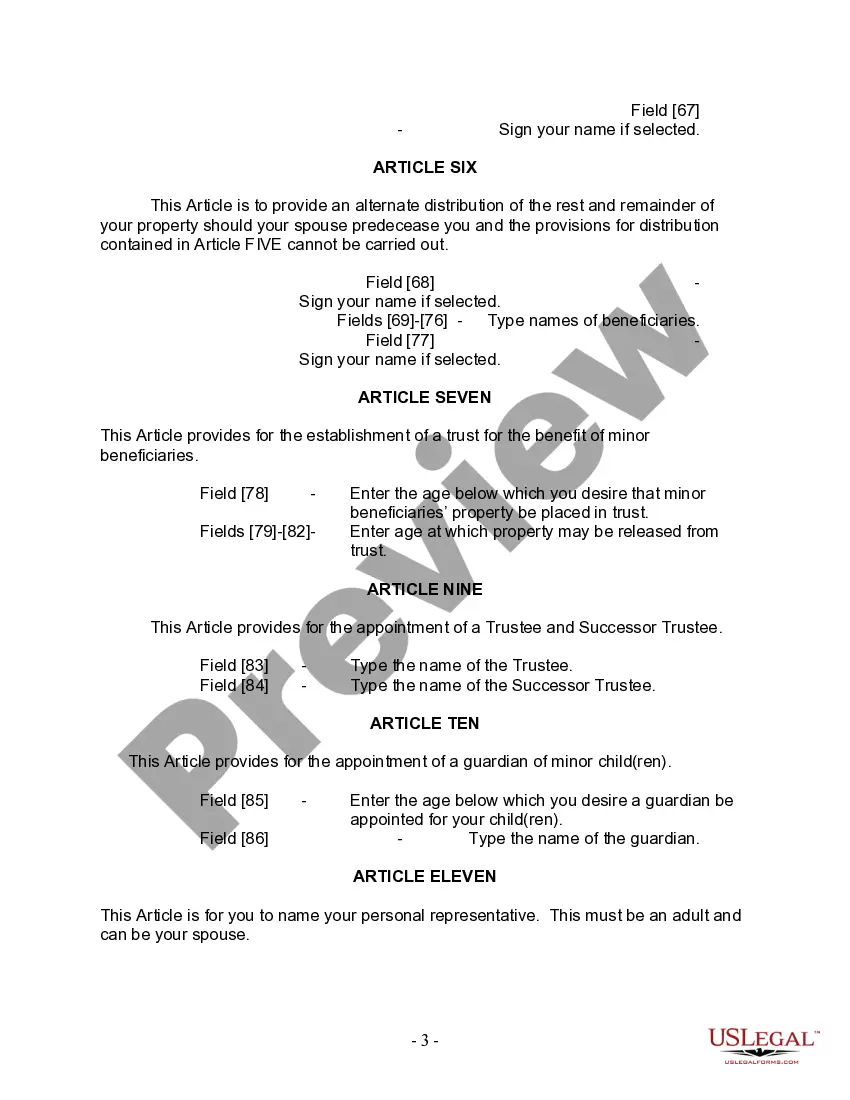
- Provisions for appointing a personal representative or executor of the estate.
- Trust establishment for minor child beneficiaries to manage their inheritance responsibly.
- Guardian appointment for any minor children, if necessary.





When to use this document
This form should be used when an individual who is divorced and has remarried wishes to formalize their estate planning, especially when there are children from all relationships involved. It is particularly useful in situations where specific property can be assigned to designated beneficiaries, ensuring that all family-related complexities are addressed appropriately. Using this will is advisable to prevent potential disputes and to clarify the testator's intentions clearly.
Who this form is for
This form is intended for:
- Individuals who are divorced and have remarried.
- Parents with children from previous marriages or relationships.
- Those seeking to ensure equitable distribution of their estate among all children.
- Anyone who wants to appoint guardians for their minor children in their will.
Completing this form step by step
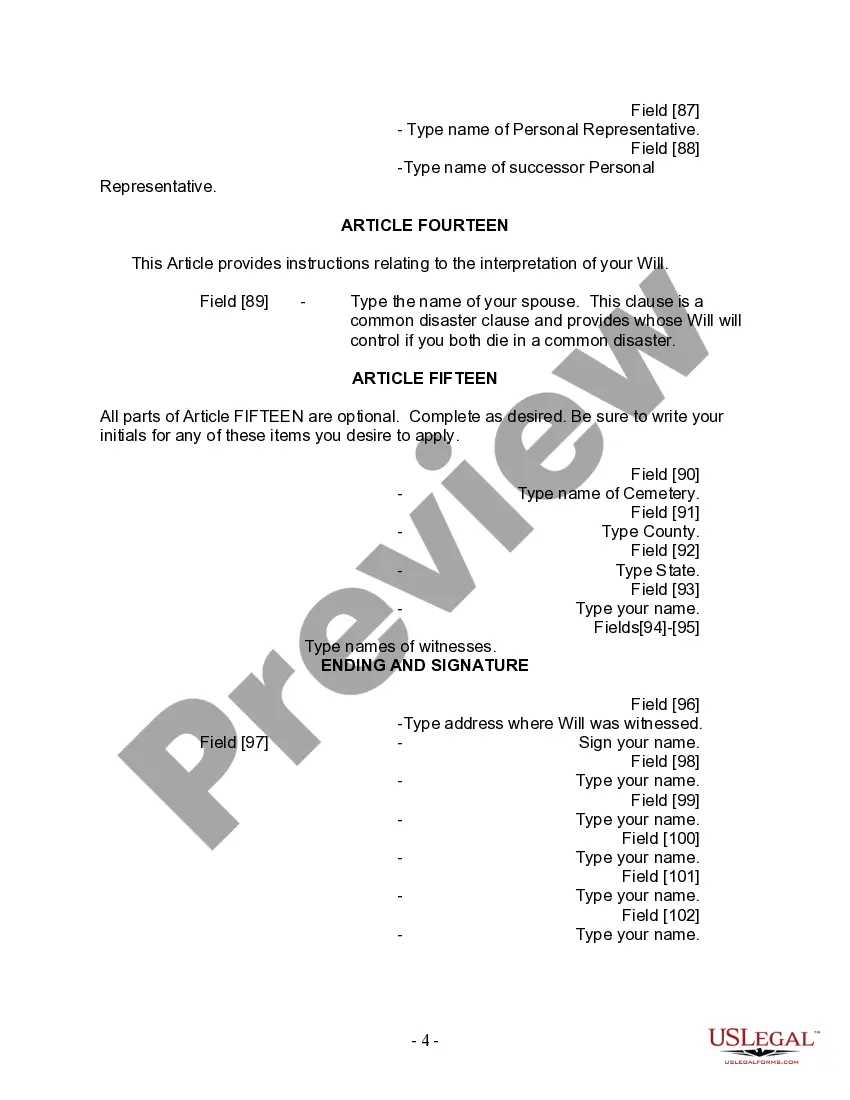
- Begin by entering your name and county of residence in the provided fields.
- List the names of your current spouse and all children, including those from previous marriages.
- Designate specific properties to be bequeathed to selected individuals or enter "none" if no specific bequests are intended.
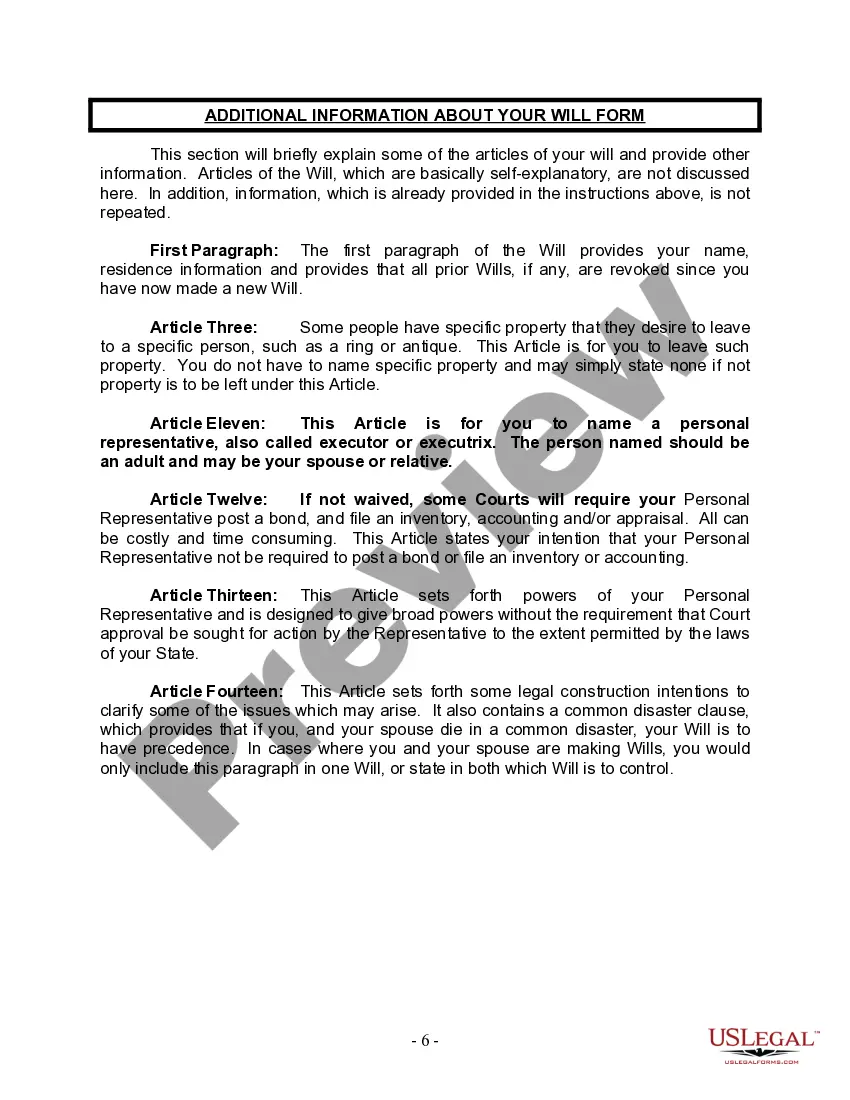
- Include the guardian for any minor children and a personal representative for managing your estate.
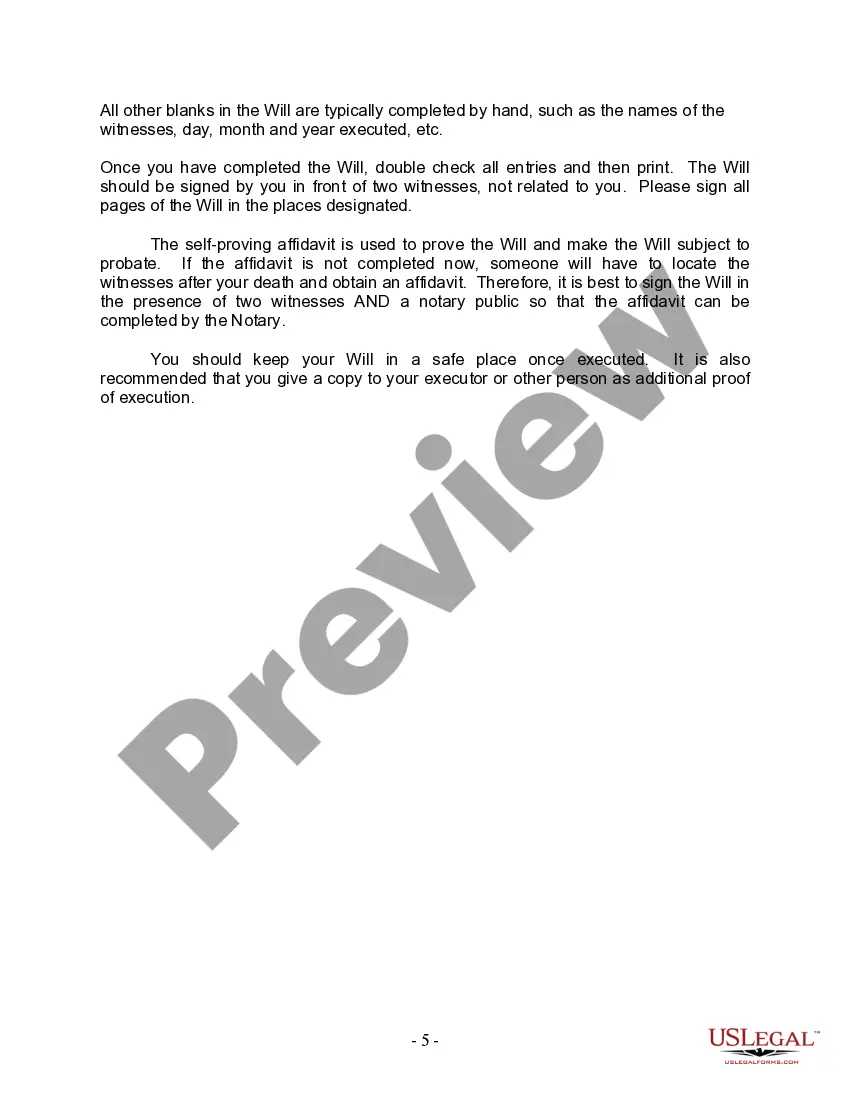
- Ensure the will is signed in front of two witnesses and potentially notarized, depending on state laws.
Notarization requirements for this form
To make this form legally binding, it must be notarized. Our online notarization service, powered by Notarize, lets you verify and sign documents remotely through an encrypted video session.
Get your form ready online
Our built-in tools help you complete, sign, share, and store your documents in one place.
Make edits, fill in missing information, and update formatting in US Legal Forms—just like you would in MS Word.
Download a copy, print it, send it by email, or mail it via USPS—whatever works best for your next step.
Sign and collect signatures with our SignNow integration. Send to multiple recipients, set reminders, and more. Go Premium to unlock E-Sign.
If this form requires notarization, complete it online through a secure video call—no need to meet a notary in person or wait for an appointment.
We protect your documents and personal data by following strict security and privacy standards.

Make edits, fill in missing information, and update formatting in US Legal Forms—just like you would in MS Word.

Download a copy, print it, send it by email, or mail it via USPS—whatever works best for your next step.

Sign and collect signatures with our SignNow integration. Send to multiple recipients, set reminders, and more. Go Premium to unlock E-Sign.

If this form requires notarization, complete it online through a secure video call—no need to meet a notary in person or wait for an appointment.

We protect your documents and personal data by following strict security and privacy standards.
Common mistakes
- Failing to include all children, which can lead to disputes.
- Not signing the will in the presence of witnesses, making it legally invalid.
- Omitting important details regarding the distribution of specific assets.
- Not updating the will after significant life changes, such as additional marriages or births.
Benefits of using this form online
- Convenient access allows you to complete your will at your own pace.
- The form is editable, enabling you to customize it to your specific situation easily.
- Reliable structure and legal accuracy provided by licensed attorneys.
- Immediate download ability ensures quick and easy filing.
Legal use & context
- This will is legally valid in North Dakota when executed according to state guidelines, including witness signatures and notarization if needed.
- It serves to clarify your wishes regarding the distribution of your estate, especially in cases of blended families.
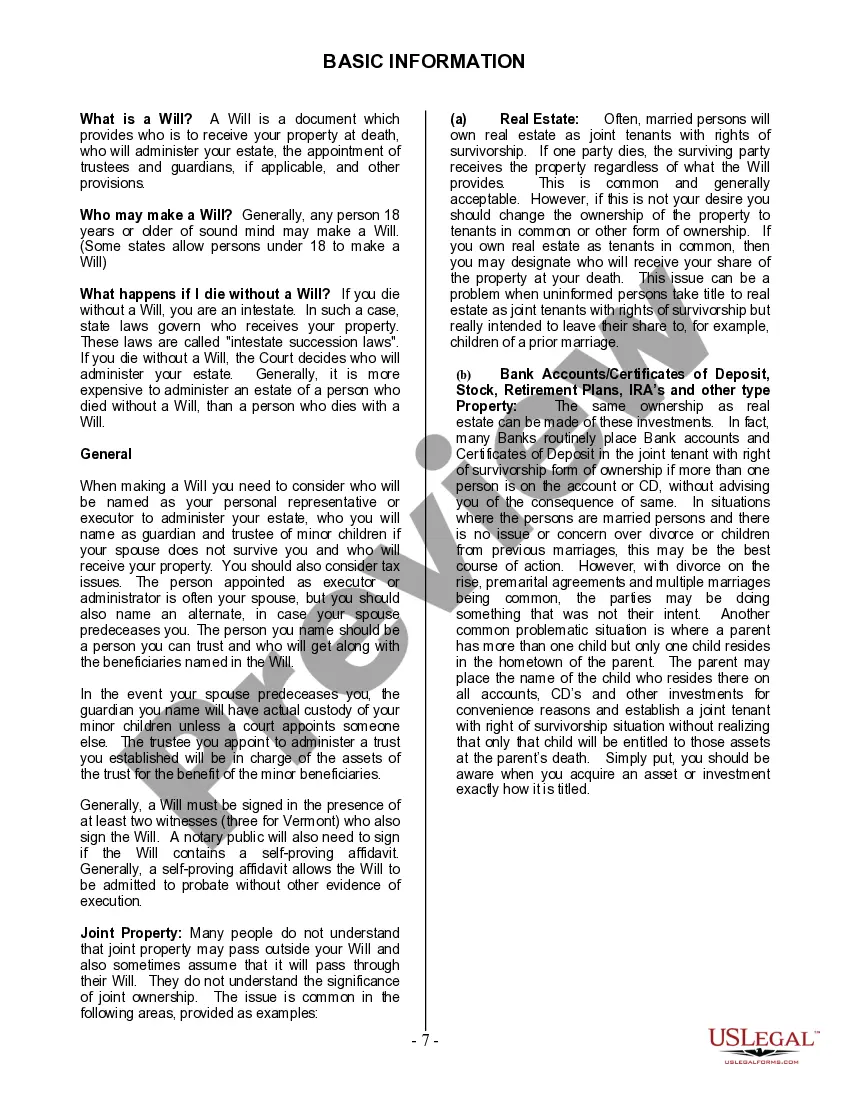
- Using a properly drafted will helps avoid intestacy, where state laws would determine the distribution of your assets.
Summary of main points
- This Last Will and Testament is specifically tailored for divorced and remarried individuals.
- Ensures equitable treatment for all children and outlines clear estate distribution.
- Requires witness signatures and potentially notarization for validity.
- Completing the form online offers convenience and editability, along with guidance throughout the process.
Looking for another form?
Form popularity
FAQ
The simple answer is yes, probate is usually required in North Dakota. However, there are exceptions where an estate may not need to go through probate for the heirs to gain access to the assets.
If Probate is needed but you don't apply for it, the beneficiaries won't be able to receive their inheritance. Instead the deceased person's assets will be frozen and held in a state of limbo. No one will have the legal authority to access, sell or transfer them.
A. You don't have to have a lawyer to create a basic will you can prepare one yourself. It must meet your state's legal requirements and should be notarized.But be careful: For anything complex or unusual, like distributing a lot of money or cutting someone out, you'd do best to hire a lawyer.
Simply having a last will does not avoid probate; in fact, a will must go through probate. To probate a will, the document is filed with the court, and a personal representative is appointed to gather the decedent's assets and take care of any outstanding debts or taxes.
In North Dakota, you can make a living trust to avoid probate for virtually any asset you ownreal estate, bank accounts, vehicles, and so on. You need to create a trust document (it's similar to a will), naming someone to take over as trustee after your death (called a successor trustee).
Probate is required when an estate's assets are solely in the deceased's name. In most cases, if the deceased owned property that had no other names attached, an estate must go through probate in order to transfer the property into the name(s) of any beneficiaries.
A properly drafted will that you have executed under the laws of one state will generally be valid under the laws of any other state.
Write a Living Trust. The most straightforward way to avoid probate is simply to create a living trust. Name Beneficiaries on Your Retirement and Bank Accounts. For some, a last will is often a better fit than a trust because it is a more straightforward estate planning document. Hold Property Jointly.