North Carolina Letter from Tenant to Landlord with Demand that landlord provide proper outdoor garbage receptacles
About this form
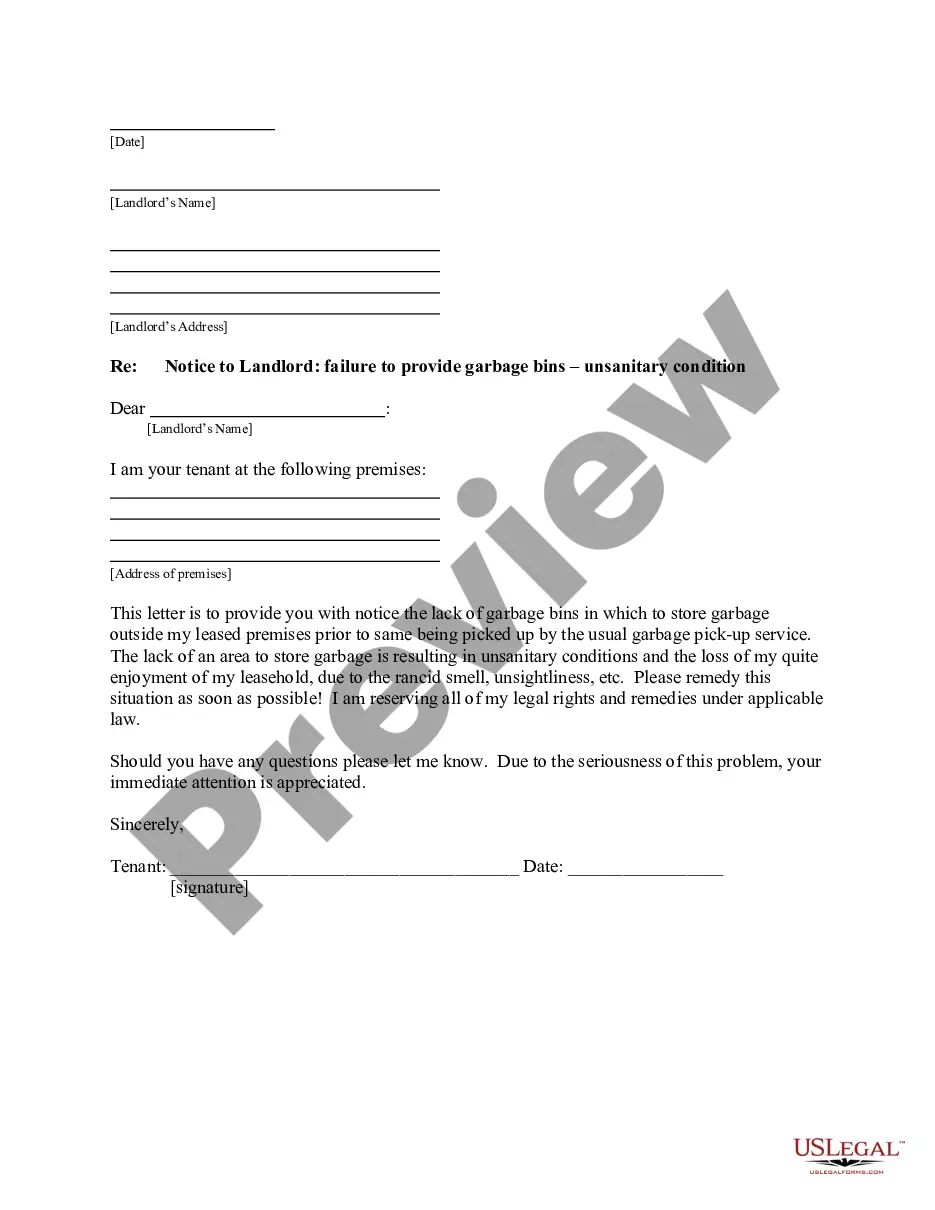
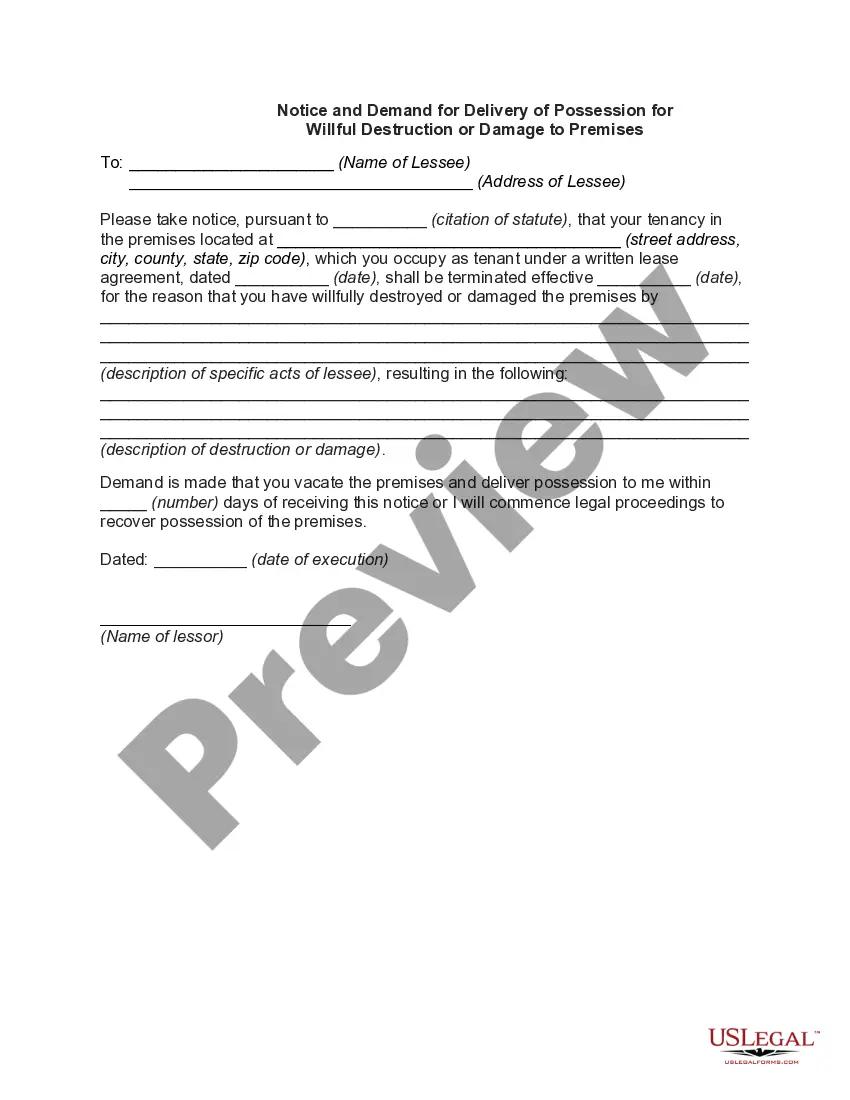
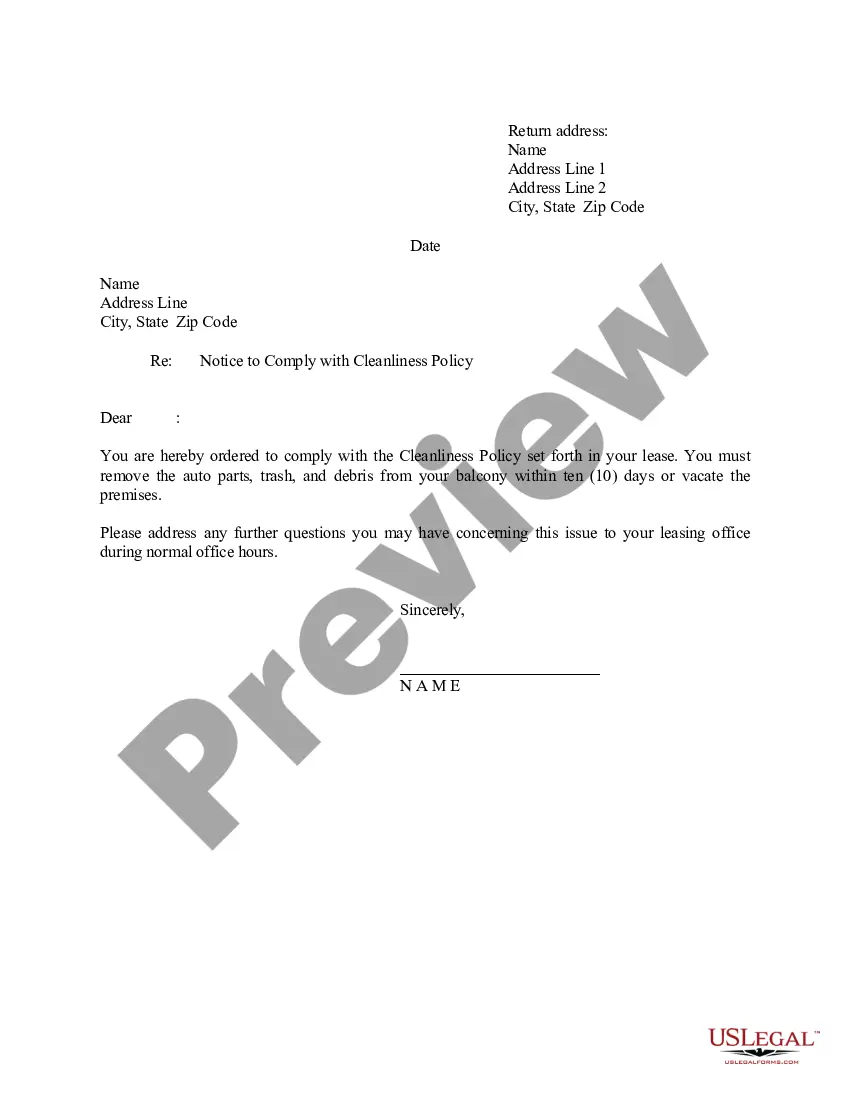
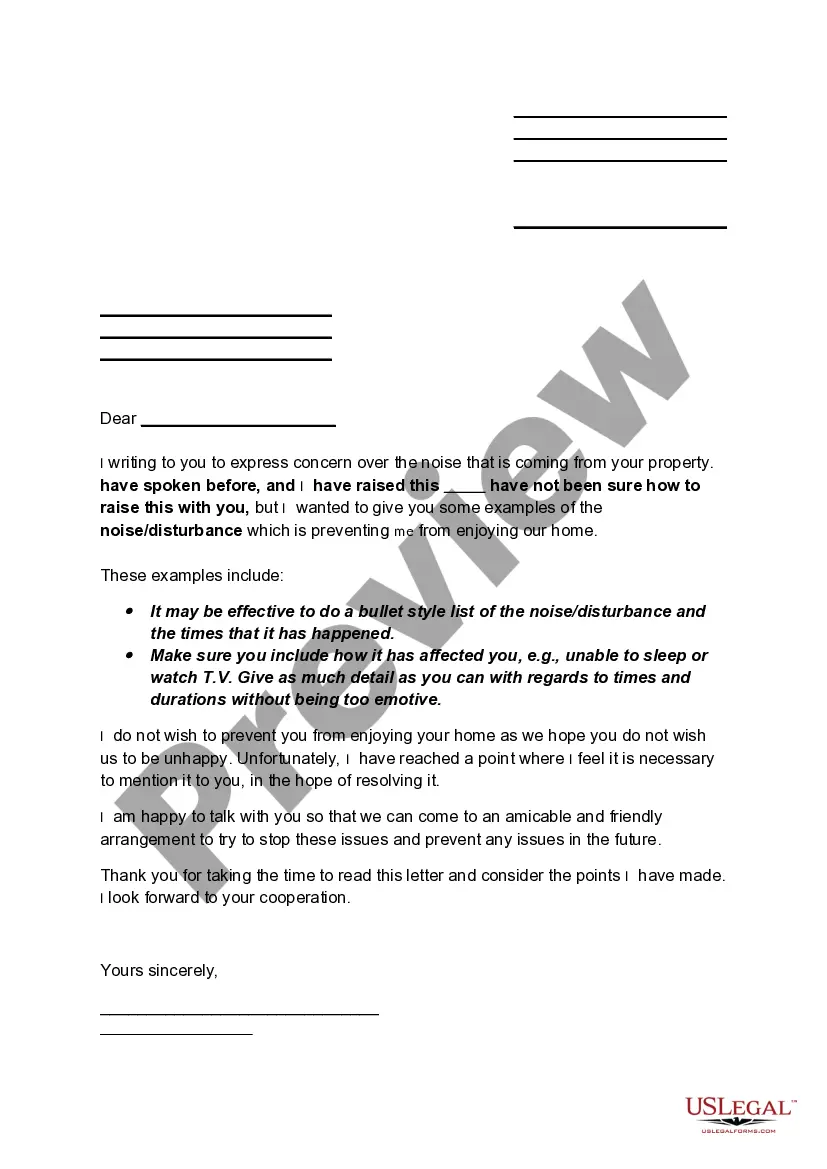
This Letter from Tenant to Landlord with Demand that landlord provide proper outdoor garbage receptacles is a formal request from a tenant to notify the landlord of unsanitary conditions due to the absence of garbage bins. It serves to document the landlord's breach of the lease agreement and demand immediate action. This form is essential for tenants seeking to address health and safety issues related to waste disposal.
What’s included in this form
- Tenant's name and signature
- Date of the notice
- Description of the issue with garbage receptacles
- Request for immediate action to provide appropriate garbage bins
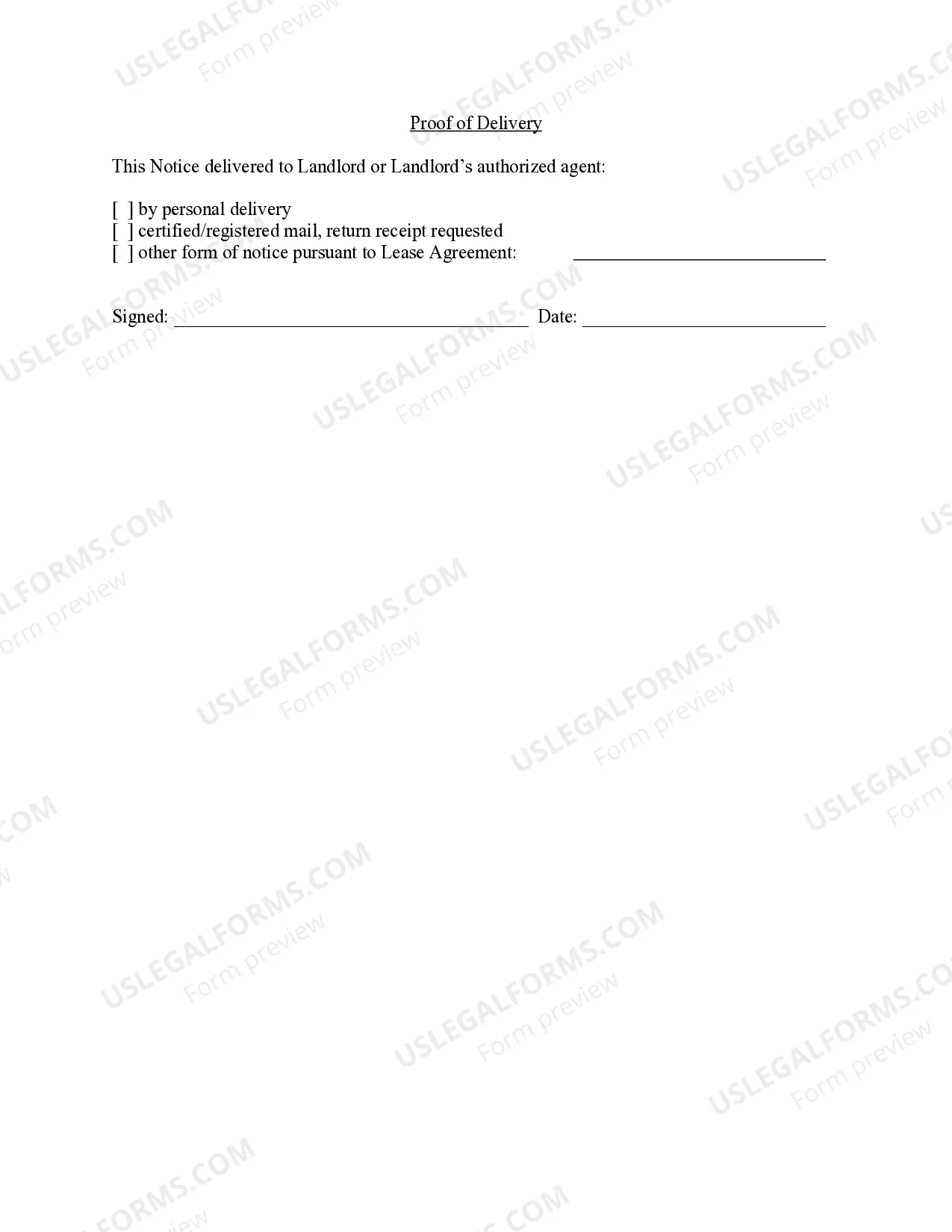
- Proof of delivery method to the landlord

Common use cases
This form should be used when a tenant notices that proper outdoor garbage receptacles are not provided, leading to unsanitary living conditions. It is appropriate when a tenant wants to formally document the problem and request immediate corrective measures from the landlord, especially if the lease requires the landlord to provide waste management solutions.
Who should use this form
- Tenants experiencing issues with garbage disposal in their rental property
- Individuals looking to formally document unsanitary conditions
- Anyone wanting to ensure compliance with lease agreements regarding property maintenance
Completing this form step by step
- Identify yourself as the tenant and include your signature.
- Enter the date of the letter.
- Clearly state the problem regarding the lack of garbage receptacles.
- Specify your demand for immediate action to rectify the issue.
- Choose a delivery method to officially notify the landlord.
Is notarization required?
In most cases, this form does not require notarization. However, some jurisdictions or signing circumstances might. US Legal Forms offers online notarization powered by Notarize, accessible 24/7 for a quick, remote process.
Get your form ready online
Our built-in tools help you complete, sign, share, and store your documents in one place.
Make edits, fill in missing information, and update formatting in US Legal Forms—just like you would in MS Word.
Download a copy, print it, send it by email, or mail it via USPS—whatever works best for your next step.
Sign and collect signatures with our SignNow integration. Send to multiple recipients, set reminders, and more. Go Premium to unlock E-Sign.
If this form requires notarization, complete it online through a secure video call—no need to meet a notary in person or wait for an appointment.
We protect your documents and personal data by following strict security and privacy standards.

Make edits, fill in missing information, and update formatting in US Legal Forms—just like you would in MS Word.

Download a copy, print it, send it by email, or mail it via USPS—whatever works best for your next step.

Sign and collect signatures with our SignNow integration. Send to multiple recipients, set reminders, and more. Go Premium to unlock E-Sign.

If this form requires notarization, complete it online through a secure video call—no need to meet a notary in person or wait for an appointment.

We protect your documents and personal data by following strict security and privacy standards.
Common mistakes
- Not including the date of the notice.
- Failing to clearly describe the issue with garbage disposal.
- Neglecting to verify the delivery method for proof of receipt.
- Not keeping a copy of the notice for personal records.
Benefits of completing this form online
- Convenient access to a legally vetted template.
- Easy to download and customize to fit specific needs.
- Provides a clear record of communication with the landlord.
Legal use & context
- This letter serves as an important step in documenting a landlord's failure to uphold their responsibilities.
- Using this form can help protect tenants' rights under local rental laws.
- Filing this notice may be necessary before pursuing further legal action regarding housing conditions.
Main things to remember
- The form addresses unsanitary conditions from lack of garbage receptacles.
- It serves as a notice of breach of lease that requires immediate attention from the landlord.
- This document can help tenants formally communicate issues while safeguarding their rights.
Looking for another form?





Form popularity
FAQ
Uninhabitable conditions can include dangerous ones, such as holes in the floor, unsafe or exposed wiring, or non-working air conditioning in dangerously hot summer months. Gross infestations of roaches, fleas or other pests are also uninhabitable conditions.
If you think your landlord is violating the Fair Housing Act, you can get that landlord in trouble by filing a complaint at HUD.gov. Your remedy for breach of quiet enjoyment is to terminate the lease and move or sue in small claims court.
Contact us at (888) 700-9995.
North Carolina law says that your landlord must keep your housing fit and safe. It also says that you, the tenant, must pay your rent, keep your home clean, and not damage your home. To make the law work, both the tenant and the landlord must do their part.
North Carolina law says that your landlord must keep your housing fit and safe. It also says that you, the tenant, must pay your rent, keep your home clean, and not damage your home. To make the law work, both the tenant and the landlord must do their part.
When a home is condemned, the owner (and tenants, if any) are notified in writing that the building must be vacated. A sign is attached to the building stating that the dwelling is not fit for human habitation, and that it cannot be occupied.The owner of the building may be ordered to repair or demolish the building.
A landlord cannot evict a tenant without an adequately obtained eviction notice and sufficient time. A landlord cannot retaliate against a tenant for a complaint. A landlord cannot forego completing necessary repairs or force a tenant to do their own repairs.A landlord cannot remove a tenant's personal belongings.
Health Issues When the environment in a unit becomes hazardous to one's health, the rental is considered to be uninhabitable.Other health risks such as mold and asbestos can make a unit uninhabitable, by causing respiratory problems and serious illnesses.
In California, habitability includes the following specific warranties: A dwelling also may be considered uninhabitable (unlivable) if it substantially lacks any of the following: Effective waterproofing and weather protection of roof and exterior walls, including unbroken windows and doors.