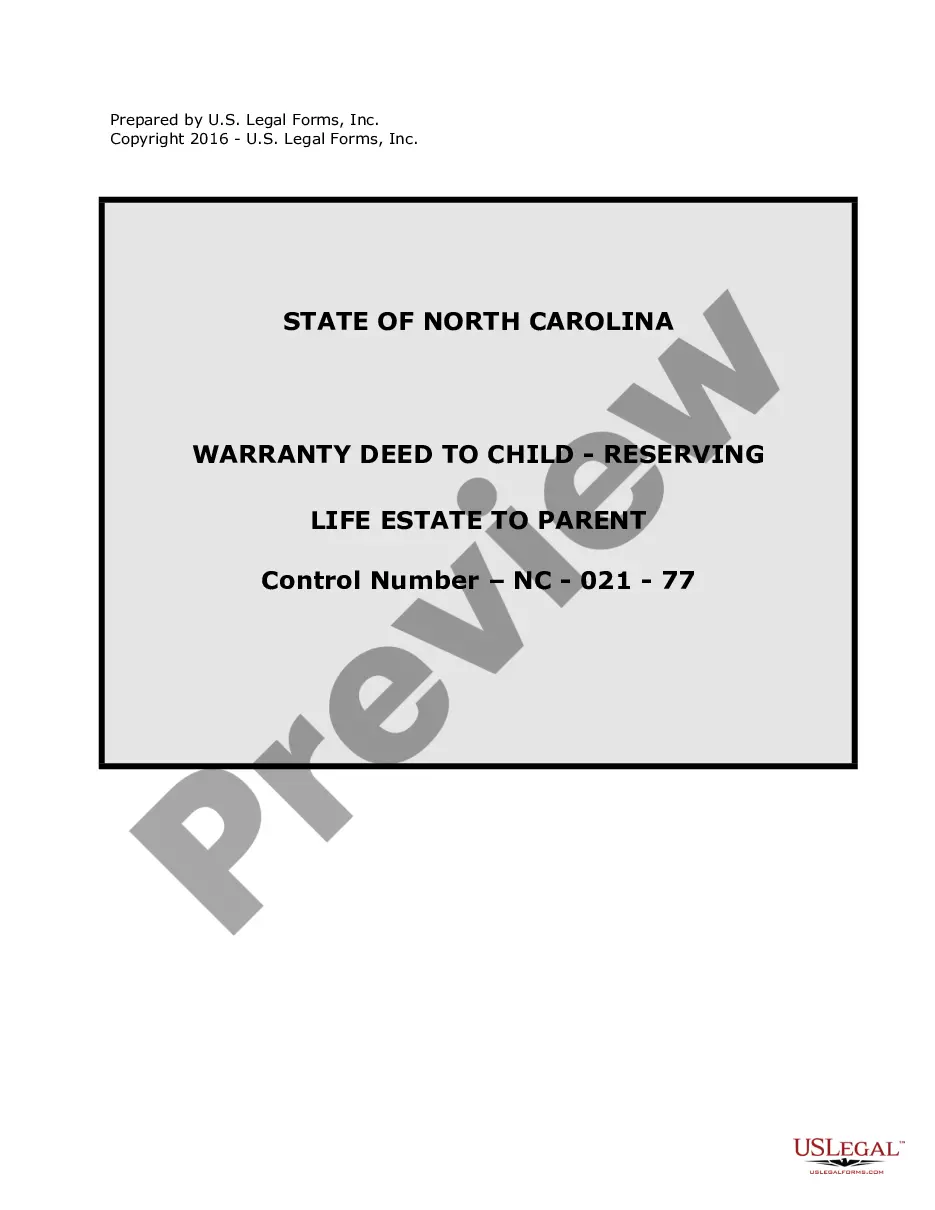
North Carolina Warranty Deed to Child Reserving a Life Estate in the Parents - Husband and Wife Grantors
Overview of this form
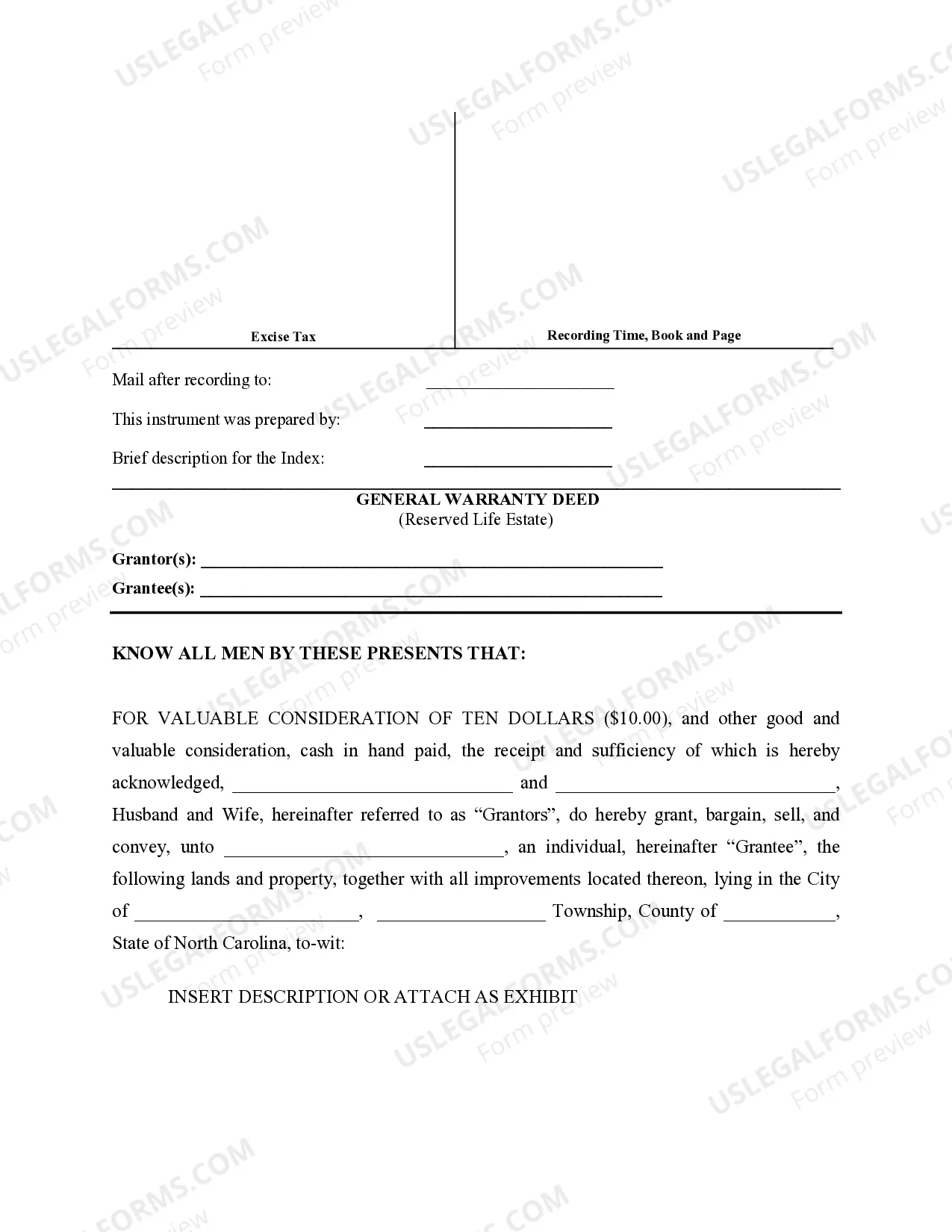
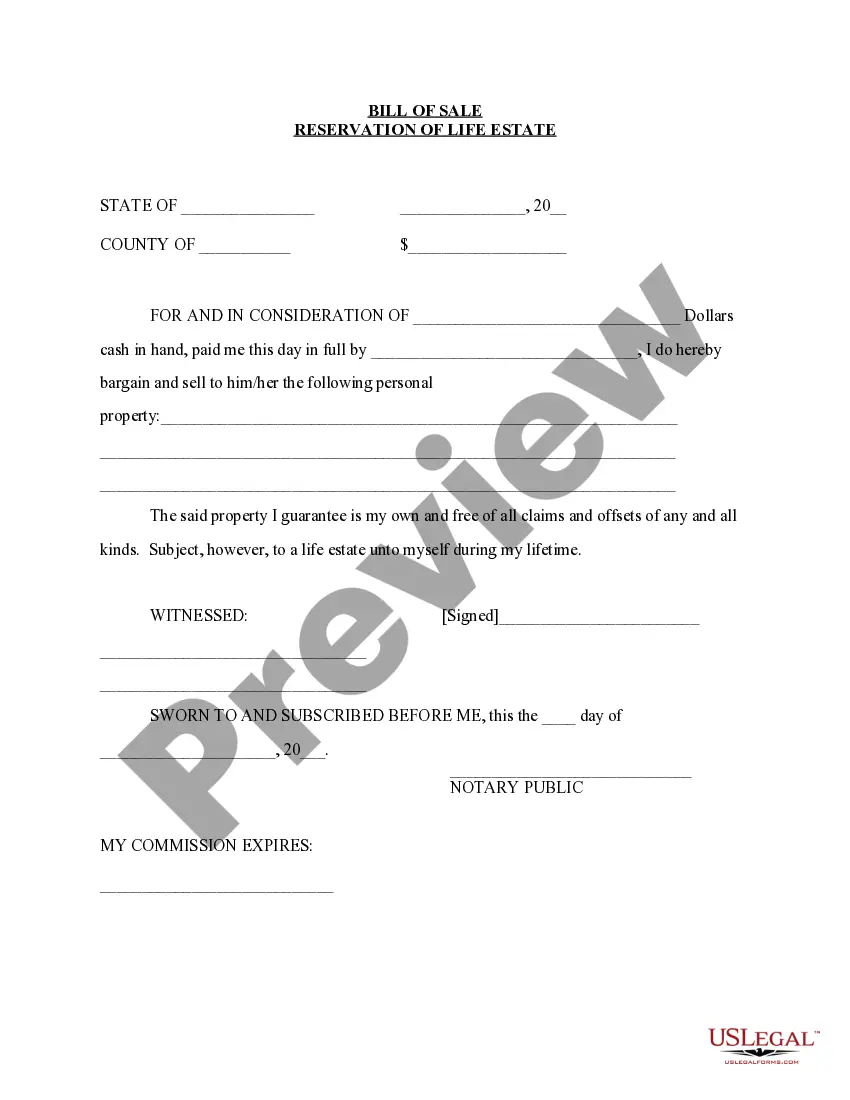
The Warranty Deed to Child Reserving a Life Estate in the Parents is a legal document used to transfer property from parents, specifically a husband and wife, to their child. This form allows the parents to convey ownership of the property while retaining a life estate, meaning they maintain the right to use and live on the property for the duration of their lifetimes. Unlike other deeds, this warranty deed provides assurance that the parents are legally entitled to transfer the property, ensuring a secure transaction for the child receiving the property.
Main sections of this form
- Identification of grantors (parents) and the grantee (child).
- Details of the property being transferred, including a legal description.
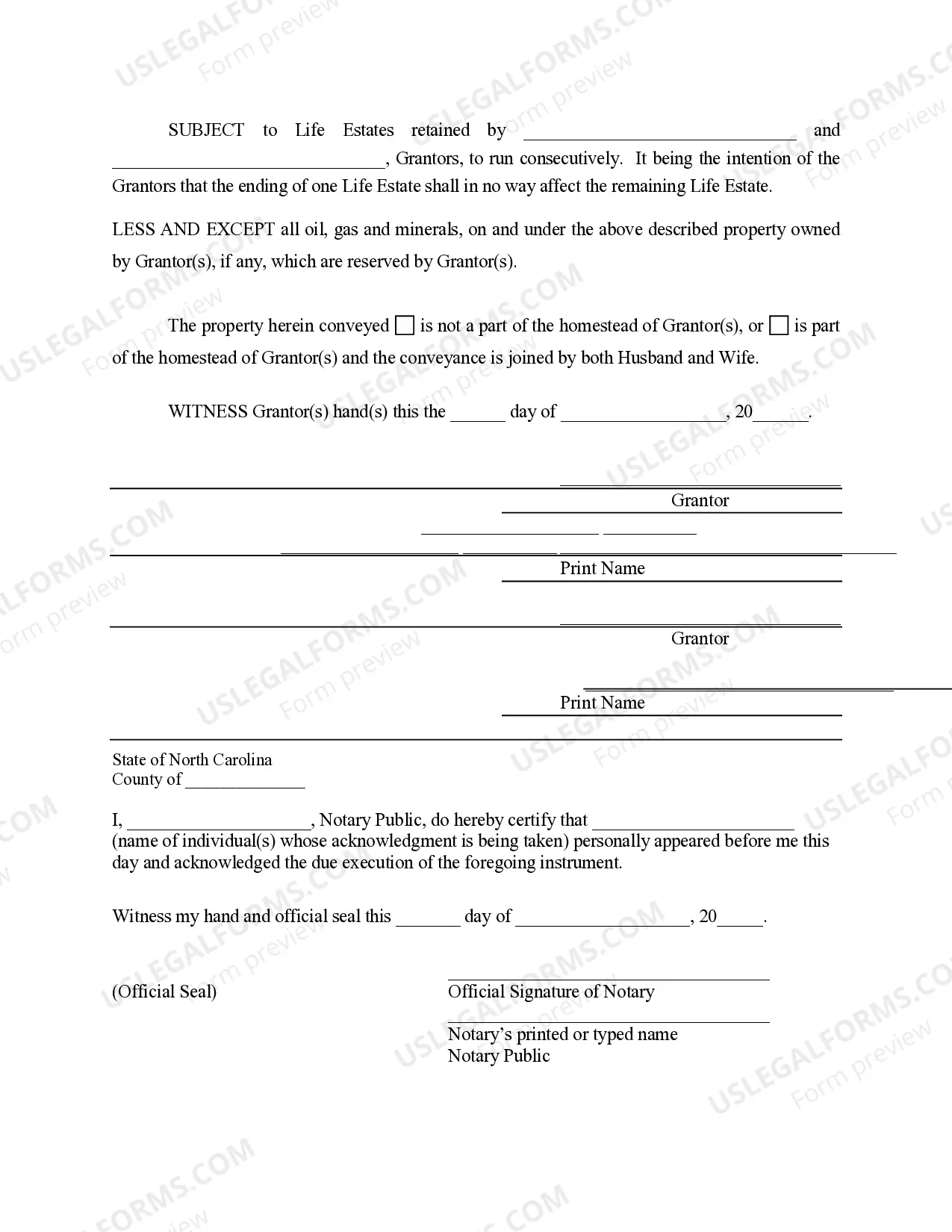
- Reservation of a life estate, allowing parents to retain property rights during their lifetime.
- Provisions regarding the homestead status of the property.
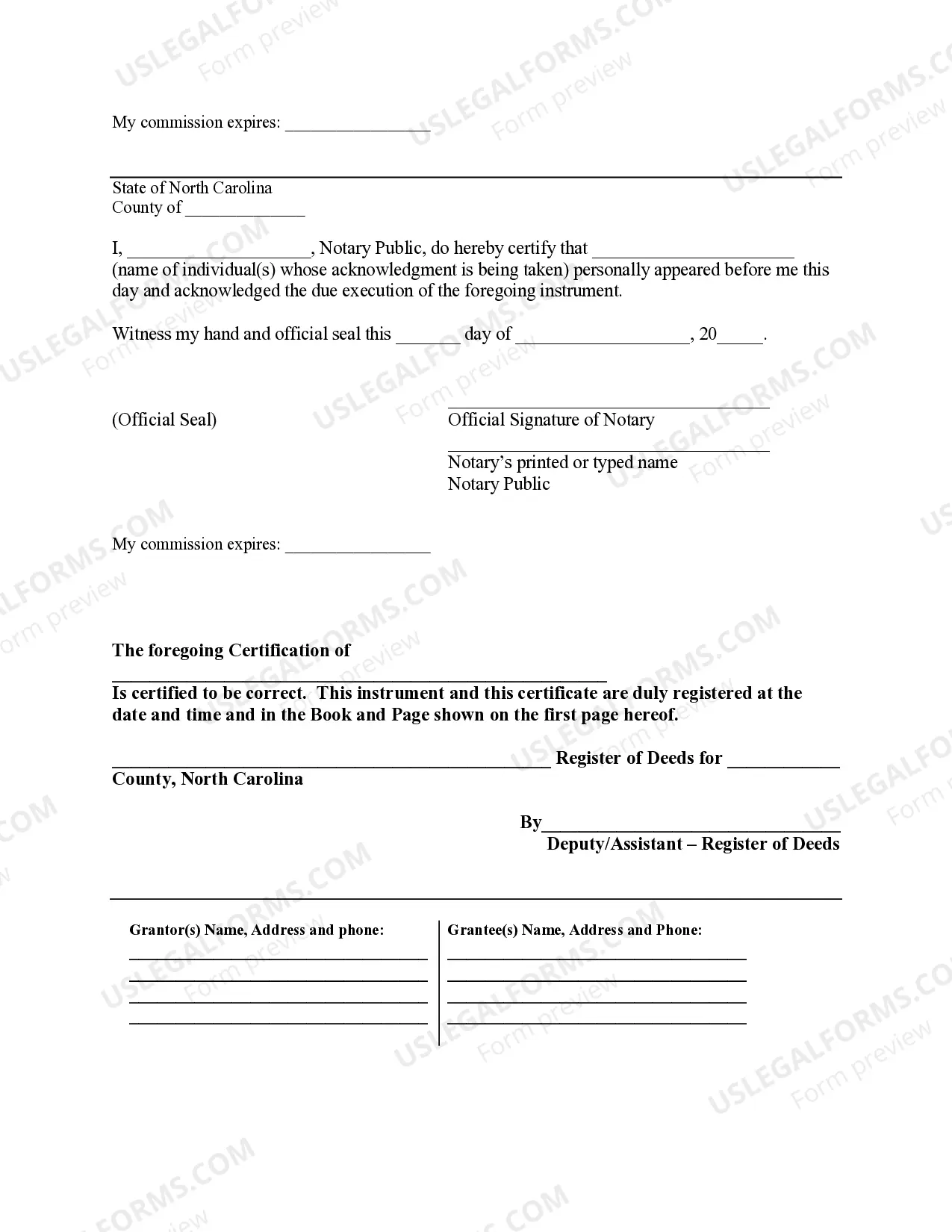
- Notary acknowledgment to validate the deed.




When to use this document
This warranty deed should be used when parents wish to transfer property to their child while retaining the right to live on or use the property until they pass away. It is particularly useful in estate planning to avoid probate and ensure a smooth transfer of property ownership upon the parents' death. This deed is also beneficial for parents ensuring their continued residence without losing property ownership.
Who this form is for
- Parents who are married and wish to transfer property to their child.
- Parents looking to maintain the right to the property during their lifetime.
- Individuals seeking a secure method of estate planning that minimizes probate issues.
- Families wanting to clarify property ownership while ensuring parental rights.
Instructions for completing this form
- Identify the grantors by entering the full names of the husband and wife.
- Specify the granteeâs name by entering the childâs full name.
- Provide a complete legal description of the property being transferred.
- Indicate whether the property is part of the homestead and ensure both parents consent to the transfer.
- Fill in the date and sign the deed in front of a notary public.
Notarization requirements for this form
Yes, this form must be notarized to be legally valid. Each grantor must acknowledge their signature in front of a notary public. US Legal Forms offers an integrated online notarization option, providing secure video calls to complete this process conveniently.
Get your form ready online
Our built-in tools help you complete, sign, share, and store your documents in one place.
Make edits, fill in missing information, and update formatting in US Legal Forms—just like you would in MS Word.
Download a copy, print it, send it by email, or mail it via USPS—whatever works best for your next step.
Sign and collect signatures with our SignNow integration. Send to multiple recipients, set reminders, and more. Go Premium to unlock E-Sign.
If this form requires notarization, complete it online through a secure video call—no need to meet a notary in person or wait for an appointment.
We protect your documents and personal data by following strict security and privacy standards.

Make edits, fill in missing information, and update formatting in US Legal Forms—just like you would in MS Word.

Download a copy, print it, send it by email, or mail it via USPS—whatever works best for your next step.

Sign and collect signatures with our SignNow integration. Send to multiple recipients, set reminders, and more. Go Premium to unlock E-Sign.

If this form requires notarization, complete it online through a secure video call—no need to meet a notary in person or wait for an appointment.

We protect your documents and personal data by following strict security and privacy standards.
Common mistakes to avoid
- Failing to include the complete legal description of the property.
- Not obtaining the necessary notarization, which may invalidate the deed.
- Leaving out one parent's signature when both are required.
- Not specifying the terms of the life estate clearly, leading to potential disputes later.
Advantages of online completion
- Easy access to professionally prepared legal documents.
- Convenience of filling out forms digitally and downloading them immediately.
- Editable forms that allow for personalization to better fit your specific needs.
- Secure handling of personal information, ensuring privacy and compliance.
Quick recap
Key takeaways include:
- This warranty deed allows parents to transfer property to their child while retaining a life estate.
- Proper completion and notarization are essential for legal enforceability.
- Utilizing this form can simplify estate planning and clarify property ownership among family members.
Looking for another form?

Form popularity
FAQ
A life estate is a form of joint ownership that gives a person (the life tenant) ownership rights in property during their lifetime. But when the life tenant dies, the remainder interest in the property goes to the beneficiary, also known as the remainderman.
A life estate is the interest in property that is measured by the life of a person. It can be granted to someone for his or her lifetime or for the lifetime of another. The life estate interest gives the holder the right to all the benefits of the property during the lifetime for which it is granted.
This life estate deed is a document that transfers ownership of real property, while reserving access and use of the property for the duration of the grantor's life. It allows the original owner (grantor) to remain on the premises with full access to and benefits from the property.
A person owns property in a life estate only throughout their lifetime. Beneficiaries cannot sell property in a life estate before the beneficiary's death. One benefit of a life estate is that property can pass when the life tenant dies without being part of the tenant's estate.
A person owns property in a life estate only throughout their lifetime. Beneficiaries cannot sell property in a life estate before the beneficiary's death. One benefit of a life estate is that property can pass when the life tenant dies without being part of the tenant's estate.
This life estate deed is a document that transfers ownership of real property, while reserving access and use of the property for the duration of the grantor's life. It allows the original owner (grantor) to remain on the premises with full access to and benefits from the property.
A lifetime estate on a deed is a type of property ownership. It gives an individual the right to occupy and use a property during that individual's lifetime.After the death of the occupant, the life estate terminates and transfers to another person, known as the remainderman.
Reservation of the present interest allows the owner to retain ownership for a period of time measured by the life of one or more individuals, by a term of years, or by a combination of the two.
A life estate, when used to gift property, splits ownership between the giver and receiver. Many parents set up a life estate to reduce their assets in order to qualify for Medicaid. Even though the parent still retains some interest in the property, Medicaid does not count it as an asset.