Montana Lease Subordination Agreement
Understanding this form
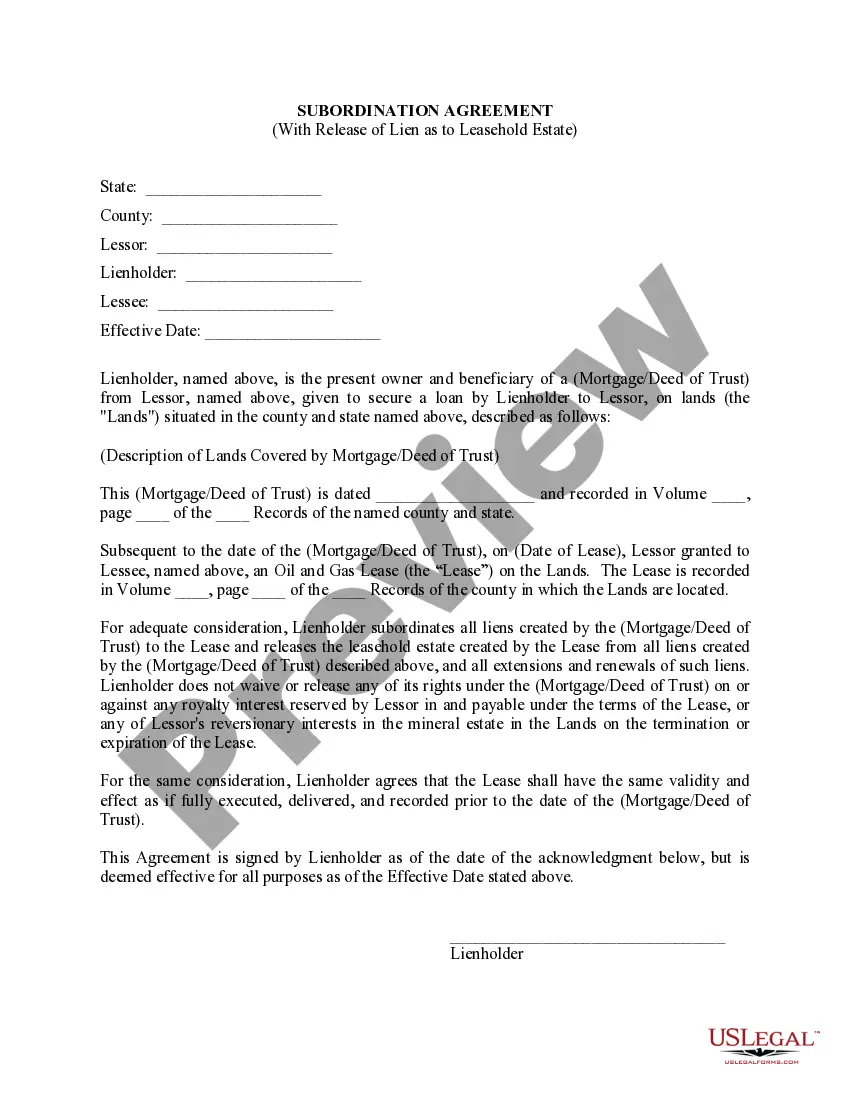
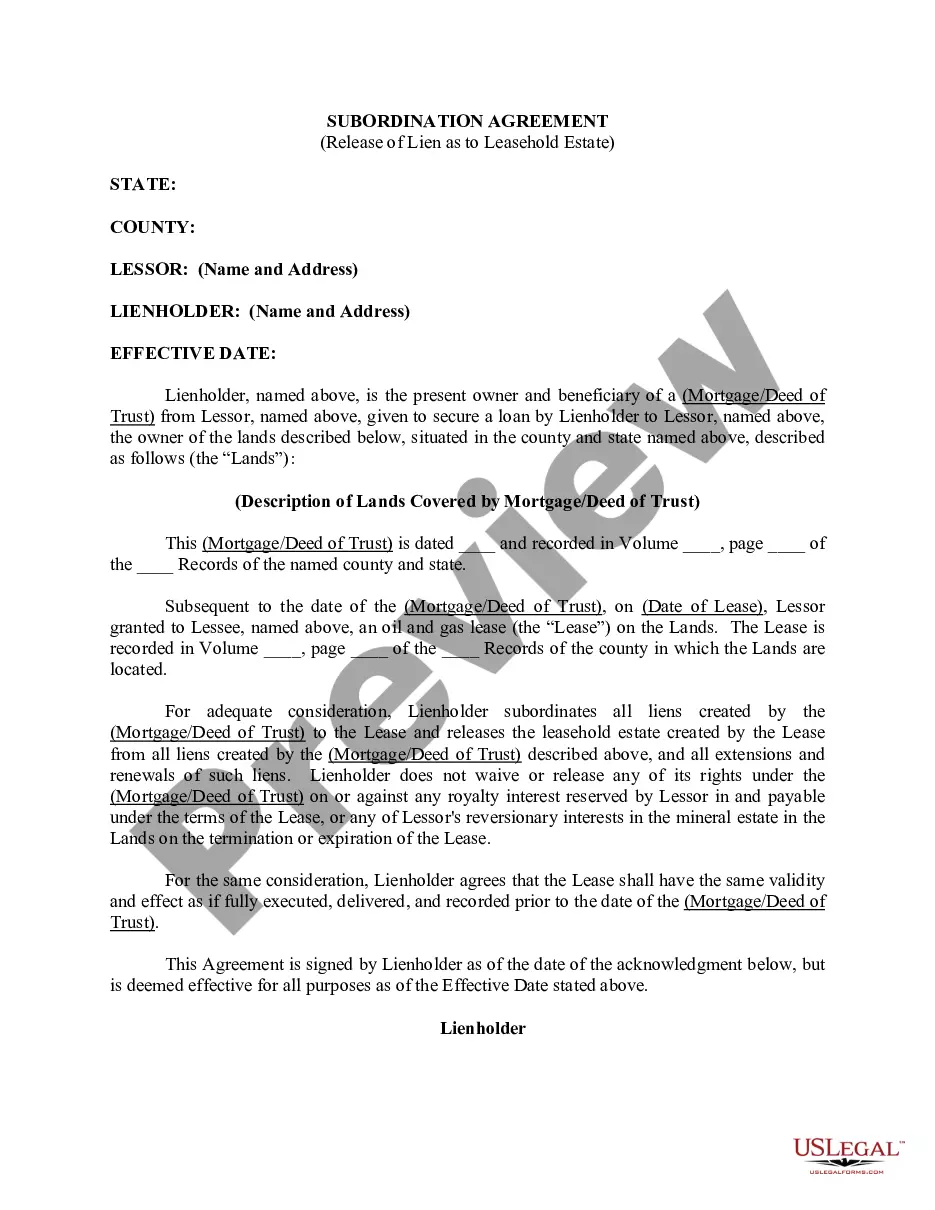
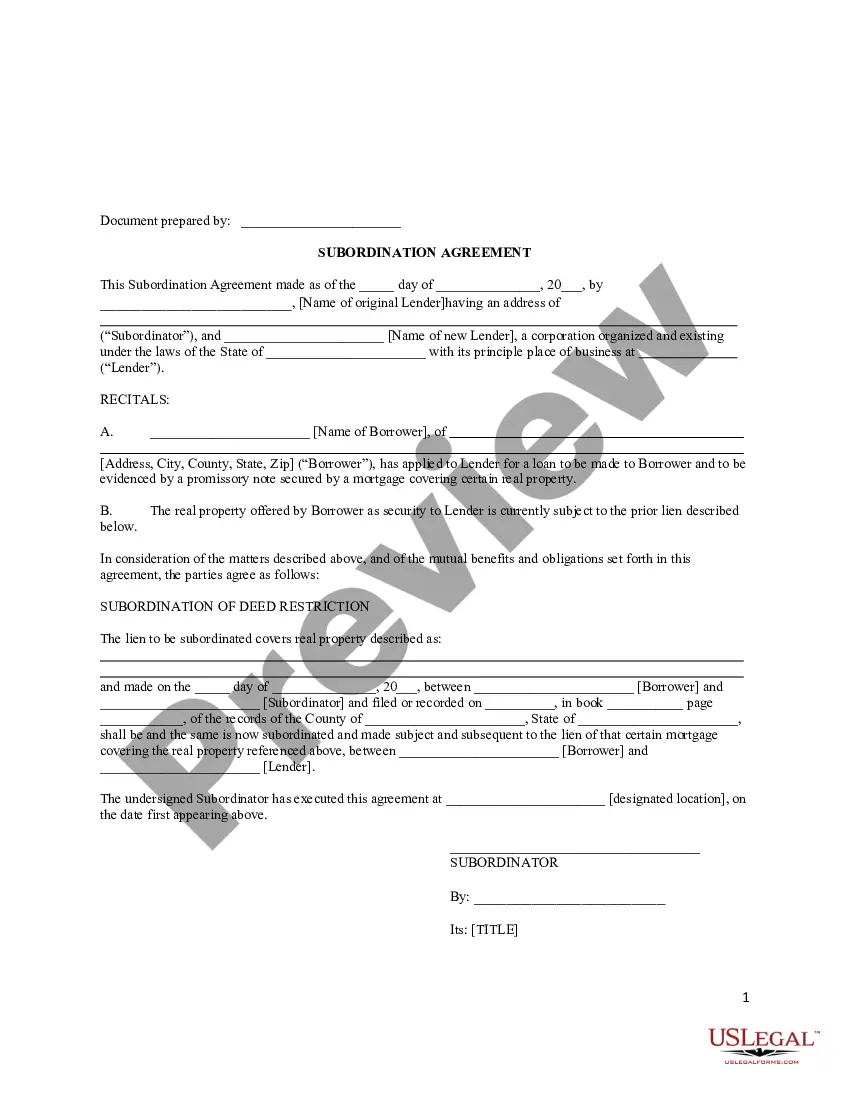
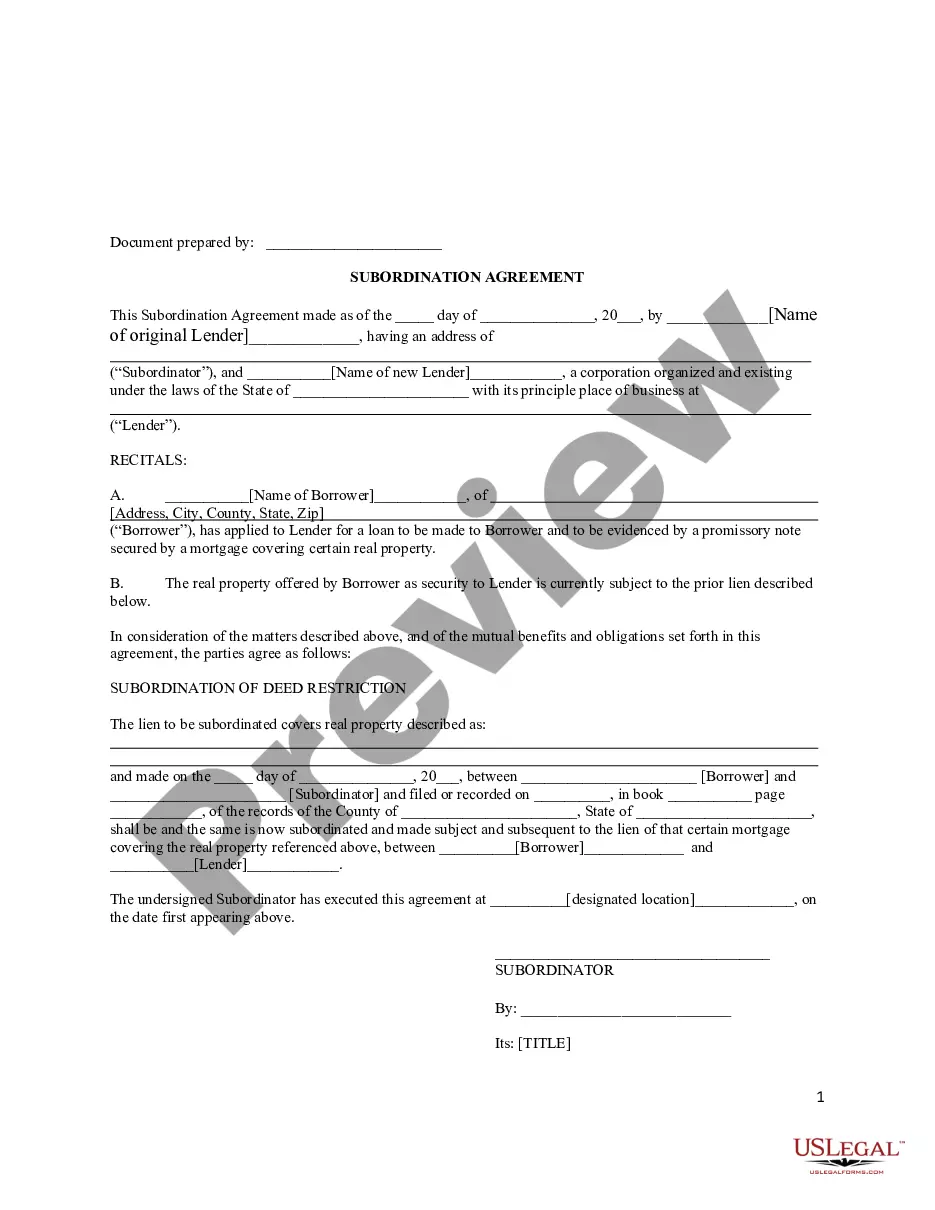
The Lease Subordination Agreement is a legal document that allows a lien holder's mortgage or deed of trust to be subordinated to a mineral, oil, or gas lease. This means the lien holder agrees that their loan will stand behind the lease, granting priority to the lessee's rights under the lease. This agreement differentiates itself from other forms by specifically addressing the relationship between property liens and lease rights in the context of mineral rights.
Form components explained
- Identification of the parties involved: Lessor, Lienholder, and Lessee.
- Description of the property subject to the lease and mortgage.
- Effective date of the agreement.
- Clauses outlining the subordination of the mortgage to the lease.
- Retention of rights by the lien holder concerning royalty interests.
When to use this document
This form is typically used when a property owner wants to secure a new loan or make improvements on a property already subject to a mortgage. The lender will often require the existing loan to be subordinated to an oil or gas lease to ensure that the new funding retains primary claim to the property's income generated by those leases.
Who needs this form
- Property owners looking to enter into a mineral, oil, or gas lease.
- Mortgage lenders who require subordination to protect their investments.
- Lessees who need assurance that their lease rights take precedence over existing mortgages.
How to complete this form
- Identify and enter the names of all parties: Lessor, Lienholder, and Lessee.
- Provide the property description and relevant recording details of the mortgage and lease.
- Record the effective date of the subordination agreement.
- Ensure all parties sign the agreement to validate it.
- Keep copies for all parties involved for their records.
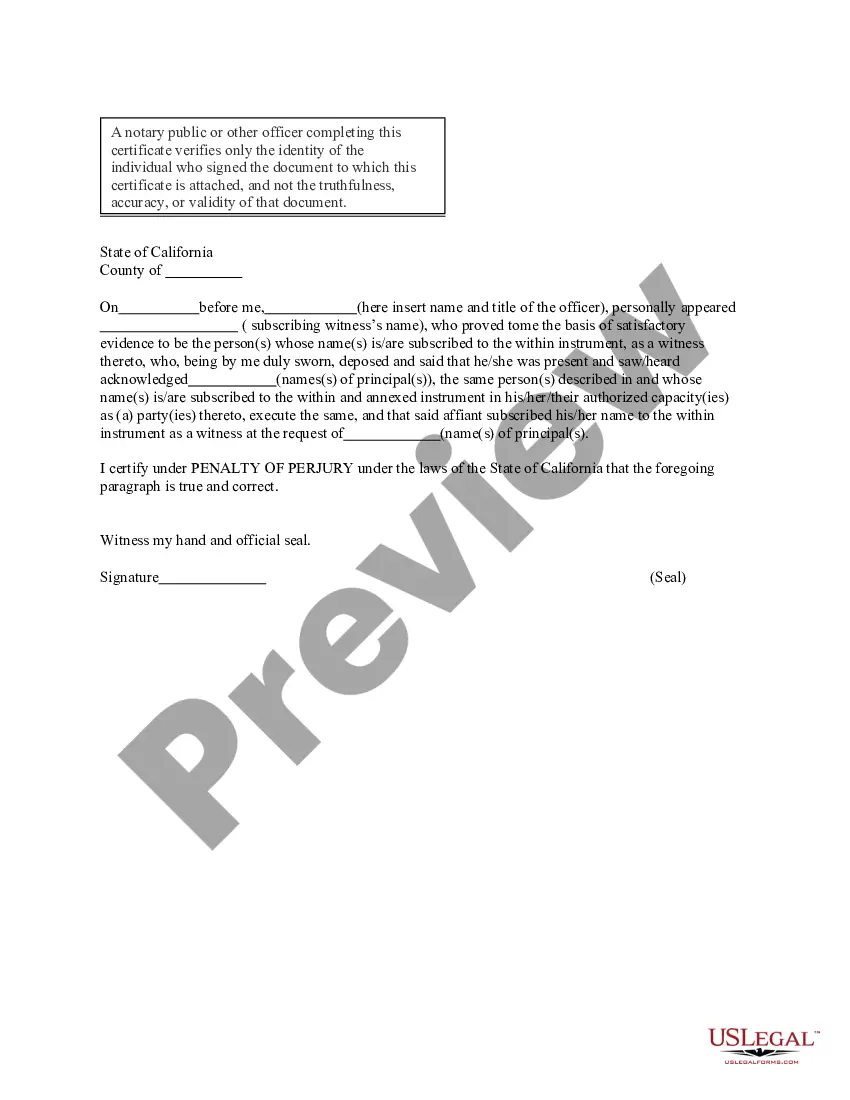
Notarization requirements for this form
This form must be notarized to be legally valid. US Legal Forms provides secure online notarization powered by Notarize, allowing you to complete the process through a verified video call.
Get your form ready online
Our built-in tools help you complete, sign, share, and store your documents in one place.
Make edits, fill in missing information, and update formatting in US Legal Forms—just like you would in MS Word.
Download a copy, print it, send it by email, or mail it via USPS—whatever works best for your next step.
Sign and collect signatures with our SignNow integration. Send to multiple recipients, set reminders, and more. Go Premium to unlock E-Sign.
If this form requires notarization, complete it online through a secure video call—no need to meet a notary in person or wait for an appointment.
We protect your documents and personal data by following strict security and privacy standards.

Make edits, fill in missing information, and update formatting in US Legal Forms—just like you would in MS Word.

Download a copy, print it, send it by email, or mail it via USPS—whatever works best for your next step.

Sign and collect signatures with our SignNow integration. Send to multiple recipients, set reminders, and more. Go Premium to unlock E-Sign.

If this form requires notarization, complete it online through a secure video call—no need to meet a notary in person or wait for an appointment.

We protect your documents and personal data by following strict security and privacy standards.
Avoid these common issues
- Failing to accurately describe the property can lead to disputes.
- Not including all necessary parties' signatures may invalidate the agreement.
- Overlooking local legal requirements might render the form non-compliant.
Benefits of using this form online
- Convenience of accessing and downloading the form from anywhere at any time.
- Editability allows for easy customization to fit specific needs.
- Reliability of forms drafted by licensed attorneys ensures legal compliance.
Legal use & context
- The subordination agreement is legally binding and establishes clear priorities among competing claims.
- It is important to ensure that all terms are clear to prevent disputes in the future.
- Consulting a legal professional can help clarify any complex terms or conditions in the agreement.
Looking for another form?



Form popularity
FAQ
A written contract in which a lender who has secured a loan by a mortgage or deed of trust agrees with the property owner to subordinate its loan (accept a lower priority for the collection of its debt), thus giving the new loan priority in any foreclosure or payoff.
But as property values are going up and the demand for refinance isn't as much, it seems that the subordination process has gotten a little easier. Typically, it takes two to three weeks to get the resubordination paperwork through, and it is likely to set you back $200 to $300.
Subordination clauses in mortgages refer to the portion of your agreement with the mortgage company that says their lien takes precedence over any other liens you may have on your property.However, it's also possible to have other liens. You might have some placed by contractors until work is paid off.
A rental agreement will be void and unenforceable if it allows the landlord to terminate the tenancy of a tenant for a crime committed in relation to the rental property if it does not also include the new domestic abuse protection language set forth in sec. 704.
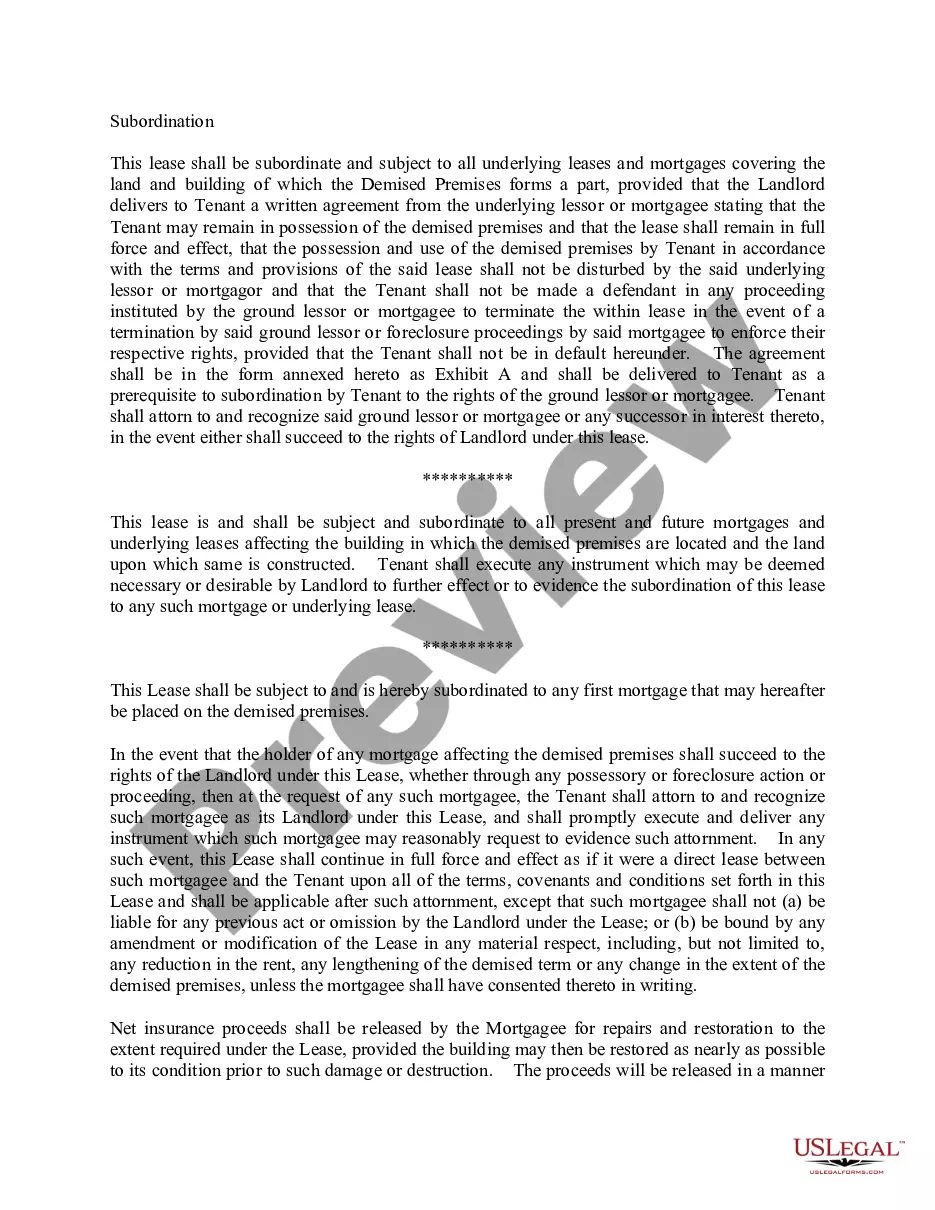
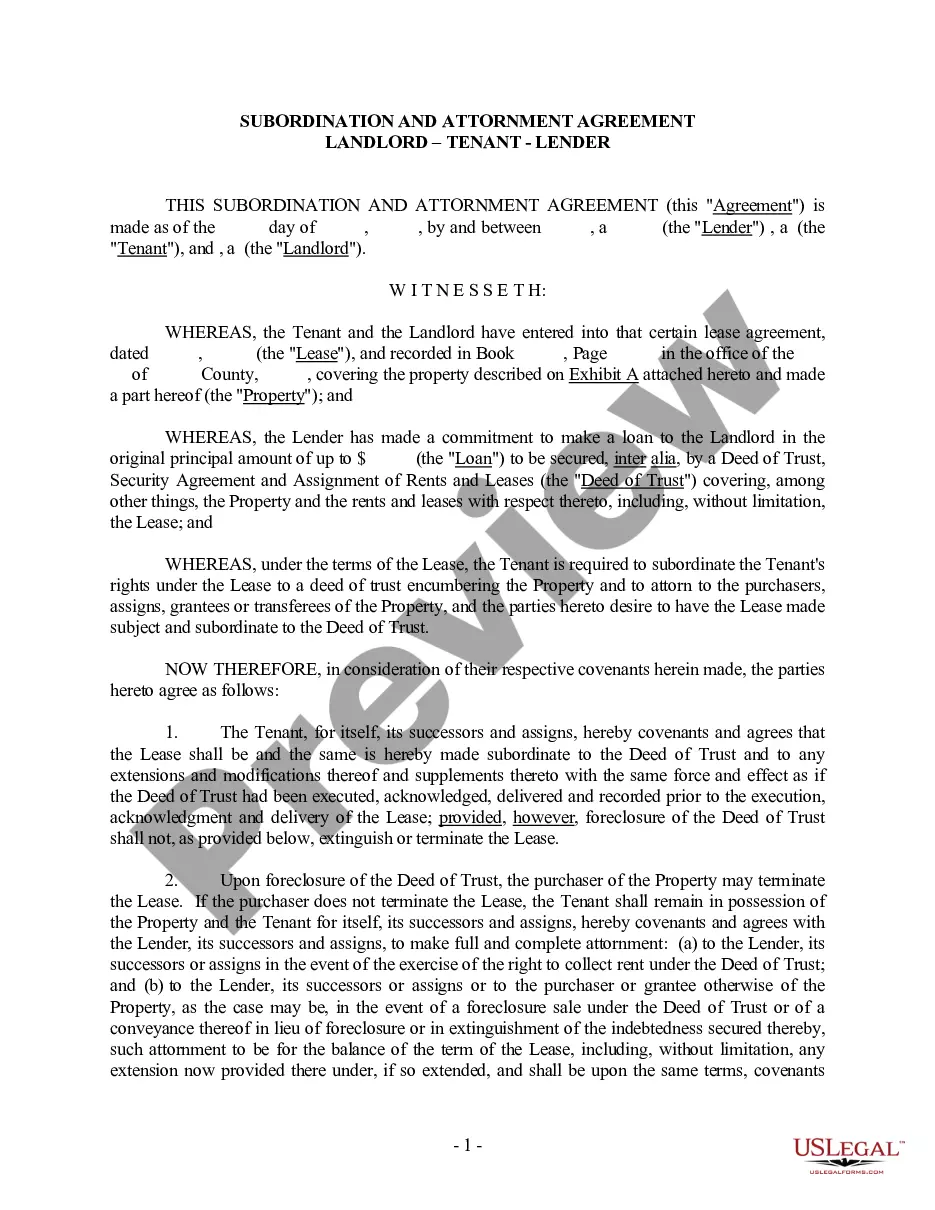
A Subordination and Non-Disturbance Agreement (SNDA) commonly called a non-disturb is an agreement that your landlord asks its lender to provide. The agreement basically says that if the building goes bankrupt and the lender takes control of the building from the landlord, the lender will honor your lease.
Subordination is the tenant's agreement that its interest under the lease will be subordinate to that of the lender.Attornment is the tenant's agreement to become the tenant of someone other than the original landlord and who has now taken title to the property.
A subordination agreement often comes up when a home has a first and a second mortgage, and the borrower wants to refinance the first mortgage. If you have two mortgages on your home and refinance the first loan, the refinancing lender might require a subordination agreement.
Despite its technical-sounding name, the subordination agreement has one simple purpose. It assigns your new mortgage to first lien position, making it possible to refinance with a home equity loan or line of credit. Signing your agreement is a positive step forward in your refinancing journey.