Montana Warranty Deed from Husband and Wife to LLC
About this form
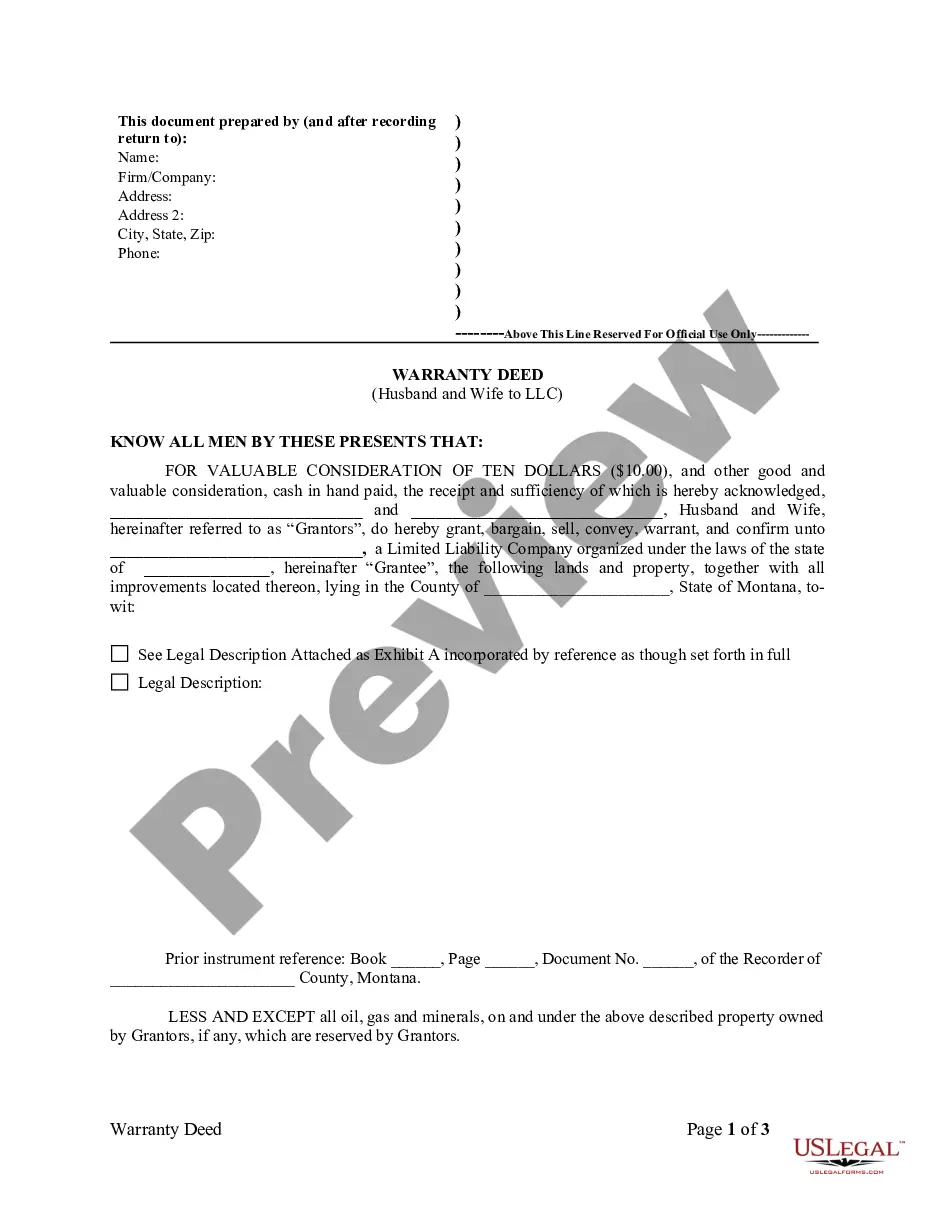
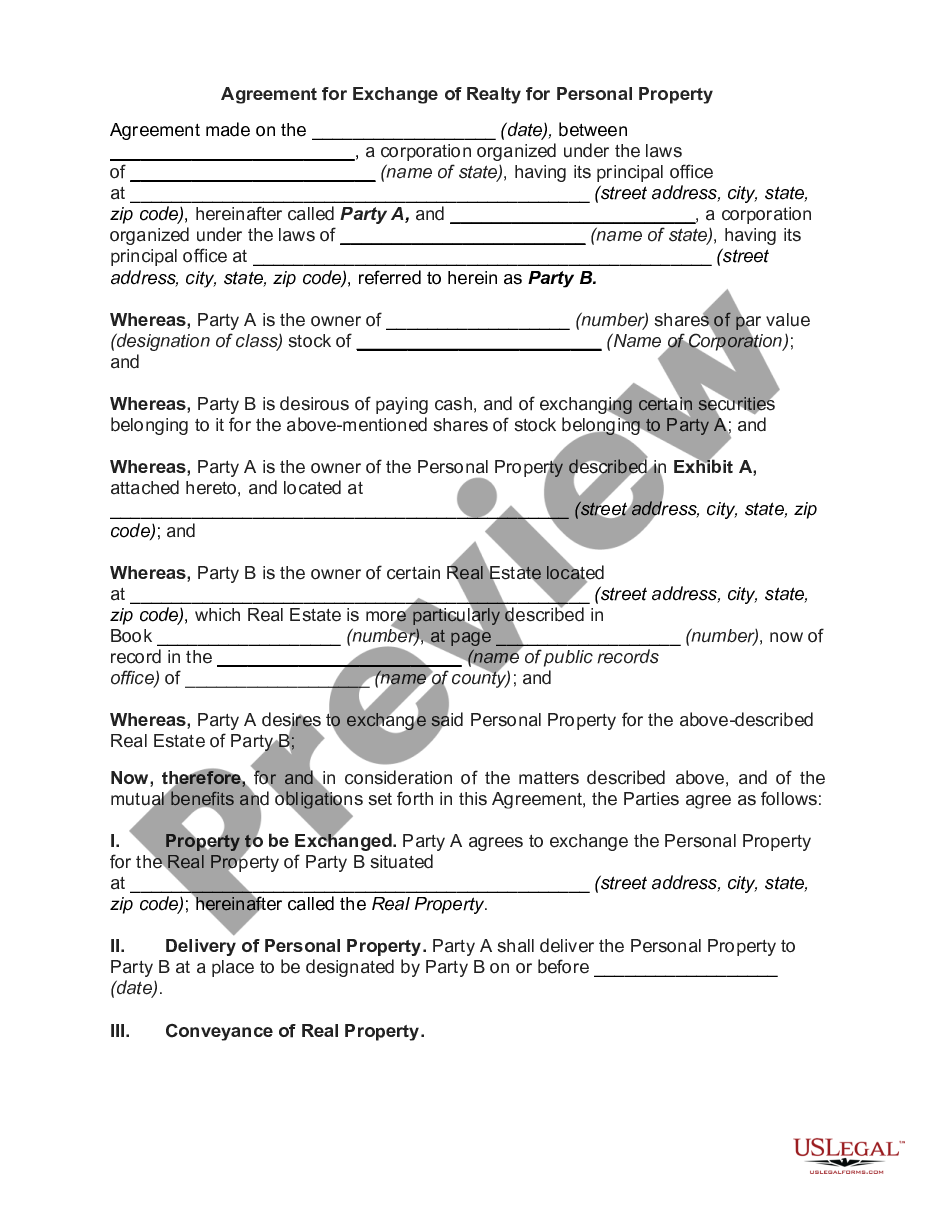
The Warranty Deed from Husband and Wife to LLC is a legal document that allows a married couple (as grantors) to transfer their property ownership to a limited liability company (LLC) as the grantee. This form outlines the terms of the transfer, ensuring that the couple conveys full ownership while reserving rights to any oil, gas, or minerals in the property. It differs from other types of deeds by specifying both the marriage relationship of the grantors and the unique status of the grantee as an LLC.
What’s included in this form
- Identification of grantors and grantee, specifying husband and wife as grantors and the LLC as grantee.
- Legal description of the property being conveyed, referenced as Exhibit A.
- Reservation of rights concerning oil, gas, and minerals, allowing the grantors to retain certain interests.
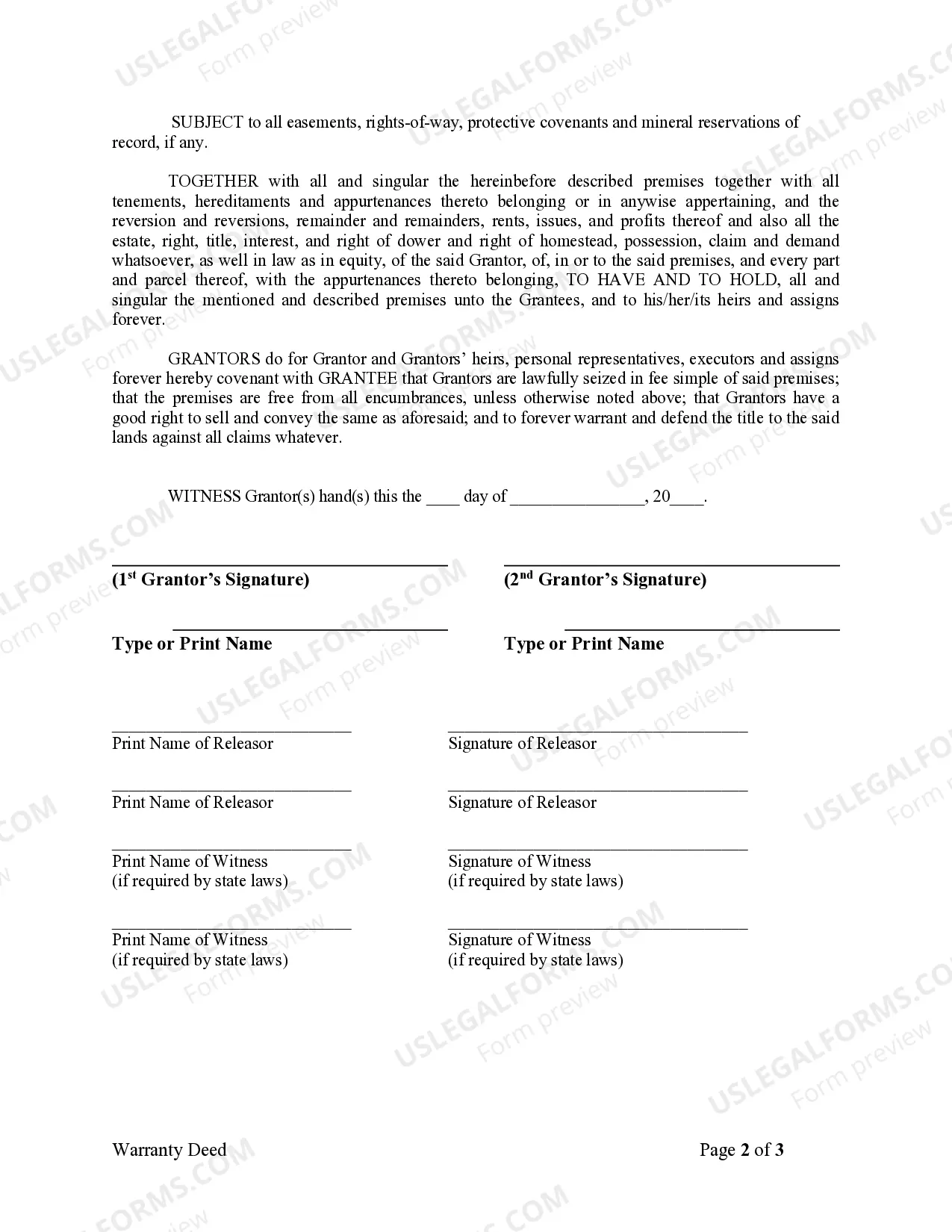
- Warranties and covenants regarding the title, assuring that the grantors hold the property free from encumbrances.
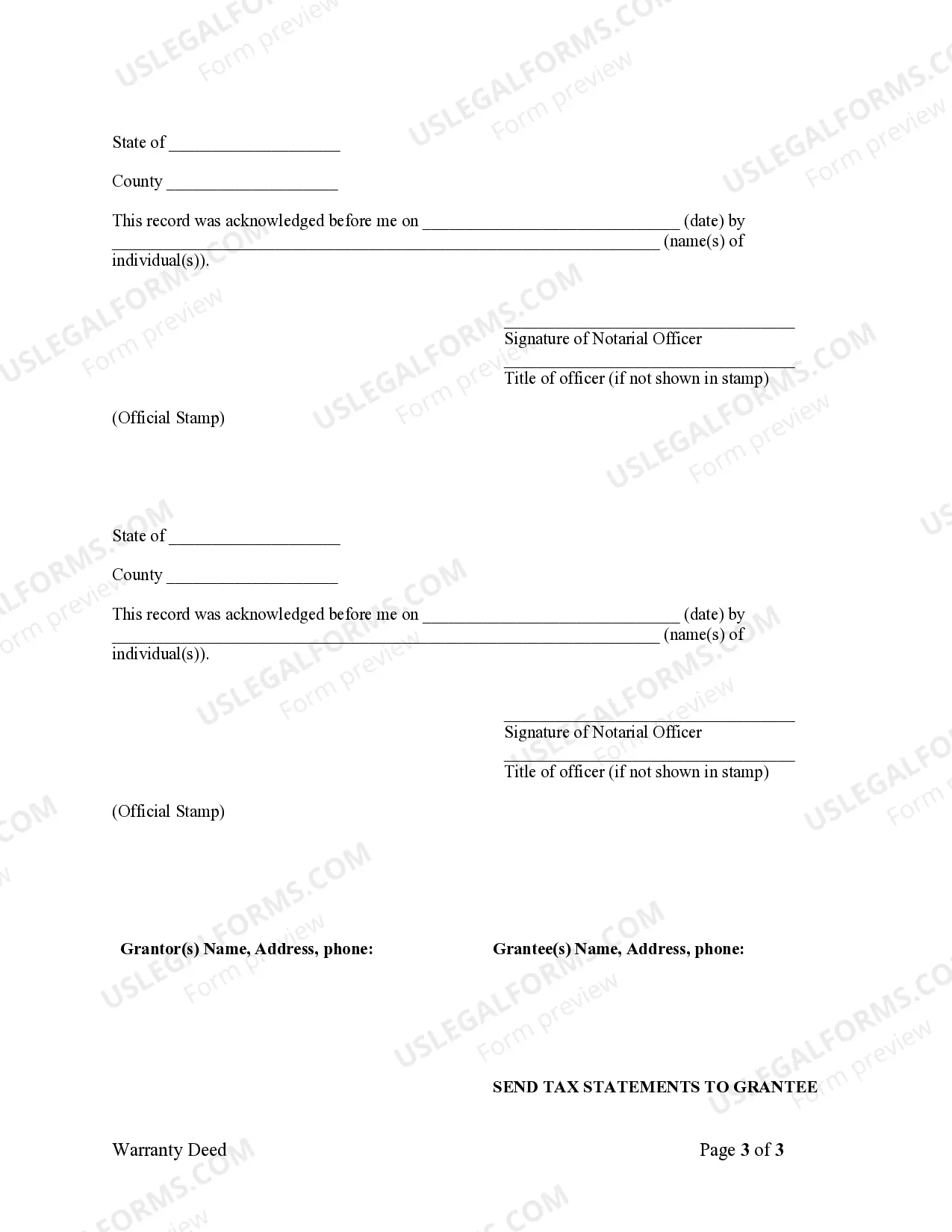
- Signature lines for both grantors and required witnesses, along with notary acknowledgment if necessary.






When to use this document
This form is used when a married couple decides to transfer ownership of their property to a limited liability company, which may be for reasons of asset protection, business management, or estate planning. It is particularly applicable when the couple wants to ensure continuity in ownership and maintain liability protections that an LLC provides.
Who can use this document
- Married couples who own real estate and wish to convey it to an LLC.
- Business owners looking to limit personal liability by converting property ownership to a limited liability company.
- Individuals interested in facilitating estate planning through property management by an LLC.
How to complete this form
- Identify the parties involved: enter the names of the husband and wife as grantors and the name of the LLC as grantee.
- Include the legal description of the property in Exhibit A, specifying all boundaries and characteristics of the land being conveyed.
- Indicate any reservations of rights, particularly regarding oil, gas, and minerals.
- Fill in the date and ensure all grantors sign the form, along with witnesses if required by state law.
- Complete the notary section, if necessary, for the form to be legally enforceable.
Does this form need to be notarized?
This form must be notarized to be legally valid. Notarization acts as a safeguard to prevent fraud, ensuring that all parties involved have willingly signed the document. US Legal Forms offers integrated online notarization services, allowing you to securely get your document notarized via video call at any time, from anywhere.
Get your form ready online
Our built-in tools help you complete, sign, share, and store your documents in one place.
Make edits, fill in missing information, and update formatting in US Legal Forms—just like you would in MS Word.
Download a copy, print it, send it by email, or mail it via USPS—whatever works best for your next step.
Sign and collect signatures with our SignNow integration. Send to multiple recipients, set reminders, and more. Go Premium to unlock E-Sign.
If this form requires notarization, complete it online through a secure video call—no need to meet a notary in person or wait for an appointment.
We protect your documents and personal data by following strict security and privacy standards.

Make edits, fill in missing information, and update formatting in US Legal Forms—just like you would in MS Word.

Download a copy, print it, send it by email, or mail it via USPS—whatever works best for your next step.

Sign and collect signatures with our SignNow integration. Send to multiple recipients, set reminders, and more. Go Premium to unlock E-Sign.

If this form requires notarization, complete it online through a secure video call—no need to meet a notary in person or wait for an appointment.

We protect your documents and personal data by following strict security and privacy standards.
Common mistakes
- Failing to include a complete legal description of the property.
- Not reserving the rights to oil, gas, and minerals if applicable.
- Omitting signatures of witnesses where state law requires them.
- Not obtaining notarization when necessary, which can invalidate the deed.
Why complete this form online
- Convenient access to a legally sound document that saves time.
- Editability allows users to customize the form to their specific needs.
- Prepared by licensed attorneys, ensuring compliance with legal standards.
- Safe storage and easy retrieval of the documents when needed.
Key takeaways
- The Warranty Deed from Husband and Wife to LLC transfers property ownership while providing a warranty of title.
- Proper completion and notarization are crucial for the legal validity of the deed.
- Users should be aware of their rights and obligations concerning the property after the transfer.
- Consulting a legal professional may be beneficial, especially in state-specific matters.
Looking for another form?


Form popularity
FAQ
A special warranty deed to real estate offers protection to the buyer through the seller's guarantee that the title has been free and clear of encumbrances during their ownership of the property. It does not guarantee clear title beyond their ownership.
But you might be wondering if an owner can transfer a deed to another person without a real estate lawyer. The answer is yes. Parties to a transaction are always free to prepare their own deeds.A quitclaim deed, for example, is far simpler than a warranty deed.
A warranty deed guarantees that: The grantor is the rightful owner of the property and has the legal right to transfer the title.The title would withstand third-party claims to ownership of the property. The grantor will do anything to ensure the grantee's title to the property.
Fill out the quit claim deed form, which can be obtained online, or write your own using the form as a guide. The person giving up the interest in the property is the grantor, and the person receiving the interest is the grantee.
No, California does not require that the Grantee sign a warranty deed. However, some states and counties require that the deed be signed by the Grantee in addition to the Grantor.
It's important to note that a warranty deed does not actually prove the grantor has ownership (a title search is the best way to prove that), but it is a promise by the grantor that they are transferring ownership and if it turns out they don't actually own the property, the grantor will be responsible for compensating
Special warranties allow the transfer of property title between seller and buyer. The purchase of title insurance can mitigate the risk of prior claims to the special warranty deed.
It will not protect against title issues that arose prior to the time the seller took occupancy. Consequently, it offers less protection to buyers, and more protection to sellers, than a general warranty deed, which is the most common option for selling or buying a property.