Mississippi Last Will and Testament for Single Person with No Children

Overview of this form
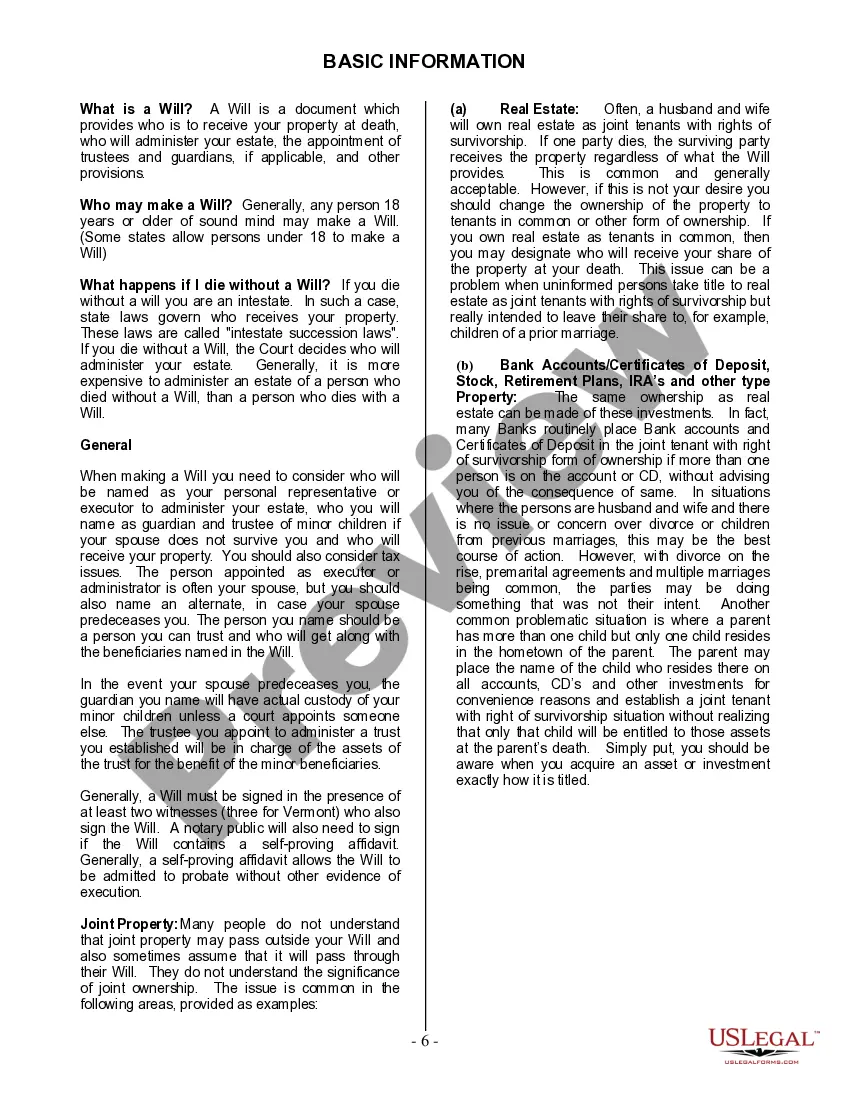
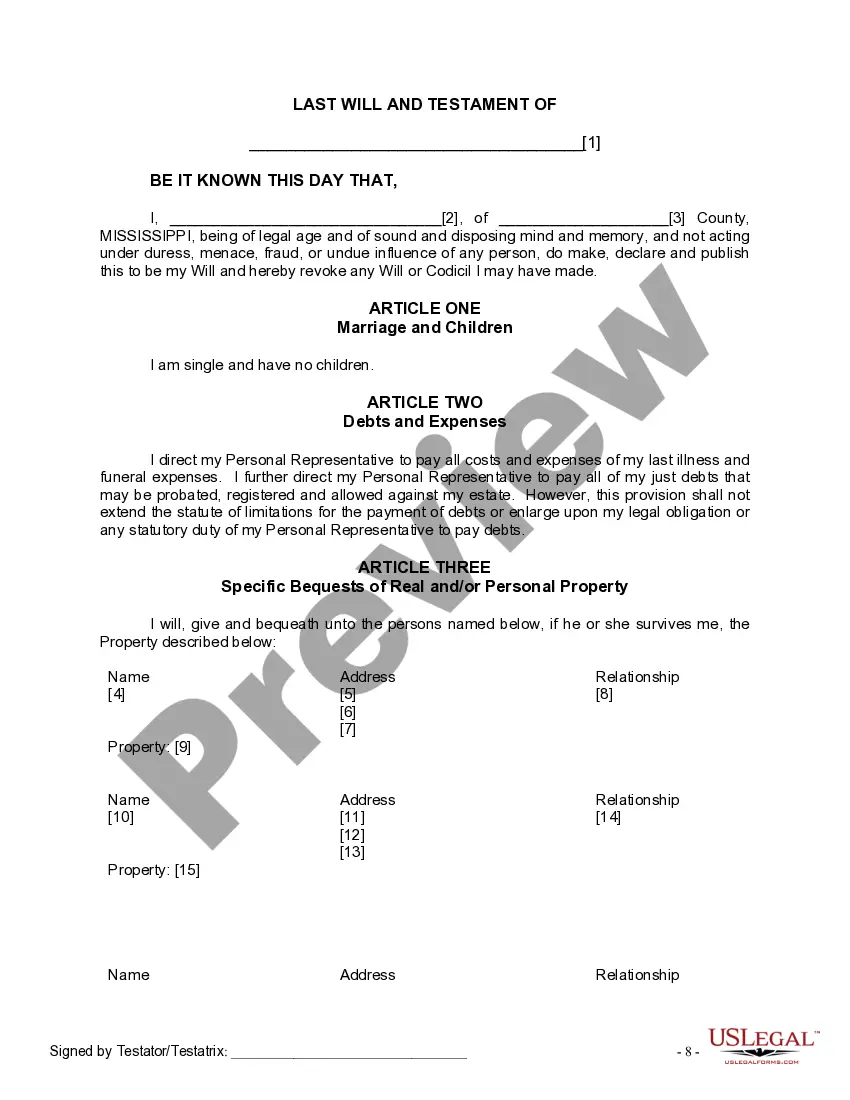
The Last Will and Testament for Single Person with No Children is a legal document that outlines how your assets will be distributed upon your death. It is specifically designed for individuals who are single and do not have children, allowing you to appoint a personal representative or executor, designate beneficiaries for your property, and include any additional provisions you wish. Creating a will ensures that your wishes are honored and can help avoid disputes among family members after your passing.
Main sections of this form
- Personal information: Details about your identity and residence.
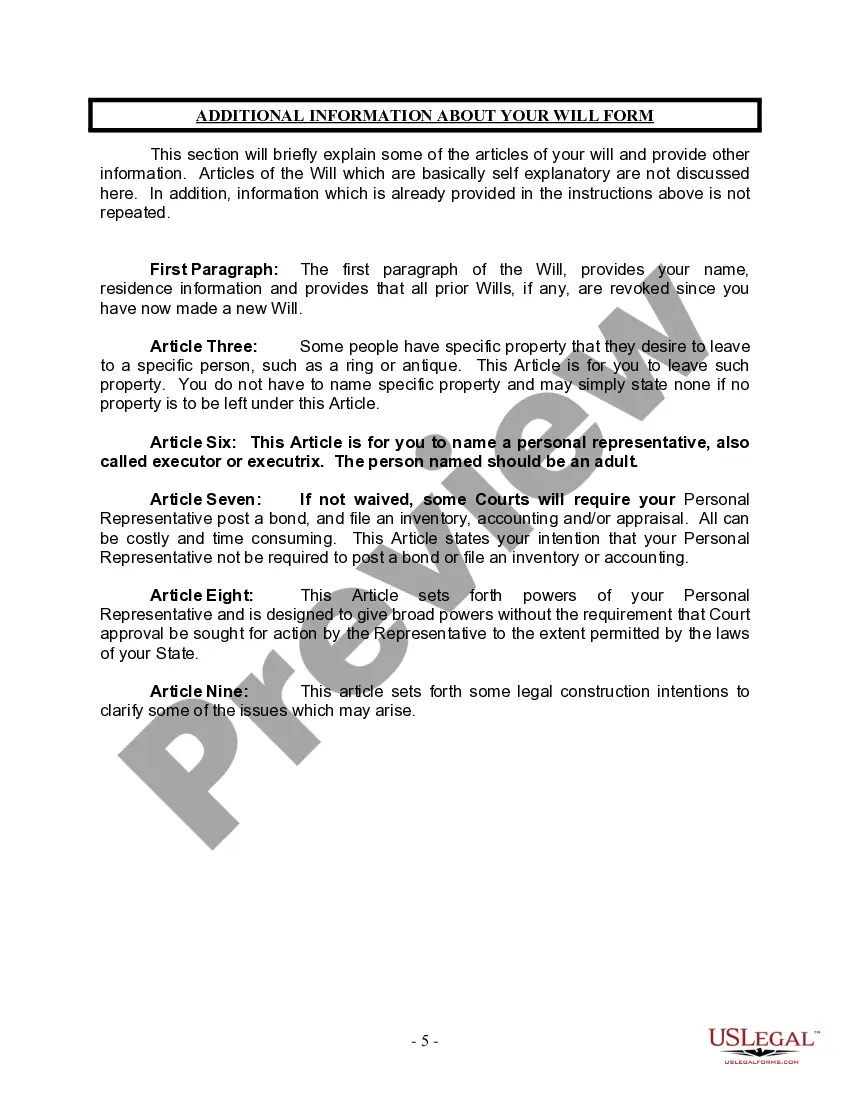
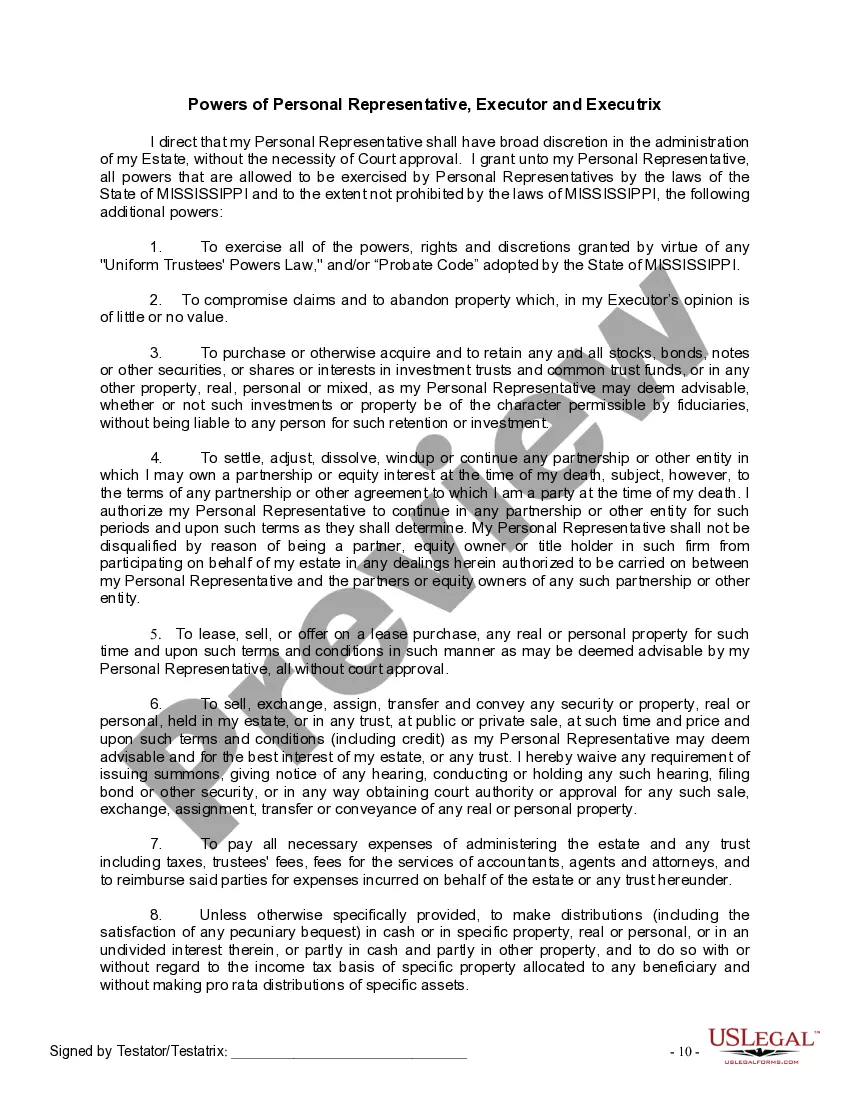
- Appointment of executor: Designate a personal representative to manage your estate.
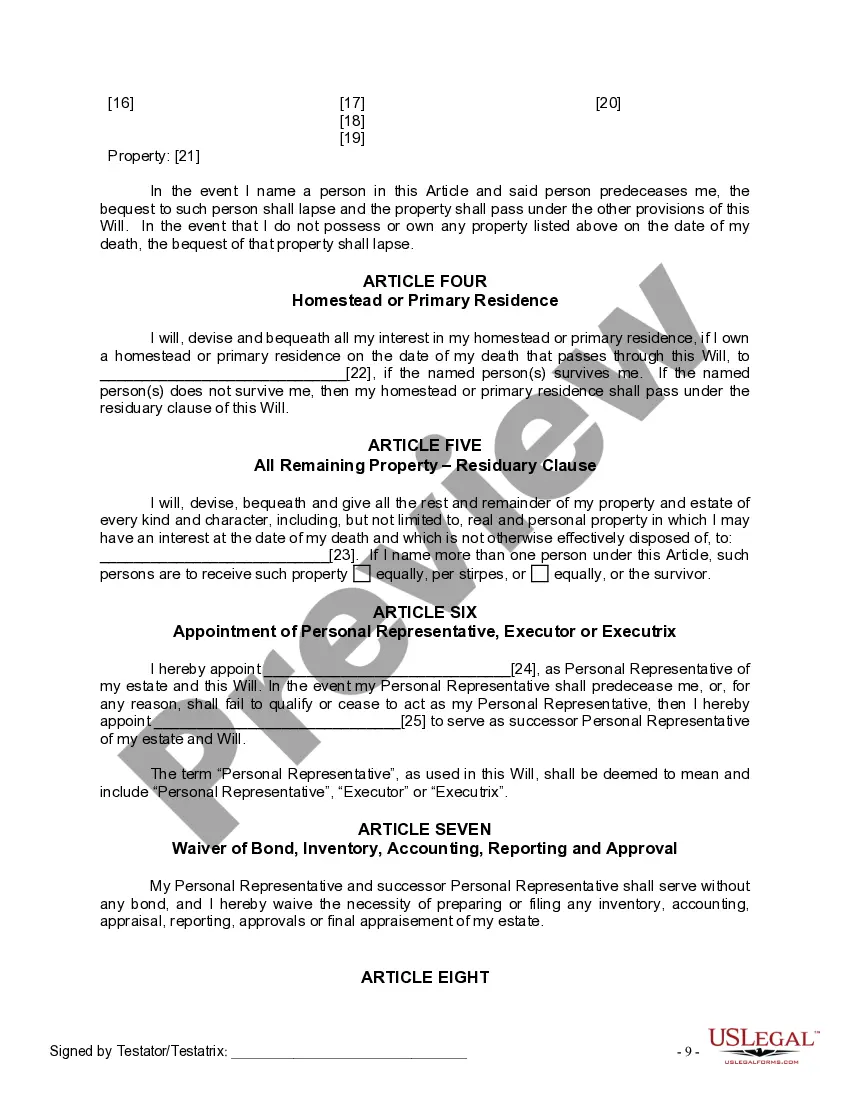
- Specific bequests: List specific items or property you want to leave to certain individuals.
- Homestead provision: Specify who will inherit your primary residence.
- Residuary clause: Identify who will receive the rest of your estate.
- Witnessing and notarization requirements: Legal necessities for validating your will.




When to use this document
This form is essential when you want to ensure that your assets are distributed according to your wishes upon your death. Use it if you are a single individual without children, planning your estate, or wanting to avoid intestate succession where the state decides how your property is distributed. It is advisable to complete this document even if you have specific items or assets you wish to designate to certain individuals.
Who this form is for
- Single individuals without children who want a clear distribution of their assets.
- People who have specific wishes regarding their property and estate.
- Those who wish to appoint someone trustworthy as their personal representative.
- Individuals seeking to avoid complications and expenses associated with dying intestate (without a will).
Steps to complete this form
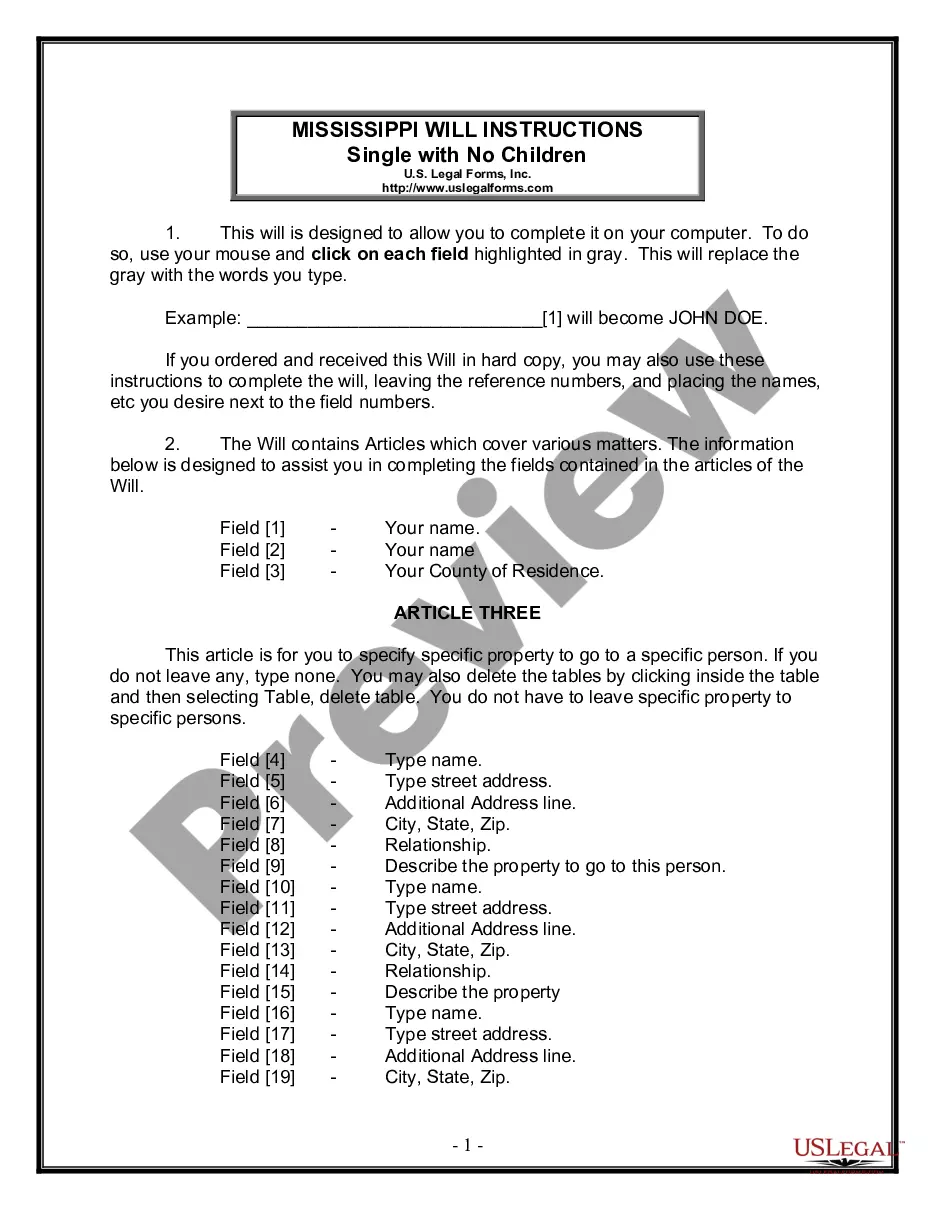
- Identify yourself: Provide your full name and county of residence.
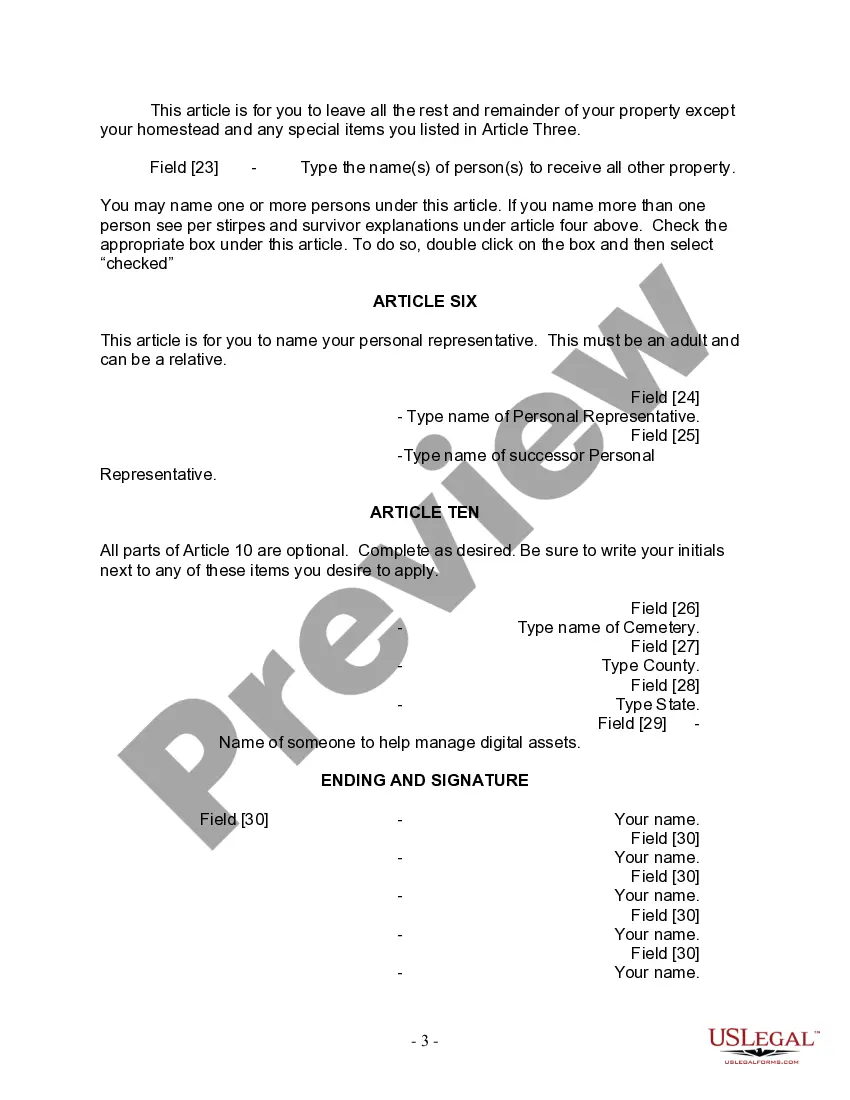
- Appoint a personal representative: Designate who will handle your estate after your passing.
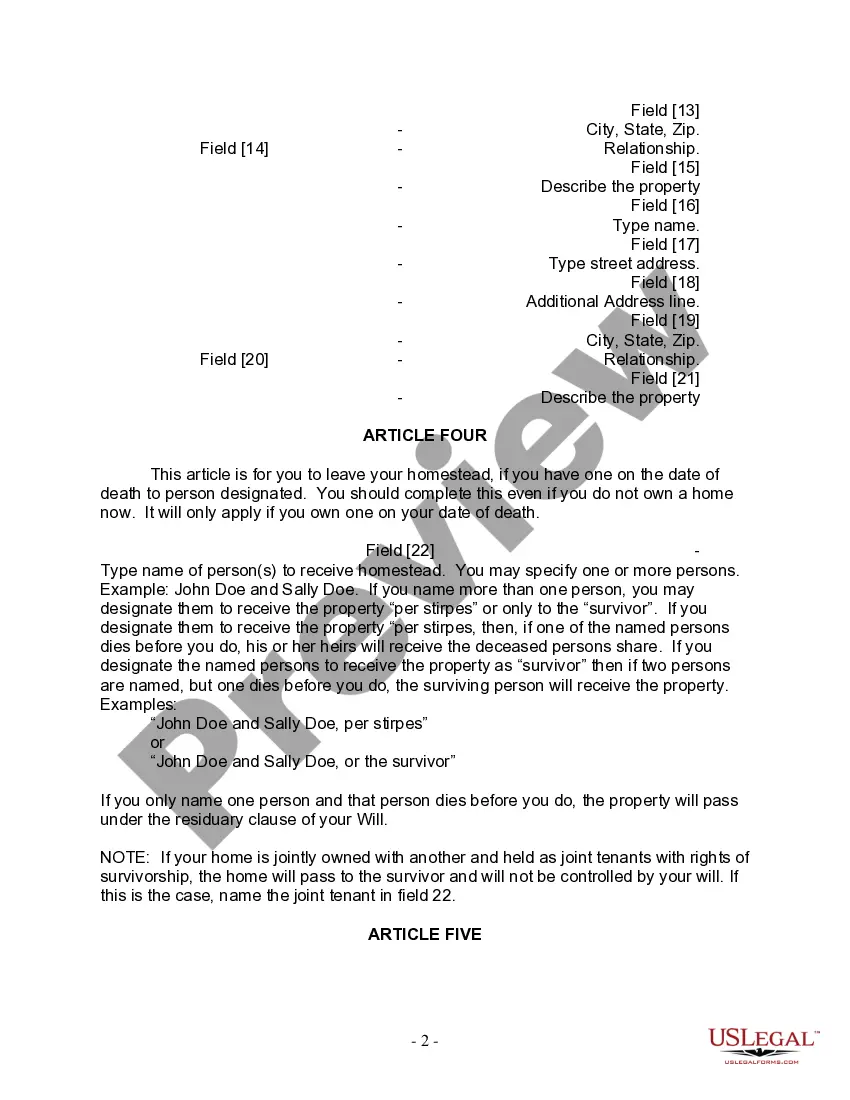
- Specify bequests: Write down specific items you want to leave to named individuals.
- Complete the homestead provision: If applicable, indicate who will inherit your primary residence.
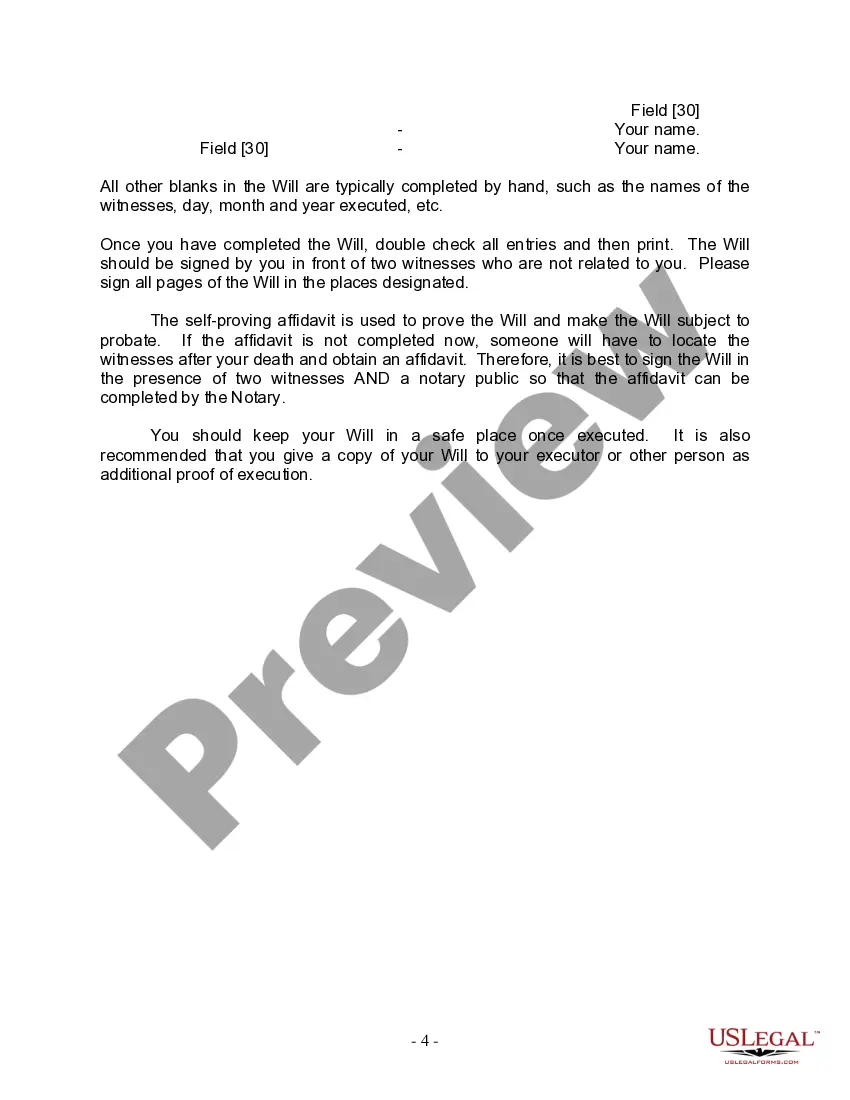
- Sign in front of witnesses: Ensure that you sign the will in front of two unrelated witnesses and a notary public if desired, to validate your wishes.
Is notarization required?
Yes, this form must be notarized to be legally valid, especially if you include a self-proving affidavit. Having a notary public sign the will along with your witnesses helps simplify the probate process, ensuring your wishes are clearly stated and recognized.
Get your form ready online
Our built-in tools help you complete, sign, share, and store your documents in one place.
Make edits, fill in missing information, and update formatting in US Legal Forms—just like you would in MS Word.
Download a copy, print it, send it by email, or mail it via USPS—whatever works best for your next step.
Sign and collect signatures with our SignNow integration. Send to multiple recipients, set reminders, and more. Go Premium to unlock E-Sign.
If this form requires notarization, complete it online through a secure video call—no need to meet a notary in person or wait for an appointment.
We protect your documents and personal data by following strict security and privacy standards.

Make edits, fill in missing information, and update formatting in US Legal Forms—just like you would in MS Word.

Download a copy, print it, send it by email, or mail it via USPS—whatever works best for your next step.

Sign and collect signatures with our SignNow integration. Send to multiple recipients, set reminders, and more. Go Premium to unlock E-Sign.

If this form requires notarization, complete it online through a secure video call—no need to meet a notary in person or wait for an appointment.

We protect your documents and personal data by following strict security and privacy standards.
Common mistakes
- Failing to sign the will in front of required witnesses.
- Not updating the will after significant life changes (e.g., marriage, obtaining assets).
- Leaving out critical information in the sections detailing bequests or beneficiaries.
- Not considering the implications of jointly held property.
Benefits of using this form online
- Convenience: Easily fill out the form from your computer or device.
- Editability: Make changes or updates to your will as needed.
- Reliability: Ensure that the form is in compliance with state laws and drafted by licensed attorneys.
Looking for another form?
Form popularity
FAQ
No. You can make your own will in Mississippi, using Nolo's do-it-yourself will software or online will programs. However, you may want to consult a lawyer in some situations. For example, if you think that your will might be contested or if you want to disinherit your spouse, you should talk with an attorney.
Most single people should have a will. A will can help you determine who will get your property (including your home, business, pets, and digital assets), name guardians for your children, and name an executor. A will also puts your wishes in writing so there's no confusion about your intentions.
Property in a living trust. One of the ways to avoid probate is to set up a living trust. Retirement plan proceeds, including money from a pension, IRA, or 401(k) Stocks and bonds held in beneficiary. Proceeds from a payable-on-death bank account.
Contrary to popular belief, you do not need to have an attorney draft a will for you. Anyone can write this document on their own, and as long as it meets all of the legal requirements of the state, courts will recognize one you wrote yourself.
Create the initial document. Start by titling the document Last Will and Testament" and including your full legal name and address. Designate an executor. Appoint a guardian. Name the beneficiaries. Designate the assets. Ask witnesses to sign your will. Store your will in a safe place.
Find an online template or service. Make a list of your assets. Be specific about who gets what. If you have minor children, choose a guardian. Give instructions for your pet. Choose an executor. Name a 'residuary beneficiary' List your funeral preferences.
Include personal identifying information. Include a statement about your age and mental status. Designate an executor. Decide who will take care of your children. Choose your beneficiaries. List your funeral details. Sign and date your Last Will and Testament.
Contrary to popular belief, you do not need to have an attorney draft a will for you. Anyone can write this document on their own, and as long as it meets all of the legal requirements of the state, courts will recognize one you wrote yourself.