Minnesota Letter from Tenant to Landlord for Failure of Landlord to comply with building codes affecting health and safety or resulting in untenantable condition - demand for remedy
What is this form?
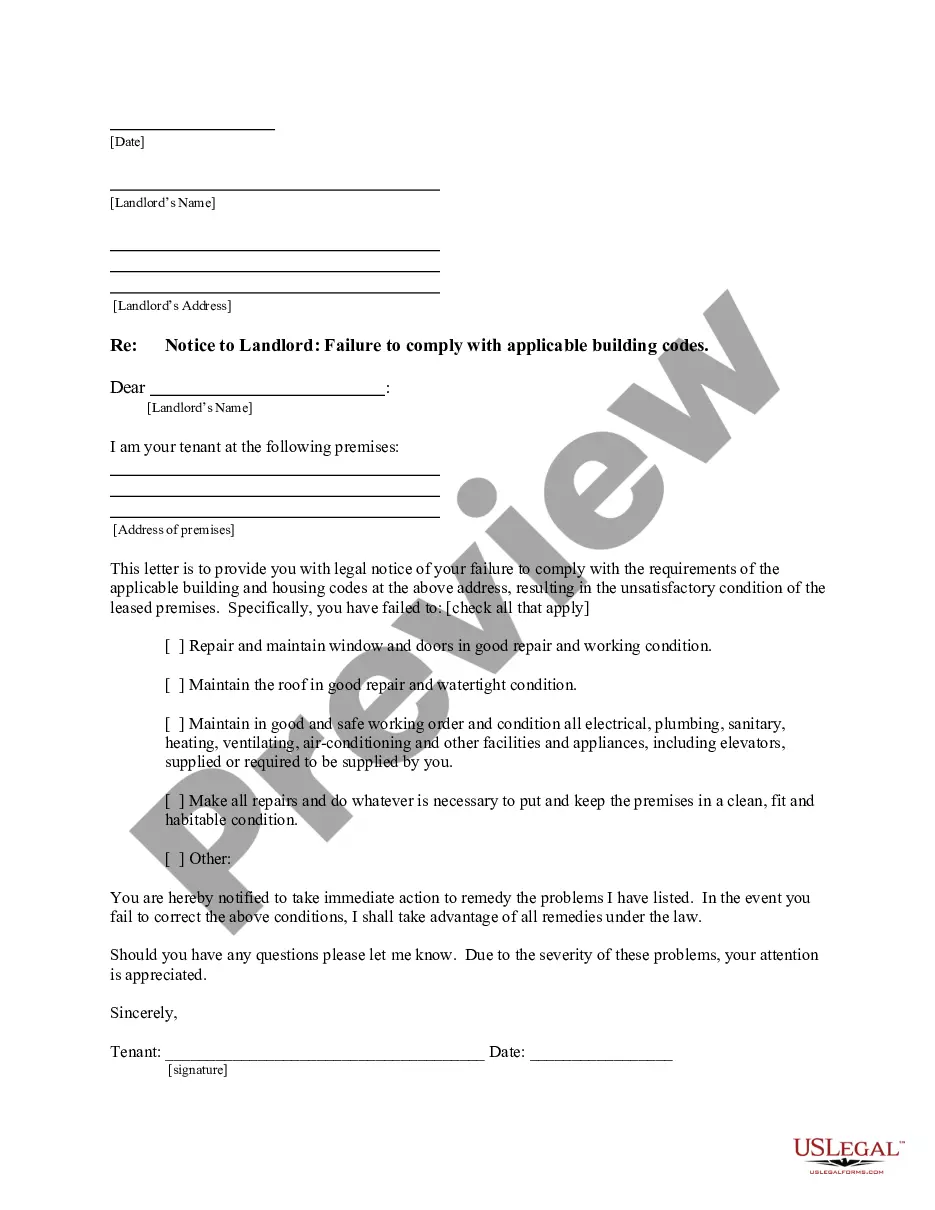
This form, titled "Letter from Tenant to Landlord for Failure of Landlord to comply with building codes affecting health and safety or resulting in untenantable condition - demand for remedy," is a demand letter from the tenant to the landlord. It is specifically designed to address situations where the landlord has failed to maintain safe and healthy living conditions, thereby violating building codes. The letter demands that the landlord make necessary repairs within ten days, distinguishing it from other forms that may simply notify the landlord of general issues without a specified timeframe for action.
What’s included in this form
- Identification of the tenant and landlord.
- Detailed description of the untenantable conditions and specific repairs needed.
- A demand for remediation within ten days.
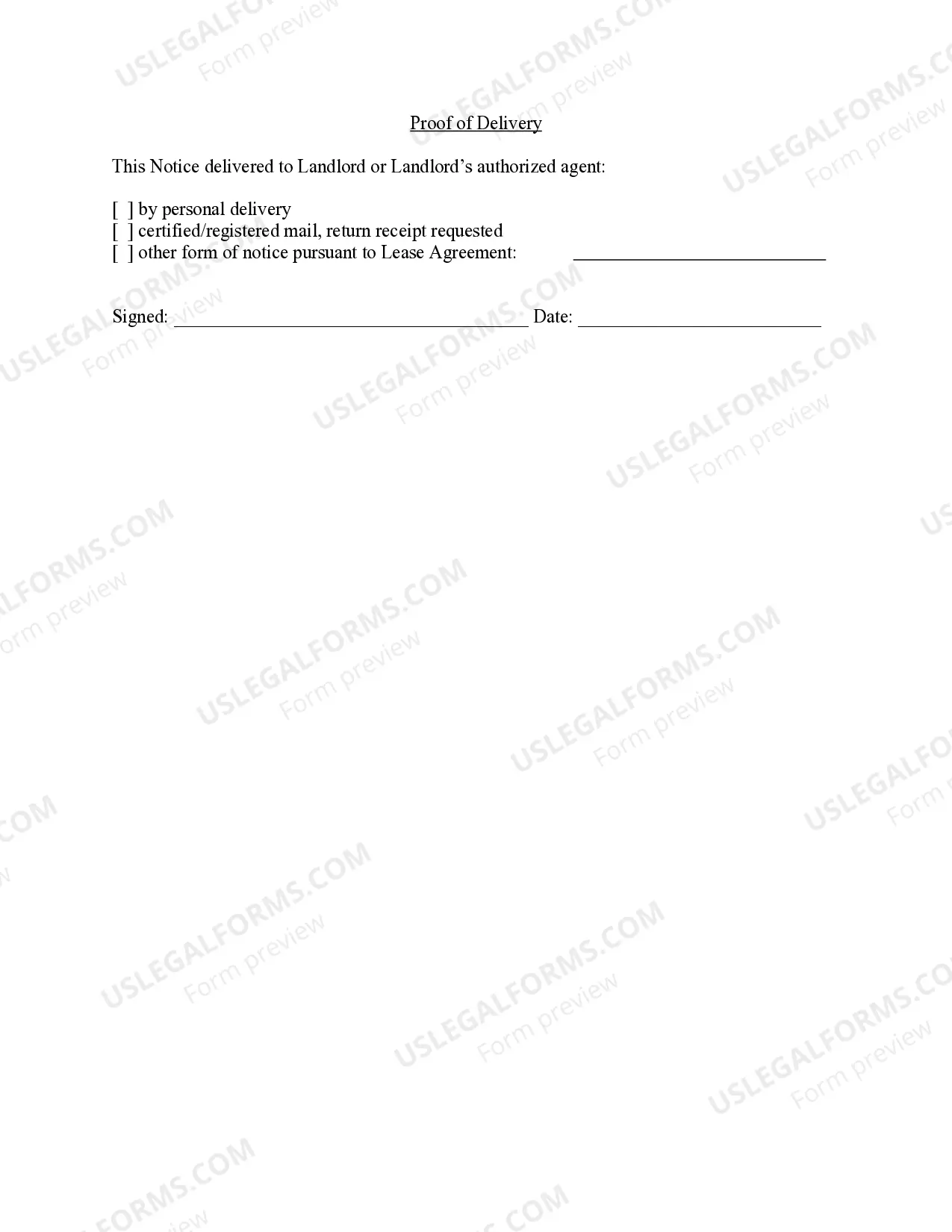
- Proof of delivery section for documentation purposes.


When to use this document
This form should be used when a tenant notices significant issues within their rented property that violate health and safety codes. It is ideal for situations where the landlord has failed to respond to previous requests for repairs, and the living conditions have become unsafe or uninhabitable. This letter serves as a formal notice to prompt action and protects the tenant's rights.
Who this form is for
- Tenants experiencing unaddressed health or safety issues in their rented property.
- Individuals who have formally requested repairs and have not received a response from their landlord.
- Renters who want to document their concerns and take steps toward legal remedies.
Steps to complete this form
- Identify the parties involved: fill in the tenant and landlord's names and addresses.
- Describe the living conditions in detail, specifying the repairs needed and referencing any applicable building codes.
- State the demand for repairs, noting that the landlord has ten days to respond.
- Sign and date the letter to confirm it is coming from you, the tenant.
- Deliver the notice to the landlord or authorized agent and keep proof of delivery for your records.
Does this form need to be notarized?
This form does not typically require notarization unless specified by local law. You can complete and send the letter without the need for a notary, simplifying the process for tenants.
Get your form ready online
Our built-in tools help you complete, sign, share, and store your documents in one place.
Make edits, fill in missing information, and update formatting in US Legal Forms—just like you would in MS Word.
Download a copy, print it, send it by email, or mail it via USPS—whatever works best for your next step.
Sign and collect signatures with our SignNow integration. Send to multiple recipients, set reminders, and more. Go Premium to unlock E-Sign.
If this form requires notarization, complete it online through a secure video call—no need to meet a notary in person or wait for an appointment.
We protect your documents and personal data by following strict security and privacy standards.

Make edits, fill in missing information, and update formatting in US Legal Forms—just like you would in MS Word.

Download a copy, print it, send it by email, or mail it via USPS—whatever works best for your next step.

Sign and collect signatures with our SignNow integration. Send to multiple recipients, set reminders, and more. Go Premium to unlock E-Sign.

If this form requires notarization, complete it online through a secure video call—no need to meet a notary in person or wait for an appointment.

We protect your documents and personal data by following strict security and privacy standards.
Mistakes to watch out for
- Failing to specify a clear timeline for repairs.
- Not including sufficient details about the conditions that need to be addressed.
- Neglecting to keep a copy of the letter and proof of delivery.
- Sending the letter without signing it.
Why complete this form online
- Convenience of downloading and using the form at any time.
- Editability to customize the letter according to specific issues.
- Reliability of having a professionally drafted document that meets legal standards.
Legal use & context
- This form serves as formal notice to the landlord of the needed repairs.
- It provides a record that can be used in case of future disputes.
- The tenant is encouraged to send this letter via a method that provides proof of delivery.
- Failure by the landlord to remedy the situation may provide grounds for further legal action by the tenant.
Looking for another form?
Form popularity
FAQ
Yes, you can sue a landlord for uninhabitable living conditions. It is essential to gather evidence that shows how the conditions violate building codes or make your unit unlivable. Sending a Minnesota Letter from Tenant to Landlord for Failure of Landlord to comply with building codes affecting health and safety or resulting in untenantable condition - demand for remedy is a crucial step in this process, as it gives your landlord a chance to resolve the issue. If they do not take action, you can file a lawsuit to seek compensation for damages.
To sue a landlord for unsafe living conditions, you first need to document any issues that violate health and safety codes. This documentation can include photographs, repair requests, and correspondence with your landlord. Next, you should send a Minnesota Letter from Tenant to Landlord for Failure of Landlord to comply with building codes affecting health and safety or resulting in untenantable condition - demand for remedy, which formally notifies your landlord of the violation. If the landlord fails to address the issue, you may then proceed to file a lawsuit in your local court.
The meaning of Section 22 often relates to the legal framework governing landlord-tenant relationships, specifically regarding property maintenance and tenant rights. This section can provide tenants with essential protections and remedies. Knowing its implications can empower you to take action, such as drafting a Minnesota Letter from Tenant to Landlord for Failure of Landlord to comply with building codes affecting health and safety or resulting in untenantable condition - demand for remedy.
A section 22 from a landlord typically refers to a formal communication regarding a tenant's rights and the landlord's obligations under housing laws. This section may include important details about necessary repairs or compliance issues. If you receive such a notice, understanding your rights can help you respond appropriately, potentially using a Minnesota Letter from Tenant to Landlord for Failure of Landlord to comply with building codes affecting health and safety or resulting in untenantable condition - demand for remedy.
Section 22 of the Housing Act generally addresses the obligations of landlords to maintain safe and habitable living conditions. This section often describes the legal recourse available to tenants when these obligations are not met. If you find your landlord in violation, a Minnesota Letter from Tenant to Landlord for Failure of Landlord to comply with building codes affecting health and safety or resulting in untenantable condition - demand for remedy can be a crucial step.
Section 22 of the landlord and tenant Act typically outlines the responsibilities of landlords regarding property maintenance and tenant rights. It may specify conditions under which tenants can seek remedies for violations. Understanding this section is essential, especially if you plan to send a Minnesota Letter from Tenant to Landlord for Failure of Landlord to comply with building codes affecting health and safety or resulting in untenantable condition - demand for remedy.
The amount you can sue for uninhabitable living conditions varies based on the severity of the issues and the impact on your quality of life. Courts may award damages for lost rent, emotional distress, and necessary repairs. If you find yourself in this situation, documenting your experiences and sending a Minnesota Letter from Tenant to Landlord for Failure of Landlord to comply with building codes affecting health and safety or resulting in untenantable condition - demand for remedy can strengthen your case.
New rules for landlords in 2025 may include stricter compliance measures for housing code standards and enhanced tenant rights. These updates aim to ensure safer living conditions and more accountability for landlords. Staying informed about these changes is crucial, and if you face issues, a Minnesota Letter from Tenant to Landlord for Failure of Landlord to comply with building codes affecting health and safety or resulting in untenantable condition - demand for remedy can help you communicate your needs effectively.
A landlord fails to comply with housing code standards when the property does not meet the required health and safety regulations set by state or local laws. This non-compliance can lead to unsafe living conditions for tenants and may require legal intervention. If you encounter such a situation, consider drafting a Minnesota Letter from Tenant to Landlord for Failure of Landlord to comply with building codes affecting health and safety or resulting in untenantable condition - demand for remedy to address your concerns.
A notice of uninhabitable conditions is a formal communication from a tenant to a landlord, indicating that the rental property has serious issues affecting health and safety. This notice usually cites specific building code violations, prompting the landlord to take corrective action. When you send a Minnesota Letter from Tenant to Landlord for Failure of Landlord to comply with building codes affecting health and safety or resulting in untenantable condition - demand for remedy, you can outline these issues clearly.