Minnesota Letter from Landlord to Tenant as Notice to remove Wild Animals in Premises
What this document covers
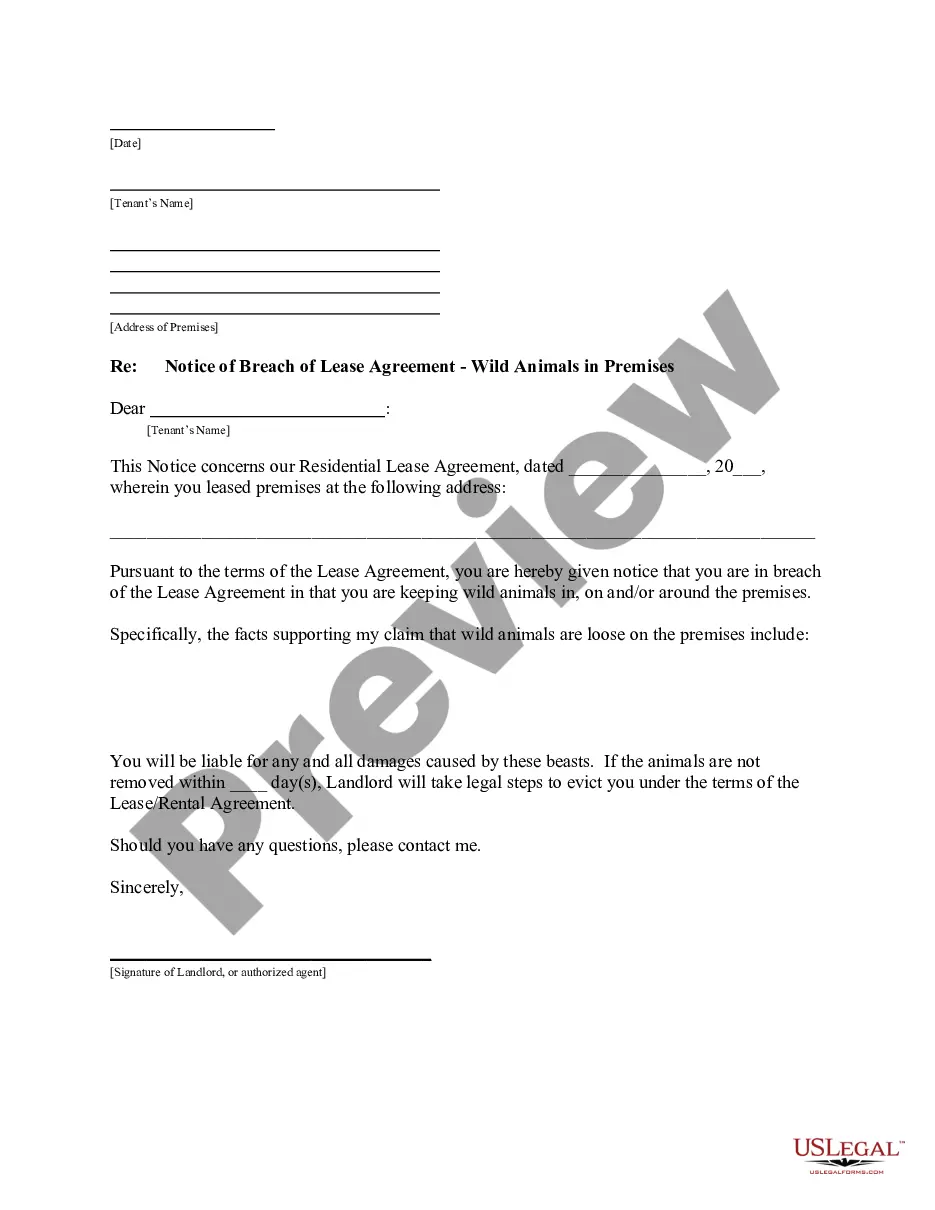
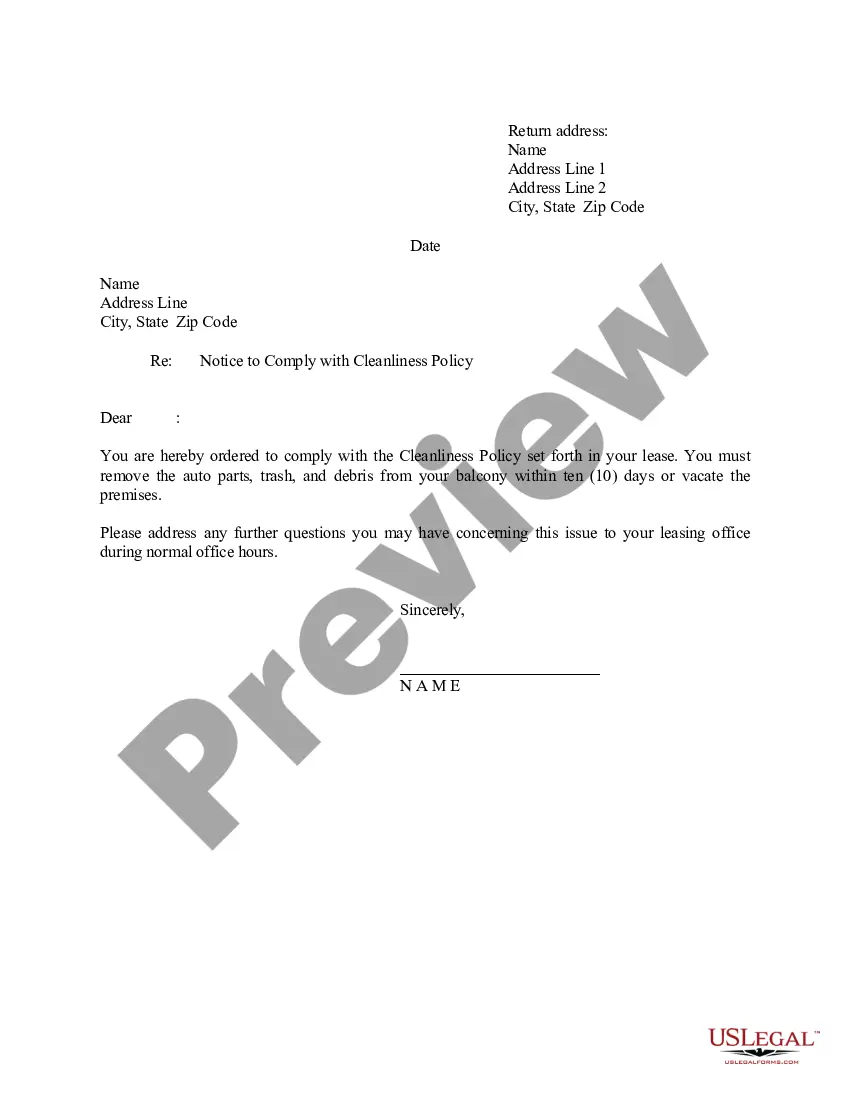
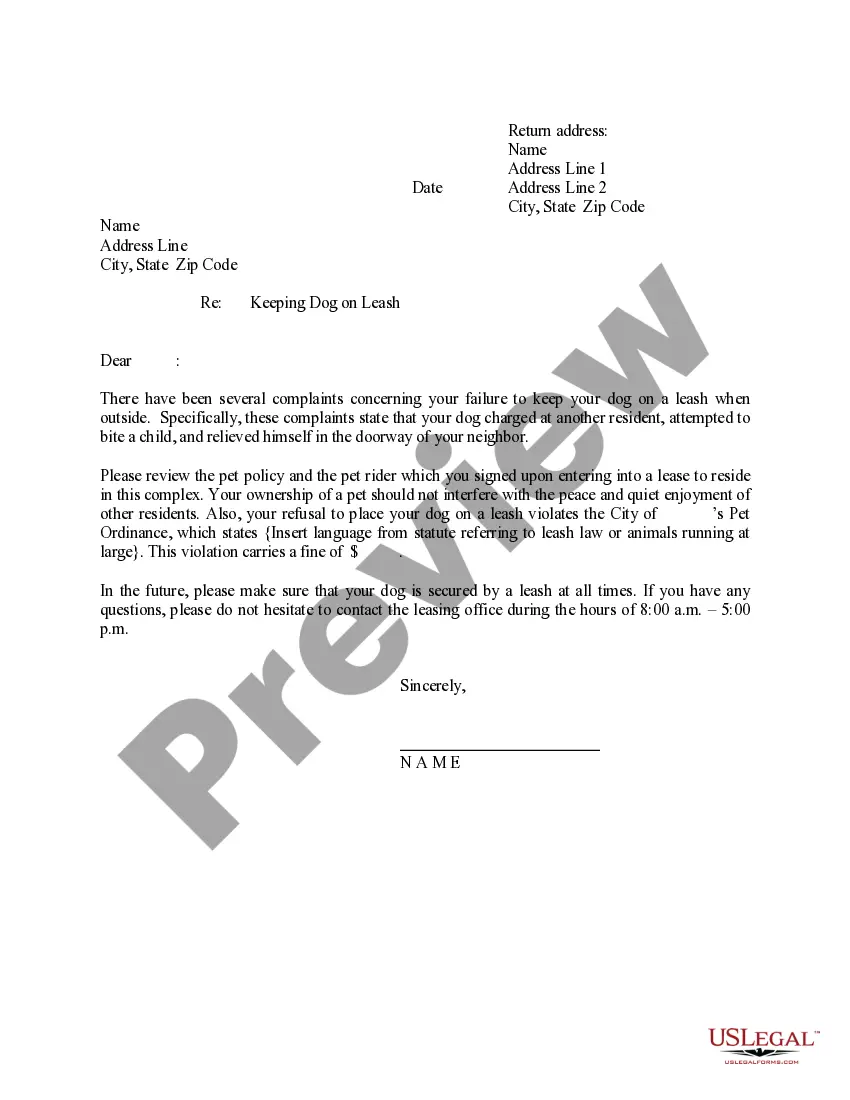
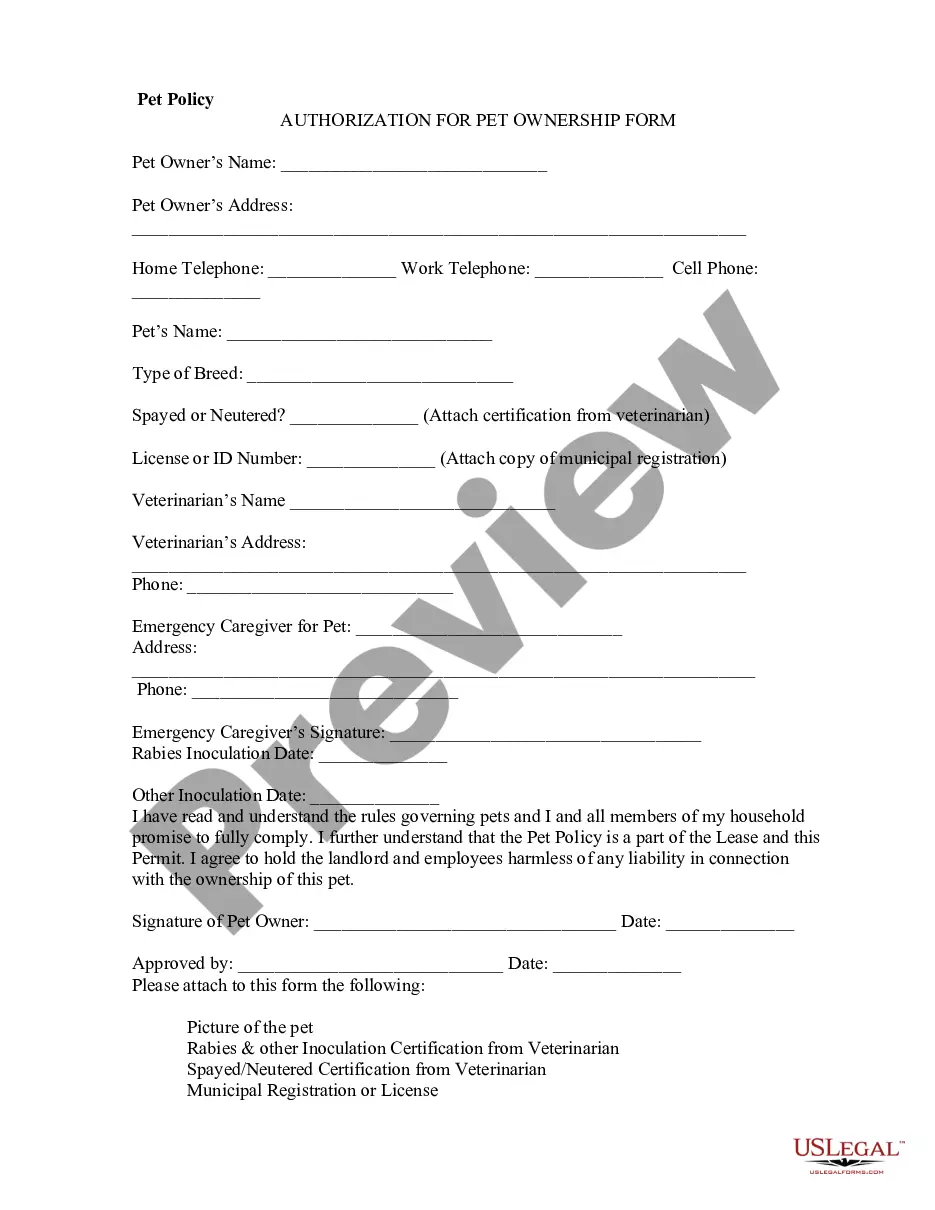
This letter from landlord to tenant serves as a formal notice that the tenant has violated the lease agreement by allowing wild animals on the premises. It details the specific terms breached and outlines the relevant facts regarding the violation. This form is essential for landlords to ensure compliance with lease agreements and to maintain a safe living environment for all tenants.
Key components of this form
- Identification of the landlord and tenant involved.
- Reference to the specific lease agreement terms being violated.
- Details of the wild animals being kept on the premises.
- Signature line for the landlord or authorized agent.
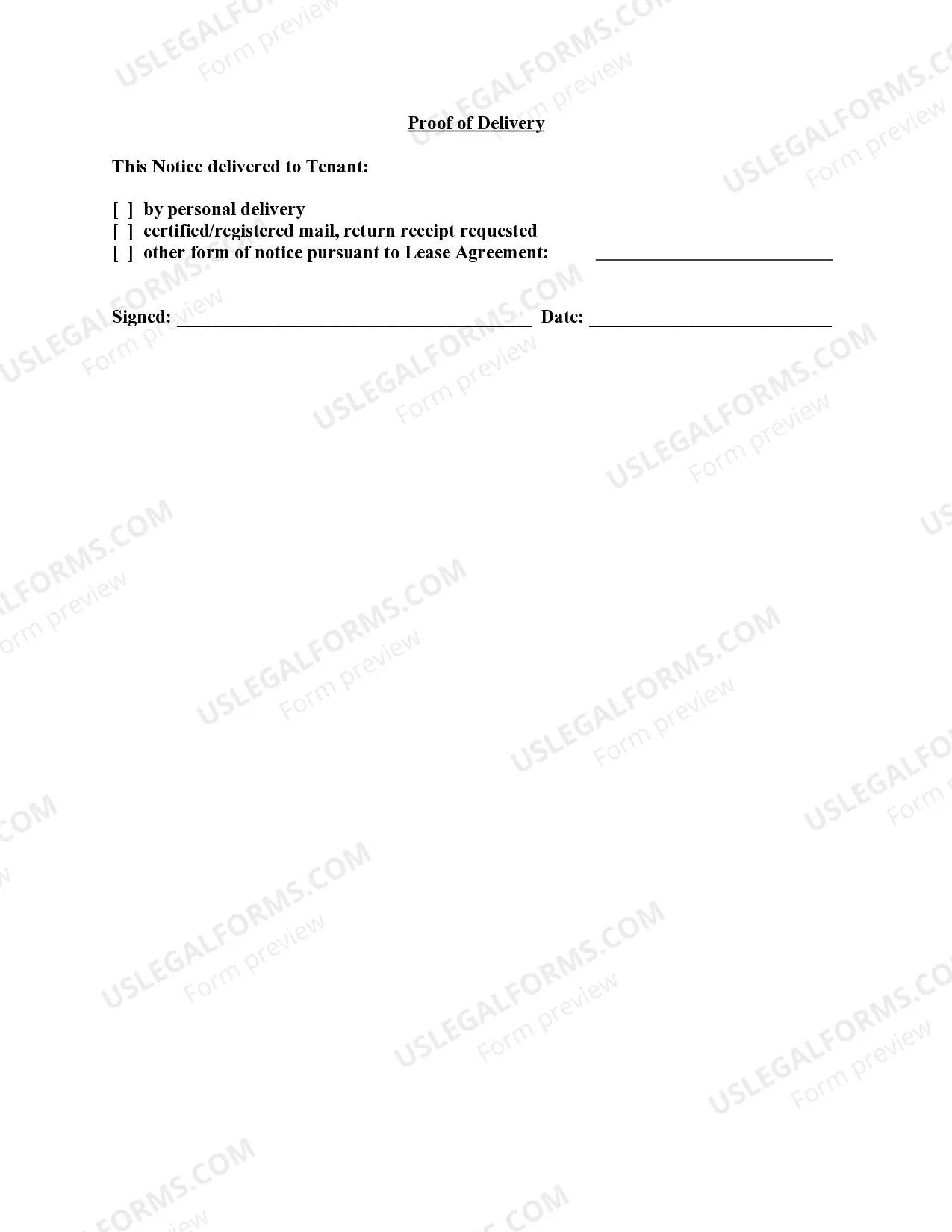
- Proof of delivery options for notifying the tenant.

Situations where this form applies
This form is necessary when a landlord discovers that a tenant is keeping wild animals in or around the rental property. Using this notice allows landlords to formally address the issue and provide the tenant an opportunity to remedy the situation, potentially avoiding further legal action.
Who can use this document
- Landlords seeking to enforce lease terms regarding wild animals.
- Property managers acting on behalf of landlords.
- Tenants who have received notification and need to understand their obligations.
Steps to complete this form
- Identify the landlord and tenant's names and contact information.
- Reference the specific lease agreement and the terms being violated.
- Describe the wild animals that are being kept on the property.
- Provide a signature to authenticate the notice.
- Choose a proof of delivery option to ensure the tenant receives the notice.
Notarization requirements for this form
In most cases, this form does not require notarization. However, some jurisdictions or signing circumstances might. US Legal Forms offers online notarization powered by Notarize, accessible 24/7 for a quick, remote process.
Get your form ready online
Our built-in tools help you complete, sign, share, and store your documents in one place.
Make edits, fill in missing information, and update formatting in US Legal Forms—just like you would in MS Word.
Download a copy, print it, send it by email, or mail it via USPS—whatever works best for your next step.
Sign and collect signatures with our SignNow integration. Send to multiple recipients, set reminders, and more. Go Premium to unlock E-Sign.
If this form requires notarization, complete it online through a secure video call—no need to meet a notary in person or wait for an appointment.
We protect your documents and personal data by following strict security and privacy standards.

Make edits, fill in missing information, and update formatting in US Legal Forms—just like you would in MS Word.

Download a copy, print it, send it by email, or mail it via USPS—whatever works best for your next step.

Sign and collect signatures with our SignNow integration. Send to multiple recipients, set reminders, and more. Go Premium to unlock E-Sign.

If this form requires notarization, complete it online through a secure video call—no need to meet a notary in person or wait for an appointment.

We protect your documents and personal data by following strict security and privacy standards.
Common mistakes
- Failing to specify the exact terms of the lease that are being violated.
- Not providing sufficient detail about the type of wild animals on the premises.
- Neglecting to include a clear delivery method for providing notice to the tenant.
Benefits of using this form online
- Convenience of downloading and completing the form at any time.
- Editability allows for customization specific to the situation.
- Reliability of using templates drafted by licensed attorneys.
Legal use & context
- The form serves as a legal notice to the tenant regarding the breach.
- It may be used as evidence in eviction proceedings if necessary.
- Landlords should keep a copy for their records to demonstrate compliance with notification requirements.
Main things to remember
- This notice formally informs tenants of lease violations related to wild animals.
- It includes key components necessary for legal enforceability.
- Using this form helps maintain compliance with local laws and protects landlord rights.
Looking for another form?
Form popularity
FAQ
Yes, there is a standard format for a notice to vacate letter, which can be found on platforms like USLegalForms. When drafting a notice, it’s important to include specific details such as the tenant's information, the reason for the notice, and a timeline for vacating. If the notice is related to a Minnesota Letter from Landlord to Tenant as Notice to remove Wild Animals in Premises, it should clearly outline the issues at hand. Using a reliable template can help ensure that your notice meets legal requirements.
Yes, your landlord can ask you to remove your pets if they violate the lease terms or local regulations. For instance, if your pets are considered wild animals or are causing disturbances, a Minnesota Letter from Landlord to Tenant as Notice to remove Wild Animals in Premises may be issued. This letter serves as a formal notice, outlining the reasons and providing a timeline for compliance. It’s essential to address this matter promptly to avoid potential eviction.
In certain situations, a landlord can require you to remove your dog from the premises. This often happens when the dog poses a threat to other tenants or violates pet policies outlined in your lease agreement. If a Minnesota Letter from Landlord to Tenant as Notice to remove Wild Animals in Premises is issued, it typically provides a formal notice detailing the reasons for the request. Always review your lease and communicate with your landlord to understand your options.
A landlord can pursue eviction if a tenant violates the terms regarding pets in the lease. If the lease prohibits pets and the tenant brings one onto the property, the landlord may issue a Minnesota Letter from Landlord to Tenant as Notice to remove Wild Animals in Premises. It’s essential to review your lease agreement to ensure compliance with its terms. If you need assistance navigating this process, uslegalforms offers valuable resources to help you understand your rights as a tenant.
A landlord can issue a Minnesota Letter from Landlord to Tenant as Notice to remove Wild Animals in Premises if they believe that the presence of animals violates the lease agreement. Lease terms often specify whether pets are allowed, and violating these terms can lead to eviction. It’s crucial to understand your lease before bringing any animals onto the property. If you face this situation, consider using resources from uslegalforms to understand your rights and obligations.
In some cases, yes. If your lease restricts pets or you received a Minnesota Letter from Landlord to Tenant as Notice to remove Wild Animals in Premises, your landlord may require you to remove your pet. However, it's always best to discuss your options with your landlord, as they may be willing to negotiate or provide alternatives.
In Minnesota, landlords cannot evict tenants without proper notice or cause. They also cannot interfere with your right to quiet enjoyment of the property. If you receive a Minnesota Letter from Landlord to Tenant as Notice to remove Wild Animals in Premises, it should clearly state the issues at hand and follow legal protocols.
Yes, your landlord can ask you to leave if you have pets against the lease agreement. A Minnesota Letter from Landlord to Tenant as Notice to remove Wild Animals in Premises serves as a formal notice to resolve the issue. Always review your lease and seek a discussion with your landlord to clarify any misunderstandings about pet policies.
In Minnesota, landlords can evict tenants for having pets if their lease explicitly prohibits them. If you received a Minnesota Letter from Landlord to Tenant as Notice to remove Wild Animals in Premises, it indicates that your landlord considers your pets a violation of the lease. It's crucial to understand your lease terms and communicate with your landlord to avoid eviction.
To write a notice to a tenant, begin with a professional tone and clear language. State the purpose of the notice directly, whether it’s a request to address an issue or a notice to vacate. Ensure that you include all relevant details and a deadline for action. The Minnesota Letter from Landlord to Tenant as Notice to remove Wild Animals in Premises is an effective template that can facilitate this process.