Michigan Warning of Default on Commercial Lease
What is this form?
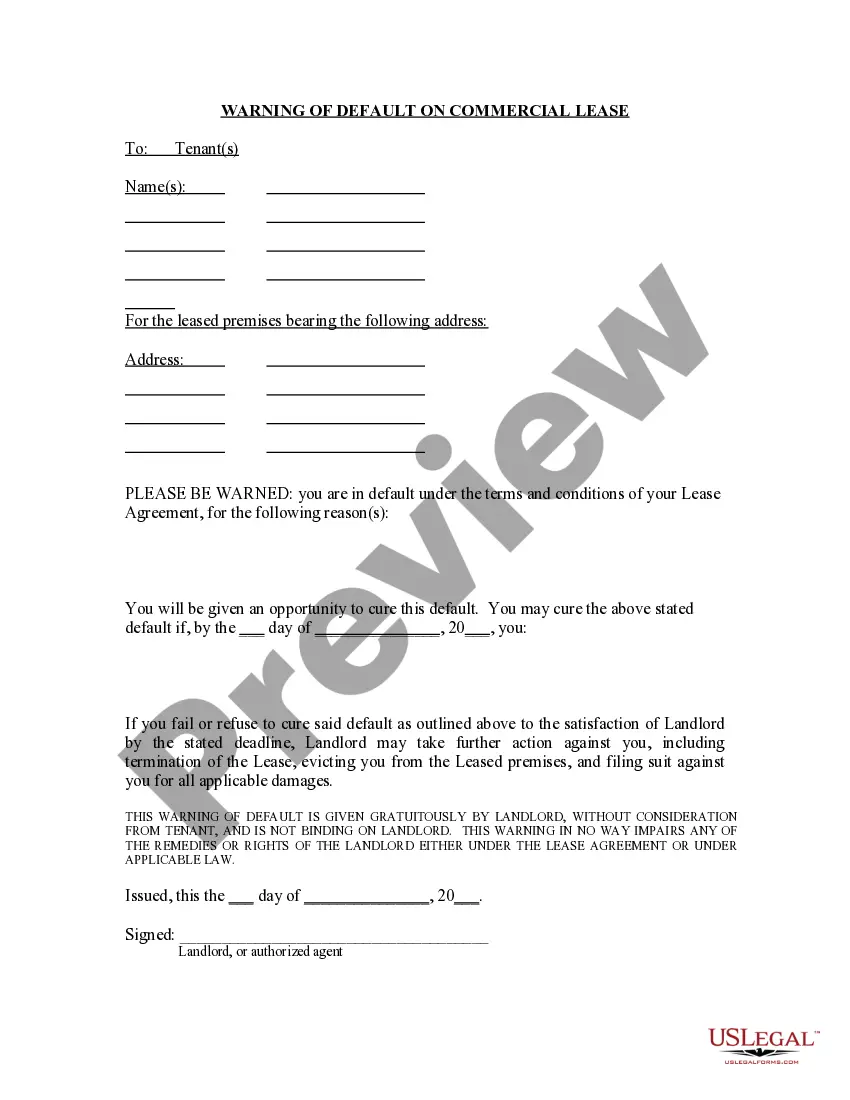
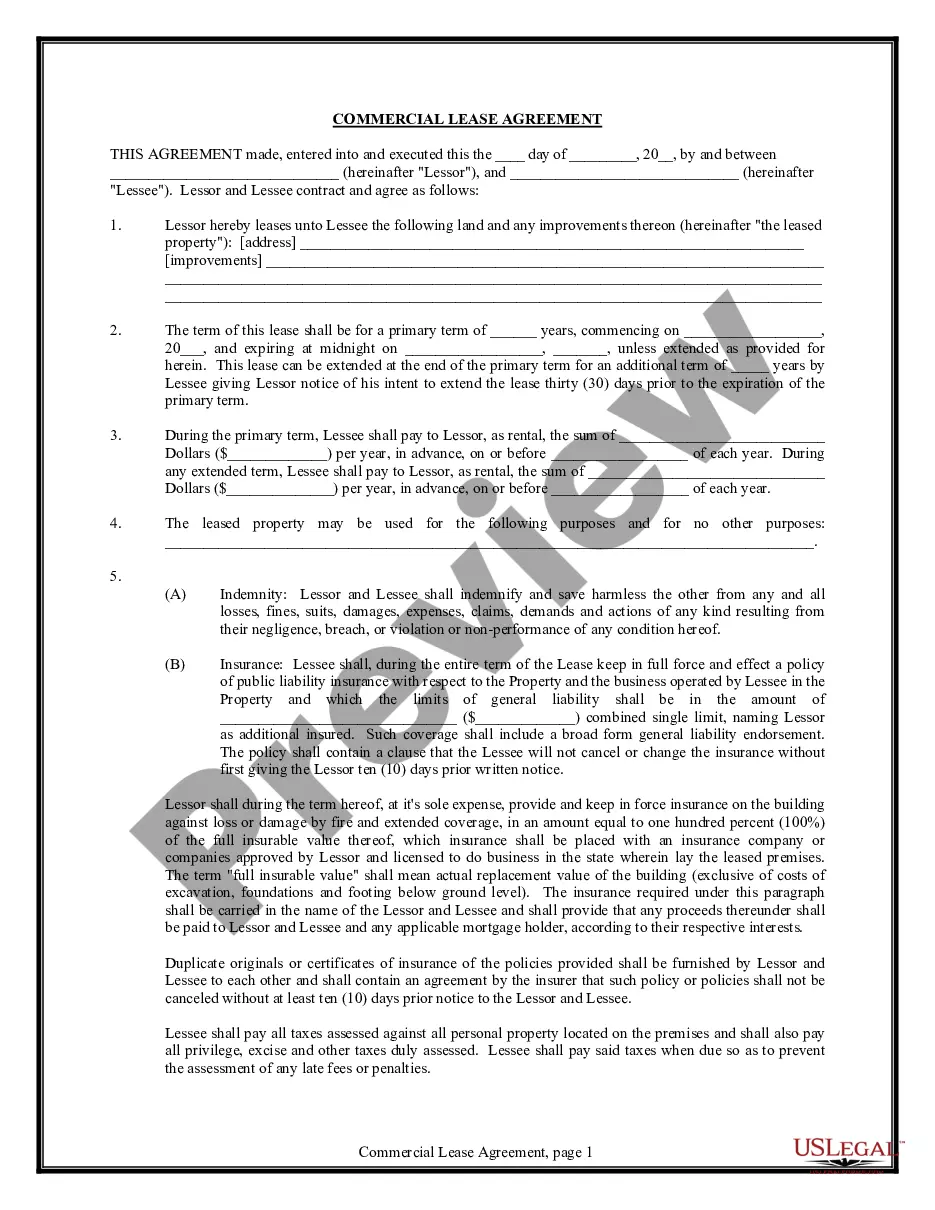
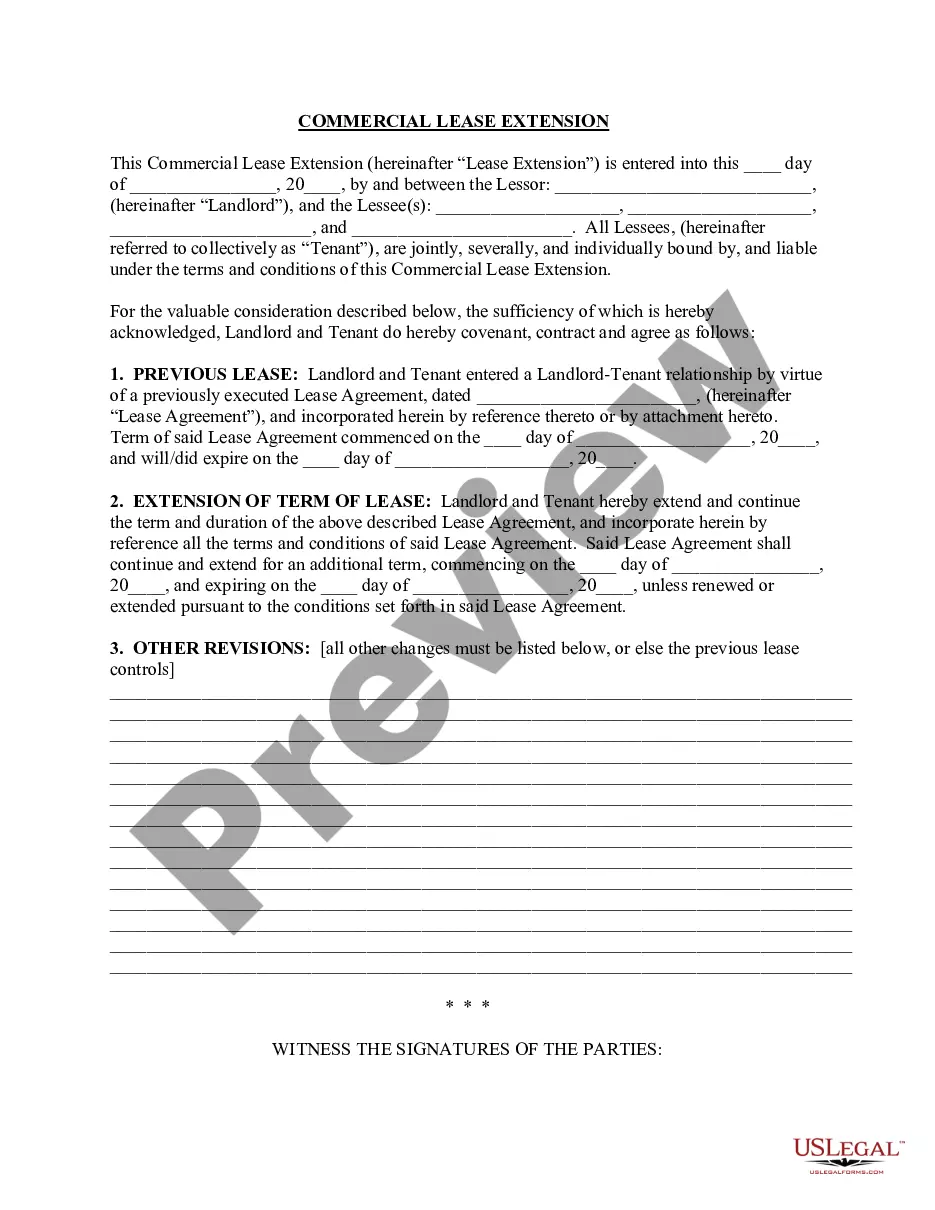
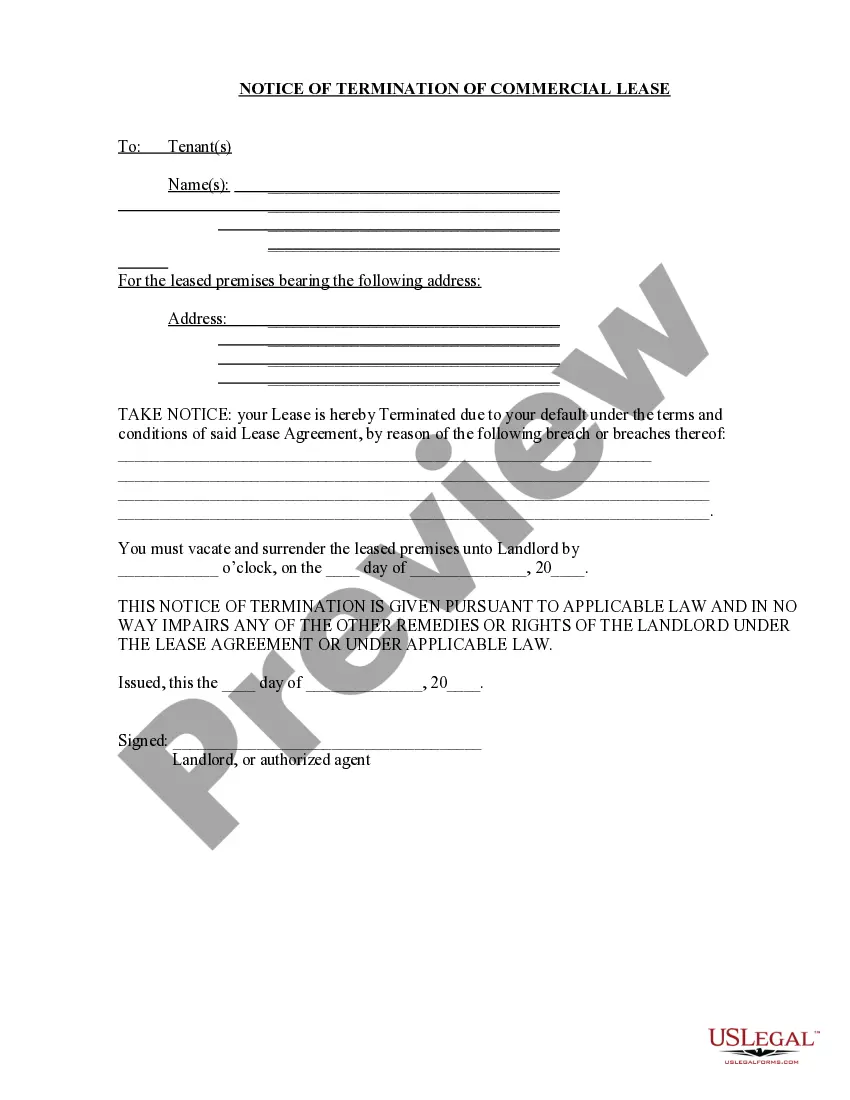
The Warning of Default on Commercial Lease is a formal notice from a landlord to a tenant. Its primary purpose is to address concerns regarding the tenant's failure to meet specific obligations under the lease agreement, particularly around payment of rent. This warning serves as a precursor to potential eviction proceedings, notifying the tenant of their non-compliance and offering an opportunity to rectify the situation before further legal action is taken.
What’s included in this form
- Date of issuance: Indicates when the warning is provided.
- Landlord's signature: Confirms the authenticity of the warning from the landlord or their authorized agent.
- Non-binding nature: Clarifies that this warning is given freely and does not impair the landlord's rights under the lease or applicable law.
When to use this form
This form should be used whenever a landlord needs to formally notify a tenant that they are in default under the lease agreement. Common scenarios include failure to pay rent on time, neglecting maintenance responsibilities, or violating other lease terms. Providing this warning allows the tenant a chance to remedy the situation before the landlord takes further action, such as eviction or claiming the security deposit.
Who this form is for
- Landlords looking to notify their tenants of default on a commercial lease.
- Property managers acting on behalf of landlords to enforce lease terms.
- Legal professionals advising landlords on lease enforcement procedures.
Instructions for completing this form
- Enter the date of issuance at the top of the document.
- Fill in the day and month in the designated fields.
- Sign the form to certify that you are the landlord or an authorized agent.
- Provide the tenant with a copy of the warning for their records.
Does this form need to be notarized?
Notarization is generally not required for this form. However, certain states or situations might demand it. You can complete notarization online through US Legal Forms, powered by Notarize, using a verified video call available anytime.
Get your form ready online
Our built-in tools help you complete, sign, share, and store your documents in one place.
Make edits, fill in missing information, and update formatting in US Legal Forms—just like you would in MS Word.
Download a copy, print it, send it by email, or mail it via USPS—whatever works best for your next step.
Sign and collect signatures with our SignNow integration. Send to multiple recipients, set reminders, and more. Go Premium to unlock E-Sign.
If this form requires notarization, complete it online through a secure video call—no need to meet a notary in person or wait for an appointment.
We protect your documents and personal data by following strict security and privacy standards.

Make edits, fill in missing information, and update formatting in US Legal Forms—just like you would in MS Word.

Download a copy, print it, send it by email, or mail it via USPS—whatever works best for your next step.

Sign and collect signatures with our SignNow integration. Send to multiple recipients, set reminders, and more. Go Premium to unlock E-Sign.

If this form requires notarization, complete it online through a secure video call—no need to meet a notary in person or wait for an appointment.

We protect your documents and personal data by following strict security and privacy standards.
Mistakes to watch out for
- Failing to include the date of issuance.
- Not signing the form, making it unenforceable.
- Neglecting to provide adequate notice based on state-specific requirements.
Benefits of using this form online
- Convenient access to forms at any time, facilitating timely communication with tenants.
- Editability allows for customization to fit specific lease agreements and situations.
- Reliable templates drafted by licensed attorneys ensure legal compliance.
Legal use & context
- This form provides notice to the tenant, which is often a legal prerequisite before further action can be taken.
- It helps document the landlord's actions to avoid potential disputes later.
- Understanding and using this warning properly can prevent going to court over lease disputes.
What to keep in mind
- The Warning of Default on Commercial Lease is essential for addressing tenant defaults.
- Providing this warning gives the tenant a chance to remedy issues before further legal action.
- Always adhere to local regulations regarding landlord-tenant communications.
Looking for another form?






Form popularity
FAQ
When a tenant defaults under a commercial lease, the landlord's remedies include the right to repossess the property and seek damages. Additionally, landlords can issue a Michigan Warning of Default on Commercial Lease, allowing tenants to rectify their default within a specified time frame. If the issue remains unresolved, landlords can pursue eviction and other legal avenues to recover unpaid rent. Understanding these remedies can aid both landlords and tenants in navigating commercial lease agreements.
The 554.134 law in Michigan pertains to a landlord's obligations when a tenant falls behind on rent. This law outlines the notification process required before any eviction action can proceed. Specifically, under the Michigan Warning of Default on Commercial Lease, landlords must provide tenants with written notice detailing the default. This ensures that tenants have a fair opportunity to remedy the situation before facing further legal action.
Walking away from a commercial lease is generally not advisable, as it can lead to negative legal implications and financial penalties. When you receive a Michigan Warning of Default on Commercial Lease, it is important to take it seriously and consider your options. Leaving without proper communication can damage your business reputation and credit history. Instead, explore potential negotiation avenues or consult with professionals to navigate the complexities of lease termination.
To get out of a commercial lease, your best strategy involves negotiating with your landlord or seeking legal advice. Understanding the terms of the Michigan Warning of Default on Commercial Lease can guide your discussions. Many landlords may be open to termination agreements or lease assignments, especially if you communicate your situation honestly. By working together, you can find a mutually beneficial solution.
'Default on lease' refers to the failure to meet the terms and conditions specified in a commercial lease agreement. This can include not paying rent on time, violating lease terms, or failing to maintain the property. It is important to comprehend this concept, as a Michigan Warning of Default on Commercial Lease may be issued, prompting you to take corrective actions timely to avoid escalation.
A default clause in a commercial lease outlines the circumstances that constitute a default, including non-payment of rent or failure to comply with lease obligations. This clause is crucial, as it defines the rights of both the landlord and tenant. Understanding this clause can help you navigate potential issues more effectively, especially if you receive a Michigan Warning of Default on Commercial Lease.
If you default on a commercial lease in Michigan, the property owner typically has the right to take specific actions, such as issuing a Michigan Warning of Default on Commercial Lease. This warning serves as formal notice of your default, which might include unpaid rent or violation of lease terms. After receiving this warning, you may have a limited time to correct the issue before the landlord can pursue further legal action, such as eviction.
The timeline for evicting a commercial tenant in Michigan can vary significantly based on the situation. After issuing a Michigan Warning of Default on Commercial Lease, landlords typically need to wait a specified period before initiating eviction proceedings. Generally, the eviction process can take several weeks to a few months, depending on court schedules and the details of the case. Timely legal advice and action can help both parties navigate this process more efficiently.
If you default on a commercial lease, the landlord can issue a Michigan Warning of Default on Commercial Lease. This warning serves as notice that you are not meeting the lease terms, typically due to unpaid rent. If the situation is not resolved, the landlord may proceed with eviction or other legal actions. It is essential to address any defaults promptly to avoid escalating consequences.
The 554.613 law in Michigan addresses specific procedures regarding the Michigan Warning of Default on Commercial Lease. This law outlines the landlord's rights and responsibilities when a tenant falls behind on rent or breaches other lease terms. It requires landlords to provide a warning before taking further legal action. Understanding this law can help tenants respond appropriately and protect their interests.