Michigan Notice of Default in Payment of Rent as Warning Prior to Demand to Pay or Terminate for Nonresidential or Commercial Property
What this document covers
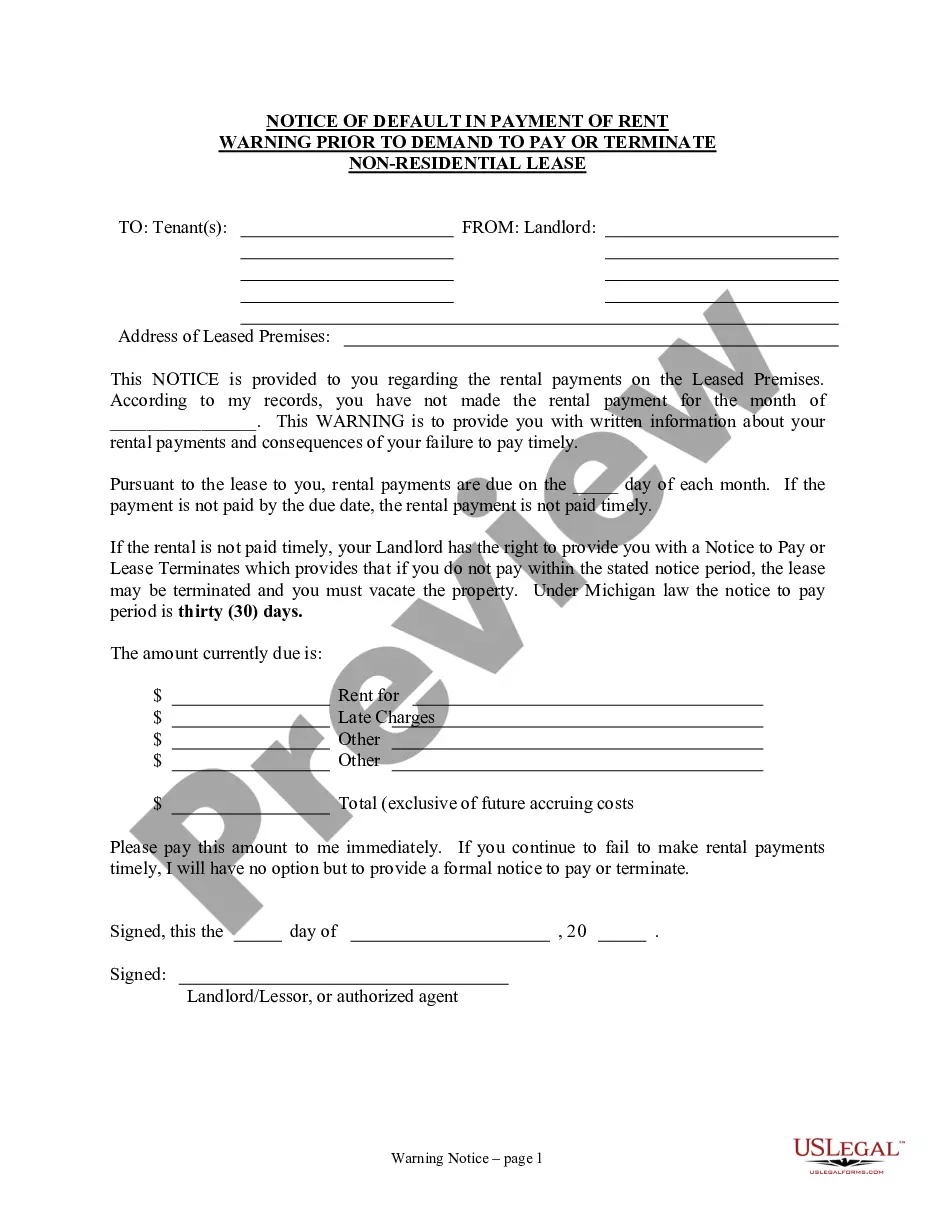
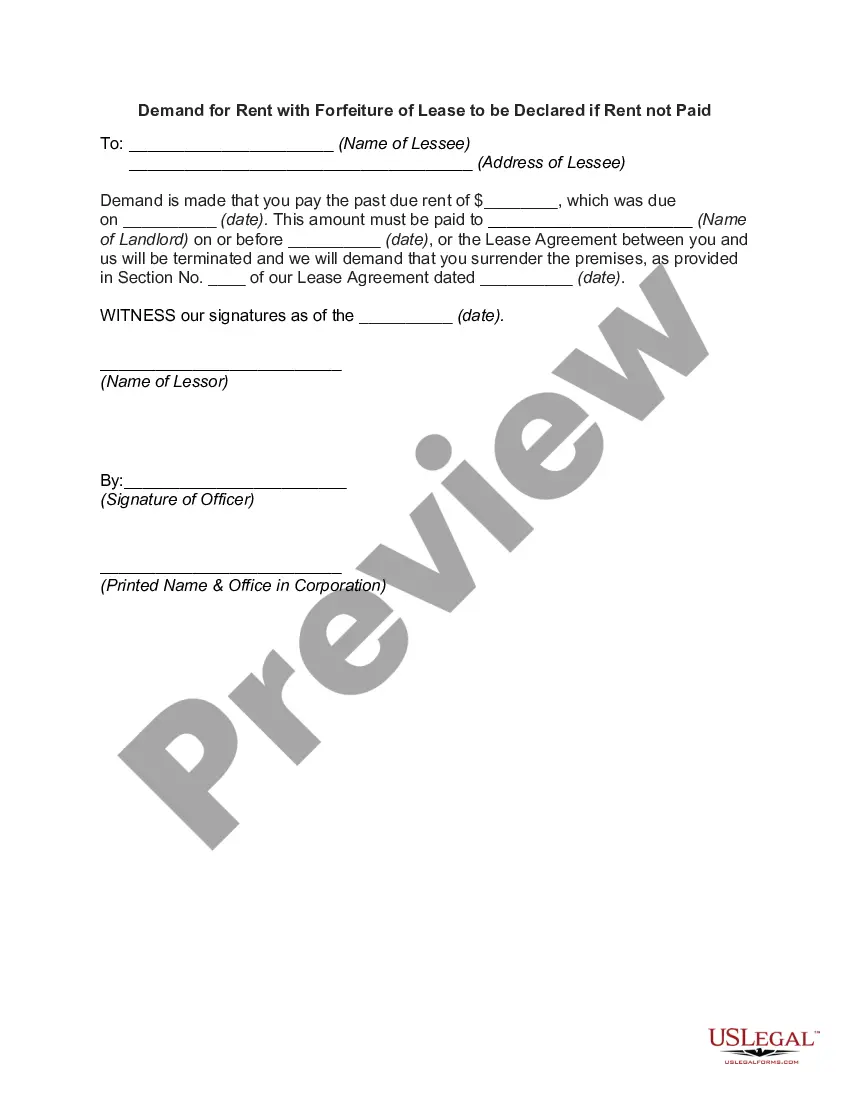
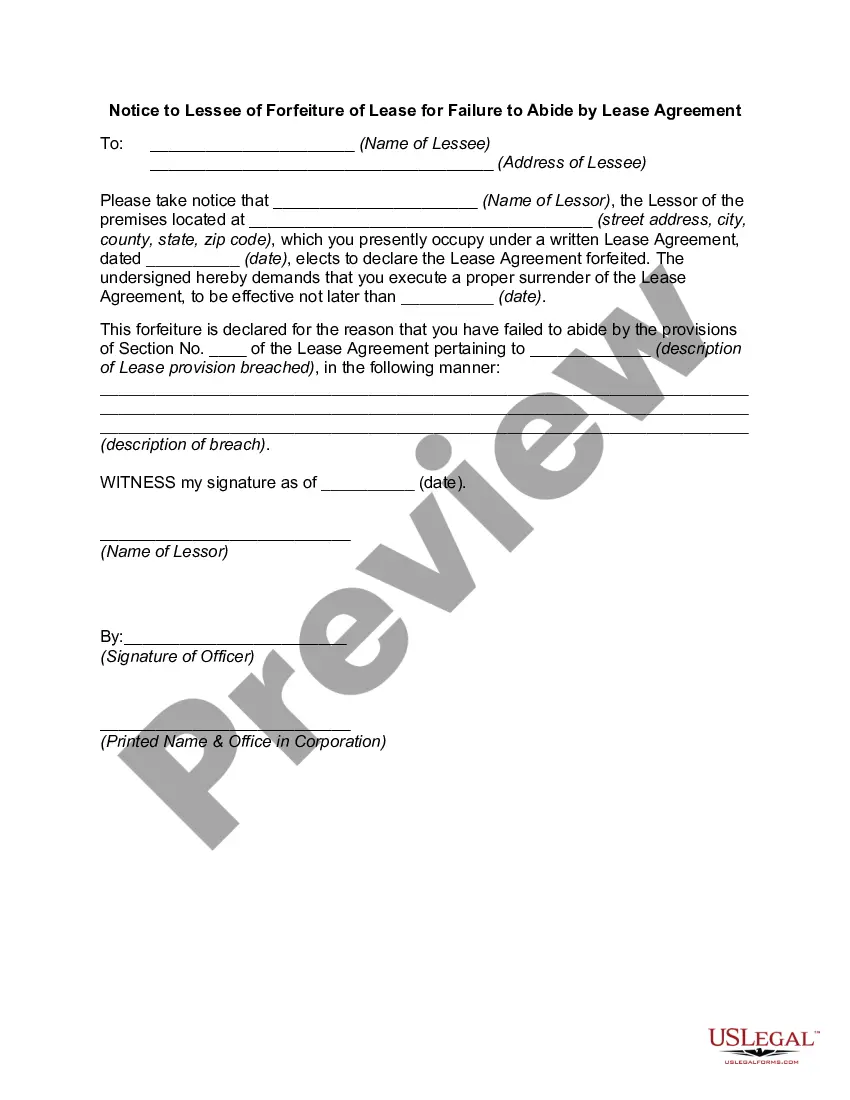
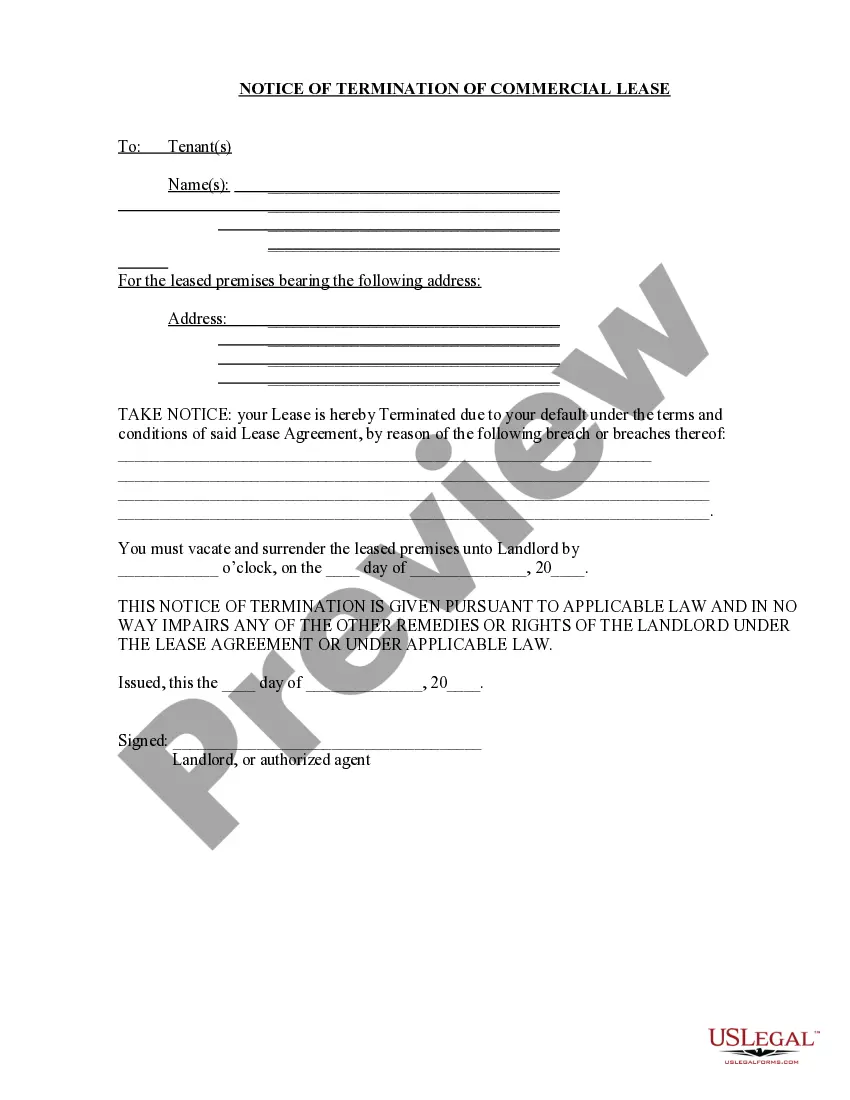
The Notice of Default in Payment of Rent as Warning Prior to Demand to Pay or Terminate for Nonresidential or Commercial Property is a legal document used by landlords to inform tenants of unpaid rent. It serves as a formal warning before initiating a notice that may demand payment or terminate the lease. This form differs from other notices by focusing specifically on rent defaults for commercial leases, ensuring that tenants are aware of their payment obligations and the potential consequences of non-compliance.
Key parts of this document
- Identification of the landlord and tenant, including addresses.
- Statement of unpaid rent, specifying the due date and total amount owed.
- Explanation of the consequences of failing to pay rent on time.
- Notice period required before further action can be taken, in compliance with state law.
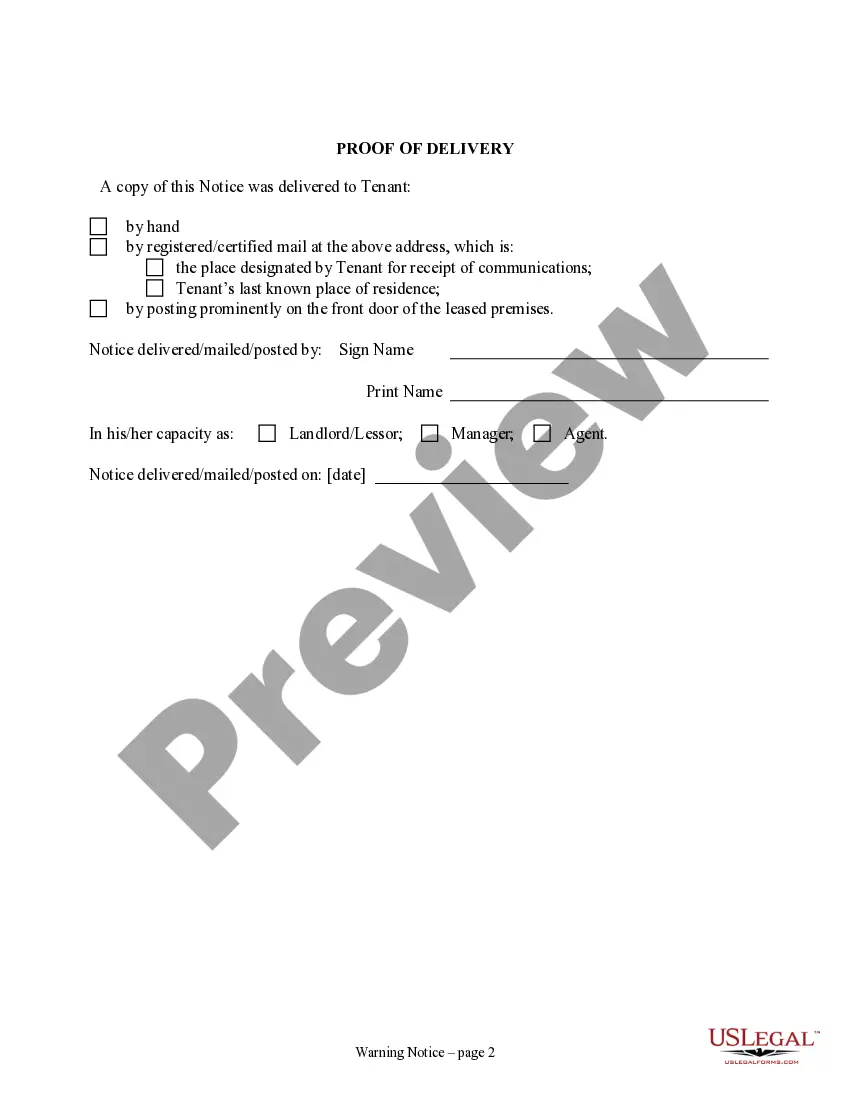
- Proof of delivery section to confirm that the notice was properly served to the tenant.

When to use this document
This form is applicable when a landlord needs to notify a tenant of a rent payment default for nonresidential or commercial property. Use this notice when the tenant has not paid rent by the due date, and the landlord wishes to inform them formally about the default as a preliminary step before issuing a more severe demand to pay or potential termination of the lease.
Who can use this document
- Landlords of commercial properties seeking to enforce lease terms.
- Property managers responsible for lease administration.
- Real estate agents representing landlords in commercial rental agreements.
How to prepare this document
- Identify the landlord and tenant by entering their names and addresses.
- Fill in the specific month for which rent is overdue and the associated due date.
- Calculate and enter the total amount due, including any late charges if applicable.
- Clearly state the consequences of failing to pay in a timely manner.
- Sign and date the form to validate the notice.
- Deliver the notice using the method specified in the proof of delivery section.
Is notarization required?
This form does not typically require notarization to be legally valid. However, some jurisdictions or document types may still require it. US Legal Forms provides secure online notarization powered by Notarize, available 24/7 for added convenience.
Get your form ready online
Our built-in tools help you complete, sign, share, and store your documents in one place.
Make edits, fill in missing information, and update formatting in US Legal Forms—just like you would in MS Word.
Download a copy, print it, send it by email, or mail it via USPS—whatever works best for your next step.
Sign and collect signatures with our SignNow integration. Send to multiple recipients, set reminders, and more. Go Premium to unlock E-Sign.
If this form requires notarization, complete it online through a secure video call—no need to meet a notary in person or wait for an appointment.
We protect your documents and personal data by following strict security and privacy standards.

Make edits, fill in missing information, and update formatting in US Legal Forms—just like you would in MS Word.

Download a copy, print it, send it by email, or mail it via USPS—whatever works best for your next step.

Sign and collect signatures with our SignNow integration. Send to multiple recipients, set reminders, and more. Go Premium to unlock E-Sign.

If this form requires notarization, complete it online through a secure video call—no need to meet a notary in person or wait for an appointment.

We protect your documents and personal data by following strict security and privacy standards.
Typical mistakes to avoid
- Failing to specify the exact amount due, which can lead to confusion.
- Not using the correct delivery method, as required by law.
- Leaving out the signature, which is essential for legal validity.
Benefits of using this form online
- Convenient access to professionally drafted legal documents at any time.
- Easy to edit fields, allowing landlords to customize the form for each situation.
- Reliability and assurance that the form meets state requirements.
Legal use & context
- This form is legally valid in notifying tenants of their rent payment default.
- Proper use of this notice decreases the risk of legal disputes in the eviction process.
- Landlords should maintain copies of all communication for their records.
Summary of main points
- The form acts as a warning to tenants regarding overdue rent payments.
- It provides landlords with a structured way to communicate potential lease termination.
- Understanding and correctly completing the form helps protect landlords' rights.
- Use the form in accordance with local laws to ensure compliance and enforceability.
Looking for another form?




Form popularity
FAQ
A default letter for rent serves as a written notification from the landlord to the tenant indicating that the tenant has failed to pay rent on time. This letter is often the formal start of the eviction process, typically referencing the Michigan Notice of Default in Payment of Rent as Warning Prior to Demand to Pay or Terminate for Nonresidential or Commercial Property. The letter outlines the specifics of the missed payment and usually provides a timeframe for the tenant to resolve the issue before further legal action is initiated. For landlords, using a reliable platform like uslegalforms can simplify the creation and management of such legal documents.
The process for an eviction due to a default in payment of rent can vary, but typically it starts with the Michigan Notice of Default in Payment of Rent as Warning Prior to Demand to Pay or Terminate for Nonresidential or Commercial Property. This notice usually gives tenants a set time to correct the default before further action is taken. If the issue is not resolved, landlords can file for an eviction, which may take several weeks depending on the court schedule. Although it can feel lengthy, the steps are designed to ensure both parties have a fair chance to present their case.
The timeline for receiving an eviction notice in Michigan typically hinges on the lease agreement and the tenant's payment history. Landlords must issue a Michigan Notice of Default in Payment of Rent as Warning Prior to Demand to Pay or Terminate for Nonresidential or Commercial Property, which generally occurs after a missed payment. After providing this notice, landlords can begin eviction proceedings if the situation remains unresolved. Therefore, acting quickly can help tenants avoid the consequences of eviction.
In Michigan, a tenant can fall behind on rent up to seven days before facing eviction. When a tenant misses a payment, landlords are encouraged to provide a Michigan Notice of Default in Payment of Rent as Warning Prior to Demand to Pay or Terminate for Nonresidential or Commercial Property. This notice serves as an essential first step, informing tenants of their default and potential eviction. Understanding this process can empower both landlords and tenants to resolve issues before escalation.
To write a warning notice to a tenant, clearly define the violations, such as rent nonpayment or property damages. Be specific about the actions required to correct the issues, and set a reasonable timeframe for response. Incorporate elements of the Michigan Notice of Default in Payment of Rent as Warning Prior to Demand to Pay or Terminate for Nonresidential or Commercial Property to address the situation effectively while maintaining legal compliance.
The 554.134 law in Michigan pertains to the notice requirements landlords must follow when tenants fail to pay rent. It outlines the necessary steps and timing for delivering notices related to payment defaults. Understanding this law is crucial for landlords, especially when drafting a Michigan Notice of Default in Payment of Rent as Warning Prior to Demand to Pay or Terminate for Nonresidential or Commercial Property to facilitate a legal eviction process.
The eviction process in Michigan can take anywhere from a few weeks to several months, depending on various factors, including court schedules and tenant responses. If a tenant fails to pay rent, landlords should issue a Michigan Notice of Default in Payment of Rent as Warning Prior to Demand to Pay or Terminate for Nonresidential or Commercial Property. This notice sets the stage for potential eviction proceedings, should the tenant not pay or respond accordingly.
A notice to quit for nonpayment of rent in Michigan serves as a formal notification to the tenant regarding overdue rent. It outlines the due amount and typically gives the tenant a specific timeframe to rectify the situation. This notice aligns with the Michigan Notice of Default in Payment of Rent as Warning Prior to Demand to Pay or Terminate for Nonresidential or Commercial Property to help landlords take necessary actions in case of non-compliance.
In Michigan, a quit notice typically requires a minimum of 30 days if the tenant has lived in the property for more than a year. For tenants who have lived there for less than a year, a 7-day notice may be sufficient. Always ensure that your notice complies with the Michigan Notice of Default in Payment of Rent as Warning Prior to Demand to Pay or Terminate for Nonresidential or Commercial Property for clarity in the eviction process.
To fill out a Michigan eviction notice, begin by clearly stating the name of the tenant and the address of the rental property. Include the reason for the eviction, such as failure to pay rent, and specify the rent amount owed. Make sure to incorporate the Michigan Notice of Default in Payment of Rent as Warning Prior to Demand to Pay or Terminate for Nonresidential or Commercial Property to inform the tenant about the legal reasons for the eviction.