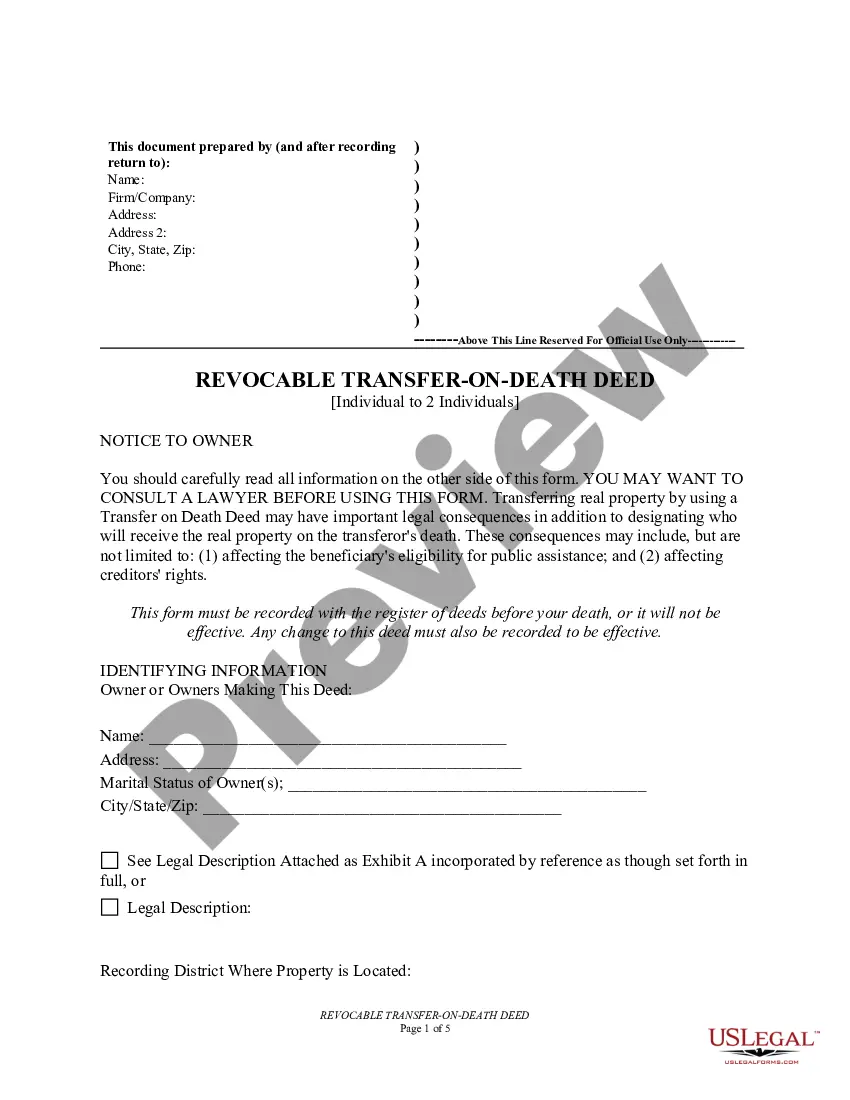
South Dakota Transfer on Death Deed or TOD - Beneficiary Deed for Individual to Two Individuals
About this form
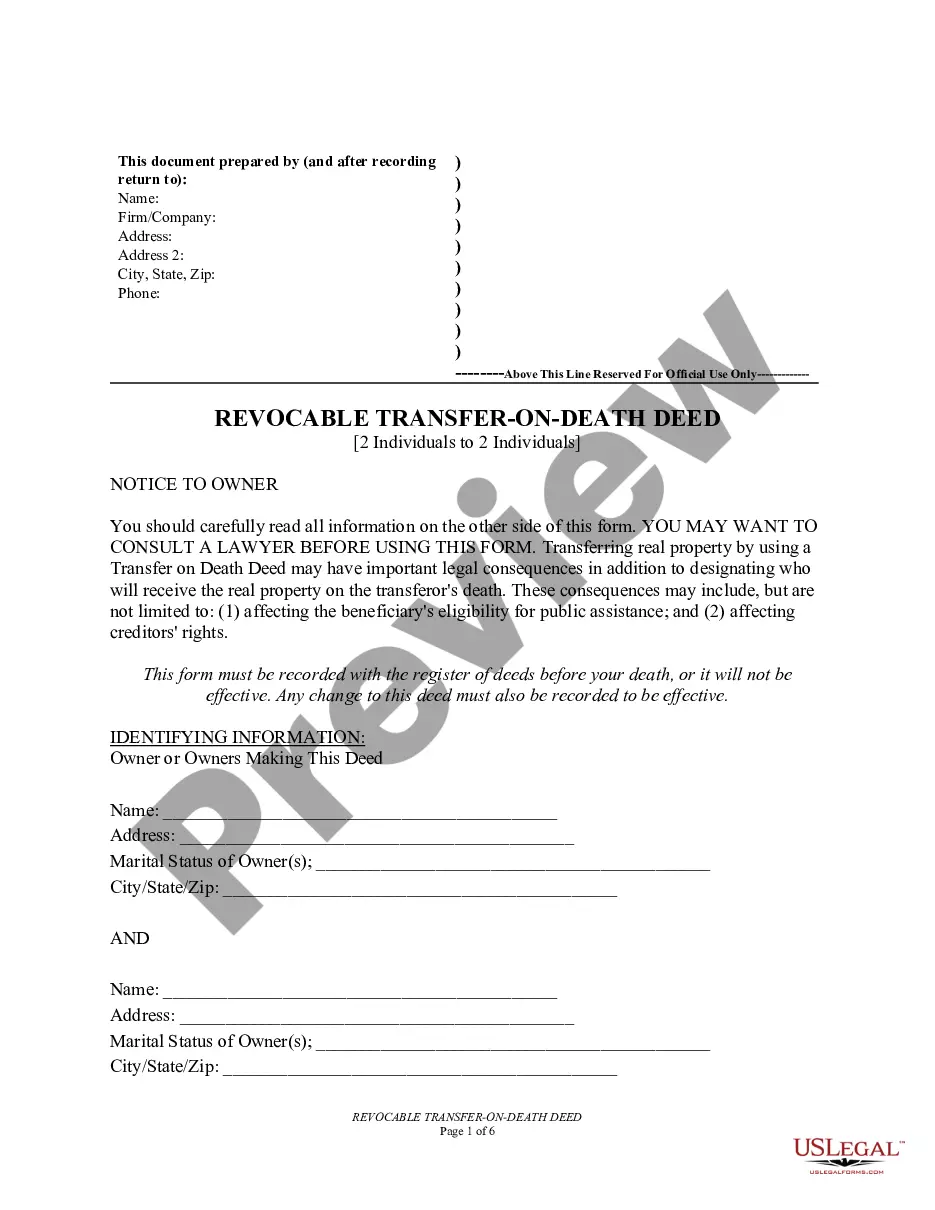
The Transfer on Death Deed (TOD) allows property owners to designate beneficiaries who will inherit their property upon their death. This deed is legally revocable and does not transfer any ownership interest until the owner passes away, helping to simplify the transfer of real estate assets. Unlike a traditional will, which can go through probate, a TOD provides a more efficient way to pass property directly to heirs without the delay of court proceedings.
Key parts of this document
- Identifying information for the owner, including name and address
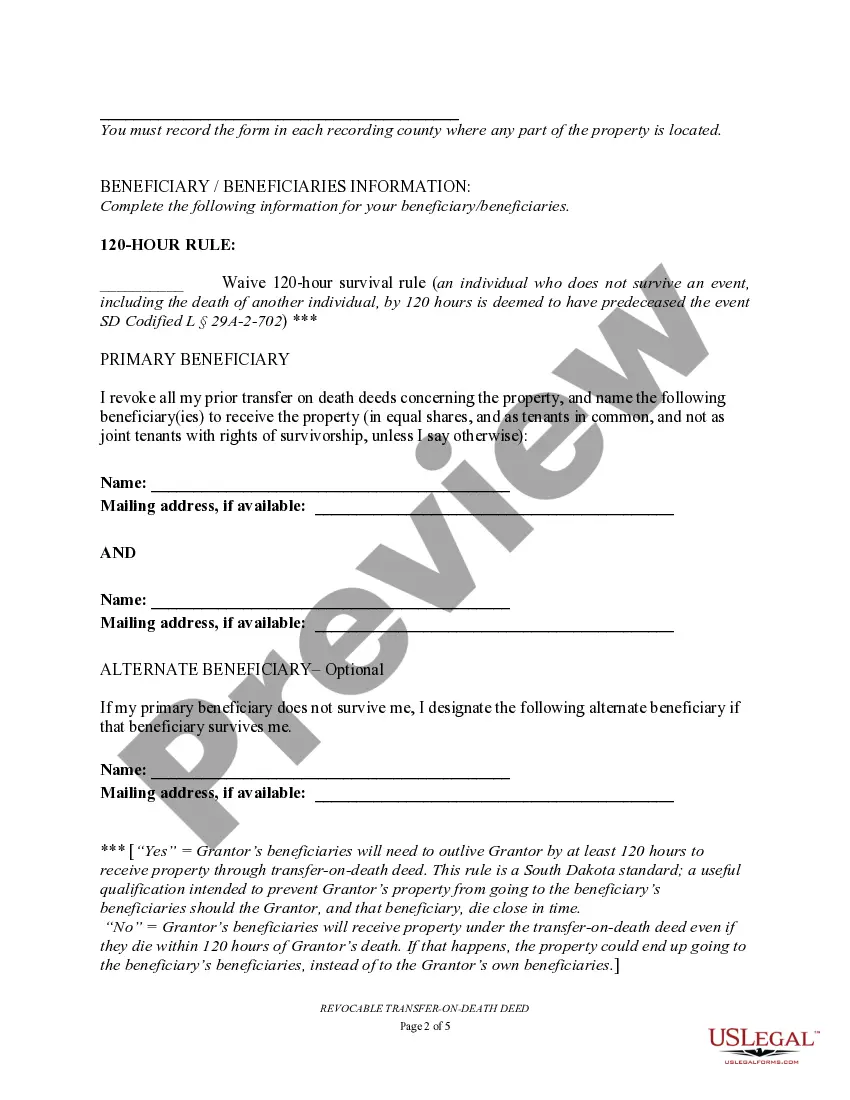
- Details about the designated beneficiaries
- Legal description of the property being transferred
- Options for alternate beneficiaries
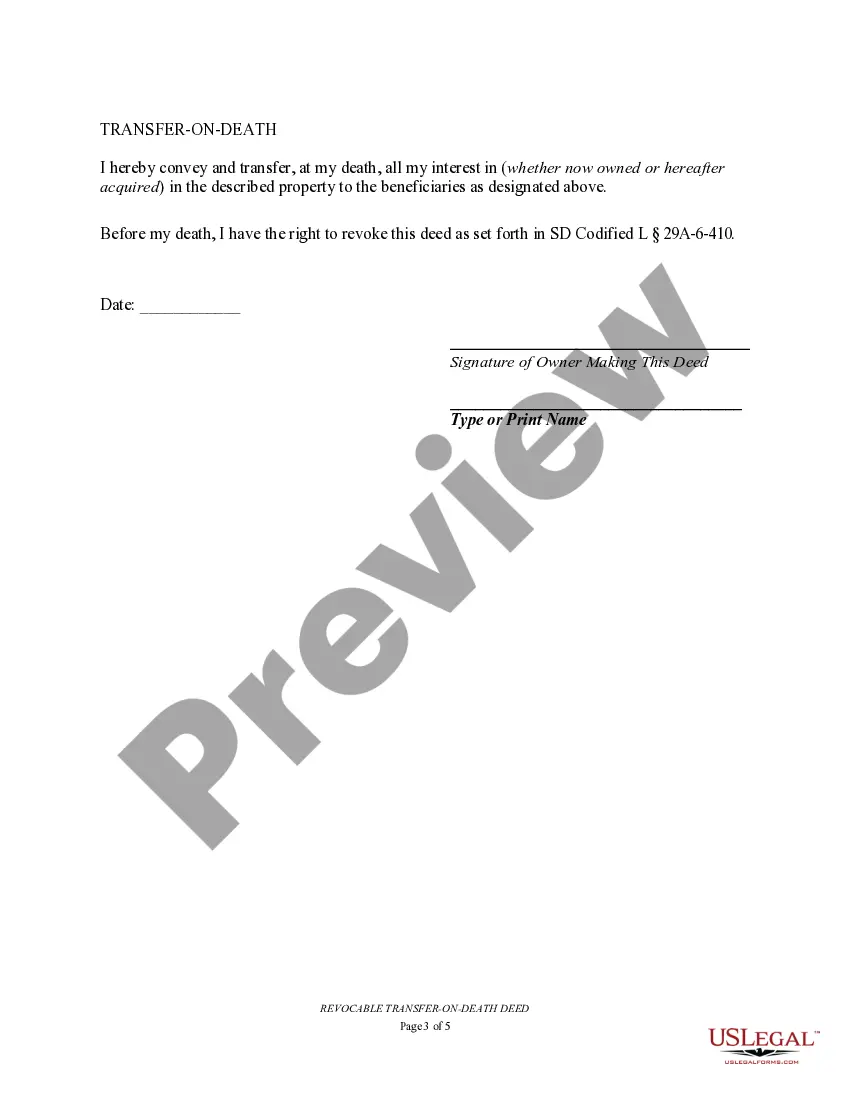
- Revocation clause to cancel prior deeds concerning the property
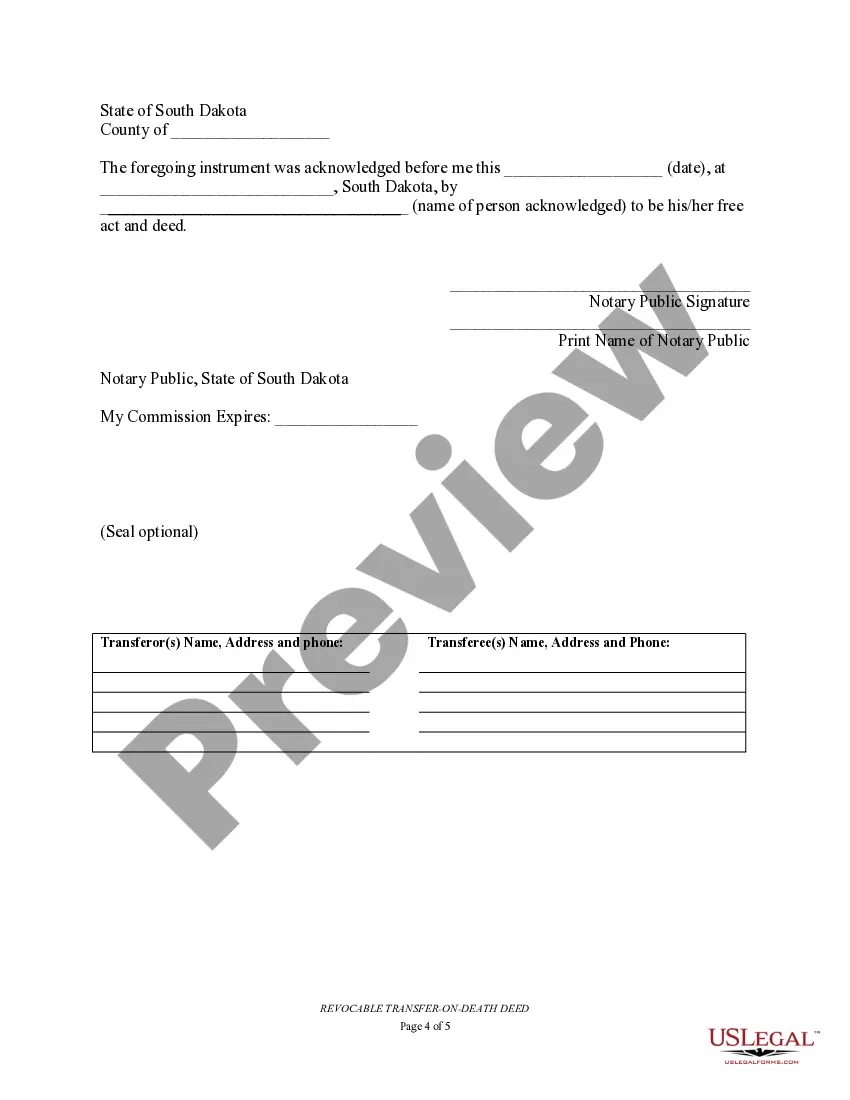
- Notarization section for validation



When to use this document
This form is useful in scenarios where an individual owner wants to ensure their real estate passes directly to chosen beneficiaries upon their death. It can be beneficial for estate planning, allowing the owner to retain control of the property during their lifetime while designating heirs, making it particularly useful for those who wish to avoid probate complications.
Who this form is for
- Property owners who want to designate beneficiaries for a parcel of land
- Individuals looking for a straightforward estate planning tool
- Those who wish to maintain control over property until death
- Landowners concerned about the probate process
Completing this form step by step
- Identify the owner(s) making the deed by entering their name and address.
- Provide the legal description of the property intended for transfer.
- Complete the section for primary beneficiaries, including their names and addresses.
- Optionally designate alternate beneficiaries, if desired.
- Sign the document in front of a notary public.
- Record the completed deed with the appropriate county register of deeds.
Does this form need to be notarized?
Yes, this form must be notarized to be legally valid. Using US Legal Forms, you can access integrated online notarization services, ensuring secure video calls and legal equivalences without the need to travel, making the process straightforward and efficient.
Get your form ready online
Our built-in tools help you complete, sign, share, and store your documents in one place.
Make edits, fill in missing information, and update formatting in US Legal Forms—just like you would in MS Word.
Download a copy, print it, send it by email, or mail it via USPS—whatever works best for your next step.
Sign and collect signatures with our SignNow integration. Send to multiple recipients, set reminders, and more. Go Premium to unlock E-Sign.
If this form requires notarization, complete it online through a secure video call—no need to meet a notary in person or wait for an appointment.
We protect your documents and personal data by following strict security and privacy standards.

Make edits, fill in missing information, and update formatting in US Legal Forms—just like you would in MS Word.

Download a copy, print it, send it by email, or mail it via USPS—whatever works best for your next step.

Sign and collect signatures with our SignNow integration. Send to multiple recipients, set reminders, and more. Go Premium to unlock E-Sign.

If this form requires notarization, complete it online through a secure video call—no need to meet a notary in person or wait for an appointment.

We protect your documents and personal data by following strict security and privacy standards.
Typical mistakes to avoid
- Failing to officially record the deed before the owner's death.
- Not including complete legal descriptions of the property.
- Overlooking the necessity of notarization for the deed to be valid.
- Neglecting to revoke any previous Transfer on Death Deeds relating to the same property.
Advantages of online completion
- Convenient access to comprehensive legal forms tailored to your state.
- Edit and customize the form easily before printing.
- Secure storage of your legal documents for easy retrieval.
- Affordability compared to hiring an attorney for simple property transfers.
What to keep in mind
- A Transfer on Death Deed allows you to pass property directly to beneficiaries without probate.
- This form is revocable, ensuring you can change beneficiaries during your lifetime.
- Notarization is required for the deed to be effective upon the owner's death.
- Proper completion and recording are vital to enforceability.