Michigan Bill of Sale of Automobile and Odometer Statement for As-Is Sale
Understanding this form
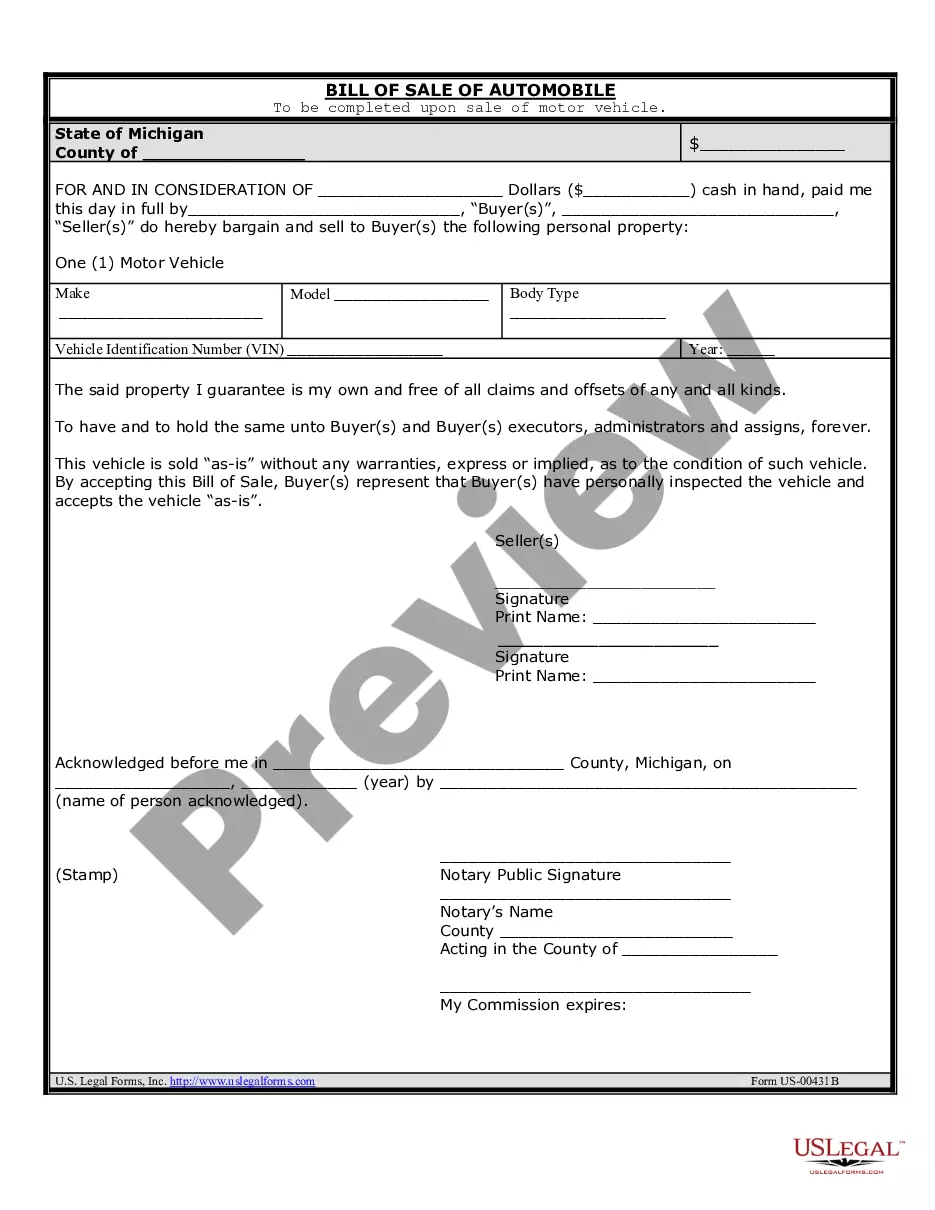
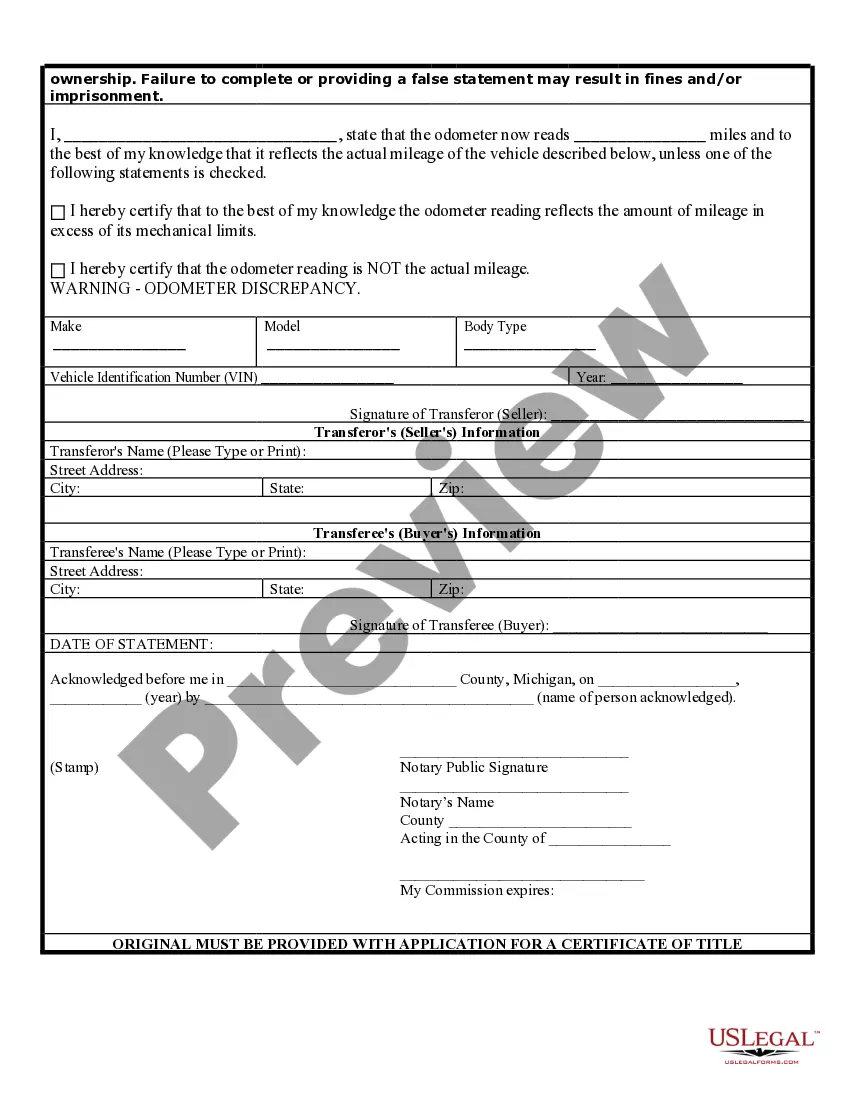
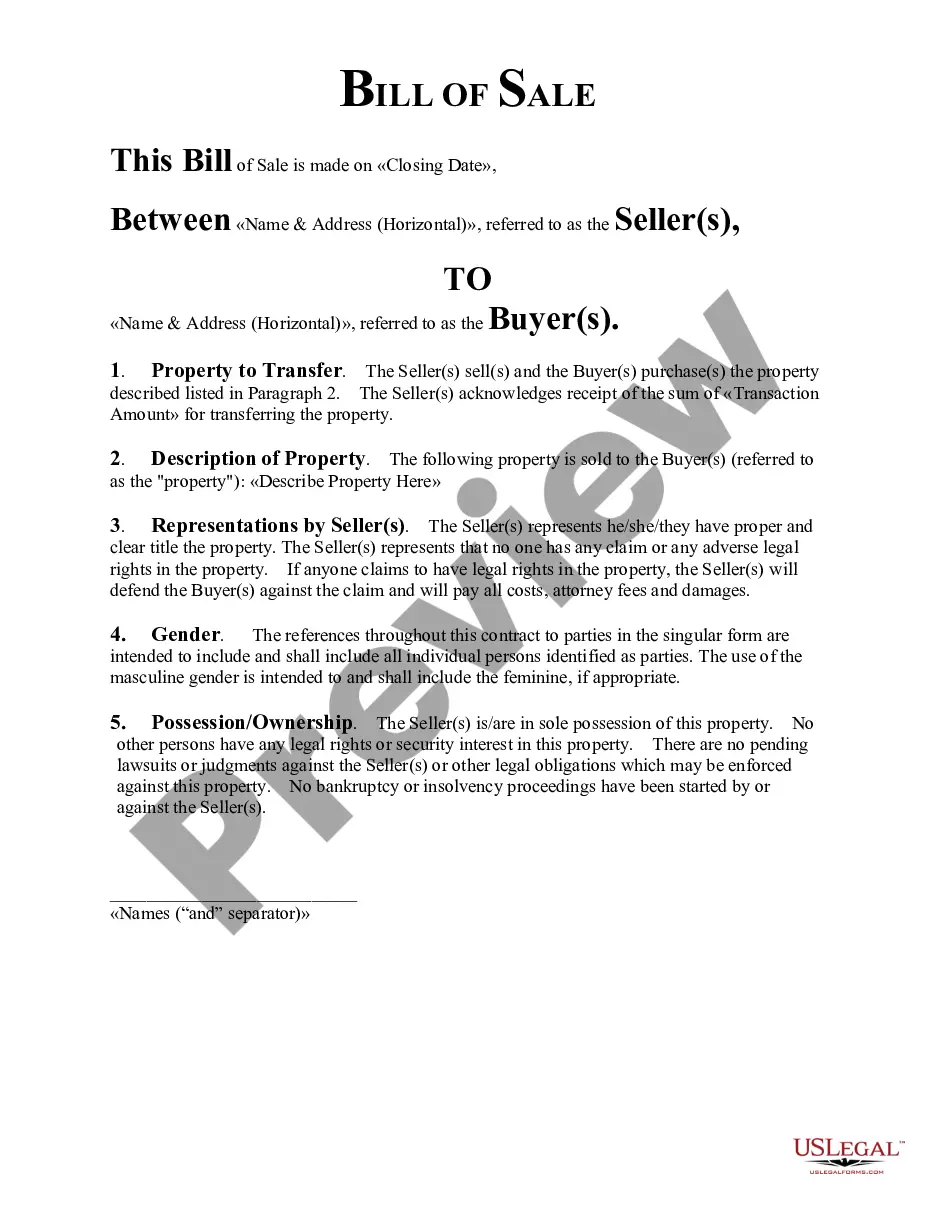
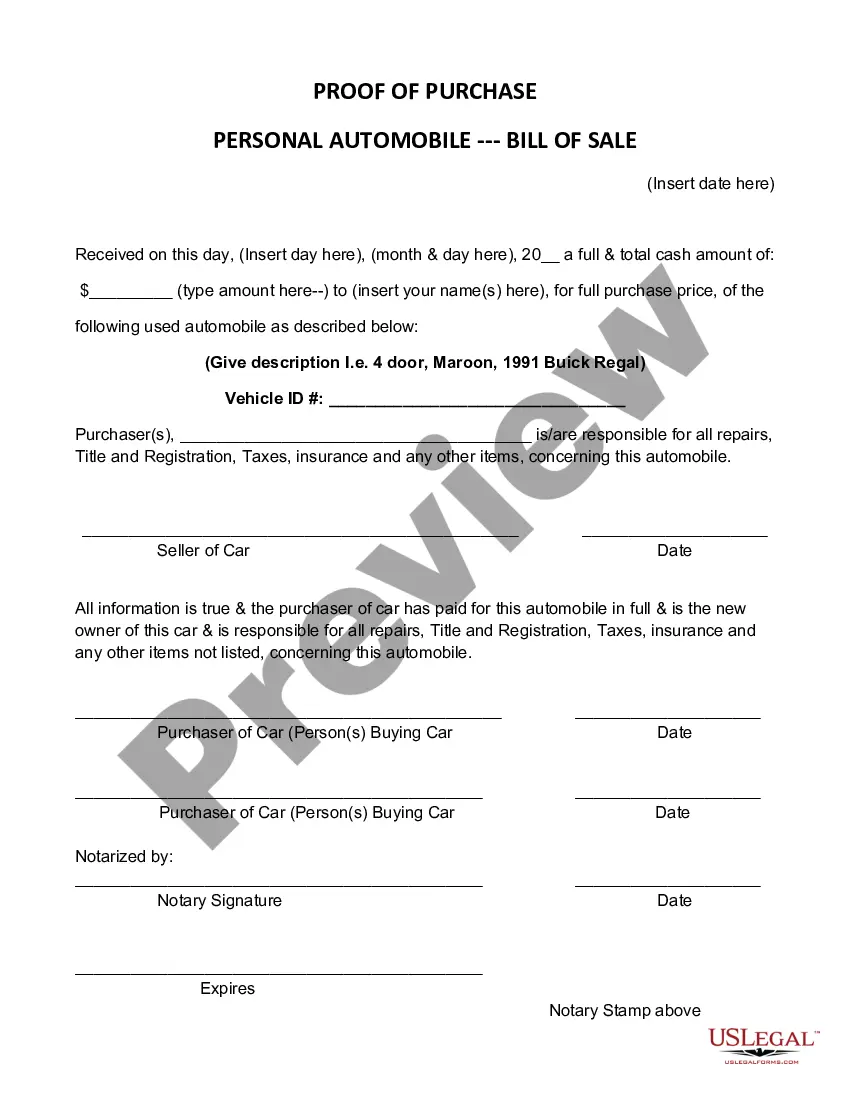
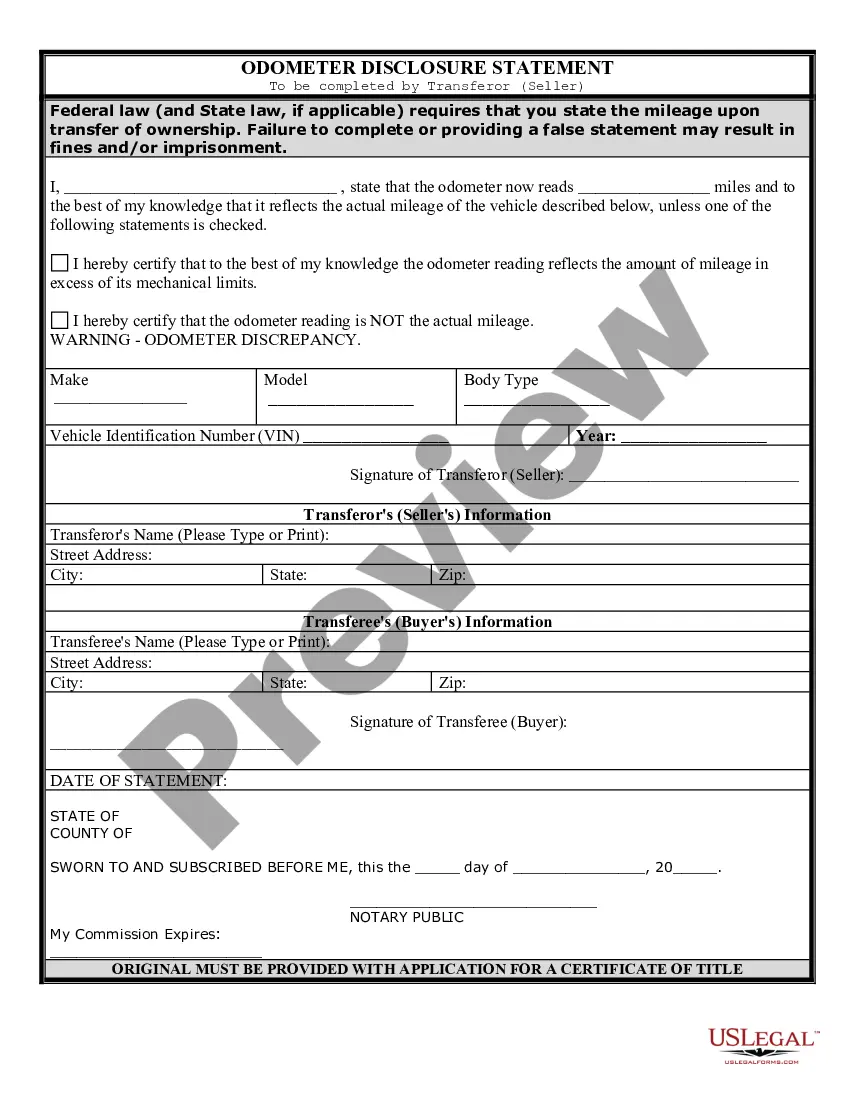
The Bill of Sale of Automobile and Odometer Statement for As-Is Sale is a legal document used to transfer ownership of a motor vehicle from the seller to the buyer. It serves as proof of the transaction and specifies that the vehicle is sold "as-is," meaning the seller does not offer any warranties about the vehicle's condition. This form also includes an odometer disclosure statement, which is a federal requirement to indicate the mileage at the time of sale. This form is essential for protecting both parties in the transaction and providing clear documentation of the sale.
Key components of this form
- Identification of the seller(s) and buyer(s)
- Description of the motor vehicle, including make, model, year, and VIN
- Statement of guarantee by the seller regarding the ownership of the vehicle
- Condition of the sale, specifying "as-is" with no warranties
- Odometer disclosure statement reflecting the vehicle's mileage
- Signature lines for the seller(s) and notarization section
When this form is needed
This form should be used when selling or purchasing a motor vehicle, particularly in private sales. It is crucial when the buyer needs clear proof of ownership and when the seller wishes to limit liability regarding the vehicle's condition. Use this form to comply with federal odometer disclosure requirements and ensure a smooth transaction between the involved parties. Additionally, it is especially useful for "as-is" sales where the vehicle may not be in perfect condition or when the seller is not offering any warranties.
Intended users of this form
Individuals and businesses involved in the sale or purchase of motor vehicles.
- Private sellers transferring ownership of their vehicles
- Buyers acquiring vehicles from private sellers
- Dealers conducting as-is sales without warranties
- Parties needing to document the transaction for legal purposes
Steps to complete this form
- Identify the parties involved by entering the full names of the seller(s) and buyer(s).
- Provide a detailed description of the vehicle, including its make, model, body type, year, and VIN.
- Enter the amount of payment provided for the vehicle in the appropriate section.
- Confirm that the seller guarantees ownership and the condition of the vehicle and record the "as-is" sale clause.
- Complete the odometer disclosure section, stating the current mileage and any discrepancies, if applicable.
- Sign and date the document, and ensure it is notarized to validate the sale.
Does this form need to be notarized?
To make this form legally binding, it must be notarized. Our online notarization service, powered by Notarize, lets you verify and sign documents remotely through an encrypted video session.
Get your form ready online
Our built-in tools help you complete, sign, share, and store your documents in one place.
Make edits, fill in missing information, and update formatting in US Legal Forms—just like you would in MS Word.
Download a copy, print it, send it by email, or mail it via USPS—whatever works best for your next step.
Sign and collect signatures with our SignNow integration. Send to multiple recipients, set reminders, and more. Go Premium to unlock E-Sign.
If this form requires notarization, complete it online through a secure video call—no need to meet a notary in person or wait for an appointment.
We protect your documents and personal data by following strict security and privacy standards.

Make edits, fill in missing information, and update formatting in US Legal Forms—just like you would in MS Word.

Download a copy, print it, send it by email, or mail it via USPS—whatever works best for your next step.

Sign and collect signatures with our SignNow integration. Send to multiple recipients, set reminders, and more. Go Premium to unlock E-Sign.

If this form requires notarization, complete it online through a secure video call—no need to meet a notary in person or wait for an appointment.

We protect your documents and personal data by following strict security and privacy standards.
Typical mistakes to avoid
- Failing to accurately complete the odometer disclosure statement
- Not providing a full description of the vehicle
- Forgetting to sign or date the document
- Not having the form notarized, if required
- Leaving out the sales amount or payment details
Why use this form online
- Convenient access to professionally drafted forms anytime, anywhere.
- Editable format that allows users to customize details easily.
- Reliable templates ensure compliance with legal standards and requirements.
- Quick download and printing options for immediate use.
Legal use & context
- This Bill of Sale serves as a binding agreement between the seller and buyer.
- It provides legal protection by clearly stating the terms of the sale.
- The 'as-is' clause helps prevent future disputes regarding the vehicle's condition.
- The form ensures compliance with federal and state laws regarding odometer disclosures.
Summary of main points
- The Bill of Sale is essential for documenting the sale of a vehicle.
- It protects sellers from liability concerning the vehicle's condition post-sale.
- Complete the form accurately to avoid any legal complications.
- Odometer disclosures are mandatory to ensure transparency in transactions.
Looking for another form?

Form popularity
FAQ
The date of the sale. A description of the car, including its: Year, make and model. The selling price of the car. If the car is a gift or partial gift, you should still create a bill of sale. Warranty information. The full names, addresses and signatures of the buyer and seller.
The vehicle description and identification number (VIN). The vehicle's final sale price. Names and details of the buyer and seller. The county where you sold or bought the vehicle.
Can a Bill of Sale Be Handwritten? A bill of sale is a legal document that verifies you have sold your car and provides basic information about the vehicle or any other item and the terms of the sale.As, with any legal written document a bill of sale can be handwritten.
Vehicle bills of sale in Michigan do not require notarization.The names, contact information, and signatures of the buyer and the seller. Warranty information (if applicable) The vehicle identification number or VIN.
No, you do not need a Michigan bill of sale to register a vehicle. The Michigan Department of State has a handy PDF to help you prepare to register your vehicle. You will need a title. You can use a bill of sale if you do not have another form for proof of ownership.
The vehicle mileage. The selling date. The selling price. Your signature.
A bill of sale isn't legally required to sell any item in Michigan. However, it is an important personal record. It can be used to document the legal ownership of an item.
A California Bill of Sale must include both a buyer's and a seller's disclosure. They must be read. If the parties agree to the sale, the document must be signed, witnessed, and notarized. The date of the signatures should also be listed.