Georgia Framing Contract for Contractor
About this form
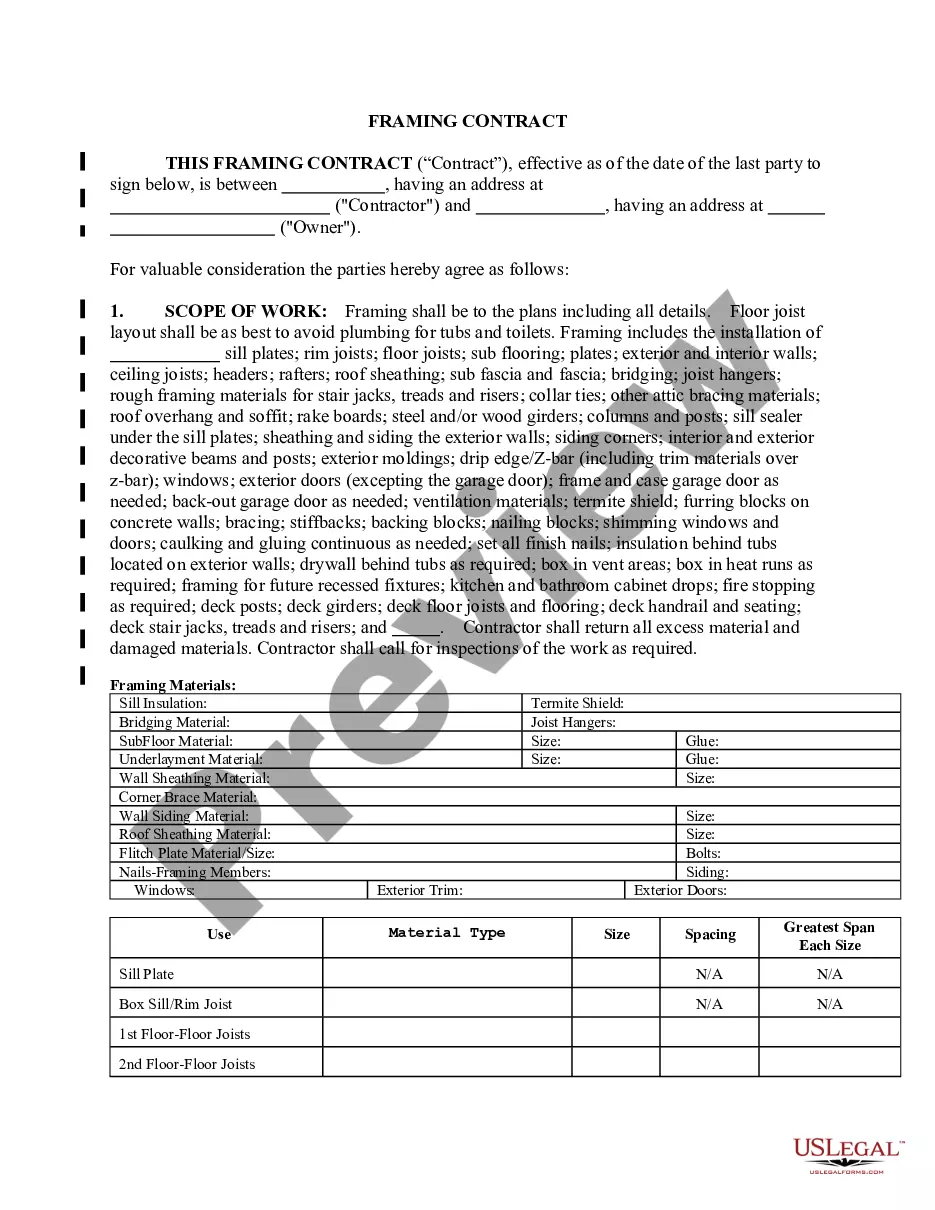
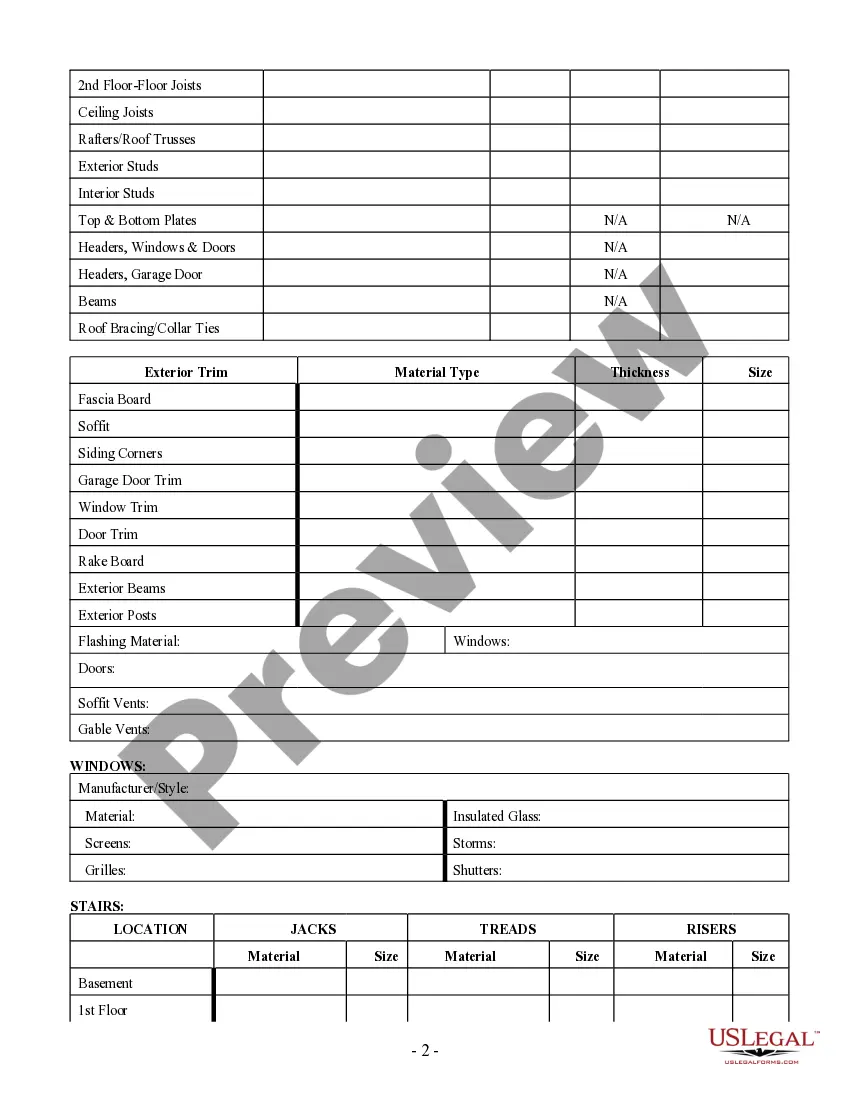
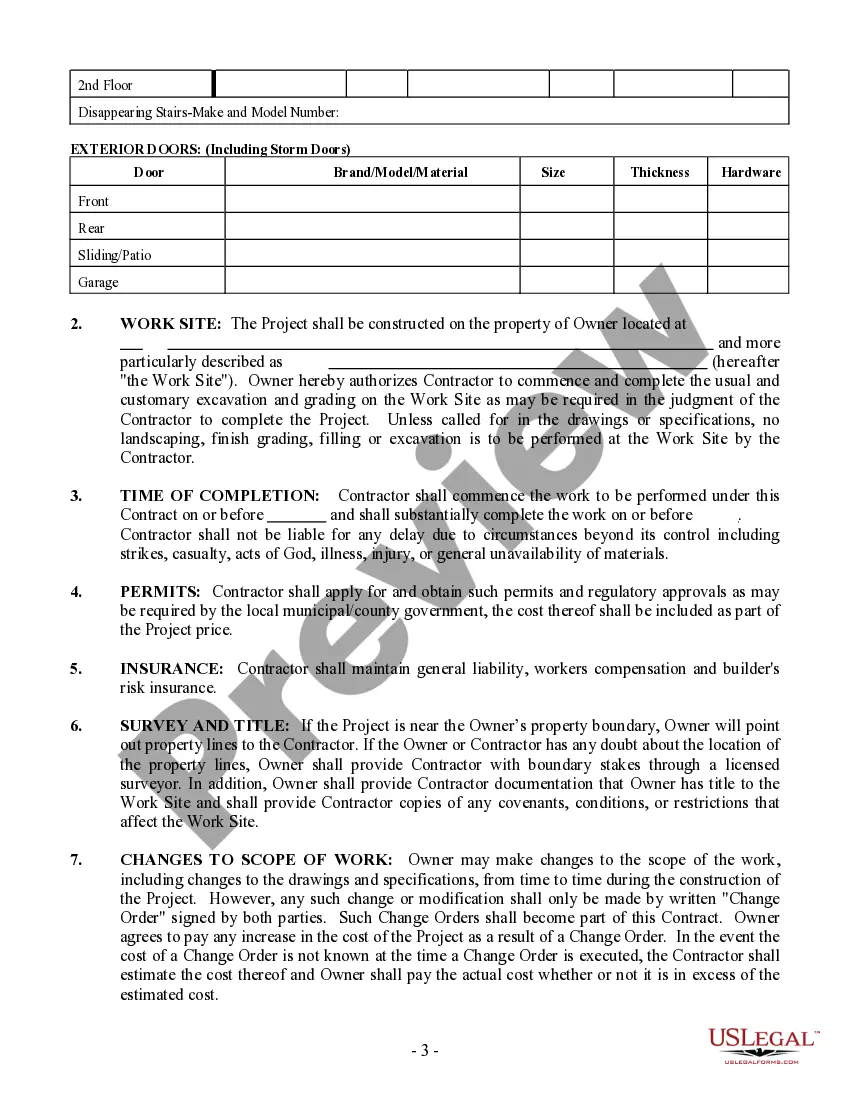
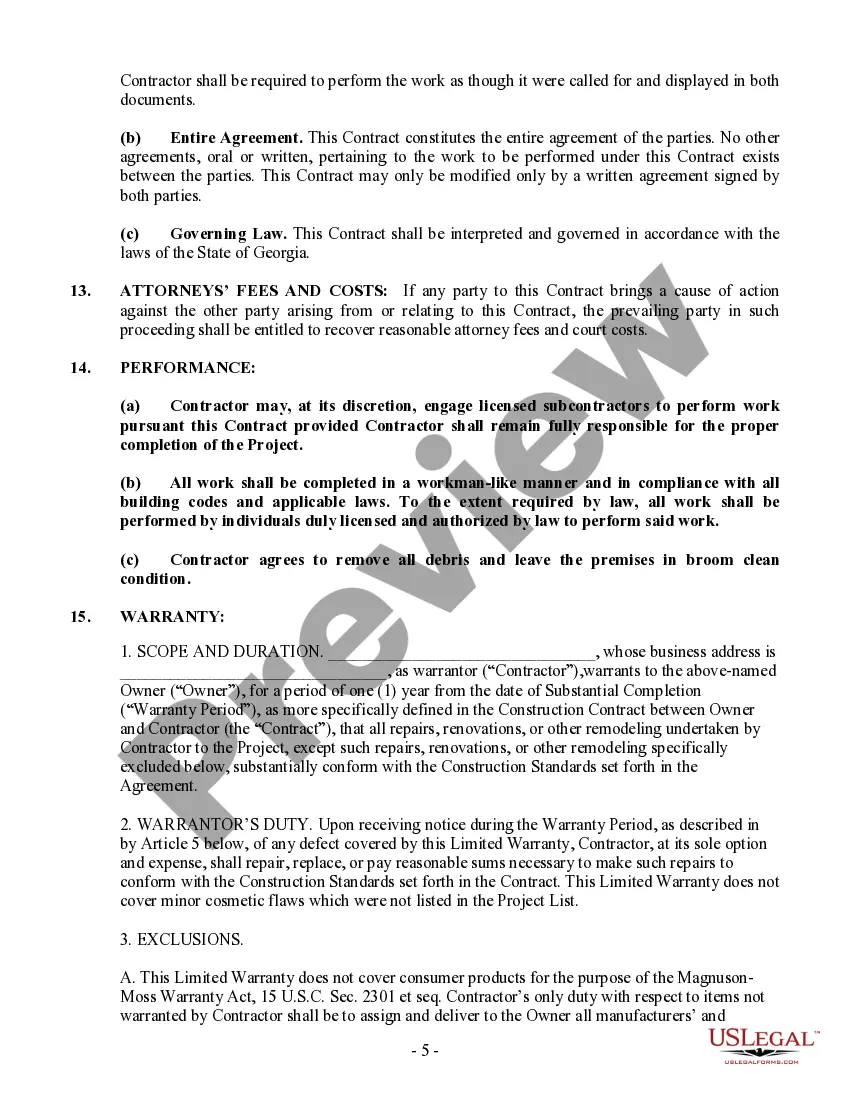
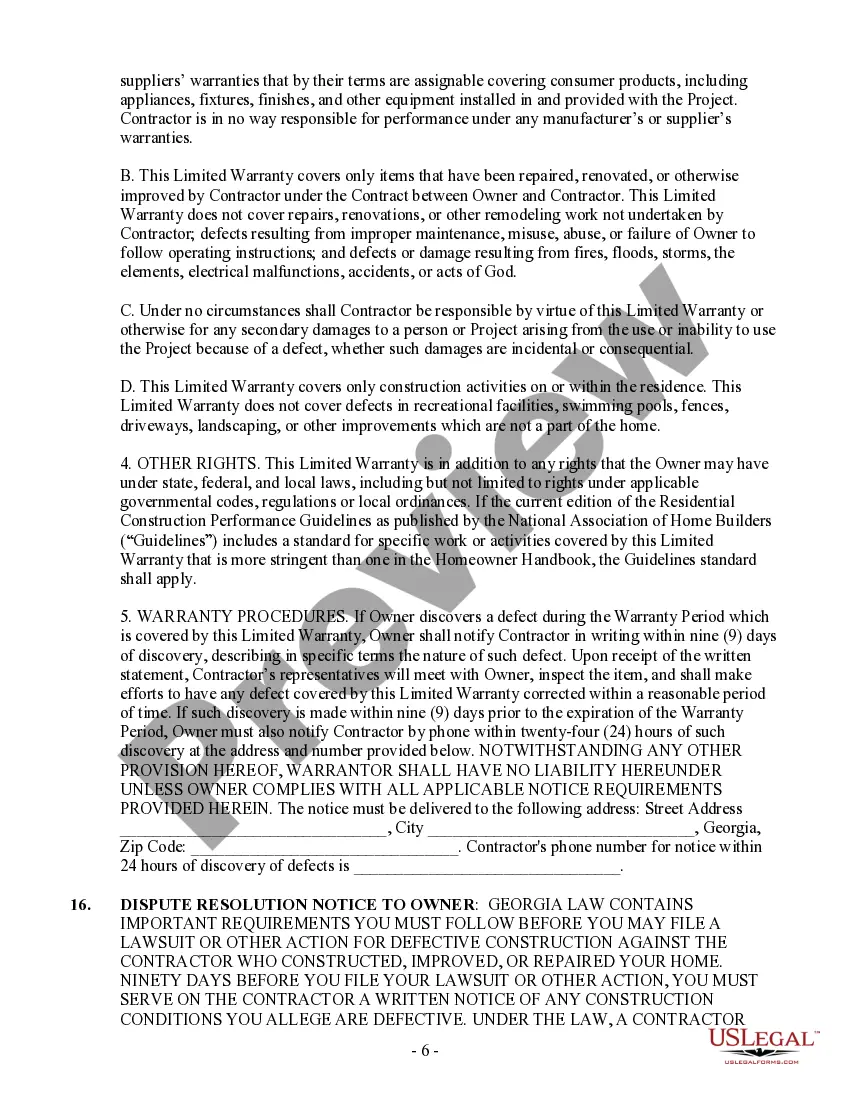
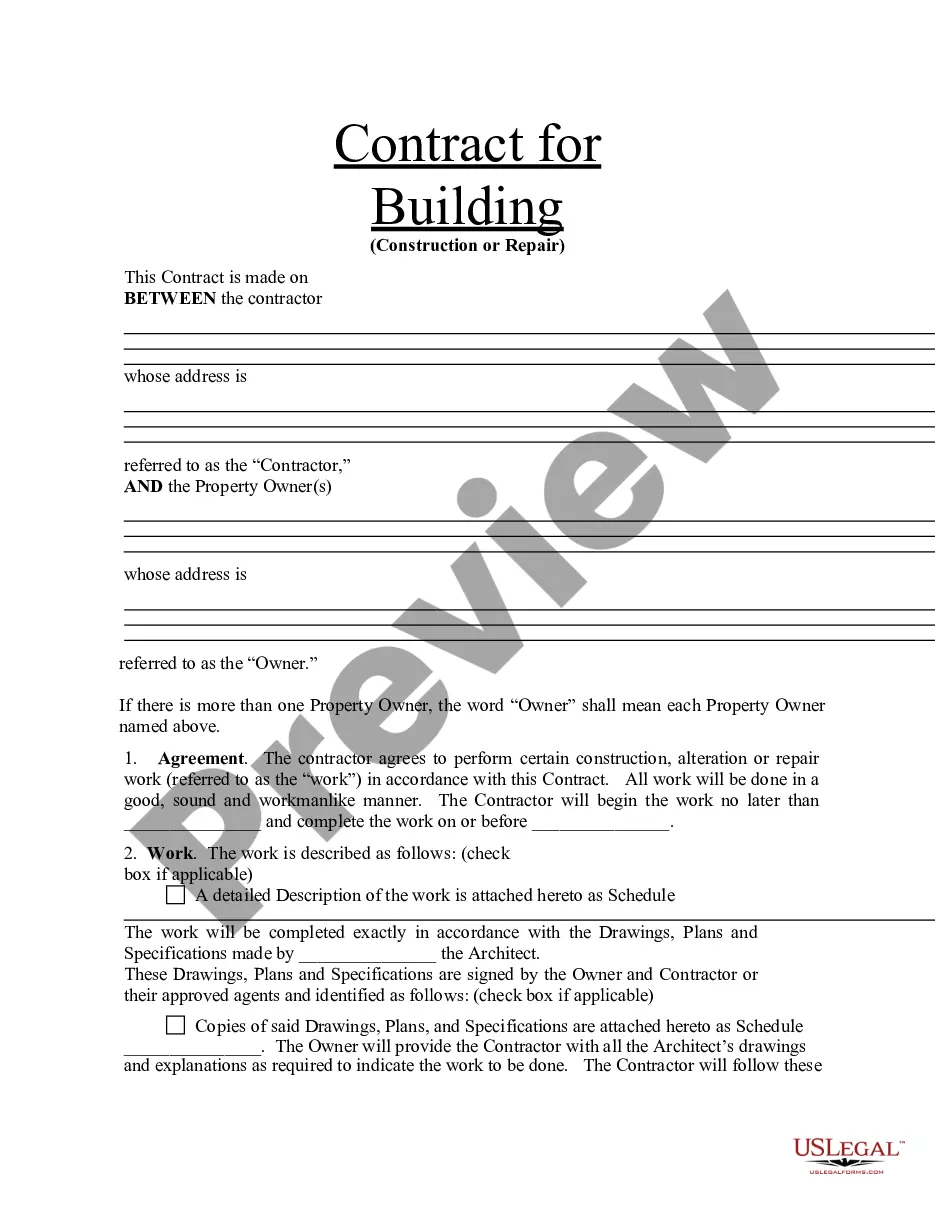
The Framing Contract for Contractor is a legally binding agreement between framing contractors and property owners. It establishes the terms of the project, including payment arrangements, responsibilities, and guidelines for changes and damages. This contract is specific to the laws of Georgia, making it distinct from other construction contracts that may not cater to state-specific provisions.
Key components of this form
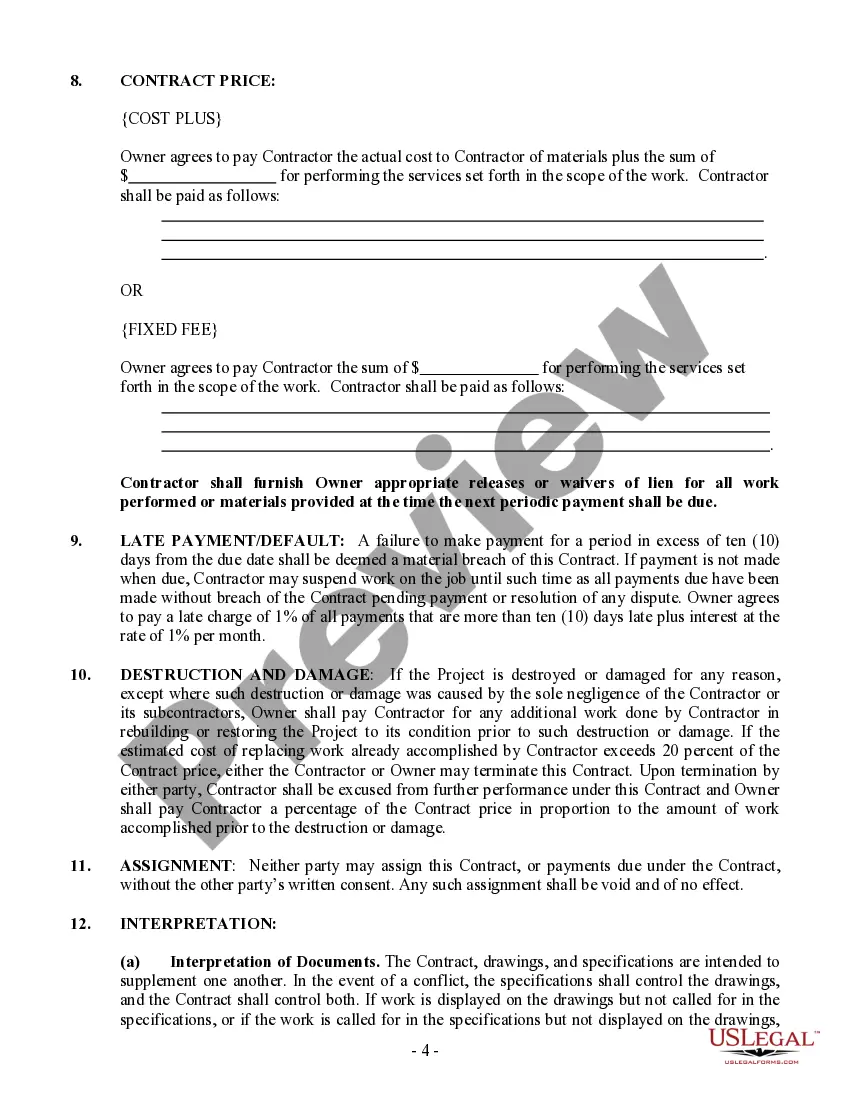
- Permits: Obligation for the contractor to obtain necessary permits and approvals.
- Insurance: Requirement for maintaining general liability, workers' compensation, and builders risk insurance.
- Survey and Title: Clarification of property boundaries and title documentation required from the owner.
- Changes to Scope of Work: Process for modifying project specifications through written change orders.
- Destruction and Damage: Provisions covering costs and responsibilities for restoring work if damaged.
- Jurisdiction: Governing law compliance with Georgia state laws.


When to use this form
This form is ideal for property owners who are hiring a framing contractor to complete construction projects. It should be used when establishing the project's scope, payment terms, and responsibilities for both parties. The need for this contract arises particularly when significant structural changes or framing work is planned, ensuring that both the contractor and the owner are on the same page regarding expectations and liabilities.
Intended users of this form
- Property owners seeking to hire framing contractors for new construction or renovation projects.
- Framing contractors needing a clear contract to outline their services and protect their interests.
- Individuals unfamiliar with legal jargon who require a straightforward contract template for their framing work.
Steps to complete this form
- Identify the parties involved by entering the names and addresses of both the contractor and the property owner.
- Specify the scope of work, including detailed descriptions of the framing project and any plans or specifications.
- Determine the payment method, whether it's a fixed fee or a cost-plus arrangement, and detail this in the contract.
- Include sections addressing permits, insurance, and changes to the scope of work, ensuring all parties understand their responsibilities.
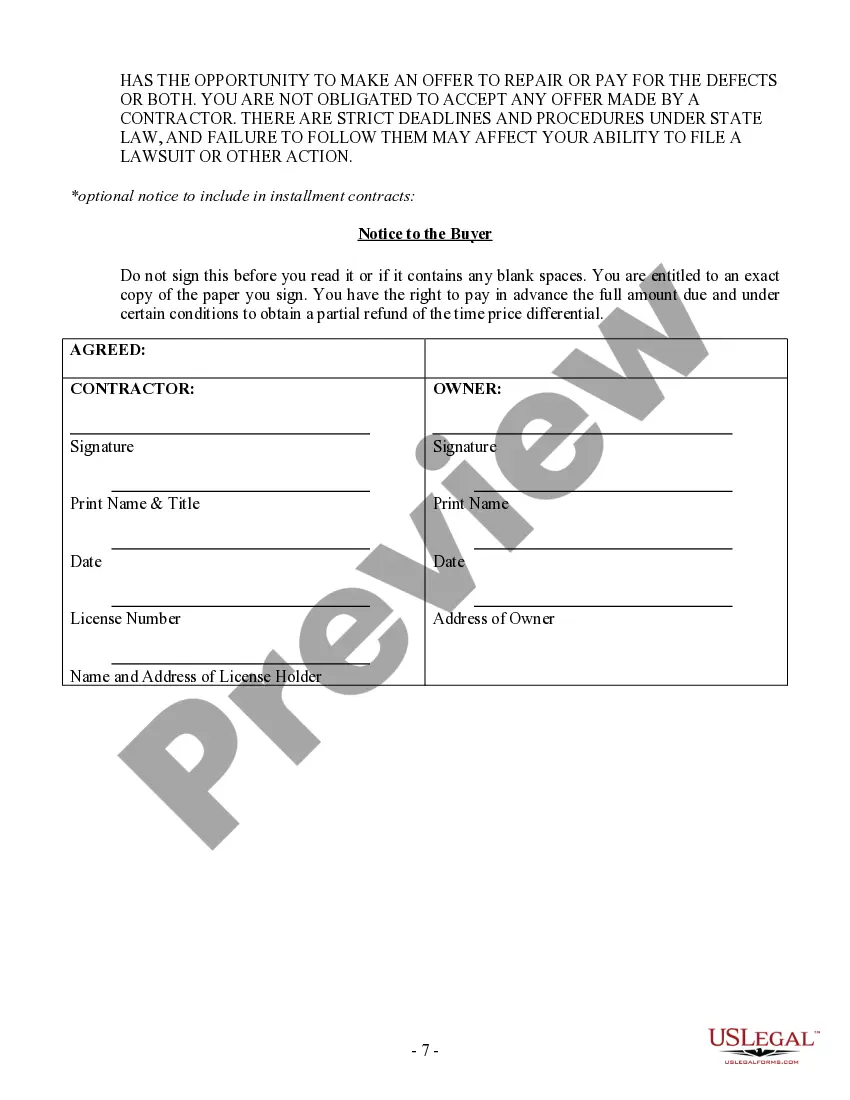
- Review the entire document and ensure both parties sign and date the contract to make it legally binding.
Does this form need to be notarized?
This form does not typically require notarization to be legally valid. However, some jurisdictions or document types may still require it. US Legal Forms provides secure online notarization powered by Notarize, available 24/7 for added convenience.
Get your form ready online
Our built-in tools help you complete, sign, share, and store your documents in one place.
Make edits, fill in missing information, and update formatting in US Legal Forms—just like you would in MS Word.
Download a copy, print it, send it by email, or mail it via USPS—whatever works best for your next step.
Sign and collect signatures with our SignNow integration. Send to multiple recipients, set reminders, and more. Go Premium to unlock E-Sign.
If this form requires notarization, complete it online through a secure video call—no need to meet a notary in person or wait for an appointment.
We protect your documents and personal data by following strict security and privacy standards.

Make edits, fill in missing information, and update formatting in US Legal Forms—just like you would in MS Word.

Download a copy, print it, send it by email, or mail it via USPS—whatever works best for your next step.

Sign and collect signatures with our SignNow integration. Send to multiple recipients, set reminders, and more. Go Premium to unlock E-Sign.

If this form requires notarization, complete it online through a secure video call—no need to meet a notary in person or wait for an appointment.

We protect your documents and personal data by following strict security and privacy standards.
Common mistakes
- Failing to specify the payment structure clearly, leading to misunderstandings later on.
- Neglecting to include necessary change order provisions, which can complicate project adjustments.
- Not verifying property lines and title documentation before starting work.
- Overlooking insurance requirements, which can expose parties to liability issues.
Advantages of online completion
- Easy access to professionally drafted legal documents without the need for an attorney.
- Editable templates that allow users to customize the contract according to their specific needs.
- Reliability, knowing that the form is compliant with Georgia state laws, reducing legal risks.
Looking for another form?
Form popularity
FAQ
Creating a contractor's contract begins with defining the project details, scope, and payment plan. Clearly outline the roles of all parties and include clauses regarding dispute resolution and termination conditions. Leveraging a Georgia Framing Contract for Contractor as a framework can simplify this process, ensuring all necessary elements are covered effectively.
To acquire a contractor's license in Georgia, you need to meet specific age and experience requirements, along with passing a licensing exam. Additionally, you must show proof of financial responsibility and submit a completed application. Preparing a Georgia Framing Contract for Contractor can be beneficial in understanding the legal obligations associated with licensure.
When working with a contractor, avoid discussing sensitive budget details or your doubts about their capability. Being overly critical can hinder the working relationship. Focus instead on open communication and using a Georgia Framing Contract for Contractor to set mutual expectations, which can foster a positive collaborative spirit.
Securing a construction contract involves identifying opportunities through job boards, industry connections, and bidding on projects. You should present a solid proposal that highlights your qualifications. Utilizing a Georgia Framing Contract for Contractor can also help outline your terms and conditions clearly, which may enhance your credibility.
To obtain contracts as a contractor, networking is key. Build relationships with local builders, architects, and property owners. Creating a professional online presence, including using a Georgia Framing Contract for Contractor, can help showcase your expertise and make you more appealing to potential clients.
In Georgia, you can perform a limited amount of work without a contractor license, typically under specific monetary thresholds. Homeowners may do small projects like simple repairs or installations without a license. However, if you're considering significant work, using a Georgia Framing Contract for Contractor ensures compliance with local regulations and protects you.
To draft a construction contract, start by outlining the scope of work and defining the roles of all parties involved. Include project timelines, payment terms, and any relevant legal requirements. A Georgia Framing Contract for Contractor can serve as a helpful template, ensuring that essential stipulations are included and clearly articulated.
Avoid revealing your budget limits too early in discussions with your contractor. This information can affect negotiations and may lead to inflated costs. Also, do not share any doubts about your decisions, as this may undermine your contractor's confidence and the overall project. Stick to factual information and your desired outcomes, and a Georgia Framing Contract for Contractor will help maintain clarity.
To write a simple construction contract, start by clearly stating the project details and expectations of both parties involved. Include specific terms such as project timelines, payment schedules, and scope of work. Using a Georgia Framing Contract for Contractor can simplify this process, ensuring compliance with state regulations. Additionally, both parties should review and sign the contract to finalize the agreement.
To fill out a contractor agreement, clearly state the parties involved and the scope of the project. Include payment details, deadlines, and any specific conditions or obligations. Finally, ensure the document is signed by both parties to make it legally binding. Using a Georgia Framing Contract for Contractor can simplify this process and provide clarity.