Maine General Power of Attorney for Care and Custody of Child or Children

What this document covers
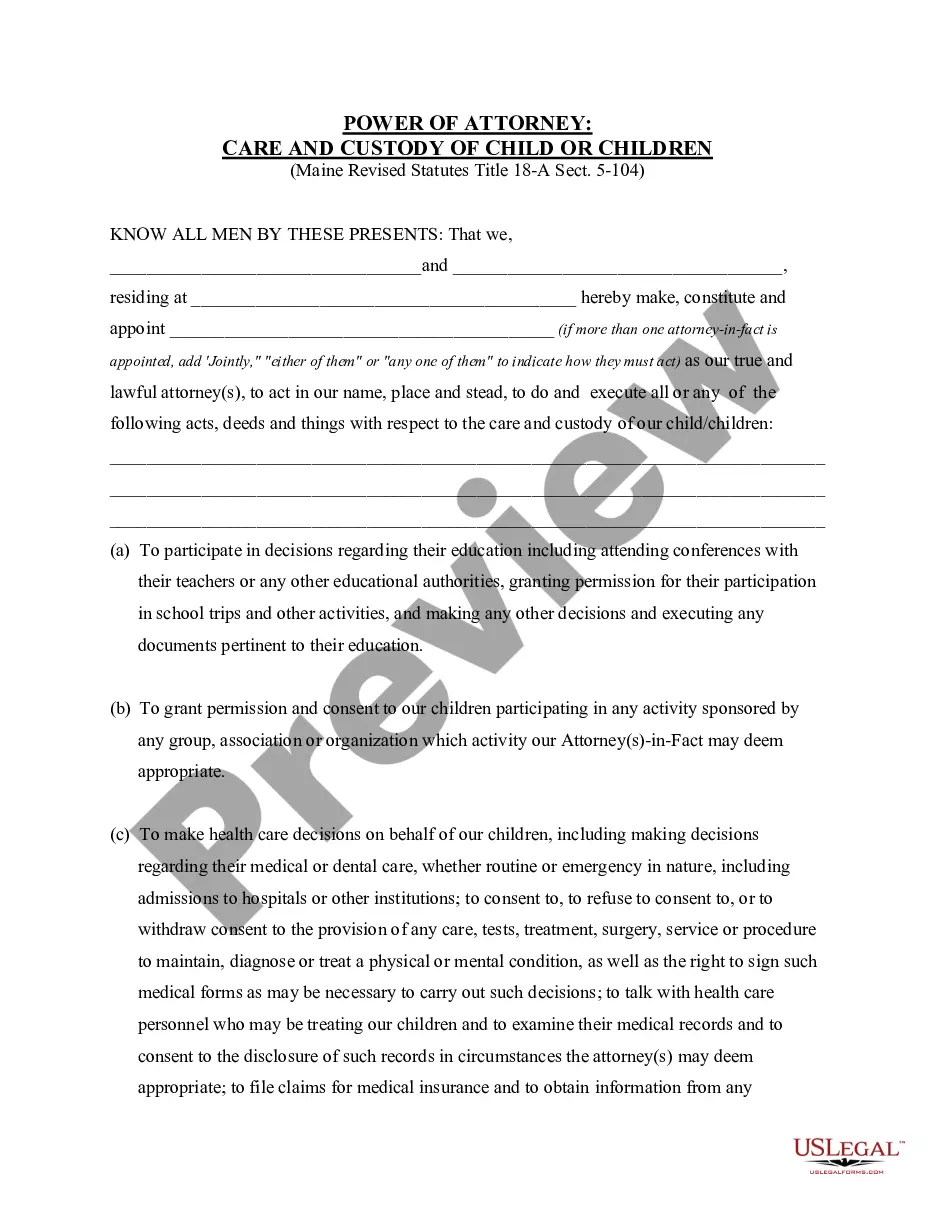
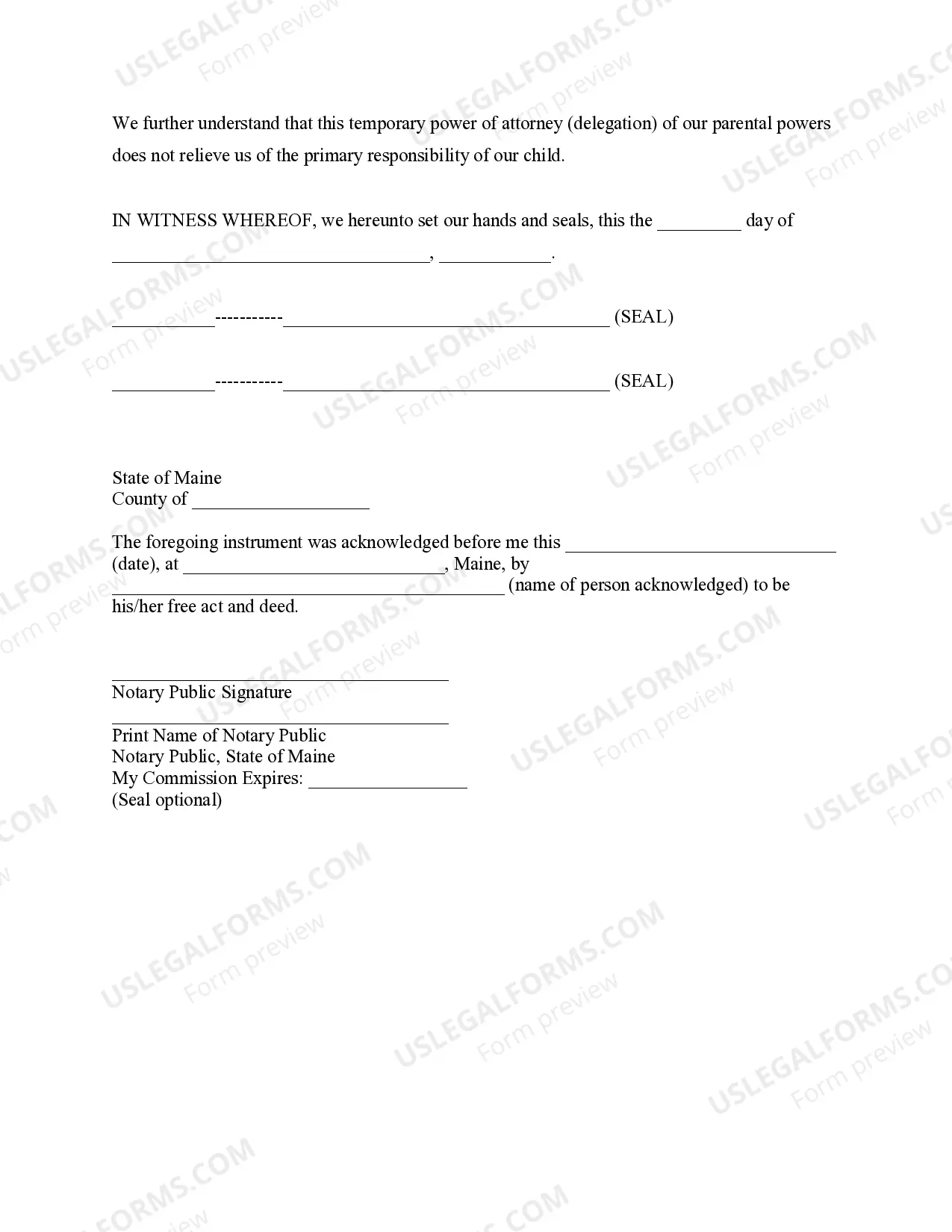
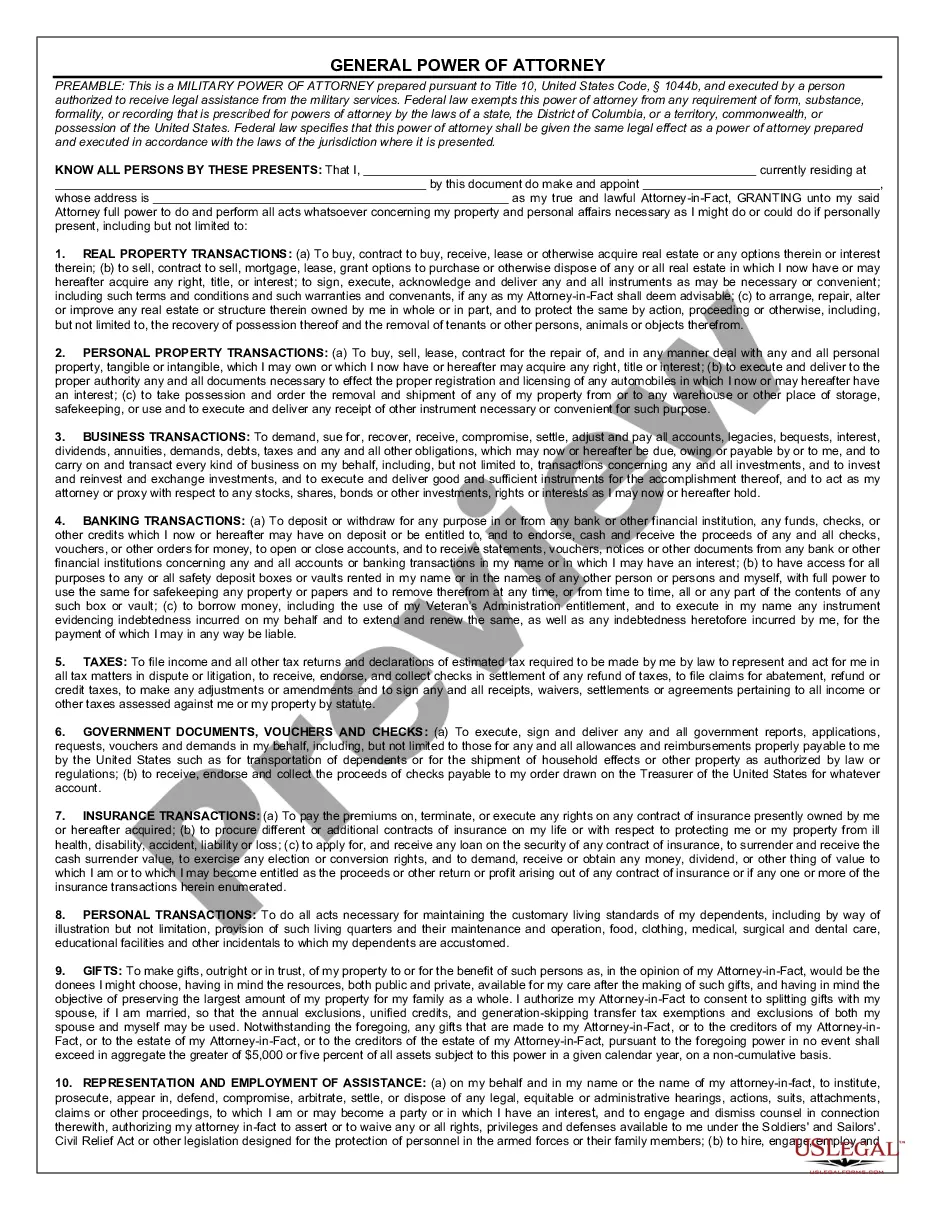
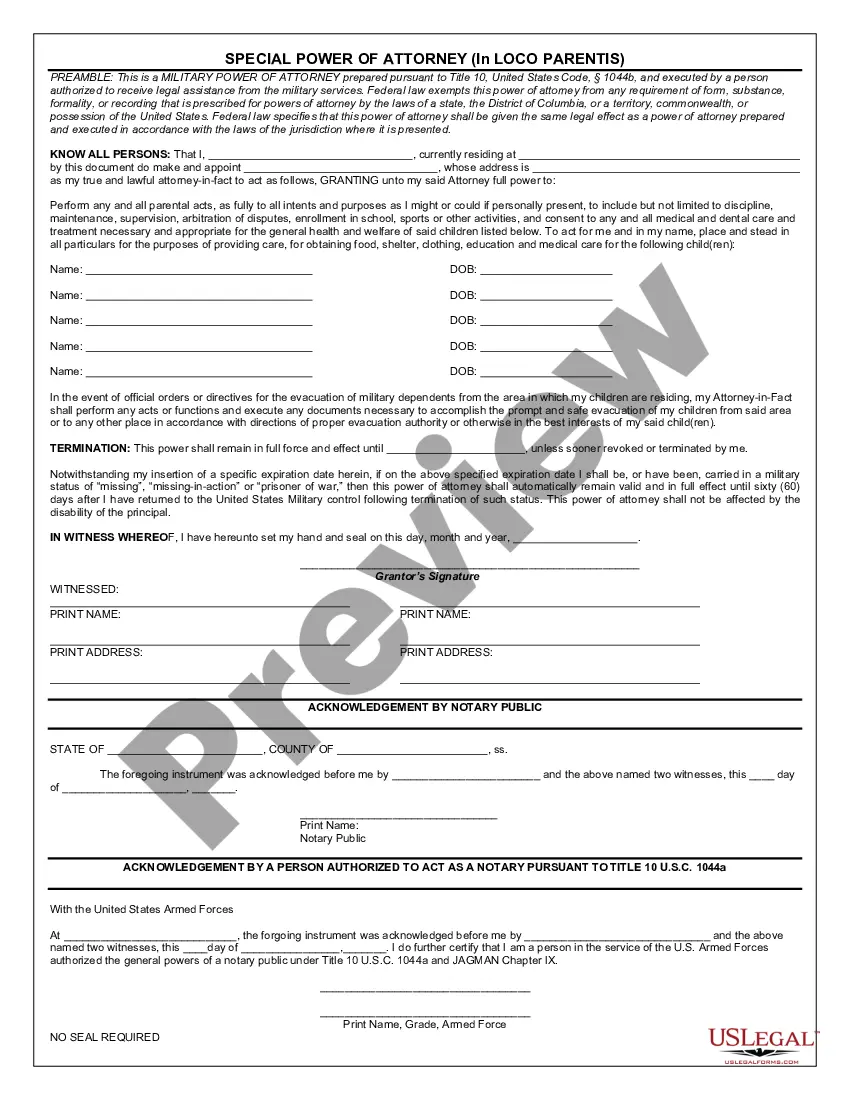
The General Power of Attorney for Care and Custody of Child or Children is a legal document that allows a parent or guardian to designate an attorney-in-fact to make decisions regarding the care, custody, and health care of their child or children. This form is particularly important when the parent or guardian is unavailable or unable to make these decisions themselves. Unlike standard powers of attorney, this form specifically addresses the needs related to children's welfare and education.
Key components of this form
- Appointment of attorney(s)-in-fact for child care and custody.
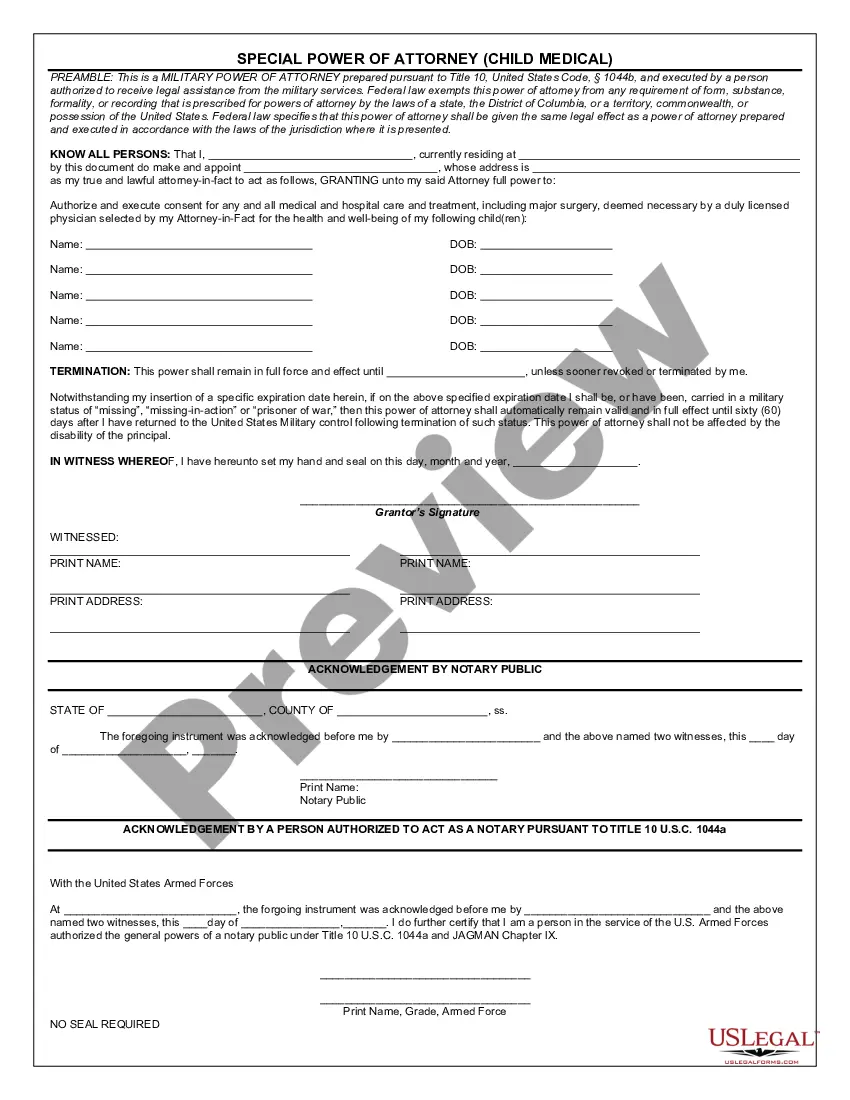
- Authority to make health care decisions on behalf of the children.
- Granting permission for children to participate in educational activities and trips.
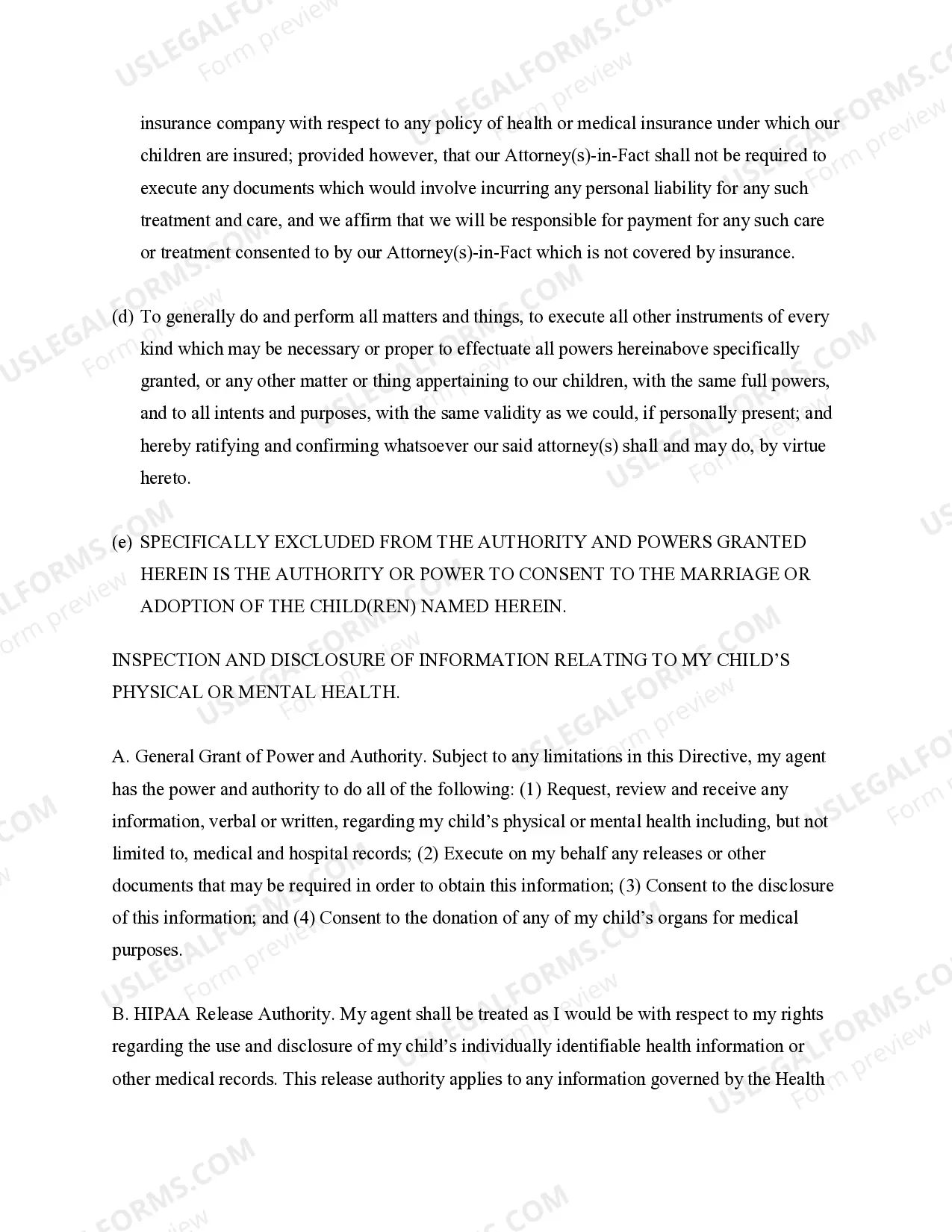
- HIPAA release authority for accessing children's medical records.
- Exclusions, such as consent to marriage or adoption of the children.
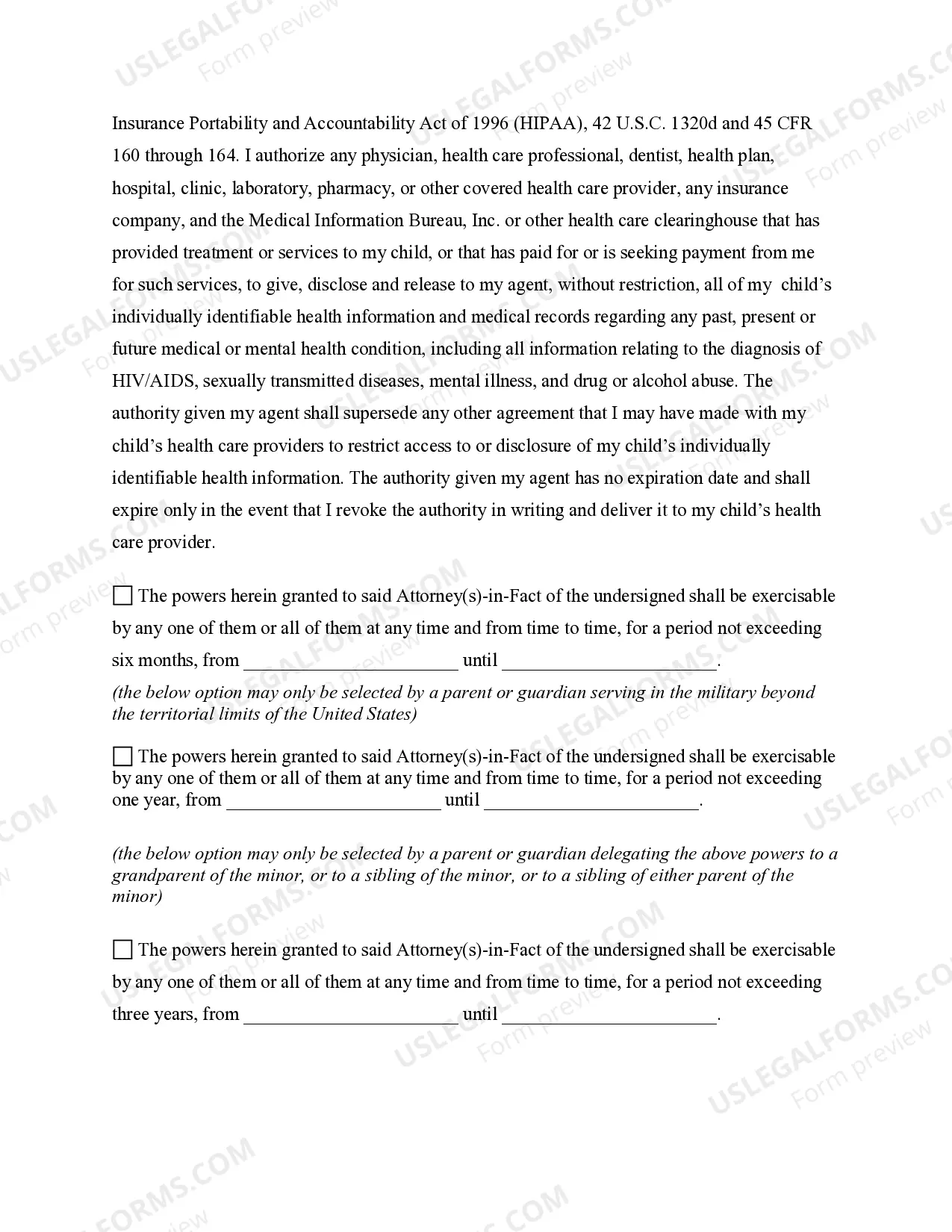
- Expiration terms regarding the duration of the attorney-in-fact powers.
When to use this form
This form should be used when a parent or legal guardian needs to delegate authority to another individual to make important decisions regarding the care, education, and medical treatment of their child or children. This can arise in situations such as extended travel, military deployment, or when a parent is temporarily incapacitated.
Who should use this form
- Parents or guardians who are unable to care for their child due to absence or incapacity.
- Guardianship professionals who require authority to make decisions for a minor.
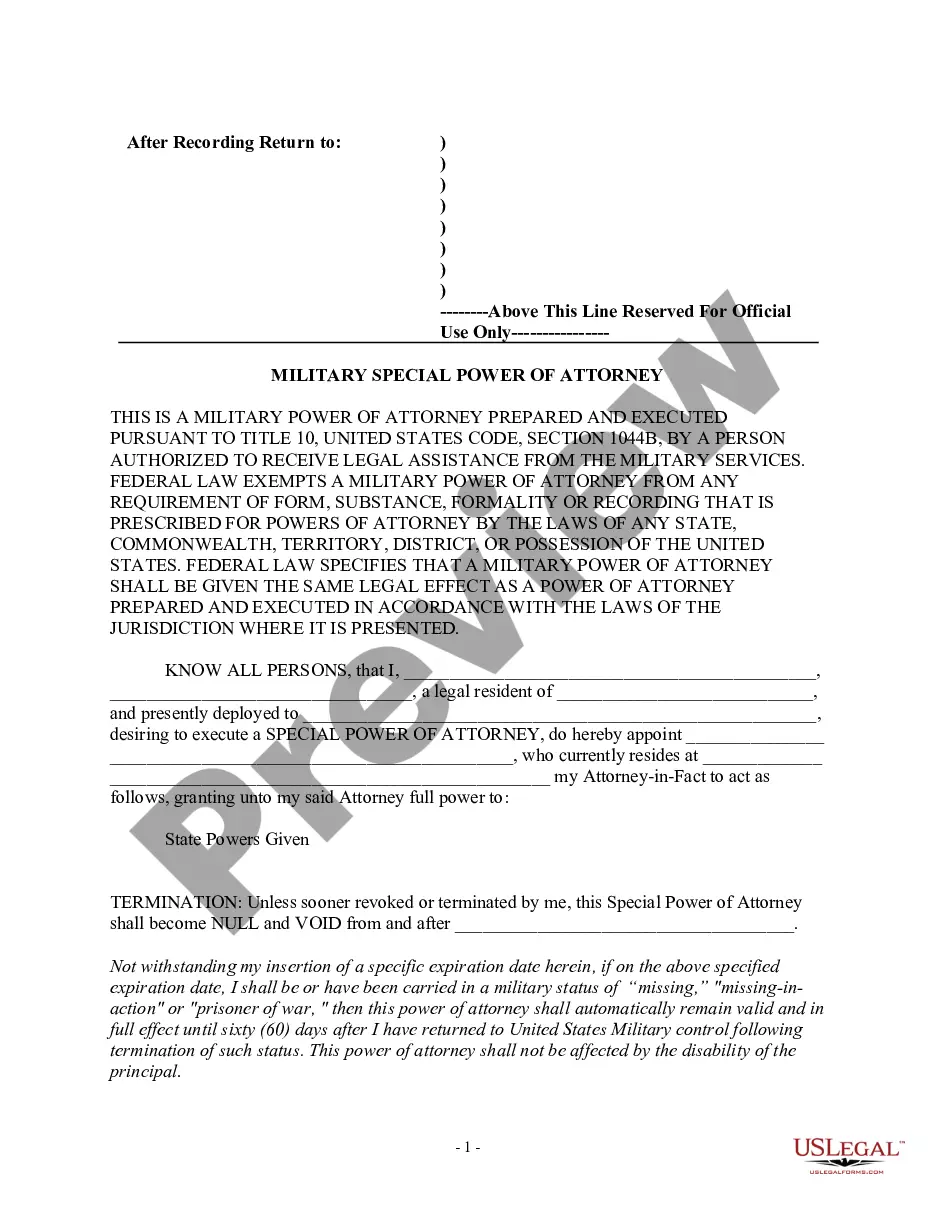
- Military personnel who are deployed and need to assign temporary care to another individual.
- Any individual needing to act on behalf of a parent for the child's welfare.
How to complete this form
- Identify the parents or guardians granting the power of attorney.
- Name the individual(s) being appointed as attorney(s)-in-fact.
- Clearly specify the child or children covered under the power of attorney.
- Determine the scope of authority granted, such as health care and education decisions.
- Sign and date the form in the presence of a notary public.
Does this document require notarization?
This document requires notarization to meet legal standards. US Legal Forms provides secure online notarization powered by Notarize, allowing you to complete the process through a verified video call, available 24/7.
Get your form ready online
Our built-in tools help you complete, sign, share, and store your documents in one place.
Make edits, fill in missing information, and update formatting in US Legal Forms—just like you would in MS Word.
Download a copy, print it, send it by email, or mail it via USPS—whatever works best for your next step.
Sign and collect signatures with our SignNow integration. Send to multiple recipients, set reminders, and more. Go Premium to unlock E-Sign.
If this form requires notarization, complete it online through a secure video call—no need to meet a notary in person or wait for an appointment.
We protect your documents and personal data by following strict security and privacy standards.

Make edits, fill in missing information, and update formatting in US Legal Forms—just like you would in MS Word.

Download a copy, print it, send it by email, or mail it via USPS—whatever works best for your next step.

Sign and collect signatures with our SignNow integration. Send to multiple recipients, set reminders, and more. Go Premium to unlock E-Sign.

If this form requires notarization, complete it online through a secure video call—no need to meet a notary in person or wait for an appointment.

We protect your documents and personal data by following strict security and privacy standards.
Mistakes to watch out for
- Failing to specify the child or children involved clearly.
- Not accurately identifying the attorney-in-fact's powers.
- Omitting the notarization requirement, which could render the document invalid.
- Creating vague language that could lead to misunderstandings about the authority granted.
Benefits of completing this form online
- Convenient access to download and print the form from anywhere at any time.
- Editable templates that allow customization to meet specific needs.
- Reliable access to attorney-drafted content, ensuring legal compliance.
- Streamlined process for completing and notarizing the document online.
Legal use & context
- This form grants authority for specific powers regarding a minor's care.
- It is important to ensure that the designated attorney-in-fact understands their responsibilities and limitations.
- The form remains enforceable unless revoked or until the specified authority period ends.
What to keep in mind
- A General Power of Attorney for Care and Custody of Child or Children is essential for delegating parental authority temporarily.
- Clearly define the scope of authority to ensure both safety and compliance with your wishes.
- Ensure notarization is completed for the document to be legally binding.
Looking for another form?
Form popularity
FAQ
A power of attorney must be notarized to be effective in Maine.A power of attorney is presumed to be effective when it is signed and acknowledged unless it states that it will become effective on a future date or upon the occurrence of a contingency such as incapacity or disability.
A Power of Attorney might be used to allow another person to sign a contract for the Principal. It can be used to give another person the authority to make health care decisions, do financial transactions, or sign legal documents that the Principal cannot do for one reason or another.
In order for your parent to grant you Power of Attorney, they must be of sound mind.If the parent is of sound mind, they may sign over Power of Attorney. If your parent is already mentally incapacitated, they may have already granted you (or another person) Power of Attorney in a Living Will.
A power of attorney and a guardianship are tools that help someone act in your stead if you become incapacitated. With a power of attorney, you choose who you want to act for you. In a guardianship proceeding, the court chooses who will act as guardian.
1 attorney answer But no, a power of attorney is not somehow going to constitute or override a custody order, and as a non-parent, he doesn't have any standing to contest custody unless your daughter's been with him (and him alone, not with her mom...
An agent under a financial power of attorney should not have the right to bar a sibling from seeing their parent. A medical power of attorney may give the agent the right to prevent access to a parent if the agent believes the visit would be detrimental to the parent's health.
A power of attorney over a child is a document signed and notarized by a parent giving a non- parent authority to make decisions for a minor child.It can be used to authorize the person to obtain medical treatment for a child or sign up a child for an activity or for other significant decisions.