Colorado Discovery Interrogatories for Divorce Proceeding for either Plaintiff or Defendant - Another Form
About this form
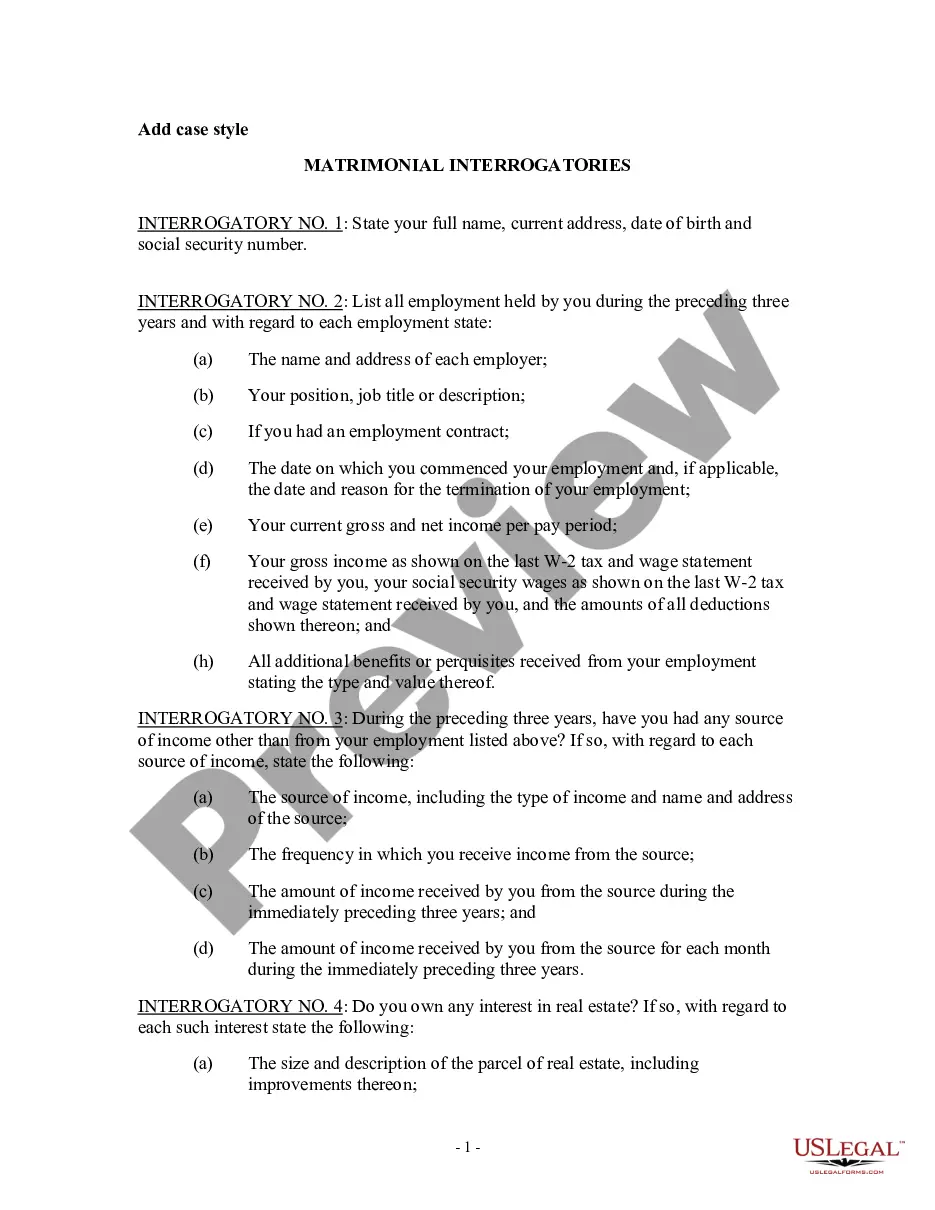
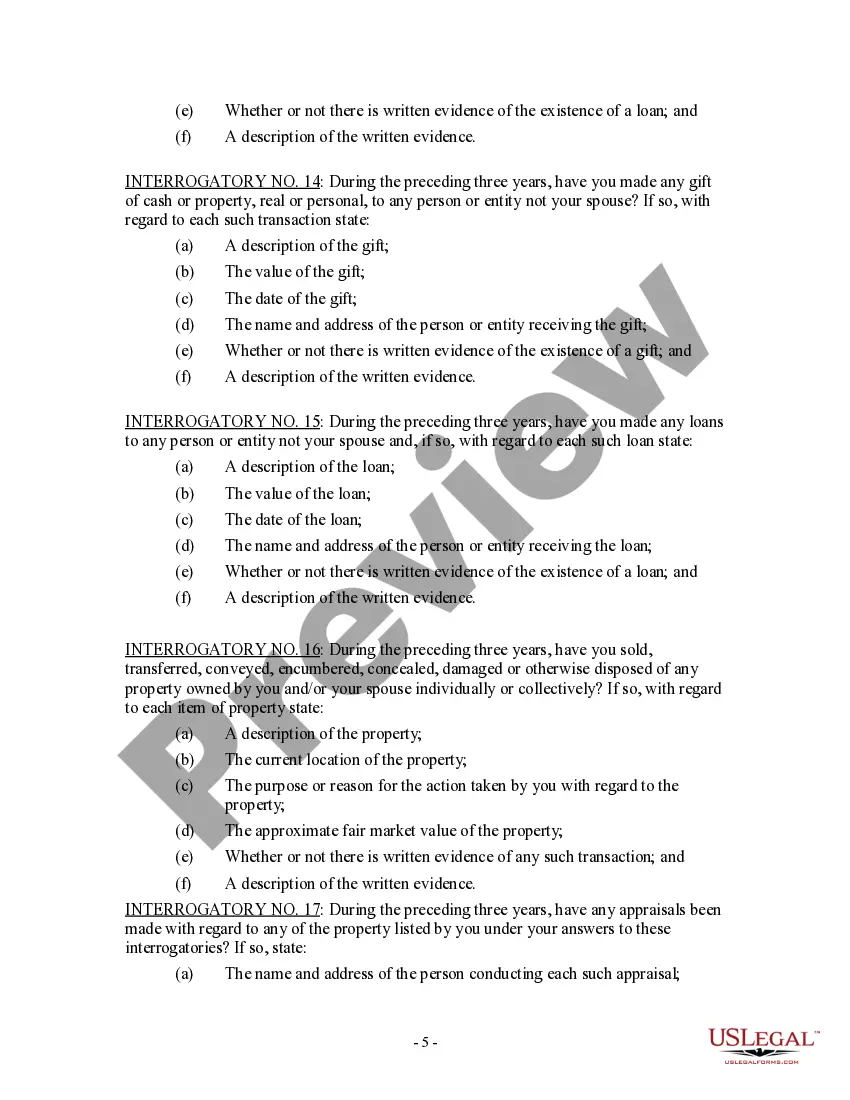
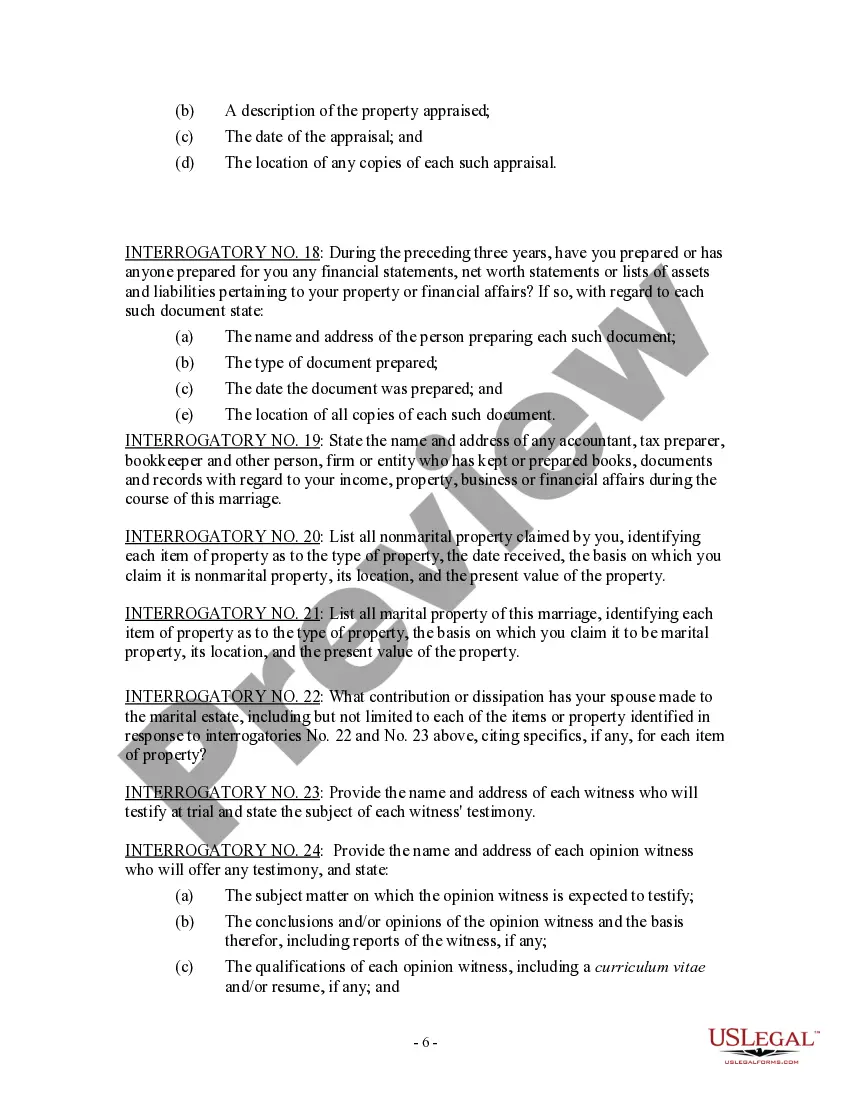
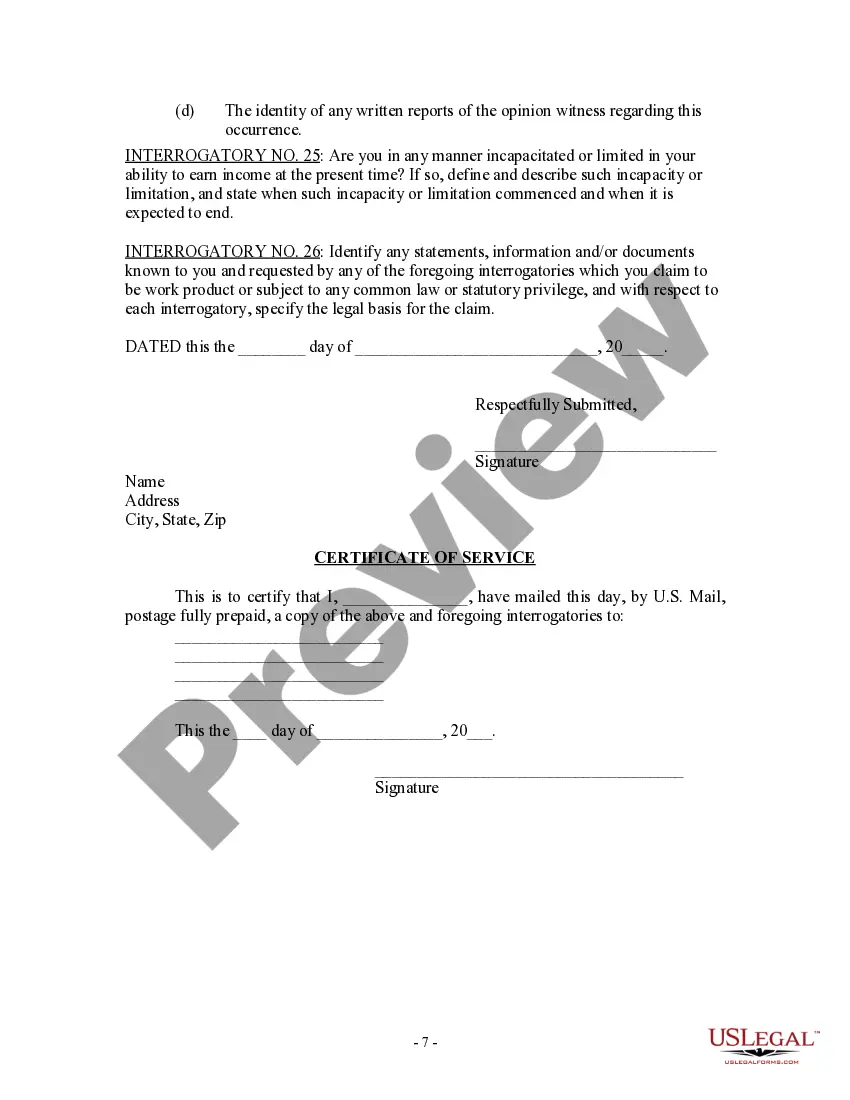
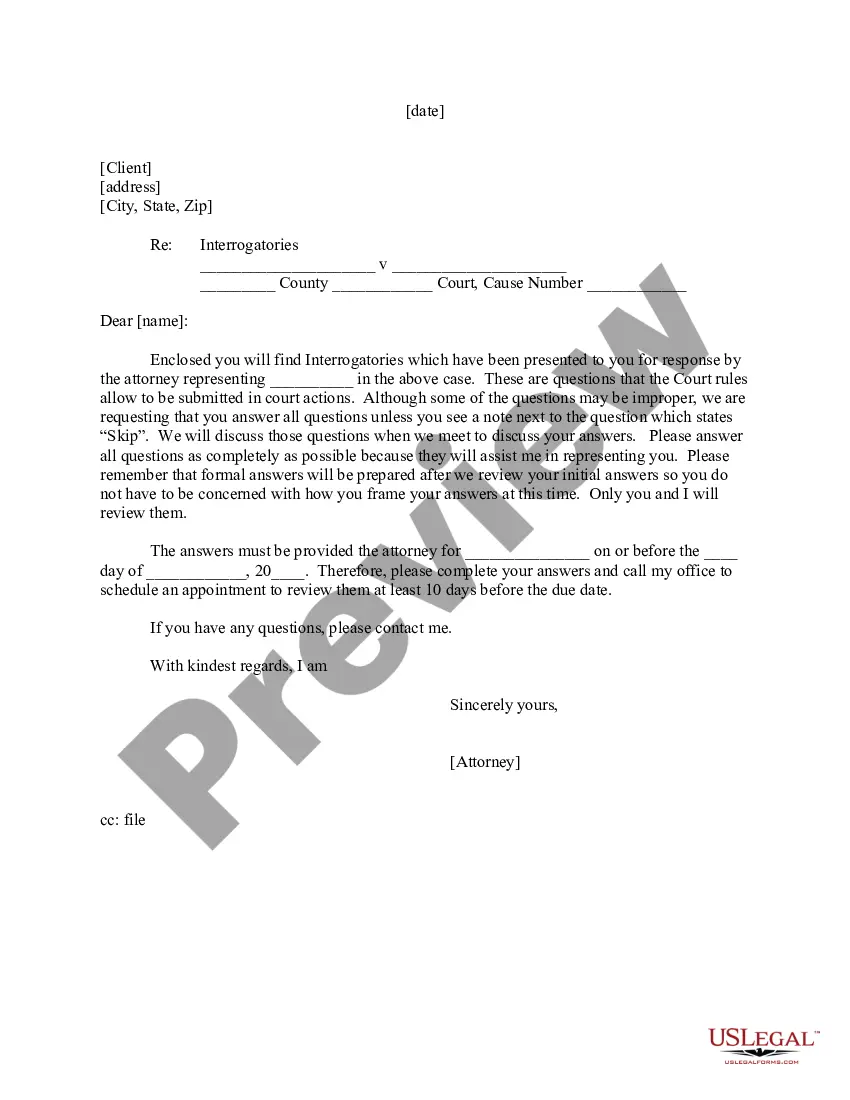
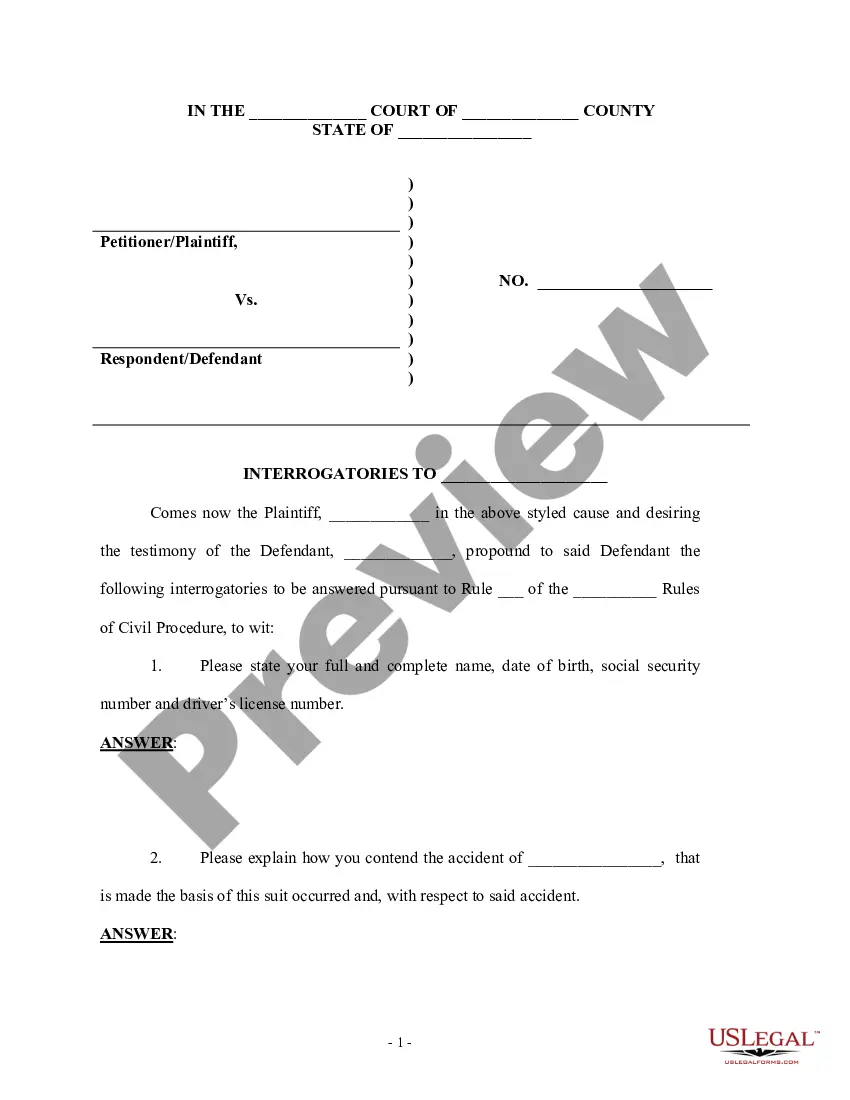
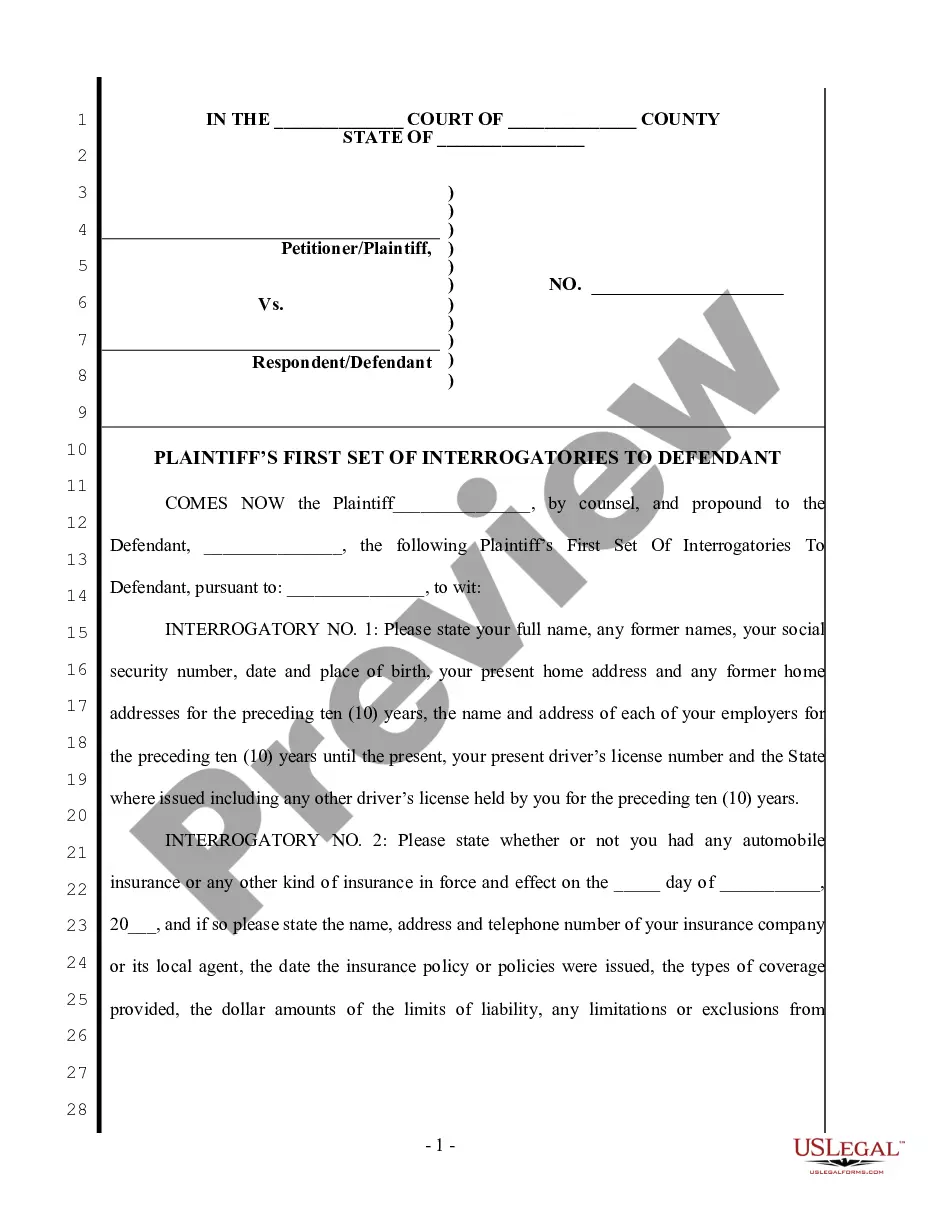
This Discovery Interrogatories for Divorce Proceeding form is designed for the Plaintiff to seek information from the Defendant in a divorce case. It includes a variety of questions that cover personal, financial, and property-related matters, offering insights necessary for settlement discussions and court proceedings. This form differs from general interrogatories by focusing specifically on issues pertinent to divorce, ensuring all relevant aspects are addressed.
Form components explained
- Identification of parties involved, including full names and addresses.
- Employment history details for the past three years, including income and benefits.
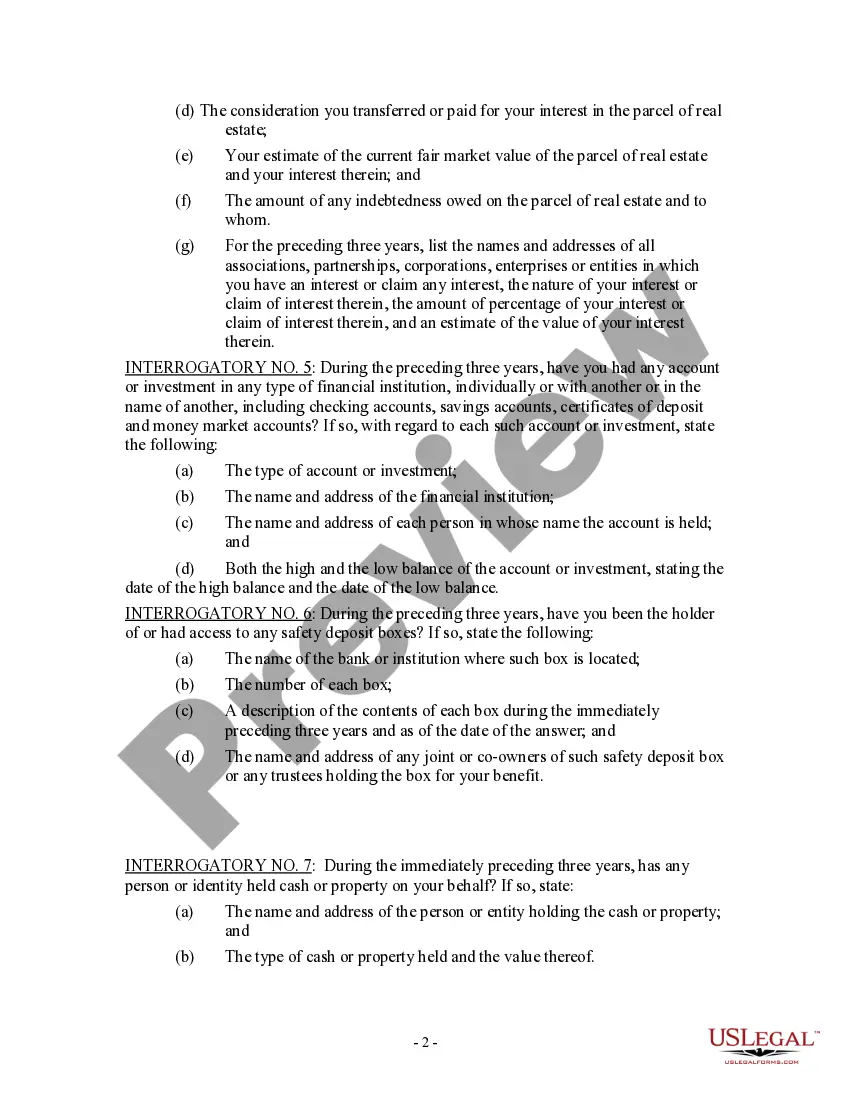
- Disclosure of real estate ownership and financial interests.
- Information regarding safety deposit boxes and assets held by third parties.
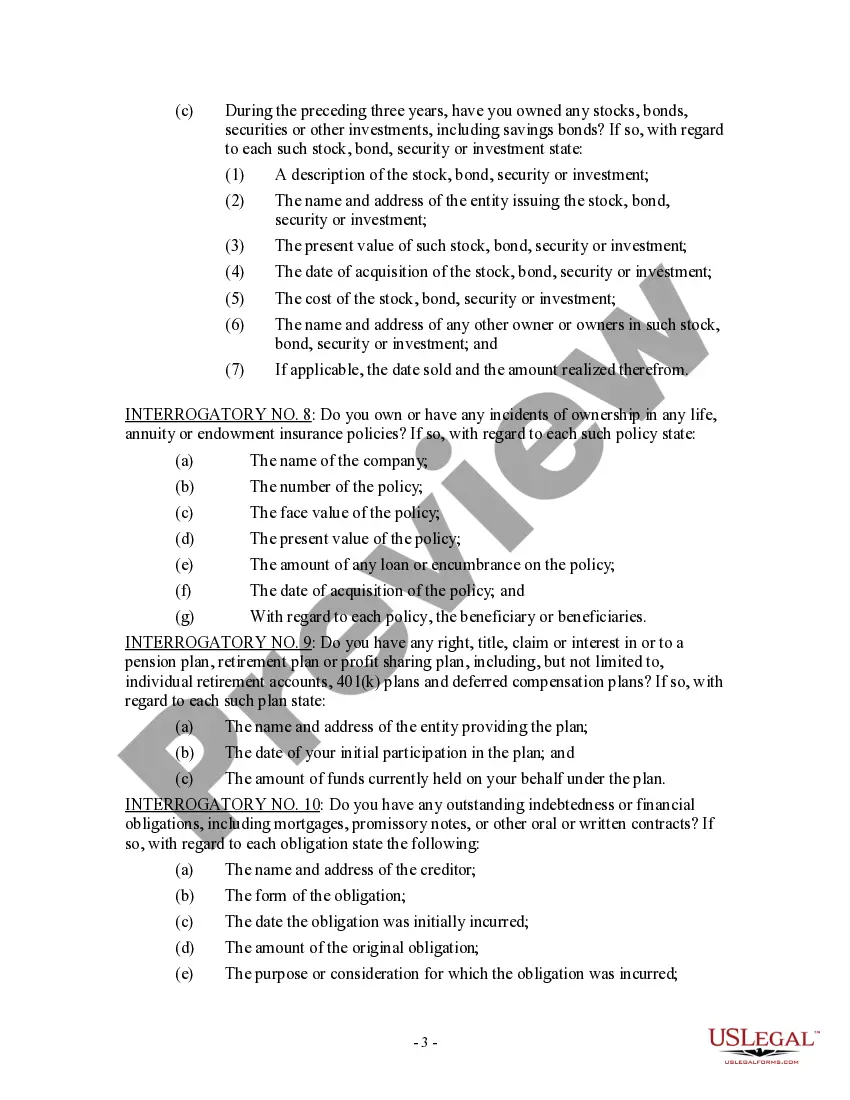
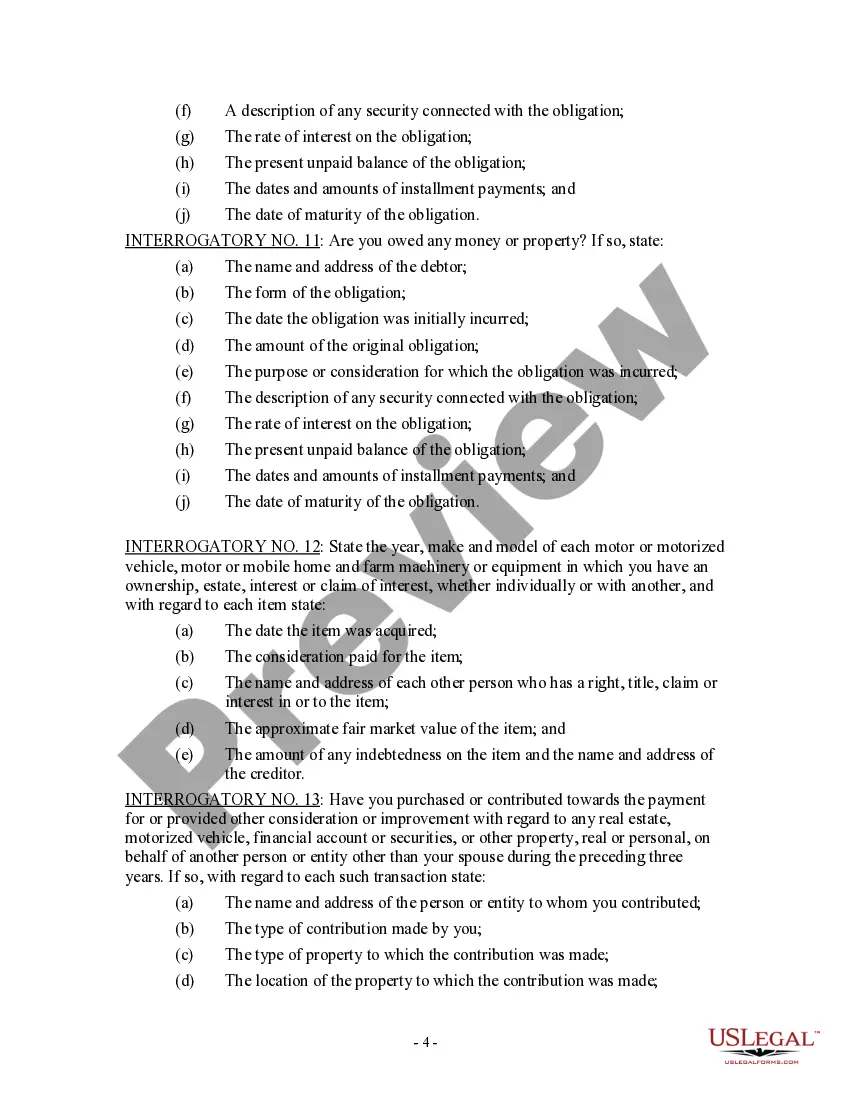
- Records of debts, loans, and gifts made to individuals or entities.
- Identification of witnesses expected to testify in the proceedings.
Common use cases
This form should be used during the discovery phase of a divorce proceeding. It is ideal when the Plaintiff needs to gather detailed information from the Defendant to prepare for negotiation or litigation. Use it when clear and comprehensive financial disclosures are necessary to assess marital assets and liabilities or when preparing for trial.
Who this form is for
- Plaintiffs initiating divorce proceedings seeking discovery from the Defendant.
- Legal representatives or attorneys preparing for trial or settlement negotiations in divorce cases.
- Individuals who require a structured approach to obtaining spouse's financial information.
How to prepare this document
- Begin by filling in your full name and address as the Plaintiff.
- List detailed employment history for the last three years, including all required financial information.
- Provide comprehensive information about ownership of real estate and other assets.
- Fill in all financial obligations and debts accurately.
- Include information about gifts, loans, and significant transactions relating to financial assets.
Notarization requirements for this form
This form does not typically require notarization unless specified by local law. Ensure you check your local requirements or consult an attorney for clarity on notarization needs before submitting.
Get your form ready online
Our built-in tools help you complete, sign, share, and store your documents in one place.
Make edits, fill in missing information, and update formatting in US Legal Forms—just like you would in MS Word.
Download a copy, print it, send it by email, or mail it via USPS—whatever works best for your next step.
Sign and collect signatures with our SignNow integration. Send to multiple recipients, set reminders, and more. Go Premium to unlock E-Sign.
If this form requires notarization, complete it online through a secure video call—no need to meet a notary in person or wait for an appointment.
We protect your documents and personal data by following strict security and privacy standards.

Make edits, fill in missing information, and update formatting in US Legal Forms—just like you would in MS Word.

Download a copy, print it, send it by email, or mail it via USPS—whatever works best for your next step.

Sign and collect signatures with our SignNow integration. Send to multiple recipients, set reminders, and more. Go Premium to unlock E-Sign.

If this form requires notarization, complete it online through a secure video call—no need to meet a notary in person or wait for an appointment.

We protect your documents and personal data by following strict security and privacy standards.
Common mistakes
- Failing to provide complete and accurate financial information.
- Omitting relevant questions or personal details that could impact the case.
- Missing deadlines for submission of interrogatories to the court.
- Neglecting to revise the form to suit specific case needs.
Benefits of using this form online
- Convenient access to customizable templates drafted by licensed attorneys.
- Immediate downloading and editing capabilities, allowing for tailored responses.
- Consistency with legal standards, ensuring accurate and reliable submissions.
- Time-saving as forms can be completed at your own pace.
Legal use & context
- This form is used to legally compel a spouse to disclose information relevant to the divorce case.
- The answers provided in this form can be used as evidence in court if disputes arise during proceedings.
- Failure to properly respond to interrogatories can lead to legal penalties or adverse judgments.
- The information gathered through this form supports equitable distribution of assets and fair determination of spousal support.
Quick recap
- The Discovery Interrogatories is a vital tool for collecting essential information in divorce proceedings.
- Complete and accurate responses are crucial for effective legal representation and fair outcomes.
- This form should be customized to fit the unique context of each divorce case.
- State-specific rules may apply, and itâs essential to abide by local legal standards.
Looking for another form?

Form popularity
FAQ
The three main types of discovery are interrogatories, depositions, and requests for production of documents. Interrogatories involve written questions, depositions require live questioning under oath, and requests for production solicit relevant documents. Each type serves a unique purpose in gathering information and can play a crucial role during divorce proceedings, particularly with tools like Colorado Discovery Interrogatories for Divorce Proceeding for either Plaintiff or Defendant - Another Form.
Good discovery questions for divorce focus on financial information, custody arrangements, and property division. Questions may include inquiries about income, assets, debts, and any factors influencing child custody decisions. Utilizing Colorado Discovery Interrogatories for Divorce Proceeding for either Plaintiff or Defendant - Another Form can guide you in formulating effective discovery questions to gain clarity in your case.
The two types of interrogatories typically used are standard interrogatories and special interrogatories. Standard interrogatories have a set number of questions that are common across many cases, while special interrogatories are tailored to the specifics of your case, allowing for more detailed inquiries. Each type can be instrumental in revealing key information during the divorce process, such as those found in Colorado Discovery Interrogatories for Divorce Proceeding for either Plaintiff or Defendant - Another Form.
When answering interrogatories for divorce, carefully read each question and provide clear and honest responses. It’s important to include all relevant details while ensuring that your answers are factual and well-documented. If you need assistance, using platforms like USLegalForms can help you understand how to structure your answers effectively in respect to Colorado Discovery Interrogatories for Divorce Proceeding for either Plaintiff or Defendant - Another Form.
Discovery is a broader legal process that encompasses various methods for obtaining information before a trial, including depositions, requests for documents, and interrogatories. Interrogatories are a specific tool used within the discovery phase to ask written questions that must be answered under oath. Thus, while all interrogatories are part of discovery, not all discovery consists of interrogatories.
Interrogatories refer to a specific set of written questions that one party sends to another during a civil case, such as in a divorce proceeding. They are designed to gather pertinent information that can help in resolving the case. On the other hand, interrogation typically refers to the questioning of a suspect by law enforcement, which is not the same as formal legal inquiries during discovery like Colorado Discovery Interrogatories for Divorce Proceeding for either Plaintiff or Defendant - Another Form.
To format interrogatory answers effectively, ensure each response addresses the interrogatory it corresponds to. Use complete sentences, and where applicable, include relevant facts and data. Additionally, organize your answers logically, possibly using bullet points for clarity if needed. By following these guidelines in your Colorado Discovery Interrogatories for Divorce Proceeding for either Plaintiff or Defendant - Another Form, you promote understanding and facilitate communication between parties.
When answering Colorado Discovery Interrogatories for Divorce Proceeding for either Plaintiff or Defendant - Another Form, it’s important to follow a clear and structured format. Typically, responses should be numbered to correspond with each interrogatory. Additionally, answers should be direct and address the specific questions asked, providing sufficient detail without unnecessary information to maintain clarity.
Yes, in the context of Colorado Discovery Interrogatories for Divorce Proceeding for either Plaintiff or Defendant - Another Form, a defendant is required to respond to interrogatories. These responses are crucial as they provide necessary information about the case. A failure to answer can lead to complications or even penalties during the divorce proceedings. It's essential to engage with the process to ensure a fair resolution.
If a party fails to respond to interrogatories, it can lead to negative consequences in the legal proceedings. The other party may file a motion to compel the non-responding party to provide answers. In such cases, ignoring Colorado Discovery Interrogatories for Divorce Proceeding for either Plaintiff or Defendant - Another Form can negatively impact the court's perception of that party, and may hinder their case.