Maine Mutual Wills or Last Will and Testaments for Man and Woman living together, not Married with Minor Children
Understanding this form
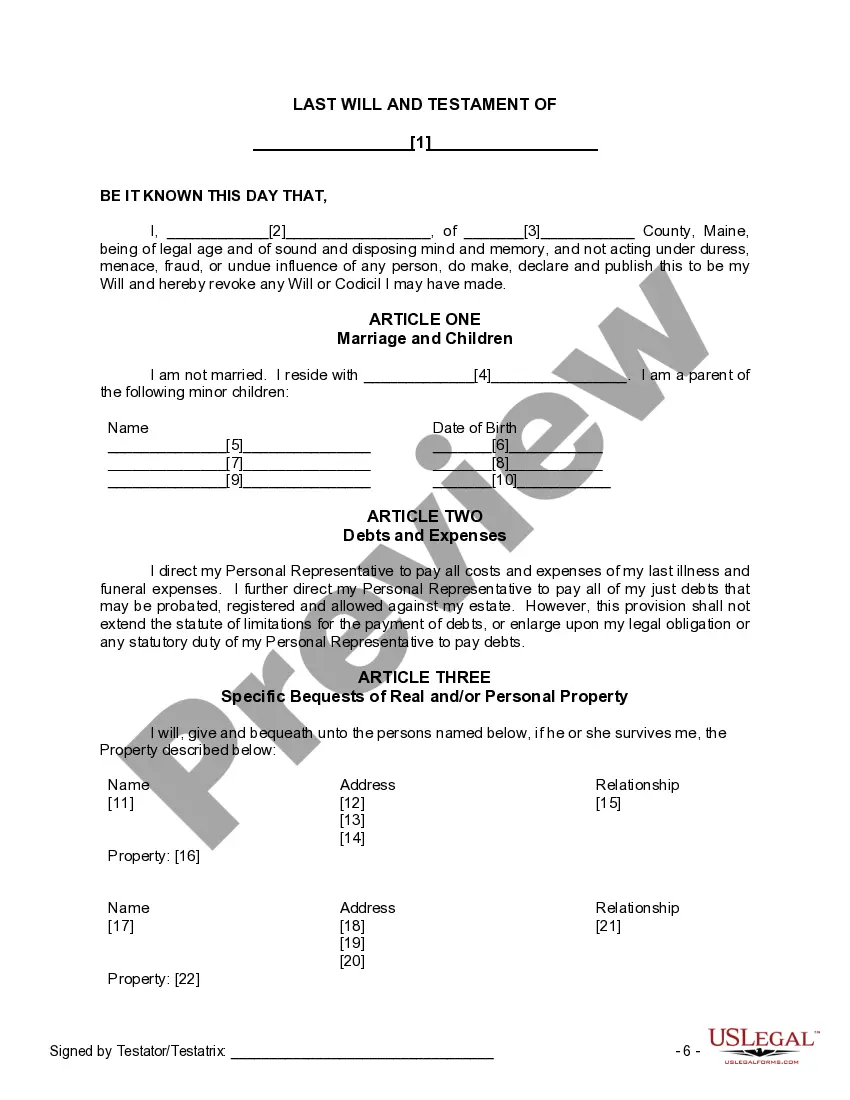
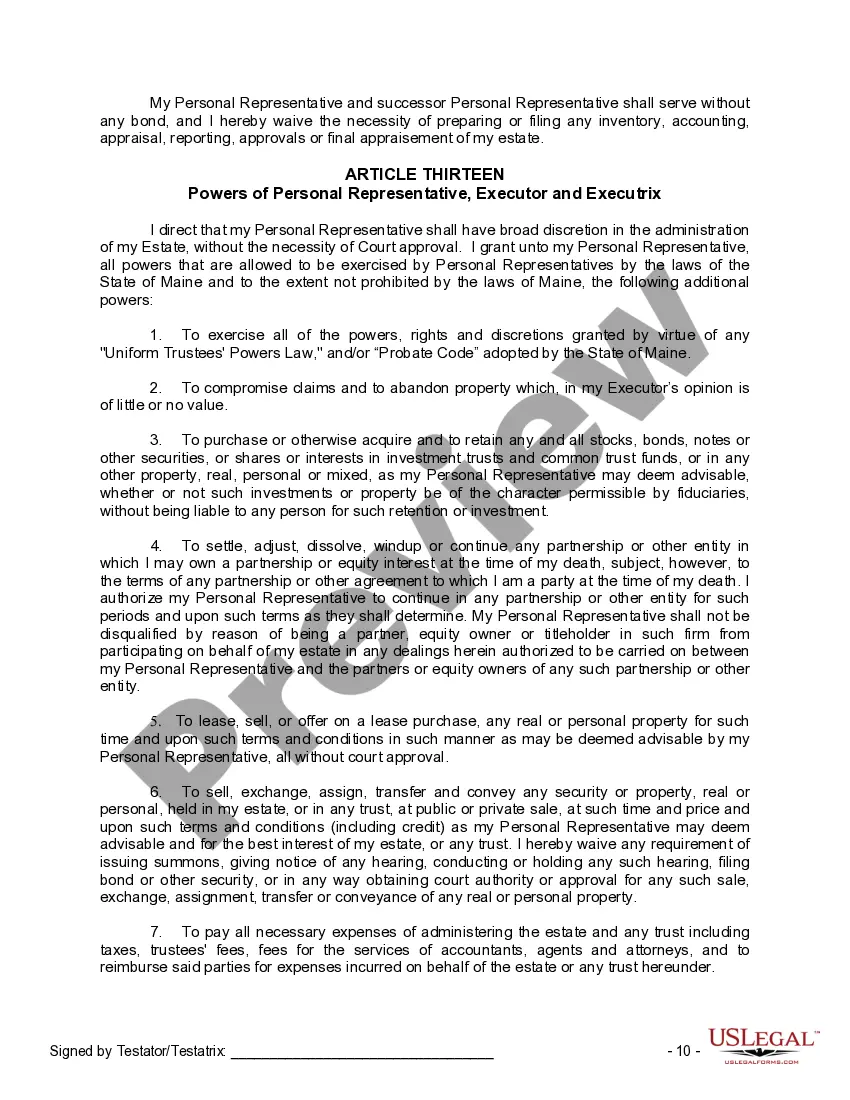
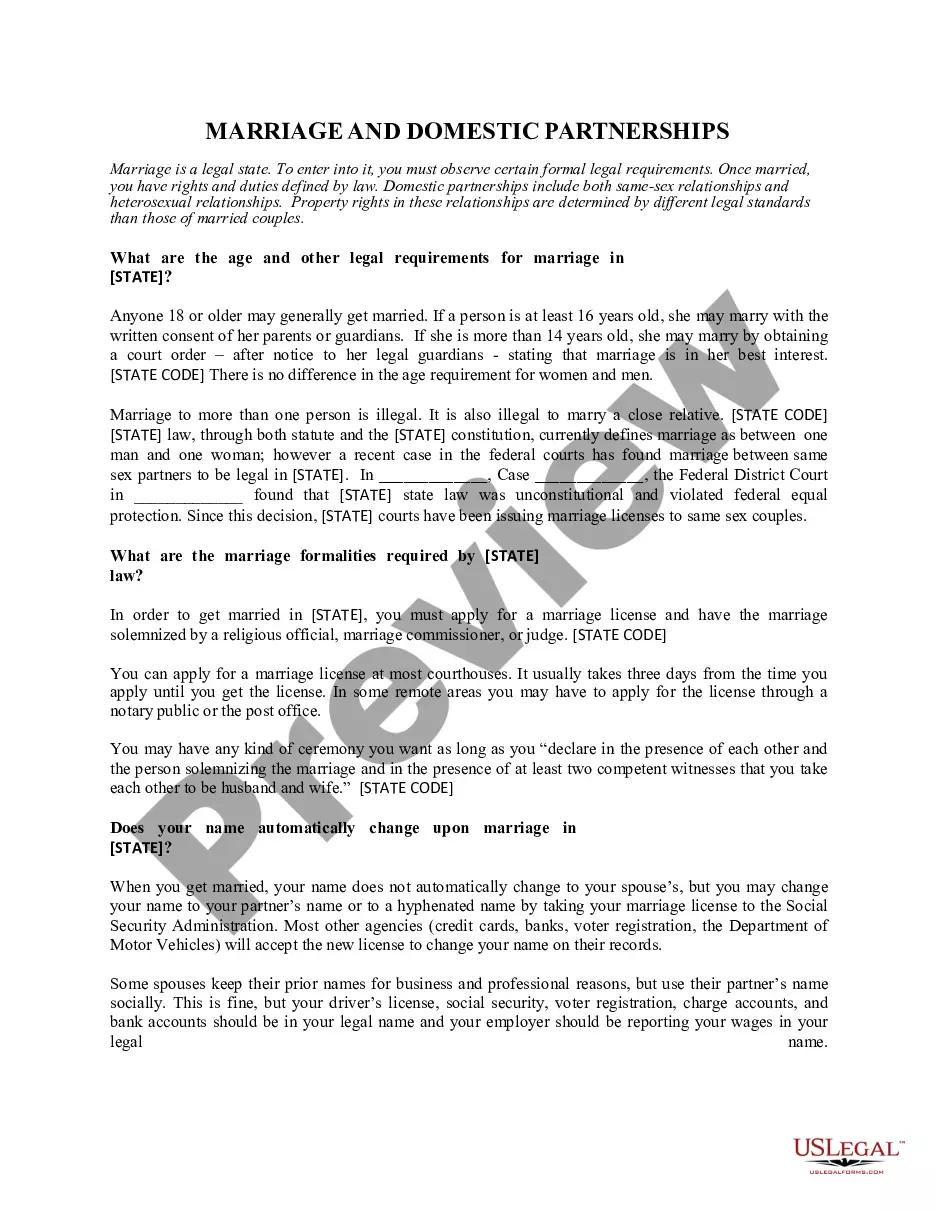
This form package includes mutual wills specifically crafted for a man and woman living together but not married, who have minor children. It allows partners to designate how their property will be left to one another, thereby ensuring their wishes are documented clearly. Unlike standard last wills, this form emphasizes mutual intent and the care of minor children, making it a vital legal tool for unmarried partners wishing to establish clear directives for their estate.
Form components explained
- Identification of both parties, establishing their cohabitation and parenting status.
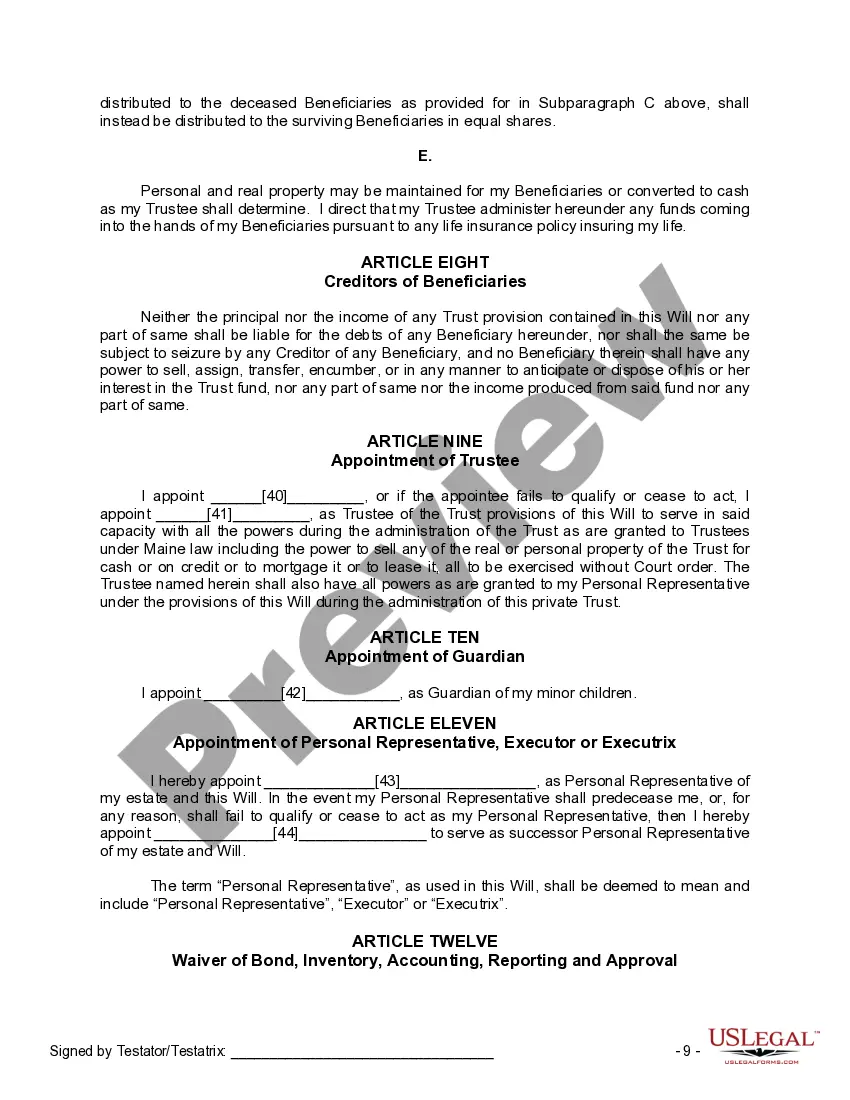
- Provisions for the guardianship of minor children should one partner pass away.
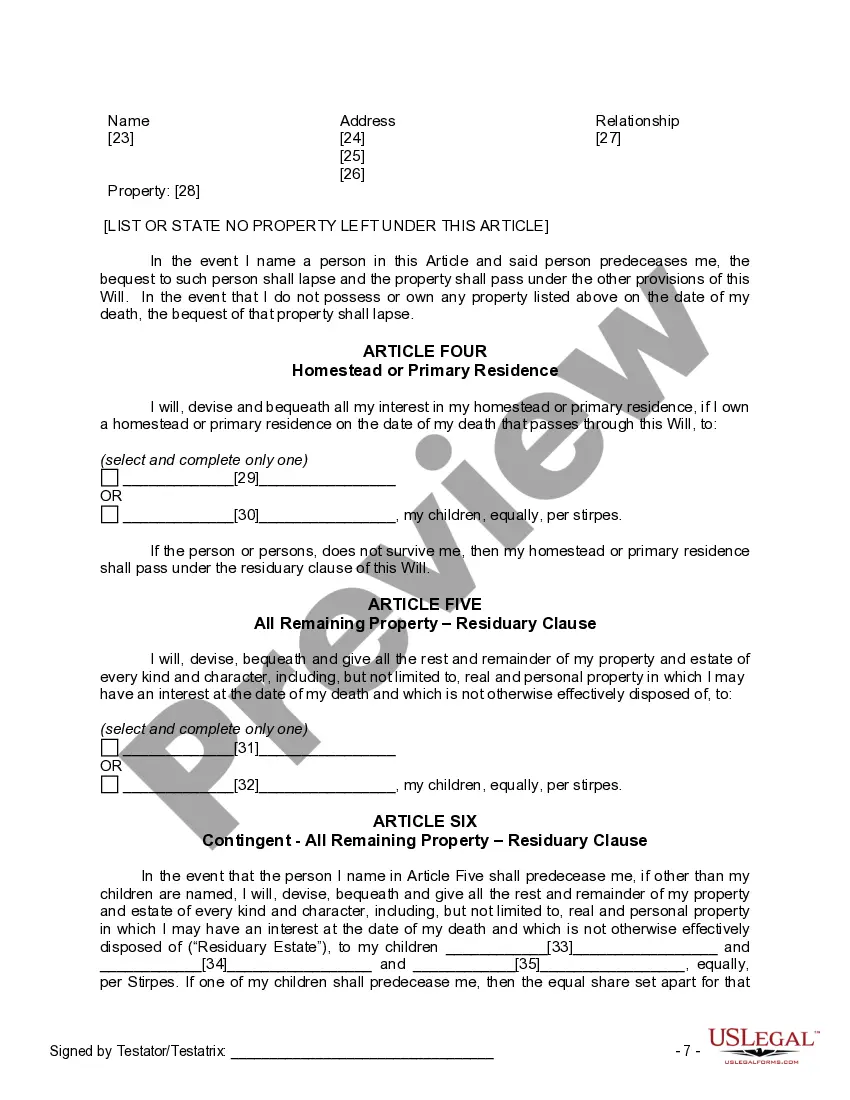
- Specific bequests of property, allowing details of who receives what.
- Residue clause that determines the distribution of remaining assets.
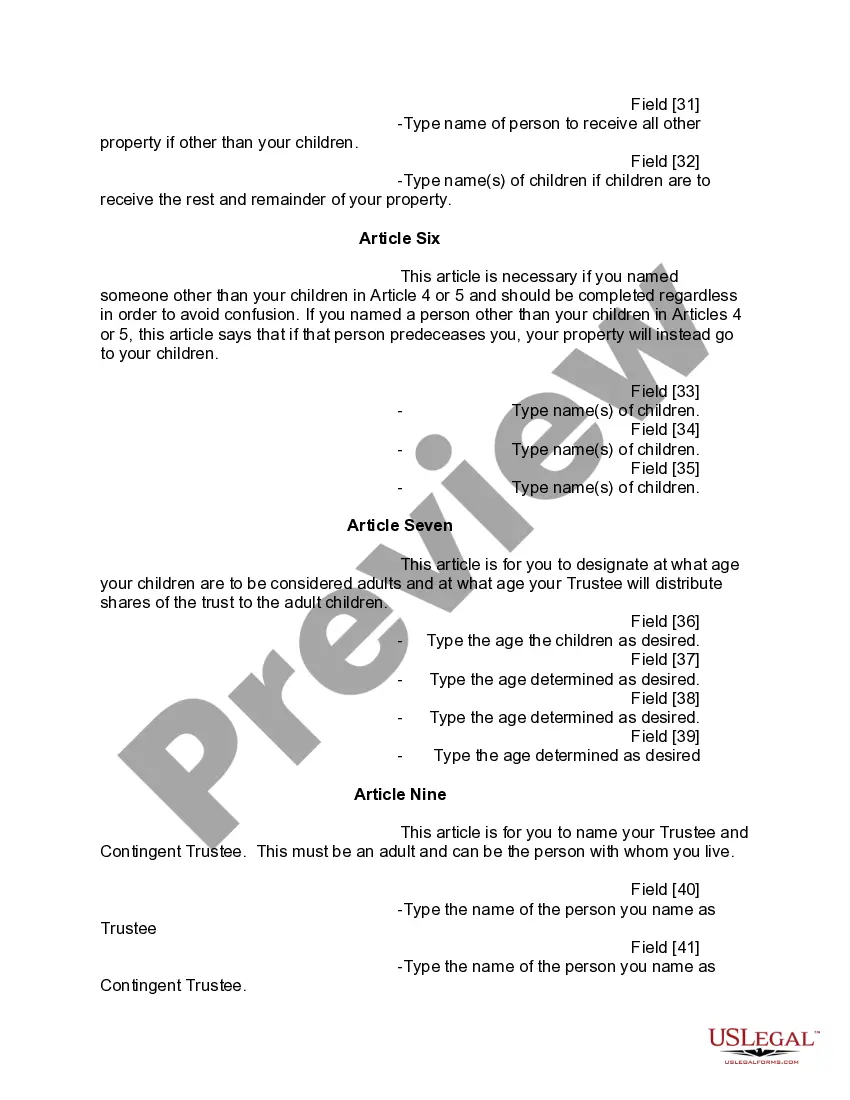
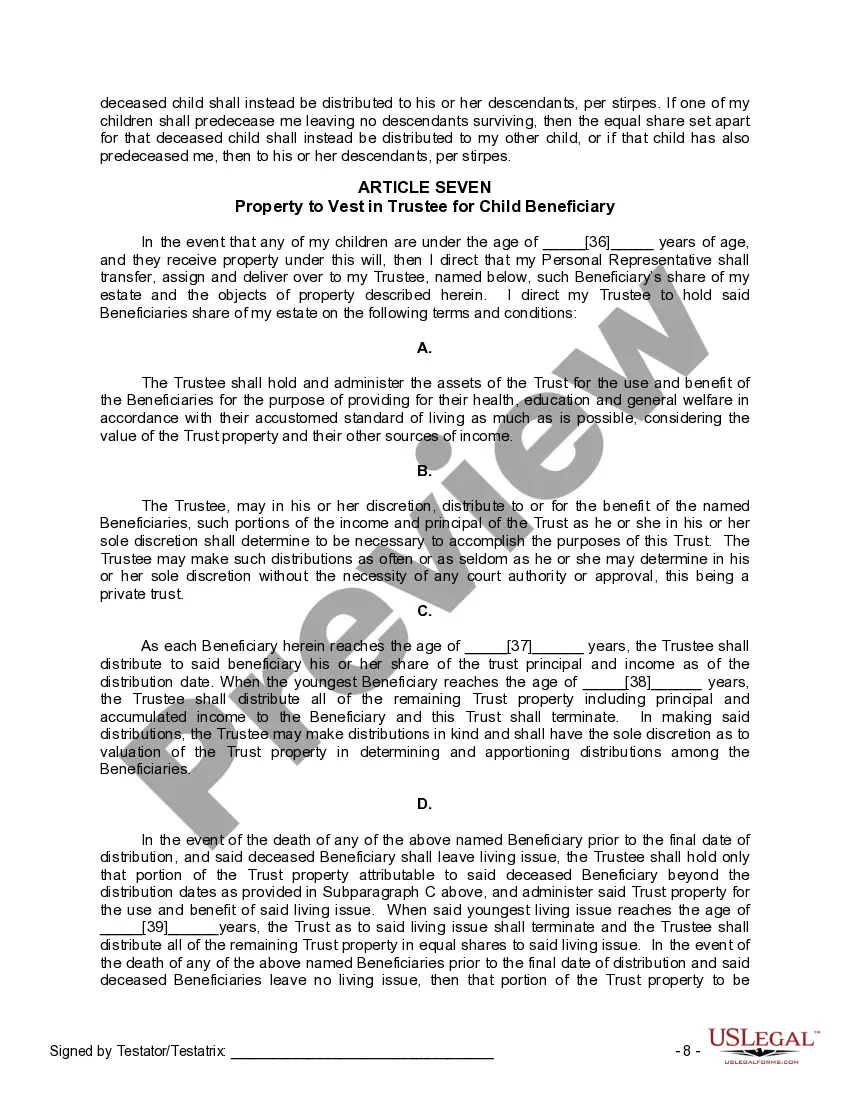
- Appointment of a Trustee to manage assets for the benefit of the children until they reach adulthood.



Common use cases
This mutual wills form should be used when an unmarried couple with minor children wants to ensure that their respective properties are passed on according to their wishes. If you and your partner want to provide for each other and designate guardianship for your children, this form is essential. It is particularly useful in cases of shared assets or when one partner wants to specify how their belongings will be handled after their passing.
Who should use this form
- Unmarried couples living together with minor children.
- Partners wishing to protect each other's rights and assets through mutual wills.
- Parents who want to ensure their children are cared for by a chosen guardian in the event of their death.
Steps to complete this form
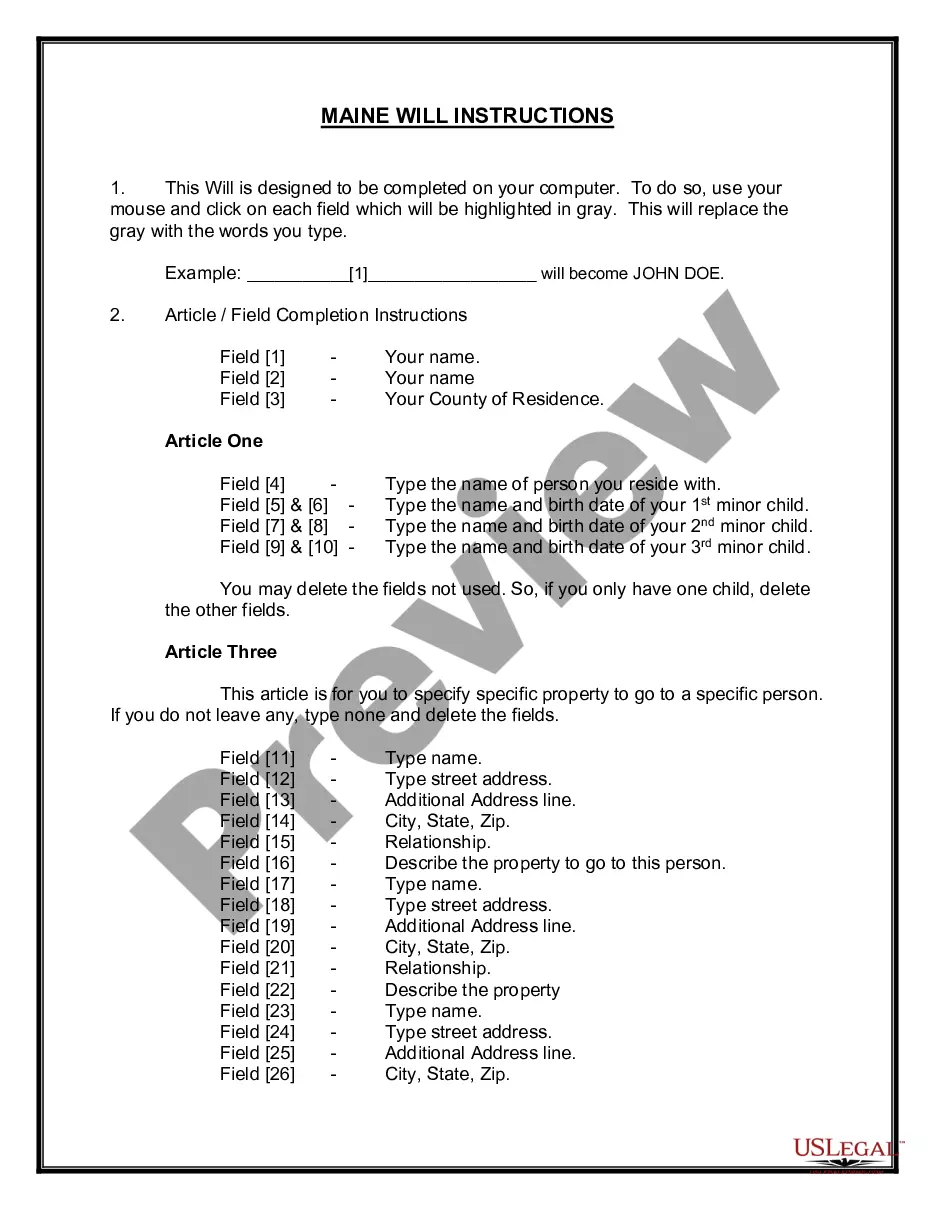
- Identify both partners' names and the county of residence in the appropriate fields.
- List the names and birthdates of all minor children, ensuring accuracy to avoid future complications.
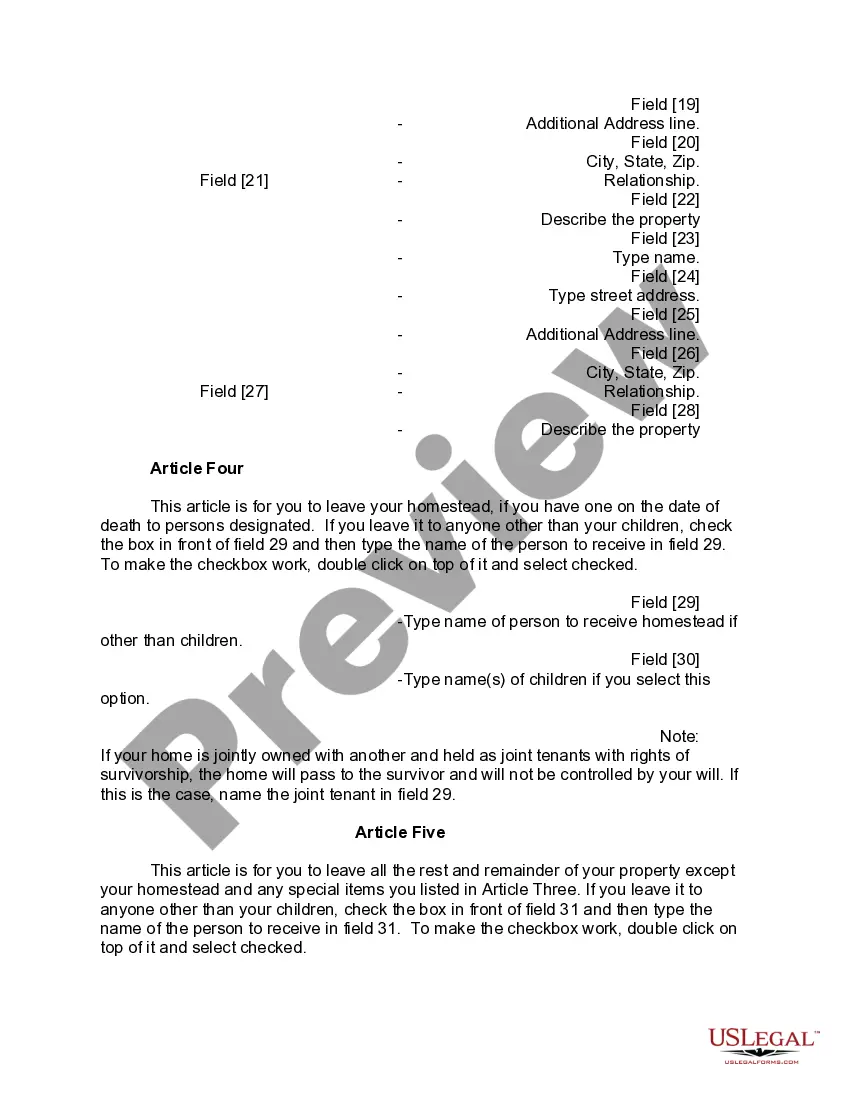
- Specify any property that you wish to bequeath to particular individuals in the relevant sections.
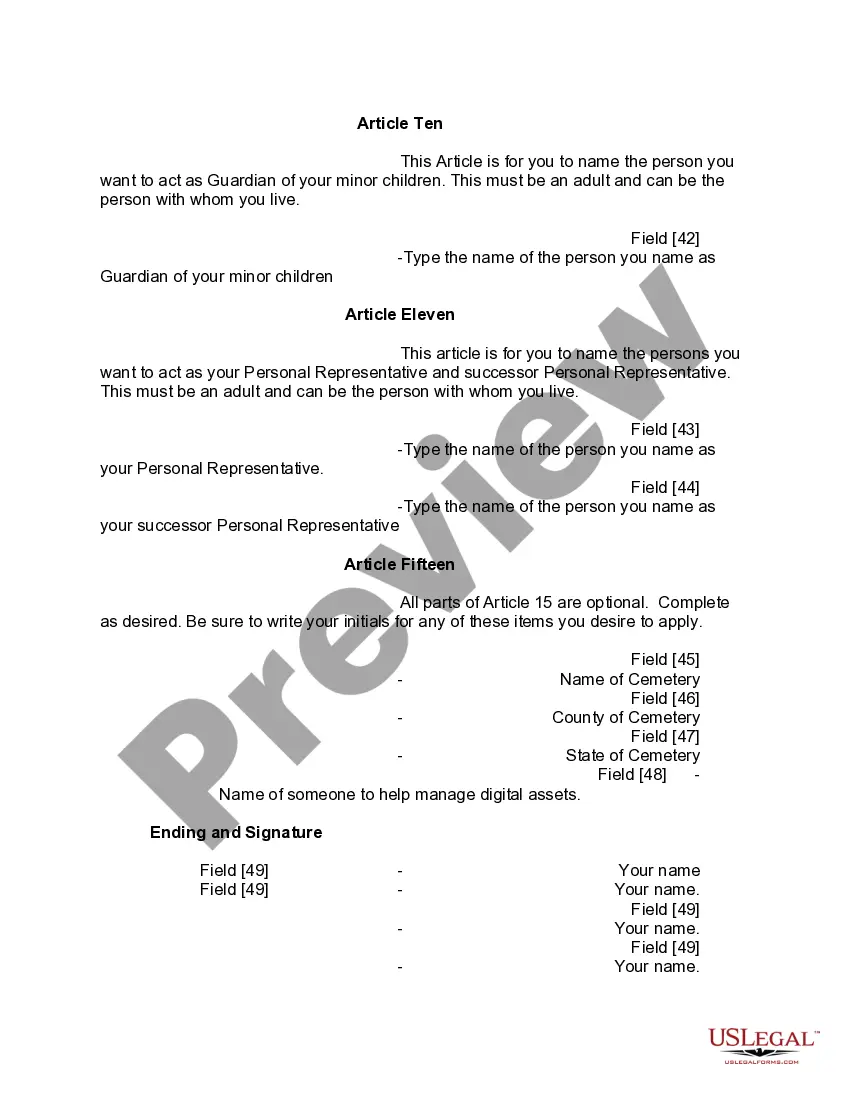
- Designate a Guardian for your children as well as a Trustee if applicable.
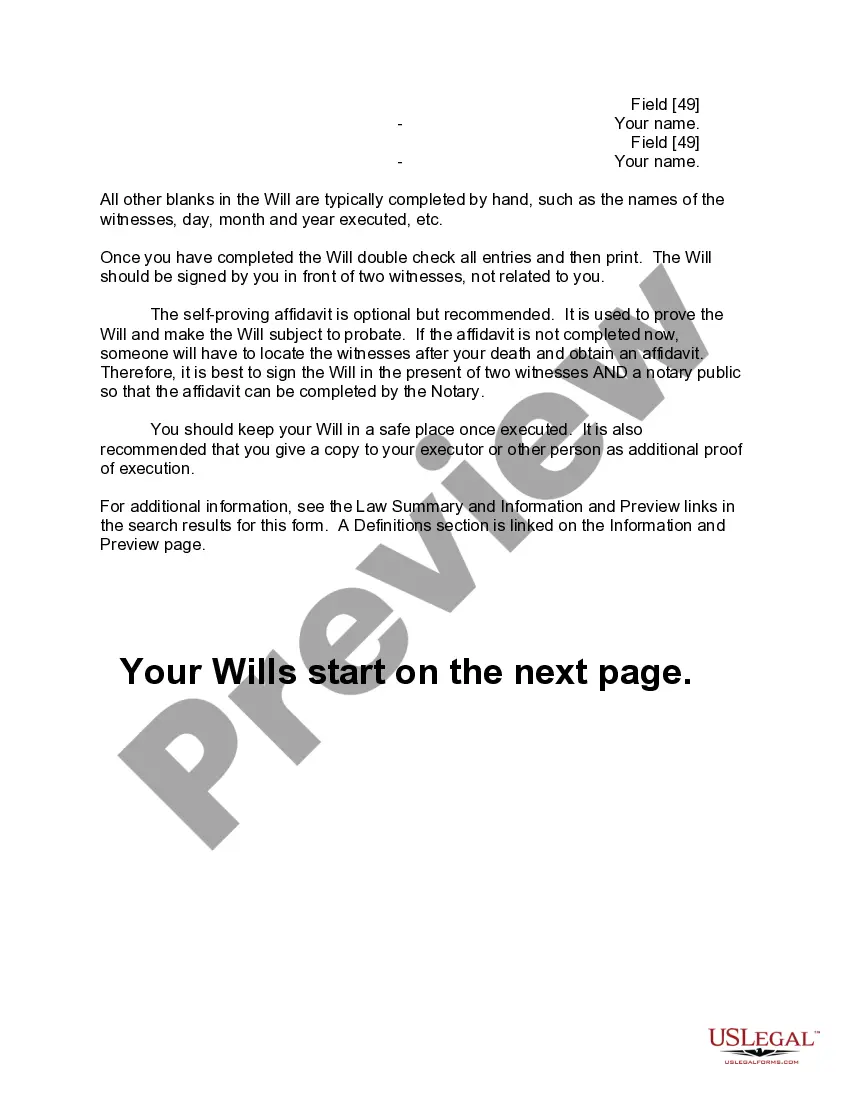
- After filling out the form, print it and have it signed in the presence of two unrelated witnesses.
Does this document require notarization?
To make this form legally binding, it must be notarized. Our online notarization service, powered by Notarize, lets you verify and sign documents remotely through an encrypted video session.
Get your form ready online
Our built-in tools help you complete, sign, share, and store your documents in one place.
Make edits, fill in missing information, and update formatting in US Legal Forms—just like you would in MS Word.
Download a copy, print it, send it by email, or mail it via USPS—whatever works best for your next step.
Sign and collect signatures with our SignNow integration. Send to multiple recipients, set reminders, and more. Go Premium to unlock E-Sign.
If this form requires notarization, complete it online through a secure video call—no need to meet a notary in person or wait for an appointment.
We protect your documents and personal data by following strict security and privacy standards.

Make edits, fill in missing information, and update formatting in US Legal Forms—just like you would in MS Word.

Download a copy, print it, send it by email, or mail it via USPS—whatever works best for your next step.

Sign and collect signatures with our SignNow integration. Send to multiple recipients, set reminders, and more. Go Premium to unlock E-Sign.

If this form requires notarization, complete it online through a secure video call—no need to meet a notary in person or wait for an appointment.

We protect your documents and personal data by following strict security and privacy standards.
Typical mistakes to avoid
- Failing to name a guardian for the children, which could lead to disputes.
- Not having the document signed by the required number of witnesses, making it invalid.
- Leaving out details about specific property, which can lead to confusion later.
Advantages of online completion
- Convenience of downloading and completing the document from any location.
- Editability allows for personalized content tailored to your specific needs.
- Access to attorney-drafted materials ensures compliance with legal requirements.
Main things to remember
- This form is for non-married couples with minor children wanting mutual wills.
- It ensures that property and guardianship are designated in the event of death.
- Proper execution includes witness signatures and potentially notarization for legal reliability.
Looking for another form?
Form popularity
FAQ
Lack of due execution Along with the testator, the will must contain the signature or thumb impression of two witnesses, witnessing that the will belongs to the testator. If any if these is not present, there is a lack of due execution in the will and the same can be challenged in the court of law.
No. An executor of a will cannot take everything unless they are the will's sole beneficiary.As a fiduciary, the executor has a legal duty to act in the beneficiaries and estate's best interests and distribute the assets according to the will.
A witness or the married partner of a witness cannot benefit from a will. If a witness is a beneficiary (or the married partner or civil partner of a beneficiary), the will is still valid but the beneficiary will not be able to inherit under the will.
Step 1 Download Your Living Will. Download in Adobe PDF, Microsoft Word (. Step 2 Health Care Directive. Step 3 Life Support. Step 4 Life-Sustaining Treatment. Step 5 End of Life Wishes. Step 6 Medical Power of Attorney. Step 7 Witness Acknowledgment. Step 8 Notary Acknowledgment.
There are certain types of property that legally cannot be included in a person's will. Depending on state laws, these may include: Any Property that is Co-Owned with Someone Else Through Joint-Tenancy: Married couples typically own the marital home in joint tenancy.Property being held in a living trust.
Step 1 - Names of Testator: Step 2 - Add Relatives: Step 3 - Add Children: Step 4 - Burial and Funeral Arrangements: Step 5 - Debts and Expenses: Step 6 - Outline Your Property: Step 7 - Pet Care: Step 8 - Appointment Of Executor or Trustee:
The following people are disqualified from inheriting under a will: a person or his/her spouse who writes a will or any part thereof on behalf of the testator; and a person or his/her spouse who signs the will on instruction of the testator or as a witness.
Age: The testator must be at least 18 years old. Capacity: The testator must be of sound mind. Signature: The will must be signed by the testator or by some other person in the testator's presence by the testator's direction.Writing: A Maine will must be in writing to be valid.
No, in Maine, you do not need to notarize your will to make it legal. However, Maine allows you to make your will "self-proving" and you'll need to go to a notary if you want to do that. A self-proving will speeds up probate because the court can accept the will without contacting the witnesses who signed it.