Mississippi Interrogatories and Request for Production
Overview of this form
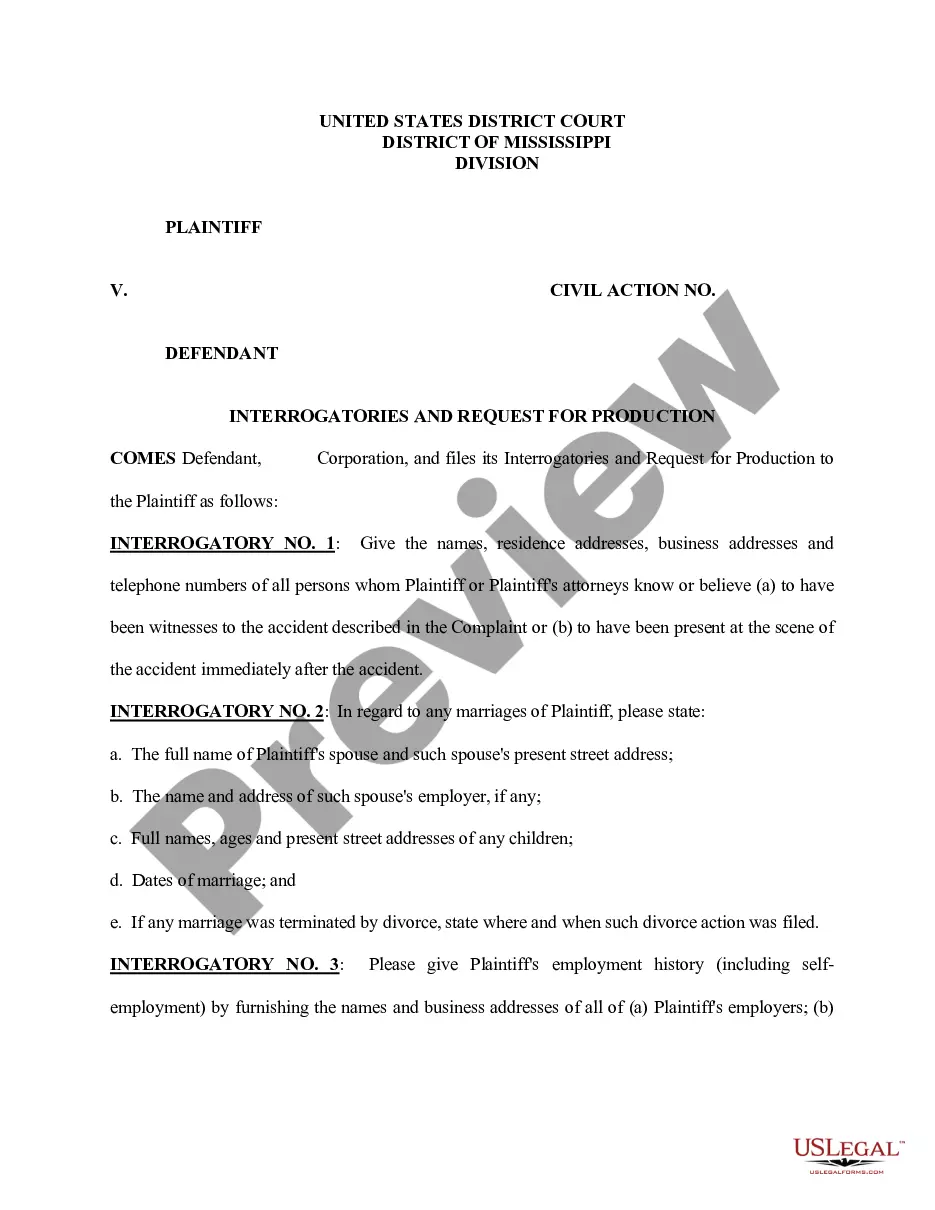
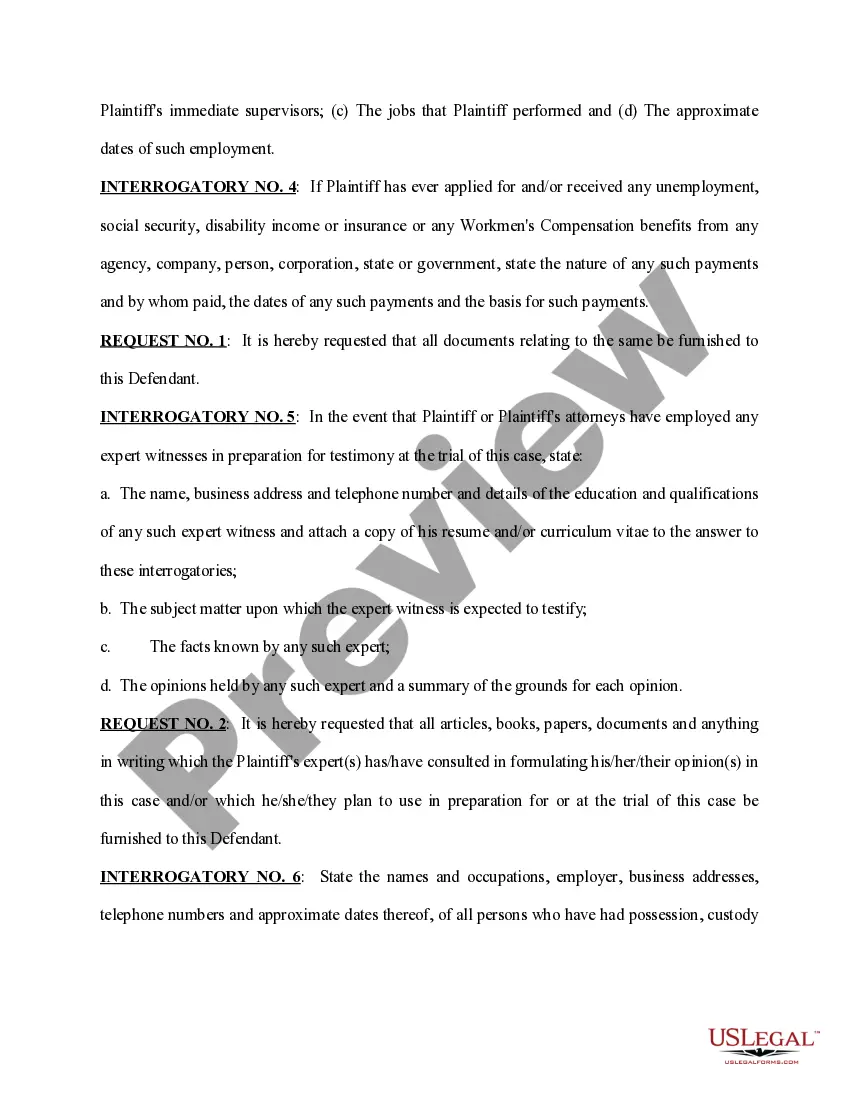
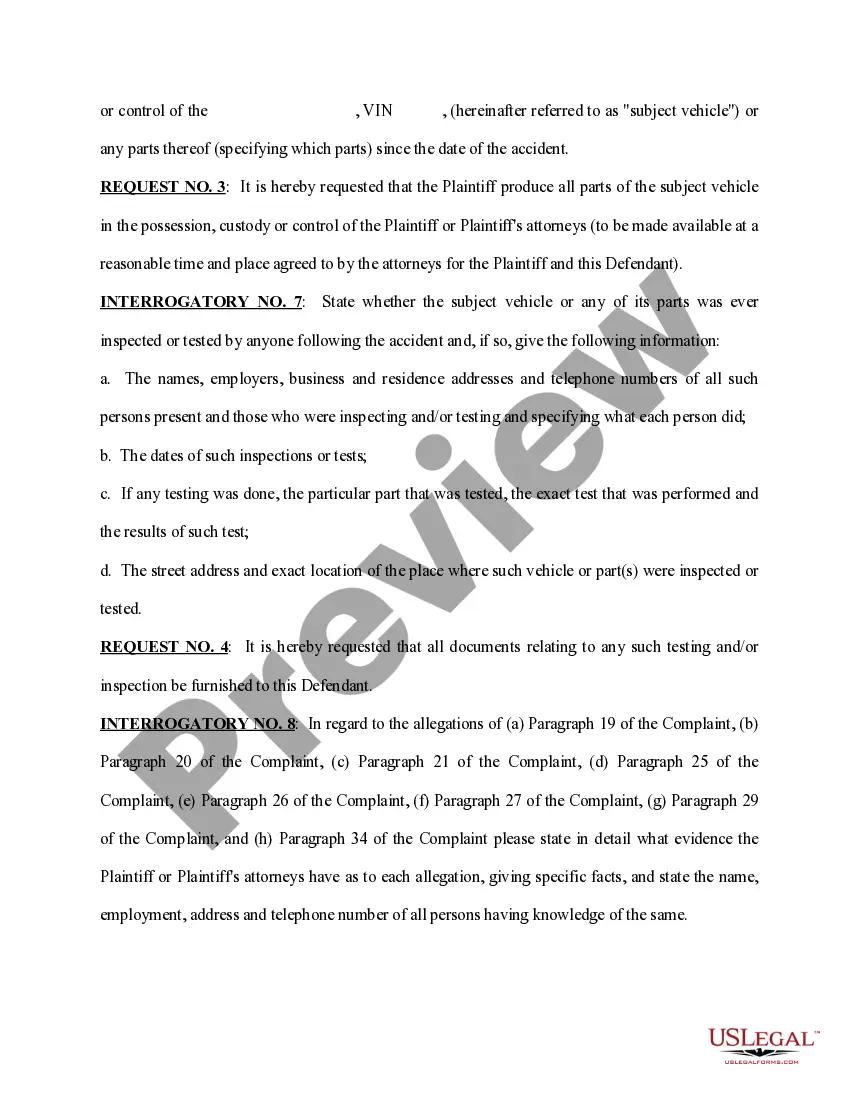
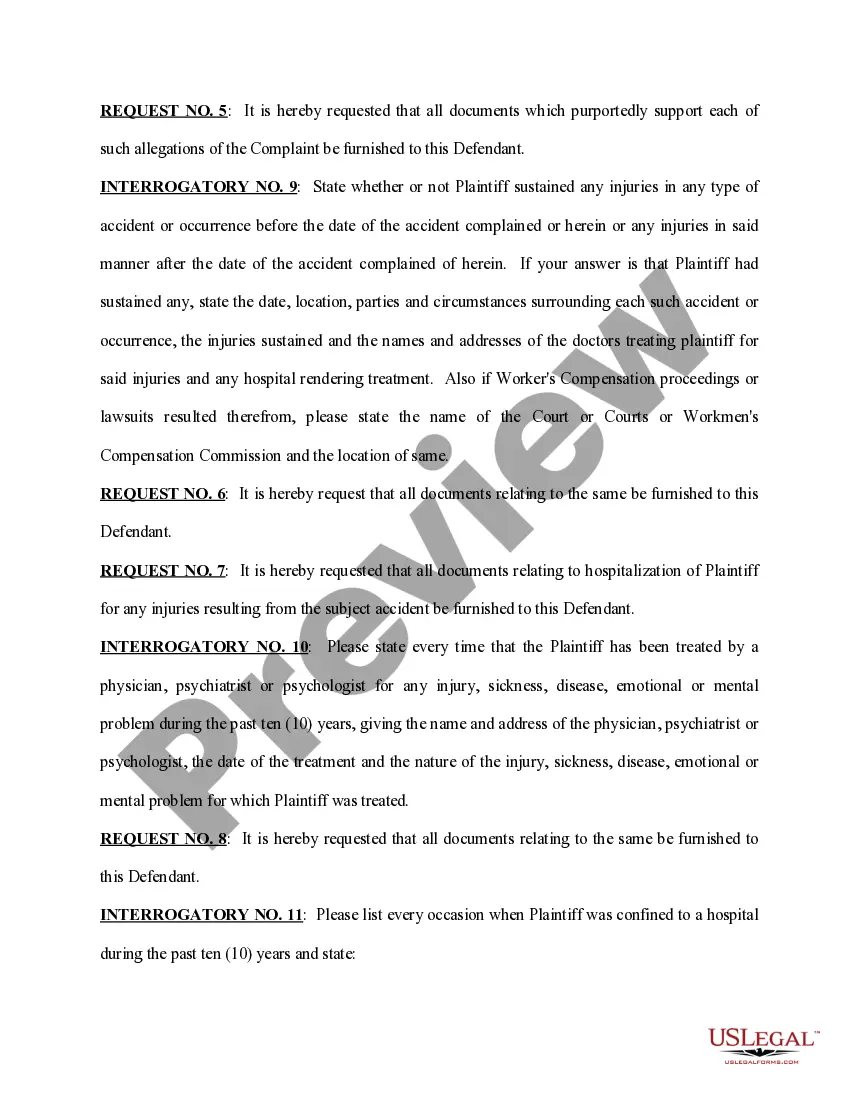
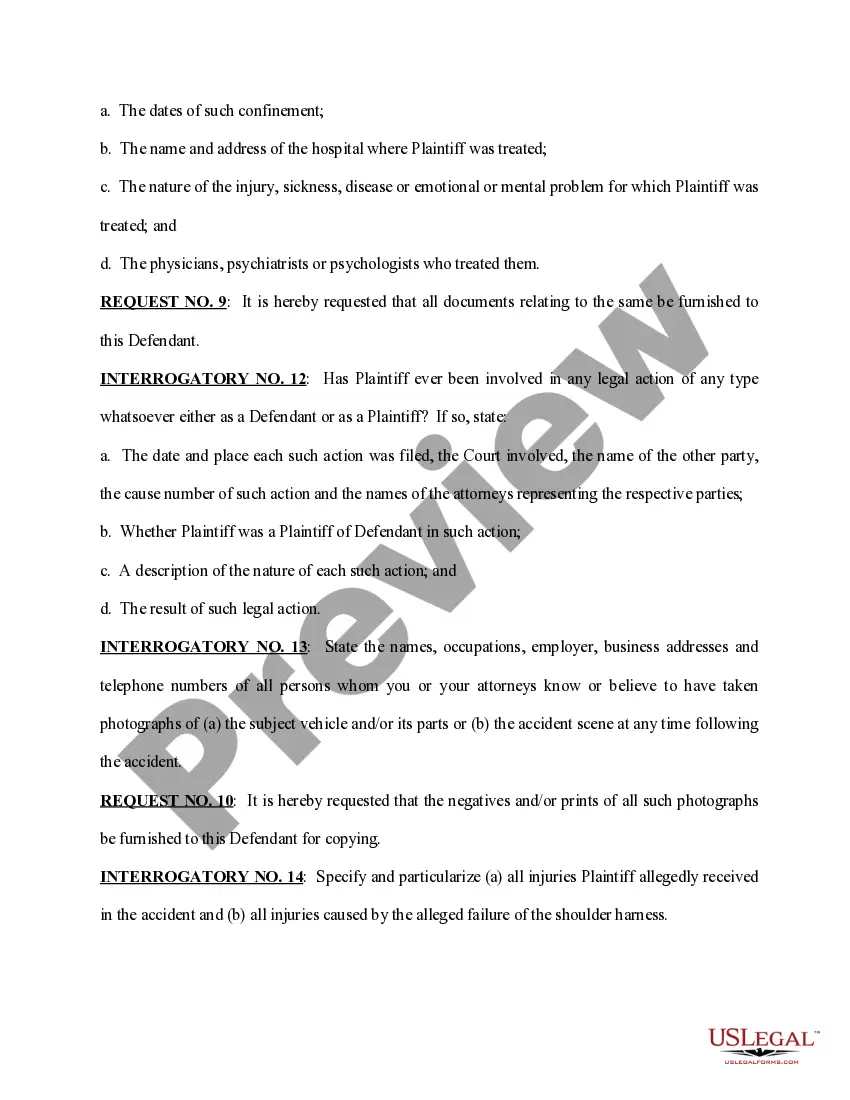
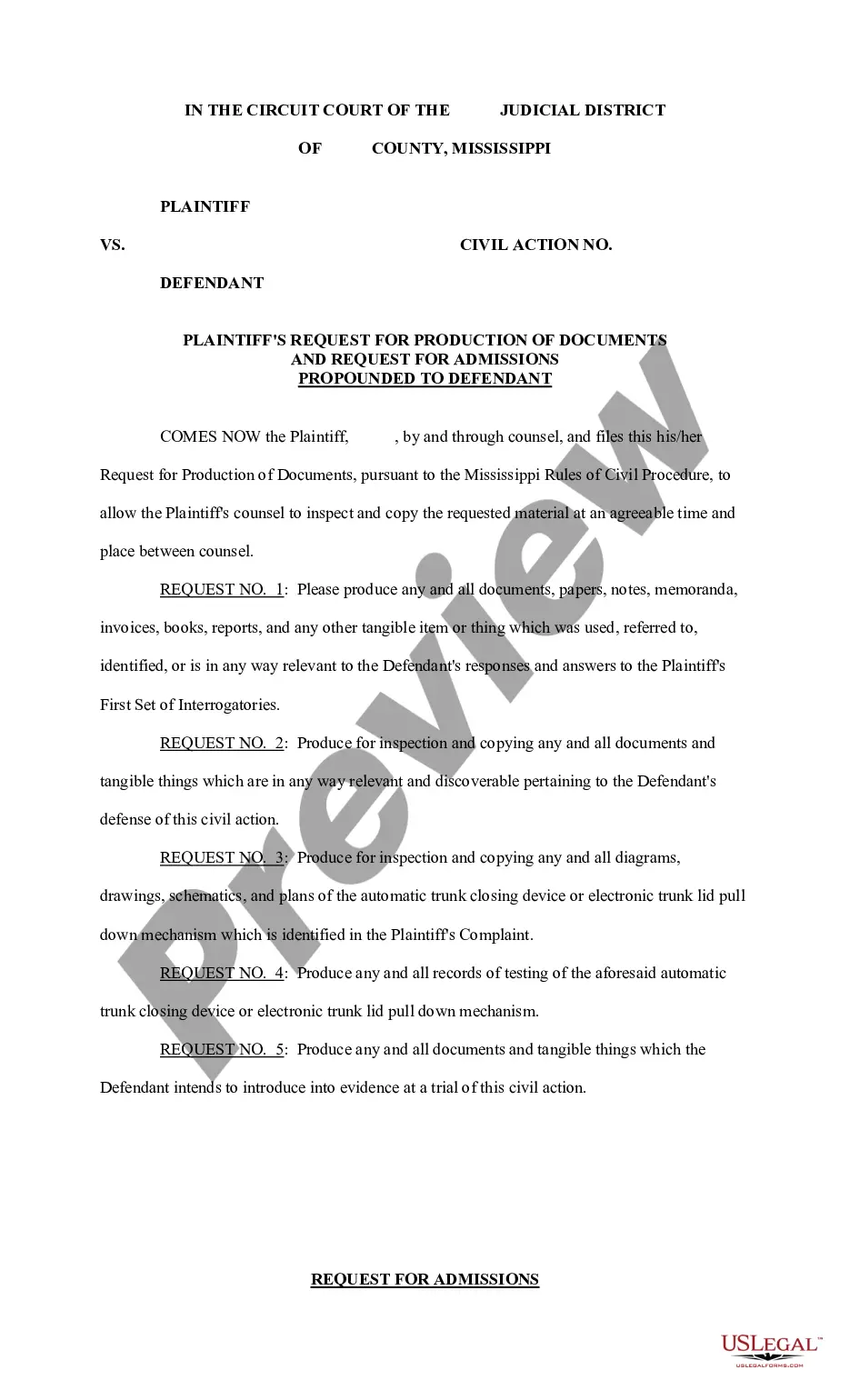
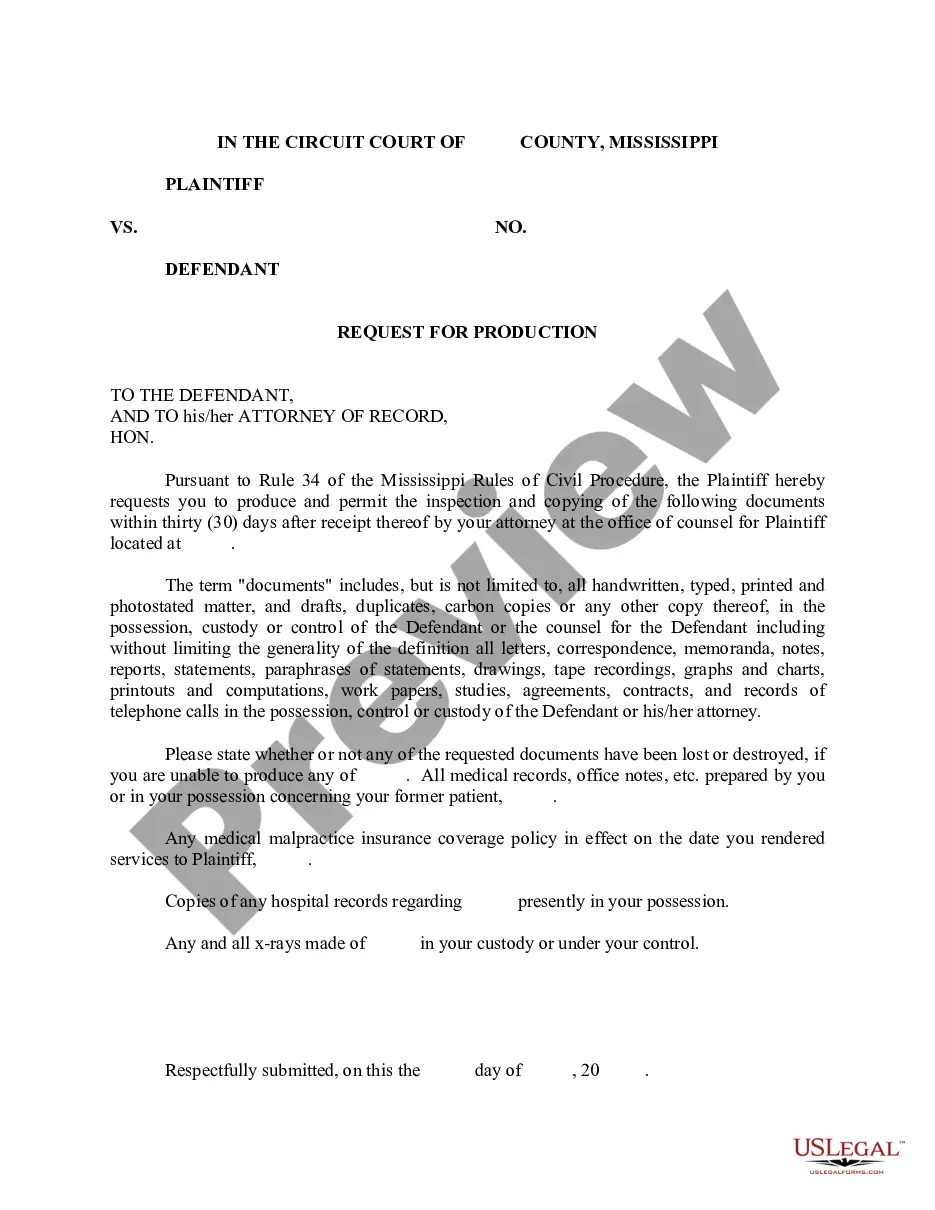
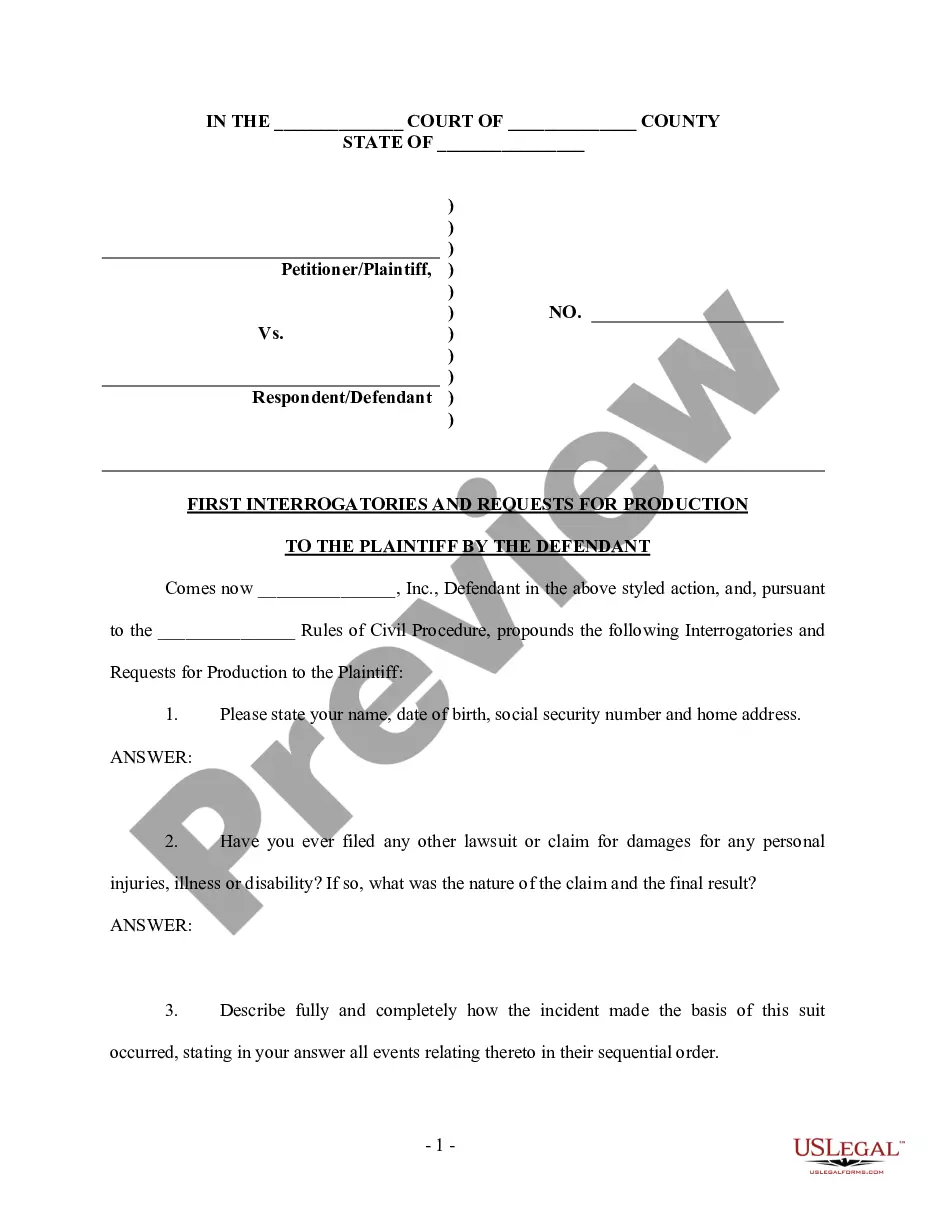
The Interrogatories and Request for Production is a legal document used in the discovery phase of litigation. This form includes written questions directed at a party in a lawsuit, aimed at gathering information relevant to the case. Unlike other discovery tools, such as depositions, this form allows parties to obtain detailed information in writing. Utilizing this form effectively can help clarify issues and prepare for trial.
What’s included in this form
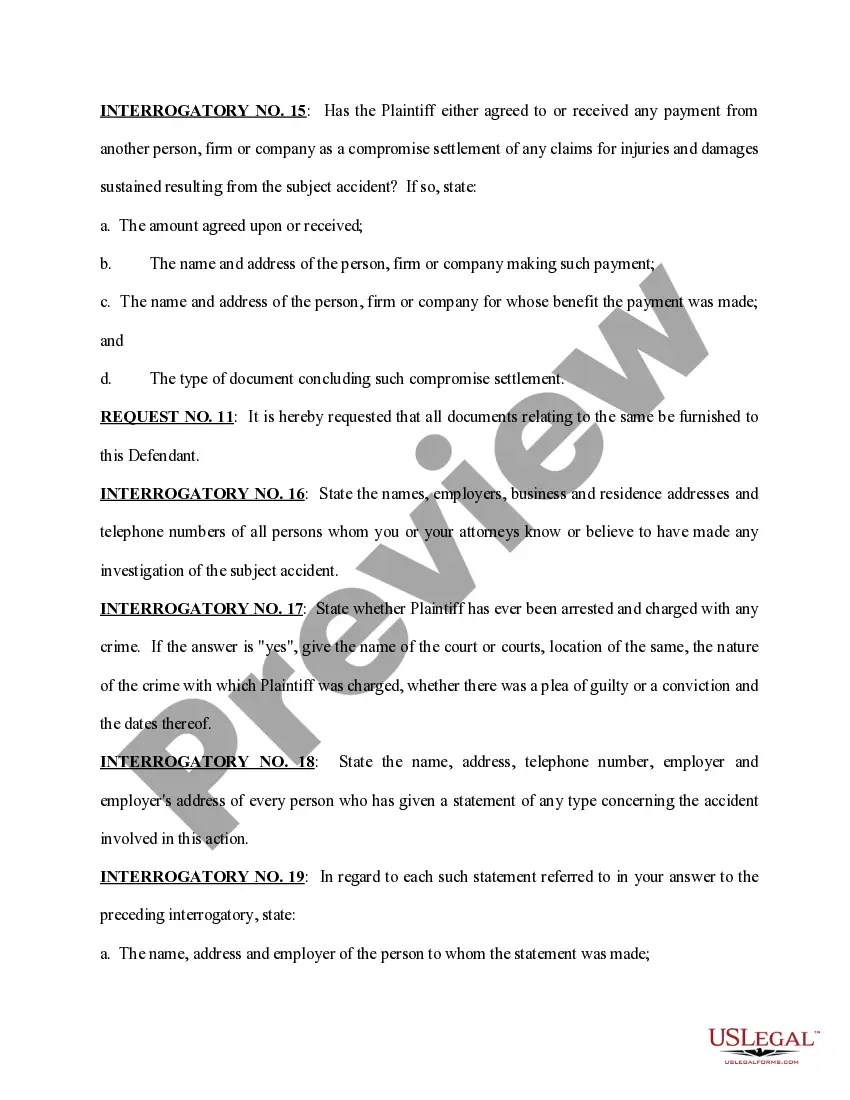
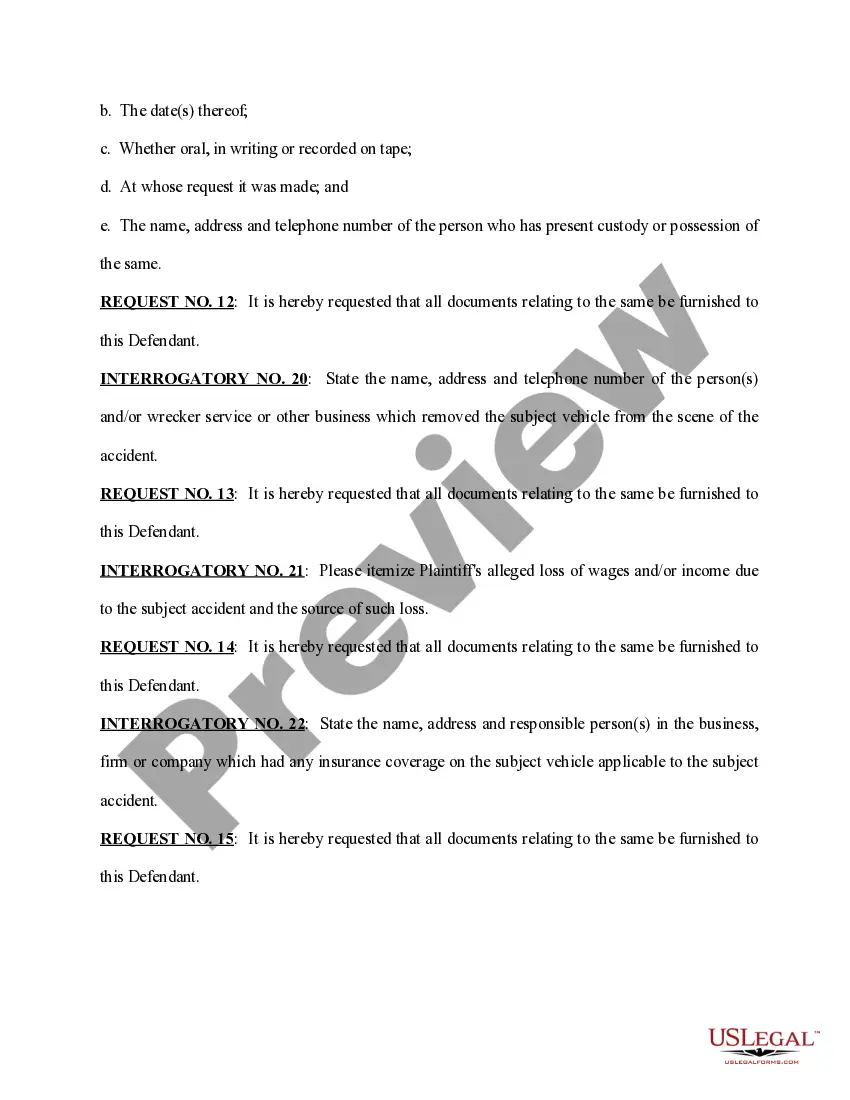
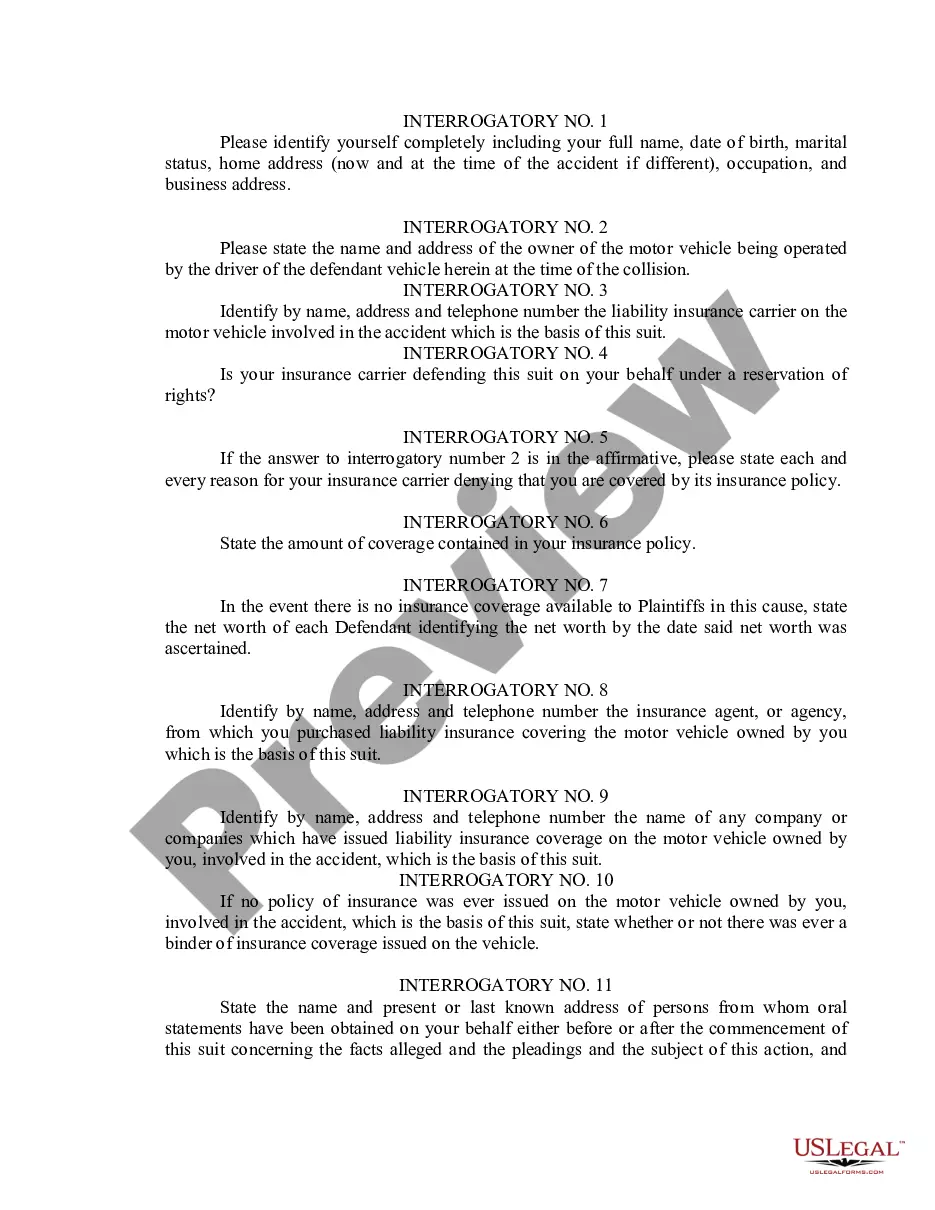
- Interrogatories: Written questions about the plaintiff's personal and employment history.
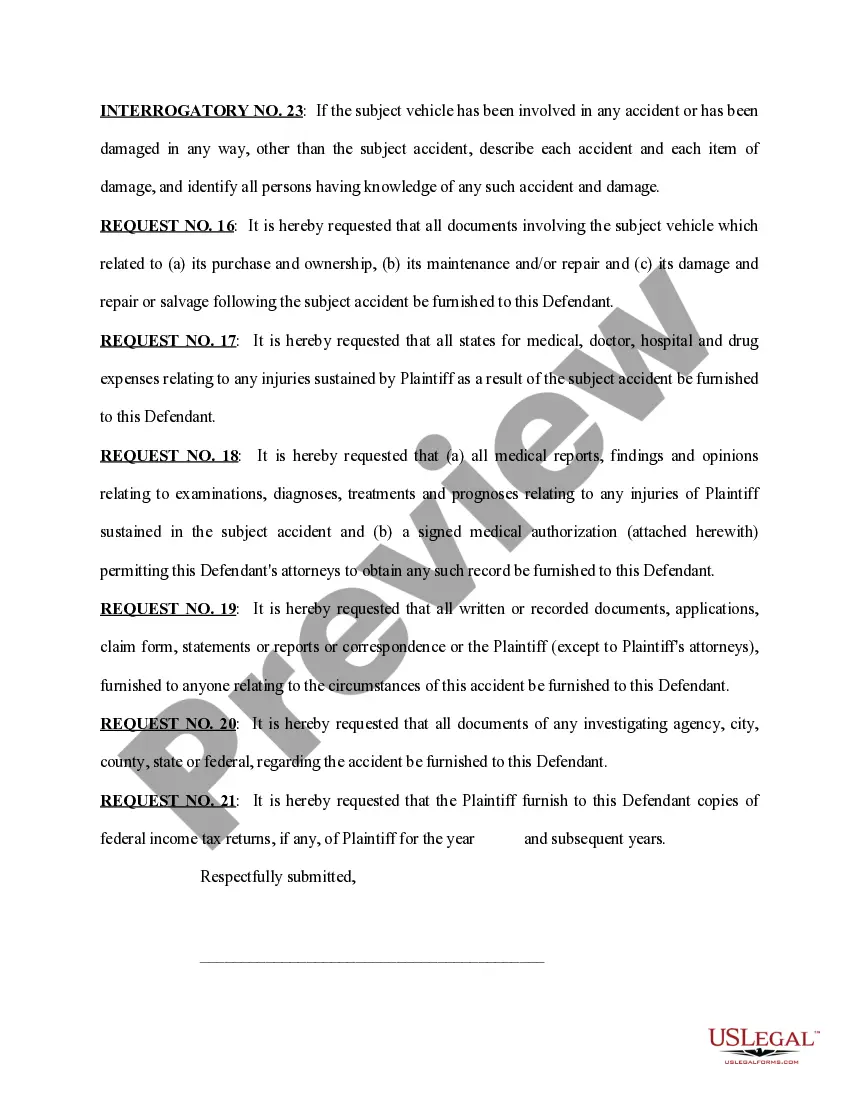
- Requests for Production: Documentation requests related to evidence and witness statements.
- Detailed inquiries: Questions about past legal actions, injuries, and expert witnesses.
- Structured format: Organized sections for easy identification of the information being requested.


When to use this form
This form should be used during the discovery process in a civil lawsuit. It is essential when you need to gather specific information from the opposing party, such as details about their work history, marital status, or past accidents, or to obtain documentation that supports their claims or defenses.
Who this form is for
- Litigants involved in civil lawsuits.
- Attorneys preparing to gather evidence or information for their case.
- Individuals seeking to understand the other party's claims in a legal dispute.
Instructions for completing this form
- Identify the parties involved in the lawsuit, including their full names and contact information.
- Provide detailed answers to each interrogatory, ensuring all questions are fully addressed.
- Collect and attach relevant documents as requested in the document requests.
- Review the completed form for accuracy and make modifications based on the specifics of your case.
- Sign and date the form where required and provide it to the other party as per the rules of the court.
Notarization requirements for this form
This form does not typically require notarization unless specified by local law. However, always check your jurisdiction's rules to confirm specific requirements for the submission of interrogatories in civil litigation.
Get your form ready online
Our built-in tools help you complete, sign, share, and store your documents in one place.
Make edits, fill in missing information, and update formatting in US Legal Forms—just like you would in MS Word.
Download a copy, print it, send it by email, or mail it via USPS—whatever works best for your next step.
Sign and collect signatures with our SignNow integration. Send to multiple recipients, set reminders, and more. Go Premium to unlock E-Sign.
If this form requires notarization, complete it online through a secure video call—no need to meet a notary in person or wait for an appointment.
We protect your documents and personal data by following strict security and privacy standards.

Make edits, fill in missing information, and update formatting in US Legal Forms—just like you would in MS Word.

Download a copy, print it, send it by email, or mail it via USPS—whatever works best for your next step.

Sign and collect signatures with our SignNow integration. Send to multiple recipients, set reminders, and more. Go Premium to unlock E-Sign.

If this form requires notarization, complete it online through a secure video call—no need to meet a notary in person or wait for an appointment.

We protect your documents and personal data by following strict security and privacy standards.
Common mistakes to avoid
- Failing to answer all interrogatories completely, leading to potential objections.
- Not attaching requested documentation or evidence to support your answers.
- Providing vague or unclear answers that do not adequately address the questions asked.
Benefits of using this form online
- Convenient access: Downloadable forms that can be filled out at your own pace.
- Editability: Modify the form as needed to fit your specific legal situation.
- Reliable: Templates are drafted by licensed attorneys, ensuring legal accuracy.
Looking for another form?
Form popularity
FAQ
The interrogatories shall not exceed 30, including all subparts, unless the court permits a larger number on motion and notice and for good cause.
The number of questions included in an interrogatory is usually limited by court rule. For example, under the Federal Rules of Civil Procedure, each party may only ask each other party 25 questions via interrogatory unless the court gives permission to ask more.
Interrogatories, which are written questions about things that are relevant or important to the case. (NRCP 33; JCRCP 33) Requests for production of documents or things, which are written requests that demand the other side provide particular documents or items.
Interrogatory subparts are counted as one interrogatory if they are logically or factually subsumed within and necessarily related to the primary question. Safeco of America v. Rawstron, 181 F.R.D. 441, 445 (C.D. Cal.
A request for production is a discovery device used to gain access to documents, electronic data, and physical items held by an opposing party in a legal matter. The aim is to gain insight into any relevant evidence that the opposing party holds.
So, can you refuse to answer interrogatories? The answer is, no, you may not. You must answer a Rule 33 interrogatory within 30 days of being served with it. That answer must either permit inspection of the requested information or object to the production of the information for a specific reason.
(1) Number. Unless otherwise stipulated or ordered by the court, a party may serve on any other party no more than 25 written interrogatories, including all discrete subparts. Leave to serve additional interrogatories may be granted to the extent consistent with Rule 26(b)(1) and (2).
Interrogatories ask questions; the responding party provides written answers. A request for production of documents requests the production of documents (or other tangible things); the responding party provides documents.
You must answer each interrogatory separately and fully in writing under oath, unless you object to it. You must explain why you object. You must sign your answers and objections.