Mississippi Request for Production of Documents and Request for Admissions
Overview of this form
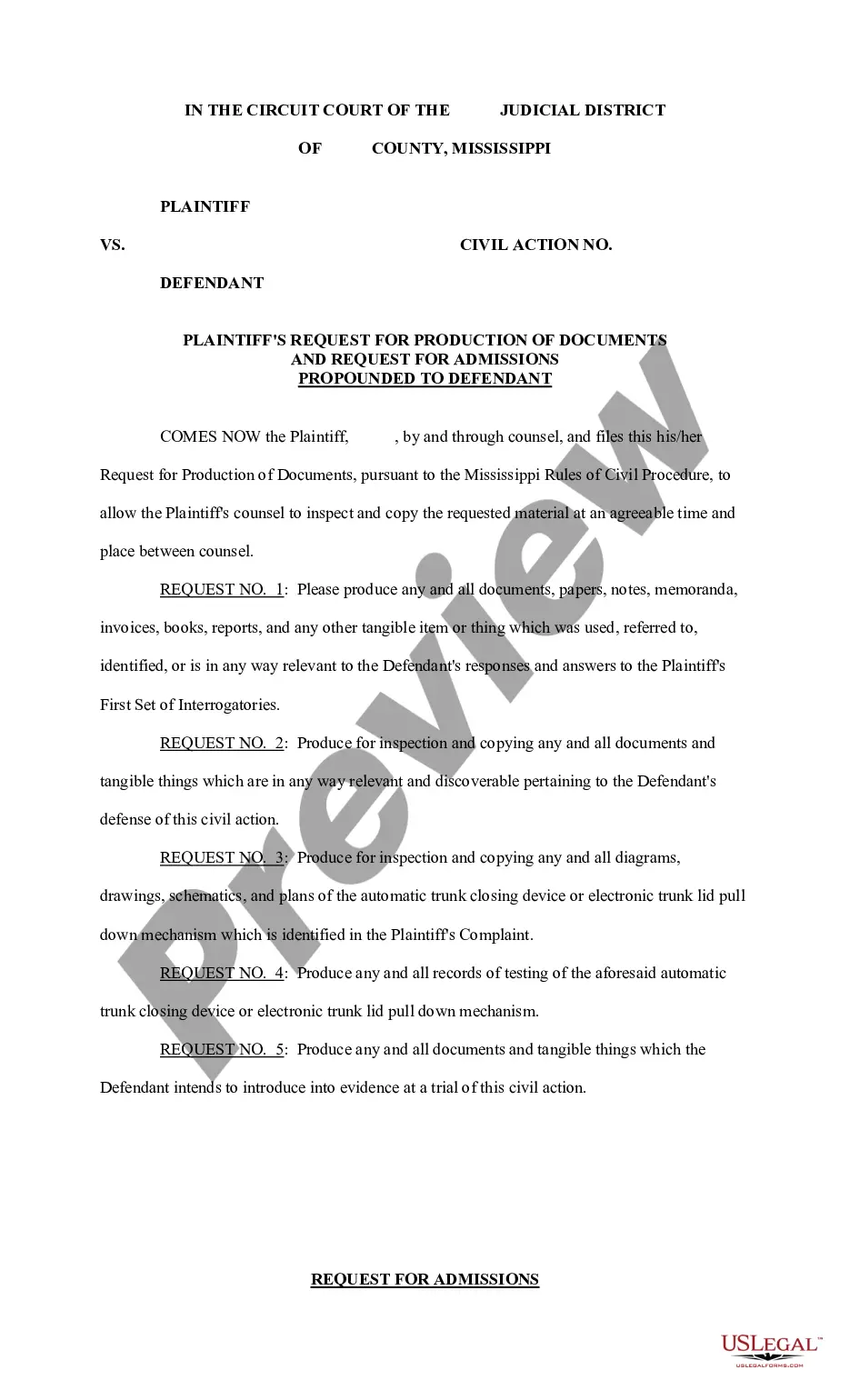
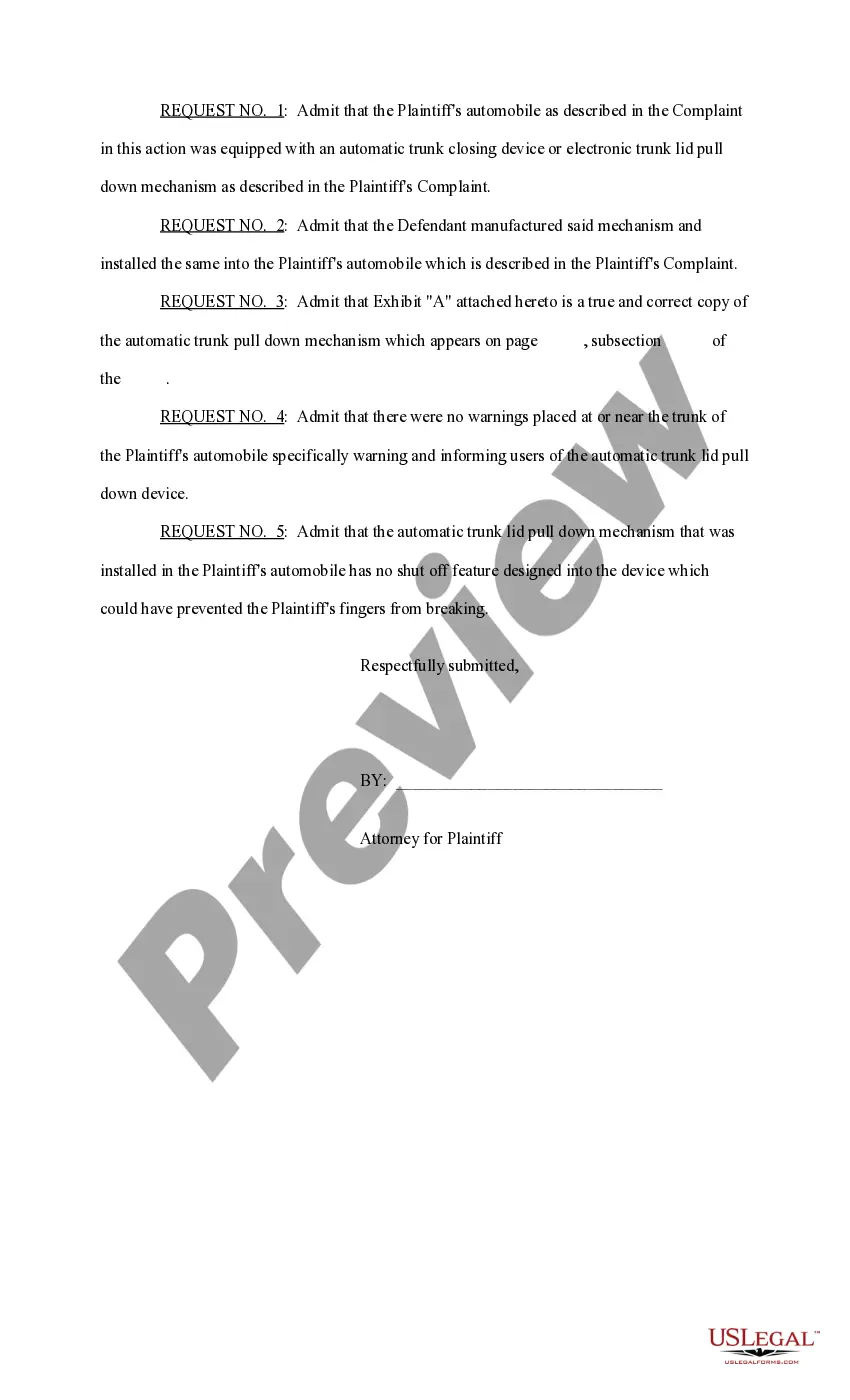
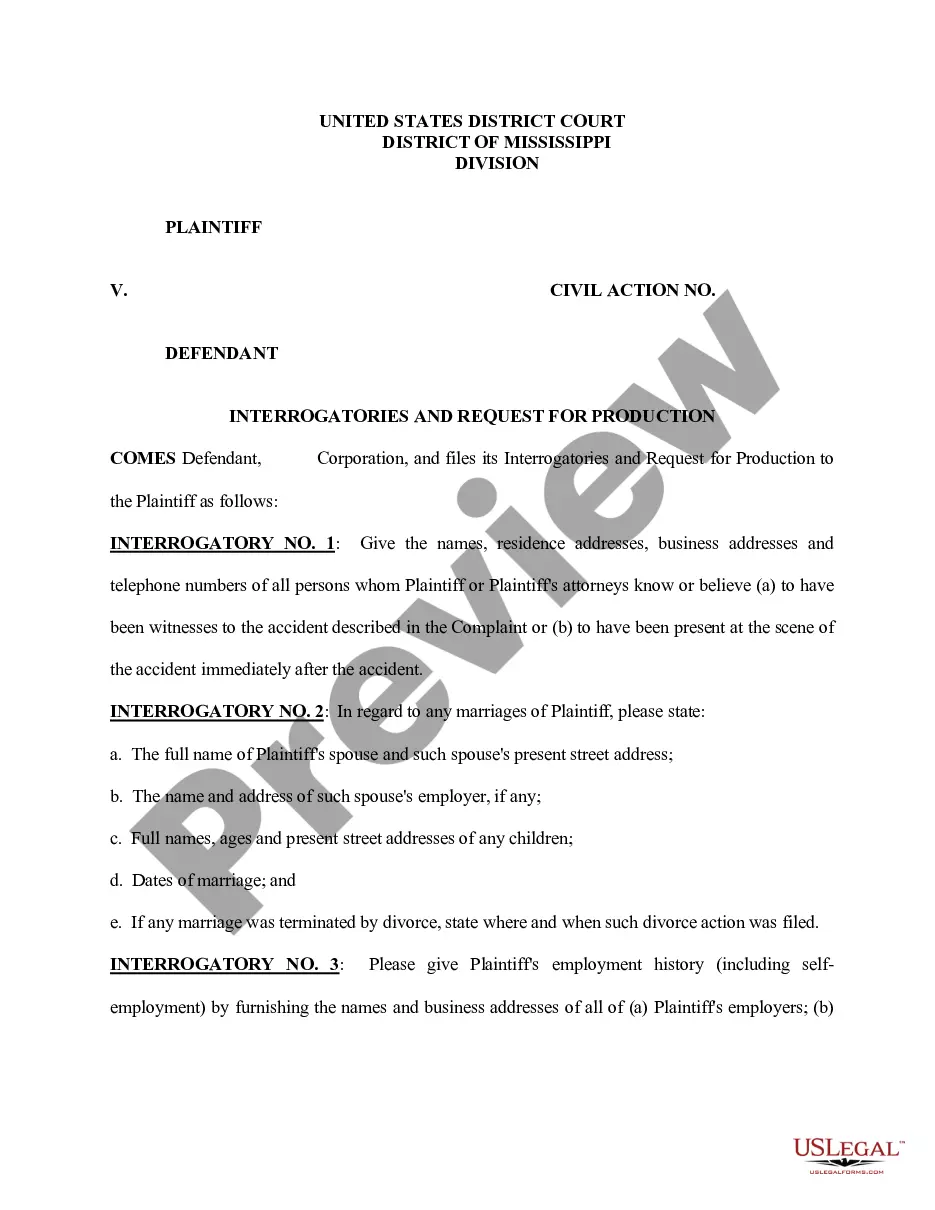
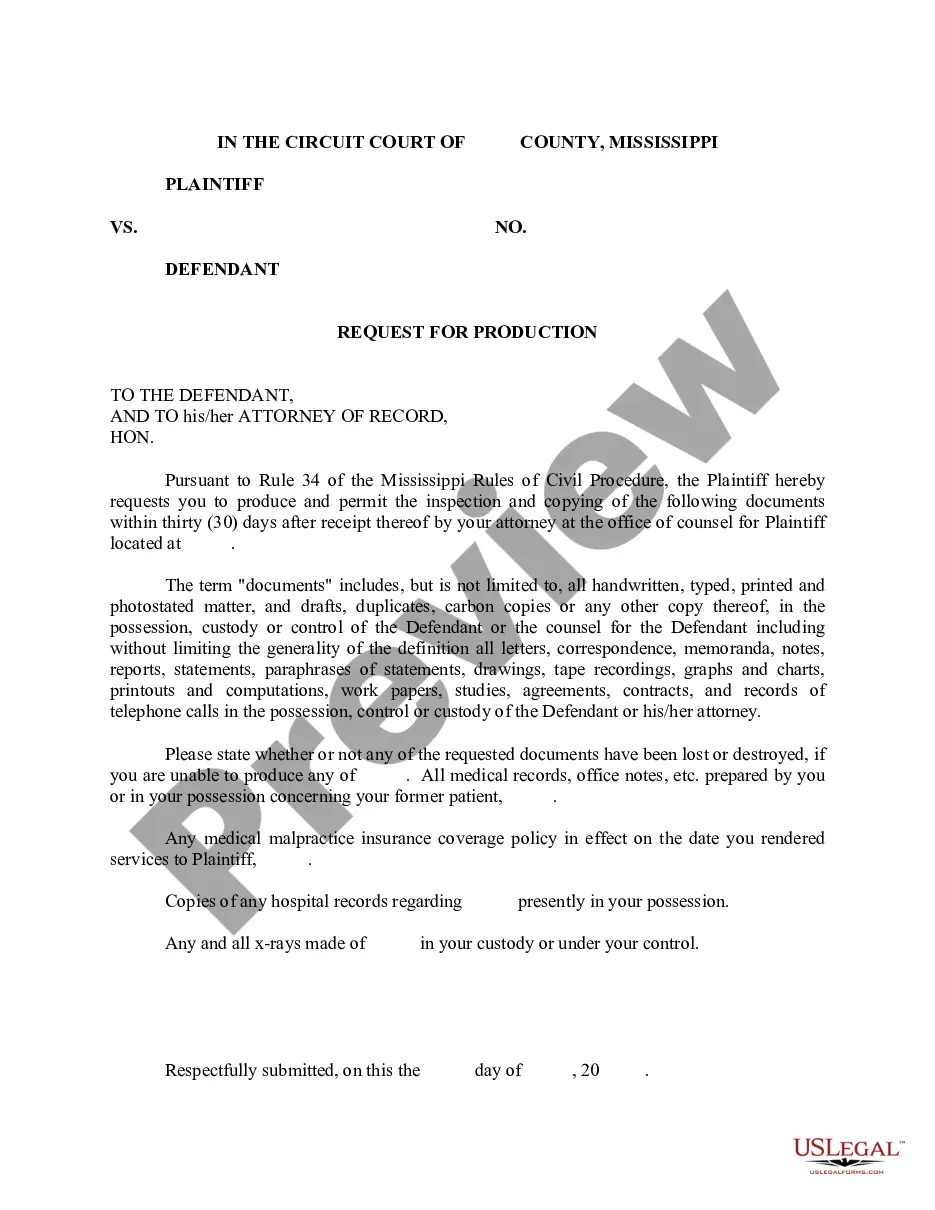
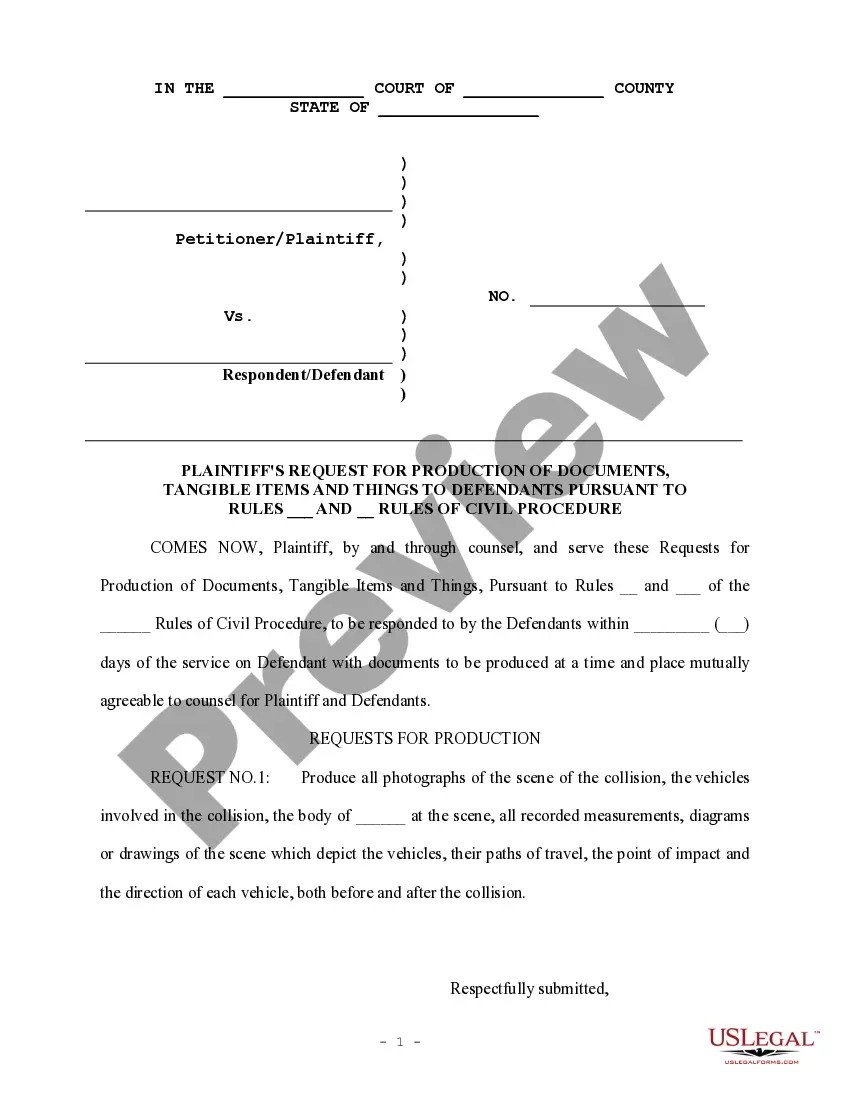
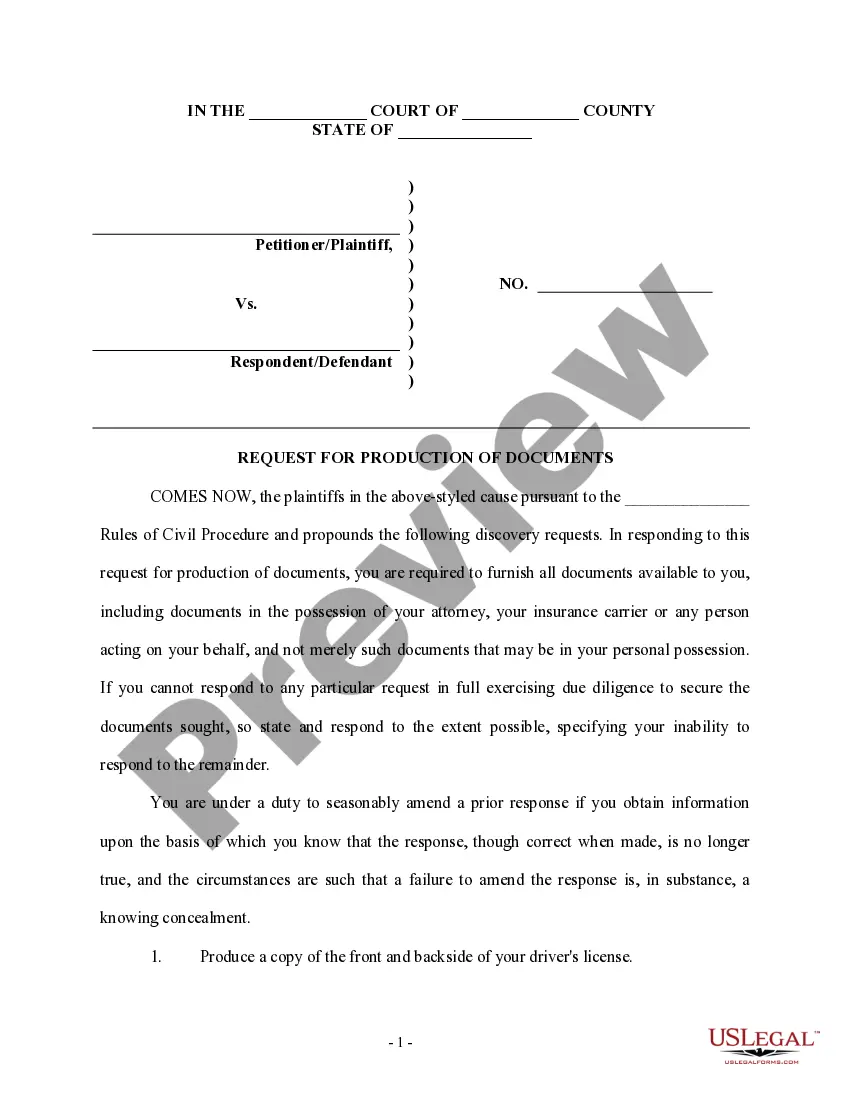
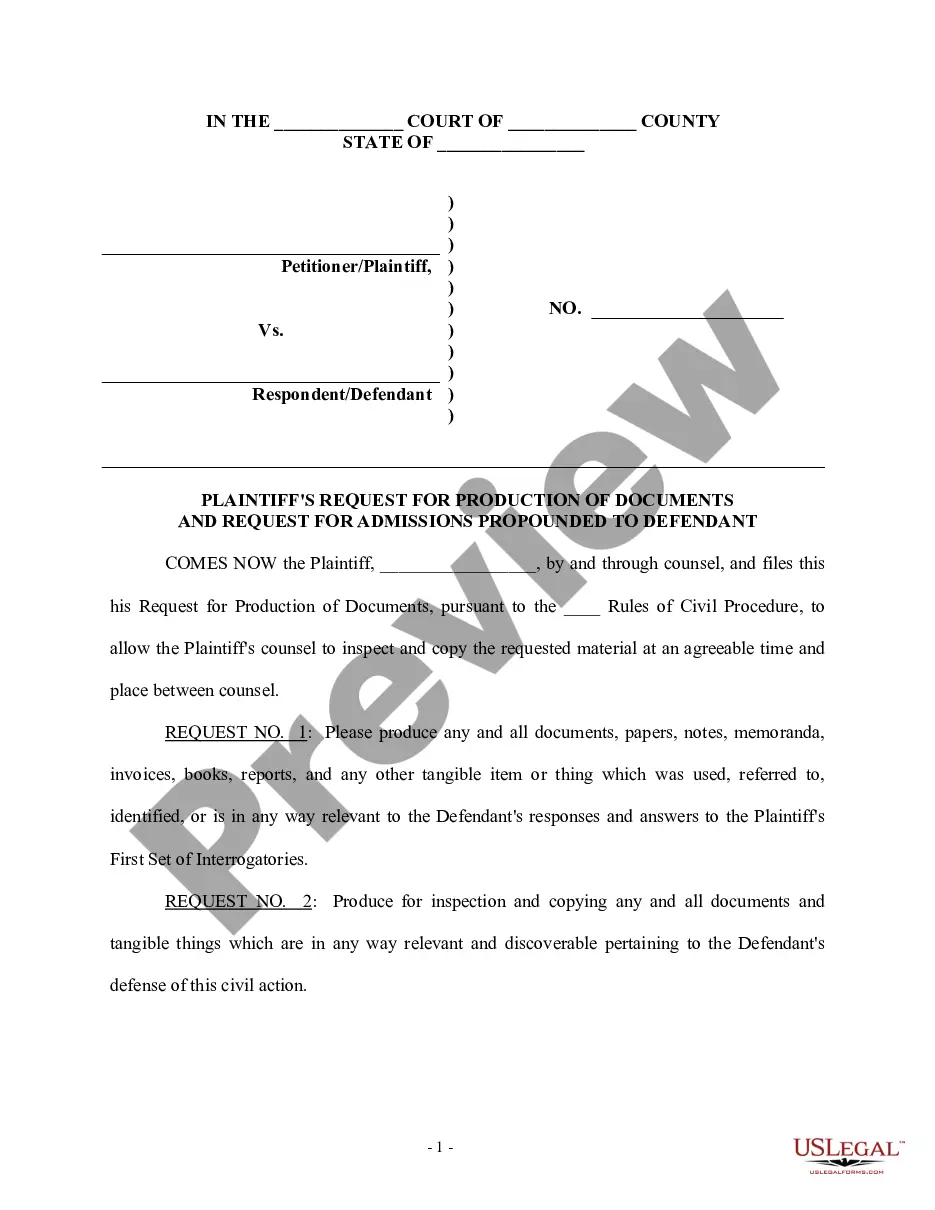
The Request for Production of Documents and Request for Admissions is a legal form used in Mississippi that facilitates the discovery process in civil litigation. This form allows one party to request the opposing side to produce specific documents and admit or deny certain facts pertinent to the case. It is crucial for gathering evidence and clarifying the issues at hand, distinguishing it from other legal documents that focus solely on evidence requests or fact admissions.
Key components of this form
- Request for Production of Documents: Asks for all relevant documents related to the case.
- Request for Admissions: Requests the opposing party to admit or deny specific facts.
- Specific Requests: Includes detailed requests for documents such as testing records and defense evidence.
- Responses and Timelines: Contains provisions on responding to each request within a specified timeframe.
- Customization: Should be tailored to reflect the specific circumstances of your case.
When to use this document
This form is typically used during the discovery phase of a civil litigation process. It is essential when you need to obtain evidence from the opposing party to support your claims or defenses. Use this form if you are involved in a case that requires clarification of facts or production of documents, especially when you suspect that the other party has information relevant to your case.
Who needs this form
This form is intended for:
- Individuals or entities engaged in civil litigation in Mississippi.
- Plaintiffs seeking to obtain evidence from defendants.
- Defendants who need to clarify issues raised by the plaintiff's claims.
- Attorneys representing clients in civil cases requiring document discovery or issue clarification.
How to prepare this document
- Identify the parties involved in the case and their respective roles (plaintiff and defendant).
- Fill out each request for production and admissions clearly and specifically, detailing what is needed.
- Set a timeline for the opposing party to respond to each request, according to local rules.
- Review the completed form to ensure it accurately represents the issues and requests relevant to your case.
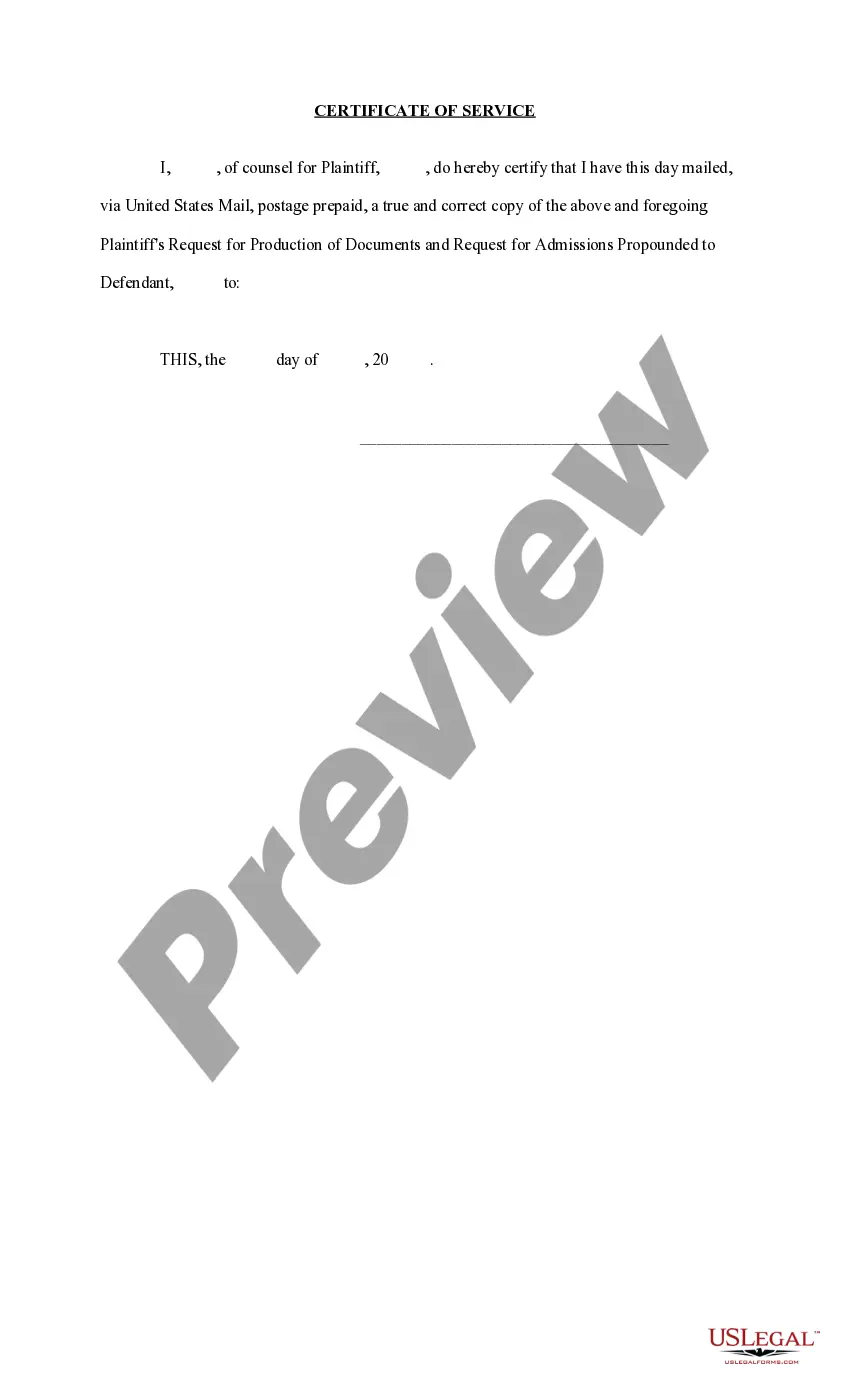
- File the form with the appropriate court and serve it to the opposing party as required.
Notarization guidance
In most cases, this form does not require notarization. However, some jurisdictions or signing circumstances might. US Legal Forms offers online notarization powered by Notarize, accessible 24/7 for a quick, remote process.
Get your form ready online
Our built-in tools help you complete, sign, share, and store your documents in one place.
Make edits, fill in missing information, and update formatting in US Legal Forms—just like you would in MS Word.
Download a copy, print it, send it by email, or mail it via USPS—whatever works best for your next step.
Sign and collect signatures with our SignNow integration. Send to multiple recipients, set reminders, and more. Go Premium to unlock E-Sign.
If this form requires notarization, complete it online through a secure video call—no need to meet a notary in person or wait for an appointment.
We protect your documents and personal data by following strict security and privacy standards.

Make edits, fill in missing information, and update formatting in US Legal Forms—just like you would in MS Word.

Download a copy, print it, send it by email, or mail it via USPS—whatever works best for your next step.

Sign and collect signatures with our SignNow integration. Send to multiple recipients, set reminders, and more. Go Premium to unlock E-Sign.

If this form requires notarization, complete it online through a secure video call—no need to meet a notary in person or wait for an appointment.

We protect your documents and personal data by following strict security and privacy standards.
Typical mistakes to avoid
- Failing to specify the documents or facts clearly in the requests.
- Not adhering to the response timeline set by court rules.
- Neglecting to customize the form according to the specifics of the case.
- Overloading requests with irrelevant or overly broad demands.
Why complete this form online
- Convenience of downloading and completing the form at your own pace.
- Accessibility to authoritative templates drafted by licensed attorneys.
- Updating forms easily to reflect changes in your case or legal requirements.
- Secure storage of documents for reference when filing or serving.
Quick recap
- The Request for Production of Documents and Request for Admissions is essential for evidence gathering in Mississippi civil litigation.
- It helps clarify facts and requires the opposing party to provide relevant documents.
- Be specific in your requests and ensure compliance with state rules to avoid common pitfalls.
Looking for another form?

Form popularity
FAQ
Similar to responses to Requests for Production, responses to Requests for Admissions do not have to be verified. It is critical to respond to Requests for Admissions because failure to respond results in the requests being deemed admitted without the need for a motion to have the responses established as admitted.
When responding to Requests for Admissions, remember to answer as follows: Admit: If any portion of the Request for Admission is true then you must admit to that portion of the request. You are also allowed to have a hybrid response admit the part of the request that is true while denying another part. See C.C.P.
A request for production is a legal request for documents, electronically stored information, or other tangible items made in the course of litigation.The responding party is required to furnish copies of any documents that are responsive to the request, except for those that are legally privileged.
In a civil action, a request for admission is a discovery device that allows one party to request that another party admit or deny the truth of a statement under oath. If admitted, the statement is considered to be true for all purposes of the current trial.
Each request must be numbered consecutively. The first paragraph immediately shall state he identity of the party requesting the admissions, the set number, and the identity of the responding party. Each request shall be separately set forth and identified by letter or number. C.C.P.
A request for admission (sometimes also called a request to admit) is a set of statements sent from one litigant to an adversary, for the purpose of having the adversary admit or deny the statements or allegations therein. Requests for admission are part of the discovery process in a civil case.
All requests for admission must be relevant to the issues in the case. If a request does not lead to the discovery of relevant, admissible evidence, you may object.
Requests for Admission Are Part of DiscoveryRequests for admission allow one party to ask another party to admit or deny certain statements while under oath. That way, admitted statements can be considered true during the trial.