Massachusetts Warranty Deed from Corporation to Husband and Wife
Understanding this form
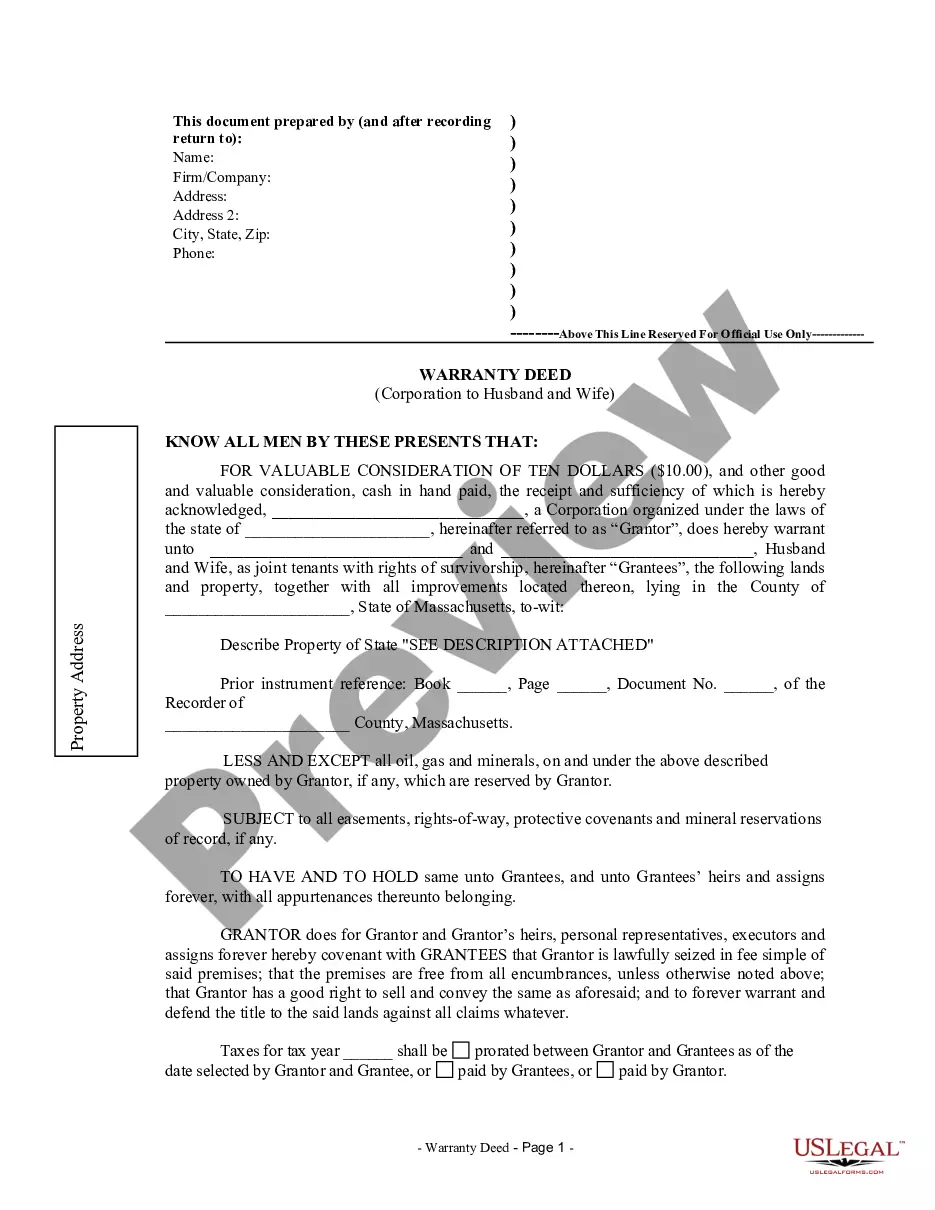
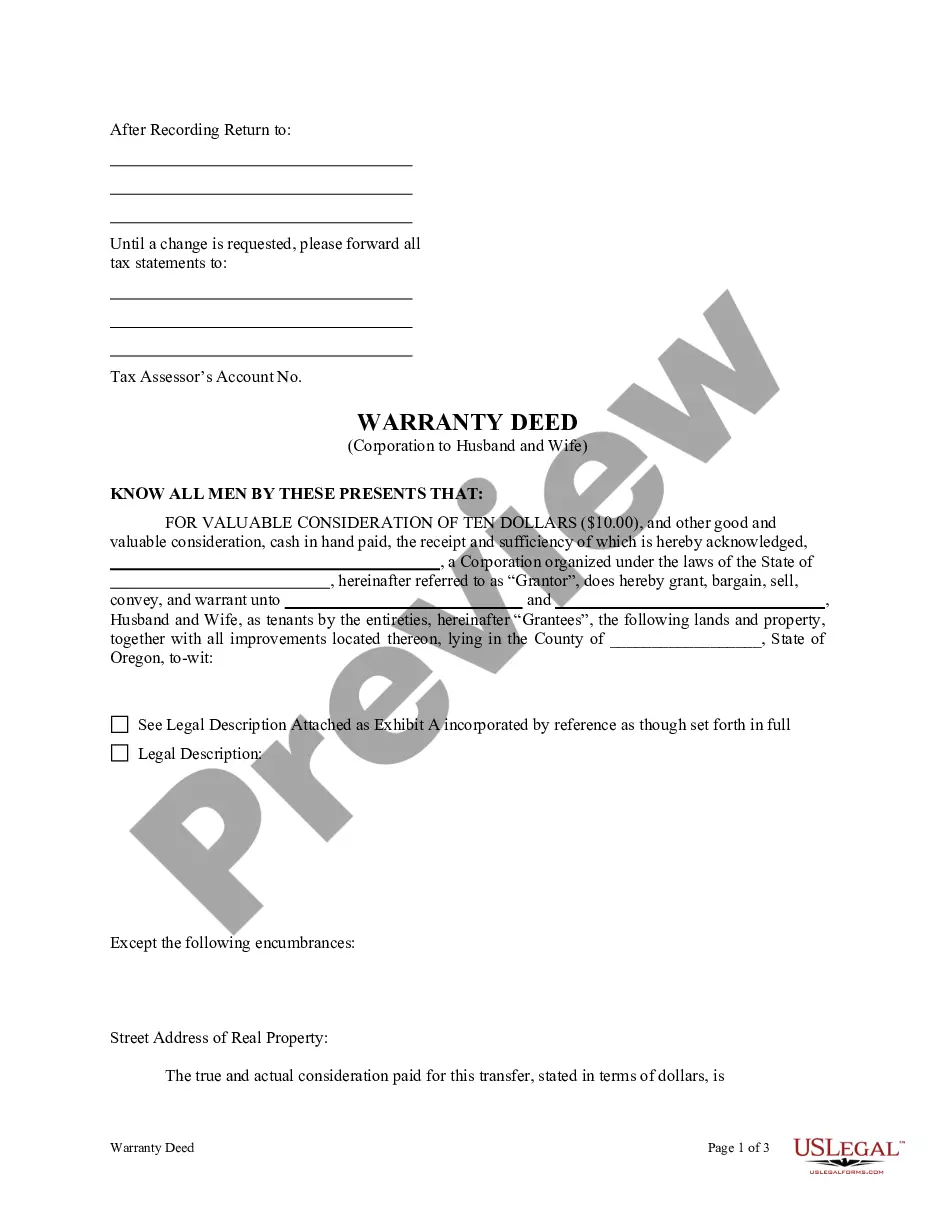
The Warranty Deed from Corporation to Husband and Wife is a legal document used to transfer real estate ownership from a corporation to a married couple. This form distinctly outlines that the corporation (the Grantor) conveys the property to the husband and wife (the Grantees), while reserving any oil, gas, and mineral rights. It's essential for ensuring the Grantees receive clear title to the property as per applicable state laws.
Main sections of this form
- Description of the property being conveyed.
- Identification of the parties involved, including the corporation and the married couple.
- Reservation of mineral rights by the Grantor.
- Warranties from the Grantor regarding the property's title.
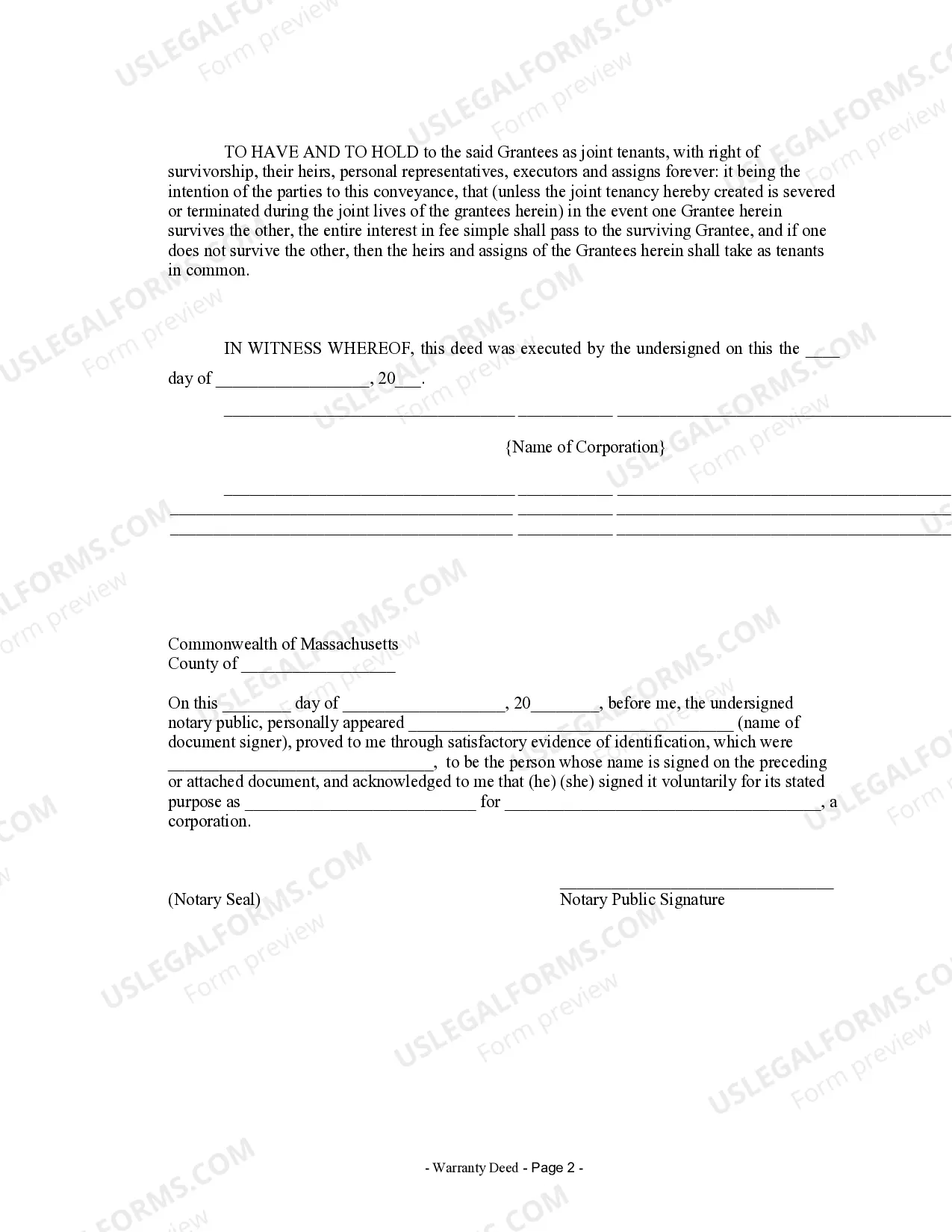
- Provisions for the distribution of property rights in the event of one Grantee's death.
- Notarization requirements for the deed's execution.



Common use cases
This form is typically used when a corporation wants to transfer ownership of real estate to a husband and wife. Common scenarios include property being gifted to a couple from a family-owned business or when divesting corporate assets. Utilizing this form ensures that the transfer includes necessary legal protections and rights of survivorship for the couple.
Who can use this document
- Corporations wishing to transfer real property to a married couple.
- Married couples receiving property from a corporate entity.
- Legal representatives of a corporation involved in property transactions.
- Estate planners managing a couple's property transfers.
Steps to complete this form
- Identify the parties: Enter the corporation's name as the Grantor and the names of the husband and wife as Grantees.
- Describe the property: Provide a detailed description of the property being conveyed, including the prior instrument reference.
- Specify mineral rights: Clearly state any reservations for oil, gas, and minerals, if applicable.
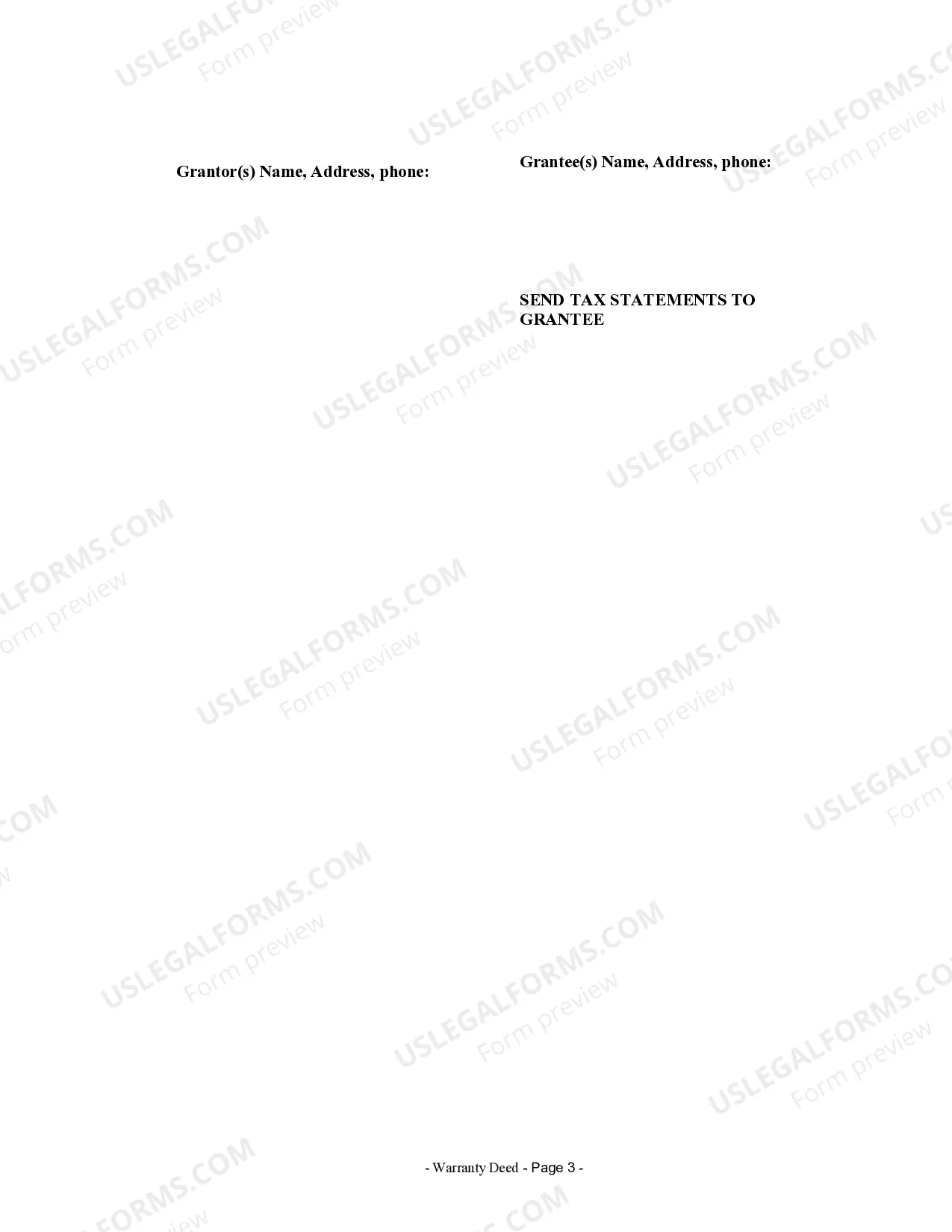
- Explain tax responsibilities: Include how taxes for the current tax year will be prorated or paid.
- Sign and notarize: Ensure the deed is signed by an authorized corporate officer and notarized to validate the transfer.
Does this form need to be notarized?
This form needs to be notarized to ensure legal validity. US Legal Forms provides secure online notarization powered by Notarize, allowing you to complete the process through a verified video call, available anytime.
Get your form ready online
Our built-in tools help you complete, sign, share, and store your documents in one place.
Make edits, fill in missing information, and update formatting in US Legal Forms—just like you would in MS Word.
Download a copy, print it, send it by email, or mail it via USPS—whatever works best for your next step.
Sign and collect signatures with our SignNow integration. Send to multiple recipients, set reminders, and more. Go Premium to unlock E-Sign.
If this form requires notarization, complete it online through a secure video call—no need to meet a notary in person or wait for an appointment.
We protect your documents and personal data by following strict security and privacy standards.

Make edits, fill in missing information, and update formatting in US Legal Forms—just like you would in MS Word.

Download a copy, print it, send it by email, or mail it via USPS—whatever works best for your next step.

Sign and collect signatures with our SignNow integration. Send to multiple recipients, set reminders, and more. Go Premium to unlock E-Sign.

If this form requires notarization, complete it online through a secure video call—no need to meet a notary in person or wait for an appointment.

We protect your documents and personal data by following strict security and privacy standards.
Avoid these common issues
- Failing to provide a complete property description.
- Omitting the signatures of the appropriate corporate officers.
- Not having the deed notarized as required.
- Neglecting to specify the reservation of mineral rights.
- Forgetting to clarify tax responsibilities between parties.
Advantages of online completion
- Convenient access: Obtain the form anytime and anywhere.
- Editability: Easily fill in the required fields without delays.
- Reliability: Forms are drafted by licensed attorneys, ensuring legal compliance.
Looking for another form?
Form popularity
FAQ
First, so long as you own the property you purchased, you are obligated to pay its property taxes. One way to get a warranty deed to the property you acquired via a foreclosure where you got a quit claim deed for it is to simply deed the property to yourself or a trust that you created as a grant (warranty) deed.
A warranty deed, also known as a general warranty deed, is a legal real estate document between the seller (grantor) and the buyer (grantee). The deed protects the buyer by pledging that the seller holds clear title to the property and there are no encumbrances, outstanding liens, or mortgages against it.
A quitclaim deed only transfers the grantor's interests in a piece of real estate.A warranty deed contains a guarantee that the grantor has legal title and rights to the real estate. A quitclaim deed offers little to no protection to the grantee. It offers the least amount of protection out of any other type of deed.
A special warranty deed is a deed to real estate where the seller of the propertyknown as the grantorwarrants only against anything that occurred during their physical ownership. In other words, the grantor doesn't guarantee against any defects in clear title that existed before they took possession of the property.
The drawback, quite simply, is that quitclaim deeds offer the grantee/recipient no protection or guarantees whatsoever about the property or their ownership of it. Maybe the grantor did not own the property at all, or maybe they only had partial ownership.
It's important to note that a warranty deed does not actually prove the grantor has ownership (a title search is the best way to prove that), but it is a promise by the grantor that they are transferring ownership and if it turns out they don't actually own the property, the grantor will be responsible for compensating
Corporate warranty deeds offer the seller's guarantee to the buyer in regards to the validity of the chain of title. Generally, special warranty deeds only protect against problems occurring since the seller purchased the property.
A warranty deed is a higher level of protection produced by the seller upon the real estate closing. It includes a full legal description of the property, and confirms the title is clear and free from all liens, encumbrances, or title defects. Most property sales make use of a warranty deed.
A warranty deed, also known as a general warranty deed, is a legal real estate document between the seller (grantor) and the buyer (grantee). The deed protects the buyer by pledging that the seller holds clear title to the property and there are no encumbrances, outstanding liens, or mortgages against it.