Alabama Living Trust
Living Trusts are essential for estate planning. Attorney-drafted templates are quick and easy to complete.

Similar documents: key differences
- Living Trust vs. Will — A Living Trust takes effect during life, while a Will activates after death.
- Revocable Trust vs. Irrevocable Trust — Revocable Trusts can be changed; Irrevocable Trusts cannot.
- Family Trust vs. Individual Trust — Family Trusts benefit multiple family members; Individual Trusts benefit one person.
- Living Trust vs. Estate Trust — Living Trusts manage assets during life; Estate Trusts distribute assets after death.
- Revocable Living Trust vs. Grantor Trust — Both can be altered, but a Grantor Trust focuses on the grantor's control.
Search for more forms
Types of Living trusts forms
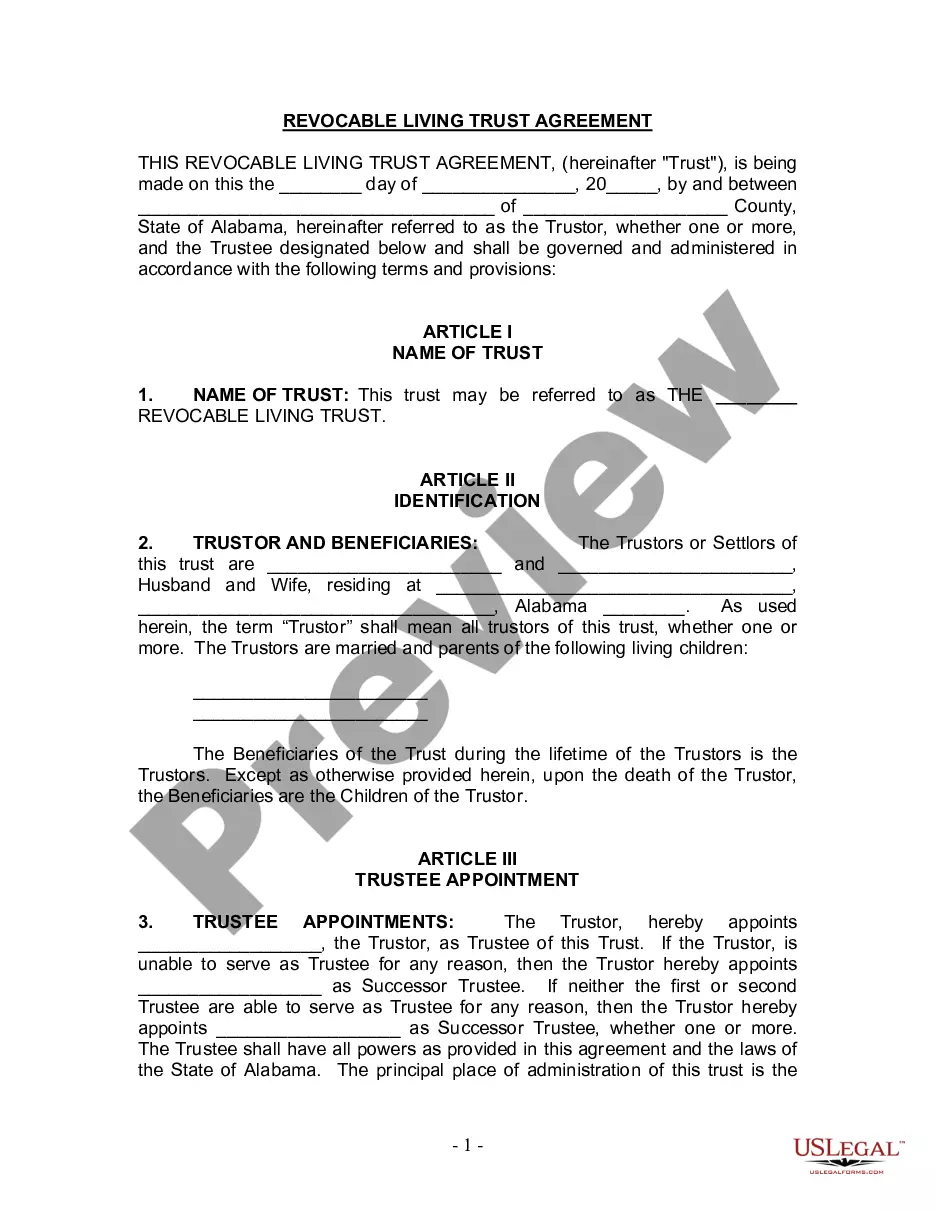
Revocable for Married Couple
Create a flexible estate plan that lets married couples manage and transfer their assets easily and efficiently.
Husband and Wife with Minor
Create a living trust that protects assets for your minor or adult children while ensuring they are managed during your lifetime.
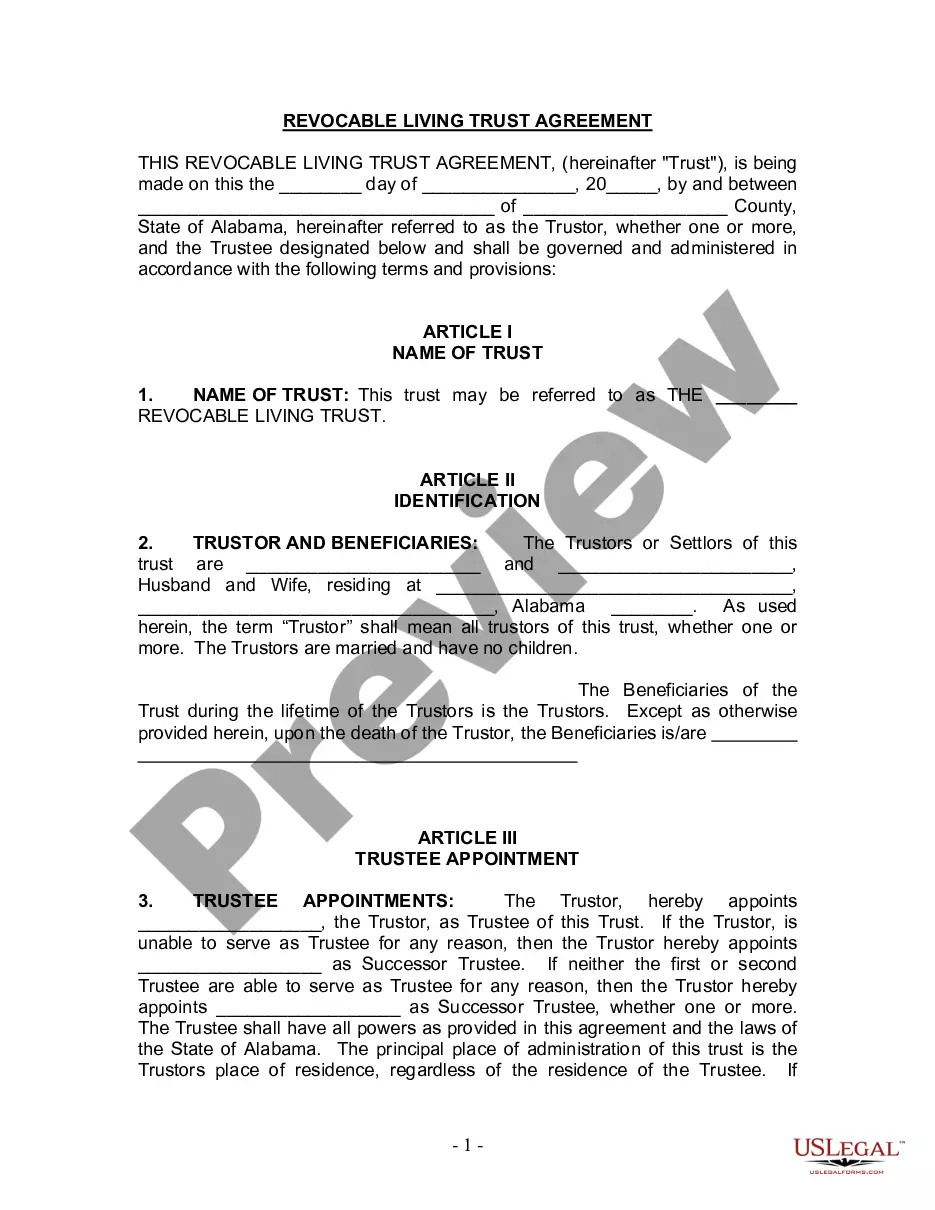
Husband and Wife with No Children
Create a flexible estate plan that allows spouses to manage and transfer assets during their lifetimes and after death, tailored for couples without children.
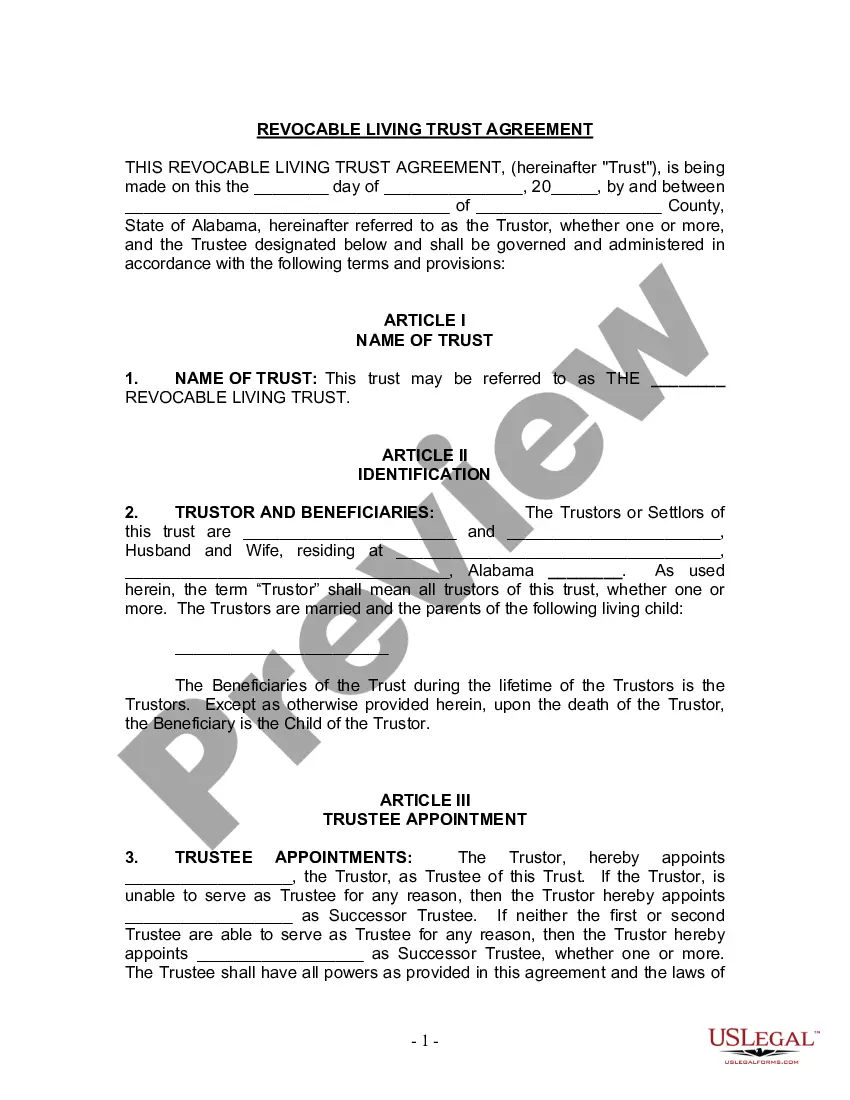
Husband and Wife with One Child
Create a revocable living trust to manage assets and ensure security for your family, especially when planning for your child's future.
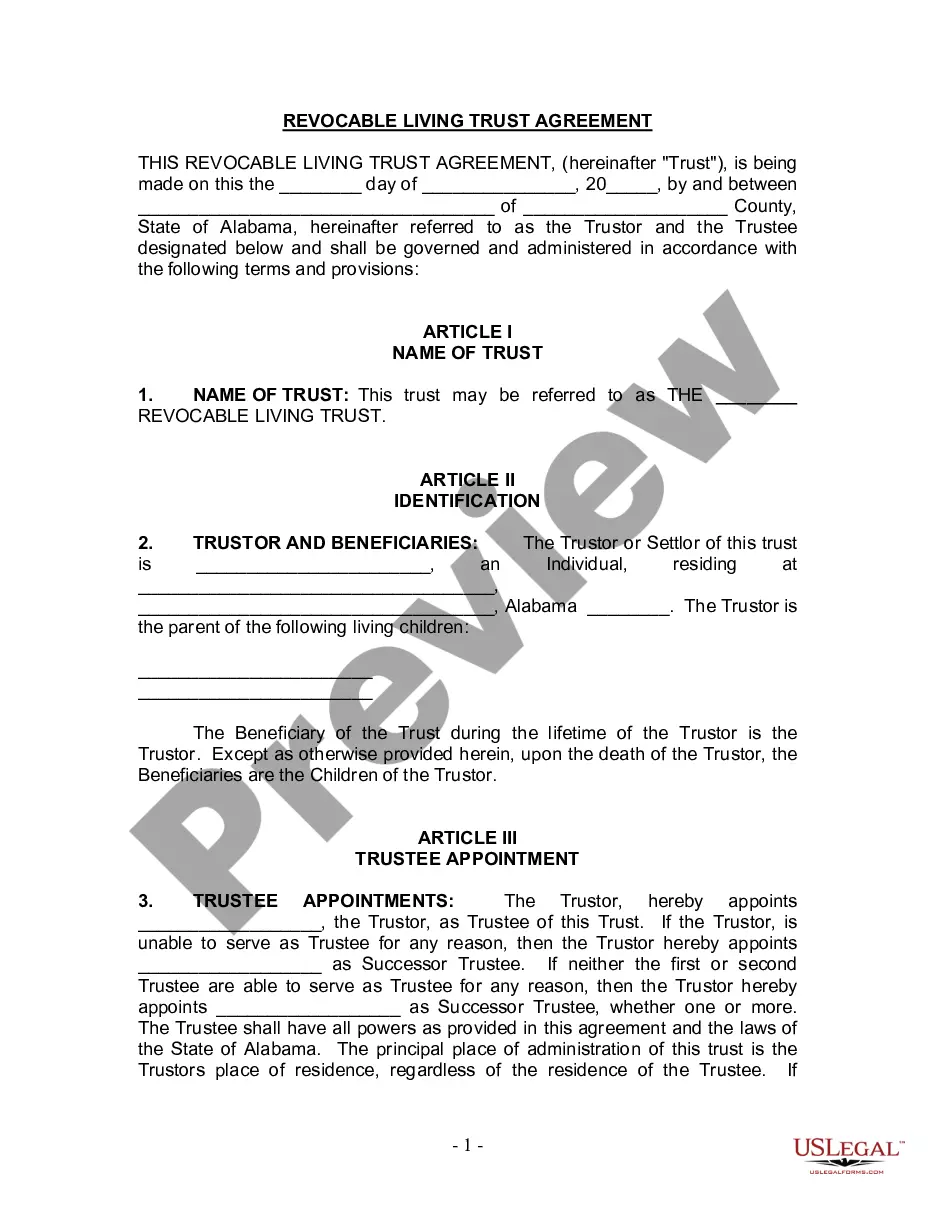
Revocable for Single Person
Establish a flexible estate plan that you can modify anytime, making it ideal for individuals managing their own assets.
Living Trust - Basic Revocable
Create a personalized estate plan that allows you to manage and distribute your assets during your lifetime and after your passing.
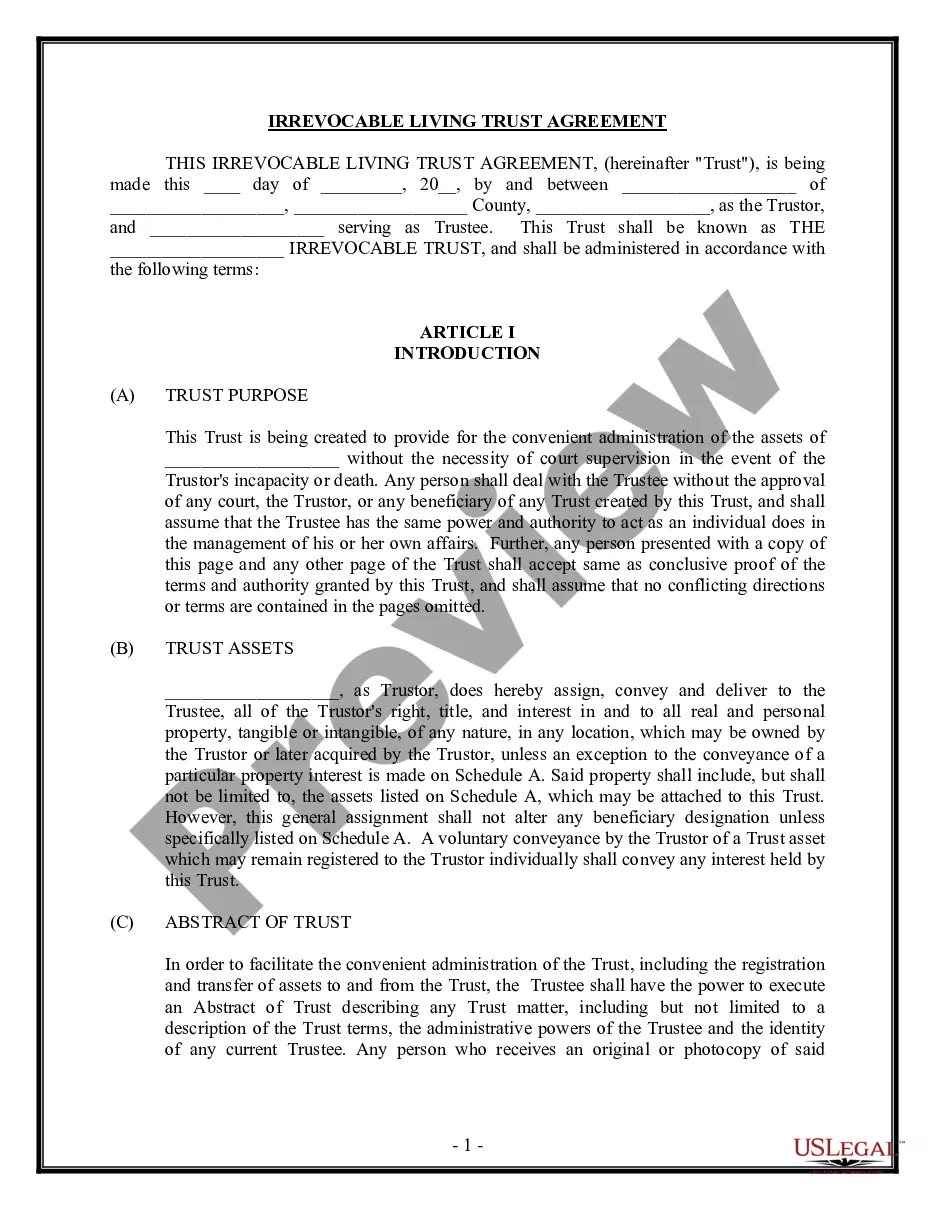
Irrevocable
Ensure your assets are managed without court involvement during incapacity or after death.
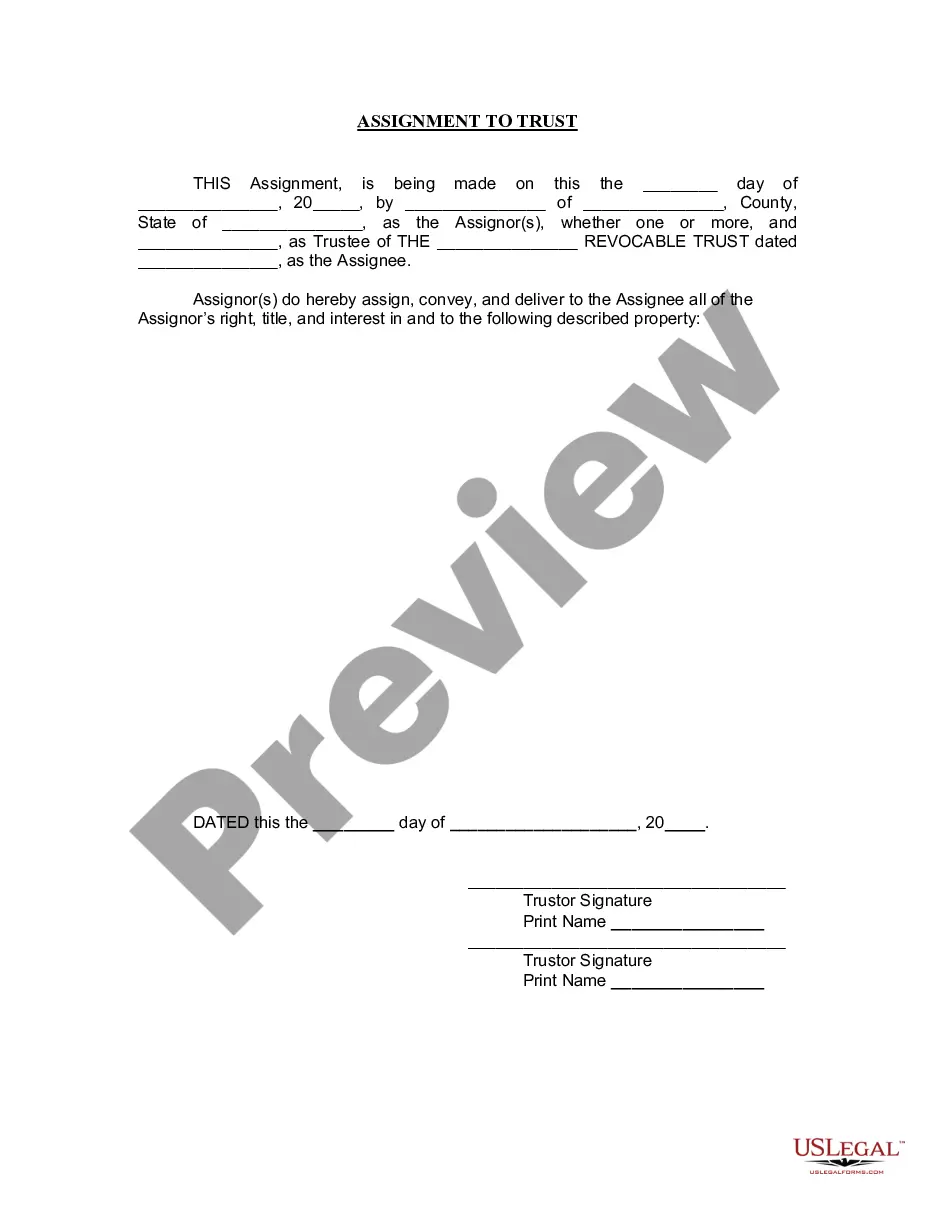
Assignment
Securely transfer your assets into a living trust, ensuring clear ownership and helping to avoid probate.
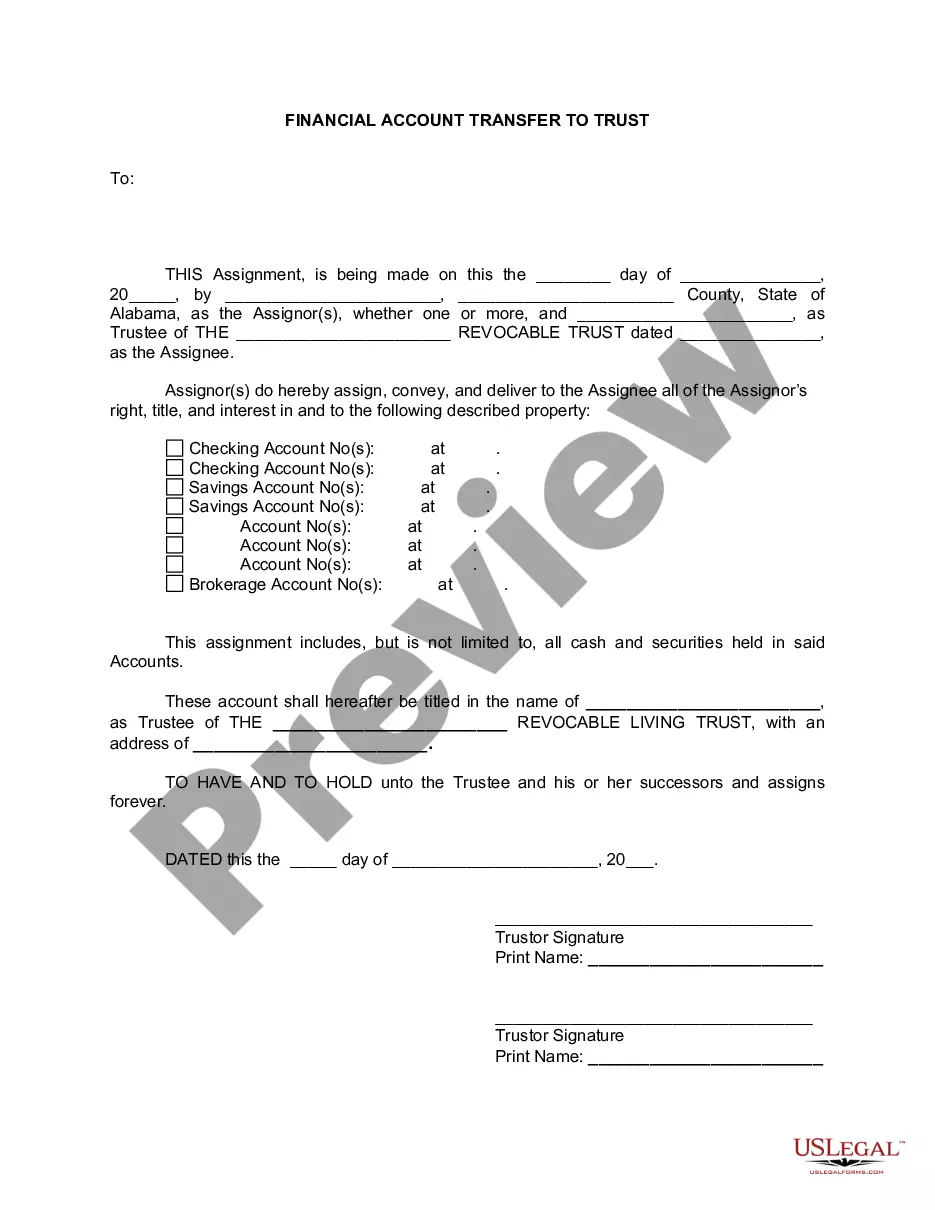
Financial Account Transfer
Easily transfer financial accounts into a living trust to ensure proper management and control of your assets.
Letter to Lienholder
Notify lienholders of property transfers related to a trust to update their records promptly.
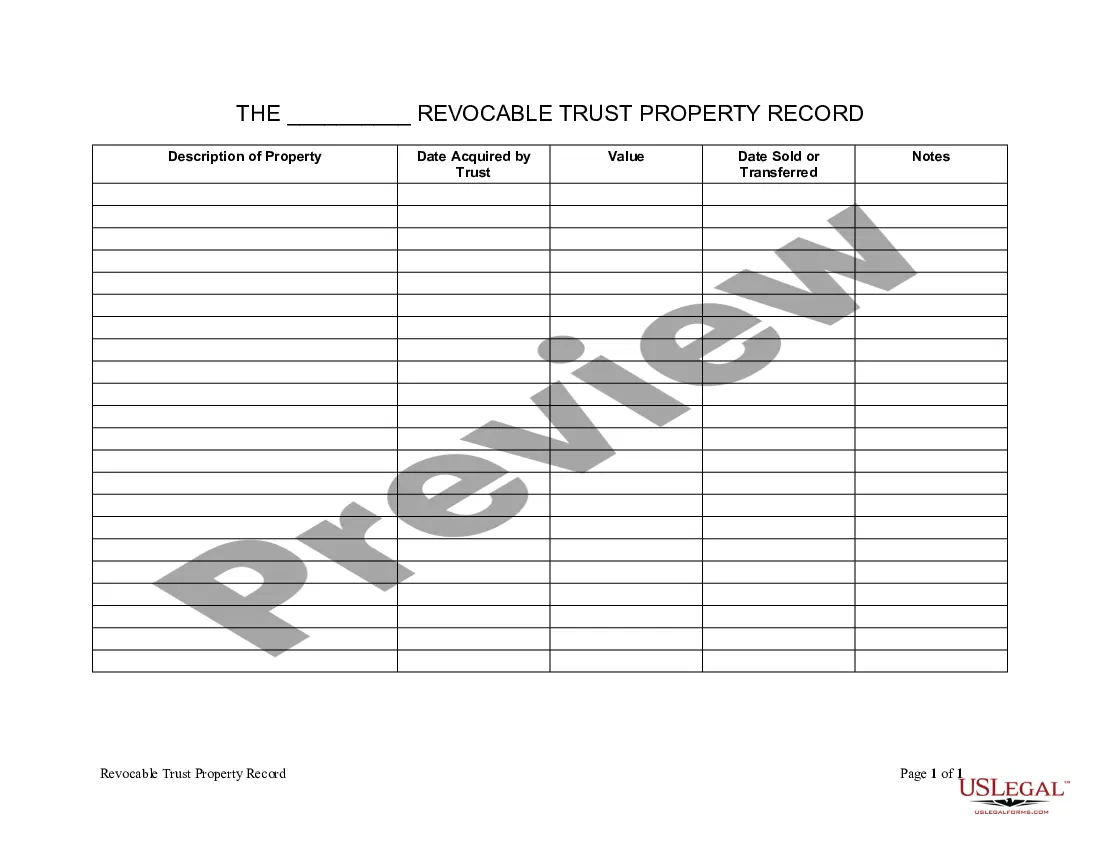
Property Record
Track and manage assets in a living trust efficiently, ensuring clarity in ownership and ease for beneficiaries.
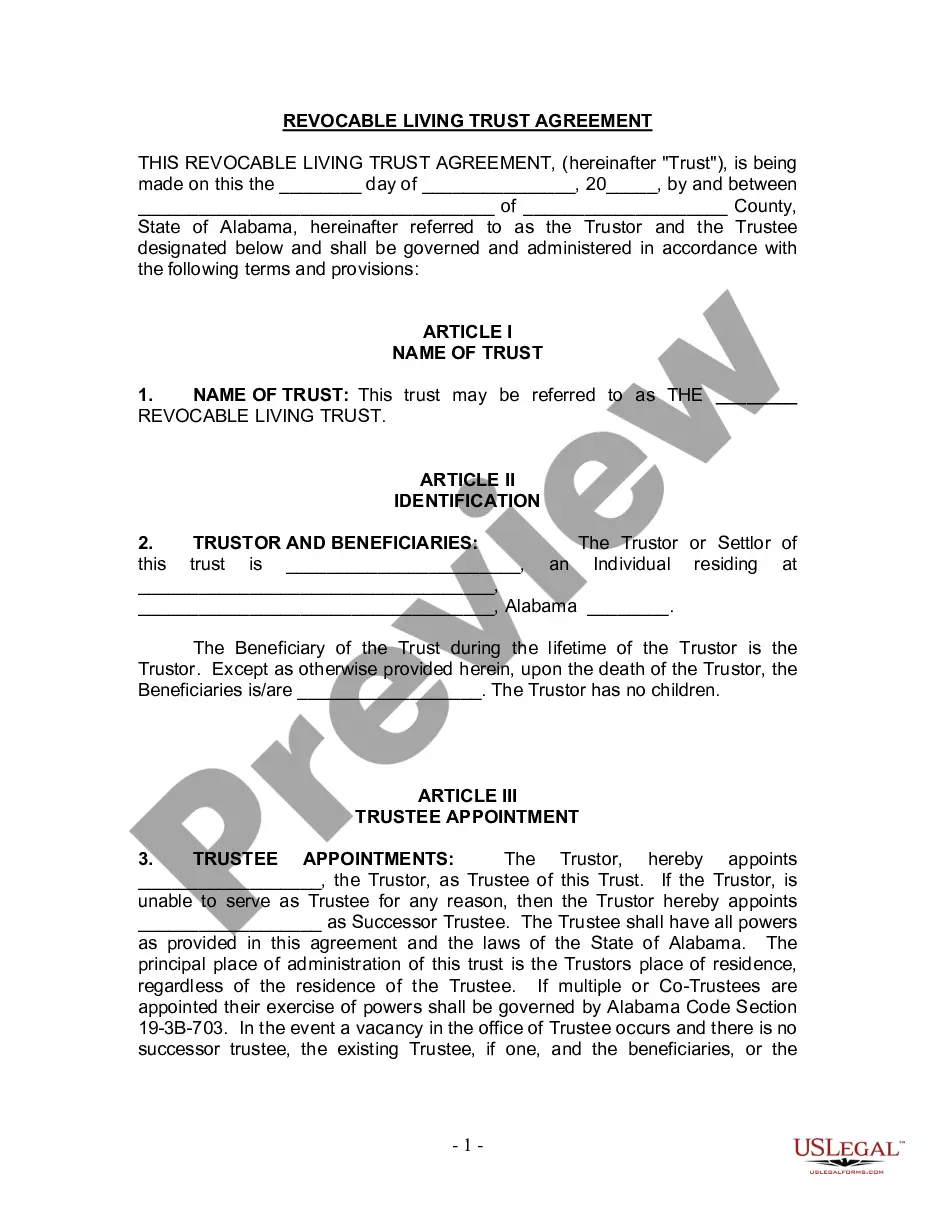
Individual as Single, Divorced
Create a revocable living trust to manage your assets, ensuring personal control and providing for future needs, even without children.
Individual, Who Is Single, Divorced
Create a revocable living trust to manage assets for yourself and your children, ensuring control over your estate and protecting your family's future.
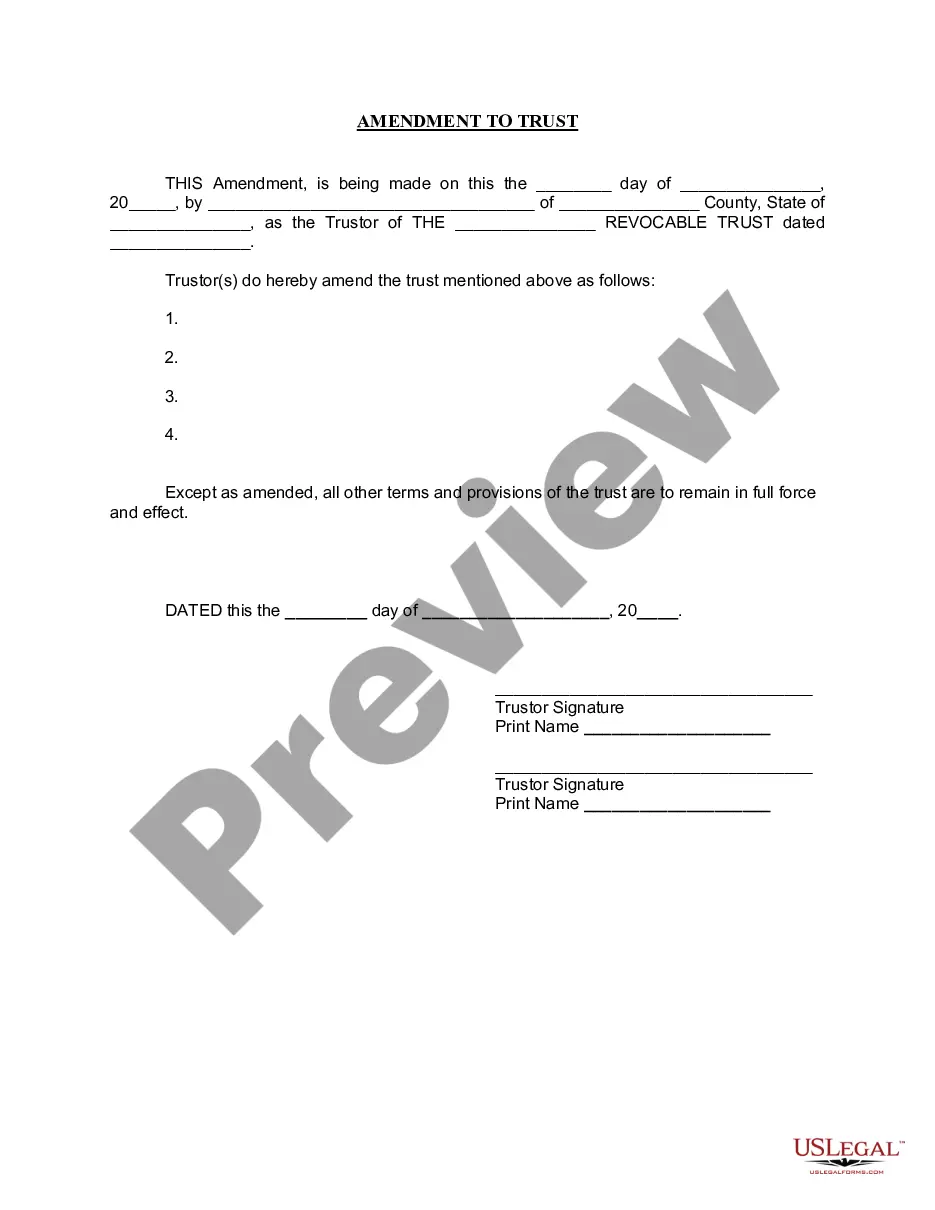
Amendment
Update your revocable trust with this essential amendment to reflect new wishes or changes in circumstances.
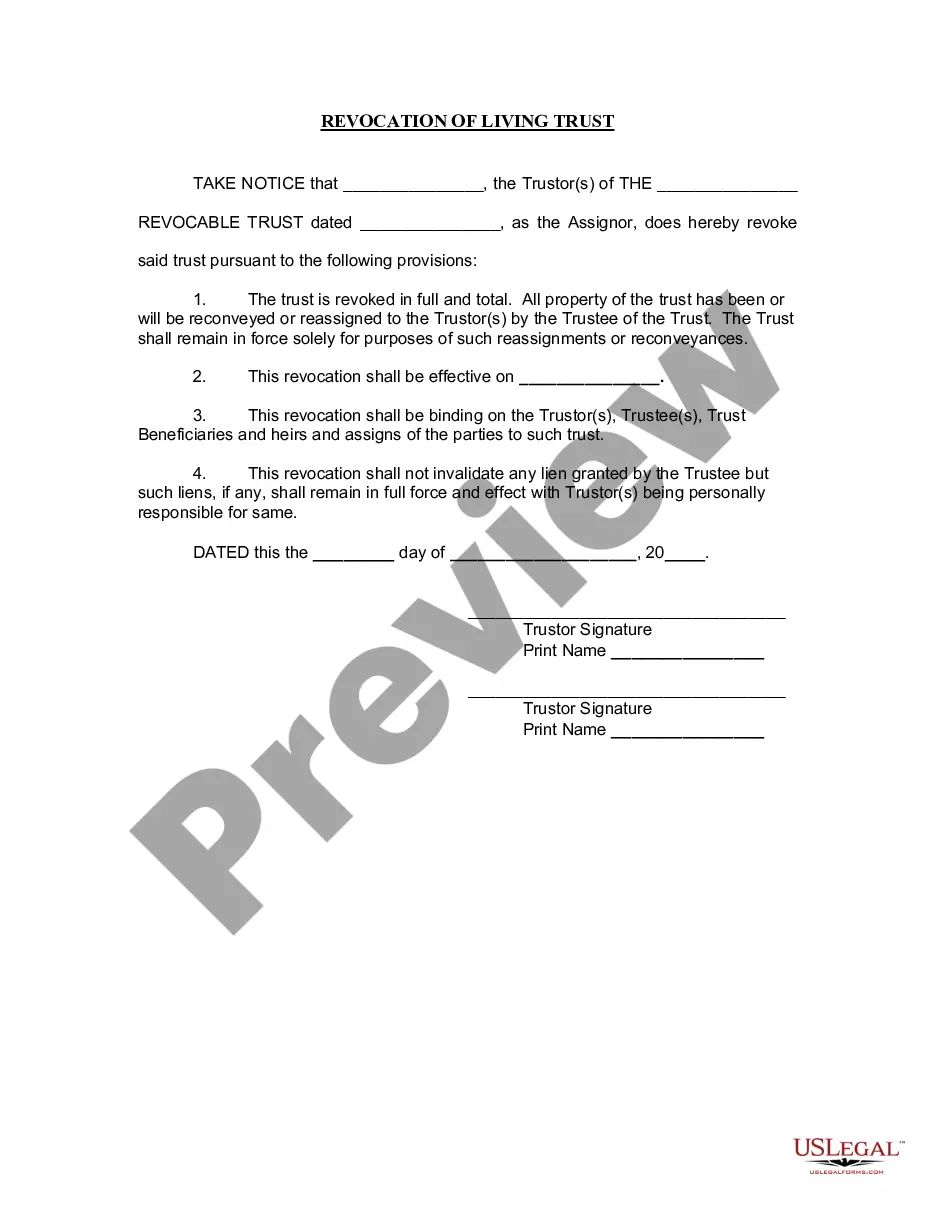
Revocation
Use this form to formally revoke an existing living trust, ensuring your assets are reassigned to you as the Trustor.
Common Alabama Living Trust documents
- Revocable Living Trust — Establishes a trust that can be altered or revoked.
- Living Trust Agreement — Sets the terms and conditions of the trust.
- Amendment to Living Trust — Updates existing trust provisions.
- Revocation of Living Trust — Officially cancels a trust.
- Grantor Trust — A trust where the creator retains control over the assets.
FAQs
A trust can provide benefits that a will does not, such as avoiding probate.
If you do not create a plan, your assets may be distributed according to state laws.
Review your plan regularly, especially after major life changes.
Beneficiary designations typically override a will or trust unless specified otherwise.
Yes, you can designate separate individuals for financial and healthcare decisions.
Key legal points
- A Living Trust can help avoid probate.
- Assets in a Living Trust are managed by the trustee.
- Trusts can provide privacy regarding asset distribution.
- You can be your own trustee in a Revocable Living Trust.
- Living Trusts can be funded with various types of assets.
How to get started
Begin in just a few steps.
- Find a template that meets your estate planning needs.
- Review the description and preview the document.
- Access full features with a subscription.
- Fill out your chosen template in the online editor.
- Export your document for downloading, mailing, or e-signing.
Practical tip
Consider starting with a Revocable Living Trust to maintain control over your assets while ensuring smooth distribution.