Alabama Living Trust for Husband and Wife with One Child
Understanding this form
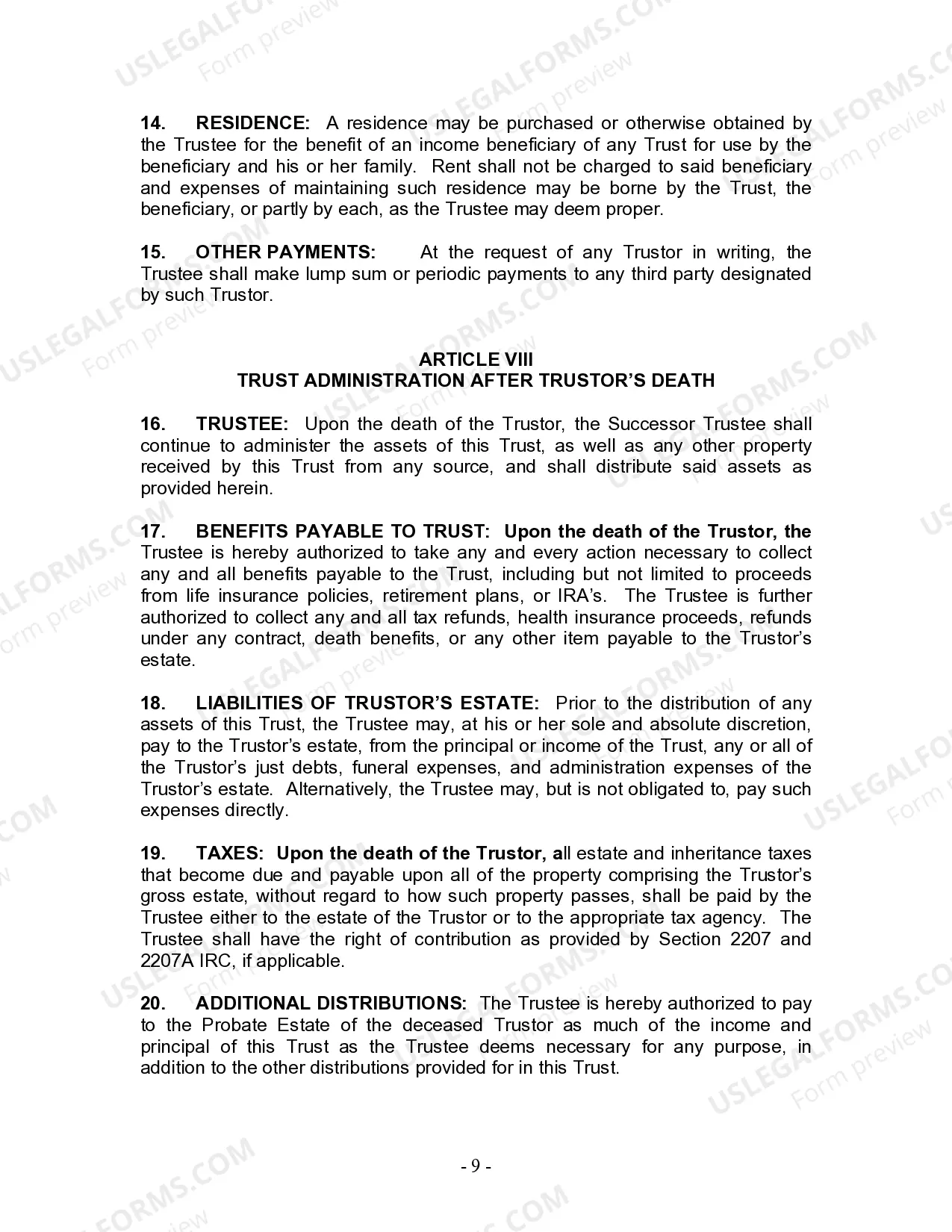
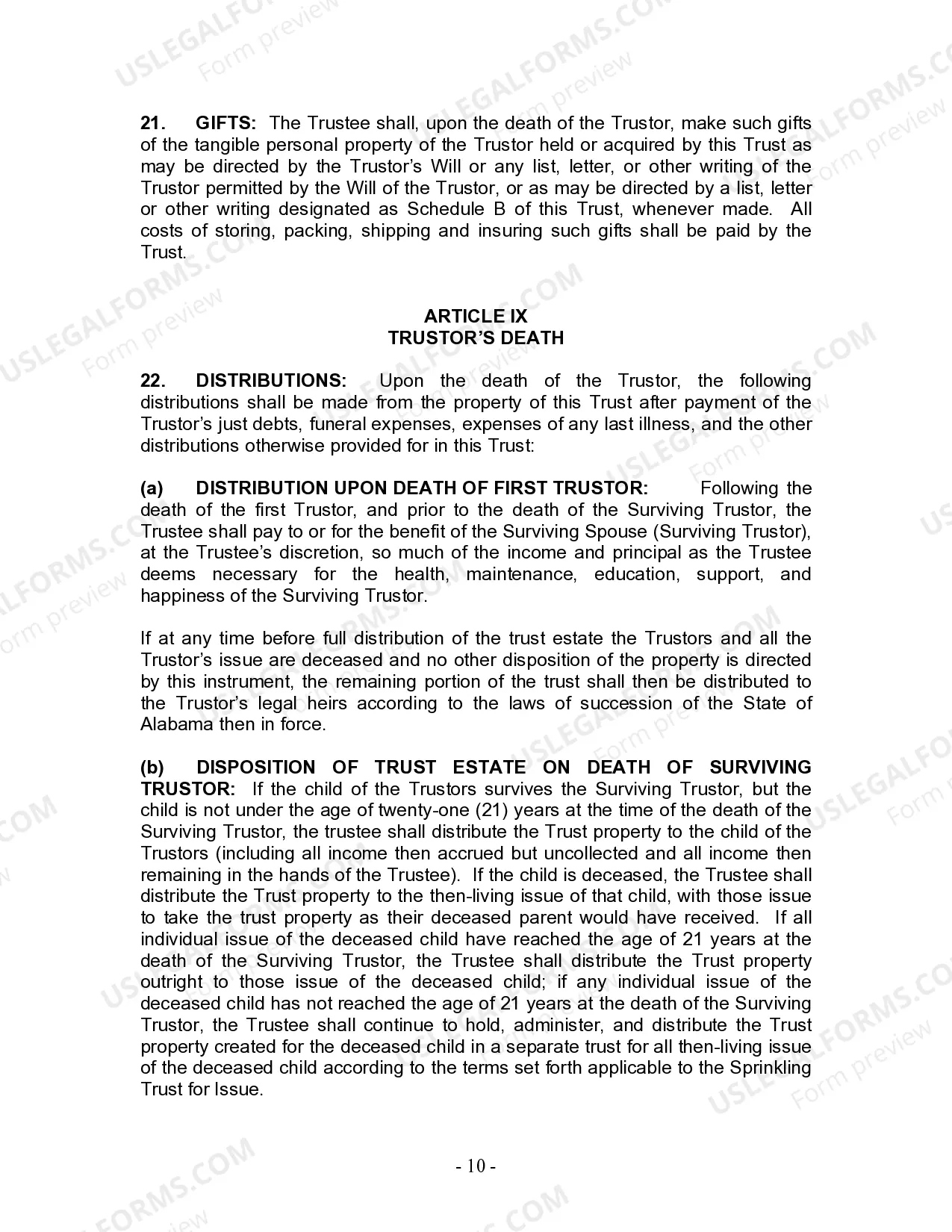
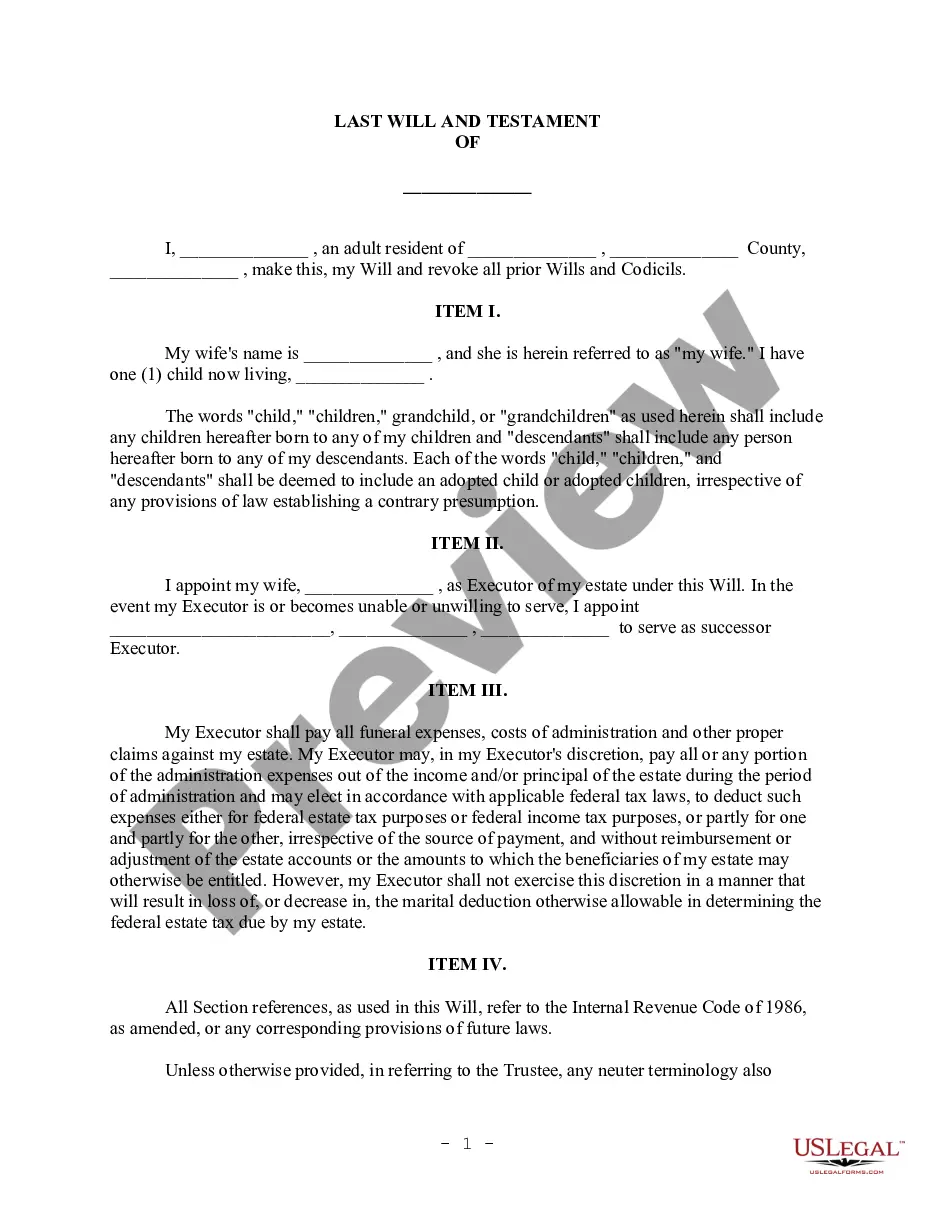
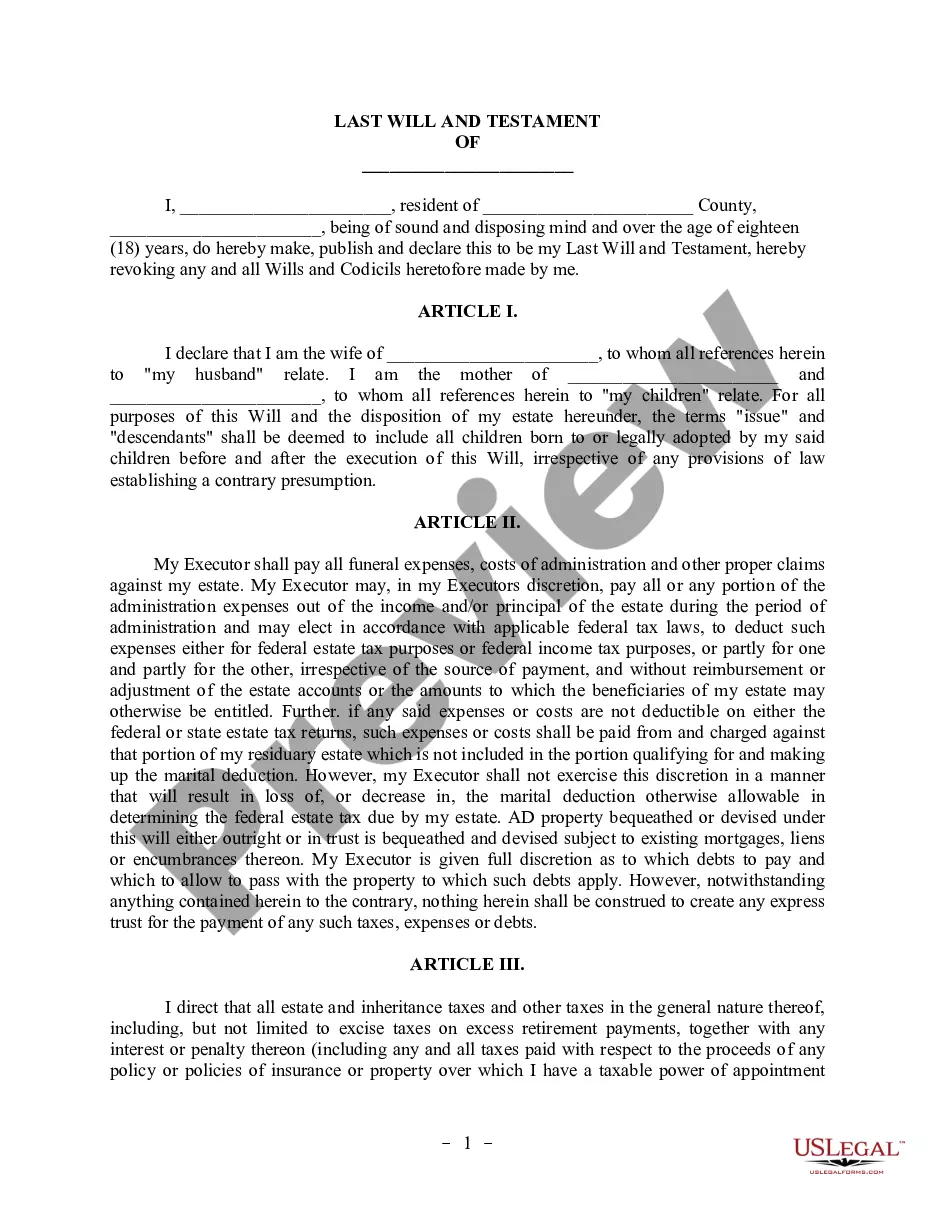
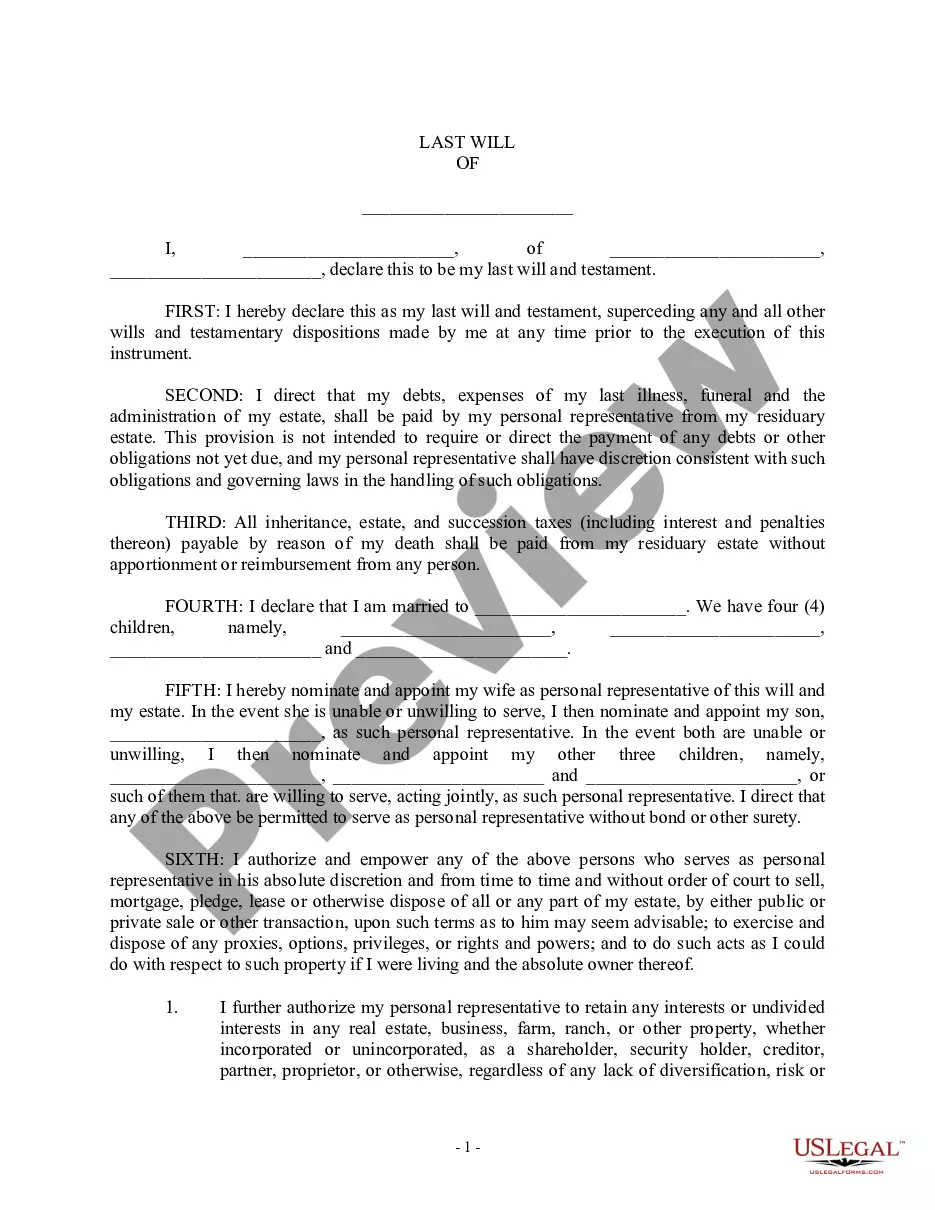
This Living Trust for Husband and Wife with One Child is a legal document that allows couples with a single child to manage their assets during their lifetimes and dictate how those assets should be distributed after their deaths. Unlike a Last Will and Testament, a living trust bypasses the probate process, ensuring a quicker and more private transfer of assets. This form provides the creators (Trustors) full control over their property while they are alive and specifies the distribution to their child upon the death of the last surviving Trustor.
Main sections of this form
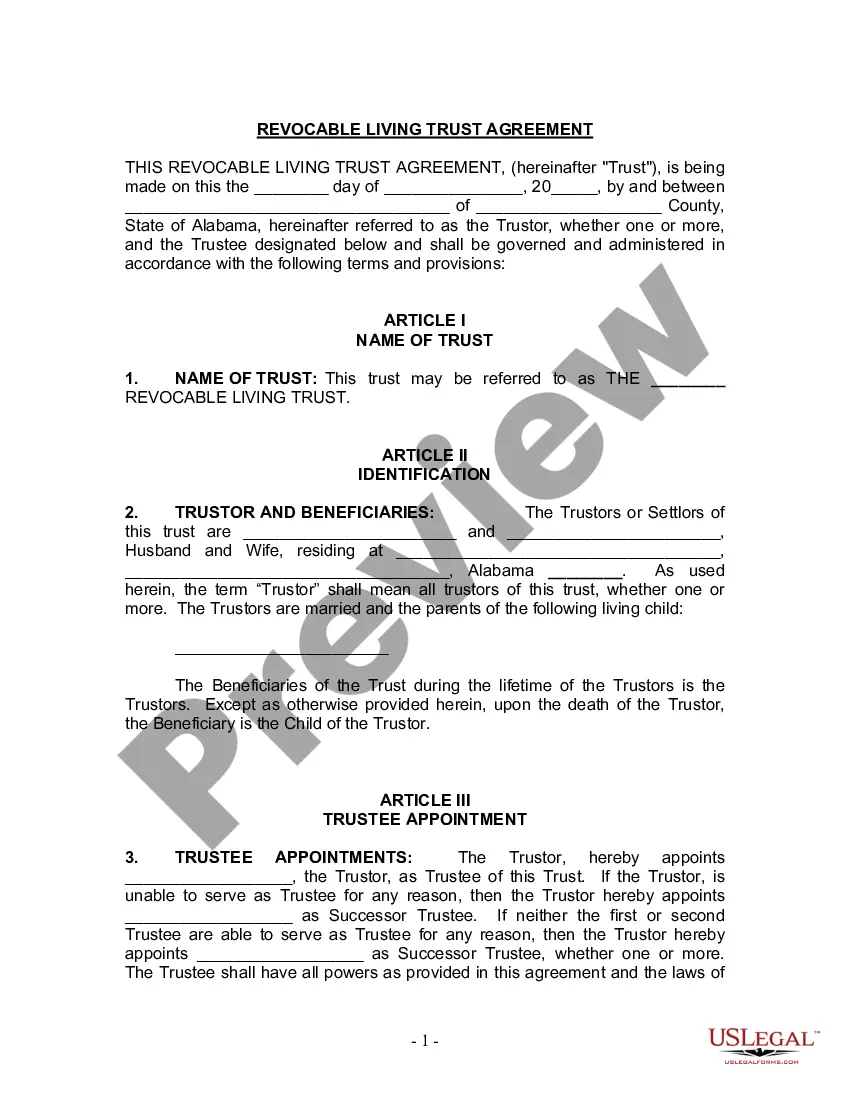
- Identification of Trustors and Beneficiaries: Names and details of the husband, wife, and child.
- Trustee Appointment: Designation of a trustee who will manage the trust property.
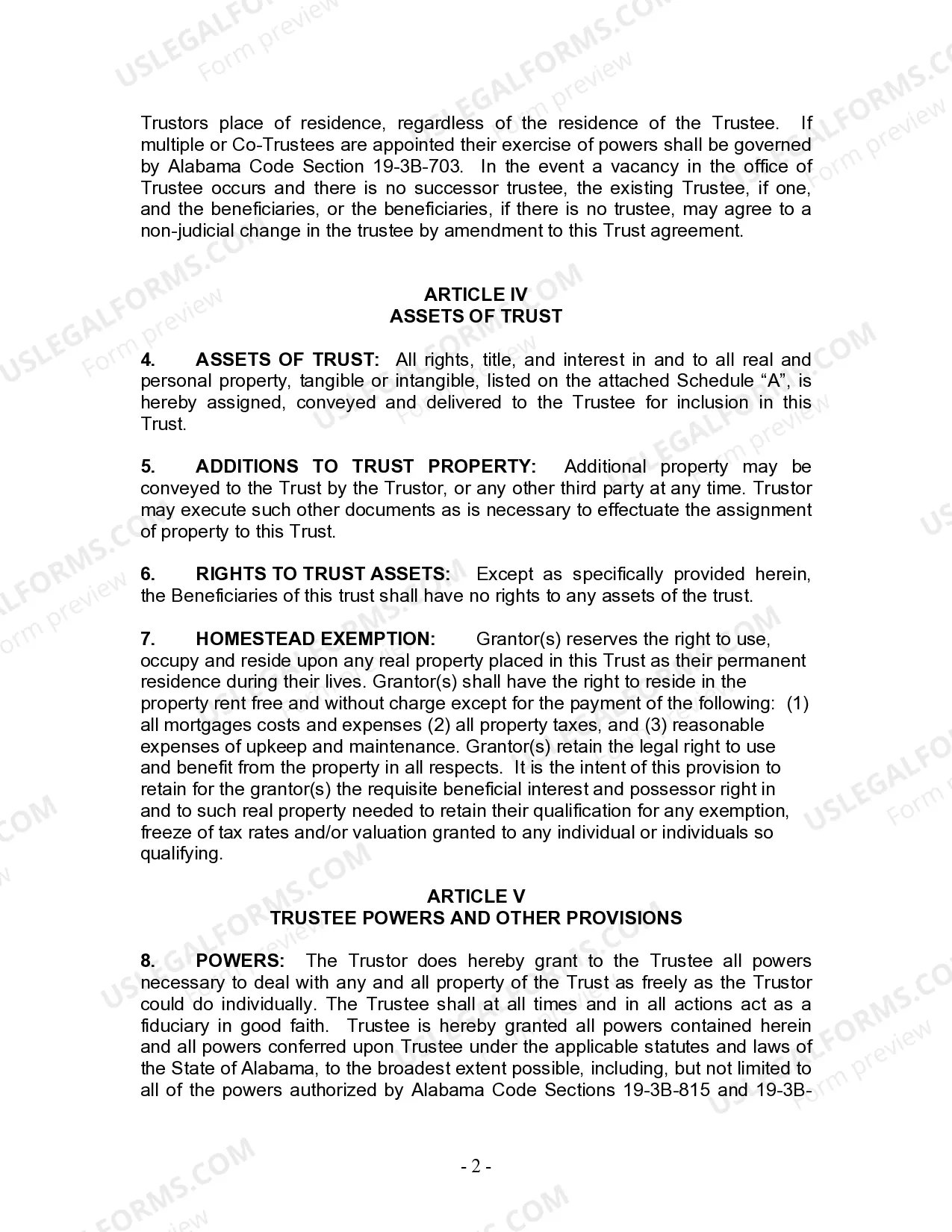
- Trust Property Assets: Details on the assets included in the trust and additional property clauses.
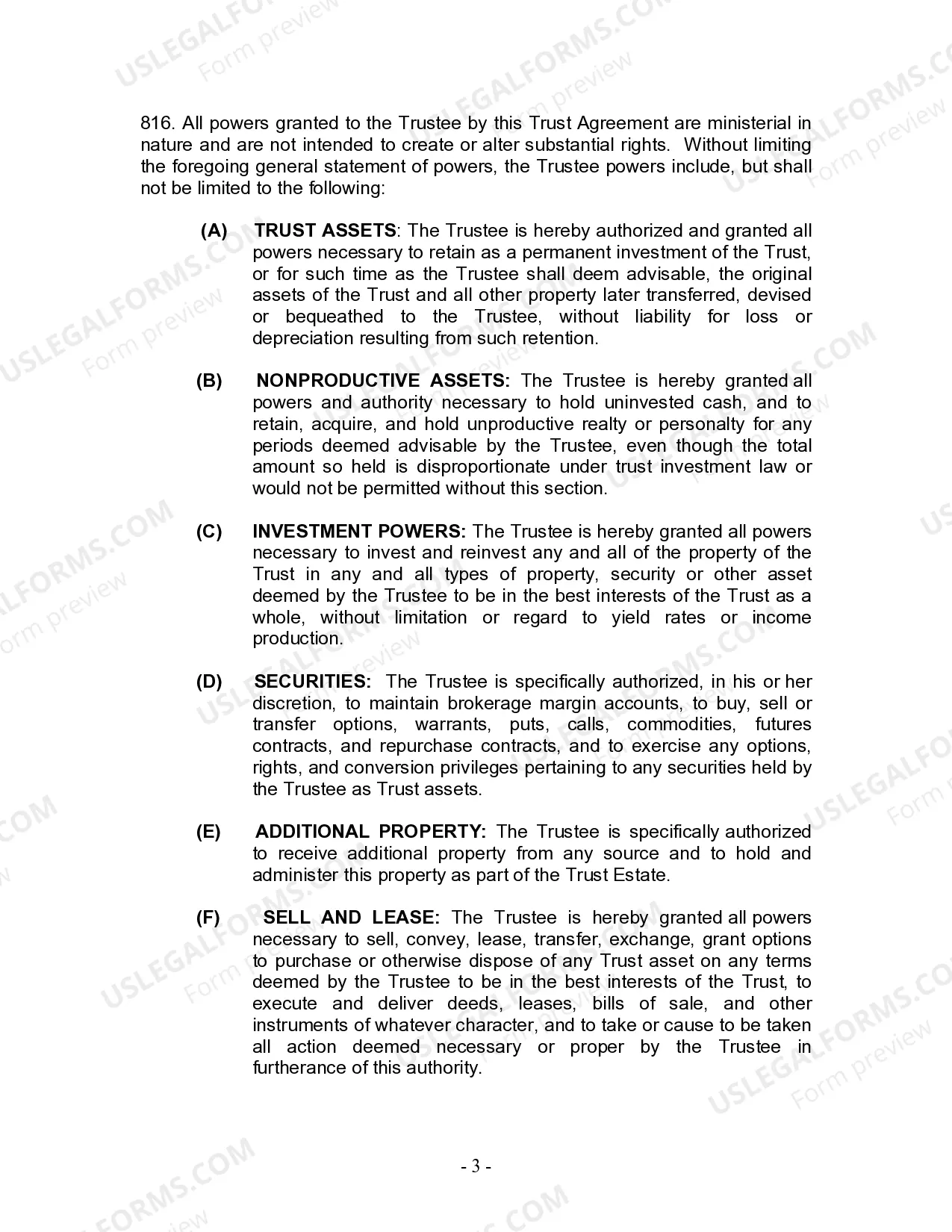
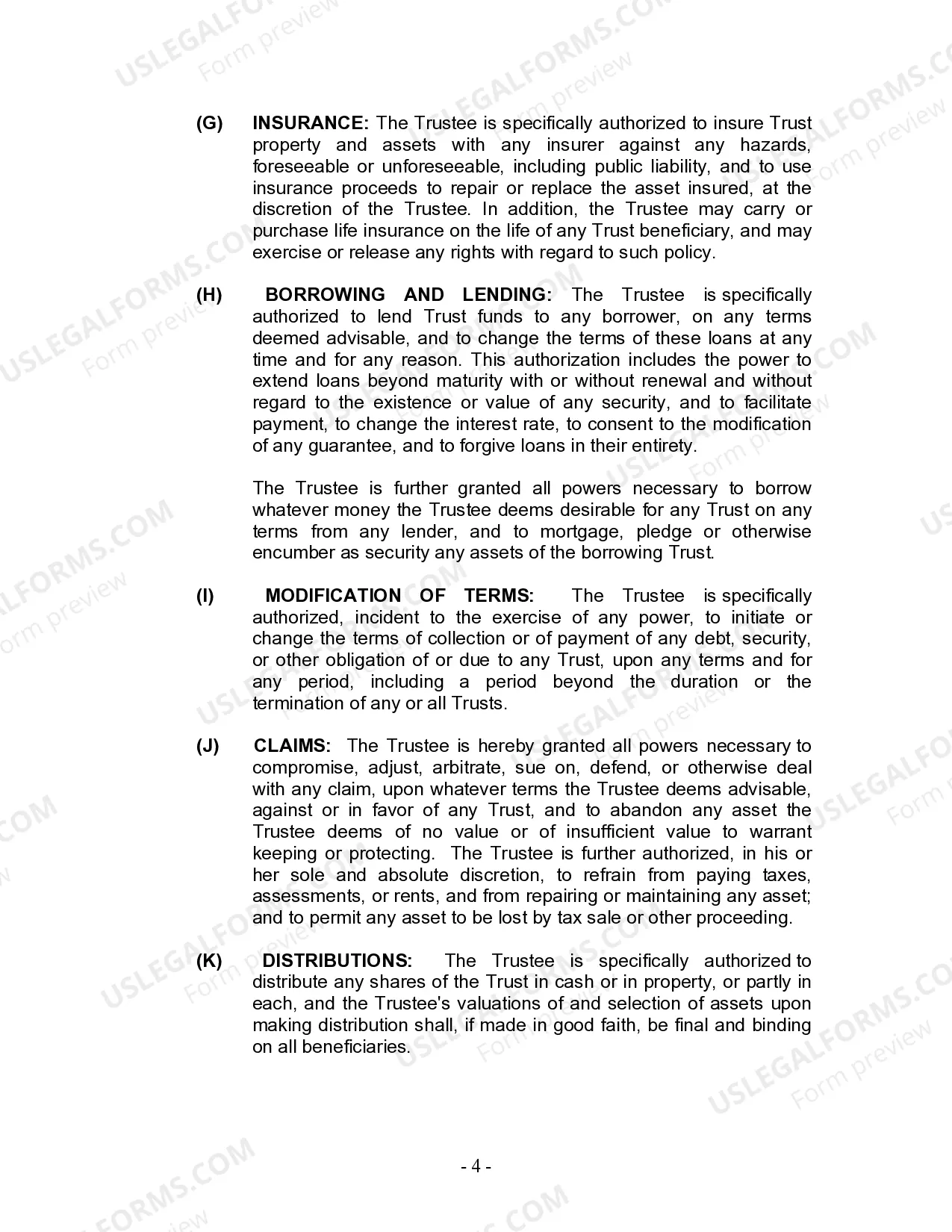
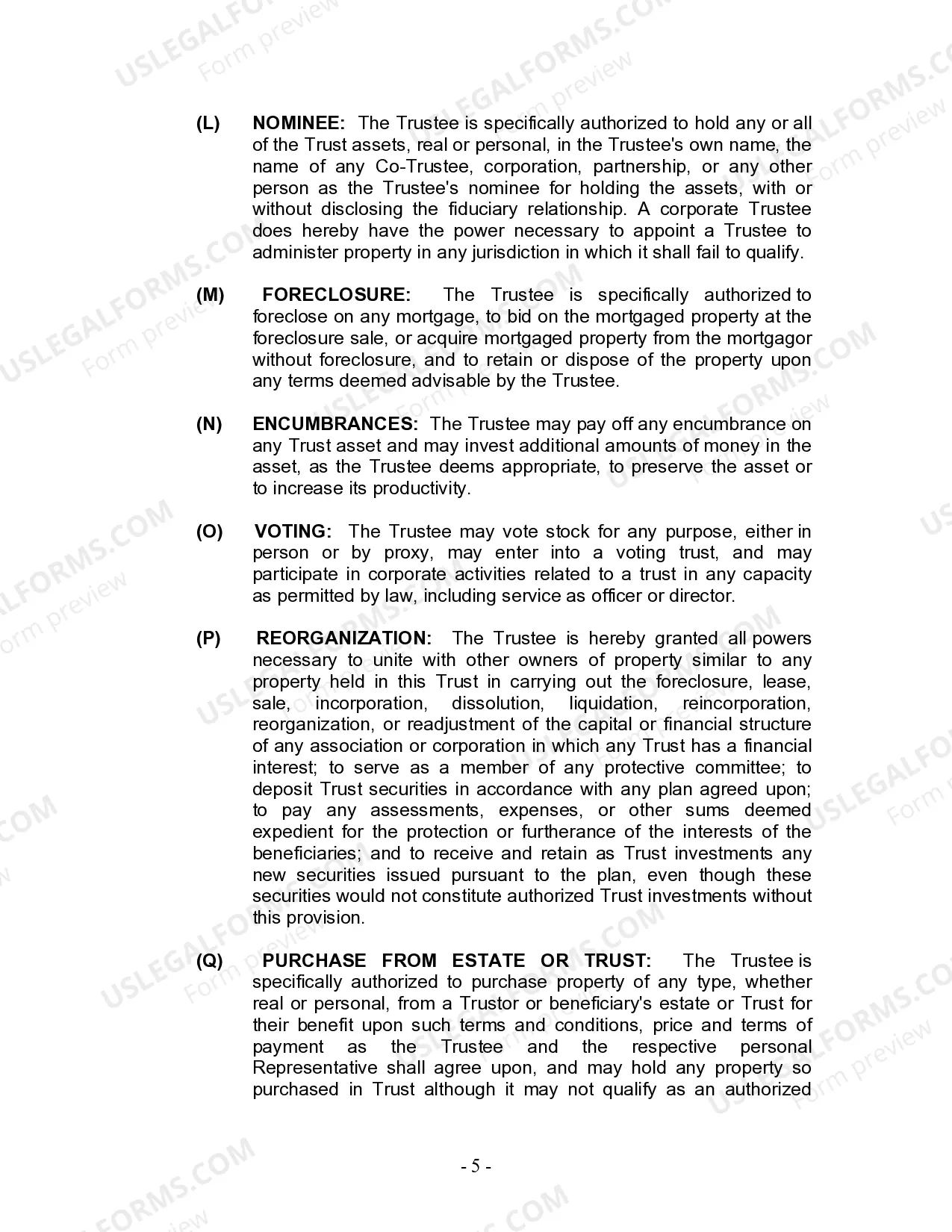
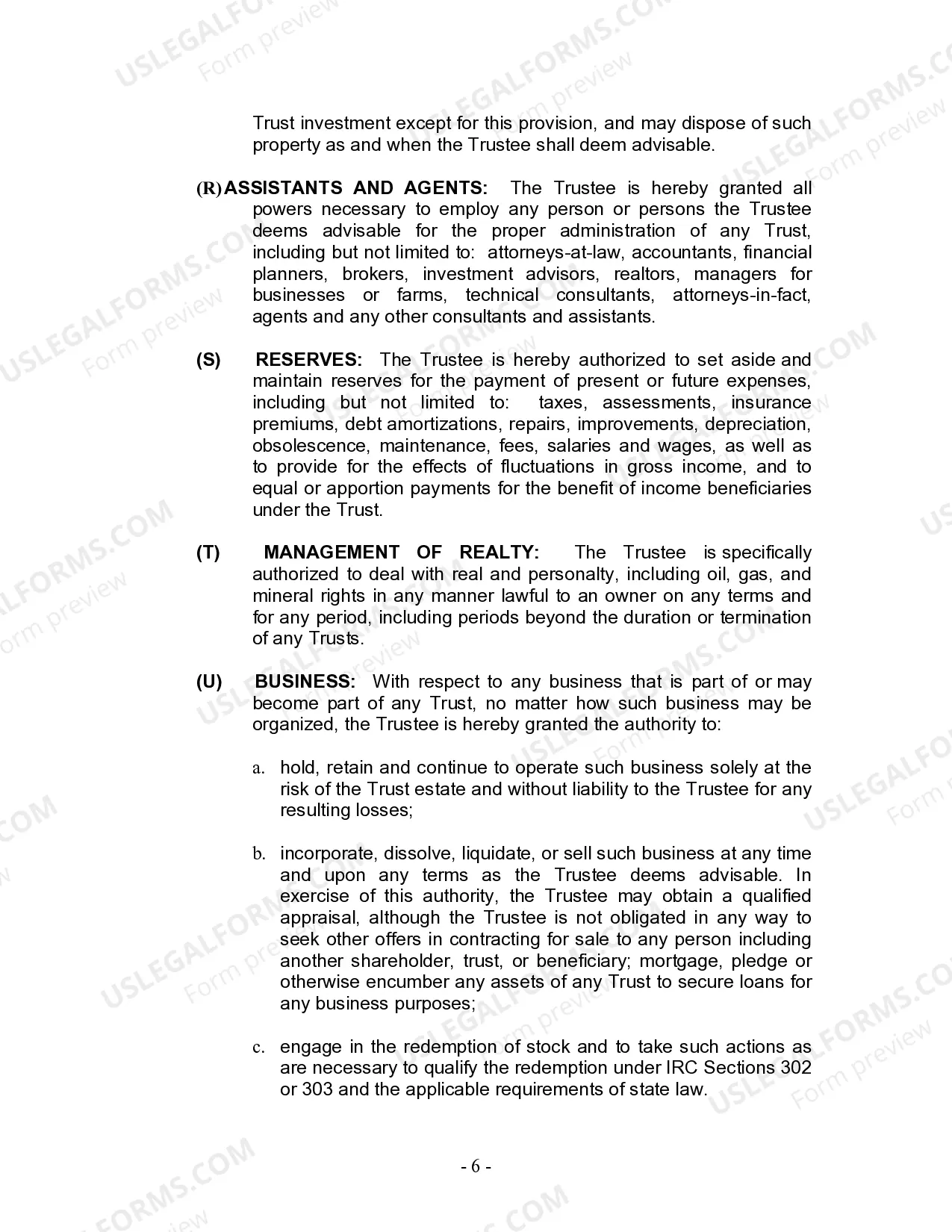
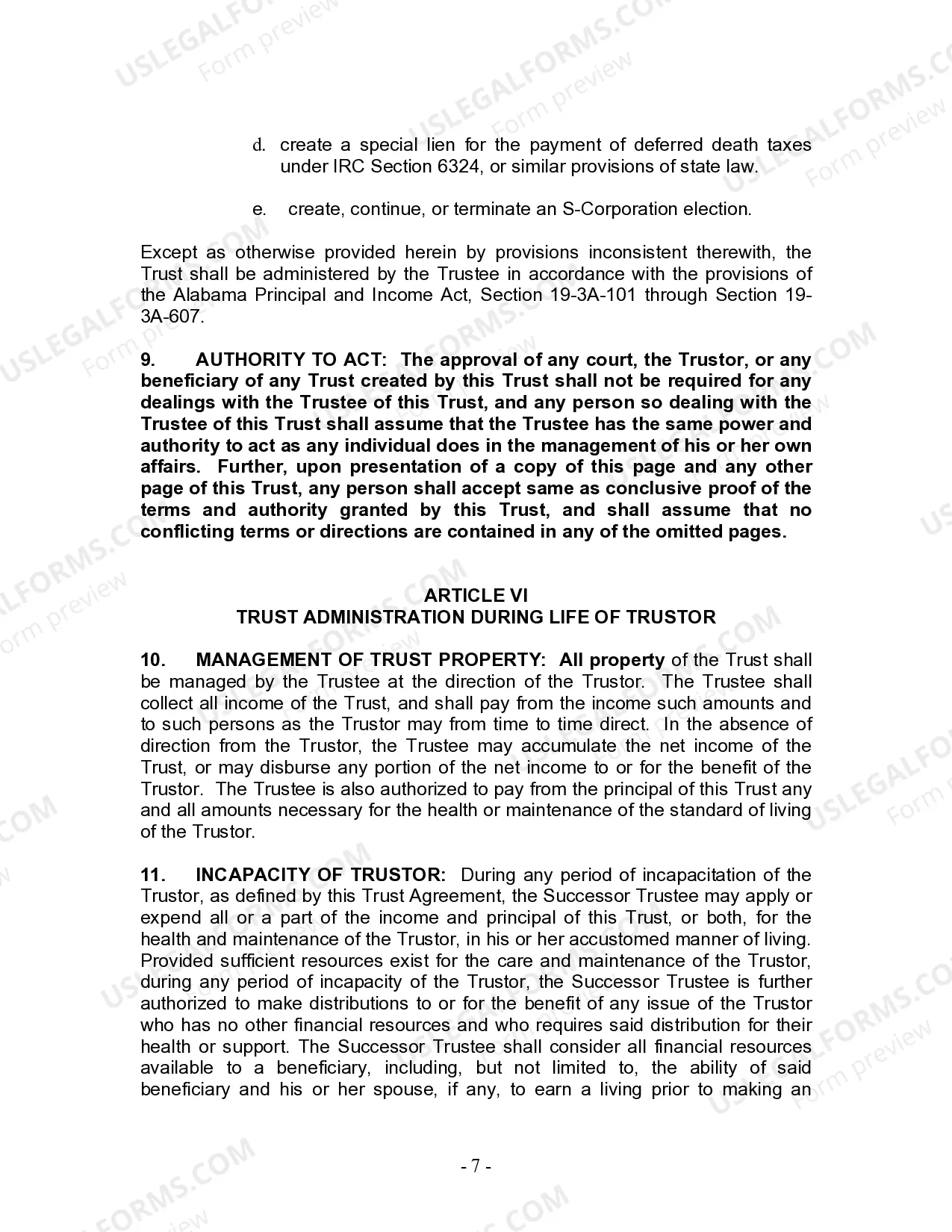
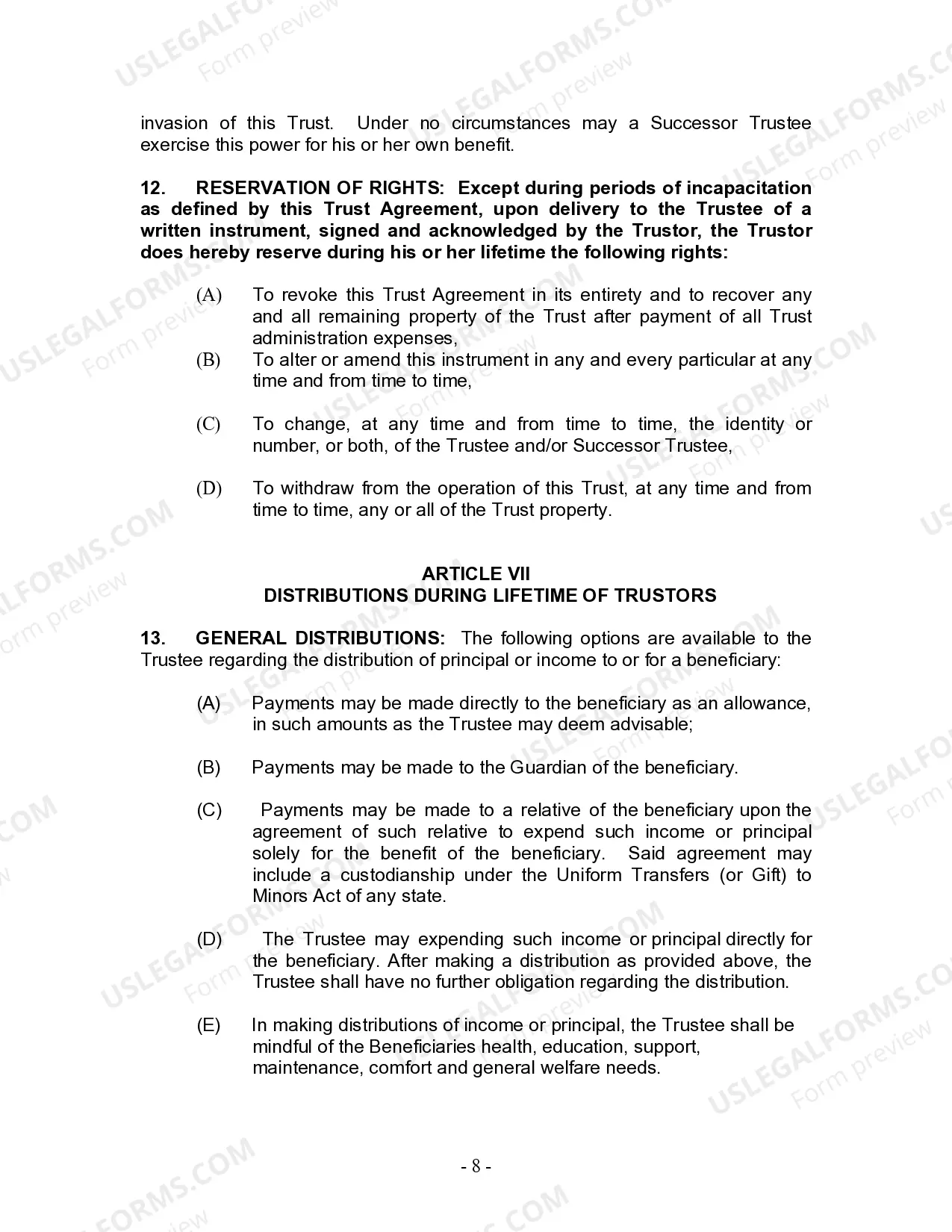
- Trustee Powers: Defined powers of the trustee regarding asset management, investments, and distributions.
- Distribution Terms: Instructions on how and when assets should be distributed to the surviving spouse or child after death.

Situations where this form applies
This form should be used when a husband and wife want to create a living trust to manage their assets and plan for their child's future. Ideal scenarios include estate planning for families who wish to avoid the complexities of probate, maintain privacy in asset distribution, and ensure care for their child after their passing. This is especially important for couples aiming to leave their estate to their child directly and efficiently.
Who this form is for
This form is intended for:
- Husbands and wives with one child seeking an estate planning solution.
- Couples who want to maintain control over their assets while living.
- Individuals looking for a straightforward way to pass assets to their child without involving the probate court.
Instructions for completing this form
To complete this Living Trust form, follow these steps:
- Identify the parties: Fill in the names and addresses of the husband and wife.
- Name the Trust: Specify the name of the trust in the indicated section.
- Assign assets: List all assets to be included in the trust in Schedule A.
- Designate a trustee: Appoint a trustee to manage the trust, along with any successor trustees.
- Sign and date the document: Ensure all parties sign the trust, and have it notarized if necessary.
Notarization guidance
Yes, this form must be notarized to be legally valid. US Legal Forms offers integrated online notarization services, ensuring a secure and convenient process through a video call, available 24/7, making it easy to get your document notarized without needing to travel.
Get your form ready online
Our built-in tools help you complete, sign, share, and store your documents in one place.
Make edits, fill in missing information, and update formatting in US Legal Forms—just like you would in MS Word.
Download a copy, print it, send it by email, or mail it via USPS—whatever works best for your next step.
Sign and collect signatures with our SignNow integration. Send to multiple recipients, set reminders, and more. Go Premium to unlock E-Sign.
If this form requires notarization, complete it online through a secure video call—no need to meet a notary in person or wait for an appointment.
We protect your documents and personal data by following strict security and privacy standards.

Make edits, fill in missing information, and update formatting in US Legal Forms—just like you would in MS Word.

Download a copy, print it, send it by email, or mail it via USPS—whatever works best for your next step.

Sign and collect signatures with our SignNow integration. Send to multiple recipients, set reminders, and more. Go Premium to unlock E-Sign.

If this form requires notarization, complete it online through a secure video call—no need to meet a notary in person or wait for an appointment.

We protect your documents and personal data by following strict security and privacy standards.
Common mistakes
- Failing to include all assets in the trust documentation.
- Not appointing a successor trustee, which could lead to complications if the primary trustee cannot serve.
- Inaccurately identifying beneficiaries, leading to disputes over asset distribution.
Why use this form online
- Convenience: Complete the form online in just a few minutes.
- Editability: Make easy updates to the form as your circumstances change.
- Reliability: Access legally sound forms prepared by licensed attorneys.
Looking for another form?
Form popularity
FAQ
Yes, two people can be on an Alabama Living Trust for Husband and Wife with One Child. Typically, both spouses are named as co-trustees, allowing them to manage the trust together. This arrangement provides a seamless transition in asset management and ensures your child benefits as intended. By including both partners, you enhance your estate planning, making it easier for your family to navigate future financial decisions.
To set up an Alabama Living Trust for Husband and Wife with One Child, start by gathering all necessary documents, such as property titles and financial statements. Next, determine the type of trust you want, which can offer flexibility and protection for your assets. You can draft the trust document yourself using resources like US Legal Forms or consult with an attorney for personalized guidance. It’s crucial to fund the trust properly, ensuring that assets are transferred to the trust to achieve your estate planning goals.
Creating an Alabama Living Trust for Husband and Wife with One Child can have some disadvantages. First, transferring your house into the trust may require additional paperwork and legal fees, which can be a burden for some people. Also, once placed in the trust, you may lose some control over the property because you will need to follow the trust's terms. Finally, in some cases, putting your house in a trust can trigger a reassessment of its value for tax purposes, potentially increasing your taxes.
Having separate living trusts may be beneficial for some couples, especially in unique financial situations. However, for many, an Alabama Living Trust for Husband and Wife with One Child allows them to streamline their estate planning and simplify the management of assets. This approach can also help secure benefits for their child more effectively. Ultimately, discussing your specific circumstances with a legal professional will provide the best guidance.
If you die without a will the State will not get your property unless you do not have any heirs at law. The Alabama Code sets out guidelines that that Probate Court must follow when someone dies without a Will. Those guidelines, which are referred to as the rules of intestate succession, list who gets the estate.
If you die without a will the State will not get your property unless you do not have any heirs at law. The Alabama Code sets out guidelines that that Probate Court must follow when someone dies without a Will. Those guidelines, which are referred to as the rules of intestate succession, list who gets the estate.
Children - if there is no surviving married or civil partner If there is no surviving partner, the children of a person who has died without leaving a will inherit the whole estate. This applies however much the estate is worth. If there are two or more children, the estate will be divided equally between them.
At death, property is transferred from your name (ownership) in one of three ways: by title; by beneficiary designation; or by probate. The trick to avoiding probate is to make sure all of your assets are set up as transfers under either joint title or beneficiary designation.
If you own property jointly with someone else, and this ownership includes the "right of survivorship," then the surviving owner automatically owns the property when the other owner dies.In Alabama, this form of joint ownership is available: Joint tenancy.
To get appointed you will need to file a petition with the probate court (most likely with the probate court for the county in which the deceased last lived). You will have to post a bond with the court, which is essentially insurance protecting the heirs of the estate in case of your mishandling of the assets.