Alabama Living Trust for Individual as Single, Divorced or Widow or Widower with No Children

What this document covers
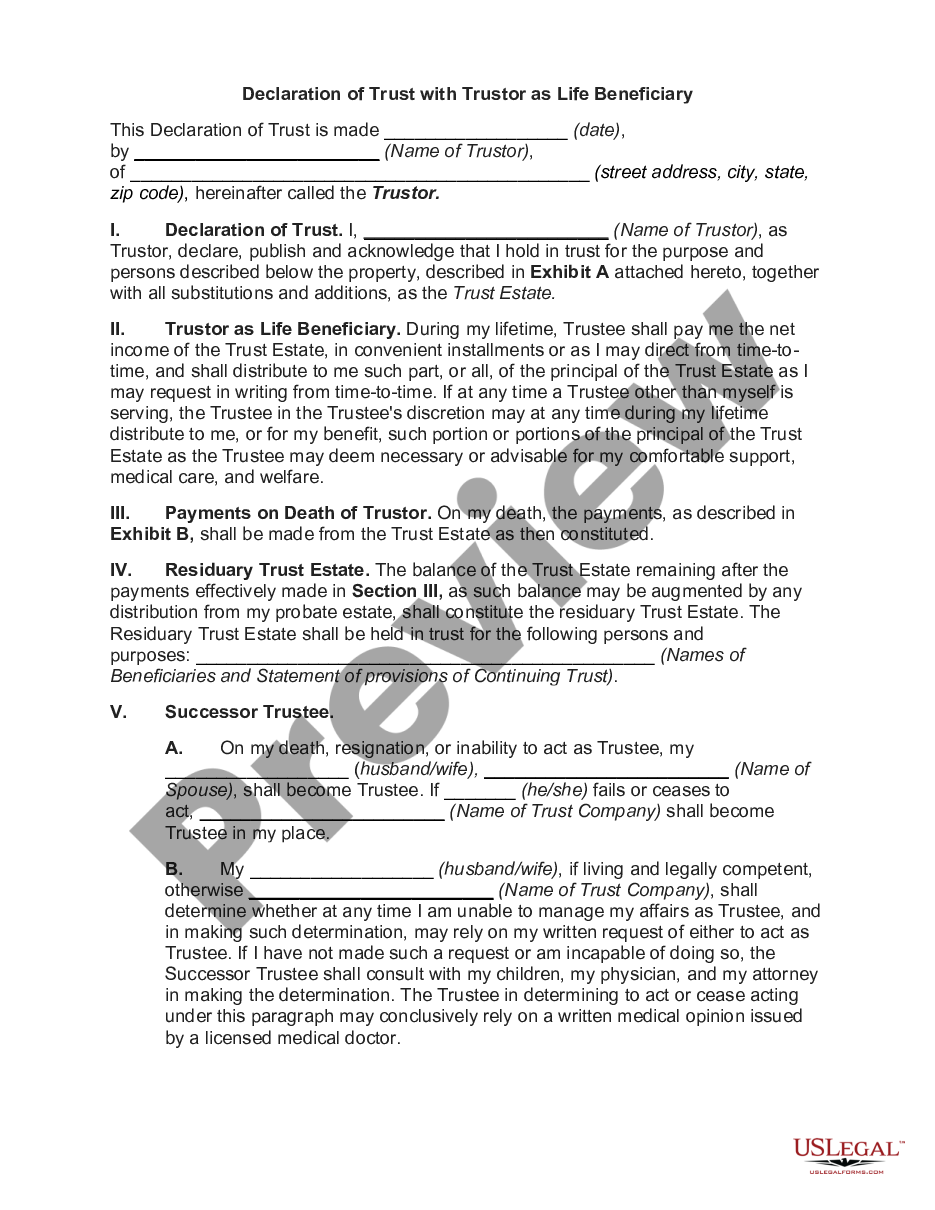
This Living Trust for Individual as Single, Divorced or Widow or Widower with No Children form is designed for individuals who want to manage their assets during their lifetime and provide for their distribution after death without going through probate. Unlike a Last Will and Testament, a living trust allows for the immediate transfer of assets upon death, providing a more streamlined and private process. This form is specifically tailored for those without children, making it an essential tool for estate planning for a single person, a divorcee, or a widow or widower.
Main sections of this form
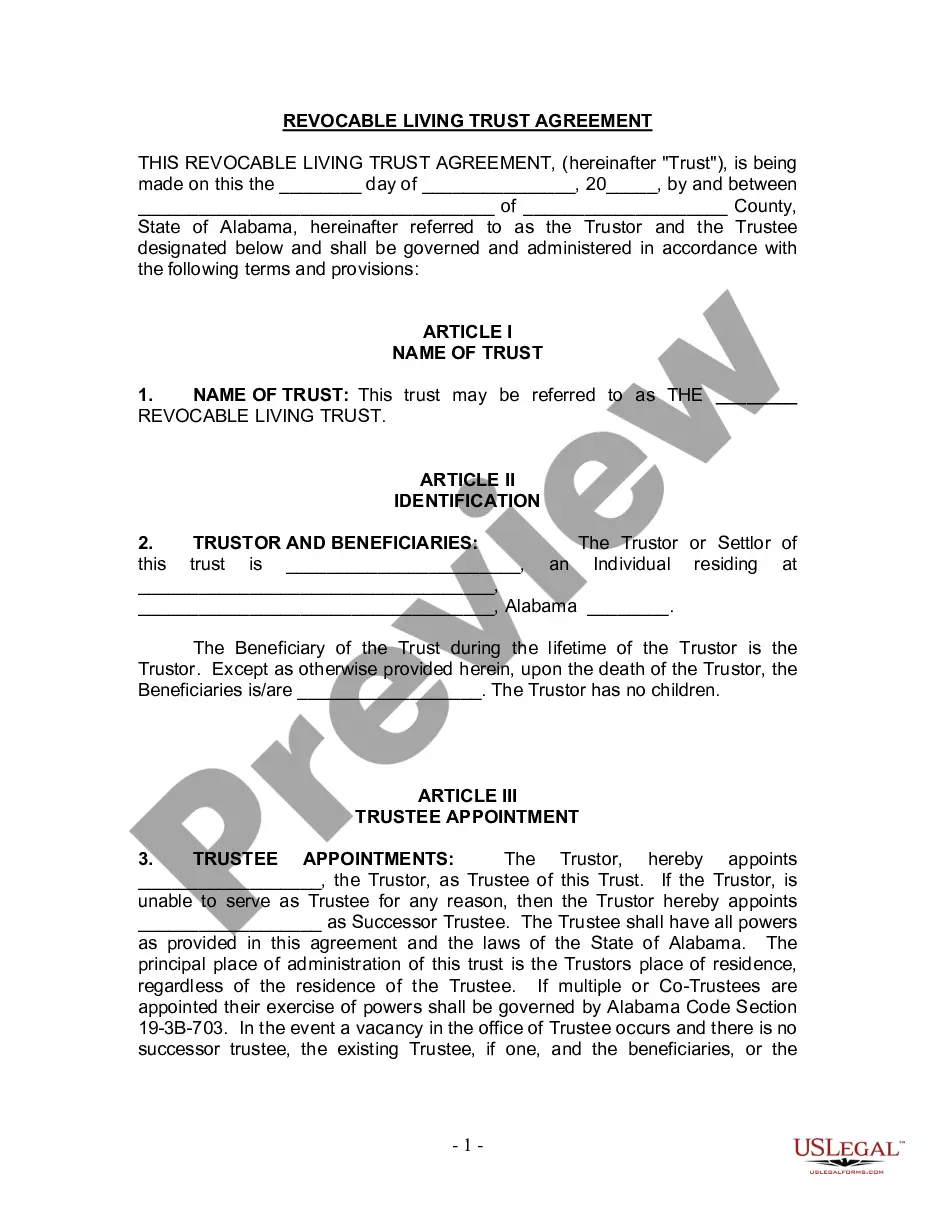
- Name of the Trust: Specifies the title of the trust
- Identification of Trustor: Lists the individual setting up the trust
- Trustee Appointment: Designates the individual responsible for managing the trust
- Assets of Trust: Details the property and assets included in the trust
- Powers of the Trustee: Outlines the authority granted to the trustee in managing the trust
- Distribution Instructions: Provides guidelines on how assets are to be distributed upon the Trustor's death




Common use cases
This living trust form is appropriate in scenarios where an individual, who is single, divorced, or a widow or widower without children, wishes to specify how their assets will be managed during their lifetime and how they should be distributed after their passing. It is particularly useful for estate planning, allowing the Trustor to retain control over their assets and simplify the transfer of those assets upon death.
Who can use this document
- Individuals who are single, divorced, or widowed
- Those without children but who have assets to manage
- Anyone looking to avoid probate for their estate
- Individuals seeking control over their asset distribution
Instructions for completing this form
- Identify the parties involved: Enter the names of the Trustor and the Trustee.
- Specify the assets: List all property and assets to be included in the trust.
- Designate successor trustees if needed: Outline who will take over in case the original trustee can no longer serve.
- Outline distribution instructions: Describe how the assets should be distributed upon the Trustor's death.
- Sign and date the form in the presence of a notary public if required.
Notarization guidance
This form does not typically require notarization unless specified by local law. However, having it notarized can provide additional legal validity and help in confirming the identity of the Trustor.
Get your form ready online
Our built-in tools help you complete, sign, share, and store your documents in one place.
Make edits, fill in missing information, and update formatting in US Legal Forms—just like you would in MS Word.
Download a copy, print it, send it by email, or mail it via USPS—whatever works best for your next step.
Sign and collect signatures with our SignNow integration. Send to multiple recipients, set reminders, and more. Go Premium to unlock E-Sign.
If this form requires notarization, complete it online through a secure video call—no need to meet a notary in person or wait for an appointment.
We protect your documents and personal data by following strict security and privacy standards.

Make edits, fill in missing information, and update formatting in US Legal Forms—just like you would in MS Word.

Download a copy, print it, send it by email, or mail it via USPS—whatever works best for your next step.

Sign and collect signatures with our SignNow integration. Send to multiple recipients, set reminders, and more. Go Premium to unlock E-Sign.

If this form requires notarization, complete it online through a secure video call—no need to meet a notary in person or wait for an appointment.

We protect your documents and personal data by following strict security and privacy standards.
Mistakes to watch out for
- Failing to accurately list all assets in the trust
- Not specifying successor trustees or alternative beneficiaries
- Neglecting to sign the document, making it invalid
- Overlooking state-specific regulations that must be followed
Benefits of completing this form online
- Convenience of downloading forms anytime from anywhere
- Editable fields allow for precise information entry
- Guidance provided throughout the process to ensure accuracy
- Access to legal templates reviewed by licensed attorneys
What to keep in mind
- A Living Trust allows you to manage your assets during your life and after your death.
- This form is designed specifically for individuals without children.
- Proper completion and notarization ensure the trust is legally binding.
Looking for another form?

Form popularity
FAQ
To obtain an Alabama Living Trust for Individual as Single, Divorced or Widow or Widower with No Children, start by researching your specific needs and understanding the benefits of establishing a trust. Next, consult with a legal expert who specializes in estate planning to ensure you meet all state requirements. You can also explore platforms like uslegalforms to find resources and templates that simplify the process. Finally, make sure to review your trust regularly to ensure it meets your evolving needs.
The best trust for a single person often depends on individual financial goals and circumstances. Generally, a revocable living trust serves as a great option, allowing you to maintain control over your assets while ensuring a smooth transfer after your death. Explore options through USLegalForms to find the right Alabama Living Trust for Individual as Single, Divorced or Widow or Widower with No Children that fits your needs.
Having a trust, even if you are single, can provide important benefits, such as avoiding probate and managing your assets efficiently. A trust can help you dictate how your assets are distributed after your passing, providing peace of mind. If you are contemplating an estate plan, consider an Alabama Living Trust for Individual as Single, Divorced or Widow or Widower with No Children for tailored solutions.
If you're single and have no children, you have various options for choosing beneficiaries. You could name siblings, nieces, or nephews as beneficiaries, depending on your relationships. Alternatively, you may consider charitable organizations or friends who have played significant roles in your life. Planning with an Alabama Living Trust for Individual as Single, Divorced or Widow or Widower with No Children gives you flexibility in designating beneficiaries.
While trusts offer many benefits, some individuals may find them unnecessary due to their specific circumstances. For example, if you have minimal assets or prefer to leave your estate to heirs through a will, a trust might not be needed. Consider your financial situation and goals before deciding on an Alabama Living Trust for Individual as Single, Divorced or Widow or Widower with No Children.
When one spouse passes away, the living trust continues to operate without interruption. Assets held in the trust typically pass to the surviving spouse, ensuring a smooth transition of ownership. This setup helps avoid the lengthy probate process, making it an appealing choice for those considering an Alabama Living Trust for Individual as Single, Divorced or Widow or Widower with No Children.
Filling out a certification of trust form requires you to provide specific information about your trust. Start by identifying the trust's name, along with your name as the grantor. You should also include details about the trustee and their powers. Using our platform, USLegalForms, can simplify this process with user-friendly templates.
Trusts are not typically recorded in Alabama, which preserves confidentiality for the grantor. This means the terms of your Alabama Living Trust for Individual as Single, Divorced or Widow or Widower with No Children can remain private. However, if your trust interacts with real property, specific documentation may be needed, ensuring a smooth transfer process.
A trust does not have to be recorded in Alabama, which allows for greater privacy and flexibility. Instead, the trust document itself serves as the governing guide for your assets. By utilizing an Alabama Living Trust for Individual as Single, Divorced or Widow or Widower with No Children, you can outline how you wish to manage and distribute your assets without public disclosure.
You do not need to record a certificate of trust in Alabama, as this is not a requirement of state law. However, having a certificate can be beneficial, especially when dealing with financial institutions. An Alabama Living Trust for Individual as Single, Divorced or Widow or Widower with No Children can make management easier, eliminating potential disputes among parties.