Kentucky Warranty Deed from Husband and Wife to Husband and Wife
Understanding this form
This is a Warranty Deed from Husband and Wife to Husband and Wife. It is a legal document that allows a married couple to convey property to themselves, ensuring that both spouses hold equal ownership. This type of deed includes warranties regarding the title, meaning that the grantors guarantee they have the right to transfer the property. Unlike other deeds, this specific form maintains joint ownership with survivorship rights, granting full ownership to the surviving spouse in the event of death.
What’s included in this form
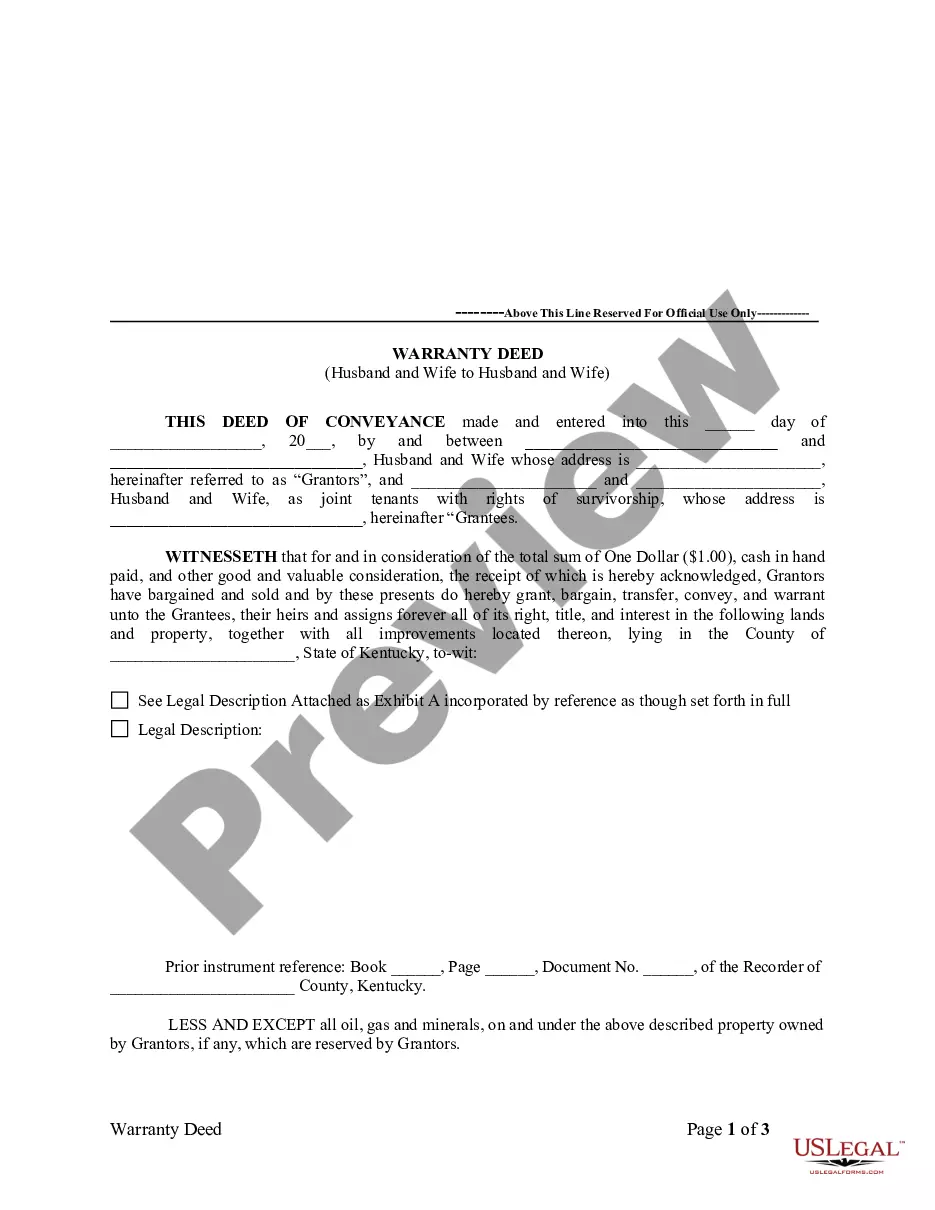
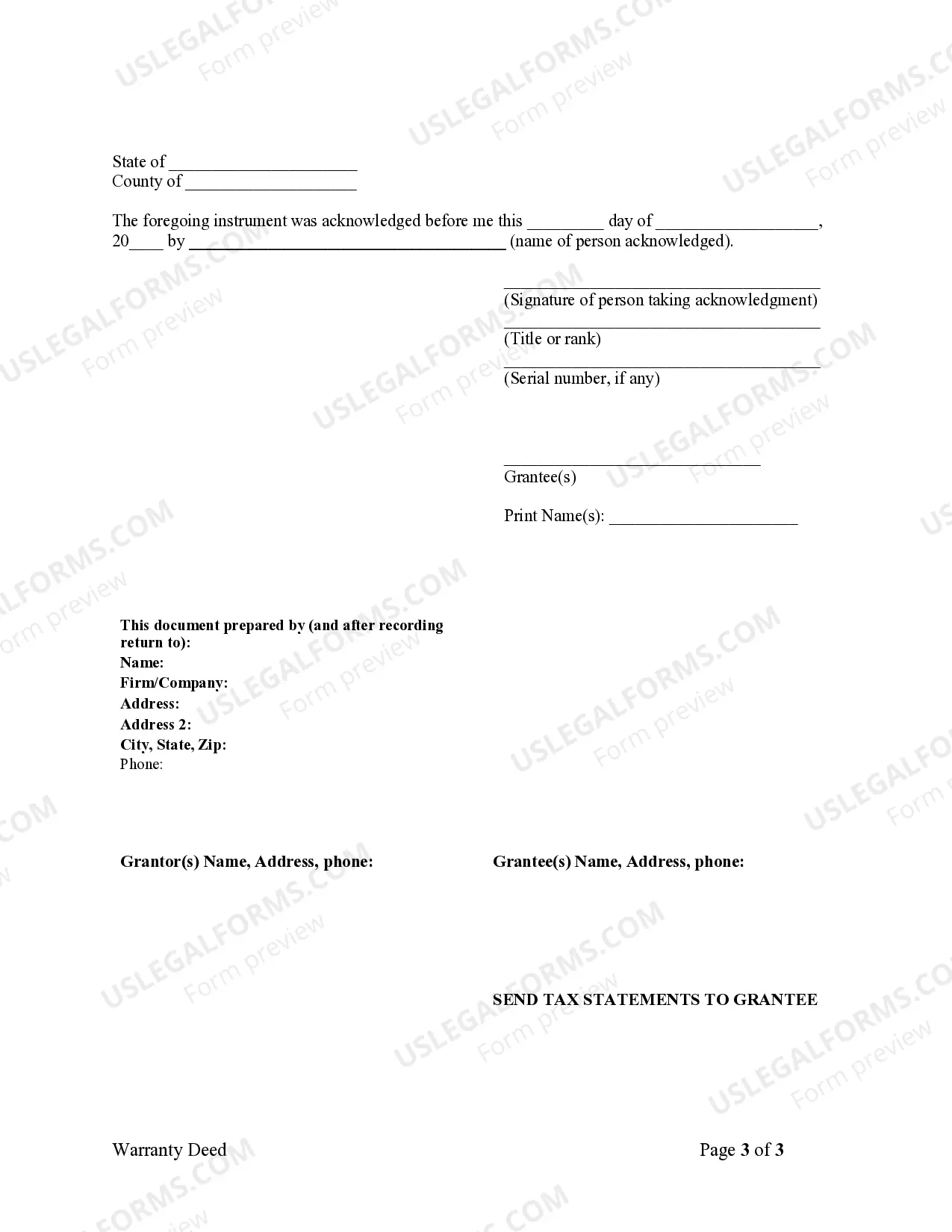
- Grantor details: Names and addresses of the husband and wife conveying the property.
- Grantee details: Names and addresses of the husband and wife receiving the property.
- Property description: Legal description of the property being transferred.
- Consideration: Stating that the transfer is made for a nominal sum and other considerations.
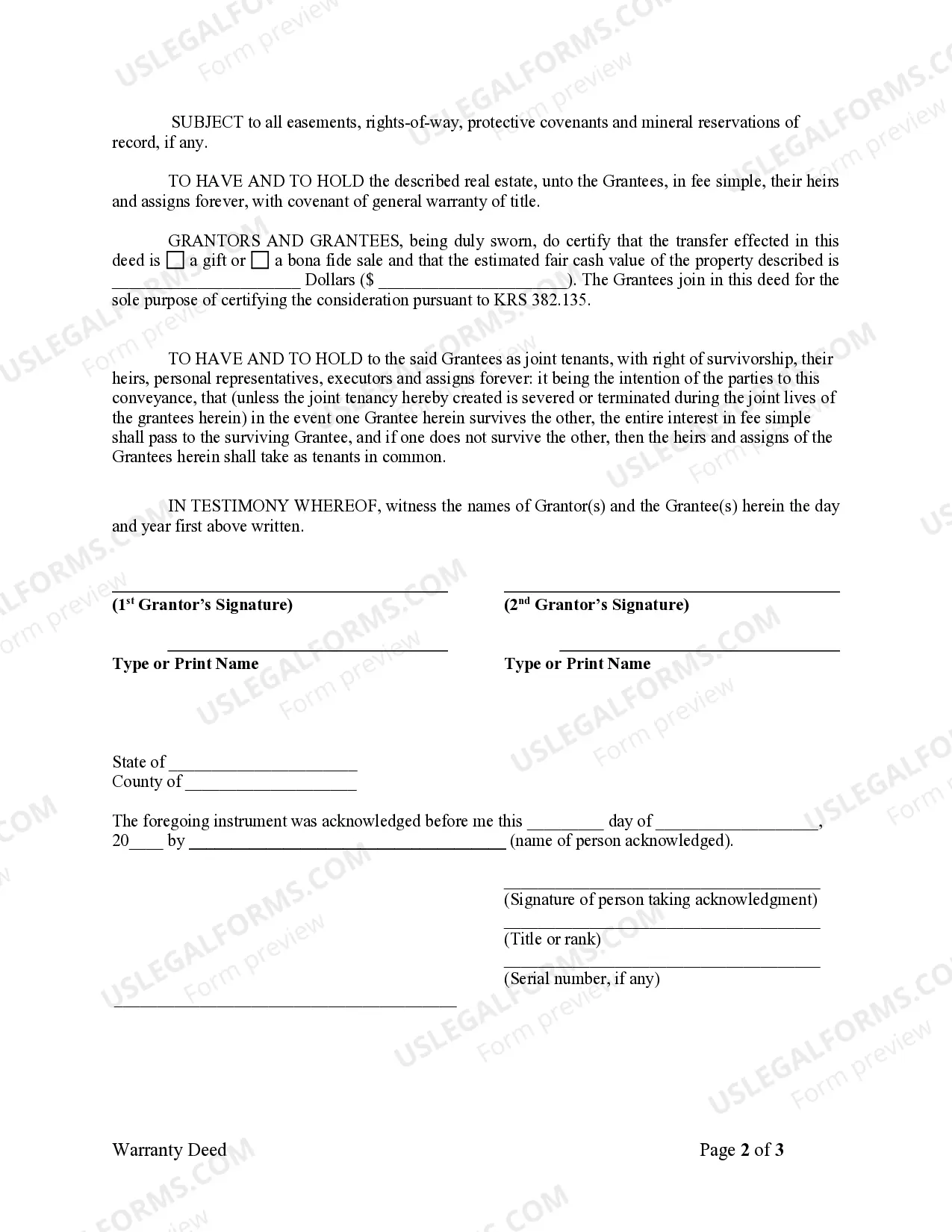
- Survivorship clause: Specifies that upon the death of one spouse, the property will pass to the surviving spouse.
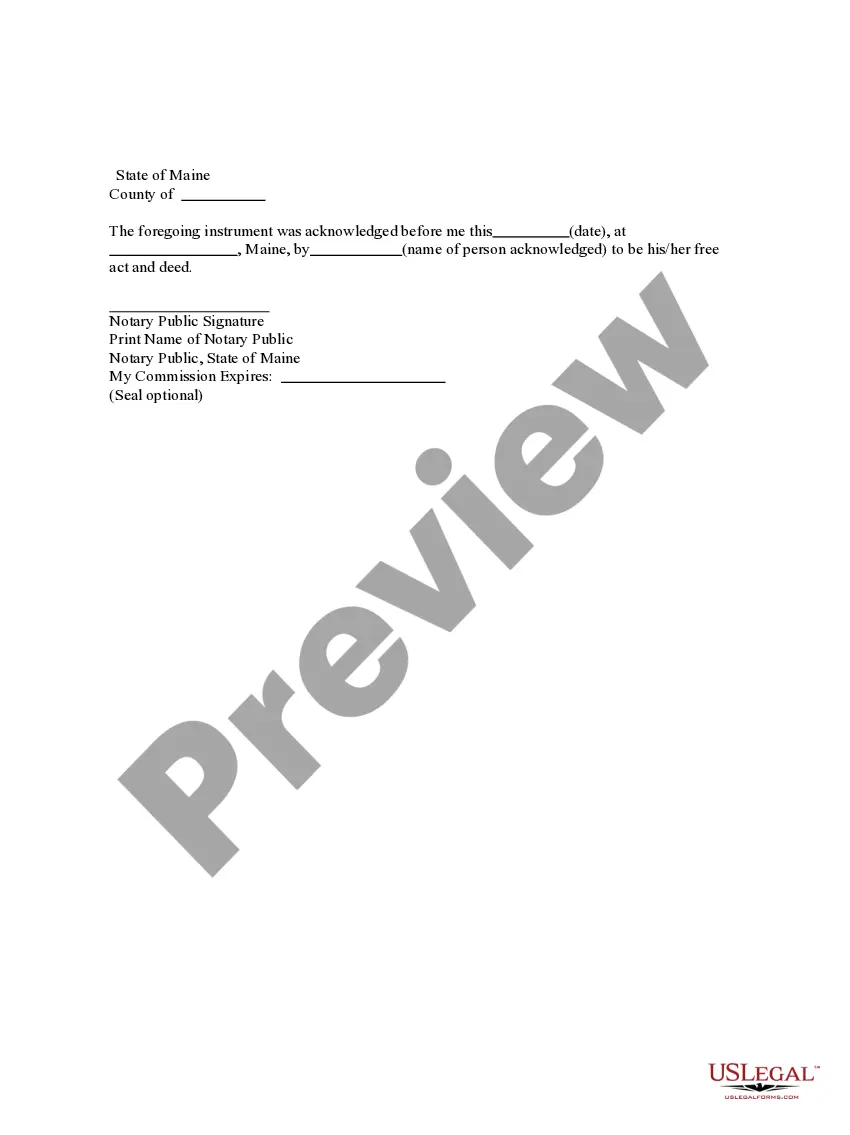
- Notarization section: Certifies the signing of the document is legally witnessed.




When to use this document
This form should be used when a married couple wishes to transfer property to themselves as joint tenants with rights of survivorship. This situation is common when spouses want to clarify ownership of shared property or to ease inheritance processes following the death of one spouse.
Intended users of this form
- Married couples who own real estate together.
- Couples seeking to clarify property rights or update ownership records.
- Those wanting to ensure survivorship rights in property ownership.
Completing this form step by step
- Identify the parties: Fill in the names and addresses of both the grantors and grantees.
- Specify the property: Provide a detailed legal description of the property being conveyed.
- State the consideration: Indicate the nominal monetary amount being exchanged.
- Complete the survivorship clause as needed: Ensure that the intent for rights of survivorship is clearly stated.
- Obtain notarization: Ensure all signatures are witnessed by a notary public to validate the deed.
Is notarization required?
Yes, this form must be notarized to be legally valid. US Legal Forms offers integrated online notarization services that are available 24/7 through secure video calls, ensuring legal equivalence without the need for travel.
Get your form ready online
Our built-in tools help you complete, sign, share, and store your documents in one place.
Make edits, fill in missing information, and update formatting in US Legal Forms—just like you would in MS Word.
Download a copy, print it, send it by email, or mail it via USPS—whatever works best for your next step.
Sign and collect signatures with our SignNow integration. Send to multiple recipients, set reminders, and more. Go Premium to unlock E-Sign.
If this form requires notarization, complete it online through a secure video call—no need to meet a notary in person or wait for an appointment.
We protect your documents and personal data by following strict security and privacy standards.

Make edits, fill in missing information, and update formatting in US Legal Forms—just like you would in MS Word.

Download a copy, print it, send it by email, or mail it via USPS—whatever works best for your next step.

Sign and collect signatures with our SignNow integration. Send to multiple recipients, set reminders, and more. Go Premium to unlock E-Sign.

If this form requires notarization, complete it online through a secure video call—no need to meet a notary in person or wait for an appointment.

We protect your documents and personal data by following strict security and privacy standards.
Mistakes to watch out for
- Failing to accurately describe the property, leading to potential confusion or legal disputes.
- Neglecting to include both spouses' names or addresses, which can invalidate the deed.
- Not obtaining a notarization, which could render the deed unenforceable.
Why complete this form online
- Convenience: Download the form quickly from anywhere, anytime.
- Editability: Easily input necessary information before printing.
- Reliability: Ensure compliance with legal standards crafted by licensed attorneys.
Summary of main points
- This Warranty Deed facilitates the transfer of property between spouses.
- It includes important provisions for joint tenancy and survivorship rights.
- Completion requires both parties' signatures and notarization for validity.
Looking for another form?

Form popularity
FAQ
Let's start with the definition of a deed: DEED: A written instrument by which one party, the Grantor, conveys the title of ownership in property to another party, the Grantee. A Warranty Deed contains promises, called covenants, that the Grantor makes to the Grantee.
A warranty deed, also known as a general warranty deed, is a legal real estate document between the seller (grantor) and the buyer (grantee). The deed protects the buyer by pledging that the seller holds clear title to the property and there are no encumbrances, outstanding liens, or mortgages against it.
They are (1) covenant for seisin; (2) covenant of the right to convey; (3) covenant against encumbrances; (4) covenant for QUIET ENJOYMENT; (5) covenant of general WARRANTY; and (6) covenant for further assurances.
Typically, the lender will provide you with a copy of the deed of trust after the closing. The original warranty deeds are often mailed to the grantee after they are recorded. These are your original copies and should be kept in a safe place, such as a fireproof lockbox or a safe deposit box at a financial institution.
A warranty deed, also known as a general warranty deed, is a legal real estate document between the seller (grantor) and the buyer (grantee). The deed protects the buyer by pledging that the seller holds clear title to the property and there are no encumbrances, outstanding liens, or mortgages against it.
DEED: A written instrument by which one party, the Grantor, conveys the title of ownership in property to another party, the Grantee. A Warranty Deed contains promises, called covenants, that the Grantor makes to the Grantee.It is even possible that the Grantor does not have any title or ownership interest at all!
A warranty deed is a document often used in real estate that provides the greatest amount of protection to the purchaser of a property. It pledges or warrants that the owner owns the property free and clear of any outstanding liens, mortgages, or other encumbrances against it.
When a will and a deed both transfer the same piece of property, typically the deed will trump. This is not because deeds automatically override a will, but because a deed is designed to take effect immediately after the grantor delivers it to the grantee, whereas a will does not take effect immediately.
It's important to note that a warranty deed does not actually prove the grantor has ownership (a title search is the best way to prove that), but it is a promise by the grantor that they are transferring ownership and if it turns out they don't actually own the property, the grantor will be responsible for compensating