Maine Definition of "Willfully"
Overview of this form
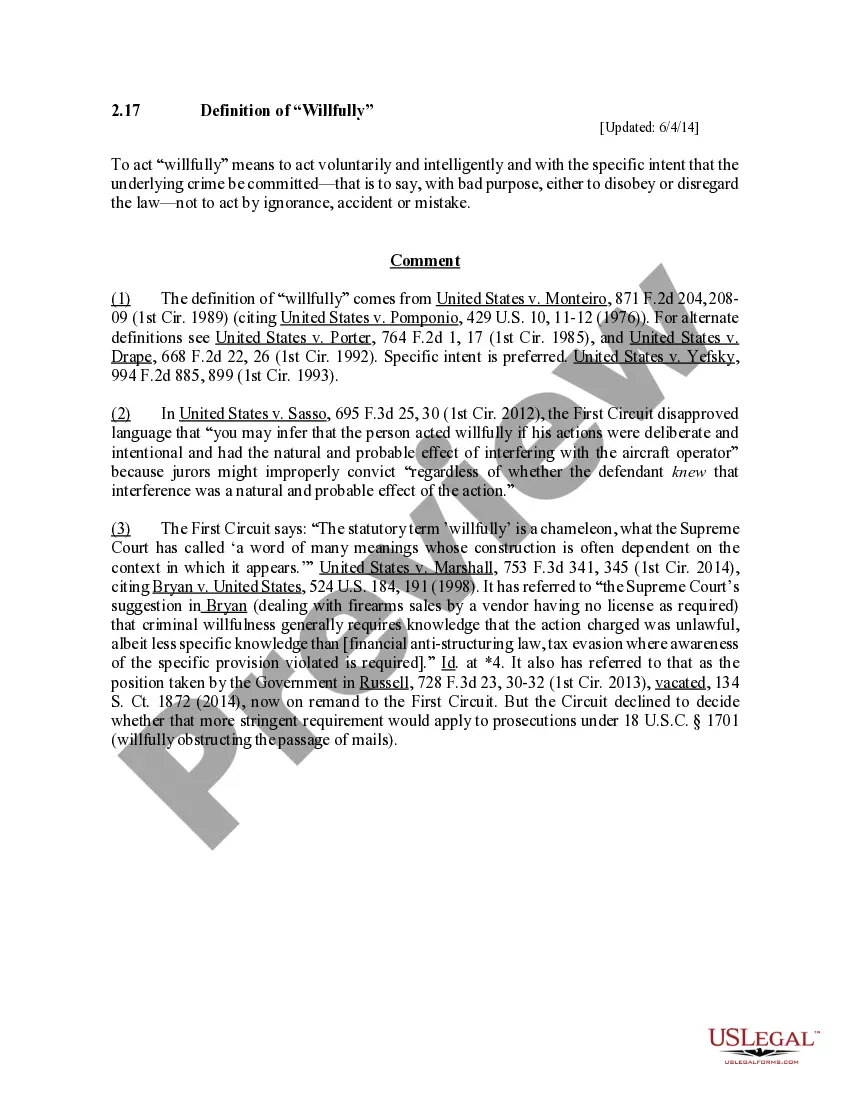
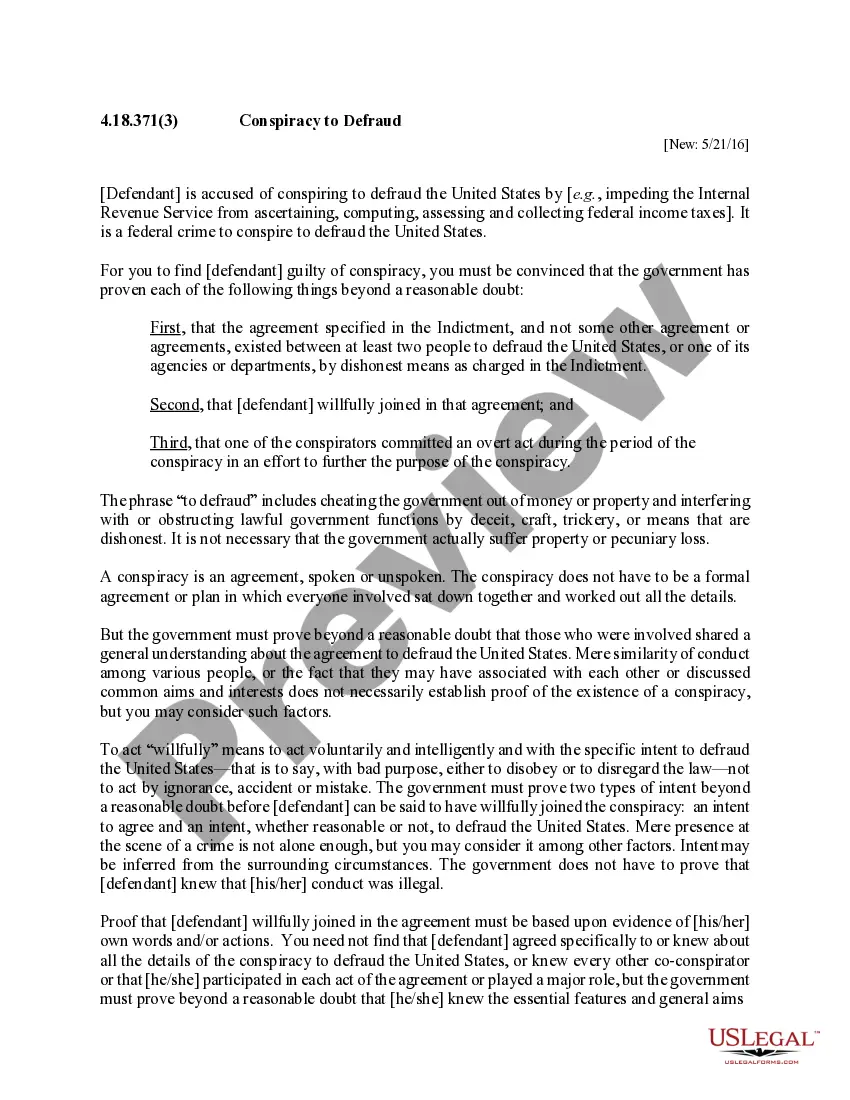
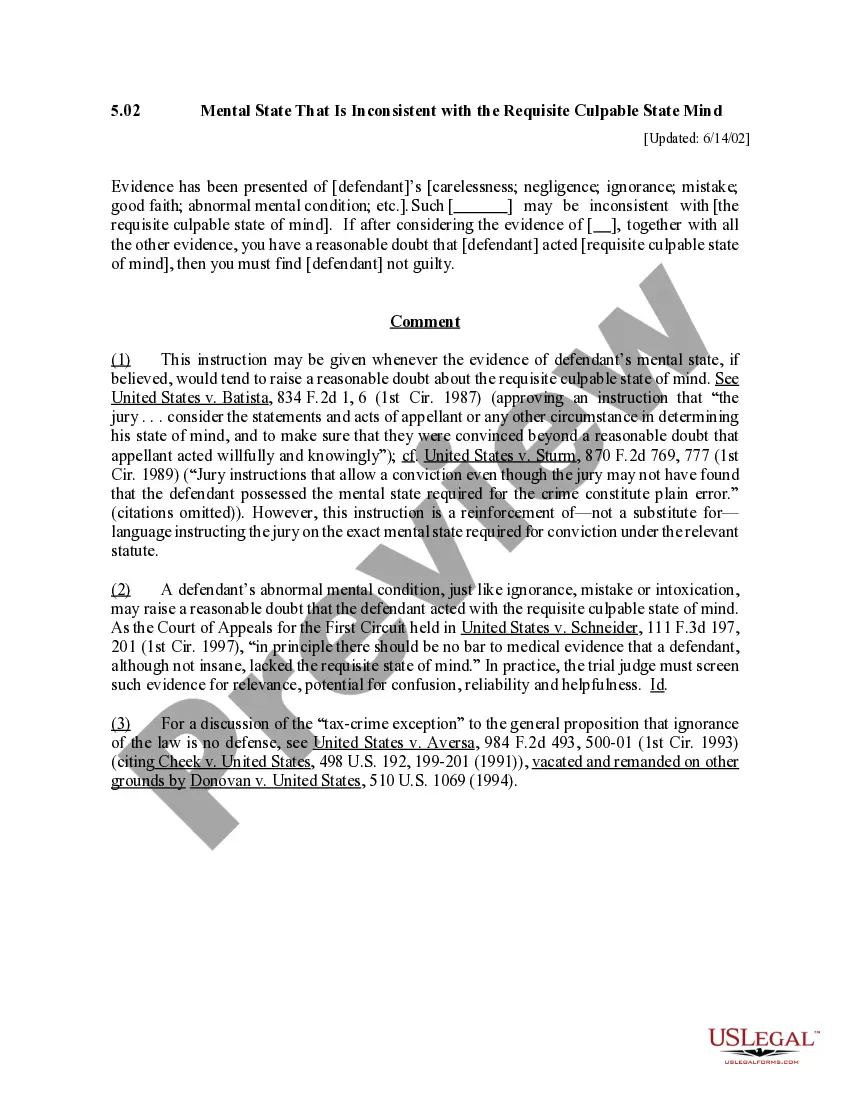
The "Definition of Willfully" is an official pattern jury instruction used in federal criminal cases in Maine. It clarifies what it means for a defendant to act "willfully," emphasizing the requirement of intentionality and knowledge in committing a crime. This form differs from other legal forms as it specifically addresses the concept of willfulness in the context of criminal law.
Key parts of this document
- Definition of "Willfully": Clarifies that willful action is voluntary and with bad purpose, showing intent to disobey the law.
- Legal Precedents: References to key court cases that shape the understanding of "willfulness," including United States v. Monteiro and United States v. Marshall.
- Specific Intent: Emphasizes the necessity of specific intent in determining willfulness for various offenses.
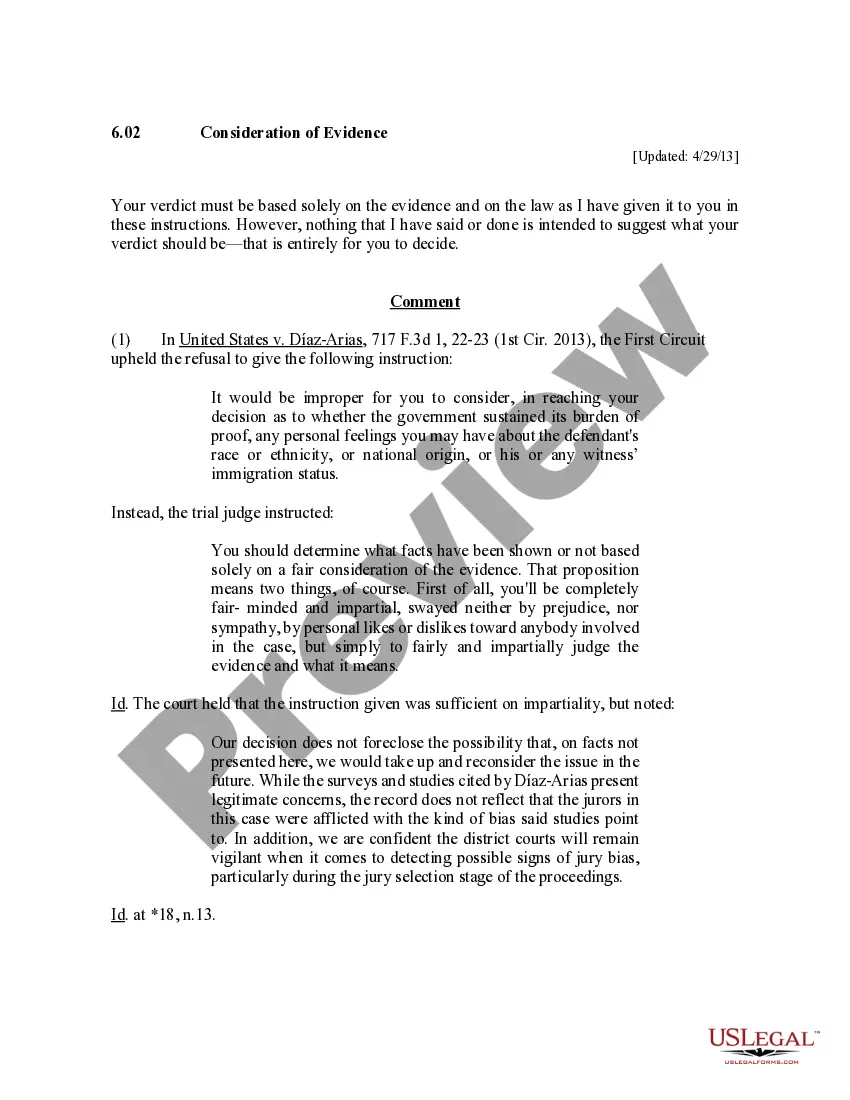
- Inference Guidelines: Instructions on how jurors should interpret actions relating to willfulness without inferring guilt incorrectly.
When to use this document
This form should be used when determining the standard for willfulness in criminal cases within the federal district of Maine. It is applicable in jury instructions during trials where the defendant's intent and knowledge are essential factors in assessing their actions related to criminal allegations.
Who should use this form
- Judges overseeing federal criminal cases in Maine.
- Prosecutors seeking to clarify the burden of proof regarding willful intent.
- Defense attorneys preparing defenses in cases where the "willful" standard is in question.
- Legal scholars and students studying federal criminal law and jury instructions.
How to complete this form
- Review the legal definition of "willfully" as described in the form.
- Cite applicable court cases that illustrate the interpretation of willfulness.
- Ensure the language aligns with federal standards for jury instructions.
- Instruct jurors on the parameters for determining willfulness in the context of the specific case.
- Include any pertinent precedents and discuss their relevance to the case at hand.
Notarization guidance
Notarization is generally not required for this form. However, certain states or situations might demand it. You can complete notarization online through US Legal Forms, powered by Notarize, using a verified video call available anytime.
Get your form ready online
Our built-in tools help you complete, sign, share, and store your documents in one place.
Make edits, fill in missing information, and update formatting in US Legal Forms—just like you would in MS Word.
Download a copy, print it, send it by email, or mail it via USPS—whatever works best for your next step.
Sign and collect signatures with our SignNow integration. Send to multiple recipients, set reminders, and more. Go Premium to unlock E-Sign.
If this form requires notarization, complete it online through a secure video call—no need to meet a notary in person or wait for an appointment.
We protect your documents and personal data by following strict security and privacy standards.

Make edits, fill in missing information, and update formatting in US Legal Forms—just like you would in MS Word.

Download a copy, print it, send it by email, or mail it via USPS—whatever works best for your next step.

Sign and collect signatures with our SignNow integration. Send to multiple recipients, set reminders, and more. Go Premium to unlock E-Sign.

If this form requires notarization, complete it online through a secure video call—no need to meet a notary in person or wait for an appointment.

We protect your documents and personal data by following strict security and privacy standards.
Avoid these common issues
- Misinterpreting the concept of willfulness as merely acting knowingly without intent.
- Failing to provide adequate context from relevant case law.
- Confusing willfulness with negligence or recklessness.
Advantages of online completion
- Accessible anytime, allowing for quick reference during trial preparations.
- Easy to download and edit according to specific case needs.
- Reliable legal resource drafted by licensed attorneys.
Legal use & context
- This instruction is enforceable in federal courts and is based on established case law.
- It provides essential guidance for jurors in understanding the intent related to criminal actions.
- Correct usage is essential to ensure fair trials and just verdicts.
Looking for another form?
Form popularity
FAQ
Rule 45 in Maine pertains to the subpoenas used in legal proceedings. This rule outlines how parties can obtain documents or witness testimony necessary for their case. Understanding this rule is vital for both lawyers and individuals involved in litigation. Additionally, knowing the Maine Definition of 'Willfully' may help you argue the consequences of non-compliance with a subpoena.