Indiana Southern District Bankruptcy Guide and Forms Package for Chapters 7 or 13
Understanding this form
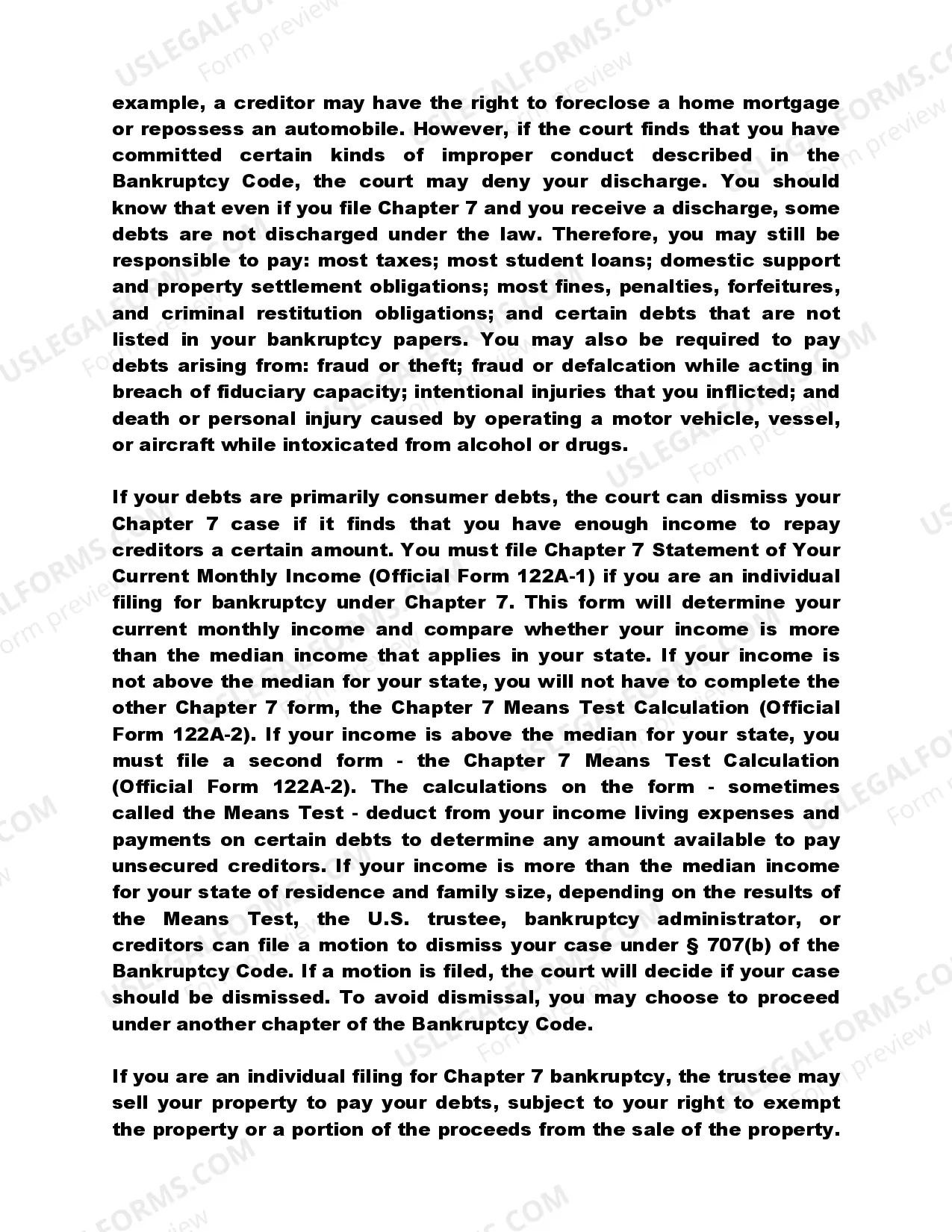
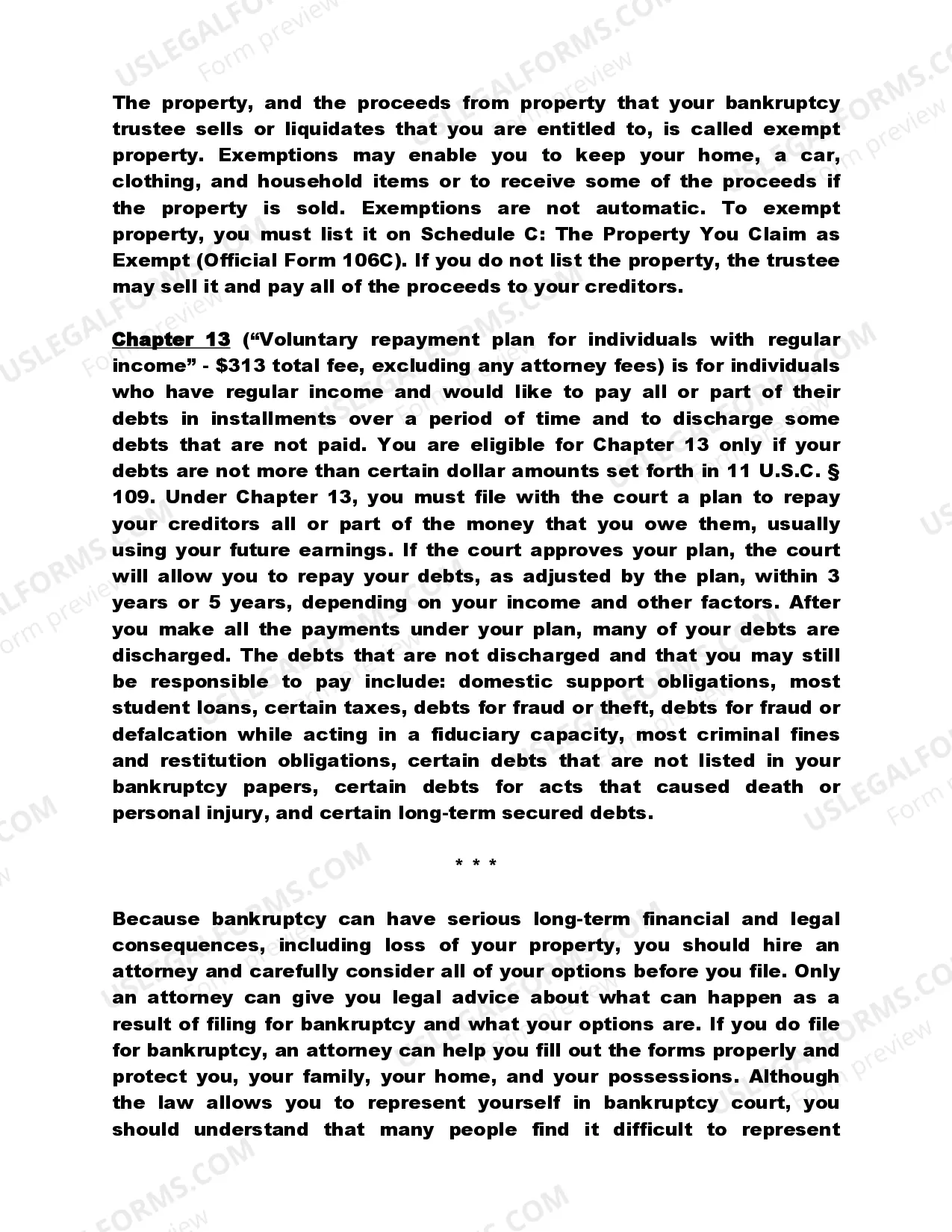
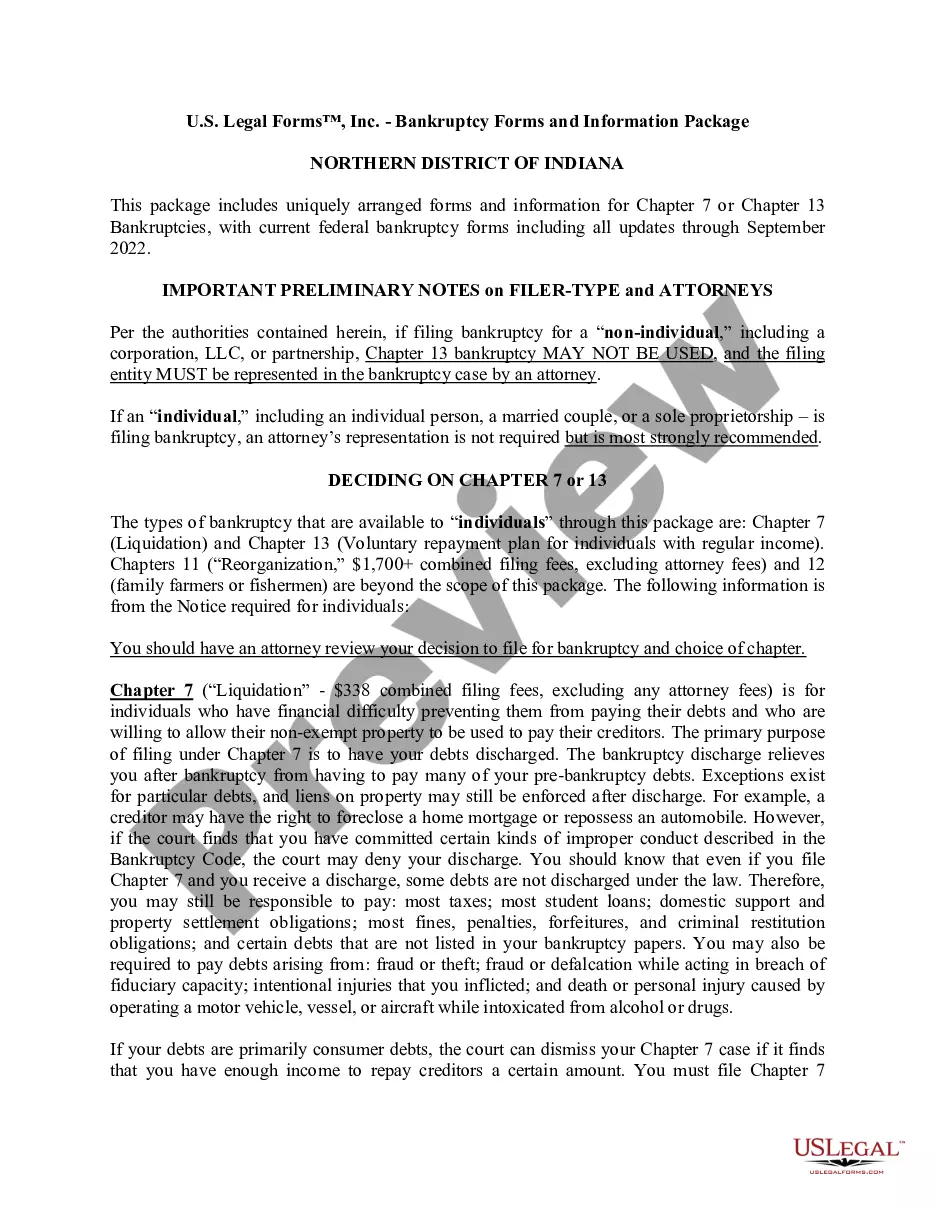
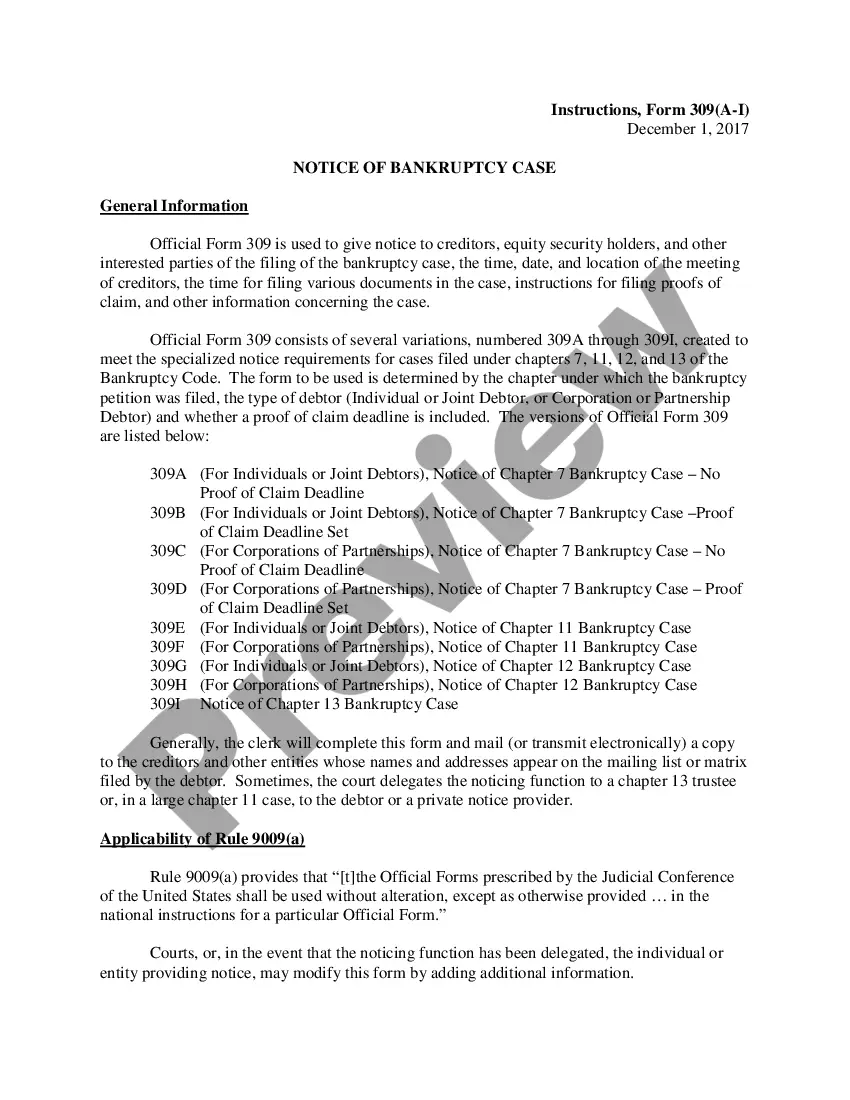
The Indiana Southern District Bankruptcy Guide and Forms Package provides essential resources for individuals filing for Chapter 7 or Chapter 13 bankruptcy. This package includes forms and detailed instructions tailored to each bankruptcy chapter, helping users navigate the legal process effectively. Unlike other bankruptcy forms, this package focuses specifically on individual filers and includes necessary guidelines based on Indiana state law.
Key components of this form
- Instructions for filing bankruptcy under Chapter 7 and Chapter 13.
- Chapter 7 Statement of Your Current Monthly Income (Official Form 122A-1).
- Chapter 7 Means Test Calculation (Official Form 122A-2) if applicable.
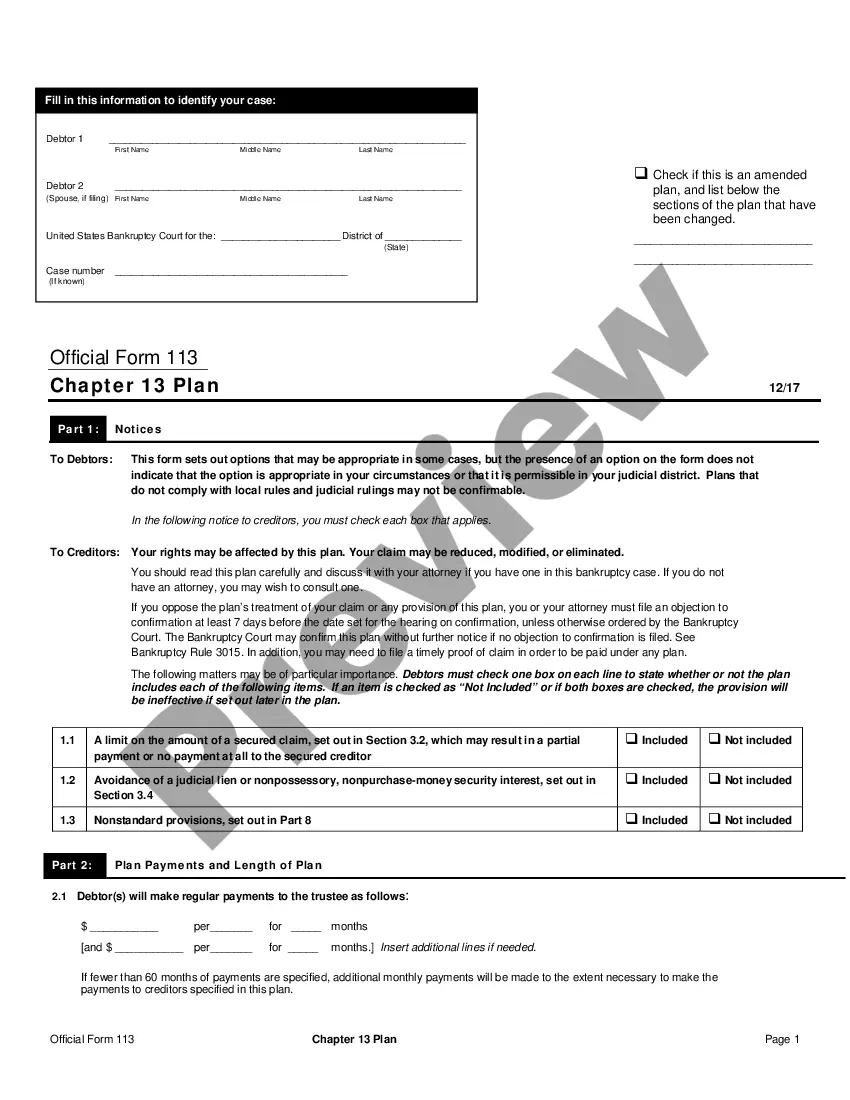
- Plan for repayment under Chapter 13 and related forms.
- Guidelines for exempt property and required schedules.

When to use this form
This form package is useful for individuals considering bankruptcy due to financial difficulties. Use it when you need to choose between Chapter 7, which discharges debts, and Chapter 13, which allows for a repayment plan. It can help you assess your options based on your income status and financial obligations.
Who this form is for
This package is intended for:
- Individuals seeking to file for Chapter 7 bankruptcy.
- Individuals with regular income wanting to file for Chapter 13 bankruptcy.
- Married couples who are considering filing jointly.
- Solo proprietors and individuals without legal representation, though attorney guidance is highly recommended.
Steps to complete this form
- Gather necessary financial information and documents.
- Identify your income type and calculate your current monthly income.
- Complete the Chapter 7 Statement of Your Current Monthly Income (Official Form 122A-1) to determine eligibility.
- If required, fill out the Chapter 7 Means Test Calculation (Official Form 122A-2).
- For Chapter 13 filers, develop a repayment plan and complete the required forms.
Notarization guidance
Notarization is not commonly needed for this form. However, certain documents or local rules may make it necessary. Our notarization service, powered by Notarize, allows you to finalize it securely online anytime, day or night.
Get your form ready online
Our built-in tools help you complete, sign, share, and store your documents in one place.
Make edits, fill in missing information, and update formatting in US Legal Forms—just like you would in MS Word.
Download a copy, print it, send it by email, or mail it via USPS—whatever works best for your next step.
Sign and collect signatures with our SignNow integration. Send to multiple recipients, set reminders, and more. Go Premium to unlock E-Sign.
If this form requires notarization, complete it online through a secure video call—no need to meet a notary in person or wait for an appointment.
We protect your documents and personal data by following strict security and privacy standards.

Make edits, fill in missing information, and update formatting in US Legal Forms—just like you would in MS Word.

Download a copy, print it, send it by email, or mail it via USPS—whatever works best for your next step.

Sign and collect signatures with our SignNow integration. Send to multiple recipients, set reminders, and more. Go Premium to unlock E-Sign.

If this form requires notarization, complete it online through a secure video call—no need to meet a notary in person or wait for an appointment.

We protect your documents and personal data by following strict security and privacy standards.
Common mistakes
- Neglecting to include all income sources in the bankruptcy forms.
- Failing to list exempt property on Schedule C (Official Form 106C).
- Not completing the Means Test accurately, which can lead to case dismissal.
- Submitting forms without double-checking for accuracy or required signatures.
Benefits of completing this form online
- Immediate access to downloadable forms and instructions.
- Edit and customize forms according to individual circumstances.
- Up-to-date information reflecting the latest legal requirements.
- Conveniently complete the forms from home, reducing time and hassle.
Looking for another form?



Form popularity
FAQ
What Will Happen to My Home and Car If I File Bankruptcy in Indiana? In most cases you will not lose your home or car during your bankruptcy case as long as your equity in the property is fully exempt.Or you can pay the creditor the amount that the property you want to keep is worth.
Under Chapter 7 bankruptcy rules, you are ineligible under the following circumstances: A previous debt was discharged within the past eight years under Chapter 7. A previous debt was discharged within the past six years under Chapter 13. Their income, expenses, and debt would allow for a Chapter 13 filing.
In most cases, an individual files for bankruptcy, performs their required duties and receives an automatic discharge at the end of the process all without ever having to talk with a lawyer or appear in court. The role of the Bankruptcy Trustee is to be an impartial administrator.
Because a chapter 7 discharge is subject to many exceptions, debtors should consult competent legal counsel before filing to discuss the scope of the discharge. Generally, excluding cases that are dismissed or converted, individual debtors receive a discharge in more than 99 percent of chapter 7 cases.
What Documents Do You Need to File for Bankruptcy? Tax Returns. Income Documentation. Vehicle Registration, Proof of Value & Insurance. Retirement And Bank Account Statements. Identification. What Information Do You Need to Complete the Bankruptcy Forms? Credit Counseling Requirement.
There is no threshold amount that you need to reach to file a bankruptcy. Some chapters of bankruptcy have debt limits, but there is no such thing as a debt minimum. That being said, you certainly can and should evaluate if filing a bankruptcy makes sense in your current situation.
Identifying Information. The Voluntary Petition for Individuals Filing for Bankruptcy form acts as the cover sheet for your paperwork. Your Property. Your Exempt Property. Your Collateralized Debt. Your Other Debt. Your Contracts and Leases. Your Codebtors. Your Income.
Collect Your Indiana Bankruptcy Documents. Take Credit Counseling. Complete the Bankruptcy Forms. Get Your Filing Fee. Print Your Bankruptcy Forms. Go to Court to File Your Forms. Mail Documents to Your Trustee. Take Bankruptcy Course 2.
Eligible filers are able to file Chapter 7 for free. If your household income is less than 150% of the federal poverty level, you can ask the bankruptcy judge to waive your court fees with a simple application submitted along with your bankruptcy petition.