Indiana Warranty Deed from Individual to a Trust
What this document covers
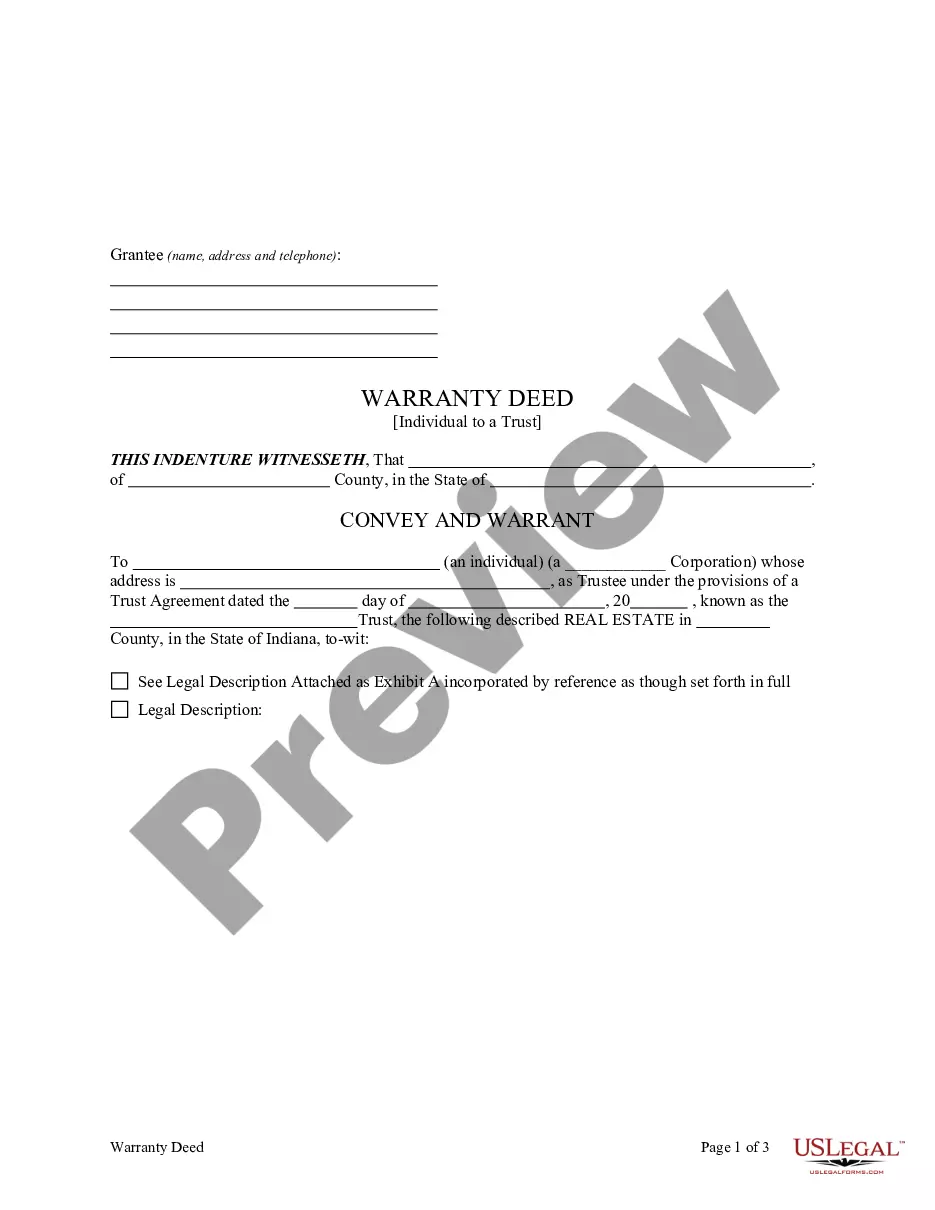
This Warranty Deed from Individual to a Trust is a legal document that allows an individual (the grantor) to transfer real property ownership to a trust (the grantee). This form ensures that the title of the property is clear and free from claims, providing security in the transfer. Unlike other deeds, such as quitclaim deeds, a warranty deed guarantees that the grantor holds clear title to the property and has the right to sell it, making it a stronger assurance for the trust and its beneficiaries.
Form components explained
- Identification of the grantor and grantee, including full names and addresses.
- A legal description of the property being transferred.
- Clauses that affirm the grantor's ownership and rights to convey the property.
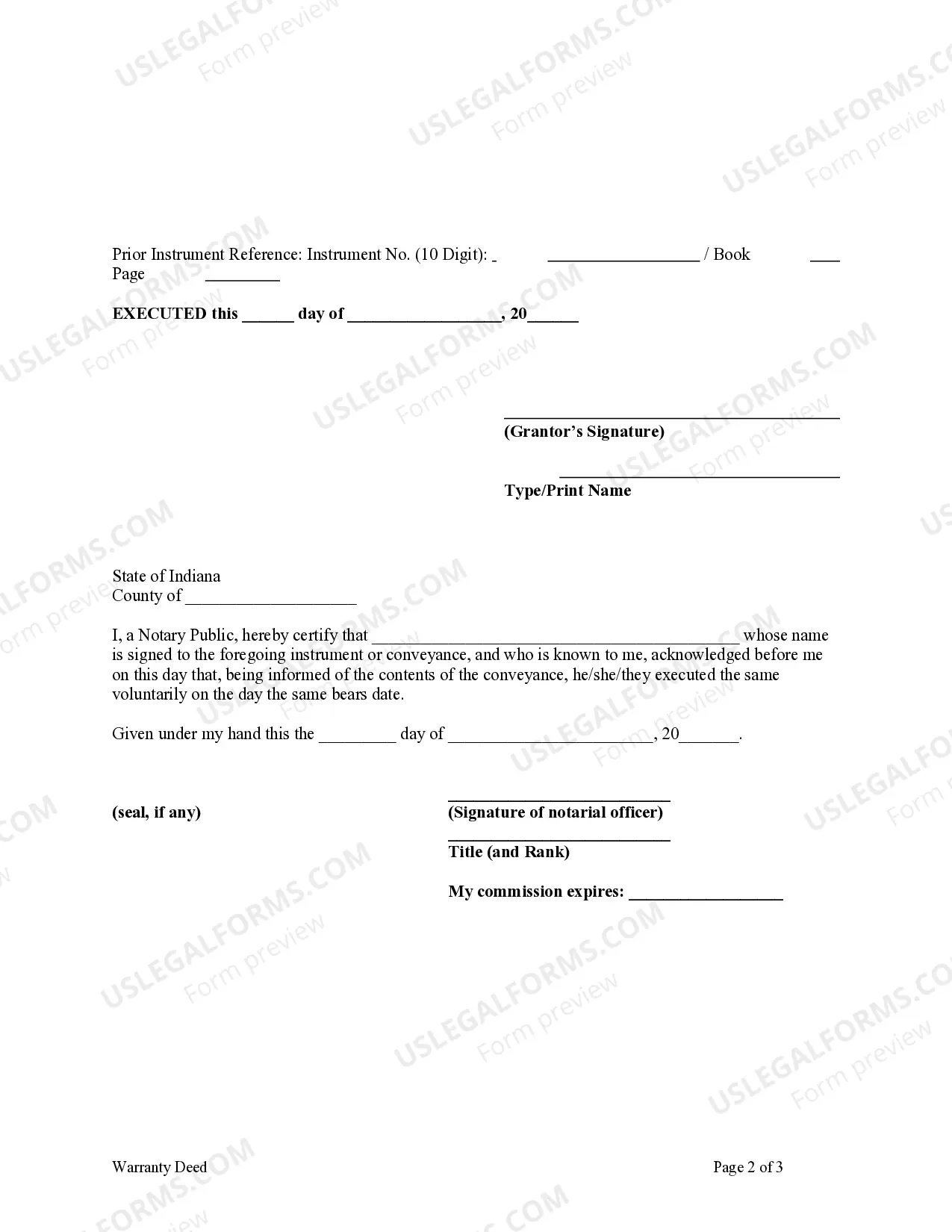
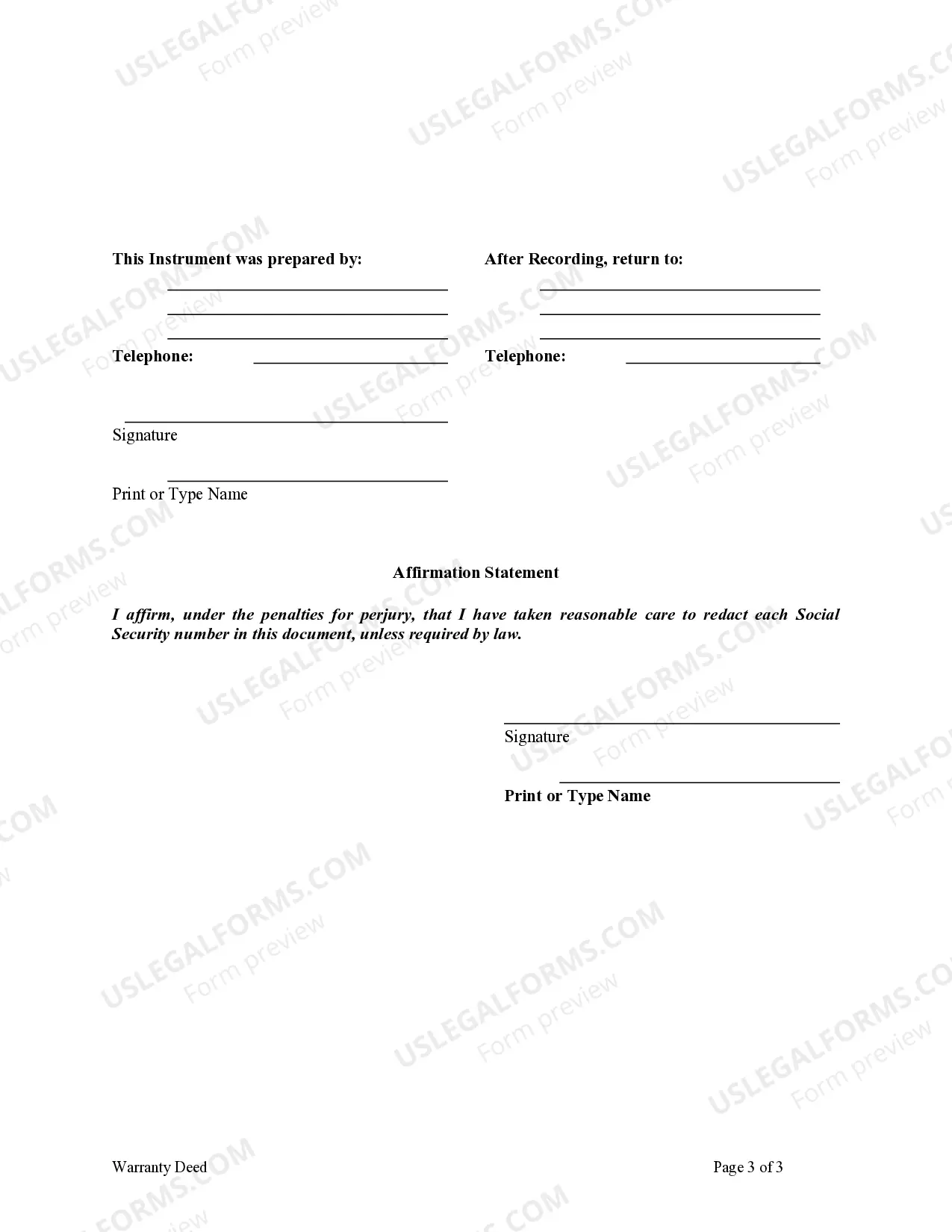
- Signatures of the grantor and witnesses, along with notarization details.
- Effective date of the transfer.






When to use this document
Use this warranty deed when you need to legally transfer property from an individual to a trust. This situation often arises in estate planning, where an individual wishes to place their property in a trust for asset protection or to facilitate the distribution of assets to beneficiaries upon their death. It is also applicable when setting up a living trust or during property transactions involving trusts.
Who should use this form
- Individuals who wish to transfer real estate property to their trust.
- Trustees who need to formalize the acquisition of property into the trust.
- Estate planners and legal professionals assisting clients with property transfers.
Instructions for completing this form
- Identify the parties involved: list the full name and address of the grantor and the trust.
- Provide the legal description of the property being transferred.
- Include affirmations from the grantor regarding their ownership and rights to the property.
- Ensure all required signatures are affixed, including those of witnesses and a notary public.
- Specify the effective date of the transfer and keep a copy for your records.
Does this form need to be notarized?
This form needs to be notarized to ensure legal validity. US Legal Forms provides secure online notarization powered by Notarize, allowing you to complete the process through a verified video call, available anytime.
Get your form ready online
Our built-in tools help you complete, sign, share, and store your documents in one place.
Make edits, fill in missing information, and update formatting in US Legal Forms—just like you would in MS Word.
Download a copy, print it, send it by email, or mail it via USPS—whatever works best for your next step.
Sign and collect signatures with our SignNow integration. Send to multiple recipients, set reminders, and more. Go Premium to unlock E-Sign.
If this form requires notarization, complete it online through a secure video call—no need to meet a notary in person or wait for an appointment.
We protect your documents and personal data by following strict security and privacy standards.

Make edits, fill in missing information, and update formatting in US Legal Forms—just like you would in MS Word.

Download a copy, print it, send it by email, or mail it via USPS—whatever works best for your next step.

Sign and collect signatures with our SignNow integration. Send to multiple recipients, set reminders, and more. Go Premium to unlock E-Sign.

If this form requires notarization, complete it online through a secure video call—no need to meet a notary in person or wait for an appointment.

We protect your documents and personal data by following strict security and privacy standards.
Avoid these common issues
- Failing to provide a complete legal description of the property.
- Not having the document notarized, if required by state law.
- Omitting signatures from witnesses or the grantor.
- Not entering the effective date of the transfer accurately.
Benefits of using this form online
- Convenience of accessing and downloading the form instantly from any location.
- Editability allows for personalized modifications to meet specific needs.
- Reliability of using attorney-drafted templates ensures legal compliance.
Legal use & context
A Warranty Deed from Individual to a Trust is legally recognized to transfer property ownership. It provides assurance to the grantee that the property title is free from encumbrances, enhancing trust in the transaction.
Main things to remember
- The Warranty Deed from Individual to a Trust facilitates property transfers into a trust.
- Complete all required fields, focusing on accuracy and thoroughness.
- Ensure notarization to validate the deed and protect asset ownership.
Looking for another form?
Form popularity
FAQ
Discuss the terms of the deed with the new owners. Hire a real estate attorney to prepare the deed. Review the deed. Sign the deed in front of a notary public, with witnesses present. File the deed on public record.
A warranty deed guarantees that: The grantor is the rightful owner of the property and has the legal right to transfer the title.The title would withstand third-party claims to ownership of the property. The grantor will do anything to ensure the grantee's title to the property.
Retrieve your original deed. Get the appropriate deed form. Draft the deed. Sign the deed before a notary. Record the deed with the county recorder. Obtain the new original deed.
Signing (§ 32-21-2-3) All deed must be executed by one of the following: judge, clerk of a court of record, county auditor, county recorder, notary public, mayor of a city in Indiana or any other state, commissioner appointed in a state other than Indiana by the governor of Indiana, clerk of the city county council
No law forbids adding someone to your mortgaged home's deed or in signing your home over to others through one. Mortgage lenders understand deeds, though, and use loan due-on-sale clauses to prevent unauthorized property sales or transfers.
Locate the prior deed to the property. Create the new deed. Sign the new deed. Record the original deed.
An Indiana quitclaim deed is a legally binding document that allows a property's owner to sell or transfer the real estate to another party, a buyer, without any promise about the title.
A warranty deed protects property owners from future claims that someone else actually owns a portion (or all) of their property, while trustee deeds protect lenders when borrowers default on their mortgage loans.