Iowa Warning of Default on Residential Lease
What this document covers
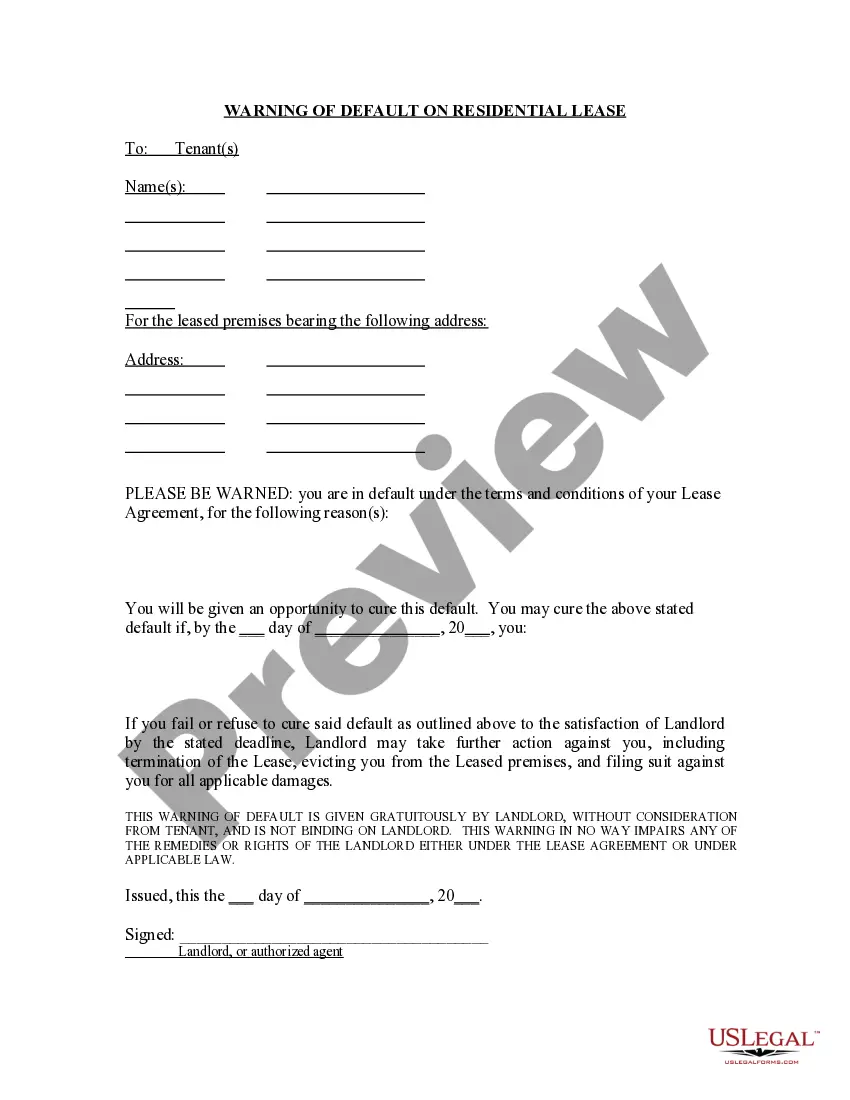
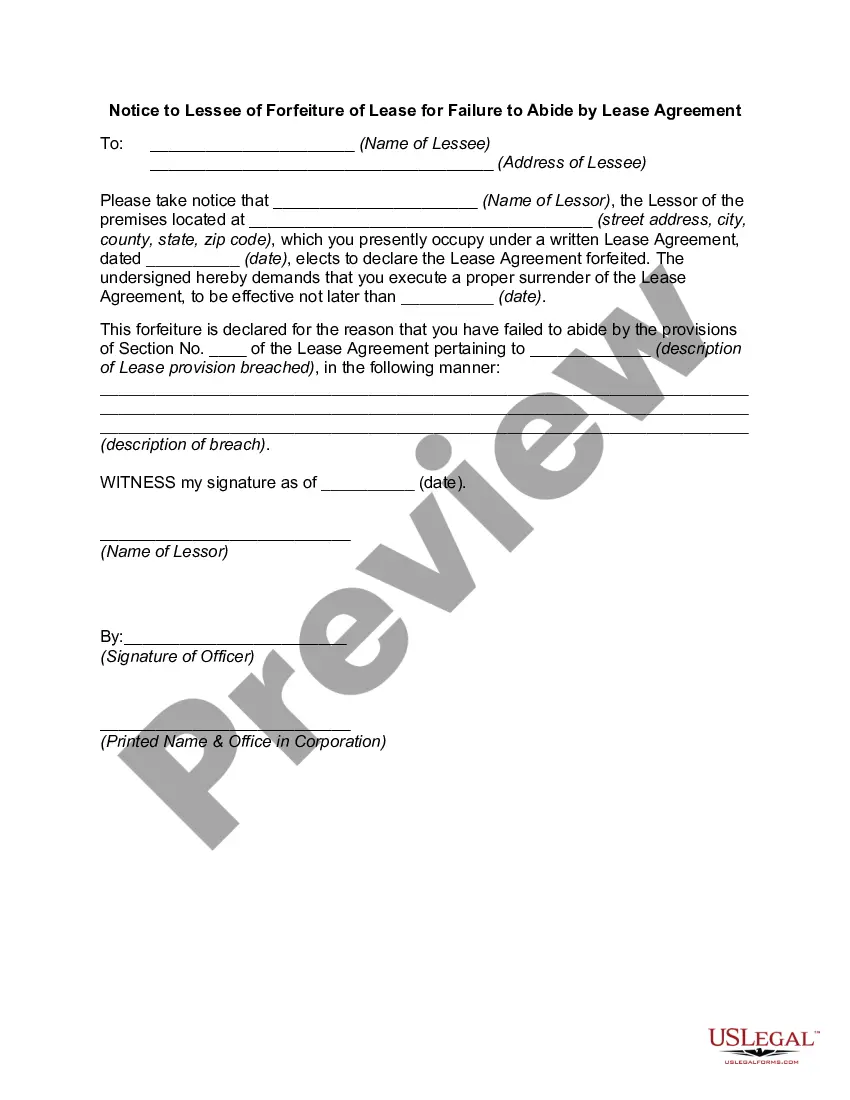
The Warning of Default on Residential Lease is a letter from a landlord to a tenant that indicates a concern regarding potential default under the lease agreement. This warning serves to inform the tenant of specific issues that need to be addressed to avoid facing consequences under the lease. Unlike other lease forms, this document focuses specifically on notifying the tenant of their default risk rather than addressing lease terms or renewal processes.
Main sections of this form
- Date of issuance
- Landlord's signature or that of an authorized agent
- Statement of default and conditions for remedy
- Notification disclaimer about the non-binding nature of the warning


Situations where this form applies
This form should be used when a landlord notices that a tenant may be failing to meet their obligations under a residential lease. Common situations include late rent payments, neglecting property maintenance, or violating lease terms. It provides a crucial step for the landlord to formally communicate concerns and allows the tenant an opportunity to rectify the situation before further action is taken.
Who can use this document
- Landlords who need to notify tenants of default issues
- Property management companies managing residential leases
- Tenants who have received a warning and wish to understand the implications
Instructions for completing this form
- Identify and enter the date of issuance.
- Fill in the landlord's name or designate an authorized agent's name.
- Clearly state the specific reasons for the warning of default.
- Add any necessary conditions or steps the tenant should take to remedy the situation.
- Sign the document to validate the warning.
Notarization guidance
This form does not typically require notarization unless specified by local law. Always check state-specific requirements to confirm.
Get your form ready online
Our built-in tools help you complete, sign, share, and store your documents in one place.
Make edits, fill in missing information, and update formatting in US Legal Forms—just like you would in MS Word.
Download a copy, print it, send it by email, or mail it via USPS—whatever works best for your next step.
Sign and collect signatures with our SignNow integration. Send to multiple recipients, set reminders, and more. Go Premium to unlock E-Sign.
If this form requires notarization, complete it online through a secure video call—no need to meet a notary in person or wait for an appointment.
We protect your documents and personal data by following strict security and privacy standards.

Make edits, fill in missing information, and update formatting in US Legal Forms—just like you would in MS Word.

Download a copy, print it, send it by email, or mail it via USPS—whatever works best for your next step.

Sign and collect signatures with our SignNow integration. Send to multiple recipients, set reminders, and more. Go Premium to unlock E-Sign.

If this form requires notarization, complete it online through a secure video call—no need to meet a notary in person or wait for an appointment.

We protect your documents and personal data by following strict security and privacy standards.
Common mistakes
- Failing to specify the exact reasons for the default.
- Not including the date or landlordâs signature.
- Using ambiguous language that may confuse the tenant about what actions are required.
Advantages of online completion
- Immediate access to a legally vetted form created by licensed attorneys.
- Easy download and ability to customize for specific needs.
- Convenient and secure way to handle tenant communications digitally.
Legal use & context
- This warning serves as a formal notification and may be crucial in the event of a legal dispute.
- By issuing this form, landlords maintain a record of communication regarding tenant defaults.
What to keep in mind
- The Warning of Default serves to notify tenants of lease violations.
- It allows tenants the opportunity to correct issues before legal actions are pursued.
- Always ensure compliance with relevant state laws regarding notifications.
Looking for another form?

Form popularity
FAQ
If you default on a lease, the landlord can initiate several actions against you. First, you may receive an Iowa Warning of Default on Residential Lease, which formally notifies you of the breach. If the issue is not resolved, the landlord may file for eviction or seek damages in court. It is crucial to address any warnings promptly to avoid complications and explore options available through platforms like US Legal Forms, which provide resources and templates to help you manage lease agreements effectively.
The default clause in a lease provides a framework for what happens if either party fails to meet their obligations. This might include penalties for late payments or procedures for eviction. In the context of the Iowa Warning of Default on Residential Lease, it's essential for both landlords and tenants to know these terms well. Being proactive about compliance with these clauses can save you from potential legal complications.
Defaulting on a lease refers specifically to failing to meet agreed terms, while breaking a lease usually means terminating the lease agreement prematurely. The Iowa Warning of Default on Residential Lease can include conditions that lead to a default but may not always equate to breaking the lease entirely. Understanding the distinctions can help tenants make informed decisions and avoid legal issues. It's beneficial to seek counsel when considering your options.
Section 562.4 in Iowa law outlines tenant and landlord rights concerning the lease agreement and specific defaults. This section includes the necessary requirements for landlords to provide a written notice of default before taking further action. By understanding the Iowa Warning of Default on Residential Lease, you can stay informed of your rights and responsibilities. Familiarizing yourself with these legal aspects promotes peace of mind during your rental experience.
Red flags in a lease agreement include vague terms, excessive fees, or conditions that seem unfair to the tenant. If you notice unclear language regarding responsibilities or penalties, approach with caution, especially concerning the Iowa Warning of Default on Residential Lease. Be vigilant and consult resources or legal guidance to ensure the agreement is fair and transparent. Protecting yourself from unfavorable terms is essential in any legal commitment.
The default clause on a residential lease details what actions can lead to a default and the subsequent actions that the landlord may take. It might include stipulations regarding late rent payments or damages to the property. In the context of the Iowa Warning of Default on Residential Lease, understanding these clauses is crucial to avoid unnecessary disputes. Ensure you familiarize yourself with these terms to safeguard your rights as a tenant.
A tenant defaults when they fail to meet the terms of the lease, such as missed rent payments or violating lease rules. This situation can lead to legal consequences, including eviction, so it's important to understand the implications of the Iowa Warning of Default on Residential Lease. If you're facing difficulties, consider reaching out for guidance to navigate these complexities. Taking early action can help prevent further issues.
In Iowa, a tenant typically needs to provide written notice of intent to terminate a lease at least 30 days before moving out. This aligns with the Iowa Warning of Default on Residential Lease guidelines. Always be sure to check your specific lease agreement for any variations in the notice period. Proper communication can help prevent misunderstandings and potential defaults.
If you default on a lease, your landlord may issue an Iowa Warning of Default on Residential Lease, which serves as a formal notification of your rental agreement violation. This warning can lead to serious consequences, including potential eviction proceedings, loss of your security deposit, and damage to your credit score. It is crucial to address the situation promptly; you might want to negotiate with your landlord or seek legal advice. Tools like USLegalForms can assist you in understanding your rights and preparing necessary documentation to respond effectively.
While landlords in Iowa generally can schedule showings, they must adhere to your lease agreement and give adequate notice. If a landlord attempts to force you out for showings without notice, that could be considered a violation. It's important to understand your rights related to the Iowa Warning of Default on Residential Lease to ensure a respectful process.